31 Days of Horror: Jeepers Creepers (2001)

jeepers creepers poster

I’ve talked many times on these pages about how much I like Wes Craven’s Scream (1996) and to a lesser extent the many sequels that followed. Oddly enough I didn’t actually watch a lot of the many (many) films that followed in its wake and were influenced by its winking, meta-narrative.

There are a variety of reasons why that is true. I was becoming a true cinephile around then which meant I was more interested in the Coen Brothers, Steven Soderberg, Akira Kurosawa, Francois Truffaut and the like – directors who made “real” cinema rather than horror which wasn’t great art. I had started dating the woman who would become my wife and she doesn’t like horror movies.

But mainly my horror interests were changing. I was starting to discover J-Horror and Giallo. There was this wonderful world of world horror that I had previously not known existed. Suddenly my desire to watch silly little American horror starring hip, young TV stars disappeared.

Over the last few years, I’ve enjoyed going back and watching a lot of those films from that period that I missed the first time around.

Mostly. Some of those films weren’t very good and I was smart to have skipped them.

Jeepers Creepers begins with a car ride across a lonely stretch of Florida. Siblings Trish (Gina Phillips) and Darry (Justin Long) are coming home for Spring Break. They talk and argue, and they play the type of silly games you play on long road trips.

Suddenly a large, old truck begins tailgating them. It weaves back and forth and honks its horns, scaring the two half to death. Finally, it passes them and all is calm. Sometime later they spy that same truck parked next to an abandoned old church. A man gets out of it carrying something wrapped up in a sheet tied shut with ropes. Our heroes have seen the same scary movies we’ve all seen so they naturally assume it is a body. The dude then throws the object down a drainage pipe. As he turns around he realizes those two have seen him do it.

He gets into his truck and rushes after them. Apparently, this old truck has a souped-up engine because he catches them quickly and rear-ends them multiple times. But when he finally runs them off the road he rushes on ahead instead of stopping to kill them.

Instead of acting like normal, intelligent people who would zoom as fast and as far away as possible and perhaps call the police when they get to a safe space, these two decide to go back to the church and have a look around.

Maybe one of those people tied up and wrapped in bloody sheets is still alive Darry muses. Maybe they – these two people without any medical experience – can give them emergency care before calling in any real help.

The pipe goes deep underground leading to what was the old church basement. Darry tries to take a look and instead slips falling to the bottom where he discovers…well I won’t spoil that but it is pretty gruesome.

I will spoil that the guy in the truck isn’t a guy at all but a monster. A poorly designed monster who is on the hunt. And now he’s got the scene of Darry and Trish.

Though there are periodic meta-references to other horror movies these two characters make all the dumb maneuvers people in dumb horror movies make.

After the first attack, seeing the horrors in that basement, and then watching the policeman they finally tell about all of this get ripped to shreds, they do not get the heck out of Dodge as fast as they possibly can, but rather stop at some random house in the middle of nowhere. Trish declares they need to call someone. Exactly who she wants to call and what she will tell them is unclear. Even after Darry asks those exact, and very reasonable questions.

While watching this insane monster do insanely horrible things the two just sit and stare at him. Again, they don’t run. This film is all reaction shots. Over and over again something horrible will happen and the characters will just sit there, mouths agape. The camera cuts between the action and their reactions. Back and forth. Back and forth until I’m screaming that someone needs to do something. Maybe that’s supposed to be shock or something. Maybe real people would act that way when exposed to something so traumatic. But in a horror movie, they need to run or start shooting.

The acting is passable, the script isn’t half as clever as it thinks it is, and again the monster design is bad. Yet, I think I kind of liked it.

It has this laid-back, breezy quality to it. The film never takes itself seriously, but it isn’t winking at us either. It isn’t a hipster film smirking at its audience. The in-film stakes are very high – life and death – but the film never really expects you to care all that much. It wants you to have a good time watching a movie and that’s exactly what I did.

31 Days of Horror: The Fog (1980)

the fog poster

John Carpenter’s The Fog begins with a cheesy old campfire tale told by an old man that essentially gives us the backstory to the movie we’re about to see. Both the backstory and the actual story are pretty silly. The monsters are goofy, and the ending somewhat anti-climatic. Yet I love the film through and through.

Carpenter is the master of creating a mood and The Fog finds him at his moodiest. Since time immemorial (or at least the time in which films have existed) movies have used fog to create a spooky, eerie mood. Fog was made for cinema. It is both opaque and translucent. It obfuscates your vision and yet seem to reveal. It crawls in and moves with the wind. And it looks great when lit up.

One hundred years ago, on a dark foggy night the founders of Antonio Bay, a small coastal town in Northern California murdered a group of lepers for their gold. Now as the town celebrates its centennial anniversary the fog is back, as are the lepers and they are looking for revenge.

Our heroes are Stevie Wayne (Adrienne Barbeau) who owns and DJs the coolest looking lo-fi radio station inside a lighthouse, fisherman Nick Castle (Tom Atkins), and Elizabeth Solley (Jamie Lee Curtis) the hitchhiker Nick picked up one foggy night.

Stevie spends most of her time in the lighthouse talking to her listeners (and us) whilst playing light jazz records. She acts almost like a narrator, feeding her listeners (and us) information. Nick and Elizabeth run around trying to figure out what is happening.

The monsters apparently only appear between the hours of 12 midnight and 1 AM. They show up the first night mostly messing with electronic equipment and freaking everybody out, and then on the second night, the night of the actual anniversary they start killing people.

Whatever, the story takes second chair to the general creepiness Carpenter is creating. As usual, Carpenter wrote his own score and it is terrific. The film looks terrific and there is an enormous amount of creepy fog drifting into town across the bay, floating across streets and into rooms. The film lights it up giving it a hypnotic look.

It isn’t particularly scary and there are just a few scenes of genuine violence (although none of it is bloody) but the general vibe is excellent.

The Friday Night Horror Movie: The Girl In Room 2A (1974)

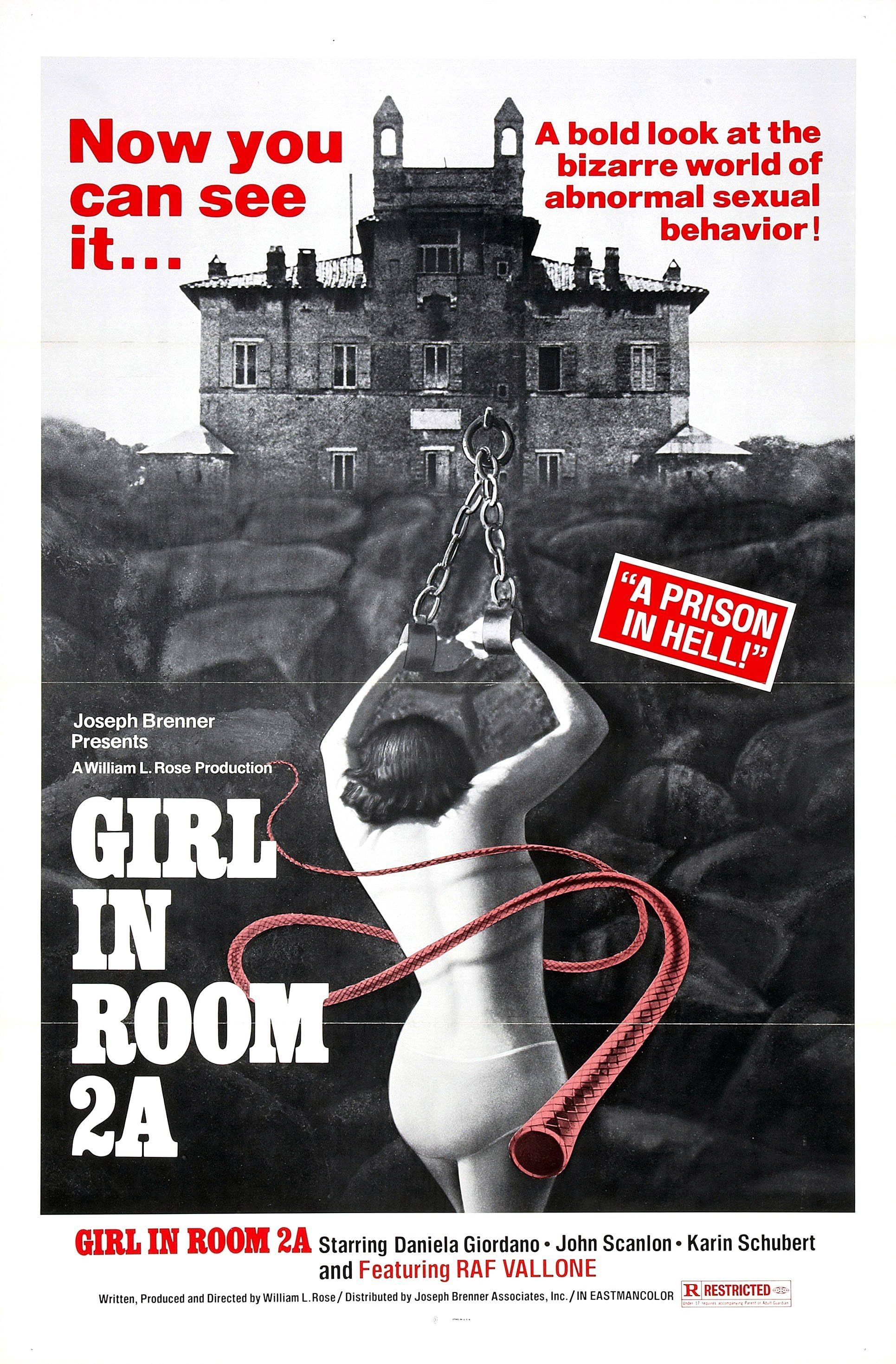
the girl in 2A poster

I watched The Girl in Room 2A via my Forgotten Gialli Blu-ray collection from Severin Films. “Forgotten” makes them sound like some overlooked classics or some incredible bits of cinema that were lost to time. But in reality, they were forgotten for a reason. That reason being they are mostly rubbish.

That’s not entirely fair to The Girl in Room 2A. It isn’t complete rubbish, it has a few moments that make it sort-of interesting. Or at least worth a watch if you are digging into the deep well of Giallo.

It starts out with a bang. A woman is kidnapped as she leaves a building. She’s grabbed, tossed into the back of a car, and taken to some dungeon. There she is stripped and punctured with these spikey metal rods. Then she’s driven to a cliff and dumped overboard. And all of that occurs during the opening credits.

Then we meet our heroine Margaret Bradley (Daniela Giordano). She’s just been released from prison and she sets herself up in the titular Room 2A in a sort-of halfway house.

The owner of the house is nice, but a bit nosey. The room is comfortable but there is a strange red spot on the floor. She’ll clean it up, but later it will reappear. At night she hears strange noises and she keeps having strange dreams about queer-looking people dressed in red robes doing…things to her.

I quite liked this part of the film. I love a good haunted house mystery. But then the film decides to show us what’s going on. In detail. They don’t just let us see the killers but it explains who they are and what their purpose is. In detail. I won’t bother with it, but all the explanations bog the film down. The mystery is lost and it becomes rather dull.

There is also a love interest which is dull in its own way, but at least that makes sense. I can accept a love interest in this sort of film, but there is no reason to spend so much time with the death cult explaining their motivations.

There is a final action sequence that’s pretty great, but it isn’t enough to make the film interesting.

31 Days of Horror: Cursed (2005)

image host

Several years after creating the hugely successful Scream franchise writer Kevin Williamson and director Wes Craven teamed up to make a werewolf film starring Christina Ricci, Jesse Eisenberg, and Judy Greer. If that sounds like a good time at the movies you should know that the studio, specifically the Weinsteins, had their perverted, gnarled hands all over it.

They demanded numerous reshoots, edited down Craven’s original R-Rating down to a PG-13, and exchanged Award Winning special effects artist Rick Baker’s physically-made Werewolf designs for lousy-looking CGI ones.

The end results aren’t terrible, but they aren’t great either.

Ricci and Eisenberg play siblings Ellie and Jimmy. On a drive home one evening something jumps in front of them causing their car to crash. Let’s not be coy here with the plot, that something was a werewolf and it bites them. Slowly they will start turning into the beast as well.

But not too much because we like these guys and we can’t have them turning so bad they wind up having a bunch of mutilated corpses on their hands. Jimmy will find himself lying naked in the garden at one point, and Ellie keeps getting little bodily changes from time to time.

In this story, they can keep from becoming full-on werewolves if they can find and kill the werewolf that bit them. A lot of time is spent with them trying to figure that out (and the audience guessing it might be one of the assortment of semi-famous actors who keep showing up.)

You can see hints of what could have been an interesting film tucked into the corners of what we actually get. Looking online and it seems a lot of folks absolutely hate this movie. I didn’t hate it, but it doesn’t do anything original or all that interesting. If Craven and Williamson’s names weren’t on it and if we didn’t know the Weinstein’s mucked with it I suspect the general consensus would be, well not great, but not hated. It is very, as the kids like to say, “Mid.”

Bring Out the Perverts: What Have They Done To Your Daughters? (1974)

what have they done to your daughters poster

Italian Cinema was dominated by two genres in the 1970s – the Poliziotteschi and the Giallo. The Poliziotteschi was a particular type of crime drama that is noted for its gritty, down-and-dirty take on police work featuring loads of violence and action sequences, highlighted by corruption at the highest levels. Gialli were murder mysteries featuring graphic violence, hyper-stylization, overt sexuality, and wild soundtracks.

What Have They Done To Your Daughters? is an interesting blending of both genres. Plotwise it is very Poliziotteschi as it follows the police as they try to catch a killer and are then pulled into a child prostitution ring with ties to the upper echelon of the city’s political sphere. Stylistically it is mostly gritty like a Poliziotteschi, and it features a couple of terrific chase sequences, but it also has a few stylish Giallo-esque moments.

There is also a black-gloved, motorcycle helmet-wearing, hatched-yielding psycho going around hacking people to death, and a few moments of sleaze where the camera lingers on naked female bodies (one of which is supposed to be a 15-year-old girl – the actress is of age – which makes it particularly gross).

I cover the basic details of the plot in my old review of the Arrow Video Blu-ray release (which you can read at Cinema Sentries) so I’ll skip them in this write-up.

I mostly really dug the film this go-around. I think I enjoyed the Poliziotteschi elements more than the Giallo. The story is good, the investigative elements are interesting, and the action sequences are top-notch. It is not unusual for this type of crime drama to dive into underage sex rings, but it still grosses me out, especially now that I have a young daughter. And this film gets a bit skeevy in that area.

I did dig the hatched-wielding killer, but like, why is he running around in a motorcycle helmet (other than the film keeping us from seeing his face I mean)? It is especially weird since the cops figure out who he is fairly early in the film (it is the guys who hired him that remain a mystery).

Overall, a very enjoyable cinematic experience.

31 Days of Horror: Day of the Dead (1985)

day of the dead poster

George A. Romero didn’t invent the zombie movie with Night of the Living Dead, but he certainly popularized it and solidified the tropes of the genre. I remember watching it when I was just a kid – maybe 13 or 14 years old – and absolutely loving it. I didn’t even mind that it was in black and white, something I usually hated at the time. It was one of the first films that made me realize that movies could be more than just mindless entertainment. They could be art. They could make you think.

I didn’t see the other two films that made up Romero’s original zombie trilogy until years later. I first watched Dawn of the Dead in a large theater in Strasbourg, France. It was dubbed in French and I don’t speak the language. I missed a lot of the nuance of that film in that first viewing but I still loved it.

I don’t remember when I first watched Day of the Dead, but I remember being disappointed with it. I suppose that’s only natural as Night of the Living Dead was so formative in my cinematic development, and that viewing of Dawn of the Dead was so wild, whatever other reasons there were I’ve long since forgotten but I haven’t watched the film since.

It is streaming on the Criterion Channel as part of their visual effects in horror series and I decided to give it another go. I’m glad I did as I quite loved it on this viewing.

Like the first two films in this loosely connected series Dawn of the Dead drops our characters into an isolated, static setting and surrounds them with zombies. Once again two factions form within this setting and they two debate, and scream at each other over what’s the best way to come out alive.

The setting is a World War II-era, underground Army base. The two factions are scientists who want to find a cure for zombie-ism or at least figure a way to make them less brain-hungry, and a bunch of military dudes who just want to blow the zombies away. Trouble is they are vastly outnumbered and limited in ammo.

As always Romero’s view of humanity is bleak. We are the true monsters in these scenarios. To drive that point home one of the scientists, mockingly called “Frankenstein” (a name that isn’t too far off for as we will see, he’s gone a bit mad) has trained a zombie to realize some basics of its humanity. He seems to remember how to use a razor and seems to enjoy music. In doing so it has become less brain-hungry. Meanwhile, the Army dudes just want to blow it up. They also regularly threaten to kill the scientists if they don’t obey orders. In a wonderful bit of irony, one of the army dudes is later killed by the trained zombie in the same place they chained him up.

The underground setting creates a wonderfully claustrophobic environment, while still giving the characters plenty of places to run and hide. It is a great set design as it feels very much carved into the depths of the Earth. Some walls are made of concrete blocks, others have been left as solid rock. The deeper they go the more cavernous it is.

Romero creates a wonderful sense of mood and tension. We can almost smell the desperation of these characters. And he’s expanded his ideas on what it means to be living in a zombie apocalypse. In the previous films, there was a sense that things were somewhat under control. That the zombie outbreaks were isolated. Sure these particular characters were screwed, but maybe no humanity. Here, these people may be all that’s left.

The script could be a little tighter, especially the dialogue, and the acting leaves a little to be desired. There are a lot of scenes where everybody is just shouting at each other and it is exhausting. But overall it is a thrilling bit of cinema.

And those gore effects by Tom Savini are some of the best there’s ever been. My favorite is when one character has his head pulled off, as his larynx is stretched his scream gets pitched higher and higher.

The Friday Night Horror Movie: Final Destination 2 (2003)

image host

In the first Final Destination, a group of teenagers board a plane for a fun trip to Paris. One of them falls asleep and has a premonition that the plane is gonna explode mid-air. He, a teacher, and a few other friends get the heck off the plane, and sure enough, it does explode. Then the survivors slowly get picked off in increasingly ridiculous Rube Goldberg-esque death traps because Death is mad they escaped his grasp the first time.

Final Destination 2 is basically the same film but with less melodrama and better deaths.

Exactly one year after the plane explosion in the first movie, Kimberly Corman (A.J. Cook) heads out for a Spring Break holiday with three of her friends. Just before she pulls onto the highway she has a premonition of a massive, deadly, pile-up on that highway (we see it too and it is the best scene in the movie). Freaked out she decides not to pull out. Moments later that accident does occur.

Knowing the story from the first movie, Kimberly is now afraid that those she saved are now being stalked by death. Knowing this is a movie, we now anxiously await those deaths.

Most of them are top-notch. The film does an amazing job of setting up a scene, showing us multiple possible ways a character could die then finding ways to surprise us. It is terrific fun.

It is less fun when it is giving us exposition. At least twice in the first twenty minutes, characters explain to us the setup of the movie (by explaining the plot of the first movie, which presumably the majority of folks watching the sequel have already seen.) Between kills the characters discuss what they need to do in order to survive.

Clear Rivers (Ali Larter, first billed but who doesn’t show up until a good 30 minutes into this 90-minute movie), the Final Girl of the first movie, has been living in a psych ward (padded cells seem safer than the real world) is brought out for helpful advice (and explain the rules of this movie).

There is less exposition in this one than in the first film, and it is cleaner and faster, but still kind of a drag. The death scenes work best when they seem to be freaks of nature rather than supernatural in nature. The early ones are the best, by the end Death (always invisible) starts moving things on his own which is a lot less fun than random crap killing the characters.

None of the characters are particularly well-developed, but honestly, who cares? You come to these films for the intricate death scenes and this one delivers on that front incredibly well.

Bring Out the Perverts: Torso (1973)

torso movie poster

I’m not sure how the Criterion Channel decided to organize their list of Giallos. It certainly isn’t chronological, and I can’t see any sort of thematic relevance. But we have definitely entered into the sleazy section of the list. By their very nature – black-gloved, knife-wielding maniac stalks and murders beautiful, young women – all Gialli are at least somewhat sleazy. But some definitely lean into that aspect of the genre.

Torso is not the sleaziest Giallo I’ve ever seen (that award goes to Strip Nude For Your Killer which is on the list and will be reviewed soon) but it certainly has plenty of gratuitous sex, nudity, and violence.

In the Italian city of Perugia, someone is strangling and then mutilating women from the local university. Terrified, four students take off for the weekend to an isolated villa that sits on top of a tall cliff overlooking a small village. Naturally, the killer follows them there and now they have nowhere to run.

But first, the two lesbians have to do a little sexing, and everybody must lounge around in skimpy lingerie. The violence ratchets up until our Final Girl is stuck inside the villa watching the killer literally make torsos out of his victims.

But Sergio Martino is too good a director to let this slip completely into sleaze. The mystery is well done (even if I did guess who the killer was early on). There are lots of red herrings and the kills are gruesome, but interesting and effective.

It is definitely not the first film I’d recommend to people looking to dive into the genre, but it is definitely not one I’d say you should avoid.

31 Days of Horror: A Nightmare On Elm Street (1984)

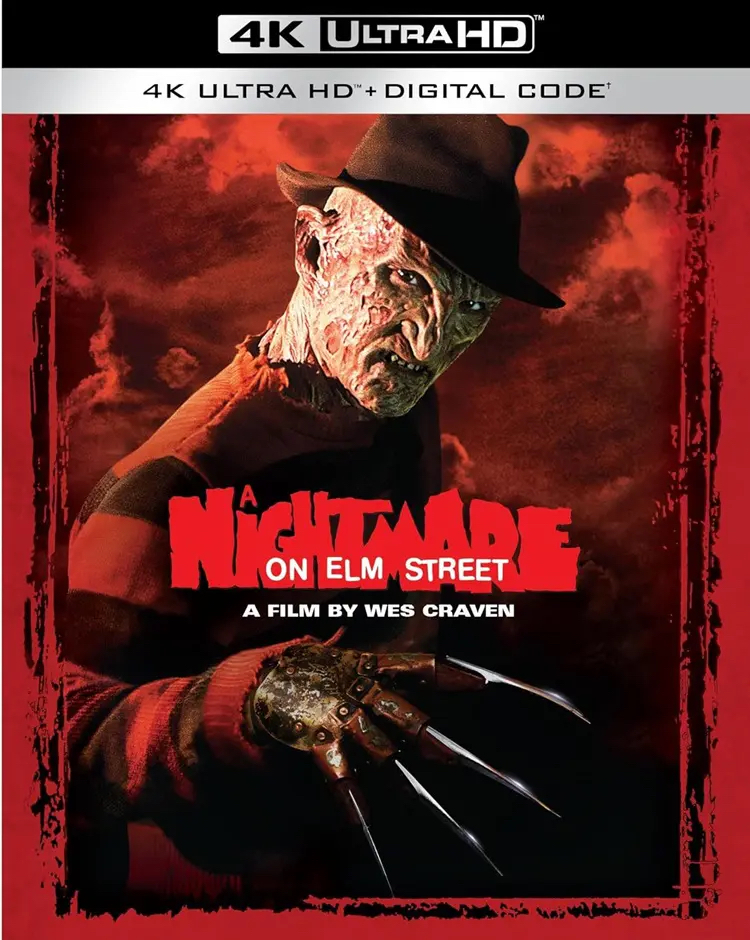
a nightmare on elm street 4K UHD

I recently upgraded to a 4K UHD Blu-ray player. I was pretty late coming to this upgrade. Honestly, I was pretty late buying a Blu-ray player. For someone who claims to be a physical media enthusiast, I just don’t care that much about video and audio quality in my movies.

That’s not entirely true, if you gave me the choice between playing a badly degraded copy of a film and a newly restored Ultra High Definition version of the same film I’d go with the quality. But I’m not going to not watch a film simply because the video quality might not be the best that is available.

If I’m being honest, though, I’ll likely not purchase a great many 4K UHD discs, unless they are on sale for a very good price. I still buy DVDs because I’m a cheap bastard.

If I might be honest again, I only bought a UHD player because I review physical media for Cinema Sentries and increasingly it is 4K UHD discs that are available.

That is, perhaps, a strange way to introduce my review of the new 4K UHD release of A Nightmare on Elm Street. It is a very good film, a great horror film and it has never looked better. Every time I watch these UHD discs I am duly impressed with the quality of the video.

Getting to see Freddy Krueger and his nightmare-induced kills is a fantastic way to further my Halloween Season viewings. You can read my full review here.

31 Days of Horror: The Invisible Woman (1940)

the invisible woman poster

The original The Invisible Man (1933) is a classic Universal Horror picture. It was followed by a sequel, The Invisible Man Returns in 1940. The sequel stays pretty close to the original in that it is a serious dramatic film with horror undertones. It is also very much a sequel in the sense that one of the characters is the brother of the original film’s Invisible Man and the plot follows it chronologically.

The Invisible Man Returns was a success and so Universal immediately put a third film into production, also releasing it in 1940. But it is a sequel in name only. None of the plot has anything to do with the first two films and the characters are unrelated. Gone, too is the serious tone of the first films and instead, this plays as a very broad comedy.

Professor Gibbs (John Barrymore) has created an invisibility potion but he needs a human test subject to make sure it works. Naturally, he puts an ad in that paper (as one does) and Kitty Carroll (Virginia Bruce) answers the call. She’s less interested in scientific progress and more interested in being able to give her sexist, slave-driving boss a good kick in the pants without being fired. The experiment works, Kitty turns invisible and she gives her boss a literal kick in the pants whilst making him understand he needs to treat his employees better.

Meanwhile, a gang of criminal stooges (including one real-life Stooge – Shemp Howard) have learned about this invisibility experiment and decide to steal it for their boss who is stuck hiding out in Mexico. They steal the invisibility machine but don’t understand how to make it work. They try it on the biggest, meanest stooge and only manage to make him speak in a high-pitched voice.

Hilarity ensues whilst our heroes save the day. Because this is The Invisible Woman and one must remove your clothing in order to be fully invisible there are quite a few 1940s-era jokes about how unseemly the whole thing is. The film is full of jokes you could sit around with your grandfather laughing about. It is a light, forgettable, but more or less enjoyable film. But I did find myself hoping the next film would take itself more seriously.