For Whom the Bell Tolls by Ernest Hemingway

for whom the bell tolls

What can I say about Ernest Hemingway’s 1940 masterpiece For Whom the Bell Tolls?

Read It.

I’ll have to give it a little time to settle, but I suspect this novel will officially enter my favorite top 10 novels of all-time list.

It is written in Hemingway’s usual terse style. Descriptive adjectives are few, replaced by verbs. Lots of verbs. This is not to say that it is a book filled with action. For, in fact, much of the novel consists of waiting, sitting, and talking. In the nearly 600 pages, there are only three scenes of real action: Pillar’s retelling of the beginning of the revolution in her town; El Sordo’s last stand, and the bombing of the bridge. The remaining pages consist of the relationships between those involved in the war.

The war is the Spanish Civil War of 1936-1939. Instead of focusing on the larger aspects of this war, Hemingway decides to focus on a single guerilla outfit fighting against the fascists. The main character is Robert Jordan, an American Spanish professor, who has volunteered to fight against the fascists as well. He has been ordered to destroy an important bridge and enlists the guerilla band of Pablo. In doing so, he details the experiences of the average, normal citizens of a country fighting for its destiny.

With the exception of World War II stories, most retellings of war, come from a perspective that all war is terrible and unjust. Here, Hemingway shows not only the horrors of fighting a war but also the sometimes necessity of it. Yet, he is also able to show the confusion of its participants.

Anselmo, a trusted companion of Jordan, midway through the novel ponders what he would be doing had he been raised with fascist ideals. He truly believes in what he is fighting for but realizes that under different circumstances he would be fighting on the other side of the lines. Many wars are fought by soldiers without any true sense of the ideals behind them. For Whom the Bell Tolls is often called a novel on the death of ideals. And it is true, nearly every idealized truth that is held up by the band seems tarnished and destroyed by the novel’s end.

It is impossible, within the confines of a review, to fully expound upon the greatness of this novel. It is a piece of literature, of art, that should be read, reread, studied, and made mandatory reading for every human being.

Read It.

The Big Sleep (1946)

the big sleep poster

This classic film noir has very few of the characteristics generally associated with noir. It contains no skewed camera angles, it is not overcome with murky, obscuring shadows. The hero is not down-and-out, poor, or desperate. There is no retrospective narration or flashbacks. Yet, The Big Sleep is widely considered to be one of the very best of the genre. It is a cynical, perverse, murderous world filled with loads of confusing action, and unknown motives. It is, in fact, one of the great films from one of the screen’s greatest actors, Humphrey Bogart (for my personal top 10 actors list, click here), and its most talented directors, Howard Hawks.

Hawks was fresh off of the successful pairing of Humphrey Bogart and Lauren Becall in To Have and Have Not (1944). The two star here again and it is easy to see why they made another two films together. Based on a Raymond Chandler novel of the same name, many people complain that this film is incomprehensible. Somewhat famously it is reported that Bogart and Hawks, after arguing over who killed one of the characters, called up Chandler to get the correct answer. Chandler didn’t have the slightest idea, for the novel is rather vague on this point. It’s true that both the novel and film leave many plot points as to who did what to whom more than unclear, but there is so much style in both that it’s hard to make a convincing argument against them.

A good deal of the confusion within the film comes from the production codes in effect at the time it was produced. Chandler’s novel deals with murder, homosexuality, heterosexuality, and pornography. At the time, these things were deemed unfit to show on a movie screen and so Hawks had to hint at them using various subtle methods. For instance, when Carmen Sternwood (Martha Vickers) is found by detective Phillip Marlow (Bogart) in the novel she is completely nude and sitting posed for a hidden camera. Since pornography is explicitly against the code, in the movie she is dressed in a silky, Japanese gown. There is still a hidden camera, and its missing film becomes a catalyst for much of the action in the film. We must infer from the exotic nature of the gown that there was more than just pictures of a woman in a gown going on. There are many similar instances in the film like this. For an audience member who has not read the book, they must pay close attention to the subtext, or the film will seem baffling.

Personally, I am very much a fan of the book, and all of Chandler’s work. While I appreciate that some of the finer plot points are a bit vague in this film, I also understand that the film succeeds not in the details of the story, but in a sinister sense of style. The film oozes with a dark, disquieting atmosphere. Nearly everyone Marlowe meets is hiding something and is of less than upstanding moral character. Hawks does a great job of keeping nearly every scene in the dark or in the rain, or both. There are so many characters coming in and out of the shadows with their own shady character that it is difficult to keep up.

Bogart, of course, does a marvelous job as Marlowe. He seems to understand a lot more information than the audience is ever given. Chandler wrote Marlowe as a detective who sticks by his own set of morals, remaining somewhat of a noble creature trying to stay afloat amongst the muck and sewers of the city. Lauren Bacall does a very good job portraying Vivian Sternwood Rutledge, in a role that is much different than the one in the book. Like many films from this era, they create a romance that wasn’t really in the source material. I don’t mind though, because Bogart and Bacall really sizzle.

What can I say that hasn’t been said before? This is really classic noir at its best. It’s got Bogart and Bacall. It was directed by Howard Hawks, and written by William Faulkner from a novel by Raymond Chandler. What more could a lover of classic cinema want?

Harvey (1950)

harvey movie poster

Towards the end of the 1950 film, Harvey, Elwood P Dowd (played by James Stewart in an Academy Award-nominated role) says this:

“In this world, you must be oh so smart or oh so pleasant. Well, for years I was smart. I recommend pleasant.”

It is a memorable line and one that sums up the film quite well. For the picture is filled with lots of smart people, and a few pleasant ones. It, in fact, seems to be the film’s central theme. Dowd is an alcoholic and mentally ill, all of which creates quite a disturbance throughout the film, but is ultimately washed over because he smiles a lot, allows others to pass through the door first, and speaks in a gentle, even voice.

Perhaps I’m being too unkind myself, it is after all a harmless comedy, slapstick and all. At that, it fairs well enough. The catch of the film, if you’ve somehow managed to not hear it before in the 55 years since its release, or forgot to look at the picture on the front of the DVD box, is that Dowd’s best friend happens to be an invisible 6-foot rabbit, named Harvey. Much of the film’s humor, and a great deal of its heart, come from that rabbit, which the audience never sees.

The conflict comes from Dowd’s sister, Veta Louise Simmons (Josephine Hall), and her daughter Myrtle Mae (Victoria Horne). They have grown tired of Dowd’s antics with Harvey, and the embarrassment of having such a relative has caused untold grief for their social positions. Early in the film they decide to have Dowd committed to an insane asylum. Slapstick ensues when Verta is mistaken for the crazy one.

I found it to be a fine, humorous film. All of the cast members are firing on all cylinders and create a wonderful ensemble cast. Stewart and Hall are particularly fine as Dowd and his sister. The jokes work well enough, at least they are not particularly unfunny, and are pleasant enough. I think this is where my complaint comes in; it is all just too pleasant. Even the Simmons’ are rather sweet and kind while they try to put Dowd away.

It was slightly disturbing to me to watch a man with an obvious mental illness be touted as the film’s hero and a character that we should all emulate. But again, I’m probably being too unpleasant. I realize that the film is more Peter Pan than Awakenings in this aspect. For Harvey seems more fantastical than a hallucination, but Dowd never once hints that the giant rabbit might not be real. I know, I know, I’m being too much the tired cynic at this point. Dowd did give me the same brief desire for improvement that Atticus Finch give me while watching To Kill a Mockingbird. Though Finch never spotted giant rabbits, just a black man served more injustice.

It is difficult to complain about a film that really just wishes we would all be happy and kind to one another. Indeed a brief search of the IMDB’s user comments finds an agreement with everyone that this is a wonderful, joyful film.

It is a heartwarming film, which only managed to kindle a low flame in my heart. This is a weird feeling. It is as if I feel the chastisement of a million fans calling me a cold-hearted son of a sailor. It just failed to make me laugh enough, or move me enough to declare it wonderful. While I don’t have any hard complaints about the picture, it is not something that I’ll be placing on any top films list.

Google News

I wrote my first piece for Google News today. Let me explain. I’ve been writing for Blogcritics for a couple of months now. Mainly I’m posting the reviews I write there over there, but there have also been a couple of music essays as well. Many Blogcritic authors also write on current events, such as the Michael Jackson court case, the new Pope, or whatever happens to be going on in the world. A lot of those posts are picked up by Google News which is subsequently picked up by just about everybody.

I’m not really cued into any current situations of the world, thus I’ve stayed away from posting anything. Until today. I just heard that Dark Star Orchestra’s keyboardist recently passed away and felt moved enough to write about it. I must say that I’m not particularly a huge fan of the band, but I know enough people dig them that it is newsworthy. I feel a little opportunistic in taking a tragedy and using it to put my name a little further into cyberspace, but I suppose that’s the breaks. I guess, really, I happened into this information and realized it had not been posted on Blogcritics, so I took that opportunity. Read my post here (sorry the link is no longer valid).

Everything Is Illuminated by Jonathan Safran Foer

everything is illuminated

On the back cover of my copy of Jonathan Safran Foer’s novel, Everything Is Illuminated, it says that it is “a work of genius,” and for lengthy sections of this debut novel, it really is, but ultimately his lofty ambitions are not fully met by his pen.

Ambition is something this book has in spades. It is a complicated, heady novel whose narrative stretches, bends, and breaks. It is really three stories tied together by a small Ukranian village whose past is linked to several characters’ destinies.

The first story involves the history of that village as far back as 1791 and moving forward until it was horrendously destroyed by the Nazi party. The second story consists of a character named Jonathan Safran Foer, an American searching for a woman who lived in the village of Trachimbrod, and who may have information concerning his grandfather. This story is told by his Ukranian guide, Sasha, in hilarious broken English. What makes up the third story are letters from Sasha to Jonathan detailing bits of his own life and commenting on the other two stories. All three stories are intermingled with one another giving an odd sense of both being off-kilter and well balanced.

Adding to the ambitiousness of the three intermingled stories is a peculiar use of the typed page. The titles of chapters often swirl, curve, and dance off the page. There is a gratuitous use of ALL CAPS, pages that are indented well beyond the others, and even several pages consisting almost completely of ellipses (…). All of which is designed to give meaning and an emotional response. It is mostly effective in doing so, though at times, it seems a little too showy as if the author is jumping up and down waving his hands shouting Hey look….THIS IS ART.

The central story of the city is silly, hilarious, sometimes moving, and mostly an outlandish caricature of ancient Jewish life. It is also more standard in its narrative. It is a straight-told story, using the typical use of type setting. It creates several moving pictures of Nazi atrocities in the town, though anyone not being able to create emotion out of the holocaust is a poor writer indeed.

The remaining stories are also quite interesting, humorous, and moving. There is a lot being said about our concept of perceptions and truth. Several things that Sasha tells us in the beginning about himself, he later admits to be false. Just as he details that he will make changes to his story that Jonathan requests due to putting him in a negative light.

It is not a novel that I would consider to be enjoyable or an easy read. The narrative structure as well as the type structure is often difficult and confusing. While it is a novel showing a great deal of talent in its author, it never quite lives up to its hype or ambition. Though there is much to admire it is well worth the time to read.

Slaughterhouse-Five by Kurt Vonnegut

slaughterhouse five

On February 13 and 14, 1945 US and British troops firebombed the non-military German city of Dresden, killing somewhere between 35,000 and 135,000 civilians. In 1969 Kurt Vonnegut, Jr. wrote about his experience as a prisoner of war in Dresden during the bombings in Slaughterhouse Five. It is a beautiful, hilarious, bizarre, horrifying novel. Or your average Kurt Vonnegut book.

It is a true Vonnegut novel in that it isn’t straight fiction. Who else would write a novel about a firebombing that includes a time-traveling, alien abducted, hero that barely says a word about the actual firebombing? In his introduction, the author describes how it took him several years to be able to write his Dresden book. He visits fellow witnesses, drinks lots of booze, and generally has a rough time of it. Then he proceeds to tell us exactly how his story begins and the words that conclude the novel. It is as if the narrative itself isn’t important, but rather its underlying themes and ideas.

The narrative itself involves Billy Pilgrim, a bumbling, incompetent replacement soldier. He started the war as a priest’s assistant but finds himself being moved closer to the front. He doesn’t manage to get far before he is captured by the Germans, and sent to Dresden. Mixed in with this simple narrative is Pilgrim’s abduction by aliens and his ability to travel through time, albeit without any type of control. The novel weaves through periods of Pilgrim’s life. From the war, to what would be called the present, to the future where he spends his time in an alien zoo making love to a dirty movie star. This is dusted with a dry philosophy that time is meaningless and individual destiny is a myth. What happens happens, and so it goes.

It is a breezy, novel written in a seemingly stream-of-conscience style. But one shouldn’t let the novel’s ease of reading confuse it with a simple throw-away novel. No, Vonnegut obviously spent a great deal of time and skill crafting a novel that is deceptively simple, yet serves a thick plate of ideas. It is written in the third person from Vonnegut’s own point of view. Several times the author stops and lets us know that the character he has just described, or quoted is, in fact, himself.

The firebombing of Dresden itself is given but few details. We see the bombing as Vonnegut himself did, from underground in a shelter. The little we do see is the aftermath, the rubble and destruction. But the massacre is never far from the author’s lips. While detailing the adventures of Billy Pilgrim, whether marching with fellow soldiers, en route to Dresden via putrid trains or sitting naked on an alien planet, we see the end, we can almost smell the charred masses after the bombing.

It is an anti-war novel that doesn’t wear its position on its sleeve. There are many moments of laugh-out-loud hilarity. It is read so fluidly that it is hard to stop during the more poignant moments to feel the sting of emotion. There are no gung-ho moments of war bravado. There are no heroes to be found in the novel, and as Vonnegut says in the introduction, “There are almost no characters in this story, and almost no dramatic confrontations, because most of the people in it are so sick, and so much the listless playthings of enormous forces. One of the main effects of war, after all, is that people are discouraged from being characters…” It does give us a moving portrait of your average soldier fighting a war he doesn’t understand, seeing atrocities he cannot comprehend. Yet somehow he (and we) are supposed to continue living our lives as atrocious massacres are somehow normal, acceptable things.

And so it goes.

The Messenger: The Story of Joan of Arc (1999)

messenger the story of joan of arc poster

What happens when you take a talented French director, his model/singer/actress wife, and one of the greatest actors of the 70s, and make a movie about one of the most renowned saints of France? You get a giant mess is what. The Messenger: The Story of Joan of Arc is loaded with lots of talented people, is filmed gorgeously, and is mostly a lousy, muddled film.

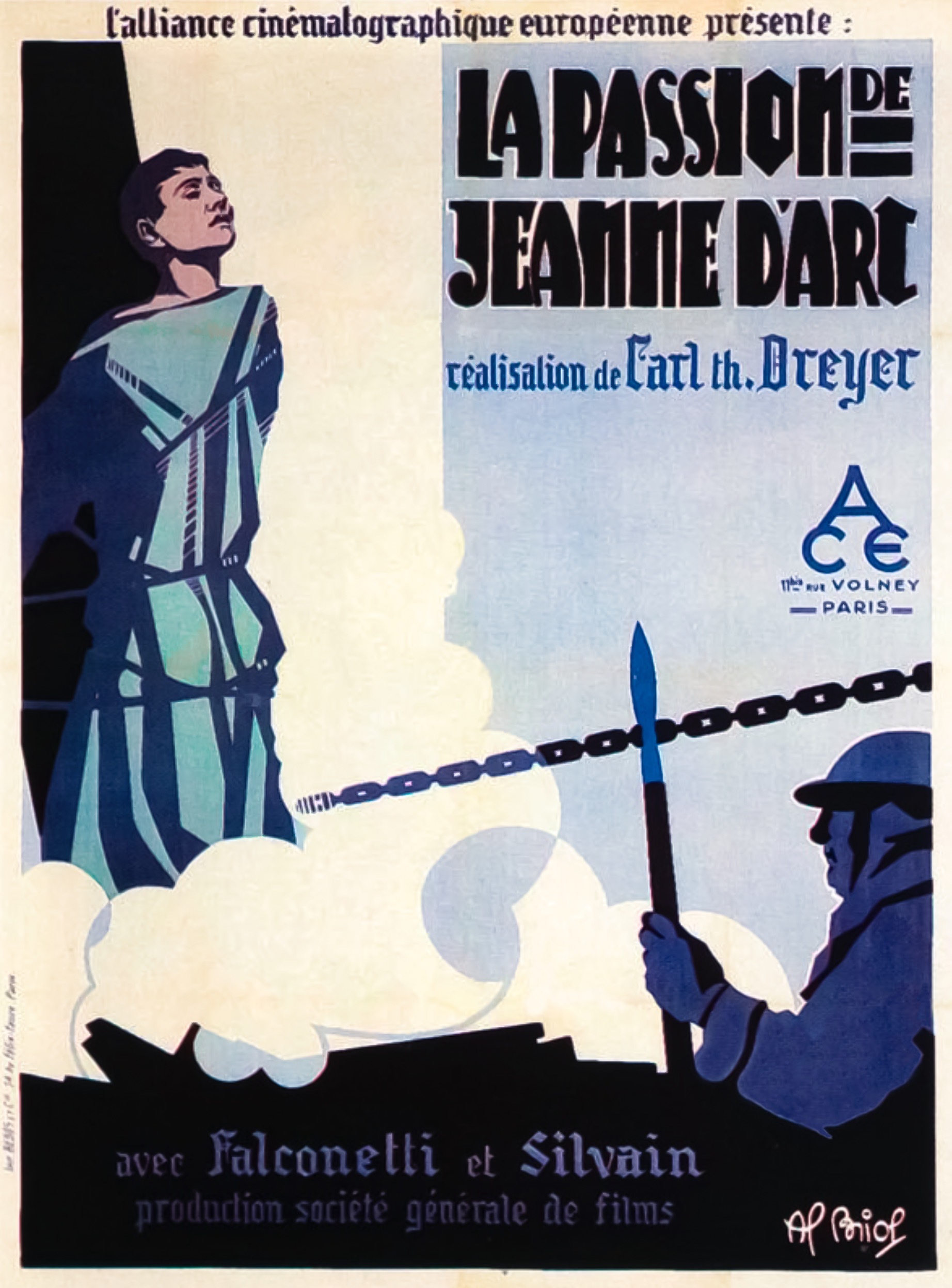
The story of Joan of Arc (or Jeanne d’Arc as they call her in France) is well known just about everywhere. Joan is a poor peasant living in a small village in France during the Hundred Years’ War with England. She begins seeing heavenly visions that tell her she is God’s messenger to rid her country of the bloody English. Somehow she convinces Charles, the Dauphin with visions of being king, to give her an army to storm Orleans. Using unconventional methods she leads her army to victory. The Dauphin is crowned king and mostly forgets about Joan. She leads an unsuccessful siege on Paris is given over to the English, tried and burned at the stake, several hundred years later she is sainted by the Catholic church. The Messenger covers most of this relatively faithfully, and beautifully.

Luc Besson is a talented director filming such classics as Le Femme Nikita (1990) and The Professional (1994). His talent is presented here in his ability to create interesting and beautiful shots but is lost in creating a cohesive story. He doesn’t seem to know what to do with the story about the young saint. In parts, it seems earnest in its recreation of this revolutionary with heavenly visions, but then it sinks into a near parody of itself and in the end sinks towards a reinventing of the events themselves asking Joan herself whether or not her visions were real or mere psychosis.

Milla Jovovich is a pretty face who has mostly been in forgettable, silly comedies and the Resident Evil franchise which might as well be considered a silly comedy for all its worth. Here, she has two modes of acting, a strange amphetamine delivery of her lines as if she couldn’t spit them out fast enough, or a snarled scream as if acting was merely being the loudest person on the set. It is not a nuanced performance. For the entirety of the film, she seems completely out of place.

The battle of Orleans is tame at best. There are virtually no scenes of real ambitious spectacle. We are given nothing to inform us of her revolutionary forms of combat. Instead, her method seems to be screaming a lot and jumping a horse over the enemy’s fence. Later the storming of Paris is so humorous it is sad. Joan screams and screams that she needs backup while a few soldiers randomly knock on what must be the Paris gates. These soldiers are so bewildered a pathetic looking they seem more out of a Monty Python sketch than a serious film about war.

Beyond the visual elements, the only saving grace is Dustin Hoffman’s performance as the Grand Inquisitor or Conscience. It is a fine performance from a fine actor, but it is a peculiar character. He spends his time questioning Joan’s own sanity. Could her visions in fact be some form of psychosis or fantasy? Could crucial moments in her life like finding a sword in a field in fact be a simple coincidence? Good questions in the history of the real Joan of Arc, but they seem out of place here. Nowhere in the film are we led to believe Joan is nothing but the real thing. Why bring these questions into play during its climactic ending?

The film would have worked much better by believing wholeheartedly in Joan’s purpose and vision. Or questioning her visions from the beginning, a revisioning of the myth could be very interesting. Instead, it kicks its legs out from under itself by bringing her into question so late in the film.

What we get in this portrayal of Joan of Arc is some pretty visuals and a fine performance from Dustin Hoffman. Try renting one of Luc Besson’s earlier films and pick up anything from Hoffman’s heyday in the 70s, they will be worth your dollar and your time far more than anything thing to be found here.

The Village (2004)

the village poster

The problem with most thrillers is that once you’ve watched them one time, there is nothing left to thrill you. Too many of these films spend all of their creative energy trying to give the audience a scare. The best directors of the genre create truly great films, which just happened to give the audience a scare. While M. Night Shyamalan is an excellent craftsman, he tends to be unable to elevate his films into the realms of true cinema. The Village is no exception.

The story centers around a small village that seems to be set in the later part of the 1800s. The Villagers have worked out a complicated deal with strange creatures (“Those We Do Not Speak Of”) lurking in the near woods. Problems arise and the long-held pact begins to break down. This causes there to be a need for one of the villagers to venture through the woods into the larger towns.

The biggest problem with The Village and the last several of Shyamalan’s films is his surprise endings. I read somewhere several years ago that he didn’t want to be pigeonholed into doing the same supernatural-type stories with a twist ending. I wish he had kept to his word. Instead everyone goes into the theatre expecting, waiting on the surprise at the end. This is a distraction taken away from the whole of the film; it is a gimmick that has run thin. A truly surprising ending for the director now would be no surprise at all.

Where Shyamalan excels is his Hitchcockian use of suspense. He understands that some of the best thrills come not from something jumping straight out at the audience, but from what we don’t see. It is a long time in the Village before we see “The Things We Don’t Speak Of” and even then we only catch a glimpse. For Shyamalan understands that our imaginations are more powerful than any piece of costuming or CG effect. There were, in fact, several moments during my first viewing of the film that had my hair standing on end. These were tense, beautifully paced moments.

The film also creates a masterful sense of mood. The color scheme, set design, and costuming are all top-notch. They give the film a true sense of paranoia and suspense. The acting, for the most part, is quite good. This is not surprising considering the cast is made up of the likes of William Hurt, Sigourney Weaver, Joaquin Phoenix, and Adrian Brody amongst others. There are several interweaving human stories set amongst the supernatural tale, some of which are quite moving. Yet it is the supernatural aspect that shines brightest, and ultimately, falls flat upon subsequent viewings. Watching the film a second time, knowing the surprises, I felt a tinge of boredom. The story no longer captivated me as it did the first time. Knowing the truth, there were too many plot points and character actions that seemed false, or self-serving.

It is a film worth a first viewing. Shyalaman is a true talent, and I look forward to his next film. In a sense, The Village is really two stories. One is a suspenseful tale of creatures lurking in the dark, and the other of a quaint village dealing with extraordinary circumstances. I believe the fault lies in the merging of the two. The suspense doesn’t hold up under subsequent viewings. It does not serve the other aspect of its story. Likewise, the more human story is broken apart too much by the mystical aspects

Cape Fear (1962)

cape fear poster

Gregory Peck is so linked in my mind to the simplicity and grace of Atticus Finch in To Kill a Mockingbird, that it is always surprising to see him in anything else. To find him in the gritty, dirty piece of film noir that is the original Cape Fear is something of a shock. Yet, as always he does a marvelous job, and some of that grace manages to shine through the grime.

The story is a pretty basic noir plot. Max Cady (Robert Mitchum) is an ex-convict who just got out of prison. He has come back to town to haunt Sam Bowden (Gregory Peck) who testified against Cady for attacking a woman. Cady has spent his time in prison studying the law. He manages to terrify Bowden and his family and still remain within the confines of the law.

Though Peck gets top billing, this is truly Robert Mitchum’s film. He plays Cady with a swagger and menacing smile that is simply magnificent. We can see inside his swarthy confident charm and see the evil, menacing psychopath. The brilliance of the role is that we rarely see the violence that hides just behind the mask. Yet it seethes and oozes out, ready to strike at any time.

Director J. Lee Thompson keeps the tension pumping throughout the 105-minute film. There is hardly a moment to relax before something else occurs to tense us right back up. Yet the tension doesn’t come from boogie men jumping out from behind closets. It is a slow, boiling tension that tightens as we imagine just what might happen. When the climax finally does occur it is almost a letdown.

The censors wouldn’t allow the bloodbath one might expect at the end of such a film as this, and so what we do get feels less exciting that I wanted.  Still, getting to the end is well worth the watching.

Funny Face (1957)

funny face poster

I hate to admit that it was a pop song that made me fall in love with Audrey Hepburn. It was the spring of 1996 and Deep Blue Something’s “Breakfast at Tiffany’s” was all over the radio. One dull afternoon in the life of a college student, a friend of mine admitted that she had actually never seen the film. I sheepishly admitted the same, and we went straight out and rented it. I immediately fell madly in love with the style, class, and beauty that is Audrey Hepburn. In the many years following, I have done my best to nurture that one-sided love, and try to watch any film with Ms. Hepburn when I get the chance. Recently I sat down and watched Audrey and Fred Astaire in Funny Face.

It is a film that is notable for being a musical in which Audrey actually sings. A feat she was famously not able to duplicate in My Fair Lady (1964). It is a soft, kind sort of voice a simple boy could fall in love with, but one can see why Mr. Cukor opted for another one to sing for Eliza Doolittle.

The Gershwins have once again created some wonderful songs. Mixed with exuberance, humor, and a sweetness that no other songwriter has ever matched, George and Ira created some of the world’s greatest songs. The stand out here is the simple sweet closer, “S’Wonderful,” but “How long has this been going on?” and the title number are just lovely. Ira’s silly, unbelievable rhymes are in full order here as well. In “Bonjour Paris” he manages to rhyme the philosopher Jean-Paul Sartre with Montmartre.

Being not only an Audrey Hepburn picture, but also starring Fred Astaire, there are plenty of dance routines. Only one number is what I would consider exceptional and that is a number between Hepburn and Astaire while photographing a wedding scene outside a lovely French church. The setting is beautiful (though shot in soft lighting for some reason) and the routine flows beautifully and with much charm.

The plot as it is, centers around Hepburn playing a bookish, intellectual named Jo Stockton, and a women’s magazine photographer, Dick Avery (Astaire) trying to convince Stockton to pose for him. She agrees only as a ruse to go to Paris and meet the inventor of a new philosophy, empathicalism. Of course, they fall in love. There is nothing really new or all that interesting in the story, but it is set in Paris which gives it some very beautiful backgrounds in which to tell it.

Call me a heretic, but I’ve never been much of a fan of Fred Astaire. He has a fine singing voice, and his dancing is always excellent, but there is something about him as an actor and leading man that rubs me the wrong way. He does a decent job here, but ask me who I’d prefer to see play opposite Audrey and I’d choose Bogart, Cooper, Peck, or Grant any day of the week over Astaire. (Editors Note: I no longer share this opinion with my younger self, I love Fred Astaire (Mat, March 2023).

Funny Face is a fun, harmless musical. The Gershwin tunes are a pleasure, the story is…well, fodder for the songs and dance numbers, but fair enough for what it is. But the real reason to watch the picture is the one, Audrey Hepburn. While I am embarrassed that it took a silly pop song for me to see the light around that graceful woman, I am forever grateful for that three minutes of bubblegum, for it gave me the joy that is Audrey.