American Beauty (1999)

american beauty poster

The first time I saw American Beauty it was the last in a three consecutive weekend movie run. The other two films were Fight Club and Bringing Out the Dead. All three films are about men trying to come to terms with what it means to be a man in America in this day and age. Fight Club finds meaning in deconstructing everything down to basic needs, and feeling through pain. Bringing Out the Dead gives meaning to its character through drug use, (Editors note: that’s totally not what these films are about – I totally missed the points when I wrote this) but it was in American Beauty that I found some sense of hope.

In the film, Lester Burnham (Kevin Spacey) plays a middle-aged, middle-class suburbanite, with seemingly everything he could desire. He has a good, well-paying job, a beautiful wife (Annette Bening), a large luxurious house, and a lovely daughter (Thora Birch). Yet, with all of this, he is not happy. In fact, all of these things are not quite what they seem. His employer is facing cutbacks, and he may soon lose his job. His marriage is in shambles, and his daughter openly hates him. Early, we see him masturbating in the shower – in a voiceover he states this is the high point of his day. All is not well in the house of Burnham.

All of this changes when Lester meets Angela (Mena Suvari), his daughter Jane’s gorgeous, cheerleader friend. On first seeing Angela during a cheer routine, Lester feels a special, lustful connection. Later that night, Lester overhears Angela playfully telling Jane that if he would only work out, he would be sexy. His lust over this teenage vixen becomes the catalyst for the film and Lester’s very life.

Soon after Lester quits his job, in fact, he bilks the company for a year’s salary by threatening to disclose scandalous information that he has become privy to. He begins smoking pot, and buys a hot rod. He plays with remote control cars, takes a job at a fast food joint, and starts working out. In every way, he reverts back to his teenage years. Even the soundtrack begins blaring out classic rock tunes from the 1970s. Finally after years, decades even, of feeling low, miserable, and not alive, he feels great.

This reversion back to his glory days is only the beginning. It is a reversion back to the days when he had fun when he felt alive. But he is not a man who will stop there. This is just the beginning point to a lifelong conversion of living a full life, as opposed to a life full of the right things, but that is ultimately empty. Or it would be if he was not shortly dead (this is not nearly the spoiler you might think it is, for Lester announced his death within the first minutes of the film.) Toward the end of the film, we can see that Lester is already outgrowing his childish behavior. When he yells at his daughter, he immediately feels the sting of regret. When given the chance to indulge in his lusts, he backs away, understanding that it is not right. Just as the music changed to classic rock with the first change, here it has changed again, turning into the same classic rock being covered by newer, contemporary artists.

Many will probably say that using the lust for a teen, and illicit drug use as a catalyst for change, is not a change for the better. I can already hear my mother scolding me for having seen the movie, much less reviewed it from 2,000 miles away in Oklahoma. Yet, here it works and works well. I don’t believe the film is saying that these things should be the means to a change, these things only served as means for this character to break free from the rut that had become his life. There is a telling scene where Lester and his wife are overcome with sexual desire. As he dips his wife to kiss her, she stops the embrace because he is near to spilling his glass of wine on an expensive couch. An argument ensues with Lester proclaiming that “it’s just a couch,” while his wife is horrified at the thought of ruining said couch. There lies one of the central themes of the film. That these characters are so wrapped up in the material that they lose sight of the better pleasure of life, including lovemaking.

It is not a perfect film. The Burnham’s neighbor, Col. Fritts (Chris Cooper) seems a caricatured archetype. He plays a hateful, homophobe who really carries deep-rooted homosexual tendencies. It is too outlandish to be considered real. Though it must be said the part is played marvelously by Chris Cooper. Jane’s speech about being a freak too may move the young kids who consider themselves the nonconformist, shy type, but it is too after-school special for my tastes.

I’ve left out some of the best scenes and an important character, Ricky Fitts (Wes Bentley). He plays the drug-dealing son of Col. Fritts, who likes to record everything on his video camera. There is a moving scene in which he and Jane watch an old tape he recorded of a plastic bag floating through the air. It is a moving, poetic scene that conjures up thoughts of the futility of life and its very beauty. It is that type of movie. It creates beautiful, moving, simple scenes that bring a sense of hope to live, while at the same time, showing the ultimate horror of living it.

The Little Sister by Raymond Chandler

the little sister

Raymond Chandler once wrote that Dashiell Hammett “Gave murder back to the kind of people that commit it for reasons, not just to provide a corpse.” In his essay “The Simple Art of Murder,” he continues to praise Hammett while berating Agatha Christie types who set murders at tea parties and ended them by bringing all the suspects into one room while the detective ran over all the clues before them, causing the killer to jump out and confess. Chandler set out to write Fiction, with a capital “ART”, that it happened to involve pimps, drug fiends, mobsters, and lots of murders is secondary.

It is difficult to review a single work of Chandlers, they all kind of fuse into a sort-of biography for his singular detective, Phillip Marlowe. His novels are very similar, in that they involve the seedier aspects of the city, are all told in the first person by Marlowe, always include various crimes, usually murder, and are filled with an assortment of double-crossing, corrupt folks. But, novels are not the same in the way novels by the likes of Dean Koontz or Mary Higgins Clark are the same. Where they seem to have a dozen storylines and can simply fill in different character names and settings. No, though Chandler’s stories are similar in many ways, they differ in the means by which they are told. Like the way snowflakes look the same in one drift, but upon observation are each different. Or the way in which dollar bills are the same aesthetically, but are spent in a million different ways. Chandler’s writing sparkles amidst the slums and degenerates he writes about. His dialogue sparkles as Marlowe’s sarcasm cracks your lips into a smile.

The Little Sister starts with a little nebbish girl, from nowhere-Kansas who asks Marlowe to help her find her brother. From there the plot involves Cincinnati mobsters, Hollywood agents, starlets, and a few ice picks sticking out of a few necks. As always, Chandler’s plot gets very complicated very fast. The joy of the novel is not in trying to figure out who is who, and who did what, but in the way Chandler lets the mystery unfold. The murders are always at the center of the story, but there is something else hanging near, something more akin to great literature, than dirty detective stories.

By the time he wrote The Little Sister, Chandler had written several screenplays for Hollywood pictures. He seemed to not like the experience one bit. There is plenty of cynicism directed toward Tinseltown here. The agents are like kings who will sell souls faster than Doctor Faustus and the starlets are empty, callous girls who sell sex like McDonalds sells French fries.

Reading The Little Sister was a little sad for me since it is the last Chandler novel that I had not read. There are still his short story collections to look forward to. It feels like the end of an era. His novels still swarm around in my head, and give me hope as a writer. Here is someone who wrote stories, not just to entertain, but to try to find something more-Literature or Art- and maybe, in doing so helped us to understand what it means to be a writer.

Band of Brothers (2001)

Band of Brothers

HBO’s ten-part mini-series on the “Easy” Company’s tribulations during the German invasion of World War II is a grand spectacle, filled with numerous moments of perfection, and begs one simple question. Why can’t the rest of television look like this?

Based on the book by Stephen Ambrose, and produced by Tom Hanks and Stephen Spielberg, the series gives a realistic, gut-wrenching portrayal of Easy Company’s activities from the final stages of their paratrooper training, to D-day, through their major battles up until the end of the war. It spans 10-hour-long episodes (the series opener “Currahee” clocks in at 1 hour, 30 minutes), with each episode focusing on a particular battlefront, and often specific characters. It gives a good portrait of what war must be like to those who actually fight it. It does not shy away from the brutal, ugly reality of combat. It is not just the Saving Private Ryan-like battlefield violence (though there is plenty of that here) but the cold-blooded murder of German prisoners, and the cowardice of boys trying to be soldiers. This is not John Wayne standing gruff and courageous against fascism. Band of Brothers does well to show that not all soldiers were courageous; all were scared, some so much to be rendered useless.

Each episode spotlights one or more of the men. In doing so it gives the audience a chance to view the soldiers on a more personal level, and not just their heroics. While doing so, the episodes also spotlight the types of struggles the soldiers dealt with day to day. While mainly this technique worked, there were a few missteps. Instead of using an entire episode to highlight the medics, I would have preferred those moments to be seen throughout the series. Medics were in constant need while on the battlefront, and to see this in detail, intertwined into every episode, would have served the purpose better. Instead, I would rather have seen another soldier highlighted (Nixon comes to mind.)

Likewise, the Normandy invasion seemed underwhelming. Easy company was part of a paratrooper division that flew over the beaches and fought their way back. Following the company, we miss much of what was the D-day invasion. Instead, we find the soldiers taking out a few machine gun nests. Though this may be historically accurate, it seems disappointing not to see more of what is one of the most significant battles of the 20th century. I suppose I’ll have to watch Saving Private Ryan for that.

These are minor complaints in what is ultimate, an excellent series. It is a joy to see such an excellent production come out of a television series. HBO proves once again that it is at the top of the television game. The networks need to take a long, hard look at their cable competitors and see how they can produce quality productions.

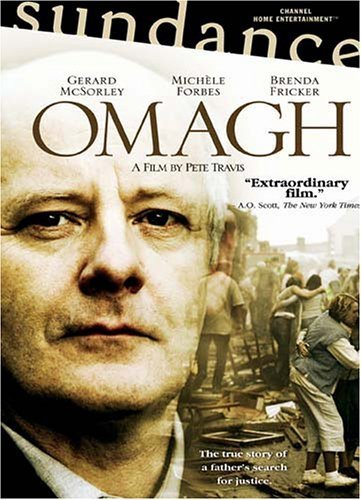
Omagh (2004)

omagh movie poster

On August 15, 1998, a car bomb exploded in Omagh, Northern Ireland killing 29 people and injuring some 220 others. It was the single worst incident in Northern Ireland in over 30 years. In 2004 director Pete Travis filmed a movie about the atrocity and the subsequent investigation. It is a relentless, brutal film that never allows the viewer an emotional sigh of fresh air. What strikes me most about the film, now, is not the quality of the film, which is quite good actually, but that I had never before heard of this event.

Admittedly, I am not the most knowledgeable lad when it comes to current events. When I had a television I would catch one of the morning news shows, and maybe a few minutes of CNN or Fox News just before bed. While in the car I tune into NPR, I receive e-mails from the Washington Post, and generally spend a few moments checking the various news websites. I’m not obsessive about the news, I try to stay mildly informed, but I certainly don’t spend every waking moment turning my thoughts to the state of the world. Yet, here was a huge terrorist attack, followed by a scandalous investigation with a potential cover-up behind it, and I’ve never heard a word about it.

I am sure the news channels mentioned something about it shortly after the bombing. It was probably a short little blurb with a death count. It’s got all the elements they love: terrorists, explosions, murder, and scandal. But, it didn’t happen in America, and European drama doesn’t have the ratings pull as say something stateside, say Michael Jackson’s latest shenanigans. Especially when these events happened in some obscure country like Northern Ireland. Who knew the North of Ireland was a separate country anyway?

In the US we have cable networks that run 24 hours a day, 7 days a week, 365 days a year. There is CNN, Fox News, MSNBC, not to mention specialty networks like CourtTV, and of course, nonnews-specific networks that still employ daily news shows. Yet with all of these outlets, American audiences are still inundated with the same stories over and over again.

It is a big world, with a lot of important events happening, but instead of covering these events, they rehash the current scandal of the week and trial of the century. How did Bill Clinton’s hummer overshadow the murder of 29 people? How did Mark McGuire’s record-breaking homerun sprint become more important than terrorist activity? Certainly, the network news shows give us what we want. Had we received a 3-hour special report on the Omagh bombing I’m sure many of us would have clicked over to Seinfeld reruns. In the end, I’m not scholar enough, nor have the time, to lay out why virtually no one I know has heard of Omagh before. This is a movie review after all. Yet, as I think about the film I can’t help but feel the sting of guilt. When I hear the chattering other others complaining that Americans are full of ego, and don’t have the slightest idea about the world, I must hold my head low and sigh.

The film itself is shot like a documentary, Dogme95 style. It uses handheld cameras, utilizes only natural lighting and there is nary a digital effect to be seen. For 106 minutes it never lets go of its punishing, merciless hold on your emotions. There is no comic relief, no juncture in which to catch your breath and get away from it all. The film brings you in close, lets you feel the tension, and suffocate in the terror. It doesn’t want you to enjoy what you see. This is not a film that allows the audience to distance themselves from the actions on the screen or their very lives. It is a film that cries out, carrying the voices of all humanity that suffers, and that feels injustice.

Though it takes a few moments to adjust to its visual style, the handheld camera work becomes an effective means to bring the audience right into the emotional impact of the film. It loses a little steam in the second half when the main character, Michael Gallagher (Gerard McSorley), a father of one of the victims, begins to lose his way in bringing the terrorist to justice. However, though some headway is lost, the film continues to pack a hard emotional punch.

I am glad that films like Omagh are being made. Though it is a film that will never see a theatre screen in America, it may find its way onto a shelf in the local movie rental house. It is here, that countless Americans may go looking for something a little different, something that they haven’t seen. And it is here that they might learn a little about the world around them.

Three Lives and Only One Death (1996)

three lives and only one death poster

Chilean director Raul Ruiz created a weird, wild, fantastic world with Three Lives and Only One Death. Marcello Mastroianni plays four different characters in as many different stories that at first seem completely separate, but by the film’s end are wholly intertwined. It is beautifully, almost mystically shot, effectively using shadows, light, and computer imagery to create painted-like images. It is a bit confusing, but a wholly satisfying film.

In the first story, Mastroianni plays a salesman who walked out on his wife (Marisa Paredes) twenty years ago. The wife has since found another husband (Feodor Atkine) and is living a seemingly happy life. For reasons left unexplained Mastroianni suddenly decides he wants his old life back. He catches the new husband, at a Tabac and offers to pay him 1,000 francs for an hour of his time.

What proceeds is an imaginative, fantastic tale of why Mastroianni has been gone for twenty years. It is far too complicated to explain here, but let’s say it involves a room with moving walls and tiny fairies who prefer to eat franc bills, but will settle for newspaper. The end of the story finds Mastroianni wanting to leave the second husband in the fantastic room, while he moves back in with his wife.

In the second story, Mastroianni plays a successful professor who, for reasons that are all his own, becomes a beggar, and a rather successful one at that. He befriends a prostitute (Anna Galiena), who he later finds out isn’t all she pretends to be, and whose husband (Jacques Pieiller)is something of a psychopath.

In the third story, a young couple (Chiara Mastroianni and Melvil Poupaud) find themselves being mysteriously supported by an unnamed friend. After months of finding 1,000 francs in their mailbox each week, they learn this mysterious stranger has died and left them his mansion. The catch is they must keep on a peculiar butler (Mastroianni of course) or lose everything.

The fourth story is really a means to tie all three stories together, and yes, it is weird. There is a lot is going on throughout the film. It is visually stunning, complex in story and a delight throughout. It is the type of film that really deserves a second, and third viewing to allow thoughtful absorption of the many details. In what was his second to last film before his death, Mastroianni does a masterful job playing these varied, and interesting characters.

It is a film not meant for everyone. The story is as weird and complex as anything put out by David Lynch. But for the lover of cinema, there is much to appease the appetite. It is a beautiful, layered, surreal film that is a true pleasure to watch.

Austin Powers: International Man of Mystery (1997)

<austin powers poster

It’s hard to believe it has been 8 years since Austin Powers was unleashed on the world. A couple of sequels and far too many “Yeah Babys” later, and seemingly we’ve all had enough. I sat down and watched International Man of Mystery for the first time in a year, a few nights ago. What I found is a pretty solid comedy, which still manages to hold up, even after being parodied to death.

The jokes are no longer wet yourself funny. They are more oh-I-remember-when-this-was-hilarious cute. I did laugh out loud on a few occasions, but mostly I felt a kind sense of nostalgia, for jokes that were nostalgic in themselves. The scenes I remember most, still hold up rather well. The dancing credit sequence and the bits where we almost see nudity are beautifully done. Classics of cinema really.

Mike Myers created a very lovely character in Austin Powers. He is truly charming, funny, and a great send-up of all the classic spy characters. Jay Roach does a very nice job of bringing the manic energy of Myers’s creation to the screen while maintaining the feel of all the 60’s spy films.

Elizabeth Hurley proves once again that she has a pretty face, and looks great in a short, tight, silver skirt, but whose acting skills are less than desirable. Her character’s straight (wo)man to Power’s swinger is the weakest aspect of the film. She is way too boring playing it as a 1990s gal trying to make it as an Agent on her abilities alone. Yet, her transition into a groovy chic is unbelievable and rather insipid.

While watching, I kept forgetting which bits were in this one, and which ones actually belong in the sequels. Here there is no Mini-Me, no Heather Graham, and no references to genitalia when referring to a rocket. Too bad, too, because those are great sources of humor and I don’t have the strength to watch any of the sequels just yet.

Austin Powers: International Man of Mystery is a great film to throw in while having a party. There is no need to see and hear everything clearly. There is nothing, really to analyze. It works well as background filler to supply some hearty laughs when there is a lull in the conversations.

Various Ramblings about U2

In high school, I drove a 1986 Plymouth Reliant. It was a hand-me-downs hand-me-down. From my mother to my brother to me, it had seen more than a few hard miles. But, it was my first car, and for what it was worth I loved it, except when the fan belt made that horrible squealing noise as I was pulling out of school. I had a new tape deck that literally hung in the dash. My father, never willing to spend more than he had to on car repair, decided to install the stereo himself. The new one was a bit smaller than the old one so it left a good half-inch space around the new stereo. I wedged some cardboard underneath it to keep it from taking to many bangs and was good to go.

In those days I had a habit of listening to one cassette over and over again. One month I listened to Paul Westerburg’s 13 Songs nonstop. I had the Doors soundtrack completely memorized, beat for beat, Morrison wail for Morrison wail. There was a several-week period that I listened to U2’s 4 song EP Wide Awake in America and nothing else. Since it is so short it contained the same music on side B as on side A. I didn’t care, I loved every moment of it. It was also just long enough to listen to the entire EP in one drive to school.

During this same period, I began driving one of my sister’s friends, Amy, to school with us. She was a pleasant girl and lived close enough to me that I didn’t mind picking her up. Two or three weeks went by like this: driving Amy to and from school, me listening to the same four songs over and over again. One afternoon we loaded into the car after school ready to head home. At that very moment, I decided I was tired of listening to U2 and ejected the tape after half a verse of Bad.

“That was a tape?” Amy asked.

“Of course, it’s a tape. We’ve been listening to it repeatedly for the last several weeks.” I replied.

“Well, I thought the radio was playing that song a lot.”

“Yeah, and playing it at the exact same moment in the afternoon that we left off in the morning. That’s nice of the radio station to do that for us,” I joked.

I think she was a little more than embarrassed.

————

That particular song, “Bad”, is a particular favorite of mine. It’s got a cool, elevating jam in it on the live version. It sparkles like the stars in the sky. Truth be told, it is the main reason I listened to the EP over and over again. It’s got some great, mysterious lyrics.

There’s a great story about the band playing some awards show way back when, and Bono spends their entire slotted time trying to get a fan on stage with him. The band keeps playing the riffs, and security keeps trying to stop the fan from climbing the stairs. And there is Bono, world savior, persuading the fan to come up with him. Meanwhile, everyone else is begging him to come back and sing the song. Minutes roll by, the band’s time slot is almost up, and they haven’t even finished this one song yet. Something like 8 minutes roll by, their entire time slot, and Bono is still trying to get this one fan on stage. Finally, security lets up and the girl runs onto the stage, into Bono’s arms. There he is, one of the biggest rock stars around and he’s hugging a fan. Bam! Superstardom forever.

The song doesn’t have a proper chorus. There is a repeated refrain, but its lyrics are obscure. I listened to that song a hundred times and I could never figure out what he was saying.

I’m Wide Awake
I’m Wide Awake

But after that, it was just a mumble. I was sure it was a powerful, amazing lyric, but I could never penetrate its meaning.

One day, months after keeping the tape in my deck for weeks on end, I threw the tape back in my player. Cruising the Oklahoma back roads I cranked it up.

If I could, yes I would
If I could, I would
Let it go

Bono sang. The Edge jangling his guitar, the music crescendos higher and higher.

If I could through myself
Set your spirit free
I’d lead your heart away
See you break, break away
Into the light
And to the day

To let it go
And so to fade away
To let it go
And so fade away

I’m loving it. It’s a perfect summer day. My windows are down, my left arm soaring out the window. The road is untrafficked by other drivers, and unwatched by the cops. There are a series of hills we used to call “the Rollercoaster” because they dipped and rose like an amusement park ride. I used to take them real fast and try to get some air between the road and my tires. Life was good.

I’m wide awake
I’m wide awake

And then it hit me. Out of the clear, blue sky, I suddenly knew what he was singing. It made perfect sense, and fit perfectly with the previous couplet. There it is again, this time I can’t help but understand. How could I have not heard those lyrics before? A smile crept to my lips as I sang along:

I’m wide awake
I’m not sleeping
Oh, no, no, no

The Life Aquatic with Steve Zissou (2004)

the life aquatic poster

Wes Anderson pictures are always an event. His first three pictures (Bottle Rocket, Rushmore, and the Royal Tenenbaums) have all been brilliant bits of quirky genius. I have waited not so patiently for his fourth picture, The Life Aquatic with Steve Zissou, to make it to France. Though I tried to read little in the way of reviews, I couldn’t help but notice quite a bit of negativity being garnered it’s way. After viewing the film, I too, couldn’t help but feel a little letdown, but this has more to say about my expectations of a Wes Anderson picture, than the actual picture itself.

Bill Murray proves once again that he is a better actor post 50 than anyone could have imagined. He plays Steve Zissou, a Jacques Cousteau-esque oceanographer who has seen better days. He has spent the last decade scrounging harder and harder to find the funding for his voyages and the subsequent documentaries from them. It seems the critics have been harsher as his fans have become increasingly few. The film opens with Zissou showing his latest documentary to a bored audience. He is attempting to find funding for a second voyage, one that will allow him to exact revenge upon the jaguar shark that killed his friend. He finds the money through Ned Plimpton (Owen Wilson) who may be Zissou’s son, but no one is really quite sure.

Zissou and his might-be son, are accompanied by a ragtag crew and a reporter, Jane Winslet-Richardson (Cate Blanchett) who forms some kind of love triangle with Zissou and Plimpton. Aboard the rusty, ancient Belefante all hands set out to find the mythical shark. Though before they find the beast they encounter many adventures such as found in any road trip film.

Anderson fills his film once again with plenty of quirky, oddball characters. This time he seems to have filled the action as a means to pay homage to various movies and television shows from the 70s and 80s. There is an action sequence towards the middle that is straight out of a Charlie’s Angels or A-Team episode. The much-discussed animated fish seem to be copied from the Incredible Mr. Limpett. Many of the camera movements, including extensive use of close-up zoom on a single character only to zoom out and zoom out again to find the character surrounded by others, seem to be out of some classic television director guidebook. Before I realized Anderson was mimicking that style I was annoyed with the whole thing. Once I caught on I found a few of these moments to be brilliant put-ons, but often I felt like I was watching the last 15 minutes of Adaptation. Where yes I get the joke, and yes I find it funny, but it got tiresome rather quickly.

One of the joys of The Royal Tenenbaums is that each character is fleshed out to some degree. It is a large ensemble picture, but even the smaller roles have moments in which to give them some dimension, to make them real. The Life Aquatic similarly has a large cast, but all but the major characters are never given a chance to become three-dimensional. Why, for instance, does the navigator spend most of the film topless? If this is to present that she is a free spirit, why does she argue with Zissou over sailing over unprotected waters? Or why is she so upset with him for stealing the equipment? Her character is given no reasoning behind her behavior, and her actions only force the plot along without any purpose. She is not the only character like this. Either Anderson is again mimicking the plotless plotlines of classic television, or he has done a poor job of filling in the details of his characters.

Many things work in The Life Aquatic. Bill Murray proves again he is more than just a funny, funny man. The characters that are filled out, are aptly acted. Though just what is the deal with Cate Blanchett’s accent? She sounded like she was still hanging onto a bit of Katherine Hepburn. Anderson has again made a fun, funny, quirk of a movie. Yet, when compared to the rest of his output, I can’t help but feel a little disappointed. Here’s to his next film, and hoping his brilliance continues to shine for a little while longer.

Nightmare Town by Dashiell Hammett

nightmare town

In 1999 fans of hard-boiled detective stories got a fresh treat, from writings at least 70 years old. That was the year a collection of Dashiell Hammett’s short stories were combined and released as Nightmare Town. Many of the stories had been unavailable for decades, and several had not been released since the date of their first publication in pulp magazines such as Black Mask. It is a mostly hodgepodge collection filled with some real classics and some failed duds. It’s more of a rarities boxed set than a greatest hits package. But for fans of Hammett, it is a real gem.

The stories run the gamut of Hammett’s writing. There is a small collection of Continental Op stories, Hammett’s nameless tough guy private detective seen in his first two novels, Red Harvest and The Dain Curse. We get a couple of short sequels to The Maltese Falcon starring Sam Spade. There are plenty of murders, bad guys, and even an early draft of The Thin Man, minus any appearance of Nick and Nora Charles.

Many of the stories suffer from the necessary short length of a short story.  It is a difficult feat to devise a tense, terse plot, find a crime, create interesting characters, and solve the mystery within 20 odd pages. On several occasions Hammett misses. He takes shortcuts with the plots or explains away the mystery without giving sufficient evidence within the preceding pages.

My favorite Hammett character, the Continental Op, makes several appearances. He is a quiet, tough, private detective who works by his own set of morals. Some of his stories work like gold, while others seem rushed, or as if Hammett was still working out his craft. Too often the Op repeats the details of the case to himself (and the reader) and wonders who to trust, and what to believe. It is an unbelievable detail and one that thankfully Hammett gave up as a writer.

There are a few real gems in the collection “Ruffians Wife”, “His Brothers Keeper”, and “The Thin Man” among them.

“Ruffians Wife” is the story of a tough guy’s wife who spends her days romanticizing her husband’s work. When that work is brought home and the violence made real her, instincts change and she sees just how awful those things are. It is written in a sparse, bleak style, giving every gritty detail the right color to feel reality rushing in.

“His Brother’s Keeper” is minus the murders and plus on wayward kids trying to get their one shot at being a contender. “The Thin Man” has nothing to do with the novel of the same name but may be the best story of the bunch. It is a breezy tale about an insurance man more in love with poetry than trying to find a swindler. There actually is a bit of Nick Charles in him in that he is light-hearted and bent more on romanticism than fighting crime. The detectives seem to follow him around and kid him more than try to do their own jobs. The story unfolds in a light easy flow.

The real thrill of “Nightmare Town” is an unfinished early draft of The Thin Man. While some of the plot details are similar this is a completely different novel in terms of tone. Nowhere is the cocktail-drinking, wise-cracking Nick and Nora Charles. Instead, we get the silent, tougher-than-nails detective John Guild. He is sent to investigate a bad check and winds up for a long twisted ride helping a young District Attorney on his first murder case. This is only the first ten chapters, but it leaves me wishing for more. A wish I’ll never get granted. Much the same can be said about all of Hammett’s writing.

Nightmare Town is probably not the best place for a Hammett newbie to begin. Any of his full-length novels would serve as a better starting place. But for those of us who have read every other published word he has written, this is a great way to see some of his early work and unfinished texts. A welcome addition to your mystery bookshelf.

Finding Neverland (2004)

finding neverland

Peter Pan, is, of course, the immensely popular story of a boy who wouldn’t grow up. The Internet Movie DataBase lists 8 movies with that title, and there are many more films that have been made using the same story. Finding Neverland is about Peter Pan’s creator, JM Barrie, and his relationship with the Davies family and how they inspired Barrie to write the story.

We begin the film finding Barrie (Johnny Depp) having just completed the staging of a very expensive, new play, which also turns out to be a bomb. His marriage is falling apart because while Barrie is himself a childlike man, his wife seems to be very much an adult who cannot participate in her husband’s whims and dreams. Enter Sylvia Davies (Kate Winslet), a widow trying to support four children with very little money. Barrie immediately falls in love with her children. He takes them to the park, plays cowboys and Indians, dances with bears, and indulges every childlike fantasy they can dream up. He is every bit the child they are. They in turn are the muses for his next play. Throughout the film, we see the children acting out bits, which we know of from Peter Pan. We see his inspiration in celluloid.

This is a good, well-made film. It is aptly directed, and the actors all do fine jobs. My English friend notes that Depp does a decent job with a Scottish accent, and as always, the remainder of his performance is top-notch.

My problem with the film lies within the characterization of Barrie, himself. He is made out to be a wonderful, beautiful dreamer. A man who has the heart of a child. He is someone who lives in his imagination. We see the world through his eyes. While dancing in the park with his dog, we see it transform into a circus and the dog into a bear. Anyone who dares to question his fancies, to expect him to act as an adult, is shown in an unfavorable light. Both Barries’ wife, Mary (Rahda Mitchell), and Davies’ mother, Emma Du Maurier (Julie Christie) do not care for Barrie’s behavior and both are made out to be villains. Yet his behavior is to be frowned upon. A married man gallivanting about town with a widow and her children is neither acceptable nor Right.

The film does its best to show us that Barries’ marriage is not doing well besides the problems with the Davies household. They quibble about other issues and we can tell there has not been much love under that roof for quite some time. It is also quick to point out that the relationship between Barrie and Ms. Davies is anything but sexual. In fact, Barrie seems to be quite asexual. There is never a hint of masculinity or sexuality portrayed at all. But these are all excuses for allowing a grown, married man to spend all of his time with a woman who is not his wife, and four children who are not his own.

The film wants us to believe. It wants us to believe that life is worth dreaming about. That the eyes of a child can see mysteries forgotten by the likes of grown-ups. That they contain a secret joy we too, could experience if only we believed. It also wants us to see that if we do not behave as children, if our minds are lost in the responsibilities of adults, then we are missing out on life. It is hard to refute such beliefs. Life is hard. To be able to escape into a world of pirates and fairies is a miraculous thing. We should all be able to slip into the world of fantasy and make-believe for just a while and let the stress of being an adult slip away. But, there is the cusp of the matter, we can slip away and dream for a time, but life demands that we return. It is irresponsible and shameful to drop the responsibilities of our life, to live our fantasies. To leave the bonds of marriage for another woman, even if you never technically have an affair, is irredeemable. To accept and love a character for doing that very thing is irresponsible.

All of this is not to say that Finding Neverland is without merit. In fact, it is an enjoyable, well-made film. It is an interesting portrait of the author of one of the English language’s most beloved stories. Barrie, as seen here, was a gifted, flawed man. It is a beautiful thing to see a man filled with such whimsy. But we must be careful not to believe that being whimsical gives us the freedom to give up on being grown up.