Foreign Film February: Encounter of the Spooky Kind (1980)

encounter of the spooky kind

I recently resubscribed to The Criterion Channel. It is without a doubt my favorite streaming service, but I have a tendency to put it on hold for a month or two. There are just so many other services and various other ways in which to watch shows and movies that I just can’t afford to subscribe to everything all the time.

One of the many things I love about The Criterion Channel is that it not only has some of the world’s greatest cinema on there – from Kurosawa to Bergman, Fellini to Welles, but it also has tons of oddball, weirdo films as well. The people behind it are just as comfortable with the arthouse as with the grindhouse.

Case in point I watched this film this weekend on the channel. Encounter of the Spooky Kind is a silly martial arts movie that blends low-brow comedy with horror with lots of crazy kung fu thrown in for good measure.

It was co-written, directed by and stars Sammo Hung as Bold Cheung a rikshaw driver. One day while working he discovers two men looking through the peephole of his house, excited that a couple is making love inside. Bold Cheung barges in, narrowly missing the man with whom his wife is having an affair. 

That man is actually Master Tam (Huang Ha) Bold Cheung’s boss. Afraid that he will be found out and that Bold Cheung will have his revenge on him, Master Tam vows to murder Bold Cheung. But he cannot do it outright as he might get caught and be put in prison.

Luckily Master Tam knows a sorcerer. He tricks Bold Cheung into spending two nights inside a haunted house. There the sorcerer has control over a hopping vampire (seriously, apparently Chinese folklore involves living corpses that move around by hopping and sucking out your life force). 

Luckily for Bold Cheung the sorcerer’s apprentice doesn’t think they should use their powers for evil purposes and he sets out to help Bold Cheung to survive.

There’s a bit of voodoo, some more vampires, and even a magic undergarment thrown into the mix. It is all very silly (a little too silly for my tastes) and it runs a bit too long, but mostly it’s a lot of fun. The kung fu is excellent which more than makes it worthwhile to watch.

Foreign Film February: Re/Member (2022)

rememberposter

By now we all know the Groundhog Day Drill. Someone for some reason gets stuck in a time loop. The same day is played out for them over and over again. To stop it they must do something – make a life change, find a killer, stop a war, etc. whatever. There were time loop films before Groundhog Day, but that film perfected the concept and countless films have tried to repeat its success in various ways.

Re/Memory takes the basic concept and mixes it with a slasher horror film (something that has become something of a sub-sub-genre in itself) and a Japanese high school melodrama. Results are very mixed.

One of the many strange things the film does is that it kind of pushes many of the time loop elements to the side in order to focus on the relationship of its characters.

Set in a typical Japanese high school six students find themselves reliving the same day over and over. Eventually, they realize their task is to find the mutilated body parts of a young girl who was murdered many years ago. The ghost of the girl haunts them every day at midnight, stalking them until they are all dead, and the day resets. 

But it only happens after midnight. The day begins in the morning and they each go about their regular day – attending school, having lunch, playing sports, etc. Then at midnight, they are transported to the chapel inside the school where they must find those body parts before getting killed. Apparently, the various arms and legs aren’t available during the day.

It is so strange to see them acting like normal high school kids with all of their romances and social clicks only to find them at night running for their lives. The film never deals with the fact that being murdered every night and watching your friends get killed would be incredibly traumatic for these kids.

These six kids are all lonely in one way or another. Our main protagonist, Asuka (Kanna Hashimoto) is considered a loner. No one at school talks to her and they act like she’s some sort of freak. Some of the others are outcasts as well, but some seem to be popular kids. They have friends, but deep down they are just as lonely.

Through battling a vengeful ghost every night they become a tight group of friends. It is like The Breakfast Club, but with a vengeful, murderous ghost. This is handled fairly poorly. For the first two days, all the other kids still shun Asuka, but suddenly on the third morning, they treat her like a bestie. And she’s suddenly no longer this super shy kid, but outgoing and friendly.

The horror aspects aren’t handled any better. The film tends to skip over the hunting for the body parts scenes. The kids do eventually learn to handle the hunt systematically, but there is very little actual searching for anything. In the same way, it skips over most of the real terror of the situation. There are maybe one or two moments where the kids are hiding from the monster, hoping to escape its clutches, but mostly the film focuses on the capture. There is plenty of violence and (poorly rendered) CGI gore.

I was more interested in the daytime scenes, but I’ve always been a sucker for high school movies. If you are looking for a horror take on the classic Ground Hog Day scenario there are many other better choices. I recommend Happy Death Day.

The Friday Night Horror Movie: Noroi: The Curse (2005)

noroi the curse

For a very brief period in the early 2000s, Americans became obsessed with a certain type of Japanese horror (or J-Horror as it was known). We’d spent the 1980s watching slasher films, but by the 1990s those had grown stale. We didn’t seem to know what should take its place. So much so that in 1996 Wes Craven directed Scream which was essentially a self-aware slasher with hot TV stars. 

Whereas American horror tended to be filled with horrendous violence and jump scares, Japanese horror at the time was more foreboding. The violence was toned down and in its place was psychological horror and a brooding atmosphere.

The Blair Witch Project introduced Americans to the found-footage genre in 1999. That movie, which is about some independent filmmakers making a documentary about a mythological witch that is supposed to haunt rural Maryland. They go missing and the film is supposedly made up of their leftover footage. It is a mix of their professionally made documentary footage and a lot of handheld camera work created by the actual actors living for a few weeks in the woods. It created a craze of found-footage horror.

Noroi: The Curse is a mixture of J-Horror and found footage films. It begins with a voiceover telling us about the life of Masafumi Kobayashi (Jin Muraki) who was a journalist investigating paranormal activity across Japan. Recently his house burned to the ground, killing his wife, but his body was not recovered and he is presumed missing.

He left behind a series of videotapes full of his research. The film presents those tapes along with a series of newsreels and television footage of various occult specials and the like. It all creates a sort of documentary approach to this fictional story.

At first, his investigative reports seem unrelated. There is a young girl with psychic abilities. An actress (Marika Matsumoto) sees something spooky in a graveyard and collapses. Another woman hears a baby crying next door, but the family’s children are all much older.

Slowly all of these various stories connect and point to a demon that was released from a village that is now buried under water after a dam was built. It seems to have possessed someone and is causing nearly everyone connected to the story to die under mysterious circumstances.

The violence is mostly off-screen and there is essentially zero gore. Tonally it is filled with an eeriness and the creepy soaks right through. I’m not a big fan of hand-held camerawork in movies as it tends to make me dizzy. There is some of that here, but mostly it’s used quite effectively. The camera is framed so that there are often strange little things in the background or on the edges of the screen. It makes you pay attention.

Like a lot of found footage films in which the characters seem to always be carrying a camera, there are times when I wanted to scream at them to put the camera down and run, or fight, or at least help that person getting pummelled by a demon. At least here our hero isn’t the one carrying the camera, he’s actually got a cameraman (working for his documentary) to do that for him.

The film uses the various footage in interesting ways. The way in which it moves between stuff shot by Kobayashi, and various television crews keeps the movie moving in a manner that other found footage films cannot keep up with.

I was a huge fan of J-horror during its initial craze, but I somehow missed this one. I’m glad I found it tonight as it is a good one.

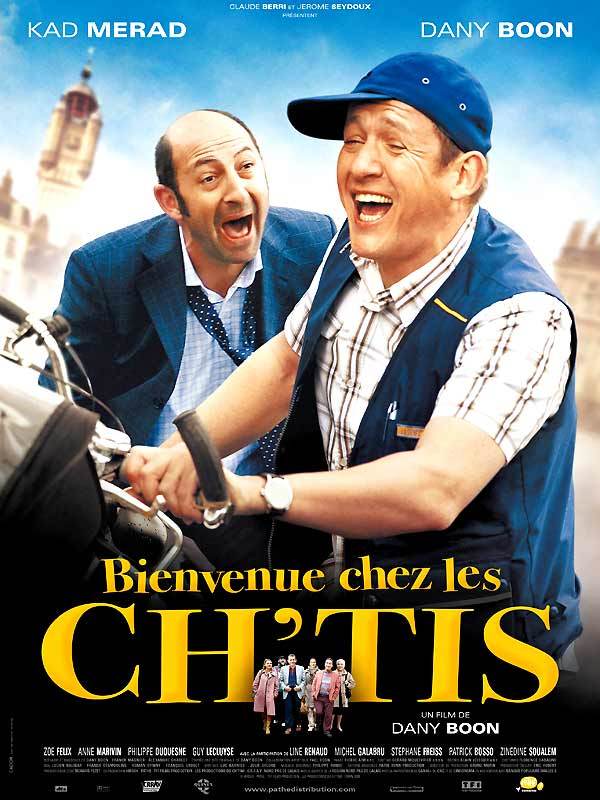
Foreign Film February: Welcome to the Sticks (2008)

welcome to the sticks

I’ve been a bit slack in my foreign language movie-watching over the last week, but I wanted to end the month with something fun. Welcome to the Sticks was written, directed and stars Danny Boon, but he’s not the lead.

That role goes to Kad Merad who plays a postal worker who is desperate to get transferred somewhere on the southern coast of France. Instead, he is transferred to a small town in the far north of the country.

The north of France is to the French like the deep south is to many Americans. He fears that it will be incredibly cold, that the people will speak with terrible accents and everyone will be rude and backward and rather stupid.

It turns out that the climate is pleasant and the people are quite nice. The trouble is he left his wife and young son back in the south. When he visits them on the weekend she is so ready for him to be miserable up there he doesn’t know how to tell her he likes it. This causes a lot of sitcom or romantic comedy-style shenanigans.

There is also some business over Danny Boon’s characters’ love life and a lot of other very silly stuff. It is very breezy and very goofy and it makes me laugh. A lot. I’ve seen it before, we own it on DVD actually. I’ll no doubt see it again.

It probably won’t work for everyone and there is a lot that gets lost in translation. A lot of the gags have to do with the difference in language. In the north, they speak a dialect of French and there are a lot of jokes about the Southerner not understanding anyone or misunderstanding certain words.

I speak a little French but not enough to watch a French film without subtitles. Jokes about how two completely different words sound a lot alike are difficult to translate so I expect a lot of the humor here doesn’t work that well for non-French speakers. I was helped out by the fact that my wife is a French speaker and she helped get the jokes across. Also, her laugh is infectious.

But there are also loads of other jokes that don’t need translating. I’m surprised an American studio hasn’t adapted it for the USA. It would work well with someone from the coast of some New England state moving to Alabama.

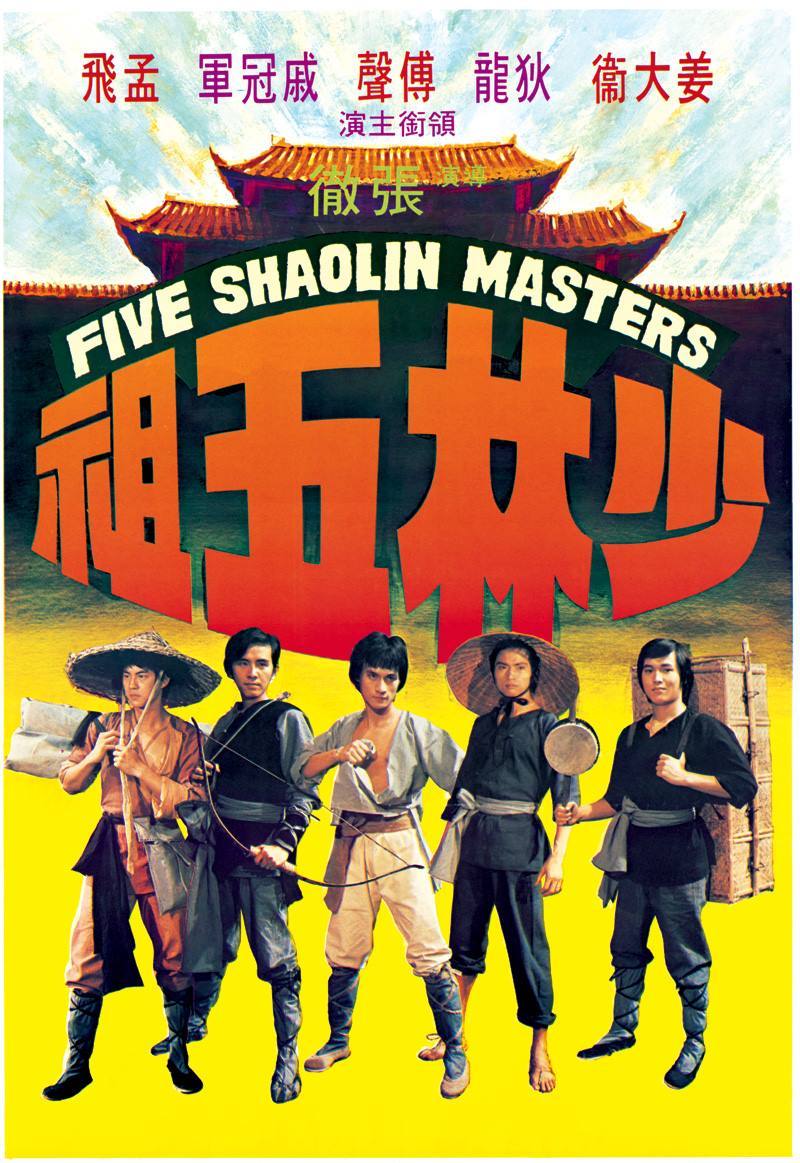
Foreign Film February: Five Shaolin Masters (1979)

five shaolin masters poster

I’ve watched enough Shaw Brothers kungfu flicks at this point to recognize that their plots are all mostly the same. There is usually a good clan and an evil clan. The evil clan picks a fight for one reason or another which leads to lots of drama and even more fight scenes and it all ends in a climactic big final battle. There is sometimes a love interest, usually a training montage, and often the Master is killed. There are variations on this, but more or less that’s what happens in all of them.

Sometimes they are funny or really goofy, and sometimes they are deadly serious. Mostly the scenes between fights is utterly pointless, but the best ones at least keep them interesting. But the real reason to watch is the fight sequences. When they are good, there is nothing better, when they aren’t so good they are at least entertaining.

Five Shaolin Master’s fights are just ok. The story is worse.

Some Qing soldiers burn down the Shaolin Temple. Five dudes survive and vow their revenge. They work out a series of secret codes to tell each other apart. This makes sense once they start enlisting other people who are sick of the Qing soldier’s evil deeds. They also learn that there is a traitor in their midst and suss him out.

Our heroes are no match for the Qing fighters and get their collective arses handed to them. They regroup, train heavily for several months, and come back for a final showdown. It is all mostly dull with the fight scenes being merely adequate. The final, big battle is pretty fun with eyes getting snatched, testicles being destroyed, and lots of jumping and flying about.

But other than that this one is utterly skippable.

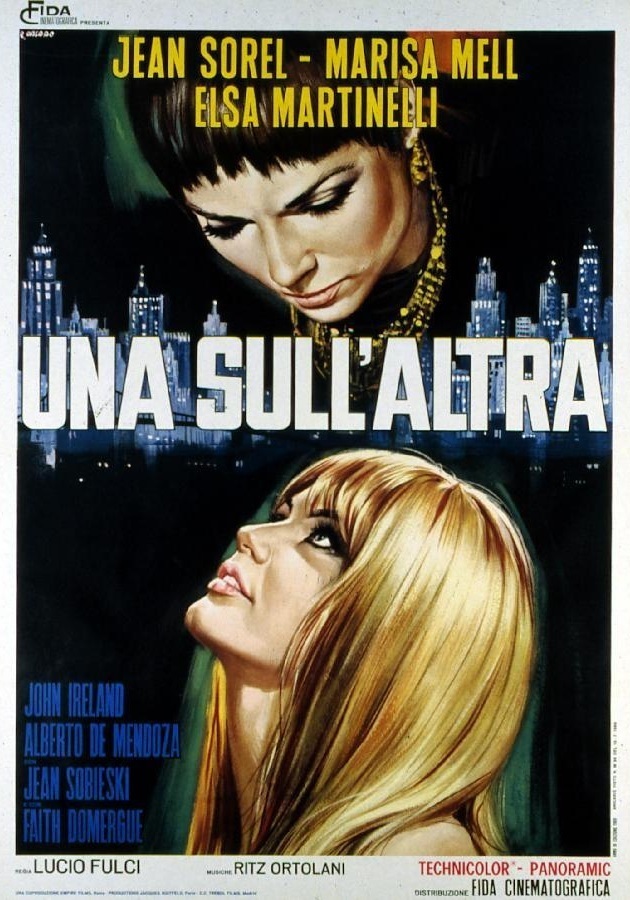
Foreign Film February: One On Top Of The Other (1969)

one on top of the other poster

While I obviously like horror films, I wouldn’t exactly call myself a super fan of the genre. I’m no horror hound who goes to see every horror film as soon as it is released. I’m not exactly a snob about it either, as there are plenty of really terrible horror films that I love. But for most of my life horror wasn’t necessarily something I set out to watch on a regular basis. I watched new horror films that were getting good reviews, and I tried to watch the classics, but weeks or even months would go by sometimes between my viewing of that genre.

Then sometime in the last few years, I started watching horror movies on Friday nights and that became the Friday Night Horror Movie and now I am seeking horror films on a regular basis. More than ever before I’m actually seeking out new horror films to watch. That’s allowed me to not only watch some of the classics that have been on my list for a while, but to find new films, or to dig deeper into certain directors’ catalogs.

Lucio Fulci is one of the godfathers of Italian horror. I’ve now seen 18 of his films. I wouldn’t consider any of them masterpieces. Some of them aren’t very good at all. They mostly slide into that good, but not great category, with bonus points being given to the great practical effects he uses for the large amounts of gore he likes to add to his films.

One On Top Of The Other is more of a crime film than a horror one. It feels like his attempt to remake Vertigo as a film noir with a copious amount of sleaze and a terrifically wonky jazz score.

A wealthy doctor has a sick wife and a pretty girlfriend. The wife dies and he gets a large insurance settlement. An anonymous tip leads him to a strip club where one of the dancers bears an incredible resemblance to his recently deceased wife. The police have been following him due to the insurance money and when they discover the doppelganger, well, things start to get hairy for our hero.

There are a lot of cool twists and turns in the story and it all looks and sounds good. But Fulci seems more interested in watching the women take off their clothes and get sexy with various men than he is in paying attention to the story. This is too bad because there is a pretty great film hidden underneath all the sleaze.

Foreign Film February: Fist of Fury (1972)

fist of fury poster

Over the last couple of years, I’ve really gotten into kung fu movies. That’s something I loved when I was a kid but had completely gotten away from as an adult. Somewhere during the pandemic, I started watching old Shaw Brothers’ films and that has rekindled my love of the genre.

While the Shaw Brothers made a lot of movies filled with kung fu action, sword fights, crazy costumes, and ridiculous storylines, they never did make a movie with Bruce Lee. I’ve not actually watched a lot of movies with Bruce Lee. I did, however, recently purchase a boxed set of Bruce Lee movies from the Criterion Collection, so maybe I’ll remedy my deficiency soon. The other day I watched Fist of Fury, which I sadly found to be not that great.

Lee plays Chen Zhen, the best kung fu student at his school. When his mentor and the master of the school dies, Chen thinks it must have been murder. He blames the gang of Japanese dudes that have been harassing his school for weeks. The rest of the school urges Chen for restraint, as their master always preached that kung fu was not to be used for revenge.

But Chen cannot restrain himself. He goes to the Japanese dojo and kicks some serious ass. The action scenes are pretty good, but they are far from the best I’ve seen in a kung fu movie. But they are definitely worth watching. But everything around the fights is utterly dull. Kung fu flicks aren’t exactly known for their great drama, but the best ones are at least interesting, or funny, or something. This one is utterly forgettable. You really are just biding your time until Bruce Lee takes his shirt off and gets down to business.

Foreign Film February: A Virgin Among the Living Dead (1973)

a virgin among the living dead poster

Jesús Franco was a prolific Spanish filmmaker who dabbled in a lot of genres (including hardcore pornography) but is mostly known as a horror director. He’s one of those guys whose name I’ve heard for years, but that I’d never gotten around to watching.

A Virgin Among the Living Dead is what you might call an erotic horror film with a gothic setting, a dreamlike plot, beautiful visuals, and, yet, lots of naked flesh. It is also pretty good.

It focuses on Christine (Christina von Blanc) a young woman whose mother died when she was very young. As a child, her father sent her away to boarding schools where she stayed, even through holidays, so that she doesn’t even really know who her father is. But when she’s notified that he has died she returns to his home in a small village.

Almost immediately we know things are strange because when she arrives in the village and informs some townspeople that she will be staying at her father’s manor, she’s told that no one has lived there for some time. But Christie just knows she has other family members living there. When she arrives she is greeted by her relatives, an odd bunch one and all (including the director himself as a drooling, sniveling mute).

As the title implies, and you’ll probably figure out pretty quickly, these relatives aren’t exactly what they at first seem to be. They might be the living dead, or they might be some manifestation of her deranged psyche. It all gets pretty weird and pretty confusing, but Franco imbues it with enough beautiful imagery that you won’t mind, at least I didn’t.

It isn’t quite good, but it is definitely not boring and it for sure made me want to watch some more films from the director.

Foreign Film February: Tampopo (1985)

tampopo poster

When I was a teenager, or maybe in college my brother asked me if I had seen Tampopo. I’d said I’d heard of it, probably seen it while flipping channels, but hadn’t watched it. He said it was really weird, but kind of awesome. He admitted that the plot – about a little restaurant that made noodles, something really foreign sounding to us Oklahoma boys – sounded goofy on paper, but that it was really funny and cool. I made a mental note to watch it and then never did. Until this last week.

It is funny how those things go. Why do I remember my brother telling me about a silly noodle movie from decades ago? Why does it seem like I’d told similar stories several times lately? I seem to be watching a lot of movies that made an impression on me as a teenager lately. Don’t ask me why.

Tampopo is really weird and absolutely delightful. The main story is about a couple of truck drivers who stop off at a run-down noodle shop owned by a pretty divorcee, with a young son. They decide to help the poor lady out and enlist some friends – a noodle connoisseur, an interior decorator, etc – to make her noodle shop the best dang noodle shop in Japan. This part of the film is very sweet and silly and wonderful. One of the drivers is sweet on the woman and they innocently flirt. The men spend much of their time trying to help her learn to cook the very best bath of noodles ever and that gets really fun.

Interspersed through all this is a series of vignettes about food and love often intersect. There is a husband who demands a woman rise from her deathbed to cook him one last meal, a lowly office worker who shows up his superiors with his vast knowledge of French cuisine, and an etiquette class that teaches its Japanese students how to properly eat spaghetti. The longest, strangest, and funniest is one involving a couple who use food in a variety of sexual ways. The vignettes are interesting and very silly, but I mostly enjoyed the film for its main story.

But the whole thing adds up to a big dish of delightful.

Foreign Film February: Nostalghia (1983)

nostalghia

Russian filmmaker Andrei Tarkovsky directed seven films in his all-too-short career. I’ve now seen all seven and everyone is brilliant, several are masterpieces (I still haven’t seen the Steamroller and the Violin the short film he made in school). His films are known for their beauty, spirituality, and long takes. Nostalghia has all that in spades. It also has a pretty confusing plot, but don’t let that bother you, for this is, as Martin Scorsese will tell you, cinema.

The story is about a Russian man who visits Italy in order to research an 18th Century Russian composer who also visited Italy and committed suicide upon his return to his homeland. That much I understood. The rest of it was pretty much lost on me. Reading the synopsis on Wikipedia just now I honestly had no idea that what they say happens in the plot actually occurred. Not that this mattered in any way, it certainly didn’t hinder my enjoyment of the film.

The film uses dream sequences and memories to create a fantastic tableau of images. Tarkovsky is famous for holding an image on the screen for a long time allowing us to truly digest everything we’re seeing on the screen. Here he uses subtle changes in lighting to shift our focus. There is one scene set in a bedroom. We see a man lying on a bed in the middle of the room, it is raining outside, and there is a bathroom in the corner. The camera holds the shot. Our focus shifts from the window to the bed. The man seems to disappear. Rain now seems to be puddling on the floor. A dog appears at the bathroom door. For several minutes we stare at this bedroom. Nothing happens, and yet we are mesmerized. Or at least I am.

Tarkovsky does this over and over. He is like a great painter and film is his canvas.

He uses rain, puddles, and water to great effect. Water drips from ceilings. Characters wander in cave-like structures filled with water. Reflections abound. The setting here often looks a great deal like The Zone in my favorite of Tarkovsky’s films, Stalker. It is very earthy. Organic.

I’ll need another viewing or two (or three) to get a real grasp on the story and what Tarvkosky is trying to say, but with this initial viewing, I was just mesmerized by the pictures he painted.