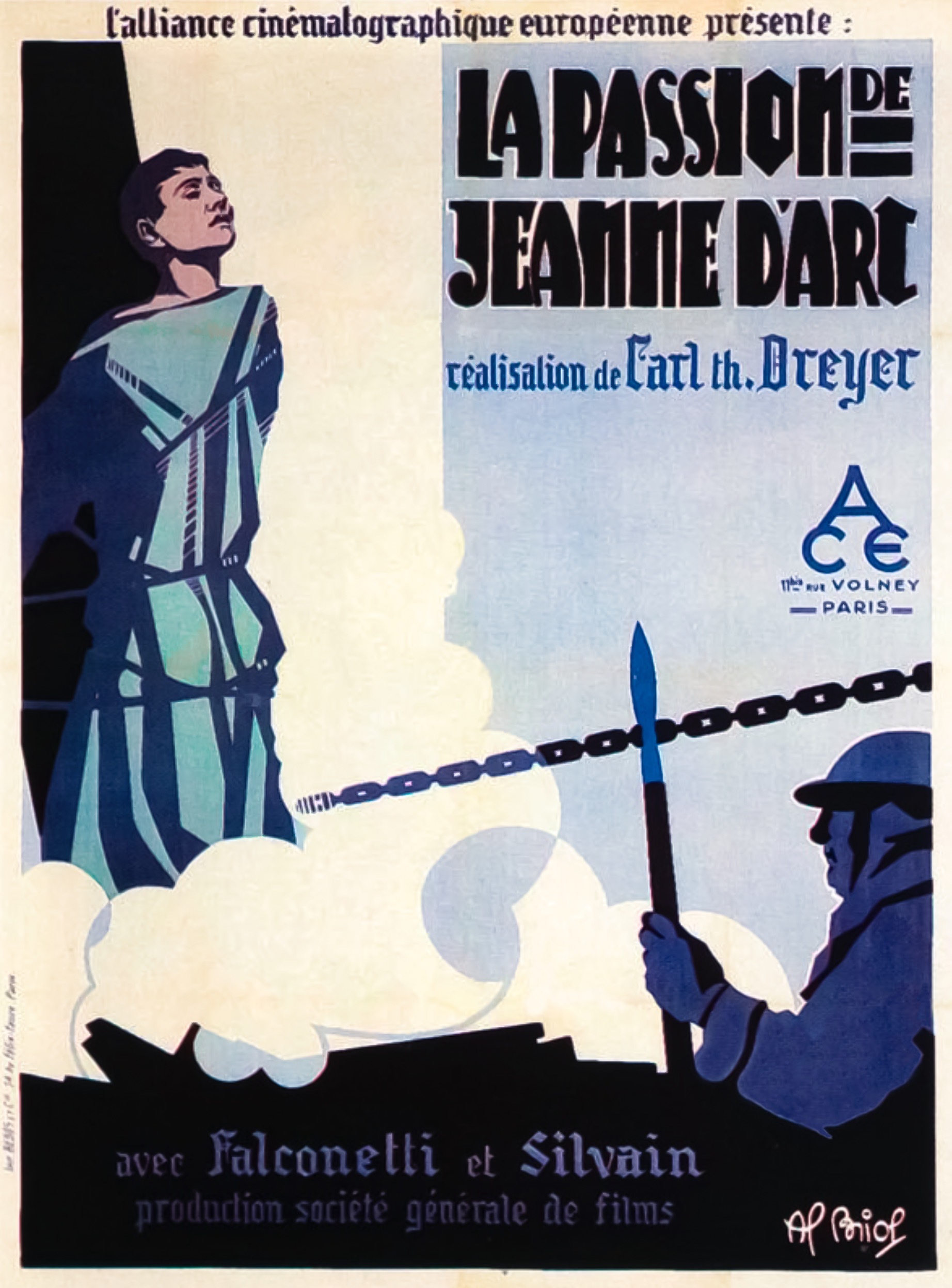
They say that the film modern audiences know as The Passion of Joan of Arc, is, in fact, not the original cut of the film. They say the original print was destroyed, and not being able to reshoot, Carl Theodor Dreyer re-edited the entire film from footage he had originally cut.
The mind mush reels wondering what the world lost if this is what was first considered unworthy of the picture.
As masterful as the film is, it is not a movie to invite all your friends to come and see. Unless your friends happen to be very serious film buffs. It is in black and white, it is silent, the title cards are in French, and almost all of the movie is just talking. Talking, talking, talking in a silent picture. So, it’s not a film for a frat party, or to play drinking games along with. Though one could get pretty hammered drinking every time Joan cries.
It is a film to watch silently, in a dark room, filled with hunger, filled with pain.
The story settles not on the full, adventurous life of Joan of Arc. There are no mystic visions from the angels. It shows none of the epic battles Joan led. Instead, it focuses on the end of the maiden’s life, her trial and execution.
It is hard to imagine that a silent film, that focuses on a courtroom drama could be so moving. And yet, Dreyer has managed to create cinema more moving than nearly everything that has come after it. This comes in large part from the performance of Joan herself, Maria Falconetti.
Falconetti is shot almost entirely in close-up, and medium shots. In fact, only once or twice do we catch a glimpse of her entire body. She pulls a performance out of her face that is all but brilliant. It is a face that moves mountains. The passion, the pain, and the unbelievable undercurrent of emotion emitting from those close-ups is something of a wonder.
Behind her eyes – my gawd those eyes, orbs of passion they are – behind her eyes lie such courage and fear, such passion and fury that we are no longer viewers of a film, but jurors, judges, and martyrs.
The judges and accusers of Joan of Arc are filmed from tight angles. From below so they tower over us, from sharp angular sides making them appear harsh and menacing. None of the actors used makeup, and the lighting is so acute that every flaw, every nuance of their ugly faces is brought out, spotlighted, and multiplied. These villains are made evil by nothing more than the scowls on their faces.
Yet Joan is shot from above, with a softer light. To look into the camera she must crane her head, appearing as if she is in constant prayer. Her face is smooth and angelic. She is a vision of purity and soft love.
The hero of this film is not the mighty warrior seen in so many other retellings of this story. She is not the wild fighter on a mission from God. She is a small, frail child, filled only with the conviction that she is right, and therefore righteous.
To the French, Joan is a patron saint. A national figure of Christianity and patriotic courage. I once visited the very spot where she was executed, in Rouen, France. It is a small ruined place surrounded by a kitschy wax museum, and pricey souvenirs. Yet it is a singularly moving place, knowing so much history was birthed from this one small spot of earth. It is a bit like standing at Gettysburg, or in Ford’s theatre – moving, tranquil, and magic.
Dreyer has created a picture, not so much about history, or its giants. But a film that reveals the passion and beauty that the cinema and all great art are destined to be.



 themidnightcafe.org