The Friday Night Horror Movie: Subservience (2024)

poster

I don’t pay super close attention to what new movies are coming out and when. I follow enough movie critics on social media that I hear some of the buzz, but I really don’t give it much heed. I don’t spend a lot of time watching new movie trailers or reading reviews, etc. But I have a general idea of what movies people are talking about.

The Substance is a new horror movie starring Demi Moore. It is getting a lot of good buzz and is definitely on my radar. Subservience is a new horror movie starring Megan Fox. It is not getting good buzz, but rather a lot of panning when anyone is talking about it at all.

Because I don’t pay close attention to these things I got these two movies mixed up. I put on Subservience thinking it was getting a good buzz. Within twenty minutes of watching it, I was confused.

People are really liking this movie? Maybe it gets better towards the end.

My friends, it did not get better towards the end, or at the end, or after the credits rolled. It is a stupid, stupid movie. It takes a old, dumb trope, and does nothing new with it. I should have realized something was up the moment I saw it was directed by S.K. Dale who also helmed Til Death which was just as dumb.

But it is also kind of fun? It reminded me a little of those dumb erotic thrillers I used to watch in the 1990s.

Nick (Michele Morrone) is a decent dude. He has a good job, a loving wife, a precocious daughter, and a baby boy. He’s living the American Dream. Except for that loving wife, she’s dying. She desperately needs a heart transplant.

Working that good job while taking care of those two kids and trying to be there for his wife is a little more than he can handle. So he does what anyone in that situation would do. He buys a super hot robot to handle the domestic chores.

Her name is Alice (Megan Fox) and she’s programmed to take care of his every need and desire (wink, wink, nudge nudge.) He doesn’t bother to tell his wife, Maggie (Madeline Zima) who is basically a permanent resident at the hospital that the robot he bought looks like Megan Fox. The look on her face when she first sees Alice is precious.

Alice is good with the kids, she’s great at cleaning up, and she’s a pretty good cook (though her lasagna is nothing like mom’s.) She can tell Nick is stressed out and would do anything to help relieve it for him.

You can see where this is going. Alice’s programming gets mucked up causing her to go haywire. If Nick is stressed then she’ll take off her robe and give him a release. If some guy at work is causing problems then she’ll go to his house and shoot him in the face. If Maggie’s health problems are causing trouble then she has to go to.

It is the kind of film where you have to just enjoy the ride. Because if you start thinking about it you’ll start to wonder things like: How can a guy with a relatively low-level construction job afford a big house, what must be enormous medical bills, and what can only be an incredibly expensive robot? Or why is the robot anatomically correct in every way? Are they all programmed to seduce? Or how can a person who just had a heart transplant do all that running and sexing and fighting?

Those aren’t questions the film is prepared to answer. It is better to just enjoy the not-particularly talented Megan Fox give a robotic performance that actually works in her favor for once. Or dig into the nostalgic vibe this thing is giving off. They don’t really make erotic thrillers like this anymore (even if the erotic aspects are fairly tame and it never quite thrills like you want it to.)

The Friday Night Horror Movie: Trap (2024)

poster

I watched The Sixth Sense in the theatre when it first came out. I managed to see it before the surprise ending was ruined for me. I remember liking it that first viewing quite a lot. But then some friends of mine wanted to see it and I was visiting them in Arkansas so I felt like I couldn’t say no. Even though I was pretty sure that the film would disappoint since I now knew the surprise. It did disappoint. I was bored during that second viewing.

That whole day was weird. I was good friends with her in high school. But since going away for college I hadn’t talked to her in over a year. Her husband I didn’t know at all. So the day was full of awkward conversations and then this movie I didn’t want to see. I also randomly remember her listening to The Eagle’s greatest hits on cassette and I hate the freaking Eagles.

Anyway, The Sixth Sense was of course an enormous hit and made M. Night Shyamalan an instant celebrity director. He followed it up with the underrated Unbreakable and then the quite fun but rather ridiculous Signs, and then the very creepy but completely dumb after the trick ending is revealed The Village.

By this point, he was starting to feel like a one-trick pony where every movie had a surprise ending. Everybody hated Lady in the Water and The Happening became an instant joke.

Shyamalan was on the outs. But then a funny thing happened on the way to career suicide. People started liking him again. It was as if after all the hype died down, and expectations became low, people realized he was actually a pretty good stylist and while his scripts were often ridiculous, his films were rather fun.

Or maybe that’s just me. I like most of his movies. They are dumb, but he’s a skilled enough director to keep me interested.

Trap is an absolutely stupid movie. There are so many instances in the film where I kept shouting at the screen that whatever was happening wasn’t the way things work. People don’t behave like that. Concerts don’t have multiple random intermissions. Police don’t let serial killers hug their daughters and play with their son’s bicycles.

And yet, I still quite enjoyed myself.

The plot involves a serial killer named Cooper Adams (Josh Hartnett), known as “The Butcher,” (and this isn’t a spoiler as it was revealed in all the trailers, reviews, and the first ten minutes of the film). He’s kidnapped at least a dozen people, then killed them, then chopped them up into pieces and displayed their parts in public. But he’s also a decent family guy.

He’s taken his daughter Riley (Ariel Donoghue) to see pop star Lady Raven (Saleka Night Shyamalan – the director’s real-life daughter who is in fact a real singer – you gotta love a dad who basically makes a movie to show off his daughter’s talents). But the cops and the feds have been clued into the fact that The Butcher is gonna be there so the entire concert is one big trap for him.

Cooper must find a way to escape so he can continue killing. And being a family guy. It is a testament to Hartnett’s skill as an actor and Shyamalan as a director that I found myself rooting for a serial killer for most of the film’s runtime.

Truly this is one of the most ridiculous films I’ve seen in a long time. Ridiculous decision after ridiculous decision is made by Cooper, the police, Lady Raven, and everyone really. My eyes rolled into the back of my head and then fell right out.

And yet, again, I quite enjoyed myself. Shyamalan never takes anything too seriously. He’s quite aware his film is dumb. But he’s having fun. And so was I.

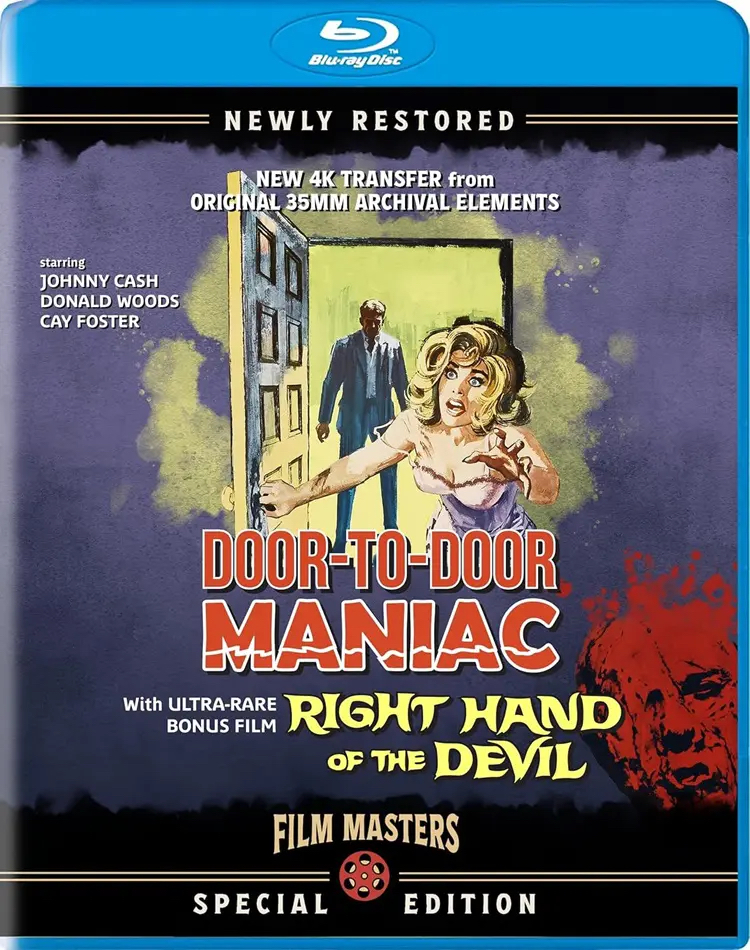
Door-to-Door Maniac (1961)

cover

Johnny Cash was a huge country and western star in 1961 but he wanted to branch out. He wanted to more famous. Hollywood seemed like a good place to make that happen. But Hollywood wasn’t exactly foaming at the mouth for Cash as an actor so he found himself starring in this super low-budget thriller. He’s pretty good in it, though that might partially be because he was strung out from partying all night which fits the character well. The movie would have been completely forgotten were it not for Cash.

This Blu-ray also contains a film Right Hand of the Devil which is what makes it worth the price of admission. It isn’t that good either, but it is weird and fascinating. It was made by a hairdresser named Aram Katcher who desperately wanted to be an auteur. He put his savings into the film and it is full of his idiosyncracies, which makes it a great little midnight movie.

You can read my full review of both films at Cinema Sentries.

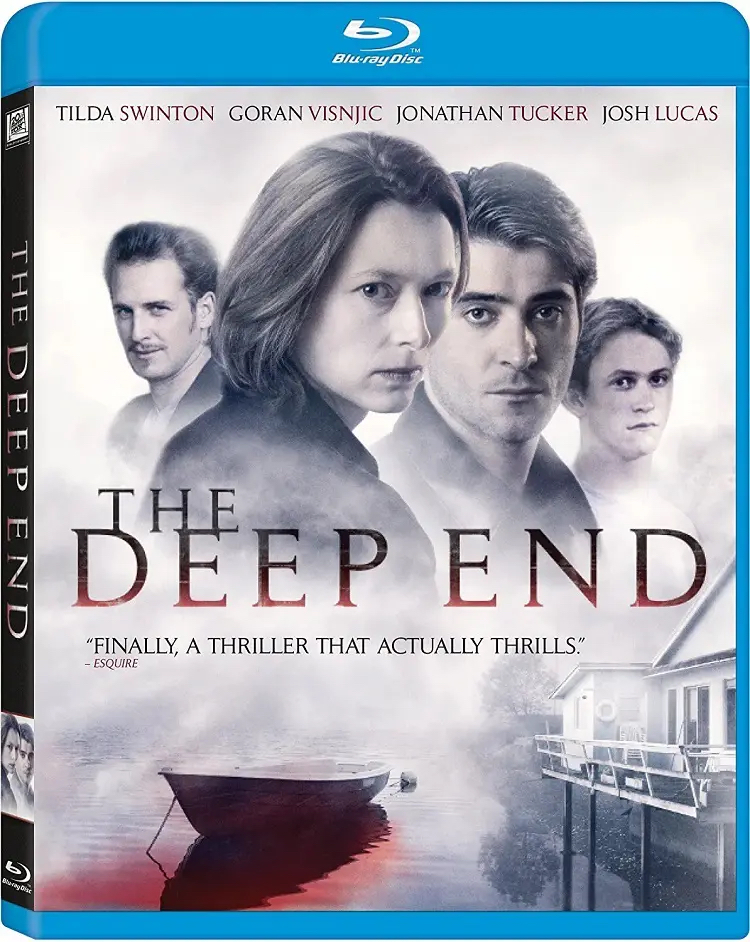
The Deep End (2001)

cover art

I love crime thrillers but I’m the first to admit they aren’t always realistic. Detectives make unbelievable leaps of logic to solve the crime, and seemingly normal people suddenly turn into superheroes when they or their families are threatened.

The Deep End is a film that puts a normal, average housewife (played by the always wonderful Tilda Swinton) and then puts her into an extraordinary situation. But she doesn’t instantly become an amazing crime fighter, she behaves like a normal person would. Dealing with blackmailers – coming up with the cash they are asking for – becomes just another task on his long list of “to-dos” for the day.

It is a very good movie and you can read my full review here.

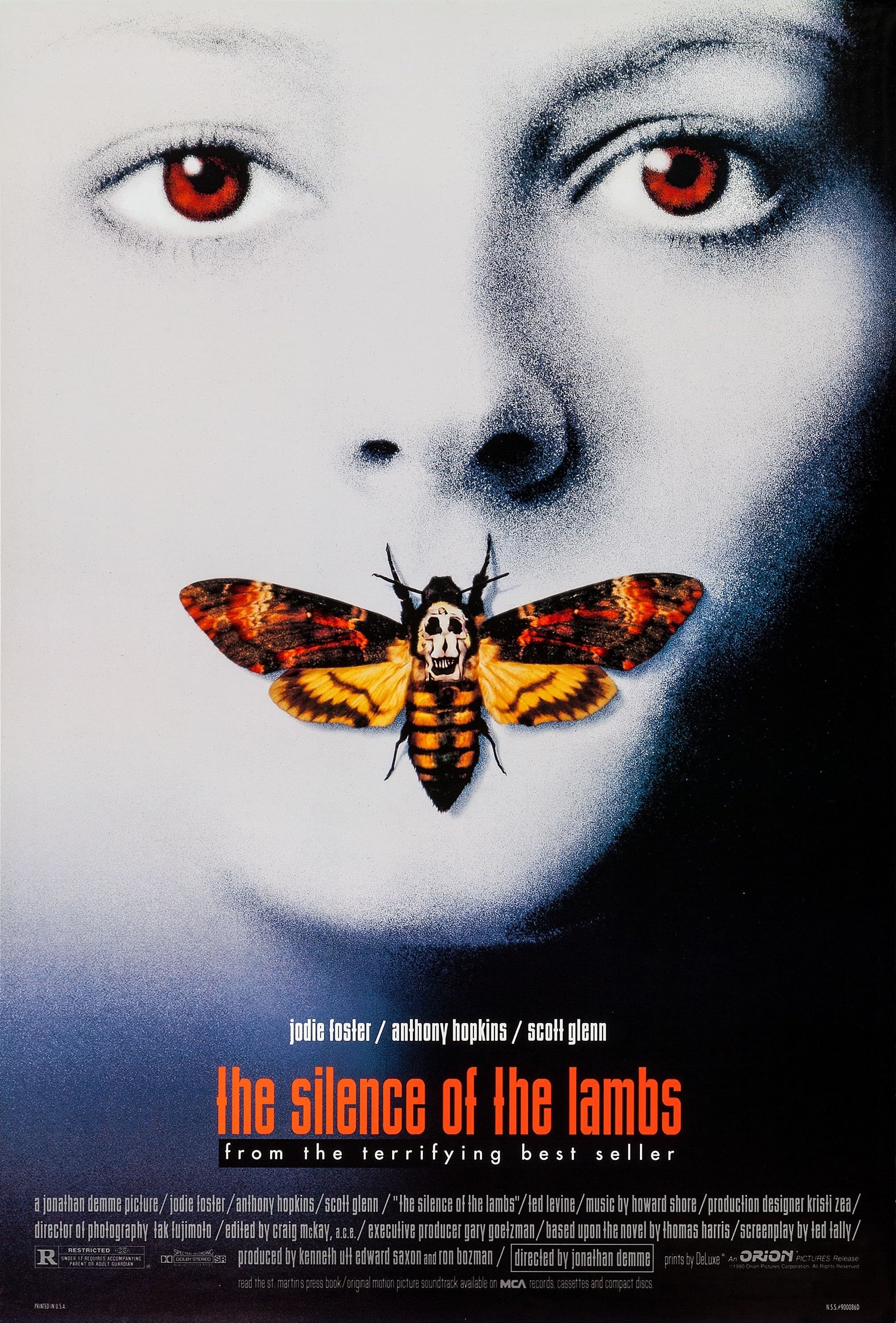
The Friday Night Horror Movie: The Silence of the Lambs (1991)

poster

Music has the ability of searing into your brain as memories. We all have songs that immediately take us to a particular place and time whenever we hear them. Movies can do that but to a lesser extent. I remember movies for their plots, or their direction, or some other thing, but rarely do they bring me back to the time in which I watched them.

I don’t actually remember watching The Silence of the Lambs for the first time in the theater, but I remember why I watched it. My brother is four years older than me. He was dating a girl named Jennifer at the time. He had just graduated high school but she was still a junior. Unsurprisingly, I was not a popular kid in school, but she was. She liked me. Her popularity rubbed off on me a little bit, by proxy. I wanted to impress her.

They watched The Silence of the Lambs on a date and came back raving about it. Somehow, I talked my mother into letting me see it. I was 15 at the time, and usually not allowed to watch rated R movies.

I did like the movie, but I didn’t love it. But wanting to make Jennifer think I was cool I pretended like it was my new favorite. I faked it so well that my mother bought me the novel by Thomas Harris for Christmas.

I wasn’t much of a reader at the time, but I devoured that book. I read it three times over the Christmas break. The novel is more of a procedural than the movie. It digs pretty heavily into the behavioral science and forensics of catching a serial killer. I loved that stuff. I’ve always been fascinated by serial killers and the book was like catnip to me.

I watched the movie again when it came out on home video and for the first time, I realized how a book can enhance a film. So many little details were filled in by the book that the movie somehow seemed better by knowing them.

It has remained a favorite of mine. The DVD was the first one I’d ever purchased that was put out by the Criterion Collection.

Every time I watch it my appreciation deepens.

I’m not the only one who thinks it is a masterpiece. It made Anthony Hopkins a star. It swept the Oscars that year winning Best Picture, Best Actor and Actress, Screenplay, and Director.

Hopkins’s performance is a thing of legend. He’s only in it for a small amount of the film’s runtime, but he made Hannibal Lecter an icon of the horror genre. He’s terrifying. He’s also immensely quotable. I found myself saying his dialog along with him in every scene.

Real quick, the plot, for the few of you who may not know it. Jodie Foster plays Clarice Starling, an FBI trainee. She’s tasked by Behavioral Science director Jack Crawford (Scott Glenn) to interview Hannibal Lecter, a notorious serial killer and cannibal, currently behind bars at a hospital for the criminally insane. He calls it an interesting errand, but really he’s hoping Lecter might shed some light on catching Buffalo Bill a man who is currently killing women and skinning them.

Clarice and Hannibal form a kinship of sorts – she tells him personal stories about her life and he gives her some insight into Buffalo Bill. Then Clarice investigates and eventually captures the killer.

It was hugely influential, nearly every serial killer movie and TV show that follows owes a debt. But what I love is that director Jonathan Demme isn’t all that interested in the genre. He’s telling a much more human story. The film often uses character POV shots to let us see what others (mostly Clarice) are looking at. It gets you inside their skin. Jason Bailey over at Flavorwire has an excellent essay on the use of POV in the movie.

Multiple times Demme shows how men ogle Clarice when she passes by. There is a famous scene at the beginning of the movie where she gets on an elevator surrounded by taller men who stare down at her. Or another one where a group of men jog past her and then turn around to look at her ass.

At a funeral home, about to perform an autopsy on one of Buffalo Bill’s victims, Crawford says something to a cop about not wanting to discuss such a heinous crime around…then he glances over at Clarice. It is a tactic meant to allow the two men to move away from the crowd of cops, but the camera lingers on Clarice’s face showing her disappointment and anger. Later she calls Crawford out on it, noting that while he may not be sexist himself, moments like that indicate to the men present that sexist behavior is okay.

Over and over Demme shows us how difficult it is for a woman to get any respect at the F.B.I. And how Clarice has to be tough and smart just to stay afloat. Call it a feminist serial killer movie.

But it is also thrilling. The scenes with Buffalo Bill are terrifying. He’s wild and camp while Lecter is subdued and intellectual. Both are nightmares come alive.

I could go on and on. I love this movie fully. It is so smart and entertaining, thrilling and scary – bolstered by terrific performances, a great script and subtle direction. One of my absolute favorites.

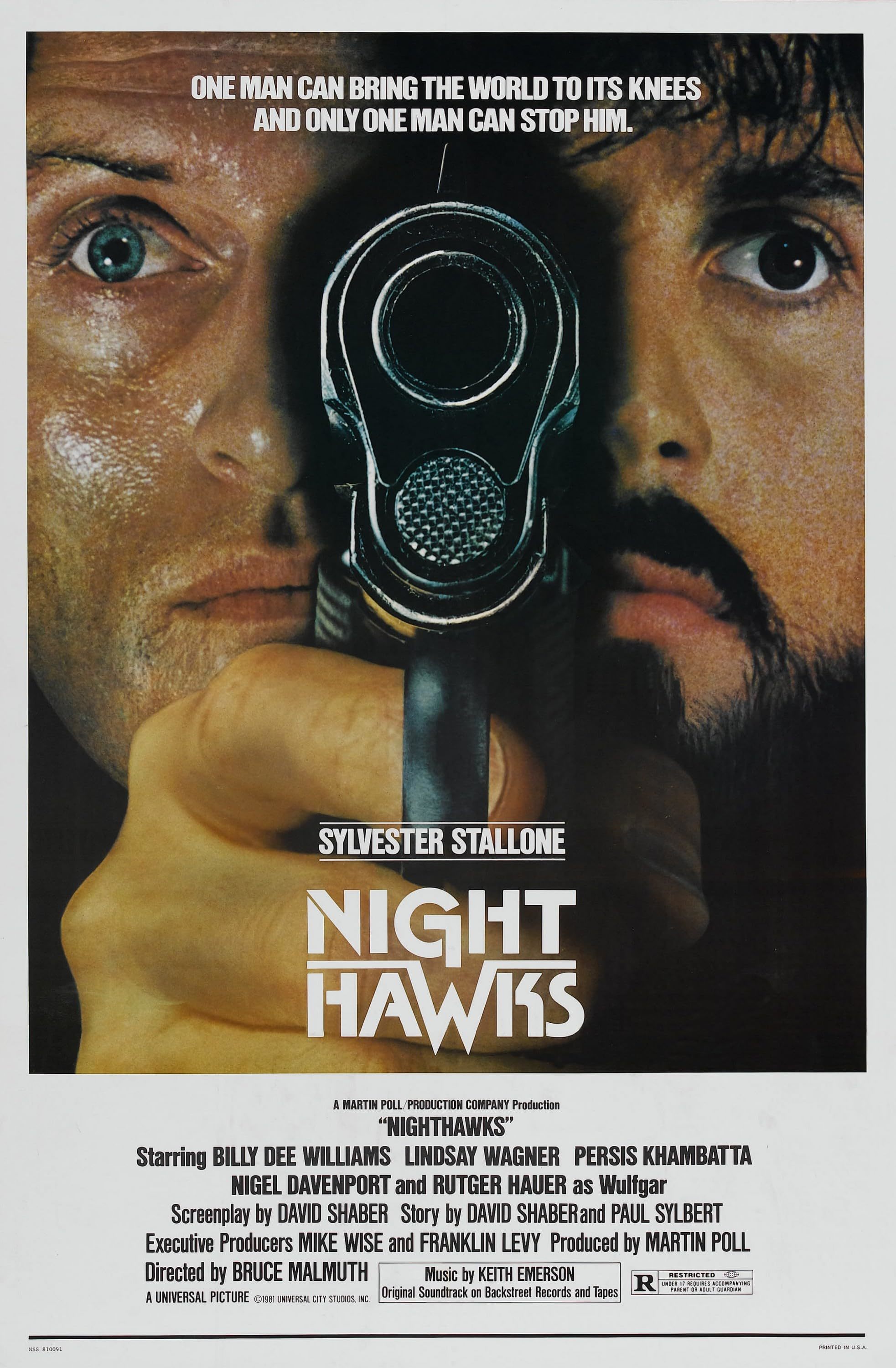
Awesome ’80s in April: Nighthawks (1981)

nightahwks

I was born in the late 1970s and so while I did grow up in the 1980s I didn’t really come of age until the early 1990s. So, the films that I watched during the 1980s were mostly kid stuff. In the years since I’ve watched most of the more popular and critically acclaimed films from that decade, but there are still tons of films I’ve missed.

I’ve said it many times before but one of the things I love about doing these little monthly movie themes is that I always discover films I’d never heard of before. Nighthawks did okay when it was first released but it seems to have been mostly forgotten, which is too bad because it’s pretty good.

I didn’t intend to watch so many Sylvester Stallone movies when I began the Awesome ’80s in April, but here I am four films deep and looking at some more to watch. Nighthawks was made fairly early in his career. Or I should say fairly soon after he found success with Rocky in 1976 (for he had been playing bit parts since 1969). He’s still clearly hungry and still trying to figure out just what kind of star he’s going to be.

It has some interesting behind-the-scenes production stories. Originally the film was written as the second sequel to The French Connection and it was going to be a buddy cop film with someone like Richard Pryor playing off of Gene Hackman’s Popeye Doyle character. But when Hackman declared he was done with the character they turned it into a stand-alone film.

The original director, Gary Nelson, was fired before he even really got started – just one week into production. When the next director, Bruce Malmoth was delayed for a day, Stallone took on the director’s duties so as to not lose a day of shooting. That caused trouble with the guild and he was fined for it. Later both the studio and Stallone made substantial edits to the film when it did poorly at early screenings. Supposedly Stallone cut out several scenes that focused on Rutger Hauer’s character.

None of this really matters of course, what we wound up with is what we’ve got, and what we’ve got is pretty good.

Stallone stars as Sergeant Deke DaSilva of the New York Police Department. He, and his partner, Sergeant Matthew Fox (Billy Dee Williams) work undercover (the film begins with a wonderful scene in which Stallone dawns a dress and a plastic face mask posing as a little old lady trying to catch some purse snatchers). They are quickly pulled into a new, elite squad designed to catch an international terrorist known only as Wulfgar (Rutger Hauer in his first American role).

Wulfgar has just come to New York City. He’s on the run from his European financiers due to running afoul to their good graces. One of his bombs killed some kids and he shot one of their men whom he believed had led the police to his doorstep.

He’s trailed by English Police Inspector Hartman (Nigel Davenport) who recruits DaSilva and Fox into his elite squad. A long chunk in the middle of the film is all about Hartman training the cops on how to catch Wulfgar which basically amounts to them throwing out all their police training and being willing to break the rules and kill the man if they can. This section is rather tedious.

Eventually, it becomes a cat-and-mouse game between DaSilva and Wulfgar and that’s when the film is at its best. There is a good scene set inside a subway line, and a terrific one on a tramway car high above the ocean, headed towards Roosevelt Island.

It looks gorgeous too with some wonderful cinematography by James A. Cotner. Stallone and Hauer play their parts well. Overall it is a good little 1980s thriller and one worth seeking out. But there is a reason why it slipped into obscurity as it doesn’t do anything particularly special with pretty standard material.

Frozen in January: Whiteout (2009)

whiteout movie

Sometimes you watch a movie knowing ahead of time it is going to be bad. You do so thinking maybe it won’t be that bad. Maybe it will at least be entertaining. And maybe, just maybe, it will defy expectations and actually be pretty good.

Mostly, you turn out wrong.

Or maybe that’s just me.

I knew going into it Whiteout wouldn’t be good. It actually has a kernel of an interesting idea – a lone US Marshall in Antarctica must solve a murder. But that’s also the kind of snappy idea that Hollywood all too often screws up.

I should have known not to watch it when I realized it stars Kate Beckinsale. I don’t actively hate Kate Beckinsale. I don’t think she’s necessarily a bad actress. She just has a habit of starring in a lot of bad movies. I don’t know if she just has bad taste, or she’s rarely offered anything any good or what. Maybe she has a terrible agent. But looking through her filmography I see very few movies that I either thought were good or that look anything like interesting.

But, like I said, this film has a setup that could be really cool so I took the plunge. 

The biggest problem with the film is that it doesn’t know whether it wants to be a mystery, a thriller, or a horror film. It even throws in a bit of World War II conspiracy for good measure.

Beckinsale plays Carrie Stetko, the sole US Marshall in Antarctica. Most of the base is preparing to fly out. Winter is coming and at the bottom of the world, winter is long and hard. Minimal staff is required.

Stetko usually stays but this time she’s leaving. As is her friend, the base’s only doctor, John Fury (Tom Skerritt). As an example of just how poorly this film thinks things through that is the base’s only law enforcement agent and doctor leaving for several months. There is no indication that anyone is being sent to replace them. While most of the personnel do leave for the winter, not all of them do. What happens when a crime is committed or someone needs healthcare?

But of course, the film doesn’t think about this because it knows those two characters aren’t going to be leaving the base. A crime will be committed and someone will need medical attention and they will stay.

A body is found lying face down in a remote part – a “no man’s land” of the continent. His face is smashed to bits so it is impossible to tell who he is. Stetko and Fury investigate. Stetko realizes he must have taken a great fall. She knows this because, as we see in a flashback she once shot a man causing him to take a tumble out of a high-rise building. 

The film loves its flashbacks. They pretty much all surround that one event in Stetko’s life, but the film doles it out like it is some great mystery that will reveal some insight into this current case. But really it is a pretty simple thing that lets us know what she’s doing in remote Antarctica in the first place.

The murder leads them to a remote station which then leads them to a WWII airplane buried in the snow. This should be an interesting mystery, a weird surprise for the audience. Except the film began with us watching the plane crash and showed us why. The only mystery left is what was in the box on the plane that everyone winds up fighting over. It might be old nuclear stuff which would be bad. Really bad. I guess.

Then Robert Pryce (Gabriel Macht), a United Nations security agent shows up. He’s there awfully fast for a guy who wasn’t in Antarctica before the movie began. Making us think perhaps he’s the killer. He’s not, but the movie likes throwing red herrings out like that. Anyone who has seen an episode of Law and Order will be able to figure out who the Big Bad really is before he’s revealed.

Oh, also, there is a huge storm rolling in causing the entire base to be evacuated in a few hours. Because this film doesn’t have enough going on, it needs to add that into the mix.

It is based on a graphic novel so maybe some of the script problems come from the source material. All of the plot twists and turns might work better in a comic. I’ve just started reading the book and it does seem to be more of a mystery than anything, and it definitely doesn’t begin with the plane crash so I’m prepared to say most of the film’s problems do come from the script. But only time will tell on that front.

Beckinsale isn’t bad. I don’t think she’s a particularly bad actress. But she doesn’t elevate the material either. And the material is bad. It is too much of everything and not enough of something specific.

Great British Cinema: Went the Day Well? (1942)

went the day well

George Orwell once stated that All Art Is Propaganda, and after watching Went the Day Well? I wanna ask, is that such a bad thing?

My tongue is planted firmly in my cheek, and to be fair, I’ve never even read that Orwell book, but Went the Day Well? is a piece of wartime propaganda. And it is excellent.

The thought experiment goes – what if the Nazis successfully took over a British town? What if they invaded England? The answer the film proposes is that we’d have to fight back. Sometimes brutally.

In the small village of Bramley Inn a group of what appear to be British soldiers arrive unannounced. They state that they are there to judge the village’s preparedness and ask to be quartered there for a few days.

At first, the villagers believe them and are excited to see some real action (or as real as they think they’ll ever get). The village has done its preparations, they have a Homeguard and have practiced what to do if the war comes to them.

But soon they begin to think these soldiers may not be what they say they are. One of them slips up in their English and another writes his “7s” in the European way. Just as they are trying to decide what to do, the soldiers reveal themselves as Germans setting up the invasion.

The Nazis are ruthless. They mow down the Homeguard without a second’s thought and have no problems shooting anyone else who causes trouble.

The message is clear: the villagers have to be just as tough. In an amazing scene – and I’m sorry for the spoilers on an 80-year-old film – a sweet little old lady is serving dinner to one of the Nazis. She prattles on as she cooks, revealing a surprisingly intimate detail about her life – that she and her husband couldn’t have children and they both blamed the other one. Then, when the Nazi isn’t looking she tosses pepper into his eyes, grabs an axe, and gives him a whack.

It is a surprisingly violent film for a 1942 film, but the message is clear again. The enemy will not hesitate to kill you and the British way of life, and you must be willing to fight back with all you’ve got. Even if you live in a little village that will likely never see any sort of action, you must be prepared.

As a piece of propaganda, it is quite effective. But better yet as a piece of cinema, it is excellent all around.

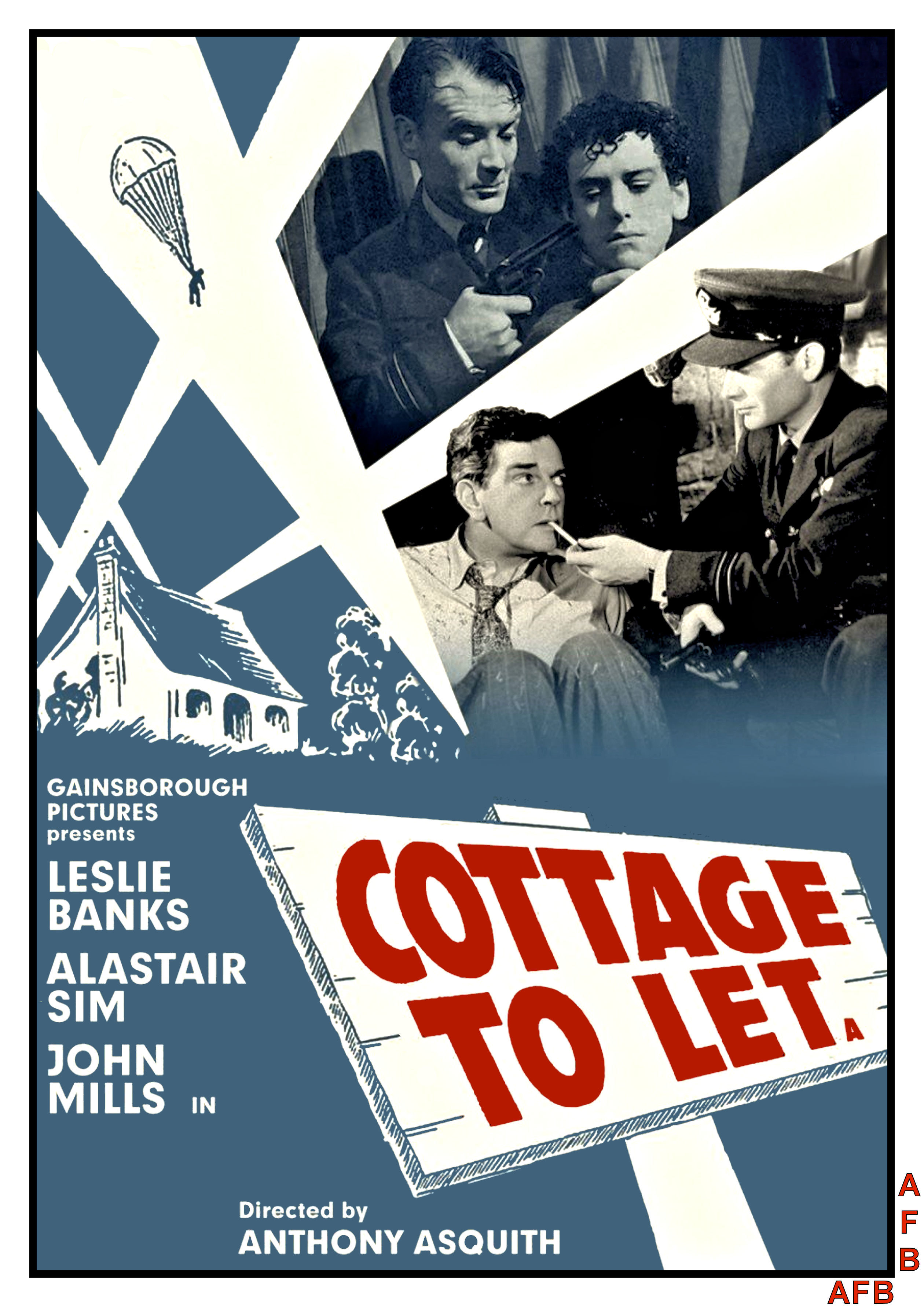
Great British Cinema Cottage to Let (1941)

cottage to let

Mrs. Barrington, a kook of a woman (Jeanne de Casalis), has agreed to take in child evacuees from London during World War II. She’s also agreed to allow her cottage to become a military hospital. Naturally, she has forgotten to inform her leasing agent of any of this so besides the children and the infirmed she has let her cottage out to a strange man, Charles Dimble (Alastair Sim). Also living at her estate is her husband John Barrington (Leslie Banks) an inventor who is currently working on a new bombsight which is of great interest to the Royal Airforce and Nazi spies.

Cottage to Let is a wonderful little drama filled with mysterious and eccentric characters and enough twists and turns to keep everyone guessing.

Mrs. Barrington might be a bit dotty, but she’s smart enough to realize she only has so many rooms so she only takes one child evacuee, and one soldier in need of attention. Still, that amounts to a large cast of characters. Moreso when the British military higher-ups come into town when John Barrington refuses to come to London to clue them in on his work.

Early on we realize there must be a spy amongst this lot, but we aren’t sure who it could be. The film has a lot of fun insinuating various characters but never quite letting us know who it is.

It is suspenseful in the way Hitchcock’s films are often suspenseful – which is to say it creates some interesting tension while also letting you know no real harm is going to come to our heroes. It is also clever and quite funny.

I found it to be wonderfully delightful.

Runaway Train (1985)

runaway train

I’m watching one movie from every year I’ve been alive in chronological order. We are now up to 1985.

I live in a small town that has two major train lines running right through the middle of it. I don’t know how many trains pass through our little burg on any given day but it is a lot. You can hardly drive from one side of the town to the other without getting stopped by a train. Sometimes two. Or three. It is very annoying. I used to carry a book with me in my car and whenever I was stopped waiting on a train I’d read a few pages. I finished more than one novel that way.

Despite this, I still love trains. I remember the first time I ever rode a train. We were riding across France. I sat in my window seat with my headset on, listening to music and watching the beautiful countryside glide by.

Trains are so much better than planes. They might not be as fast, but they are much more comfortable and pleasant. I wish we had more trains in the USA. I’d take them everywhere.

I love movies about trains. I’ve watched Westerns where they are building the first train lines out west. I’ve seen horror films with some crazed killer stalking prey on a train. There are mysteries and thrillers set on trains. One day I’m gonna make a huge playlist of all the movies that have trains in them. That would make a fun viewing.

Not all train movies are good, of course. There isn’t anything special about a train that makes your story interesting. Runaway Train is a good example of this.

Jon Voight plays Oscar “Manny” Manheim a ruthless convict being held in Alaska’s Stonehaven Maximum Security Prison. He’s so terrible the warden has had him locked away in solitary confinement for three years. When the courts say he can’t do that, Manheim is released into general pop.

Though the prison is supposed to be some kind of Alcatraz-like inescapable place, Manheim easily gets out by having fellow inmate Buck McGeehy (Eric Roberts) roll him out in a dirty clothes hamper. Inside the laundromat, they grease themselves up and slip out through a sewer tunnel. From there they hop aboard the titular train.

Darn their luck, the train conductor has a heart attack and falls off the train. In doing so he destroys the brakes and sends the train heading down the line at full speed. Rebecca DeMornay plays a train employee who is pretty useless, honestly.

There are some dispatchers back at the base, who have computerized systems to track where the train is going. They call upcoming stations to try to stop the thing, but they are pretty useless as well, honestly.

The film periodically attempts to ring some tension out of the speeding train, but this is no Speed (1994) and they mostly fail at it. Every time they cut to the dispatch station

Voight is sporting some godawful facial hair and an even worse accent. Everyone else seems to be trying their best, but it all just falls sort-of flat. It is the type of film where after watching it I just kind of shrug my shoulders and go, “that was something,” and the look for something else to watch.