Frozen In January: Jeremiah Johnson (1972)

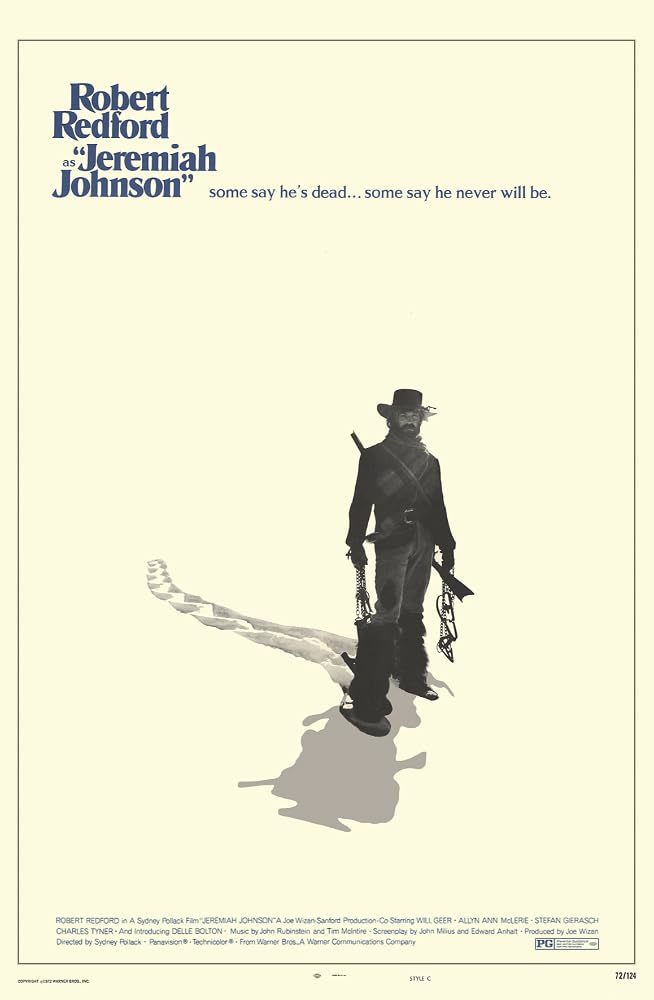
jeremiah johnson poster

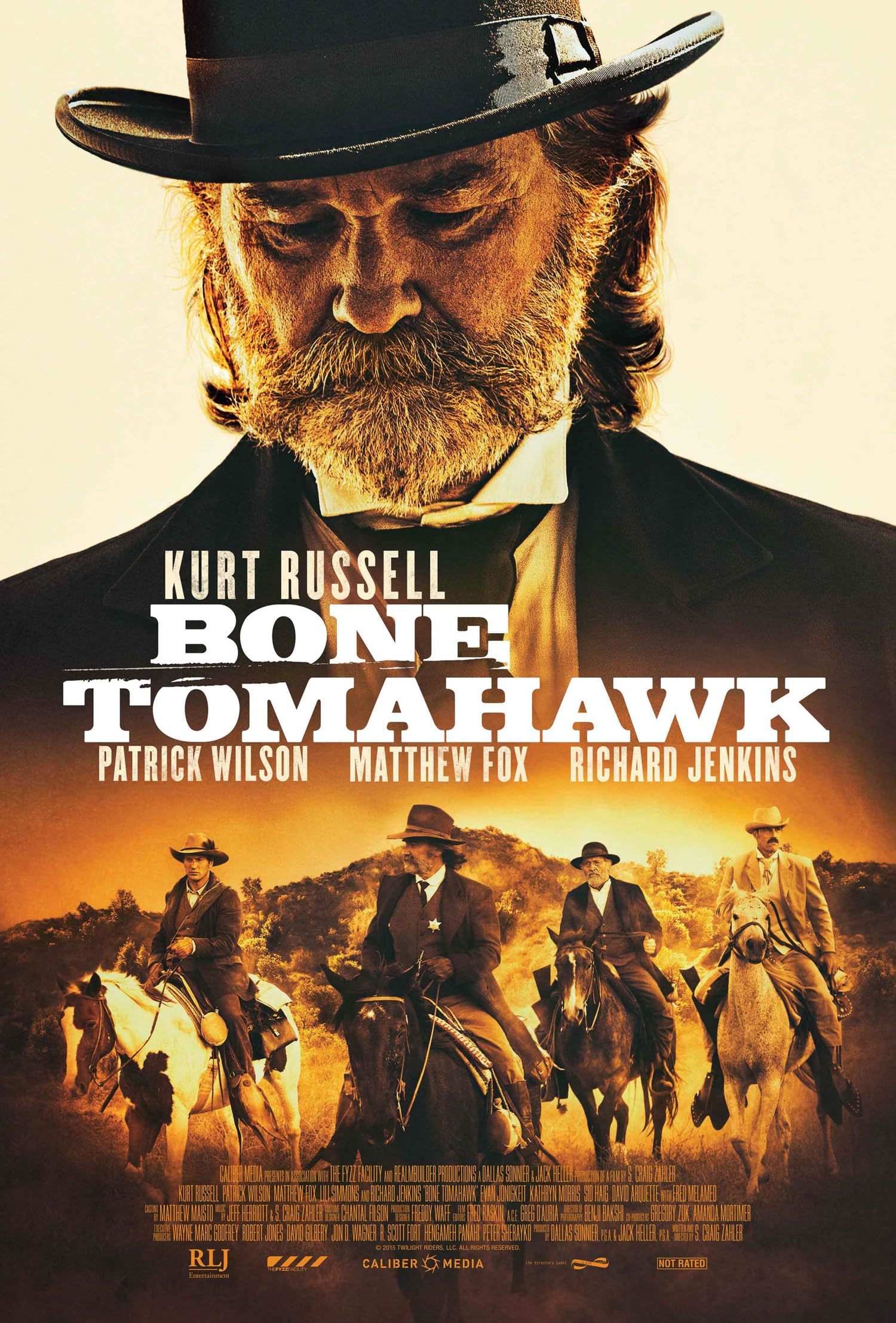
Jeremiah Johnson was a real mountain man who, as legend has it, killed, scalped, and ate the livers of some 300 Crow Indians. From what I’ve read he seems like a pretty rough-and-tumble guy. Director Sydney Pollack teamed up with Robert Redford and turned him into some kind of folk hero in their film based upon the legend.

Redford plays Johnson as a man who initially heads to the mountains to get away from society and truly become something, some kind of man. He isn’t naive or untrained like Chris McCandless from Into the Wild. He has some skills hunting and surviving in the wild. Just getting to the Rockies in the late 1800s was an adventure in itself. 

But life in the mountains is different than life in the plains. Johnson find himself in trouble. He struggles making fire in the cold, wind, and snow. He can’t catch a fish in the mountain streams. He has better luck with wild game, but not much.

Cold and nearly starved, he stumbles across an old grisly bear hunter named Bear Claw (Will Greer). The old man teaches him how to survive in the mountains. He becomes good at it. He thrives. He learns the ways of the various Indian tribes in the area, but doesn’t befriend them. He’s a man who likes to be alone.

In time he comes across a cabin that has been attacked by Indians. A child was killed, and the husband is missing. A young boy has survived and his mother who has gone crazy from the ordeal. Johnson begins caring for the boy. Later Johnson makes a mistake in a trade with a Flathead tribe and finds himself with a wife.

This man of solitude now finds himself with a family. It is hard on him at first, especially since he does not speak his Crow wife’s language and the boy is mute, but he learns to love them and they make a life together.

Then tragedy hits and Johnson becomes the liver-eating man of legend.

Pollack and cinematographer Duke Callaghan film it like poetry. Pollack calls it his silent picture and there are long scenes in which not a word is spoken. Shot in and around the Rocky Mountains in Utah it is often stunningly beautiful. Redford does some of his best work. All of this is periodically puncturated by songs from Tim McIntire and John Rubinstein. They are sung in the Appalachian folk tradition and are a little too on the nose declaring the themes of the film. Also they are just bad.

It is interesting that they turned this story of a rugged mountain man, known for his ruthless slaying of countless natives into the story of a good man who just wants to be left alone, at peace in nature. He rarely takes action himself, the mountains or outsiders force him into it. Even in the end when he becomes the Crow Slayer, it is always them who attack him. It does feel like they are turning into a folk hero. I doubt that is where the truth really lies. But we’ll never really know the truth anyway, as the true story was turned into legend long ago and the facts have long since been lost.

Not that it matters. True or not the film is quite good, longing and beautiful. A tale of a time long past, but of mountains that still amaze with their grandeur.

Wichita (1955)

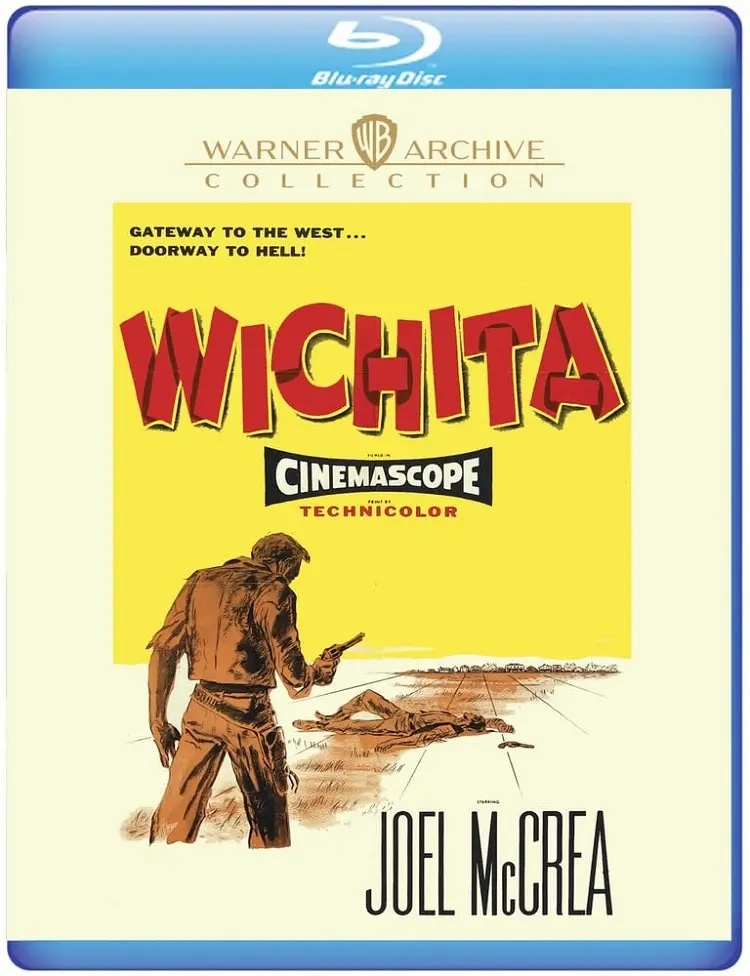
wichita movie

Wyatt Earp stands tall amongst figures of the Old West. He’s one of America’s great old legends. There have been a lot of movies made about his life. Wichita is kind of an origin story for the legend as it begins before he became a lawman and tells the story of how he wound up being a Marshall.

It isn’t particularly good, but if you like westerns I’d recommend it. You can read my full review here.

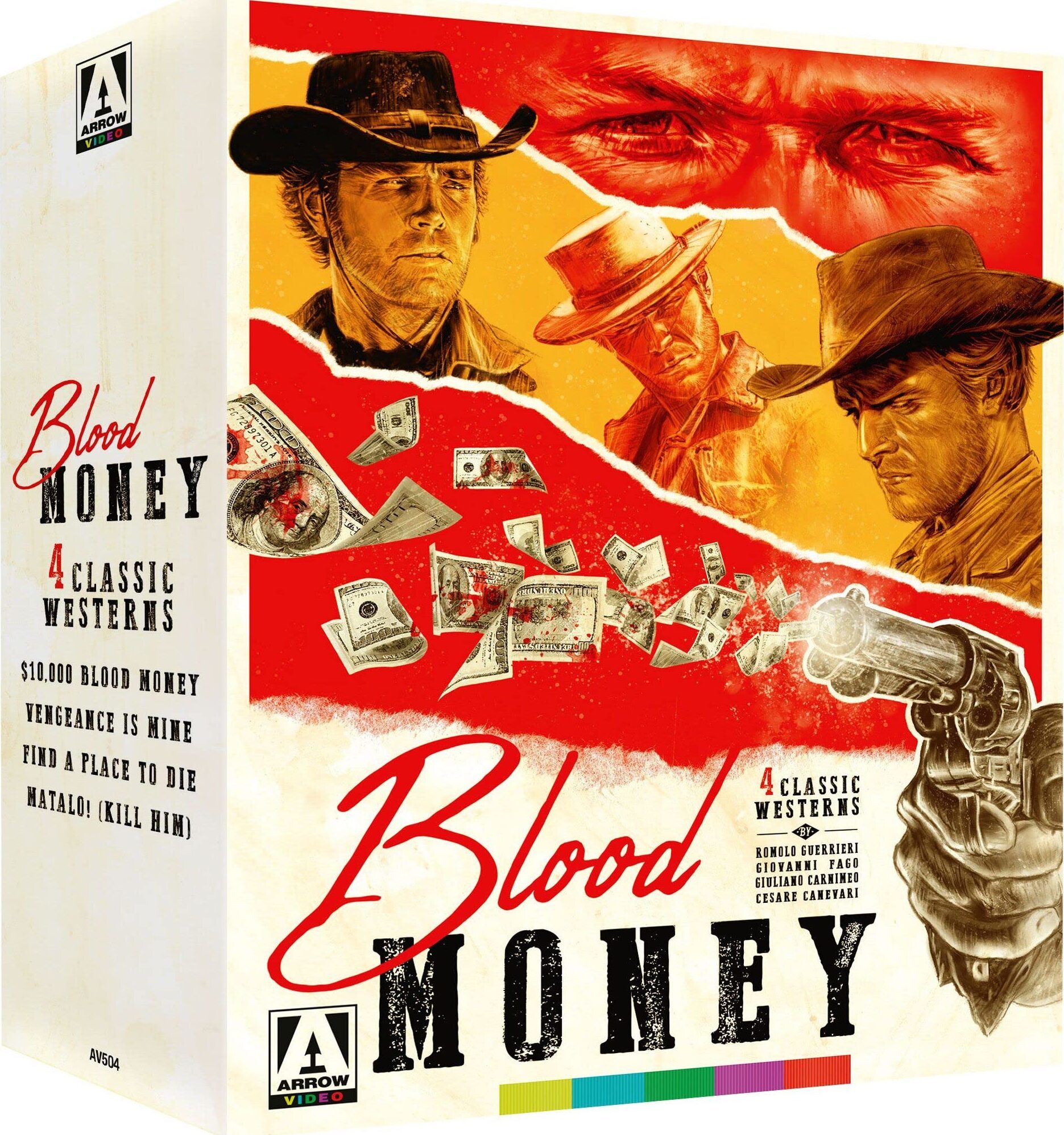
Blood Money: Four Classic Westerns is the Pick of the Week

blood money bluray

Over the last few years, my movie-watching has increased by a large margin. I’ve gone from watching around 120 movies a year to over 300. One of the things I’ve tried to do with this increase in viewings is to increase my overall cinematic knowledge. I try to watch films from different eras and genres, films that I might otherwise not see. I don’t want to just watch the latest blockbusters but to allow my movie watching to increase my understanding of film history. I think that is obvious just from the movies I’ve reviewed on this site.

The Western is a genre that I mostly ignored for large swaths of my life. I didn’t dislike Westerns as much as I just wasn’t interested in them. It didn’t help that my formative years were a time when the genre had mostly gone out of style. But I’ve come to love the genre over the last few years.

I love the wide open spaces of the genre and the gunfights. I love how the films are about expanding and living in a new world, about starting a new country, about etching out a living in a harsh, brave world.

The Italians got into the Western business about the time they were dying out in America. These so-called Spaghetti westerns played with the standard tropes of the genres and made it their own.

Arrow Video is doing what they do best this week – releasing a boxed set of relatively obscure genre films and loading them with extras. Blood Money: Four Classic Westerns includes four Italian Westerns (Mátalo!, Find a Place to Die, Vengeance is Mine, $10,000 Blood Money) that were made from 1967-1970. I don’t know anything about them, and I don’t have to. I want to buy this box and learn about them as I watch.

Also out this week that looks interesting:

Soundies: The Ultimate Collection: Around the time of WWII little jukebox type machines started showing up in bars, honkytonks, and night clubs. For the drop of a coin you could watch what amounted to an early music video (or burlesque shows, or any number of other things). Kino Classics has put together a big collection of the music videos which star folks like Count Basie, Cab Calloway, Hoagy Carmichael, Doris Day and a ton of others. Sounds cool.

Paint: I would have bet you a lot of money that this comedy starring Owen Wilson was a weird biopic of Bob Ross, and I would have lost. Apparently Wilson’s character just looks like that painter of happy little clouds (and paints for a public television station), but that’s were the similarities end. Or something. The reviews have been terrible so I’ve not bothered to dig into it more.

The Broadway Melody: The first sound film to win an Oscar is also generally regarded as the first proper movie musical.

The War of the Worlds: This sci-fi classic from 1953 is getting a big 4K release for its 70th anniversary.

One False Move: Criterion is releasing this neo-noir classic about a police chief awaiting the arrival of some killers in a 4K set.

Chucky 4-7: Shout Factory presents this collection of Chucky films (Bride of Chucky, Seed of Chucky, Curse of Chucky, and Cult of Chucky) in a new 4K boxed set. I’ve never seen any of the Chucky films so this probably isn’t the place to start, but for fans it looks pretty cool.

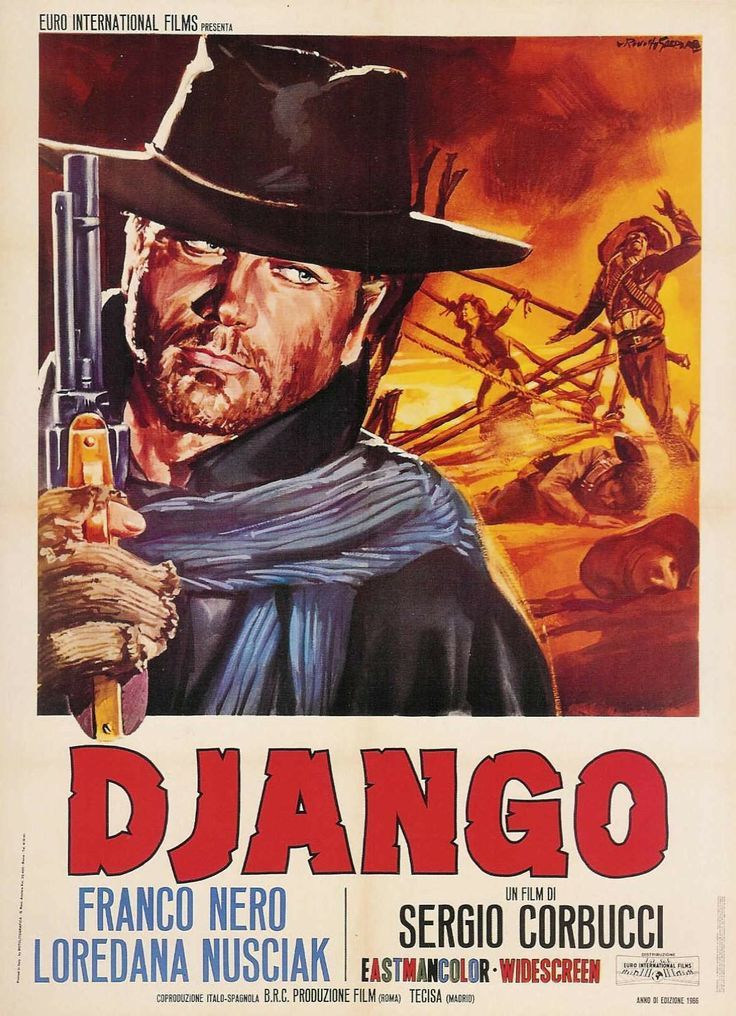
Westerns in March: Django (1966)

django poster

As the popularity of westerns began to wane in America, the Italians picked up the mantle and ran with it. A number of westerns had been produced in Europe before Sergio Leone’s A Fistful of Dollars in 1964 but it was that film that is generally credited as the first Spaghetti Western. With its distinctive visual style, unusual score by Ennio Morricone, and iconic anti-hero played by Clint Eastwood, A Fistful of Dollars set the template for all the Spaghetti Westerns to follow.

It was a huge success and naturally, numerous films came out soon after, that aped its style and tried to cash in on its success. Perhaps the most successful, both financially and artistically, was Sergio Corbucci’s Django. It was also a big success. It launched the career of Franco Nero and spawned some 30 different sequels (most of them unofficial).

It begins with our hero, Django (Nero), a former Union soldier walking alone in the wilderness somewhere along the US/Mexican border, dragging a coffin behind him. It is a magnificent image to open a film on, one of the all-time great opening images in fact. The movie ends with another indelible image, one that I won’t spoil, but it, too, is an all-timer. The film that happens in between those fantastic moments is also quite good.

Django stumbles upon a prostitute (Loredana Nusciak) about to be literally crucified upon a burning cross by some racist Red Shirts. Django shoots the men and offers the woman protection.

The two walk to a nearby town, half-deserted save for a bartender named Nathaniel (Ángel Álvarez) and a handful of prostitutes. Nathaniel tells them that the townspeople have mostly been killed off due to the feud between the Redshirts and some Mexican revolutionaries.

The plot, with Django working both sides of the fight, is very similar to A Fistful of Dollars (which itself was inspired by Akira Kurosawa’s Yojimbo, which in turn was inspired by Dashiell Hammett’s novels The Glass Key and Red Harvest.)

But first, there is a lot of discussion as to just exactly what is in that coffin he’s been dragging around. Most seem to think it holds an actual body which produces a lot of signs of the cross. His enemies often joke that he’s just being helpful, bringing his own coffin along as they are about to kill him.

But friends, and this does count as a spoiler, that thing holds one big ass machine gun. When the Red Shirts come down he hauls it out and mows them down in glorious fashion.

He works with the Mexicans for a time, but he has no interest in their politics. Like Eastwood in those Leone films, Django is a man on his own. It is frequently violent, periodically hilarious, and always cool.

It isn’t quite as stylish as Leone’s Dollars Trilogy but it is still pretty darn great. Franco Nero is terrific as Django and the score from Luis Bacalov is fantastic. It makes a terrific way for me to end my Westerns in March series.

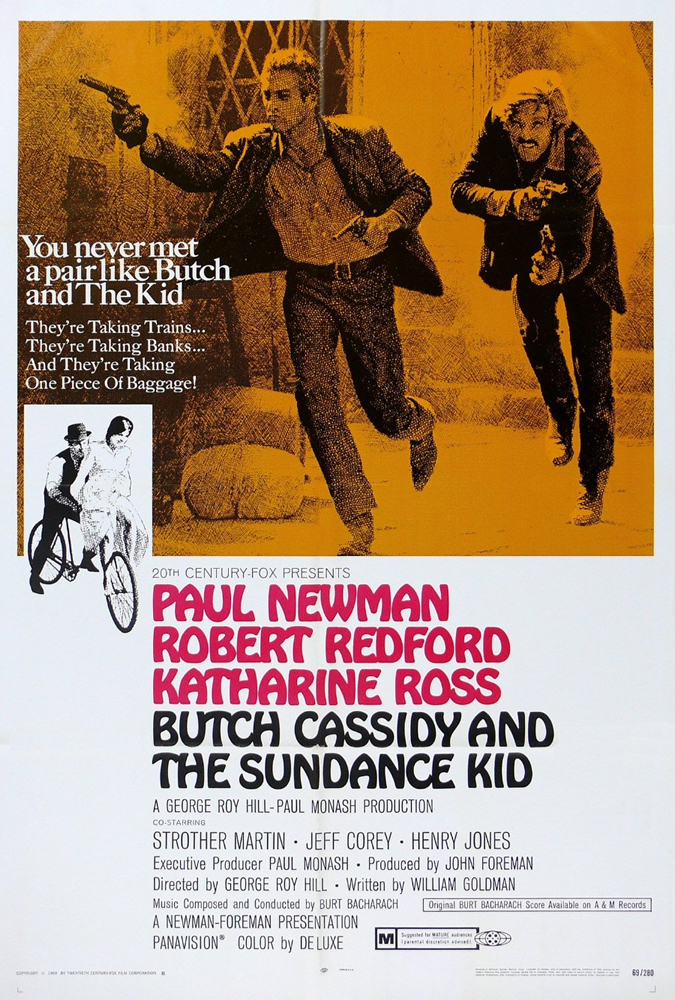
Westerns In March: The Wild Bunch(1969) & Butch Cassidy and the Sundance Kid (1969)

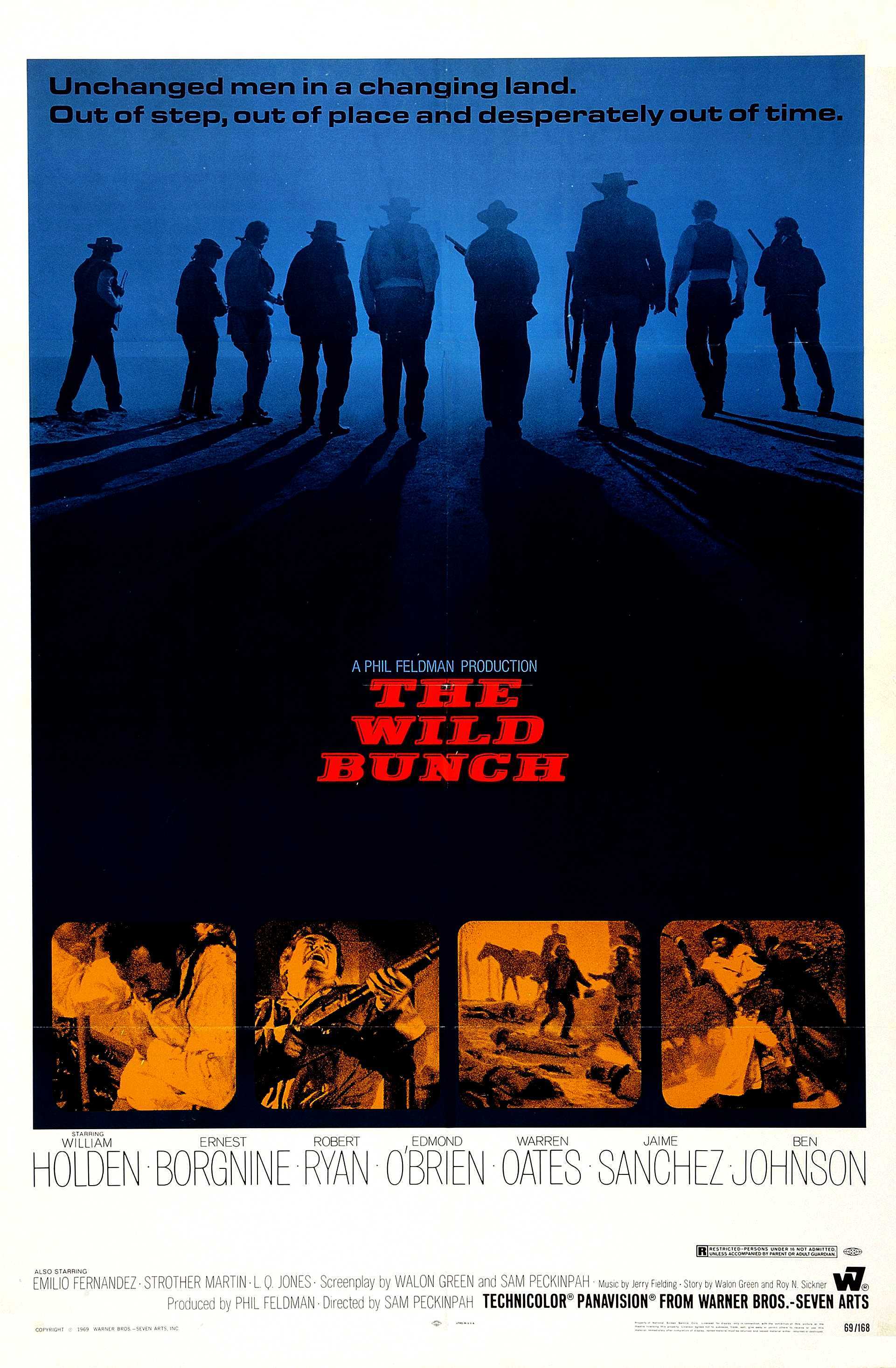
butch cassidy movie posterthe wild bunch poster

While the western was a hugely popular genre (some figures have the genre comprising up to 1/5th of the total output from Hollywood through the 1950s – call it the MCU of the classic era) it declined sharply in the 1960s. About that time the Europeans, especially the Italians, picked up the western handle and made many more films in the genre – some were great like Sergio Leonne’s Man with No Name Trilogy, but many were pretty terrible.

But in America, the western pretty much died out. Oh here and there a new western would pop up, but they were no longer the preeminent genre and have never regained that title.

Somewhere between the peak of western popularity and the death of it, there began a new kind of western, call it revisionist western. Where classic westerns tended to side with the Europeans in things like Manifest Destiny and treated the natives with contempt – making them faceless, nameless hordes of blood-thirsty monsters – revisionist westerns saw things differently. They dealt in shades of gray instead black and white.

Last week I watched two revisionist westerns from 1969. While they both subvert the classic western tropes, they are vastly different in the stories they tell and the tone in which they take. Call them two sides of the same coin. I thought it would be fun to talk about them both in this post.

The Wild Bunch is a pessimistic, dark, and violent film. It begins with a group of children watching with glee some scorpions get devoured by a million ants. A little later they will set them all on fire. In between those moments, we watch The Wild Bunch (led by William Holden and Ernest Borgnine) rob a bank. A posse (led by Robert Ryan) hired by the railroad to stop the Bunch opens fire as soon as they come out. They kill some of the gang, but a bunch of innocent citizens as well.

The movie, as directed by Sam Peckinpah, seems to announce, This is Not Your Daddy’s Western. Classic westerns were violent – there was plenty of gunplay and death – but they tended to not be particularly bloody. When a man was shot rarely do you see a bullet hole in his clothes, much less blood spurting out. I reckon half The Wild Bunch’s budget was spent on squibs and fake blood.

Butch Cassidy and the Sundance Kid begins with a card game. Sundance (Robert Redford) is winning but is accused of cheating. Butch (Paul Newman) tries to tell him to just let it go, but Sundance can’t. The confrontation ends with Sundance literally shooting the pants (or the belt, rather) right off his accuser. It is a completely unrealistic maneuver (the bullet would easily go through the belt and into the man, but doesn’t) but it sets the playful, humorous tone of the entire film.

Butch and Sundance spend most of the film wisecracking and generally having fun being outlaws. The Wild Bunch often laughs, but it is a desperate laugh, the laugh of men headed toward their demise.

Not to spoil both films, albeit ones that are more than 50 years old and such a part of the cultural zeitgeist you likely know how they both end, but all of these characters are headed toward their demise. None of our heroes live out their lives in peace and prosperity. Part of what revisionist westerns often did, and these two films in particular definitely do, is recognize that life in the Old West was often short and very violent. They also act as codas of sorts to the western genre itself.

It is fascinating how these two films are saying similar things but in such different ways. The Wild Bunch is realistic, dark, and gritty. Butch and Sundance is a light, buoyant, and joyful. I love them both, but on any particular day I’m gonna reach for Butch Cassidy far more often than The Wild Bunch.

Westerns In March: Cheyenne Autumn (1964)

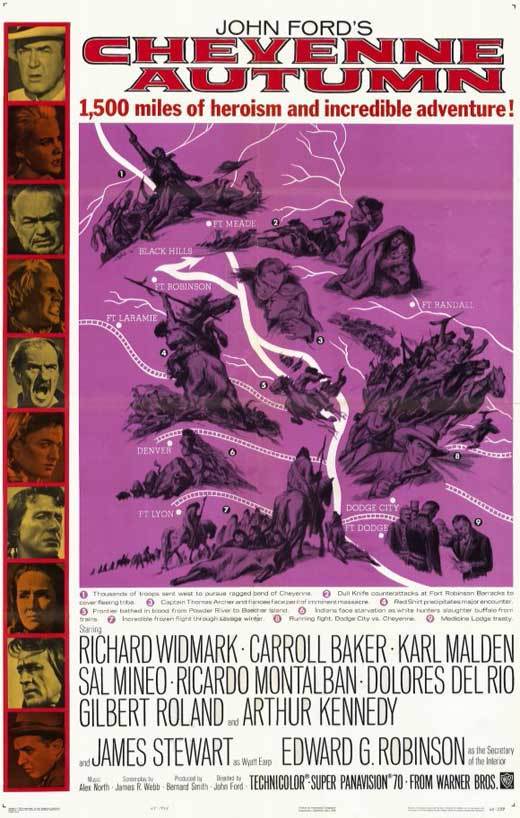
cheyenne autumn poster

John Ford made some of the greatest westerns ever made. From Stagecoach (1939) to My Darling Clementine (1946), The Man Who Shot Liberty Valence (1962) to The Searchers (1956) Ford proved over and over again to be a master of his craft, and of telling stories about the wild west and the men (and women) who tamed it.

Unfortunately, like so many western filmmakers at the time his films were not always kind to the Indians. All too often the Native Americans in western movies were faceless savages bent on raping and killing the white man. They were rarely made into full characters and very little attention was paid to the fact that the white man was invading the Indian’s territory and homeland.

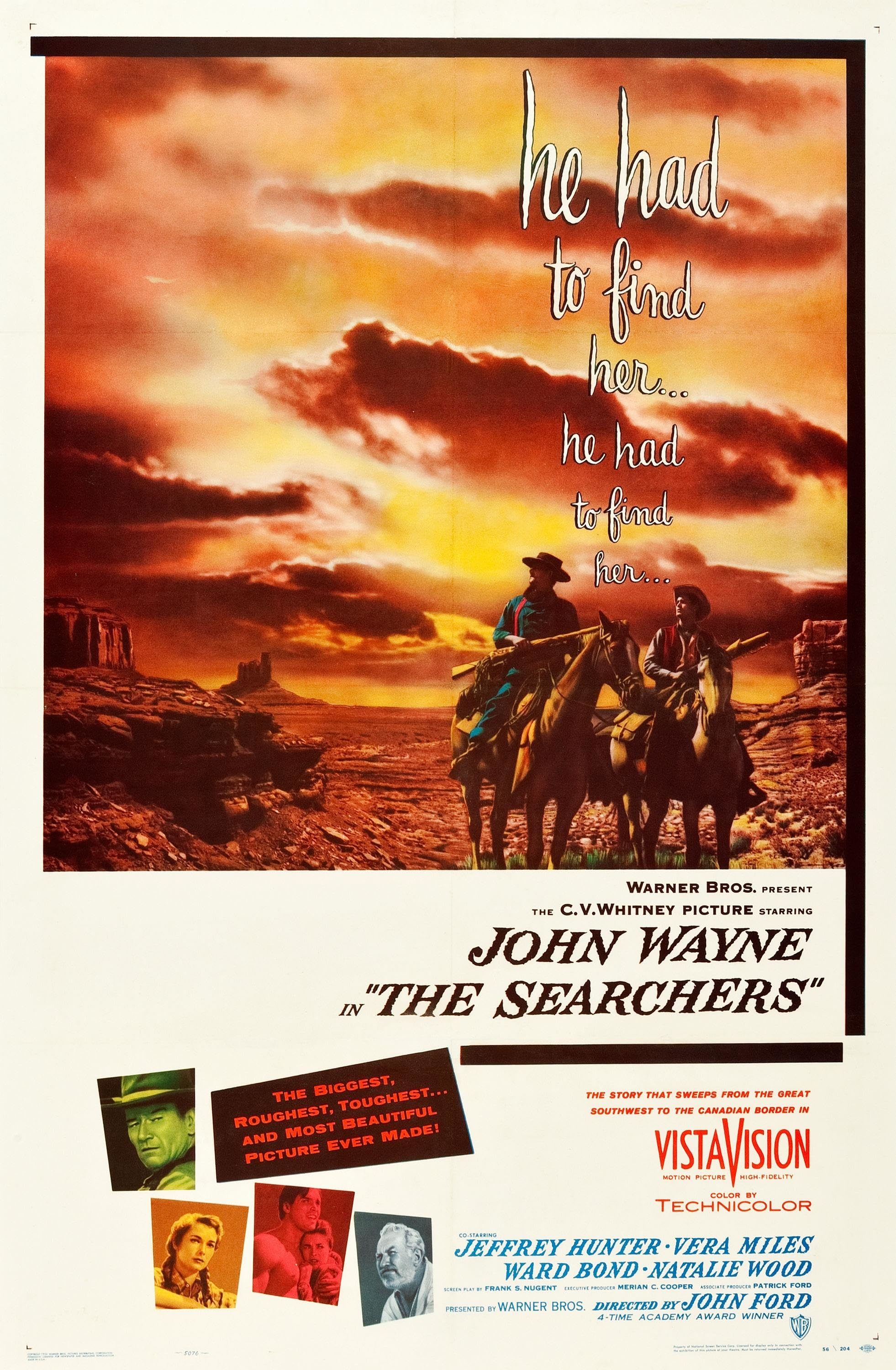
In later years Ford seemed to have recognized his flaws in this area and at least in some ways he tried to make amends. In The Searchers John Wayne plays a pretty repugnant racist and his quest to rescue his niece, who has been captured by some Comanche Indians, allows the film to raise questions about the inherent racism of Manifest Destiny and America’s unrelenting quest to capture the entire country.

With Cheyenne Autumn, Ford’s last western and his penultimate film as a director, he depicts the historical event of the Northern Cheyenne Exodus in 1877 where a group of Indians decided to move from Oklahoma Territory back to their homeland in Wyoming. His depiction of the Indians is sympathetic and demonstrates just how awful the American government treated them.

Unfortunately, the film is overlong, rather dull, and still a bit racist. The two main Indian characters, Red Shirt and Little Wolf are played by Sal Mineo and Ricardo Montalban respectively – two very much not Indian actors (Mineo was of Italian descent and Montalban was Mexican born). The film’s focus likewise is on the white characters with the Indian characters playing second fiddle in their own story.

I could be more forgiving of most of this if the film was actually any good. Instead, it is slow, plodding, and contains one of the most unnecessary side stories I’ve ever witnessed.

The film begins with the Cheyenne on a reservation in Oklahoma. The land is arid and infertile. The people are sick and starving. Some delegates from Washington are supposed to meet them and discuss what can be done. But they don’t show and the Cheyenne decide to go home.

The trip is long and arduous. They must travel in desolate areas so as to not be seen by one of the many Army Forts along the way. Starving, some of them decide to turn themselves in at one of those forts. Though the Captain is sympathetic to their needs he has orders to turn them right around and send them home. Sickness, starvation and the brutal winter weather be damned.

There is some business about the press drumming up hysteria by printing falsehoods about the number of Cheyenne on the march and their ill intentions. Many of the soldiers on the ground (led by Richard Widmark) tend to be sympathetic to the plight of the Cheyenne but have their hands tied by forces in Washington.

Etc. and so on. Ford shot some of it in and around Monument Valley and Arches National Park and he gives the scenery his usual widescreen glory. But the story just never congeals into something interesting.

At one point, out of nowhere comes a scene with James Stewart playing Wyatt Earp and Arthur Kenney as Doc Holiday. It has absolutely nothing to do with the rest of the film and is completely comic in tone (the rest of the film is utterly dramatic) and then it just ends and we never see them again.

Somewhere buried in there is a film that could have been great. The story of the Cheyenne’s exodus is a fascinating one and could make an excellent film. This is not that film and what we’re left with is the thought that Ford’s legacy left a whole lot of other films that are far greater than this one.

Westerns in March: The Magnificent Seven (2016)

magnificent seven poster

Seven Samurai (1954) is one of my all-time favorite films. It would easily make my Top 5 list. It is full of adventure and action, romance and comedy. It has some of the best camerawork of any film and its themes of loyalty and justice, honor and duty speak directly to me. Its plot – that of a poor farming village hiring a group of masterless samurai to protect them from thieving bandits – has been the template for countless other films.

Its Japanese director, Akira Kurosawa, was greatly influenced by American cinema, especially the westerns of John Ford and Howard Hawks so it makes sense that an American, John Sturges, would turn the Seven Samurai into a western.

The Magnificent Seven (1960) turns the samurai into cowboys who are hired by poor Mexican farmers to protect them from some thieving bandits. It loses some of the thematic weight of Kurosawa’s film but it has a great cast (Including Yul Brynner, Steve McQueen, and Charles Bronson), a fantastic soundtrack from Elmer Bernstein and its a lot of fun to watch.

Hollywood seems to do nothing much anymore but make comic books movies and remake their own films and so naturally they remade The Magnificent Seven in 2016. If the original The Magnificent Seven is a pale imitation of Seven Samurai, then the remake is a paler imitation of the original.

It is kind of boring. No, that’s not the right word as there is a lot of action. It is forgettable. I watched it a week or so ago and I’d be hard-pressed to give you any detail about the film.

It follows the plot of the original, more or less. In this one, the bandits are robber barons, or rather robber baron (singular, played by Peter Sarsgaard) and his hired hands. The village is a frontier town and our villain isn’t raiding it for food, but has built a mine nearby and has more or less enslaved them as workers.

Denzel Washington leads the Seven. He’s good, as he is good in everything, but his character has none of the moral center that Yul Brynner’s version had. Brynner played it like a man who simply had to defend the village, but Washington’s character is in it for revenge.

Chris Pratt plays the Steve McQueen part. I’ve liked Pratt in other things but here he only proves that there will only ever be one Steve McQueen. The rest of the cast (including Ethan Hawke and Vincent D’Onofrio) are fine, but mostly not that interesting (it took me a minute to realize D’Onofrio was even in the film he looks so different than he usually does, but his character is probably my favorite.)

It isn’t that this film is bad, it is that it is so completely unnecessary. If you want to watch a great film with a similar plot go watch Seven Samurai. If you want to watch a really enjoyable version of this film then watch the original. There is no reason to waste your time on this one.

Westerns in March Stars: in My Crown (1950)

stars in my crown poster

Jacques Tourneur directed one of the great Film Noirs Out of the Past (1947), and one of the eeriest horror movies of all time, Cat People (1942). I’ve seen a few of his other films and they are all good, so I was excited to see what he could do with a western. Stars in My Crown isn’t bad, but it’s not all that great either. It is a slice-of-life film that’s a bit too sentimental and feels like it borrows a little too heavily from To Kill a Mockingbird. Though that can’t be true as it came out years before that book was written. In fact, Harper Lee has noted that she was partially inspired to write her famous novel after watching this film. But she did it much, much better.

Joel McCrea stars as Josiah Doziah Gray who shows up in the little town of Walesburg just after the Civil War, walks into a saloon, announces he’s the new preacher, and starts his first sermon. When the saloon customers laugh at him, he pulls out his pistol and makes them listen.

Soon enough he becomes well-loved in the community. The film watches him as he gets married, has a child, and enjoys inviting the local atheist to church.

The town doctor dies just as his son (James Mitchell) comes back to town, having just graduated from medical school. He has none of his father’s bedside manner and feels people ought to just do what he says because he’s got the schooling to know what he’s talking about.

When typhoid breakout the preacher inadvertently passes it on to the schoolchildren and gets yelled at by the Doctor for not taking precautions (I’ll leave you to ponder how very familiar that sounds).

Later a free slave (Juano Hernandez) is harassed by some miners who are also Klansmen. This is where the film feels like a half-baked Mockingbird but it is much more sentimental than that story.

McCrea is enjoyable, in fact, everyone is good. The story is fine and the direction alright. It’s like an episode of Little House on the Prarie or some such thing. Fine enough to watch, but nothing particularly special.

Westerns in March: Young Guns (1988)

young guns movie poster

I was 12 or 13 when I first watched Young Guns. I can’t remember now if that first watch was in the theater or when it came out on VHS tape. Wherever it was, I loved it. I watched it many times after that first viewing as a young teen and even into my college years. It was probably the first western I ever watched. Me and my friends endlessly quoted it.

I remember my uncle, who was a huge western fan (he used to always tell us that we liked westerns too – because Star Wars was just a western in space) did not like Young Guns. He didn’t like it because it wasn’t historically accurate and it portrayed Billy the Kid as a hero and he was really an outlaw and a vicious killer.

At some point, I stopped watching it. Never intentionally, I don’t think, just one of those things. I bought it and the sequel on DVD but let it gather dust on my shelves. Somewhere in my cinephile film snob years I did rewatch them both and decided they were bad, that they were not good movies.

But this being Westerns in March month I decided to dust it off and give it another try. On a technical level, it isn’t great, but it is still a pretty fun ride.

My uncle was wrong. It is surprisingly historically accurate. At least on a plot level. Billy the Kid was taken in by John Tunstall and his regulators. Tunstall was murdered by the Murphy gang and this did cause a war between the two factions. The regulators were deputized for a time and then became outlaws. I’m not a historian and I’m sure there are any number of embellishments, but from what I’ve read it gets the basic story right.

The movie mostly comes from Billy’s point of view which naturally makes us root for him, and Emilio Estevez is too charming an actor to make him a villain. But it doesn’t shy away from his ruthlessness. When Billy and the regulators become deputies and are supposed to arrest the men responsible for Tunstall’s murder, Billy gets his revenge in blood. At one point he shoots a man at point-blank range and the camera moves in close to Charlie Sheen’s face (he plays Billy’s compatriot) as the dead man’s blood splatters all over it. Billy often seems unhinged and takes great glee in violence (his friends periodically note that he seems quite crazy).

As a teenager, I overlooked these things and will admit to finding him heroic. But watching the movie now I recognize the film doesn’t look away from his violent tendencies.

It is avery 1980s western. Some call it the Brat Pack western as it stars the aforementioned Emilio Estevez and Charlie Sheen, plus Lou Diamond Phillips, Keifer Sutherland, and Dermot Mulroney. The soundtrack is filled with synthesizers and big guitars, and there are some bright filters used in the credit sequence. All of this feels quite dated and the writing doesn’t do it any favors (though it is quite quotable.)

So I guess I’ve come full circle on it. I loved it as a teenager, hated it as a younger adult and now I can recognize its flaws but also appreciate it as an enjoyable entertainment.