Foreign Film February: Battleship Potemkin (1925)

battleship potemkin

There are some films that loom so large in a cinephile’s imagination that they are almost impossible to watch. These are films that have been so well-praised, that are so influential, so important that they sometimes seem less like movies than cinematic gods.

Or something. I’m getting a little carried away with my bloviations. Battleship Potemkin is considered one of the greatest movies ever made. It is famed for its use of editing, creating montages to elicit an emotional response. Director Sergei Eisenstein believed that you could juxtapose two unrelated images and create an entirely new idea. What he did in Battleship Potemkin was revolutionary and those techniques are still used today.

The “Odessa Steps” sequence is one of the most influential scenes in all of cinema. It has been paid homage to, and outright stolen from, and parodied countless times. I first heard about it from Brian DePalma’s film The Untouchables which has a very similar sequence involving a baby carriage on some steps.

All of this hung over my head years before I ever watched it. I put off watching it because its reputation was too great, its influence too wide for me to ever be able to sit down and take it all in.

To be honest, I really just thought it was going to be dull. I’m learning to appreciate silent films, but it is a struggle.

Turns out Battleship Potemkin is a real banger. It is fast-paced, full of incident and action, and an utterly enjoyable watch.

It is about a historical event in which some sailors revolted against the officers of the ship and took it over. They then port in Odessa where the citizens celebrate the liberation of the ship and bring them food, all before being slaughtered by the Army. It was an important part of the 1905 Revolution and the film was made as a bit of propaganda celebrating the 20th anniversary of the event.

It is propaganda. It is utterly designed to make you side with the revolution and ultimately the Communist State. I find that modern reviews of the film ultimately fall on where one’s political views are. None of that matters to me. It is a magnificent, wonderful film with never a dull moment. It is a movie I’d show to people who have never seen a silent movie.

The Friday Night Horror Movie: Paganini Horror (1988)

paganini horror

Horror, as a genre, can take some of the dumbest plot points and turn them into something fun, and interesting, and when you’re lucky, even scary. Killer clowns are living in the sewer, hatchet-wielding dudes slice up coeds in isolated campgrounds, killer tomatoes lurk at the grocery store, and just today I watched a short film called Hair Wolf.

Sometimes the movies are in on the gag (that killer tomato movie is full of winks towards the camera), sometimes they find ways to elevate the material, and sometimes they are just dumb.

Paganini Horror has a fairly interesting (if rather silly) idea but doesn’t find a way to do anything interesting with it.

An all-girl rock band is struggling to come up with their next big hit. Their producer Lavinia (Maria Cristina Mastrangeli) complains that all their new songs sound like their old ones. They need something new, something bold, something that will wow their fans.

Naturally, they buy an unpublished score by the famous Italian violinist and composer Paganini from an unscrupulous dealer (Donald Pleasence who doesn’t get to do much but has one scene in which he throws piles of cash off a tall building while muttering “fly away little demons.” Naturally, they decide to shoot a video of them performing their rock-n-roll version of the Paganini song inside the murder house where he lived. Naturally, this unleashes a gateway to Hell.

See what I mean? That’s not a bad setup. I mean, it’s pretty silly, but a good writer and director could do something with that. Instead, we get some half-thought-out ideas, a couple of decent bouts of gore and violence, and two (count them) two full-on music videos.

Daria Nicolodi who starred in a bunch of great Dario Argento films (and cowrote Suspiria with him) costars as the owner of the creepy mansion. She also co-wrote it with director Luigi Cozzi and Raimondo Del Balzo (who hasn’t done anything else I’ve seen). You can kind of see what they were going for, but without a true master like Argento to help out it all comes out as a big mess.

Columbia Classics Collection Vol. 4 Is the Pick of the Week

colubia classics

It is both an amazing time to be a physical media collector and a frustrating one. Amazing because there is so much incredible stuff being put out nearly every week. Frustrating because it is sometimes difficult to know which release is worth your money. I don’t really understand all the intricacies of how it all works, but sometimes a film will be released on Blu-ray by multiple companies within a relatively short period of time.

This is especially true of older movies (and we won’t even talk about movies that have gone into the public domain). It is difficult to figure out which release is the best one.

Take this week’s Pick. Columbia Pictures is releasing six films (and one television series) in this nice-looking boxed set, all in 4K. They are mostly very good movies (His Girl Friday, Guess Who’s Coming to Dinner, Kramer Vs Kramer, Starman – and a Starman series – Sleepless in Seattle, and Punch Drunk Love.) But they’ve all previously been released, some of them by Criterion. But I don’t believe any of them have come to 4K.

So, do you double dip? Do we need to buy this boxed set? The price isn’t bad, all things considered. It comes down to about $30 per movie, not counting the TV series. But what if you already own one or two movies. Is it still worth it?

I don’t have answers to any of that. I wish there was a better website that would really break down what releases each movie has received and what the specs were. 

Maybe that’s a weird way to make a set my Pick of the Week, I dunno. But it is a nice-looking set and that’s enough. I guess.

Also out this week that looks interesting:

The Marvels: I’ve really given up on the MCU. A couple of years ago this is a film I would have seen in the theater pretty close to opening weekend. Now I can’t even be bothered to watch it at home. At this point, it just feels like you have to do homework before watching anything. I shouldn’t have to watch a movie and a television series just to understand what is happening in this film. Still, I’ll probably watch it sooner or later.

Eric Rohmer’s Tales of the Four Seasons: Over the course of the 1990s the celebrated French director made four films about the four seasons where love was in the air. Criterion has bundled them together with their usual care.

The Shaolin Plot: Arrow Video once again brings a Shaw Brothers “classic” to home video. This one involves a sinister master being confronted by his student.

Hypnotic: Ben Affleck stars in this mystery about a man looking for his missing daughter and finding a secret government plot.

Priscilla: Sofia Coppola directed this interesting biopic of Elvis Pressley’s wife.

The Hunger Games: Ballas of Songbirds and Snakes: I’ve not read any of the Hunger Games books and the only movie I’ve seen is the second one (my dad wanted to go). I have absolutely no interest in this franchise, but obviously some people do.

Footloose (40th Anniversary Edition): I finally watched this 1980s classic last year. As you can read in my review, I didn’t love it, but I did have a lot of fun watching it. This edition comes in a cool-looking Steelbook and is loaded with extras.

Willy’s Wonderland: Nicolas Cage has been in a lot of terrible movies. Sometimes it seems like he will take any old role offered to him. Sometimes that’s actually true as according to him, he did get into some financial trouble over some bad real estate deals and had to work in order to pay them off. I don’t know if that is the case with this movie, but the reviews have been bad. He plays a drifter who gets trapped inside an arcade with murderous animatronics. Apparently, he doesn’t have a single line of dialogue which seems crazy all things considered.

Foreign Film February: Fox And His Friends (1975)

fox and his friends

Rainer Werner Fassbinder was a German screenwriter, dramatist, actor, and director. He was one of the driving forces of the New German Cinema. He reminds me a bit of Lou Reed as he was prolific in his art, a counter-cultural icon, and an absolute terror in his life. 

He is just as known for his incredible amount of output (in his short 37 years of life he wrote/directed some 40 films plus plays and television series) as for his bountiful drug use, alcohol consumption, and sexual liaisons. That’s not to mention his controlling, abusive relationships with just about everyone.

His films run the gamut from experimental art-house fare, to ribald comedies, and confrontational crime thrillers, but he is most known for a series of elegantly styled, incredibly tender melodramas made in the vein of those old Douglas Sirk films. It’s like how Lou Reed could make both Metal Machine Music and “Pale Blue Eyes.”

Not all of his films are great, or even particularly good. I’ve not seen all of them, only a small portion really, but I’ve seen most of his “important” works. I added to that stack just the other day with Fox and His Friends.

Fassbinder also stars in this one as Franz Bieberkopf an uneducated, working class gay man. He begins the film working as Fox the Talking Head in a low-rent circus. When the owner of the circus is arrested on charges of tax evasion Franze starts hustling. He picks up Karlheinz Böhm a wealthy, sophisticated art dealer. Before their tryst Franz makes Max stop off and purchase a lottery ticket. Franze buys a lottery ticket every week and he’s just sure he’ll win this time.

In fact he does win this time, a whopping 500,000 Deutche Marks. When Max’s friend Eugen (Peter Chatel) learns of this windfall he immediately goes from berating Max for introducting Franz into their group of friends to turning Franz into is lover.

Eugen is handsome, well educated, and sophisticated, but he’s also broke. His father’s paper company has hit hard times and if they don’t do something fast it will go bust.

Pretty quickly we realize (though Franz doesn’t) that Eugen is only interested in Franz for his money. He cajoles Franz into letting his company borrow 100,000 Marks, then gets him to buy an expensive apartment and furnish it with expensive things. Meanwhile when they go out in public Eugen is constnatly berating Franz for his lack of education and unsophistication.

You don’t have to have a crystal ball to know how it will all end. Fassbinder wasn’t a great actor, but he gives Franz a deep meloncholy. It is as if he knows that Eugen is taking advantage of him, but at first he doesn’t care because it is giving him access to something he’s never had before – status – and then he doesn’t know how to get out of it.

A couple of times Franz tries to assert himself, he thinks he has an ace in his hand, but always Eugen outsmarts him, and makes him feel even less.

All of this is good. But what I find fascinating about the film is it is a snapshot into a certain type of gay culture, specifically from 1970s Germany, but perhaps universally, that I don’t have access to. As a straight man who grew up in a rural, deeply conservative part of America that culture simply did not exist in my circles. There may have been a gay underground in Tulsa when I was growing up in the late 1980s/early 1990s but I certainly didn’t know about it.

Even now when my social circles have broadened, I’m not a part of any gay scene. I’m not really a part of any straight scene. Or any scene, really. I could use a friend.

So finding this scene detailed is interesting to me. Its like watching any old movie that has a lot of exteriors in a city. You get a snapshot of what was like at that specific time.

The characters are explicitly gay in the film, something surpriisng from a Germany film from the 1970s. It was controvesial at the time. It would be controversial if it was released in America today. But interestingly nobody inside the film makes a big deal about their sexuality. True, it mostly takes place inside gay bars, gay bathhouses and the like, but still there isn’t a hing of homophobia anywhere.

Fox and His Friends isn’t my favorite Fassbinder film, but it is an interesting one and a fascinating time capsule.

Foreign Film February: The Young Girls of Rochefort (1967)

young girls of rochefort poster

Jaques Demy was one of the great French directors. He was an instrumental part of the French New Wave. Early in his career, he wrote and directed two back-to-back musicals, The Umbrellas of Cherbourg (1964), and The Young Girls of Rochefort (1967). They are considered essential classics. Some many months ago my wife wanted to watch The Umbrellas of Cherbourg and so we did.

I didn’t love it.

I like musicals, more or less, but they aren’t my favorite. That’s not a genre I turn to all that often. I once tried to make musicals my theme of the month and I only watched about three of them.

The Umbrellas of Cherbourg is a type of musical that has very little dialogue. Almost everything is sung. I’m not a lyrics guy so musicals are always a little problematic in that I tend to miss plot points when they are sung. When everything is sung I get lost pretty quickly. That’s apparently even true when they sing in French and there are subtitles.

But also there weren’t any showstoppers. The music was nice but there wasn’t a single song that left me humming after it was over. There was no “Oh What a Beautiful Mornin'” or “Sit Down You’re Rocking the Boat” or whatever.

It was a perfectly fine film, but I’m not sure what all the fuss is about.

When my wife wanted to watch The Young Girls of Rochefort I was none too excited, but I relented because I love her and I enjoy watching films with her.

I liked this one a lot better. There is quite a bit of actual dialogue which allowed me to follow the story more closely. The story itself is more interesting to me. It is light and frothy and a delight. It follows two sisters (real-life siblings Catherine Deneuve and Françoise Dorléac) as they look for love in the titular coastal town of France. Little do they know their true love is closer than they think.

Much like Umbrellas, The Young Girls of Rochefort is full of bright, pastel colors, and the costumes are very 1960s and very beautiful. It feels like this one is full of real songs too. Songs you’ll leave the theater singing. It also has Gene Kelly who is always a delight.

Loads of people love The Umbrellas of Cherbourg so I probably need to revisit it at some point. I suspect knowing what I’m getting into will help me enjoy its charms more. But for now I tip my hat to The Young Girls of Rochefort and delight in it fully.

The Friday Night Horror Movie: House (1977)

house poster

Steven Spielberg’s Jaws was a massive worldwide hit in 1975. Naturally, studios from all over tried to find ways to replicate that success. The Japanese studio Toho was no exception and they hired Nobuhiko Obayashi to write something Jaws-like. What he came up with was one of the strangest, incomprehensible films I’ve ever seen.

The basic plot, if you want to call it that, is actually pretty simple. A teenaged girl nick-named Gorgeous (Kimiko Ikegami) (most of the characters in this film have goofy names like Kung Fu, Fantasy, and Sweet) invites several of her friends to spend summer vacation at her Aunt’s (Yōko Minamida) house. Strange things begin happening almost immediately once they arrive. It seems the house is haunted.

But any type of plot outline will do nothing to explain just how completely nuts this film is. Criterion describes it by saying that it’s like if an episode of Scooby Doo were directed by Mario Bava. I’d add that it’s a psychedelic cartoon turned into a live-action nightmare.

There is a floating head that bites one girl in the butt checks, a piano that eats people, an evil cat, a murderous futon, and so much more. The sets’ backdrops are gorgeous and intentionally designed to call attention to their fakeness. Obayashi uses fisheye lenses, superimposed images, freeze-frames, matte paintings, periodical animation, and every other cinematic trick at his disposal.

It feels both thrown together and tightly scripted. It is more comedic than horrifying, and more bizarre than thematically satisfying, but it truly is a film worth watching.

It is one of those films I’ve been hearing about for ages. The Criterion Collection got ahold of it a few years back and it’s been talked about ever since. But for one reason or another, I kept putting off watching it. I like weird films but I feel like I need to be in the mood for them, and I rarely feel like I’m really in the mood. But I needed a foreign language horror film and was struggling to find something so I put it on.

I’m so glad I did.

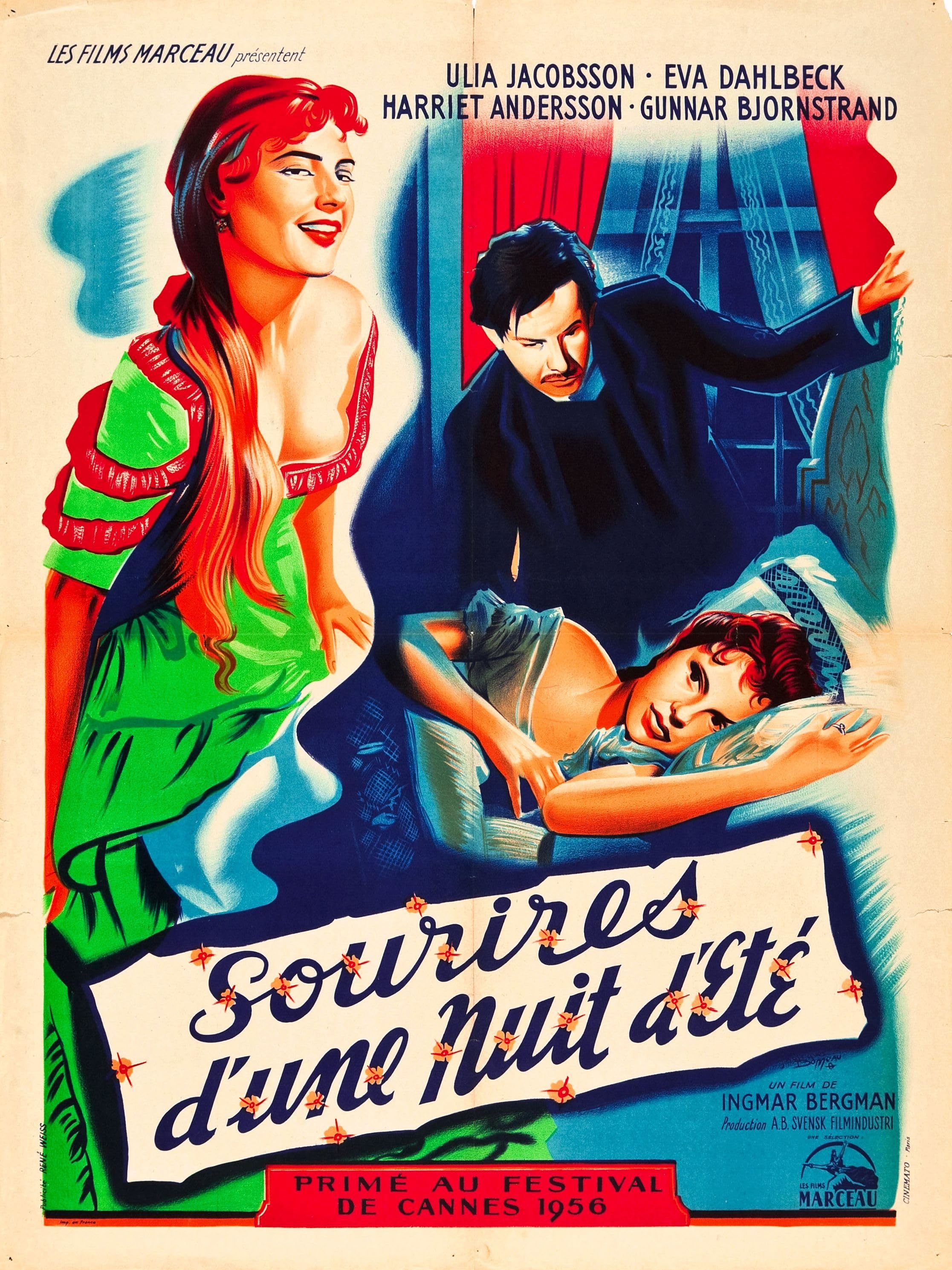
Foreign Film February: Smiles of a Summer Night (1955)

smiles of a summer night

Several years ago, probably during one of their semi-annual 50% off sales, I bought the Criterion Collection’s big boxed set of Ingmar Bergman’s movies. Ingmar Bergman is a titan of cinema. He’s widely considered one of the world’s greatest film directors, having helmed many of the greatest movies ever made.

His films are intellectual, somber, sometimes experimental, and almost always challenging. He made movies about life and death, spirituality, and religion (he made an entire trilogy from the Silence of God). As such his films are often difficult to watch. I love many of his films and yet this boxed set has set on my shelf mostly gathering dust. Bergman films are a bit like “Dark Stars” from 1969 – infinitely rewarding, but you’ve got to be in the right head space and you’ve definitely got to pay attention to what they are trying to do.

Since it is Foreign Film February I knew I wanted to watch a Bergman (I think I said the same thing last year and didn’t manage to do it). The Criterion set doesn’t present the films chronologically, but rather as one might if you were creating a film festival for the director’s works. Previously, I randomly picked films out of the collection to watch but this time I decided to begin at the beginning, the Collection’s “Opening Night” selection, Smiles of a Summer Night (1955).

Smiles was made at a difficult time in Bergman’s life. His previous two films had not done well and the studio essentially told him if his next film wasn’t a success he was done. His personal life was in turmoil and, according to the liner notes included in the Criterion set, he decided he was either going to make a new film or commit suicide.

So, Ingmar Bergman, a director famed for his sober, austere films about the meaning of life, during one of the lowest points in his life made a light comedy.

And honest-to-God it is funny.

When I read Bergman had made a comedy I figured it would be more like Shakespearian comedies, meaning that it wasn’t a tragedy – that it didn’t end in the death of everybody. But no, it is a laugh-out-loud, full of clever wordplay and incident comedy.

It is a comedy of manners. It reminded me of the works of Moliere or Oscar Wilde or some other writer I studied in school and have long since forgotten.

The dialogue is clever and droll, and Bergman uses such a light touch that one sometimes has to stop and wonder where all this fancifulness came from.

Fredrik Egerman (Gunnar Björnstrand) is a successful, respected, middle-aged lawyer. He’s married to the much younger Anne (Ulla Jacobsson). It is his second marriage, his first wife died some years ago. Before he met Anne he was involved in a torrid romance with Desiree (Eva Dahlbeck), a famous actress.

When he learns that Desiree is in town starring in a show, he gets two tickets and decides to take his wife. But before they go they take a nap together (as one does). While sleeping he reaches over and caresses Anne. She’s pretty excited by this because even though they’ve been married for a couple of years they’ve never had sex. He doesn’t want to spoil her or some such nonsense. So he’s caressing her and getting all sexy and stuff and then he says her name, and how much he loves her. Except the name he says isn’t Anne, it’s Desiree.

Oops.

They go to the theater, but Anne is understandably upset. When she realizes that the star is named Desiree and that her husband keeps looking at her through the opera glasses, she feigns illness and goes home. Once he’s settled her into bed he slips back out and goes to the theater.

They go back to their place where they barb, jab, and argue over why they broke up in the first place. Frederik solicits help from Desiree for his marital strife, but it is clear they both still have some feelings for each other.

Then Count Carl-Magnus Malcolm (Jarl Kulle) shows up. He’s Desiree’s current lover and he’s insanely jealous. He’s also married. To a girl named Charlotte Malcolm (Margit Carlqvist). At one point without a bit of irony, he utters the line “I can tolerate my wife’s infidelity, but if anyone touches my mistress, I become a tiger.”

Naturally, the five of them wind up together at a dinner party before the film ends. Plenty of mix-ups, double entendres, and verbal jousts ensue. It really is astounding just how light and effervescent this film is. It is hard to believe that the same man who directed this film would go on to direct The Seventh Seal and Wild Strawberries just two years later.

That isn’t to say everything is carefree and happy in this film, it is still a Bergman after all. There is a duel in which two characters play Russian Roulette. And one of the film’s best gags comes at the end of a suicide attempt.

One can’t help but wonder what cinema would be like had Bergman gone on to make delightful romantic comedies. Who knows what else we might have gotten. Instead, we got a plethora of serious dramatic masterpieces. I’ll certainly take that any day of the week.

Foreign Film February: Encounter of the Spooky Kind (1980)

encounter of the spooky kind

I recently resubscribed to The Criterion Channel. It is without a doubt my favorite streaming service, but I have a tendency to put it on hold for a month or two. There are just so many other services and various other ways in which to watch shows and movies that I just can’t afford to subscribe to everything all the time.

One of the many things I love about The Criterion Channel is that it not only has some of the world’s greatest cinema on there – from Kurosawa to Bergman, Fellini to Welles, but it also has tons of oddball, weirdo films as well. The people behind it are just as comfortable with the arthouse as with the grindhouse.

Case in point I watched this film this weekend on the channel. Encounter of the Spooky Kind is a silly martial arts movie that blends low-brow comedy with horror with lots of crazy kung fu thrown in for good measure.

It was co-written, directed by and stars Sammo Hung as Bold Cheung a rikshaw driver. One day while working he discovers two men looking through the peephole of his house, excited that a couple is making love inside. Bold Cheung barges in, narrowly missing the man with whom his wife is having an affair. 

That man is actually Master Tam (Huang Ha) Bold Cheung’s boss. Afraid that he will be found out and that Bold Cheung will have his revenge on him, Master Tam vows to murder Bold Cheung. But he cannot do it outright as he might get caught and be put in prison.

Luckily Master Tam knows a sorcerer. He tricks Bold Cheung into spending two nights inside a haunted house. There the sorcerer has control over a hopping vampire (seriously, apparently Chinese folklore involves living corpses that move around by hopping and sucking out your life force). 

Luckily for Bold Cheung the sorcerer’s apprentice doesn’t think they should use their powers for evil purposes and he sets out to help Bold Cheung to survive.

There’s a bit of voodoo, some more vampires, and even a magic undergarment thrown into the mix. It is all very silly (a little too silly for my tastes) and it runs a bit too long, but mostly it’s a lot of fun. The kung fu is excellent which more than makes it worthwhile to watch.

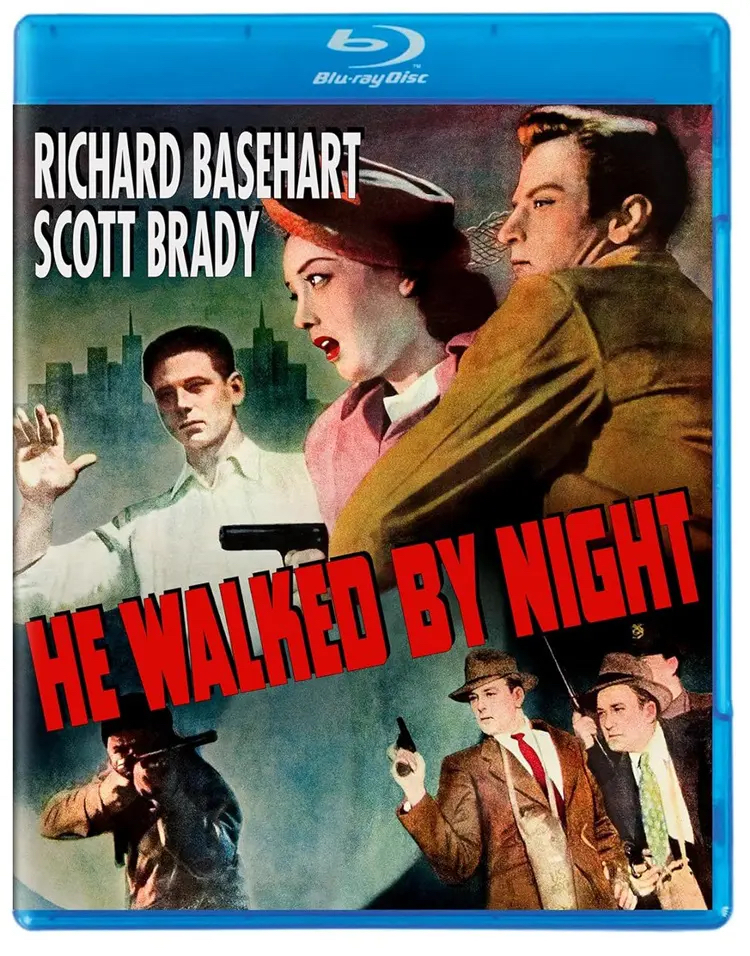
He Walked By Night (1948)

he walked by night

Every Noirvember I spend some time searching for film noirs that I’ve never seen. Last year I saw several lists including He Walked By Night as one of the great film noirs of all time. I had this vague notion that I’d seen it before but upon checking my Letterboxd feed I saw that I had never logged it. My Letterboxd feed is sacrosanct (except when it isn’t) and so I knew I had never watched it before.

But that nagging feeling that I had seen it kept me from putting it on that Noirvember. I got a chance to review the Blu-ray for Cinema Sentries and I figured it didn’t matter if I’d seen it before or not, it is considered a classic and therefore it would be good to have it in my collection.

I put the movie on thinking I’d definitely not seen it before. There was one scene in which a robber comes through a backdoor and is lit in a really interesting way that seemed familiar but I figured there were lots of scenes like that, probably, and I definitely hadn’t seen this one.

Then there was a scene where the cops are asking witnesses what the criminal looks like and it is such a fascinating scene that I immediately knew I’d seen it before.

Sometimes I forget to log things in my Letterboxd is what I’m saying.

Now that my pointless story is over you can read my actual review here.