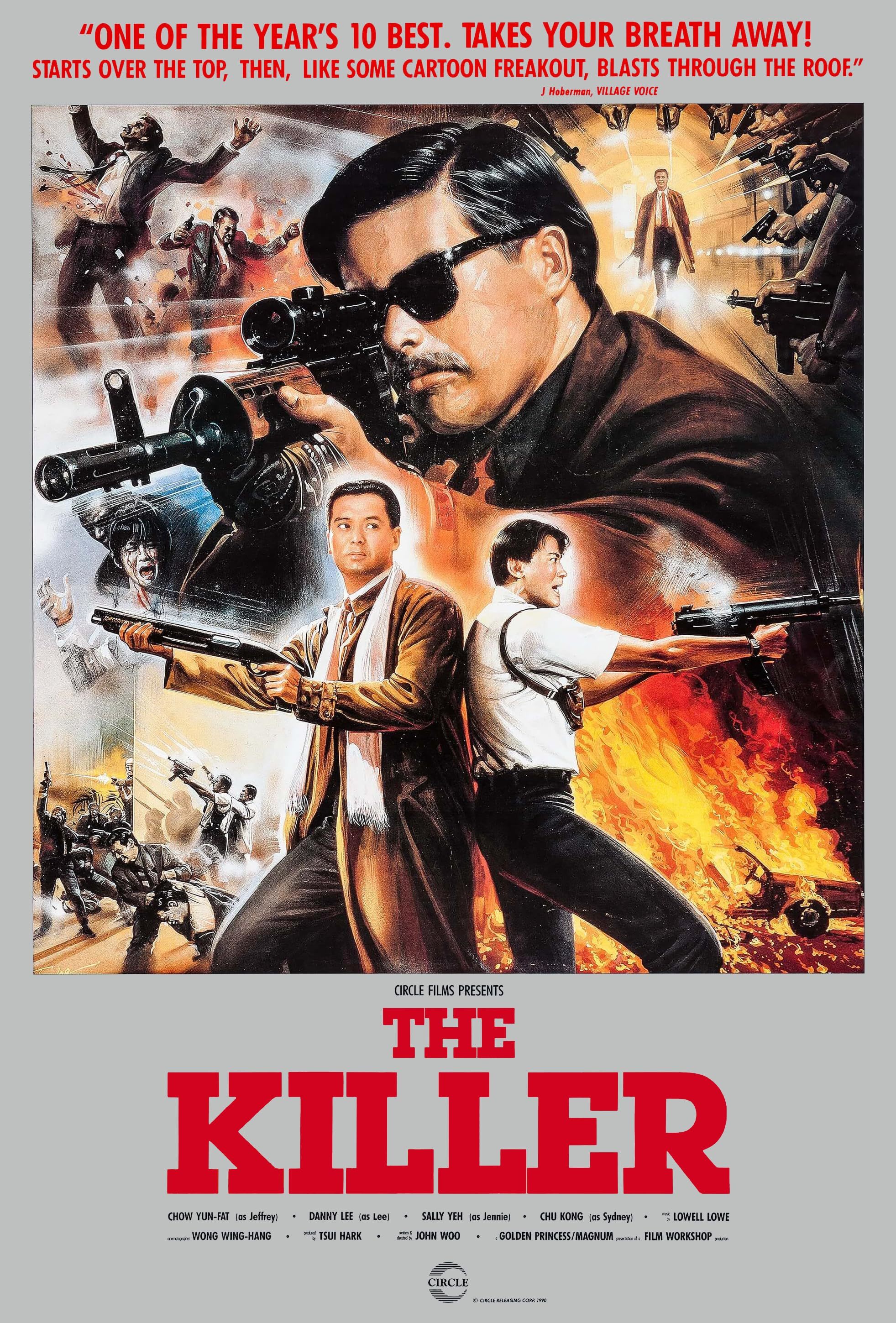
Awesome ’80s in April: Breathless (1983)

poster

I have a lousy memory. I can’t remember the details of things. I deal in impressions and feelings. This is especially true with movies, music, and books – all art really. There are songs I’ve heard a million times, that I’ve sung along to since I was a little boy, but if you were to ask me right now – if you were to put a gun to my head and force me to recite a lyric or tell you what the song was about you’d have a lot of cleaning up to do and be no less the wiser.

There are movies I’ve seen multiple times, that I absolutely love, but that I could not describe the plot to you any more than I can speak French to my wife. There are lots of other films that I know I’ve seen, that I remember enjoying, but the details of what and why are completely lost to me. I can remember it being joyous, or devastating. Sometimes I’ll remember images or specific scenes. I might quote a line of dialogue, but the details just disappear.

I’ve seen Jean Luc Godard’s Breathless at least twice. it is a great movie. An important one. I know it was an early entry into the French New Wave and endlessly influential. I can see Jean-Paul Belmondo and Jean Seberg in that little bedroom and walking down that Parisian street. That imagery is iconic. I know they have great chemistry. But I really don’t remember what happens.

All of which is to say I came to Jim McBrides’ remake of Breathless with Richard Gere and Valérie Kaprisky with a relatively clean slate. Since I can’t remember the details of the Godard film, I wasn’t constantly comparing the two.

The setting was moved to Los Angeles (versus Paris in the original) and the character’s nationalities were reversed (the man is American here, the woman French). I think the basic plot points – the story if you will – are more or less the same but I really couldn’t tell you what details were changed. Honestly, I watched this film about a week ago and I had to read the Wikipedia summary to remember much of what happened in this one.

Jesse Lujack (Richard Gere) is a Jerry Lee Lewis-loving drifter. He steals fast cars and likes to ride. He reads Silver Surfer comic books. He steals a Porche in Las Vegas and drives to Los Angeles in hopes of finding Monica Poiccard (Valérie Kaprisky) an architecture student he had a torrid affair with one weekend while she was visiting Vegas.

On his way, he zips around a traffic blockade, and accidentally (more or less) shoots a cop when he makes chase. On the run from the law he still comes to UCLA, finds Monica, and tries to convince her to come to Mexico with him.

At first, she rebuffs his advances. That weekend was fun but she has work to do. But he’s so charming, so much fun, she eventually gives in. Much of the movie is spent watching them wander around LA, goofing around. He tries to get some money owed to him, and she spends some time with her professor whom she’s also having an affair with.

I don’t remember a lot about the Godard film, but I do remember it is infused with this sense of carefree joy. Godard felt that the French films of his time lacked a certain something that could be found in the cheap American gangster films of the 1930s and 1940s. He made his own version of those films, with modern cuts, music, and filmmaking. His film went on to influence countless American movies.

McBride’s film gained modest critical praise and made a little money, but slipped into obscurity pretty quickly. Godard’s film feels very 1960s even though it mimics film noirs from two decades prior. In the same way, McBride’s film feels very 1980s and has the sheen of neo-noir on it.

I’ve been watching a lot of Richard Gere films from this period and geez that guy was a star. It simply exudes charm and sexiness even when he’s playing a creep like he is here. There is a long scene early in the film where he’s just driving down the road, talking to himself and singing along to Jerry Lee on the radio. I could watch him doing that forever. It’s no wonder Monica drops everything to run away with him.

I can’t begin to argue which film is “better” as if that designation would mean anything anyways. Both films are wonderful, even if I won’t remember any of the details in a couple of weeks.

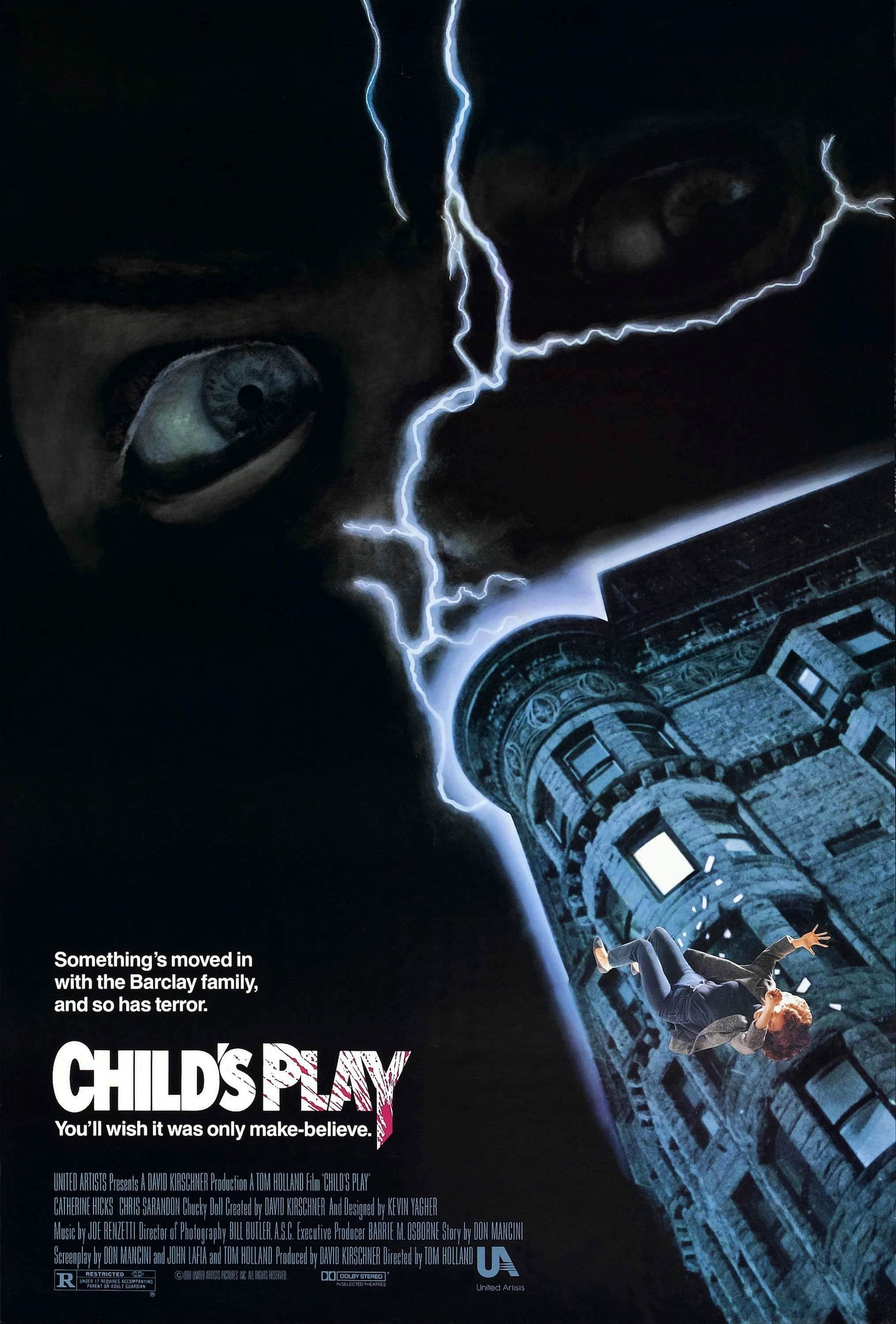
The Friday Night Horror Movie: Child’s Play (1988)

childs play

Out of all the classic 1980s horror icons – Jason, Freddy Kreuger, Michael Myers, Pinhead, etc – the only one I had never paid any attention to was Chucky. I don’t really know why. I was too young in 1988 to have seen the original in theaters, and it may have come too late in the cycle of ’80s horror films to have had the same cultural cache, or at least the same influence on me. Most of those other franchises had just about petered out by the time Child’s Play hit the screen. The exception would be the Hellraiser franchise which got its start in 1987, but I didn’t watch it until 2012.

Or maybe the Child’s Play films didn’t get the same late-night cable TV airplay as the others. Like I say, I don’t really know why I never got around to watching Child’s Play.

I rectified that tonight and while I’m glad I did, I can’t say that I’m all that upset it took me this long to get to it.

Chucky, the knife-wielding, homicidal doll (voiced by the always wonderful Brad Dourif) is an iconic character. I’m definitely familiar with him but that familiarity comes from seeing clips from all the movies and various commercials or specials or whatever.

The thing about the first film in a long-running franchise is that it is often more subdued than the subsequent films. Sequels have a tendency of ramping things up. So it is with Child’s Play. I was surprised at how long it takes for Chucky to really show himself.

First, there is a scene demonstrating how the crazed killer’s soul got into the doll. Then we have to introduce the family he’s going to terrorize. There’s the mom Karen (Catherine Hicks) and the little boy Andy (Alex Vincent). The boy precocious and smart. He’s introduced by fixing his mother breakfast in bed which consists of an overflowing (and over-sweetened) bowl of cereal and a huge blob of butter on burnt toast. He wants a Good Guy doll for his birthday but she can’t afford one. Later some homeless dude has one for sale for cheap.

At first the doll talks in its normal voice. Everything is normal about it. Then the babysitter gets pushed out the window of their high-rise apartment. Andy says Chucky scared her and she fell. Andy says Chucky speaks to him (and his language is pretty filthy).

No one believes Andy, including police detective Mike Norris (Chris Sarandon). We get a few POV shots from Chucky’s perspective and a glimpse of him moving around, but for a good chunk of the film we don’t really see him in action.

This isn’t to say the film would be improved if Chucky were to be seen early on wreaking murderous havoc. I suspect we’ll get more of that in the sequels. Rather I’m simply stating how surprising it was to me to find the story weaving a mystery for the characters about whether or not Andy was making Chucky up or not, even though as an audience we know the doll lives.

It makes sense from the perspective of the filmmakers. They didn’t know this was going to turn into an iconic franchise. They were just trying to make a scary movie about a killer doll. They needed an actual story, with plausible characters. Later it can have films with more murdering mayhem, but the first film in a franchise needs grounding.

Or something. That concept makes sense in my mind, but honestly, watching it was a little bit of a drag. I wanted more Chucky, not more story, more grounding. Once the doll does come out it is pretty cool. The animatronics are great, and while he’s not in full-on shite talking mode yet, he gets in a few good lines. And the ending is pretty great.

I’ll definitely be checking out those sequels.

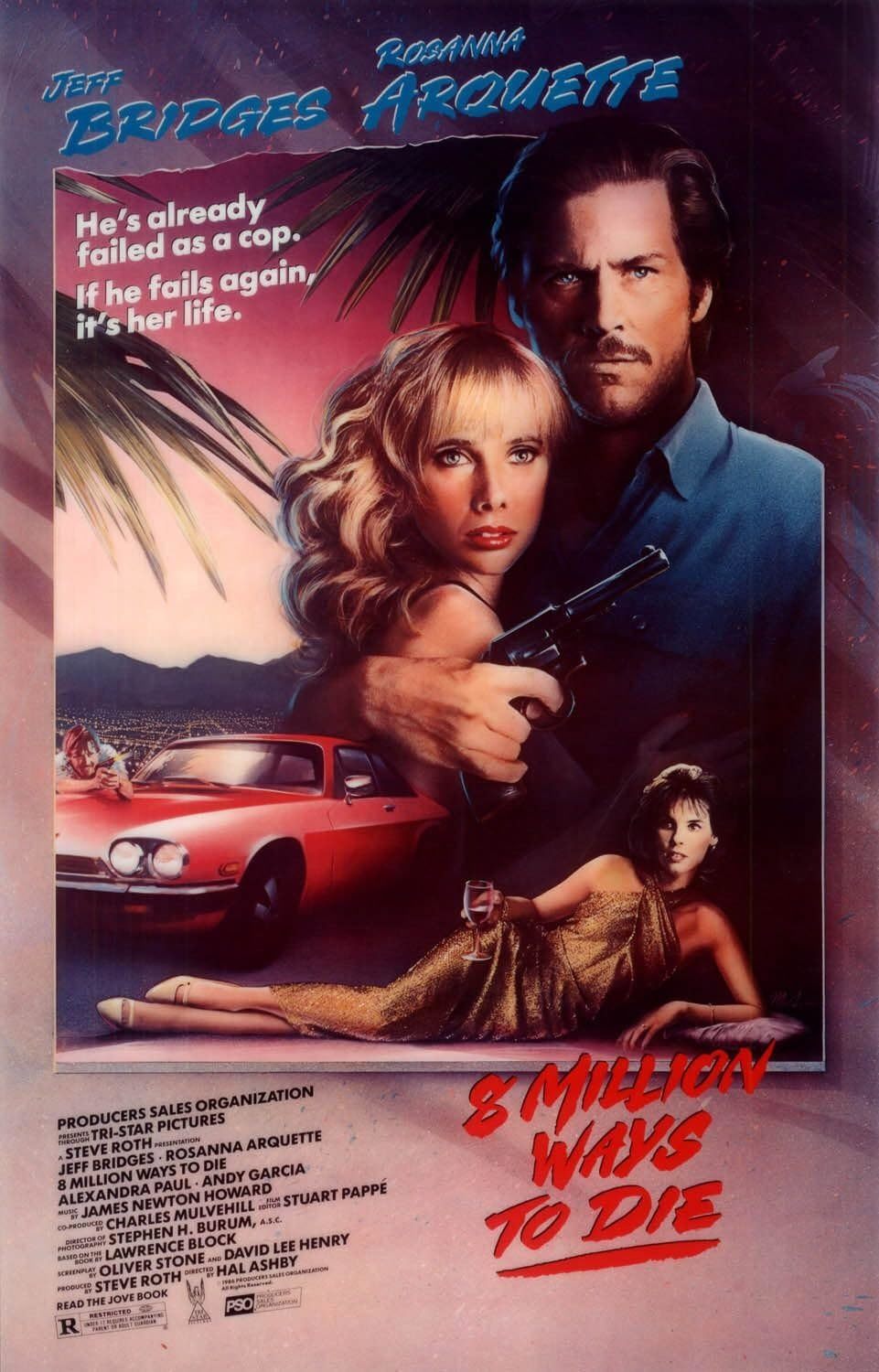
Awesome ’80s in April: 8 Million Ways To Die (1986)

8 million ways to die

The other day I was in my local used bookstore and I picked up a copy of Lawrence Block’s 8 Million Days to Die. I don’t remember why I did. I’d never read a book from Block before. I read a lot of detective fiction so probably I’d just heard his name mentioned as a good writer of that genre. Anyway, I bought the book and read it. I liked it quite a lot.

It is the fifth book in Block’s series about Matthew Scudder an ex-cop, sort-of private eye. At no point did I feel I was missing anything having not read the previous four books in the series, but I liked it enough to know I wanted to start at the beginning. I still have been unable to find that first book in the series at the used store. Maybe I’ll have to buy it new.

Fast forward a few months and I got a review copy of a book entitled Into the Night by Cornell Woolrich. The manuscript of which was found unfinished in Woolirch’s desk when he died many years ago. Lawrence Block was tasked to finish it. I read it and reviewed it (which you’ll be able to read soon over at Cinema Sentries) and quite liked it.

Lawrence Block must have been on my brain because when I came across this adaptation of 8 Million Ways to Die I got all sorts of excited and watched it immediately. It is good enough that I wish they’d made half a dozen sequels and turned it into a television show.

It has been too long since I read the story to know how faithfully they adapted it to the screen. They definitely moved it from New York to Los Angeles, and I’m sure a lot of the details were changed, I don’t remember that ending at all, but the basics are there.

Jeff Bridges plays Matthew Scudder. He begins the film as a detective working for the Los Angeles Sheriff’s Department. When a raid goes horribly wrong, ending with Scudder shooting a small-time drug dealer in front of his wife and kids, Scudder finds himself without a job and in a drunk ward. Cop politics handled the first, a several-day bender got him into the second.

At an AA meeting, someone hands him a note to be at a private gambling club at a certain time. There he meets Chance (Randy Brooks) the owner of the club, a high-class call girl named Sarah (Rosanne Arquette), and Angel Maldonado (Andy Garcia) a drug-dealing gangster. All three will become the major characters in our story.

But he also meets Sunny (Alexandra Paul) another call girl, the one who initially invited him to the party. She plays coy at first but eventually offers him $5,000 to ask Chance, who she says is her pimp, to let her leave town and leave the business for good.

Chance says he’s not her pimp, doesn’t have a hold on her at all, and has no problem with her leaving. By the next day she’s been brutally murdered.

Scudder isn’t the kind of guy – ex-cop or not, struggling alcoholic or not – to let that sort of thing go and so he’s on the case.

The script was originally co-written by Oliver Stone and R. Lance Hill with some rewrites added by Robert Towne. Director Hal Ashby was reportedly so drunk and stoned while filming that he was fired during post-production. A new editor was brought in who cut it to pieces and added some dialogue in post.

As such the film has a disjointed, shambolic feel to it. Ashby’s films often feel a little disheveled but this is even more so. There are abrupt cuts and references to things that never happened on screen (but clearly were intended to, and were probably cut).

It is also dingy and dirty, a modern film noir that isn’t afraid of the muck. Jeff Bridges is terrific as Scudder. He gets the look and feel of an alcoholic just exactly right. His performance is full of wonderful little details that make his character feel lived in. There’s definitely a touch of Jeff “The Dude” Lebowski in it, but more than that, too.

Rosanna Arquette is good as well, though her role doesn’t give her much to do. But really, this is Andy Garcia’s show. He’s terrific. Manic, and edgy. Charming, but always on the edge of violence.

It ends in a fury of shouting and violence that didn’t quite work for me. The whole film is a bit of a mess, to be honest, but also it’s kind of wonderful. I enjoyed living in this world for an hour and a half. I wish I could go back and make it a huge box office hit so we’d have more of these films with Jeff Bridges as Matthew Scudder.

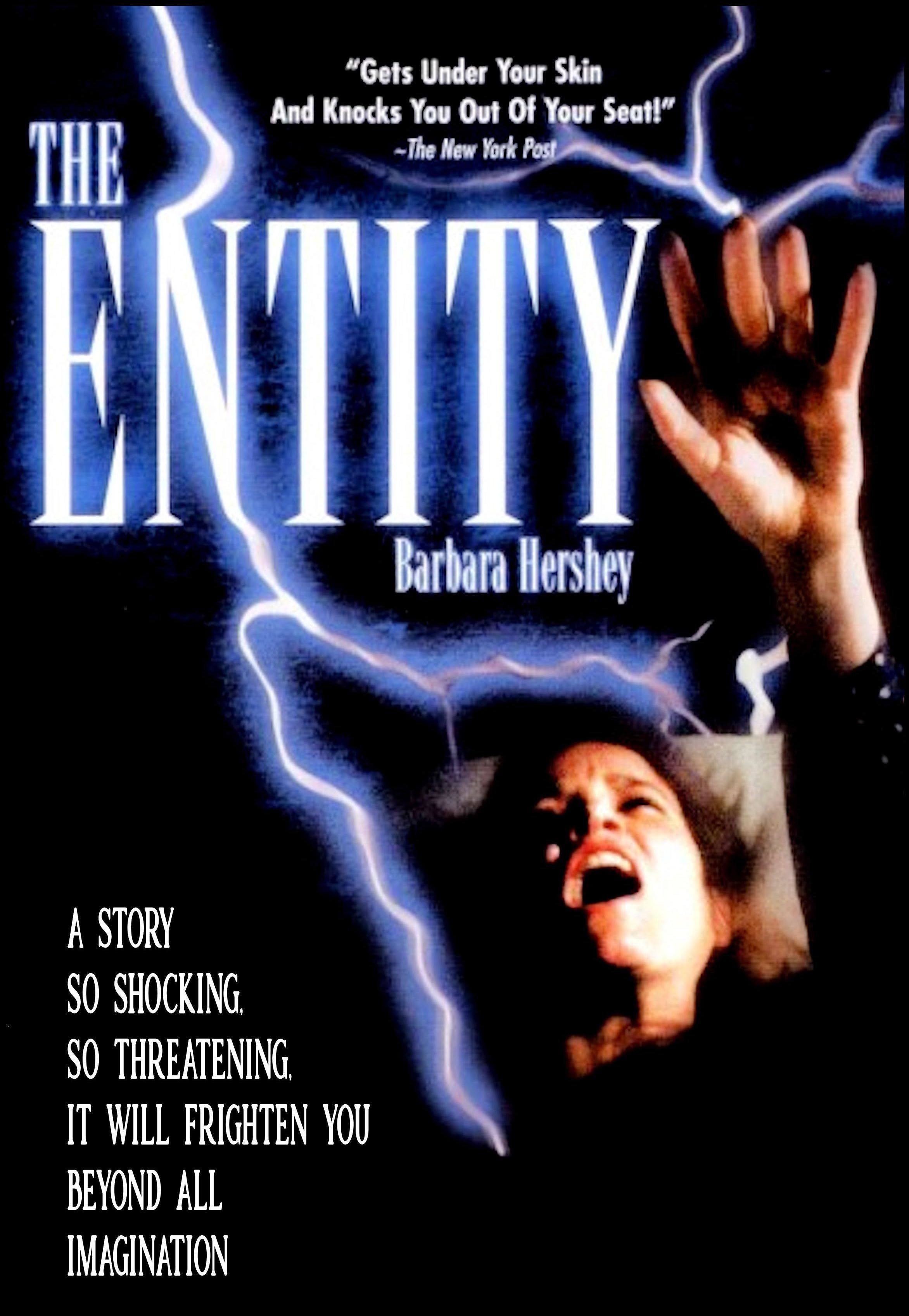
The Friday Night Horror Movie: The Entity (1982)

the entity

The Entity is a supernatural horror film that got lousy reviews upon its release and bombed at the box office. It was almost immediately overshadowed by Poltergeist which came out that same year and has now mostly been forgotten. But if you are a fan of things that go bump in the night and gnarly ghost stories then it is well worth checking out.

Carla Moran (Barbara Hershey) is a single mother of three kids who works all day and is taking classes at a secretarial school all night. She’s had a hard life, but she’s doing the best that she can. One night as she lies in bed she’s assaulted. She cannot see her attacker and when she is finally able to scream her teenage son Billy (David Labiosa) rushes in to find nobody in the room, nobody in the house, and all the doors and windows are locked. Perhaps it was just a terrible nightmare.

The next day she’s violently attacked again. This time her eyes are wide open and still she can see no one. The assailant is invisible. When the attack is over she loads the kids up and takes them to her friend’s apartment. She talks her into seeing a psychiatrist.

Dr. Sneiderman (Ron Silver) is incredibly kind. He never sneers at her claims of being raped by a poltergeist. He asks questions and responds. He doesn’t believe these supernatural occurrences really happened, but he never calls her crazy. He understands she believes they did. When she comes to his office covered in bruises, he asks a female nurse to come in while he takes a look at them. When he comes to her house to see the places in which she was attacked he repeatedly asks if it’s okay for him to come in (to the bathroom, her bedroom places of intimacy and privacy).

He believes her issues are deeply rooted in her psyche. Perhaps some childhood trauma. He wants to help. But the more they talk, the more he probes, the more violent the attacks seem to come.

She wants his help, but more than anything she wants him to believe her. When an attack happens at her friend Cindy’s (Margaret Blye) house Cindy’s belief in what is happening greatly moves Carla. At this, she begins pushing away from therapy and seeks the help of some parapsychologists. They take over her house with scientific equipment and eventually try to capture the Entity with specialty equipment.

The Entity is an odd mix of tone and a jumble of themes. Hershey and Silver are terrific as Carla and Dr. Sneiderman. I especially love those character details about Sneiderman. And Hershey portrays Carla with a great deal of empathy. Both go a little off the rails towards the end of the film, but that’s a script problem, not the actors. The best parts of the film are just them talking.

As you can probably see from this review some of the underlying themes of the film are about how women who make claims of assault are treated. The men in the film tend to not believe her, they make negative claims about her sanity. They objectify her or use her for their own purposes.

The worst part of the film is when she’s being attacked. There are a couple of really harsh assaults and even though we can’t see The Entity, his presence is felt. The scenes are meant to be uncomfortable and they are especially so as I was expecting something more along the lines of Poltergeist, not something so heavy.

From an audience perspective, we see that she is being attacked by some invisible force so all of the mystery of whether or not she’s just imagining it is sucked out of the room. The attacks are a blunt force. Almost immediately in the film, we witness her being attacked. Before we even get a picture of who she is, she’s being slung across the room. The film is relentless in that way. It isn’t a ghost story. There is no mystery. Perhaps that’s the point, it ties in better with how men tend to not believe women.

But it also wants to be a thriller, a scary horror film. And those two ideas – women are assaulted all the time and it is horrifying and they are rarely believed – and gee isn’t this an exciting horror film about ghosts and monsters attacking a woman seem to be at odds.

But there is enough here to like. Think of it as the opposite side of the Poltergeist coin and maybe you’ll enjoy what you see.

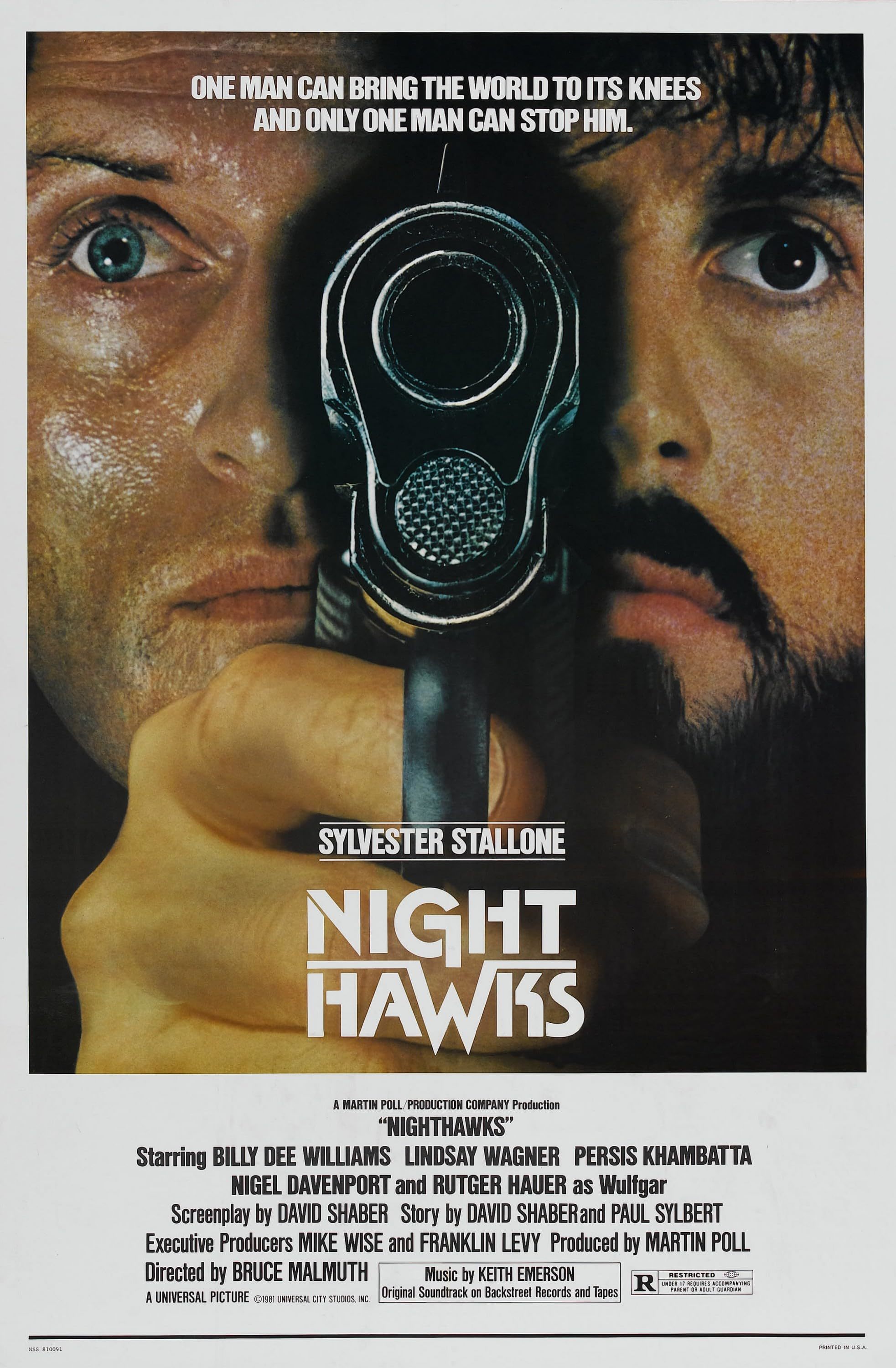
Awesome ’80s in April: Nighthawks (1981)

nightahwks

I was born in the late 1970s and so while I did grow up in the 1980s I didn’t really come of age until the early 1990s. So, the films that I watched during the 1980s were mostly kid stuff. In the years since I’ve watched most of the more popular and critically acclaimed films from that decade, but there are still tons of films I’ve missed.

I’ve said it many times before but one of the things I love about doing these little monthly movie themes is that I always discover films I’d never heard of before. Nighthawks did okay when it was first released but it seems to have been mostly forgotten, which is too bad because it’s pretty good.

I didn’t intend to watch so many Sylvester Stallone movies when I began the Awesome ’80s in April, but here I am four films deep and looking at some more to watch. Nighthawks was made fairly early in his career. Or I should say fairly soon after he found success with Rocky in 1976 (for he had been playing bit parts since 1969). He’s still clearly hungry and still trying to figure out just what kind of star he’s going to be.

It has some interesting behind-the-scenes production stories. Originally the film was written as the second sequel to The French Connection and it was going to be a buddy cop film with someone like Richard Pryor playing off of Gene Hackman’s Popeye Doyle character. But when Hackman declared he was done with the character they turned it into a stand-alone film.

The original director, Gary Nelson, was fired before he even really got started – just one week into production. When the next director, Bruce Malmoth was delayed for a day, Stallone took on the director’s duties so as to not lose a day of shooting. That caused trouble with the guild and he was fined for it. Later both the studio and Stallone made substantial edits to the film when it did poorly at early screenings. Supposedly Stallone cut out several scenes that focused on Rutger Hauer’s character.

None of this really matters of course, what we wound up with is what we’ve got, and what we’ve got is pretty good.

Stallone stars as Sergeant Deke DaSilva of the New York Police Department. He, and his partner, Sergeant Matthew Fox (Billy Dee Williams) work undercover (the film begins with a wonderful scene in which Stallone dawns a dress and a plastic face mask posing as a little old lady trying to catch some purse snatchers). They are quickly pulled into a new, elite squad designed to catch an international terrorist known only as Wulfgar (Rutger Hauer in his first American role).

Wulfgar has just come to New York City. He’s on the run from his European financiers due to running afoul to their good graces. One of his bombs killed some kids and he shot one of their men whom he believed had led the police to his doorstep.

He’s trailed by English Police Inspector Hartman (Nigel Davenport) who recruits DaSilva and Fox into his elite squad. A long chunk in the middle of the film is all about Hartman training the cops on how to catch Wulfgar which basically amounts to them throwing out all their police training and being willing to break the rules and kill the man if they can. This section is rather tedious.

Eventually, it becomes a cat-and-mouse game between DaSilva and Wulfgar and that’s when the film is at its best. There is a good scene set inside a subway line, and a terrific one on a tramway car high above the ocean, headed towards Roosevelt Island.

It looks gorgeous too with some wonderful cinematography by James A. Cotner. Stallone and Hauer play their parts well. Overall it is a good little 1980s thriller and one worth seeking out. But there is a reason why it slipped into obscurity as it doesn’t do anything particularly special with pretty standard material.

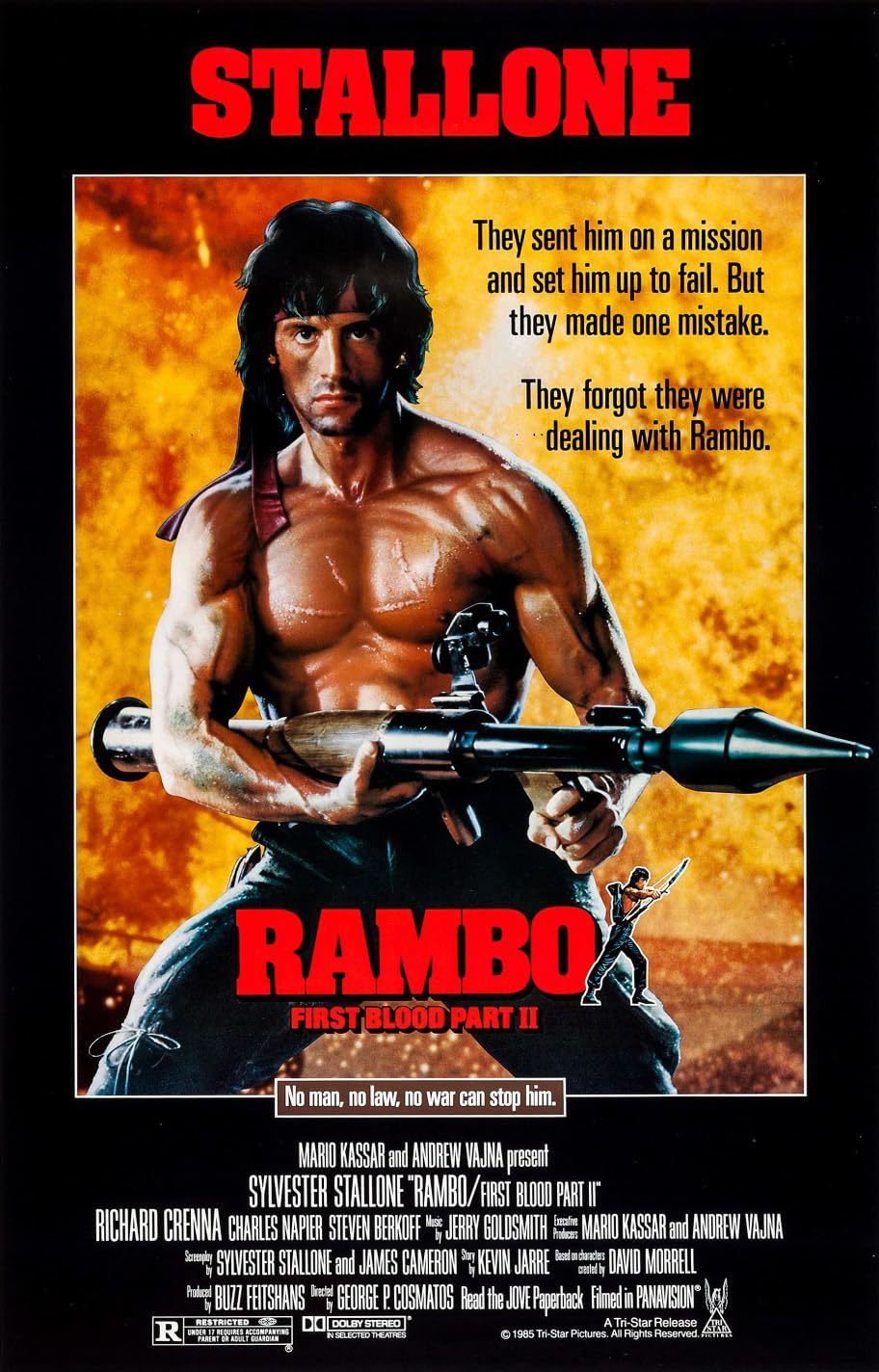
Awesome ’80s in April: The Rambo Trilogy

rambo ii

After years of getting bit parts and going nowhere, Sylvester Stallone sold his script to Rocky and somehow talked the right people into letting him star. It became a huge success and launched his career. In 1982 he starred in First Blood, the first Rambo movie. That film launched him into superstardom and made him one of the biggest actors of the 1980s.

What I didn’t realize until just now is that in the time between when he made Rocky in 1976 and First Blood in 1982 he made six other films including two Rocky sequels. Other than the Rocky sequels, most of them were only moderately successful. He is credited as a writer or co-writer on most of them. He also directed the first two Rocky sequels, Paradise Alley in 1978 and Staying Alive, the Saturday Night Fever sequel. It is interesting to look at his career at this stage and realize he seemed to think of himself as something of a Renaissance man.

But this isn’t about Sylvester Stallone, it is about John Rambo, the quintessential 1980s action hero. The Rambo films became something of a template for action films in the 1980s. You are probably picturing Stallone right now as Rambo, muscles bulging, a bandana wrapped around his long hair, sweat dripping down his brow as he fires a massive machine gun at countless bad guys.

Truth is the subsequent films became exactly that, but that first film, First Blood, actually attempts some real drama and a social message. It is more of a character study than an explosive shoot-em-up. For the first two acts anyway.

John Rambo is a Vietnam vet. He returns home to find his country not only isn’t proud of his service but angry at it. His fellow soldiers are spat upon when they return. He heads to the mountains to find his old friend. But when he gets there he finds his friend has died. It was cancer they wrote on his death certificate but his wife thinks it was Agent Orange from the war that really got him.

Disheartened he walks into town looking for a bit to eat before he moves on. He’s immediately picked up by Sheriff Will Teasle (Brian Dennehy). The Sheriff basically tells Rambo they don’t want his kind – dirty drifters who need a shower and a haircut – in his town and drops him off past the bridge. Rambo is having none of that and turns right back around.

He’s arrested then and essentially tortured by the local cops. Rambo, flashing back to his time in ‘Nam, when he was captured by the Vietcong and tortured, flips out and escapes. The chase is on and once again the police go too far, shooting at Rambo when he’s done nothing to deserve being killed. At this point, the film turns into an action film. Rambo’s former CO (Richard Crenna) shows up and lets the local yocals know they are facing the best damn Green Beret he’s ever seen and it’s best to give up.

The action is tight and well-composed all the way up until about the last fifteen minutes at which point it gets ratcheted up to ridiculous levels.

It is those levels that will serve as the inspiration for the following two sequels. In Rambo: First Blood Part II he’s offered a pardon from prison (for he did get sent to prison for killing all those cops in the first film) if he’ll go back to Vietnam. The mission is to infiltrate an old prison camp and see if there are still any POWs there. Naturally, there are and once again Rambo gets to kill a lot of people.

First Blood made a big deal about how the authorities were the villains. The cops hassled and tortured him just for existing, the military more or less turned their backs on him. That’s an interesting point of view for a 1980s action flick. Rambo II contains a little of that, with Rambo basically being used as an expendable pawn who is sent to Vietnam to basically prove that there aren’t any POWs left and everybody can be happy now that the war is over. But mostly it is a chance to let Rambo fight in the jungle.

With Rambo III our hero gets to fight in Afghanistan. His old CO is captured there and Rambo has to get him out. This time any pretext of a real plot of subtext is thrown out of the window in order to allow for more shooting, more explosions, and more dumb fun. Let’s just say there is a scene in which Rambo jumps inside a tank and fights off an attack helicopter and leave it at that.

There have been two subsequent Rambo sequels made – one in 2008 and another in 2019. I haven’t seen them. Those first three feel like enough.

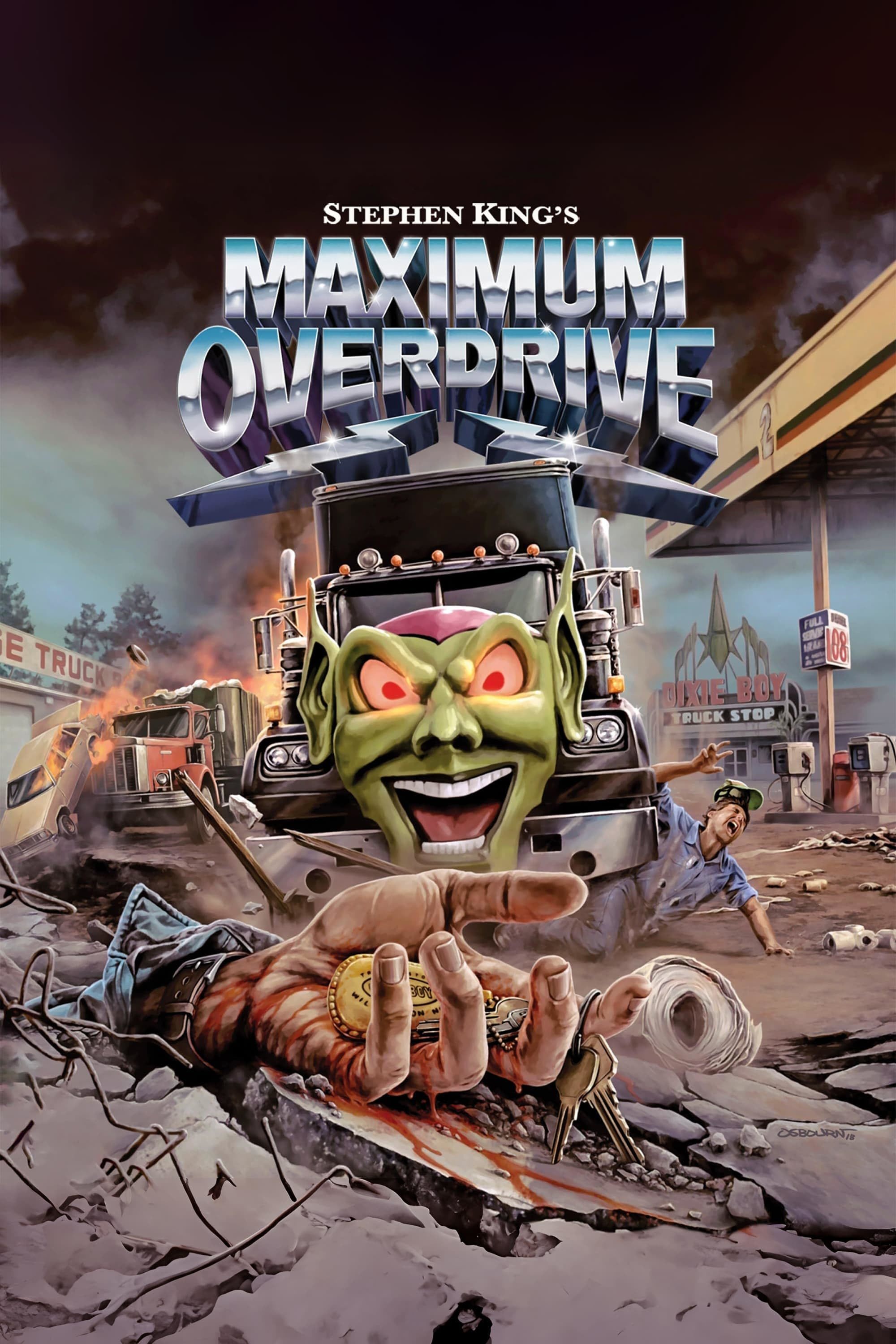
The Friday Night Horror Movie: Maximum Overdrive (1986)

poster

Stephen King stories have been adapted into countless films and television series. Some of them are good, a lot of them are bad, a few of them are great, and some aren’t even worth talking about. Opinions vary on which films fit which category with King himself disagreeing with most.

In 1986 for the first (and last) time Stephen King actually adapted one of his own stories for a film. Based on his short story Trucks, King wrote the screenplay and directed Maximum Overdrive. It bombed at the box office and is generally considered to be lousy in pretty much every way.

I’ve become a pretty big Stephen King fan over the last few years, and have tried to watch a lot of the adaptations of his work. I knew I needed to watch this at some point, but I tended to believe the critics on this one and kept putting it off.

But since it is the Awesome ’80s in April, I decided to give it a go.

I knew it wasn’t going to be good, but I had no idea how insanely incompetent it was going to be.

One can forgive a first-time director like Stephen King (and especially one who has no training in filmmaking) for not banging it out of the park, but you’d think a guy who has written a lot of wonderful stories, would know a thing or two about writing. But the script is just as bad as the direction. Maybe he just didn’t know the difference between writing for the screen and writing for the page.

The bare bones of the story are actually interesting (and most of it seems to have come from that short story – which I haven’t read). Extra-terrestrial forces pass by Earth causing all electronics to become sentient, and murderous. Several people get trapped at a truck stop by a bunch of semi-trucks bent on their destruction.

Technology becoming sentient and trying to destroy mankind is not a new idea, but it can be a good one in the right hands. I especially like the idea of big trucks attacking people. And I love a good people trapped in an enclosed space story. With a better script and a good director this film could have been cool.

King has admitted to having a cocaine addiction at the time, and he was still deep in his alcoholic phase, so no doubt that affected the production.

An example of how this film works. At the start of the film, the controls to a draw bridge come alive, raising the bridge when cars are on it. I swear the number of cars on the bridge at any given time changes, depending on the shot. The height to which the bridge is raised changes as well. Sometimes we’ll have a shot in which the bridge has just been raised to a slight angle, but then we’ll get shots of cars spinning their wheels trying to keep from sliding backward, while other cars slide into the trucks behind them. A wide shot will then show the bridge all the way up. Then it will switch to barely having been raised. There is no tension, it isn’t at all scary.

I can see King writing that scene. As a novelist, he’d take pages and pages to tell that part of the story. We’d get lots of details. We’d know several of the characters. We’d get a sense of the terror. There would be gory details of someone getting smashed up. But as a director, it feels like he didn’t know how to get those details cinematically. He didn’t know the types of shots he’d need or how to put them together.

The entire movie is like that. It feels cheap. Like some bad B-movie, you’d see late at night on cable TV. In part, I suspect this is intentional. I can see King trying to make a B-movie. The kind he might have watched when he was growing up. But those movies have an energy to them that is fun to watch. Maximum Overdrive is a dud from start to finish.

Totally Awesome ’80s in April: 2024 Edition

back to the future

The Awesome ’80s are back, and better than ever! Looking through last year’s posts I see that I did really well with this theme, I watched a lot of movies, and I wrote a lot of reviews. Let’s hope I do the same this year.

As I noted in last year’s keynote I grew up in the 1980s. It’s when I really started watching movies. According to Letterboxd I’ve watched more films from the 1980s than any other decade. And yet, it is not at all my favorite decade for movies. When I think about my favorite eras for cinema, I start talking about the 1940s or the 1970s, or maybe even 1999. But the 1980s won’t get much of a mention.

There were some great movies made in the 1980s. I think, for me, in some ways the decade comes up short because I grew up in it, but I was too young to watch a lot of the best films from that period. I love 1980s Spielberg films, John Hughes’s teen flicks, and Robert Zemeckis and all that classic ’80s stuff. A lot of it holds up, and some of it is really good. But a lot of it was crap, kid stuff. I think my memory blends all of that together and the decade comes out as a mishmash of nostalgic gold and syrupy slop.

So, once again, this year I’m going to try to find and watch films that I would have missed as a kid. Movies that were maybe inappropriate for pre-teen me, or that I would have found hopelessly boring. I don’t want to say I’m gonna watch movies for adults, or mature films as that bring up images of me sitting in a dark room sweating, but movies for grown-ups lets say. And then maybe some silly, goofy totally 1980s movies.

I already watched the original Rambo trilogy if that tells you anything about where this is going :). Look forward to that review soon.

The Friday Night Horror Movie: A Return to Salem’s Lot (1987)

a return to salmes lot poster

‘Salem’s Lot was one of the first Stephen King novels I ever read. It remains one of my favorites. Tobe Hooper made a pretty good TV mini-series out of it in 1979. Apparently, Larry Cohen had originally been slotted to adapt the book, but the executives hated his screenplay and gave Hooper the job instead.

Years later Warner Brothers approached Cohen to direct a low-budget horror film for them and he pitched the idea of a sequel. Interestingly, the sequel was intended as a theatrical film and in fact, debuted at the Cannes Film Festival and saw a limited American release. But the reviews were terrible and the box office a dud and so it pretty quickly went straight to the VHS shelves.

Outside of a few gorey effects, a couple of naked breasts, and a lot of children swearing, the film feels very much like a made-for-TV movie. The budget was clearly small, the acting amateurish, and it is edited within an inch of its life.

It follows Joe Webber (Michael Moriarty), an anthropologist who is called away from studying a native tribe in the South American jungle to take care of his young, troubled son Jeremy (Ricky Addison). He takes him to a run-down house he’s inherited in the small New England town of Jerusalem’s Lot (or Salem’s Lot as it is sometimes called).

Pretty quickly he realizes the town’s inhabitants are either vampires or their human slaves. Actually, they pretty much straight-up tell them who they are because they want him to write a book about them. To convince him to do this they kidnap the boy and get a young vampire girl to sweet-talk him into becoming a vampire as well.

Joe figures this is a good time to hook up with his childhood sweetheart and do a little remodeling of his old homestead. Seriously, the film makes some really odd choices.

Soon enough a Van Helsing-like vampire hunter shows up (played by director Samuel Fuller in a rare acting role) and eventually our heroes get to some actual vampire slaying.

A Return to Salem’s Lot feels like it should have been a mini-series. There are a lot of ideas floating around in it, but few of them get explored. A lot of scenes feel like they were cut short, as if maybe a lot of footage was shot but due to time constraints they had to be cut. Or maybe they just didn’t have the budget to shoot everything in the script.

As it is it feels very disjointed, and unrealized. There are some interesting ideas. The original story is basically ‘what if Dracula showed up in a small American town’ and this one takes that concept and has the vampires take over the entire town. Yet here they are also a persecuted minority. They fled Europe with the Pilgrims for the safety of the new world. They are good Americans. They don’t even kill humans (well, most of the time) but breed cows for their blood needs – and it is quite a scene watching some elderly actors pretend to suck the blood out of cows lying in a pasture.

All of this creates some light satire of American consumer culture, but again it is pretty disjointed and cut to shreds.

Despite all of this I still rather enjoyed it. Cohen knows his way around a low-budget picture and he gives it enough oomph to make it not terrible. Fuller is having a blast playing the crotchety old hunter.

Not a great movie by any means, but a fun one to watch.

Awesome ’80s in April: The Big Red One (1980)

the big red one poster

I’ve talked a little in this series about memory and the movies. Or rather, how this series continually brings up memories of both me watching certain movies or just knowing about their existence in various ways. That probably isn’t interesting to anyone but me, but I find it fascinating, and this is my blog so I’m gonna keep talking about it 🙂

My first memory of The Big Red One, Samuel Fuller’s movie loosely based on his experiences in World War II, is of the DVD cover. I was in Walmart many years ago looking through their movie selection and came across a copy of The Big Red One. It was an evocative cover that was mostly black with a big white outline of a rifle and the title was all in white except for the word “red.” Well, you can see what I mean up above.

I immediately wanted it. I read the back cover and it promised to be a full restoration of Fuller’s lost film. It had lots of extra footage. It was a masterpiece. That sounded great.

I put the film back. I’ve been burned before. The film sounded interesting but I wasn’t ready for another blind buy.

I haven’t really thought about the film since. Oh, every now and again it would pop up on a streaming service or whatever and I’d think about watching it. Then I’d find something else. And now, I’ve finally seen it.

It is pretty good. Unfortunately, I wasn’t paying attention and I watched the original, non-director’s cut which is missing something like 45 minutes of footage. I might go back and watch that version someday. But not anytime soon.

The film follows a man only known as Sergeant (Lee Marvin) as he leads a squad of infantrymen from the 1st Infantry Division (who were known as The Big Red One due to the patch on their shirts.)

It reminded me quite a bit of the HBO series Band of Brothers as it follows this squad From North Africa to D-Day, the liberation of France to a concentration camp. They deal with battles and injuries, death, and replacements. In its own way, it is just as episodic as that series.

It was made on a low budget and unfortunately, it shows. The battle sequences aren’t particularly exciting. There are quite a few characters, but none of them are all that memorable. Mark Hamill is second billed but he gets very few lines of dialogue. His performance is mostly reaction shots. Most of the other characters are indistinguishable. I’d be hard-pressed to tell you any of their names or what they did. Marvin is great and he gets almost all of the screen time. He’s a hard-worn war veteran (in an early scene we see him as a private in World War I), but he’s kind to his men.

There are some really wonderful scenes. One inside a mental institution stands out. And the D-Day landing involves the Sergeant sending his men, one by one, across the beach to try and blow up a barbed wire fence keeping everyone from advancing. One guy goes, gets shot and he sends another. Then another. And another. He calls them out by number, not by name. It is harrowing to watch. These men are literal cannon fodder. More meat for the grinder.

It very much feels like an incomplete film. I’d like to see the longer cut (which was put together from surviving footage based on Fuller’s notes, he was dead when it was done). Forty minutes is a lot of time for these characters to be better filled out and their lives explored.

This version isn’t enough for me to be begging to see even more of this film, and the reviews of the extended cut don’t call it a masterpiece, so I expect it will be a few years before I decide to go back. But it is an interesting film, and I’d be interested to see if any of my readers have seen the longer version.