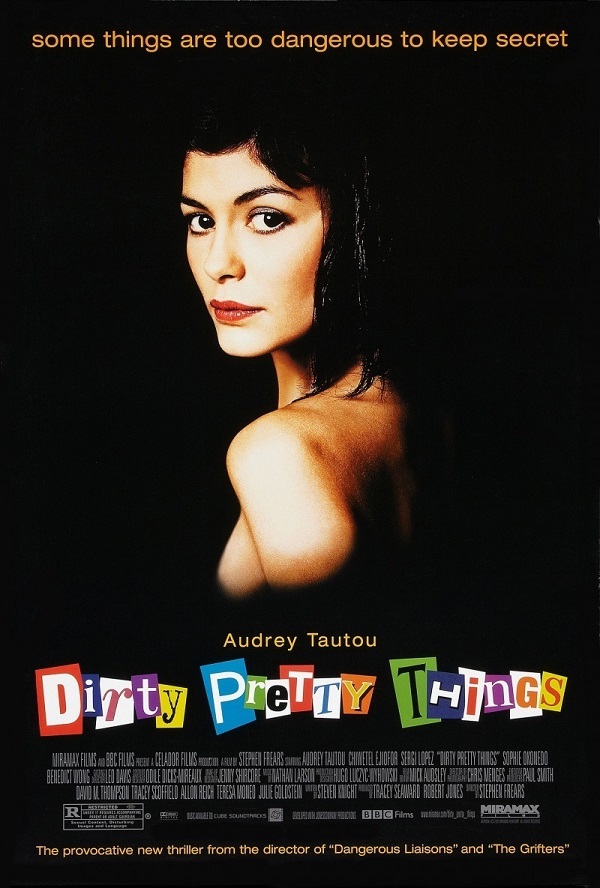
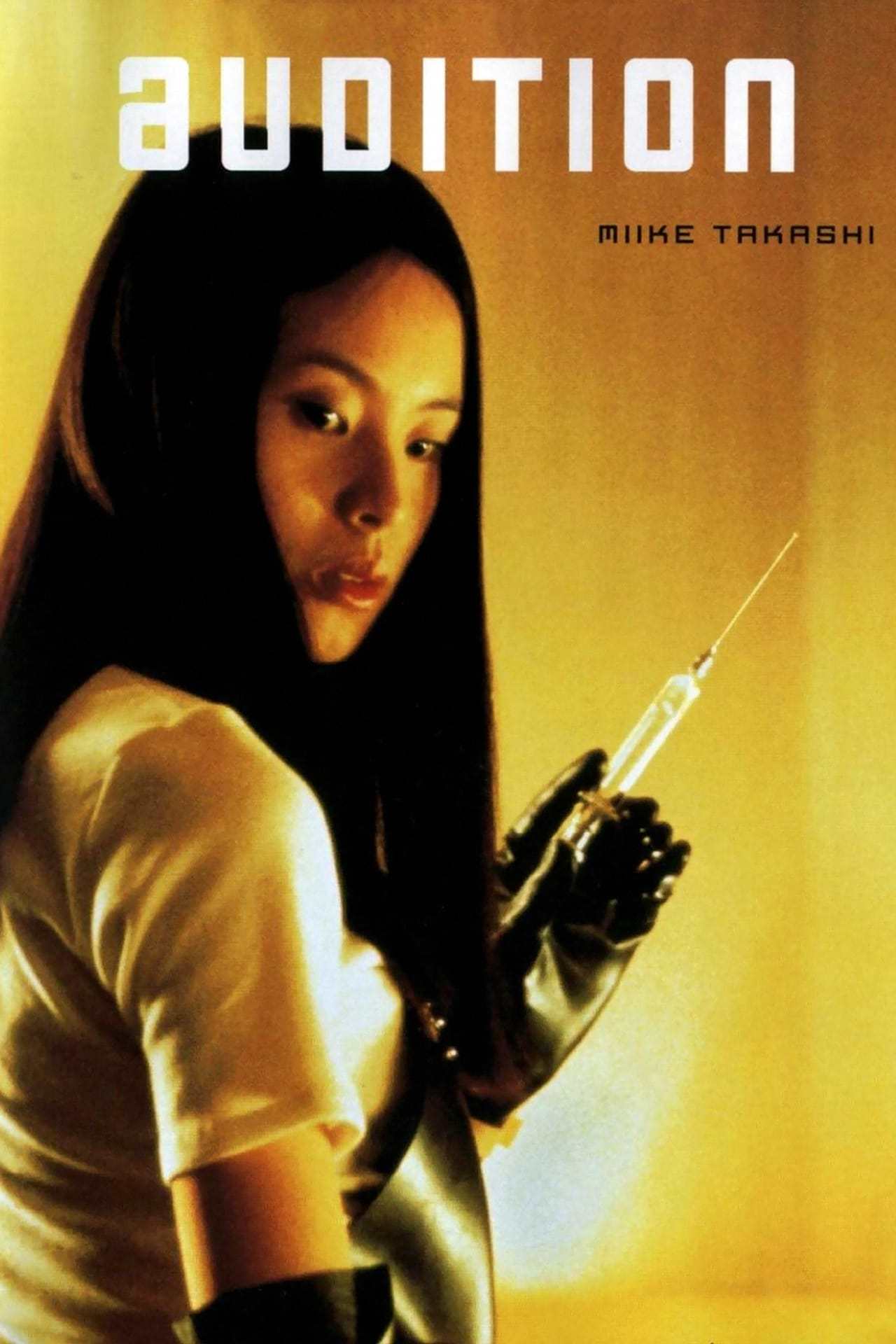
The Eye (2002)

the eye movie poster

There is an old horror story about a normal law-abiding citizen getting a transplant from a psychopathic killer. The killer’s body part still has the memory of its former owner and wants to take up the killings again.

This premise has been aped in countless movies and TV shows, most notably in Body Parts starring Jeff Fahey and that Simpsons episode where Homer has Snakes hair transplanted to his bald head. It is a pretty tired premise; one that has been done so many times all the originality has been drained from it. I’m waiting for the day when Hollywood green lights a picture about a little girl who gets a toe transplant from Charles Manson.

Chinese directors, the Pang brothers try to breathe some life into the concept with their 2002 feature, The Eye. Unfortunately, it is the first of the so-called Asian Extreme pictures that I’ve seen that I’ve found to be rather lackluster.

It isn’t for a lack of trying. The Pang brothers bring an eye of originality to the premise and create an atmosphere that is quite creepy and interesting. At least in the first half.

In this case, the transplanted body parts are eyeballs. A young blind girl, Wong Kar Mun (Angelica Lee) receives an eye transplant and thusly begins seeing dead people, a la The Sixth Sense.

The Brothers Pang introduce this concept by having the dead show up in shadows. Visually the first half of the film is stunning. We see the world through Mun’s adjusting-to-sight eyes and there are creeping things lurking just about everywhere. In an impossible-to-explain, but absolutely must-see series of scenes Mun comes to understand that what she sees with her eyes is beyond the realm of the natural. As a viewer, I was knocked upside the head by the brilliant display of imagery

There is no “I see dead people” revelation here. The revelations come slowly, building tension along the way. Having no concept of vision, Mun has no understanding of what is real and what may be supernatural. By allowing the audience to understand quickly what Mun must slowly learn, the film is quite effective in creating a sense of horror.

The camera pans slowly around corners as the music builds anticipation to what could be hiding just out of sight. There are nice jolts of music as the camera reveals a new surprise. Here it seems the Pang brothers have taken a page out of the American scary movie pages instead of the Asian counterpart. Scare the people with jolts instead of developing actual creepy situations.

In the second half, the film begins to truly unravel. With only a few conversations, Mun manages to have her psychotherapist, fall in love with her and be willing to drop everything and travel to Thailand to investigate the donor of her dead-seeing eyes.

From horror, the movie now travels into a melodramatic mystery. The doctor and Mun find dark secrets in the story of the young lady who had Mun’s eyes first. Of course, they are forced into setting things right, and the movie pretty much falls apart. Oh, it’s nothing terrible or cringe-inducing, but it is formulaic and not nearly as interesting as the first two-thirds of the film.

I found The Eye in the foreign section of my local Blockbuster. It was well worth the five dollars I laid down for it, if just for the glorious visuals of the first half.

Walk the Line (2005)

walk the line poster

Since being married going to the cinema has become a rare thing. Pre-marriage (or really, pre-dating the woman who became my wife) I was going to the movies once, or twice a week. Now, I’m lucky if I get to the movies once a month. I’d like to blame this solely on my wife (and in fact often do) but the reality is that it’s not really her fault.

I’m older. I have responsibilities. I can no longer spend every weekend in a darkened theatre watching the old celluloid. The wife is in graduate school, she teaches classes, she does adult learning at the library, and she can’t spend every weekend watching the latest Hollywood blockbuster. Put us together and it is difficult for us to spend a meal in each other’s company much less actually get out together.

When we do make it to the movies, I’m always very excited. Moviegoing is an almost spiritual experience for me. As a teenager, my family and I bonded through movies. We might fight over everything else, but the cinema was shelter. To this day when I travel to Oklahoma to see my folks we inevitably go to the movies. It’s just built into our psyche. Family = movies.

So my wife and I went to the Johnny Cash biopic, Walk the Line the other day.

Worst audience ever.

But first, we’ll talk about the theatre itself. It is an older one, made before the new wave of super-ultra theatres with 20 screens and stadium seating all equipped with your own personal Laz-E Boy.

The floor was pretty much flat. The walls were covered with ugly, green curtains circa 1972. The floors were sticky and unclean. The chairs were moldy and uncomfortable.

I go to the movies early. My preferred buffer of time is 30 minutes. This ensures I get the best seat (middle row, middle seat spaced between the speakers) and don’t miss a moment of the film. It also allows for things like traffic, and large crowds.

So, the movie starts, and of course, there are two or three groups of people coming in late. Late! How hard is it to get to the movies on time? They have a schedule; it’s posted a week in advance for crying out loud. If you can’t show up on time, catch the next flick or stay at home.

These latecomers come in, talking of course, and rudely continuing a conversation started in the lobby. Their big heads get in the way of the screen while they shuffle into their seats.

The staff forgets to shut the door to the theatre so I can continually hear everybody in the aisles and hallways talking through the whole picture.

Oddly, a group of four, young, Asian girls sitting right in front of me get up and leave 10 minutes into the picture. Their spots are immediately taken up by a group of three middle-aged to old ladies all wearing those floppy toboggans. Toboggans that they do not take off and that all have little fluffy balls on top. Little fluffy balls on top that get right in my line of sight.

I always get anxious before a film starts because of all the talking. But as the movie starts usually people shut the crap up. It works out this way for most of Walk the Line. Well, until an old lady a couple of rows up gets a phone call on her cellular. Gladly, I don’t hear a ring, but she sure enough picks up and starts talking in the theatre.

“Hello. Who is this?”

She looks around a bit trying to decide if she can explain to the caller where she is and that she’ll call this person back. Nope, I guess she can’t because she gets up and continues chatting, loudly, as she walks out.

Really, who is that important that they have to answer their phone at every moment?

The cell phone lady leaves. Filmatic enjoyment continues. On the screen, Johnny Cash begins to sing “Folsom Prison Blues” for Sam Phillips. The dude sitting next to my wife begins singing along. Not in a silent, toe-tapping kind of way, but a belting it out for everyone to hear manner.

Ruins the cinematic moment.

Loud singing guy continues to talk through the entire film. Just random stories about Johnny Cash’s life and what’s going on in the film.

Beyond the audience, there actually was a movie playing, and that was a rather good one.

The film follows the life of Cash from childhood up until he marries June Carter. Joaquin Phoenix gives his usual wonderful performance as the Man in Black. It took me a little while to adjust to thinking of Joaquin as Johnny Cash. Cash was such a larger-than-life icon any actor would have difficulty portraying him. Yet after an initial adjustment period, Joaquin sinks right into the Cash skin.

Reese Witherspoon is an actress I enjoy, but have never really appreciated as a “real” actress. With films like Legally Blonde and Sweet Home Alabama under her belt, it is difficult to take her seriously. She’s like Meg Ryan in that her bubbly enthusiasm is hard not to get swept up in, but as a serious actress, she’s rarely had the chance to prove herself. At least in my experience.

She plays June Carter in the same exuberant manner we’ve come to expect from Reese. It is a June Carter I’ve never seen before. I know the June Carter Cash of the last few years of her life: a reserved, loving wife; a kindly woman, and a lovely singer. It was a strange thing to see her full of the zestful energy reserved for young country stars. Not that this isn’t an accurate portrayal of Ms. Carter during this part of her life, it’s just a part of her life I’ve never seen before.

All is not bubbles and fun though, and Reese brings a weight to the character that is smart and well-performed. We can see the difficulties of being a young woman carrying on the legacy of her family and still trying to be a modern woman. We can understand the heartache she feels as she both loves Johnny Cash and abhors the life he is living. It is a fine performance all around.

It is a fine film that doesn’t really cover any new ground, biopic-wise. There is the troubled childhood, the rise to stardom, the hard fall with drugs and pain, and the redemption through love and a little concert amongst hardened criminals.

For Cash fans, there isn’t any new ground dug up, but it’s a lot of fun. The leads perform to perfection, and the songs are classic. For non fans, the story is a good one and the performances are enough to make a few new fans along the way.

The Hot Topic: Writing Ambitions

From a half-mad ragbag collective of high-minded but low-paid bloggers referred to in hushed tones in speakeasies across the land as the Mondo Gentleman’s Club comes the Hot Topic. Watch slack-jawed as the panel dissects the critical and cultural issues of the day! Wince as it sinks in a frenzy of angsty whining and barefaced self-promotion.

Mind your heads as you enter, readers, and stick to the path…

This issue: What are your writing ambitions?

From: Mat Brewster
To: The Hot Topic Collective
Re: Writing Ambitions

I got a BA in English not because I love grammar and such, but because I love to read and figured talking about literature for a living wouldn’t be such a bad thing. Plus English degrees have minimal math requirements. I got sidetracked in graduate school and now my degree is little more than a $15,000 wall hanging, but I digress. Along with the grammar and the literature I took some writing classes. Loved ’em.

Writing was (and is) tiresome, frustrating, and difficult, but extremely rewarding. I remember sitting in a poetry class getting a big ovation for one of my readings and feeling completely elated. Thus began the whispers of hope that maybe someday I could be a writer.

I’m much too practical to take that whispering too seriously though. Go to your local Barnes and Noble and count the books on the shelves. A very small minority of these books are best sellers. And these are the ones that actually make the shelves of a big giant book chain. How many books never see the light of a bookseller’s shelves? How many writers never get published? That’s a lot to fight against.

The blogging phenomenon has suddenly made writers out of all of us. Instantly I can publish my latest sublimely written piece to the world. Millions can read my work with the click of a mouse. I remember publishing those first few pieces thinking about the hordes of fans that would be entranced with my every word. Fan sites would pop up, and groupies would be knocking on the door. Then I got a site meter and realized that there were exactly two people reading my blog. Me and my mom. And even she doesn’t stop by that often.

There might be millions of potential readers out there, but there are also millions of writers vying for attention. Even with a site like Blogcritics, bringing thousands of people to my words on a regular basis, there still isn’t enough to make anything like a living out of it.

So, no I have no plans of becoming a professional writer. As for goals, I don’t have anything really specific in mind either. I enjoy the process of writing. I dig that Blogcritics comes with a plethora of eyes to read my writing. I hope I’m entertaining and once in a while thoughtful, or at least halfway intelligent. If I make a couple of fans along the way, then all the better.

And hey, if the perfect writing gig comes up, then I can split my day job like *that*.

From: Eric Berlin
To: The Hot Topic Collective
Re: Writing Ambitions

I was a writer long before I ever thought of myself as a “writer.” That label has all kinds of wonderful and grandiose and even pompous connotations, smoking jackets and rubbing elbows with the intelligentsia and jumping in the Seine with a bottle of wine strapped to your abdomen, a platter of cheese plastered to your trousers, and so on.

Writers tend to not be like everyone else. We’re weird, we see things differently. Looking back, it all kind of makes sense. I was a kid who was lucky enough to be part of a much-smarter-than-me crowd, but other than that I never fit easily into any “scene.” I liked sports but wasn’t much of an athlete. I adored music but turned out to be merely competent on the double bass. As I stated, I had friends but was by no means Tall Man on Campus.

I was shy among those I didn’t know well. I observed, sucking in the world and often making up detailed lives about strangers that I saw (often some combination of bizarre and comedic) without consciously realizing I was writing in my head. I concocted fantastical scenarios where I would swoop in to save the damsel in distress (always the pretty popular girl sitting across the classroom) from grave peril.

Moving on, I have clear memories of realizing, sometime in my early 20s, “Dead God, I’m a writer!” and had all the rushing feelings of power and creative destruction and terrible ego that comes along with that at such an age. However, I was also cursed with a terrible laziness that went along with that ego and clearly decided that traveling and partying and getting kicks and avoiding responsibilities were far more the way to go.

You see, it was just all so hard! I had decided that to be a writer absolutely meant that you wrote novels — and not just a novel, it had to be huge teeming piled stacks of tomes, dust billowing off the thousands of pages that you whipped off in a month’s Benzedrine and instant coffee pan-dimensional muse-lock, pages that would clear the world’s concerns off the map in the built-up ecclesiastical mania to read my work, yes My Work, the Novelist’s Grand Vision Made Real.

But how do you do that? Where do you start? I wrote short stories, a few that were pretty good, and made awkward forays into all different kinds of styles and modes of thought. Eventually, I realized that I must delve into the novel game or die trying. I made it a bit further each time: 10,000 words about saving the world before time ended, inspired by Stephen King’s The Langoliers; 40,000 words about a bizarre and updated ode to Charles Dickens’ A Christmas Carol.

Then, in 2004, I was close, by golly. Strengthened by the wisdom of Stephen King’s On Writing, I was writing every bloody day. Didn’t care how hard it was, how painful, how awkward the words or stilted the plot ties. 600 words, 1,100, 588.

And I finished a first draft, all 85,000 reeking words of it! And yes, there’s a story in there too, a surreal (yet) comedic thriller based upon my experiences playing rugby and my Animal House-esque final year of college. Upon completing, I realized that the very best parts of the story were the real parts, the actual anecdotes and scenarios and pitfalls and mania of that wonderfully debaucherous year spanning 1995 and 1996.

Sometime in late 2004, as a lark and to rest my brain while thinking about the next phase of the novel, I started blogging. It was so… easy. Easy and fun. And the instant feedback. My God, I said to myself again (not to say I am my own God, that’s an entirely philosophic brain-shaker that I won’t deem to get into right now), there are people who read my stuff. My shit. My gold, and all in between!

And I was hooked. After a brief spout of soul doubt, I realized I had come to where I always was meant to be, cheerfully spouting off into the electronic heavens about politics and music and television and life-things, all with the Big Picture perspective I’ve come to see things with and, one hopes, enough comedy and interesting bit-ends to keep people along for the ride.

So I take myself less seriously these days, or at least I try to! I sure do have a lot of fun though. It turned out that blogging was the place for me where “working” wasn’t work at all, that my need for a creative outlet and instant feedback and the occasional e-pat on the head saying, “Well my, aren’t you so clever then!” could be met anytime I wanted, rain or shine, daytime or the darkest reaches of the vast electronic night.

From: Greg Smyth
To: The Hot Topic Collective
Re: Writing Ambitions

Okay, so I lied. I’m a great big faker. Sorry.

You see, the original post to the Mondo Group stated quite assuredly that, yes, I, Greg Smyth, had really quite obvious writing ambitions that were easily spelled out and that left me feeling quite good about myself. “I’m a do-er”, I thought to myself, “and all the multitude of plans and schemes I have are currently paying off.”

What a fool I am, because, as soon as the teeth of the Mondo Chattering Classes began chewing over the various novels and poems and the like that the great and good of this collective have in the backs of their minds or sitting, unedited, on their various hard drives, I felt somewhat foolish. All I wanted to do was write music reviews.

Sure, I’d love to write a novel but there are two things that either put me off or prevent me from churning out the Great Masterwork. The first is that, really, I’m not sure I have the patience or concentration span to stick with one thing for so long. Second, at what point do you realize you’ve got sufficient inspiration or ideas to begin such a huge undertaking? That’s the beauty of music writing, and I’m sure I’ve said this before, you’re espousing on one of a thousand objects that will pass over your desk in that year, each one for both a limited amount of words and always with some ready-made frame of reference or backstory. Never, really, are you as a critic faced with the purely blank page and the very specific Fear that instills in the writer. And particularly in one who doubts his own dubious level of talent.

Both Eric and Mat mention the liberation that blogging brought them. That, to me, is a whole hornet’s nest that could be saved for a future Hot Topic – is blogging proper writing/journalism? But let’s give it a spin here in the meantime. Blogging has meant that, when I’m sufficiently on the ball to do it regularly, I have an outlet for the finished product regardless of whether the commissioning editor of the magazine I’m pitching the samples to likes them. Prior to my introduction to blogging (and, perhaps more crucially, prior to getting a laptop and associated internet connection), I had a box file with old printed samples into which would go the latest attempt at getting a writing gig. I’d send out samples much less frequently and, so, a real lack of momentum developed and I wrote less and less. Since blogging properly, I’ve produced much more, and crucially, better content. Coupled with the ease of approaching editors via the likes of the internet (and, to my surprise, MySpace) I’ve begun to foster links with a range of publications. Hopefully one day I’ll meet one who’ll start to pay me!

So yes, initially, my goal is to write for (and, crucially, earn money from) mainstream music publications. Ideally, I’d like to write fiction in one form or another but the question of just how inspired you need to be before you can sit down with a novel on your mind is one that vexes me. Is a germ of an idea enough, with everything coming out in the wash eventually? Will the twists and turns that your imagination will invariably take you on be reliably frequent so that you can do the high-wire without the safety net of some sort of roadmap (mixing metaphors there, but you get the drift)? Hopefully, one day I’ll have to balls to find out.

From: DJ Radiohead
To: The Hot Topic Collective
Re: Writing Ambitions

This is, quite seriously, the 11th or 12th draft of this. I beg forgiveness from whoever has to edit it. Just know it’s late and the caffeine stopped working hours ago. I must go sleep now. Feel free to replace my scribblings with an excerpt from the Latvian translation of The Book of Mormon. I won’t be offended.

I have written, re-written, and re-re-written my contribution to this edition of the Hot Topic. In the process of trying to describe my ambitions and goals for my writing and podcasting I came to a surprising conclusion: fuck all if I know.

What the fuck do I do all day and why do I do it? I can’t explain it. I can’t make it make a whole lot of sense.

In some ways, my ambitions and goals have already been achieved and exceeded. I write pieces for Blogcritics and record a podcast. My work has been read and downloaded and listened to by people in Red states and Blue states. I have an audience. That blows my mind. “I’m bad, I’m nationwide.” The real mind fuck is knowing people in Canada and the UK have downloaded and listened to my humble podcast. I am international! Holy shit.

Here’s the kicker: some of them liked it. The hell you say! I’ve written and recorded works and other people have liked them. The praise of strangers has meant more to me than encouragement from family and friends. My mom is supposed to laugh at my jokes. When someone else does, my feet don’t touch the ground for days.

Want to hear something more amazing than that? I have actually liked some of my own work, too. I have been annoyingly and sometimes intolerably insecure about the quality of my own work. I am often my harshest critic. I don’t like everything I do but even I have taken some satisfaction in what I have been producing as of late despite a predisposition not to see any of my own growth or improvement.

Could I hope for anything more than that?

Finding someone to pay me to do this would be great. Maybe some day that will happen. Maybe some day I will chase that dream and find that opportunity. There was a time when I thought anything short of that was a failure and a waste of time. It turns out I was wrong. I do not need the cash or the fame (although I will still take it) to feel fulfilled. I never would have believed I would feel this way. I am having fun doing what I am doing now. I enjoy it. It pleases me.

My goals and ambitions and hopes and dreams have changed a lot just in the five years since I graduated college. Maybe someday this won’t be enough. I might wake up one day and decide it’s not worth it or I want more. Who knows? Hell, someday we’ll all look back on this and plow into the back of a truck.

Has any of this made a damn bit of sense to any of you? Me neither. I guess I am just putting one foot in front of the other, gratefully plugging away for another 24 hours.

From: Mark Saleski
To: The Hot Topic Collective
Re: Writing Ambitions

I see “ambition” as a funny sort of word when it sits in such close proximity to my name. Not that I’m a slacker or anything. It’s just that things like ambition and career and success… they’re sort of foreign to me.

Does that mean I’ve been doing nothing all of these years? Of course not. Twenty-something planet-revolutions of CAD/CAM, pre-press, and various flavors of control system software. Lots and lots of bytes. Still, it never had inertia, if you know what I mean. Or… maybe it used to.

But… this writing thing kind of snuck up on me and, maybe for the first time, ambition isn’t such an odd concept.

A few years ago I started writing music reviews for Blogcritics. Yeah, there’s some inertia there. Plenty of it. The funny thing is that the source for this transformation, the push, the cause… has origins from my teen years. Many nights of scouring issues of Creem magazine cover-to-cover. Hours and hours spent in the University of Maine microfilm lab looking at old copies of Rolling Stone (Did you know they used to give out roach clips to new subscribers?!)

I lived for this stuff. But.. I just could not write. Not at the age of nineteen, anyway.

So what has changed 25 years later? Good question. I don’t really know. Maybe I needed to read a thousand or so more books. Maybe I needed to go to a bunch more concerts. Maybe I needed to discover jazz. And Kerouac. Maybe I just needed to live.

All I know is that this feels right… and I’m determined to make it work. It feels weird saying that. Good, but weird.

From: Duke DeMondo
To: The Hot Topic Collective
Re: Writing Ambitions

Is there a thought more potent with regards stirrin’ the sour waters a’ insomnia than the notion that, at 63, a fella will be as far forward, career-wise, as he is at 23? (It’s nothin’ short a’ shameful, an’ a touch ironic, that I couldn’t grasp a better word than career just now.) Not a day passes that I don’t get myself wound up twenty shades a’ mental with regards When Will Stuff Happen?

When will a fella be paid to write, that he might spend his days thinkin’ a’ new jokes involving “fuck” an’ not have to worry ’bout also, seems I’m starvin’ an ain’t an ounce a’ chow.

When will sympathetic ears light on mine net records an say “Oh, how ’bout we give you the money for to play this nonsense an also survive”?

When!?

The thought that, as far as statistics would suggest, never is the answer, well, that’s a mighty cripplin’ mind-fry right there.

Getting older an’ closer to the age when a fella has to say “Right then. Looks like it’s the Civil Service till I end up dead ‘hind a spreadsheet an’ no one notices till the death-stench starts fuckin’ wi’ the pot-plants.”

The glory of the web-net is that anyone can fling words an’ songs an’ images up yonder an’ have folks read, hear an’ watch. The terror of it all is that, yeah, anyone can.

“Yeah, he’s a writer an’ some sorta song-flinger.”

“Wow, that’s great.”

“Yeah, posts it all on the internet.”

“Oh. I thought maybe he was a proper one.”

It’s surely not enough to produce, cause we all do that, look here, can’t move for screeds an’ melodies an’ prose an’ poetic fuckery. Some blockage up yonder, somethin’ keeping a fella from slinkin’ that bit further ‘long the line, from the Amateur to the Professional.

There’s only so many lovely words a couple eyes can read before they start toyin wi the brain-glands, sayin “But if it is so very pleasant, how come The Real World remains oblivious?”

What the blog tomfoolery provides is the finest tools thus spawned for grabbin’ an audience, if’n a fella puts in the time. When the veil slides off the yap though, an’ the realisation hangs there cross the screen, the fact that however many hits yon page gets a day, it hasn’t made much difference in the ol’ Life, that can be enough to stomp any ambition to globs a’ frazzled shite.

So we keep on keepin’ on, an’ the hope remains. Those bloggers done got book deals, those Arctic Monkeys used the web to kick themselves up top the Record-Breaking Debut Record Sales ladder, these things are possible.

An’ try not to think how tiny, tiny, tiny that percentage is.

Okay people, so that’s what our panel of selected bloggers had to say, now it’s your turn. Do you find yourself locked in turmoil between the job you have and the job you want? Have you learned to find a happy medium that works for you? What are your creative ambitions and how do you express them? Has blogging helped you find a method of creative release or just led to niggling haven’t-posted-in-a-while tension?

Let us know!

Calendar Movies: Anatomy of a Murder (1959)

anatomy of a murder poster

For Christmas, my wife bought me a 12-month calendar full of classic movie posters. It is a lovely thing with large, full-color photographs of some great movies. I immediately decided that I would have to watch all of the movies featured. Then I decided that each month I would throw a party around each film.

I’ve continually got ideas running through my head about throwing parties in which to watch a bunch of movies. Call them my own personal mini-movie festivals, like Sundance in my living room. The idea of getting a bunch of people together to watch Kurasawa films, or movies set in space, or the Evil Dead and Reanimator series back to back to back sends me into orgiastic spasms.

The problem is I just don’t know enough people willing to sit still for 8 hours to watch multiple movies. This is especially true when my idea for a festival includes Wild Strawberries (1957) and Cannibal Holocaust (1980).

The only thing I’ve ever managed to do is get some folks together for a semi-regular horror movie festival in October. And even then most folks don’t make it past movie number two.

I believe I’ll have more luck with my classic movie poster festival, for I’m only asking the audience to watch one movie. And indeed, I had a fine turnout for the January movie, Anatomy of a Murder. Well, if three people can be considered a fine turnout – but everyone seemed to have a swell time.

Truth be told, half the problem with my movie festival ideas is that they never get past the idea stage. I’m great at thinking up themes for movies to watch and really terrible at actually planning parties. I always wait until the last minute and by then everyone already has plans.

This month was no different. I mentioned to a few people my idea for a regular monthly gathering to watch a classic movie, but didn’t nail down the details. The day of, the wife and I made a few phone calls and got a few folks to agree to come over for pizza and a movie.

I have come to realize that all of my social skills have deserted me. There was a time when I liked nothing better than to sit and converse with acquaintances. I loved to enthrall an audience with a good story. But somewhere over the years, this skill has gone away. I now tend to allow the awkward silences to run into infinity. It’s not that I can’t think of anything interesting to say, it’s that I don’t want to. It all seems so pointless anymore.

Being married is part of it. I’ve got a woman, so chatting up women into a flirtatious frenzy is beyond the question. But even just making more friends seems tiring and not worth the time. Maybe I’m just getting old and curmudgeonly.

I’m being hard on myself, I’m a friendly enough chap and can still hold a room’s attention with a good story, and nail the perfectly timed joke. One of the invitees, Daniel, a somewhat friend of my wife, and I got along smashingly. The wife has told him that I’m a big fan of the film buying so he brought over three DVDs to borrow, and a list of all the DVDs he owns. I quickly printed out my list (and my wife had a good laugh over what freaks we were to even have lists.

As the film started Daniel and I both let out a grown over the DVD being in the Pan and Scan format. Then we sounded off in excitement over Duke Ellington having created the film score.

In the first scene, I suddenly realized that I had, in fact, seen this film. Though all I could remember was Jimmy Stewart and something about fish.

It is a delightful film with marvelous performances from Jimmy Stewart, Lee Remick, and George C Scott. Stewart plays Paul Biegler, a recently ousted DA who is enlisted to defend Lt. Frederick Manion (Ben Gazzara) who is on trial for the brutal murder of a man who raped his wife.

For a film that deals with wife beating, rape, and murder, it is a very lighthearted and enjoyable picture. The script snap, crackles, and pops out of the actor’s mouths, trading one wisecrack for another.

It is notable, now, for its controversy back then. It was banned in Chicago and Jimmy Stewarts’ own father took an ad out in a newspaper deeming it a “dirty picture.” What seems immensely tame to modern audiences, was highly controversial for its time, for the film uses such words as “bitch,” “contraceptive,” “panties,” “slut,” and “sperm.”

Today what stands out is not the use of dirty words, but a tightly directed story with nuanced performances by some of the world’s greatest actors.

Remick slinks and broils across the screen. There is a marvelous scene in which Stewart asks her to take off the hat she’s wearing in court. She is dressed ultra-conservatively to appear the ever-happy and straight-laced housewife for the jury. But as she takes off the hat and swizzles her hair lose you can feel the lust of every warm-blooded man and woman in that courtroom from 45 years away.

Stewart plays the cornball country lawyer with his usual aplomb. A very young George C Scott nails the role of a slick, big-city lawyer. His reaction to an unexpected answer in the courtroom towards the end of the picture is absolutely stellar. Simply perfect acting from a great actor.

It is a great movie, and it was a great beginning to what will hopefully be 12 fabulous months of classic movie festivals (editor’s note, I only had one other party, and then the whole thing collapsed).

The Long Goodbye (1973)

the long goodbye movie poster

During a documentary extra on the DVD version of The Long Goodbye, director Robert Altman says they called Elliott Gould’s version of Phillip Marlowe “Rip Van Marlowe” because it’s like the iconic 1940s detective character fell asleep for 30 years and awoke in the 1970s.

True to form, the opening scene shows Marlowe being jolted out of a deep sleep. Gould plays Marlowe like he has stumbled out of hibernation and is completely baffled by everything going on around him. He does, however, take it with a 70’s stoned indifference.

The film opens with interconnecting scenes between Phillip Marlowe and Terry Lennox (Jim Bouton). The soundtrack plays the same song through both scenes, but in completely different styles. Over Marlowe’s scenes, the music is soft and jazz-like, while when Lennox is on screen it becomes edgier, more rock-influenced. It is a brilliant way to introduce characters and give us a sense of who they are.

This is not Howard Hawk’s Raymond Chandler. Gone are the dark shadows and production code of film noir. Sex and violence are no longer hidden under innuendo and suggestion. Here Marlowe’s neighbors are drug-ingesting nudists. This is Altman’s subversion of a genre.

This is definitely a Robert Altman picture. There are plenty of trademark long shots, and overlapping dialogue. He is less interested in the Chandler story than in a sense of style and the juxtaposition of classically moral 1930s detective in the amoral times of the swinging 1970s.

The story loosely follows Raymond Chandler’s novel. Marlowe drives his friend, Lennox, to the Tijuana border only to return home to an apartment full of cops ready to arrest him for aiding and abetting Lennox, who is suspected of murdering his wife. Meanwhile, Eileen Wade (Nina Van Pallandt) hires Marlowe to find her alcoholic husband who has disappeared. Between the cops and the missing husband Marlowe is accosted by local gangsters who want the money Lennox owes them. The three stories meet and interconnect in an ending that is vastly different from the novel.

There is a wonderful scene after the cops arrest Marlowe and are interrogating him. It begins as the standard interrogation scene with Marlowe in a small room being slapped around by tough cops, while others watch through a two-way mirror. Altman invigorates the scene by inter-cutting the two rooms together. While the camera is in the interrogation room, the mirror is always in sight. When the scene moves into the outer room, we see through the mirror and can hear the Marlowe conversation as it overlaps with what the watching cops are saying.

Elliott Gould is brilliant as Phillip Marlowe. He seems completely amiss from his surroundings, oblivious to all the things going on all around him. He keeps the Chandler wisecracks going but sends the tough guy gumshoe routine packing.

Though not a film for noir or even Chandler purists, it is a brilliant piece of cinema. In subverting a genre Altman has created a new kind of detective drama. One that is humorous, thrilling, and cinematic.

Railroad Earth – Elko

"railroad

To make a great live album takes several things. First, you’ve got to have a pristine sound. I need to hear all the instruments playing clearly, and the vocals need to be right up front. I wanna hear the crowd cheering, but only sometimes. Give me audience noise between songs and if there is a particularly brilliant bit of playing, otherwise keep the crowd in the far, far background. I really have no need to hear that guy screaming his request for “Free Bird”.

Next, I want a great setlist. Nothing sucks the life out of a concert like bad song choices. For me, this means not playing every song from the newly released studio album. If I haven’t had time to absorb the new songs, what can I sing along to? Man, I dig that you’ve gotta promote the new stuff, just mix it in with the old. A perfect set list includes some new songs, the greatest hits, some obscure b-sides, and a few choice covers.

Yeah, I dig covers. Nothing perks up a concert like hearing a cool cover of something you just weren’t expecting to hear. You get bonus points if the cover song is something totally off the wall or from a different genre even. Like Sam Bush covering Bob Marley, or bluegrass band Hayseed Dixie doing “Hell’s Bells”.

Bonus points go to reworking the melody of one of your old songs. Who can forget the laid-back version of “Layla” on Eric Clapton’s Unplugged?

Of course, all of these things mean bupkis if the music sucks. An absolute must for any live album is that the musicians have to be playing at the top of their game. I’m an old-school lover of improvisation. I dig the crap out of long, interesting jams. Nothing is more boring than an uninspired noodle fest, but a good band can turn a song on its head and create something inspiring out of the air. And if you can’t jam, then crank up the energy and give me something raw. If the song sounds exactly like the studio cut, then why am I paying for a concert ticket, when I can just stay home?

To release a live album takes a certain amount of balls. It’s expecting the audience to pay more money for songs they already have based on your ability to play in the moment. On the road, there is no studio enhancement, no overdubs or producers tweaking every note, every sound. It’s just the band and their songs.

To release a live album after only three studio albums and 5 years together as a band takes a lot more than balls. Yet that’s just what Railroad Earth has done with their latest album, the double live disk Elko.

Railroad Earth is something of a cross between the Grateful Dead and Sam Bush. It’s bluegrass through a jam band funnel. They are old-school songwriters who think nothing about jamming a song out for 15 minutes.

On Elko, they meet all of my criteria for a live album except playing covers. Every song is an original Railroad Earth tune, and it doesn’t hurt the album one bit. Honestly, I’m not overly familiar with any of their studio work, but there is enough improvisation and jamming here to make each song unique and certainly different than anything you’re going to find on a studio album.

Together the sextet plays over twelve instruments including the banjo, dobro, mandolin, pennywhistle, and flute (and that’s just Andy Goessling!) which come together to form a whirling, swirling soundscape. It’s music to get lost in and get up on your feet and boogie to as well.

Out of the twelve songs on this album five of them clock in at over 10 minutes. Improvisation is the name of the game. Mostly the boys carry it off. In songs like “Seven Story Mountain” and “Colorado,” the music stays fresh and remarkable throughout its long ride. Occasionally, the jamming gets a little repetitive, yet just as I’m about to get bored they bring it back get my feet tapping, and mouth smiling.

If I have a real complaint here, it’s that some of the songwriting isn’t all that strong. For sure many of the songs evoke a lovely rural image and a real joy for life. Songs like “Railroad Earth” and “The Old Man and the Land” create lovely images and evoke a sense of a warm sunny day. Yet a few of the tunes, like “Like a Buddha” or “Bird in a House” neither catch me in their lyrics or their melody. A song like “Warhead Boogie” is even quite silly with lyrics like:

They’re building lots of warheads/building them all around
They’re loading them up on pads/loading them up on subs
Flying around on airplanes/driving around on trucks
Driving around on trucks

Though, it must be said that the warhead certainly does boogie. With one of the strongest jams on the album, the music there, more than makes up for its flighty lyrics.

And in their defense, even the Beatles wrote a few less-than-stellar tunes. Railroad Earth is proving they can write some strong songs and be able to put on a live show worthy of a two-disk album. As a lover of live music, Elko is a welcome addition to my collection.

Harry Connick Jr and Branford Marsalis: A Duo Occasion (2005)

harry and branford a duo occasion dvd art

In support of their new album Occasion: Connick on Piano, Vol. 2 Harry Connick, Jr., and Branford Marsalis played a gig at the Ottawa Jazz Festival. Marsalis Music, in conjunction with Rounder Records, has just released a pristine DVD release of that concert.

Both musicians fall under what I’ll call the popular jazz genre. Connick is an accomplished jazz pianist. He grew up in New Orleans studying under such greats as James Booker and Ellis Marsalis. By age 18 he had moved to New York and headed his own jazz trio for Columbia Records. Yet unlike many jazz musicians, he isn’t afraid to delve into sheer pop territory like his Christmas records or the When Harry Met Sally soundtrack.

Branford Marsalis comes from a long line of jazz musicians. The Marsalis name is synonymous with great musical skill. Branford has lived up to his family name and is a well-accomplished, Grammy award-winning musician. Yet he too has not shied away from the popular spectrum. For several years he was the bandleader for The Tonight Show and he has performed with such popular rock bands as the Grateful Dead.

For this performance, the duo mostly leaves the popular music behind, sticking to a more strictly jazz format. However, Connick starts things off with his interpretation of the pop standard, “Chattanooga Choo Choo.” A rather stilted, tonal version, I’m afraid.

I honestly expected to be a little disappointed with this performance. As a general rule, I don’t really care for duos or even trios. I like my music robust and full of interplay. I want to hear a multitude of instruments playing together to form a cohesive sound. Before I had even put this DVD into play I was already writing a review in my head stating that it needed some bass, more keyboards, and perhaps a cello or two.

After about the second song I had to rewrite my internal review for the two performers were filling out the music just fine on their own. The interplay was smooth, interesting, and fun. Nowhere did I miss the sounds of other instruments, just the saxophone and piano were ample enough.

Harry Connick, Jr is the leader here. Not only are the majority of songs his compositions but he is the only one miked for between-song banter. He is a natural talker and showman whereas Marsalis tends to hide behind his instrument, letting his saxophone do the talking for him.

The music here is excellent. Both musicians are obviously having a great time performing together and have a long history of collaboration. They skillfully weave their instruments together, never trying to outdo or show each other up. Musically, it is easy enough to be background music for a dinner party and yet complicated enough to stand up to repeat listens with the lights turned off and the headsets on.

The concert was shot by award-winning director Pierre Lamoureux in a high-definition video. It looks and sounds spectacular. The editing is smooth and exciting. Or as exciting as a jazz concert DVD can be.

Duo Occasion is a remarkable performance for fans of Harry Connick Jr., Branford Marsalis, jazz, and popular music alike.

The Doc Watson Family – Tradition

doc watson family tradition

Music is all around us. Pouring out from the radio and the concert halls. Dripping from the internet stream and the podcast. Booming from the crowded discothèque and blues bars. Music is everywhere.

Some of the best music comes from places few have ever seen. In the empty pool halls, the backyards, the living rooms, and thousands of garages there is beautiful, passionate, amazing music being played. Right now, from every corner of the globe, someone is playing a tune, singing a song.

Before there was DVD audio, CDs, 8 tracks, and even vinyl records, there was a caveman sitting around a fire howling out a song about his battles to his cavewoman. Through time we moved out of the cave into cozier dwellings, but we’re still sitting around a fire, singing about our lives, loves, and losses.

Years ago I had the experience of sitting around in a living room with a bunch of people and singing and playing. And it was like a spiritual experience. It was wonderful. I decided then that was what I wanted to do with my life was to play music, do music. In the making of records I think over the years we’ve all gotten a little too technical, a little too hung up on getting things perfect. And we’ve lost the living room. The living room has gone out of the music. –Emmylou Harris

In 1977 Doc Watson released Tradition, a record designed to put the living room back into the studio. It is not so much of a studio record, as a family sing-a-long – quite literally since Watson uses his real family as a band. Doc is playing Grandpa here, picking the guitar and singing songs older than the entire family put together. Dolly Greer is the grandmother singing silly children’s songs on the porch and lonesome fiddle tunes in the kitchen. The rest of the family pitches in on guitar and banjo singing old-timey tunes while we gather ’round to listen.

The record is like an old photograph found buried in the back of the closet in your great-grandmother’s closet. It’s not the prettiest picture ever taken, nor something to take out and hang on your living room wall. It’s a little tattered and worn, faded by the sun. Yet there is something familiar, comforting, and beautiful about it.

Simple tunes like “Reuben’s Train”, and “Biscuits” will surely put a smile on your face, and if they don’t make you get up and dance, you’ll at least be tapping your foot along to the tune.

There are lots of little half-songs and snippets of tunes. Dolly Greer sings a medley of four children’s songs that lasts less than three minutes in total. Her country accent is so heavy that you can hardly understand what it is exactly, that she’s singing, but she does it with such a happy zeal you can hardly fault her for any of it. There are other half-played fiddle tunes and songs that seem so spur of the moment and forgotten halfway through that the album really does feel like a family sitting on the back porch watching a lazy summer day float away.

It is definitely not an album for everyone. Fans of tightly wound, well-crafted pop songs will surely find disappointment in the casual feel of the songs. I suspect even bluegrass and country music fans may find themselves looking back at the record bin through part of the 45 minutes of music here. But for anyone interested in traditional music, for a patient listener willing to wait for something special, there is a wealth of beautiful music on this disk.

Bela Fleck – Crossing the Tracks

bela fleck crossing the tracks

It is always interesting to revisit the roots of an innovative artist who has been around for a long time. Bela Fleck has been playing professional banjo since the 1970s. He played with the new-wave bluegrass band New Grass Revival to start out before creating blu-bop (an impressive mix of bluegrass, jazz, funk, and rock) with his own band, the Flecktones. Rounder Records just re-released his first solo album, Crossing the Tracks, originally released in 1979.

It is mostly a straightforward bluegrass album with some acoustic swing tossed in for good measure. Though you can already see the bluegrass innovator wanting to branch out. What other bluegrass musician would dare to cover Chick Corea’s masterful “Spain”? And that with a lead Dobro part!

For his first solo outing, Bela managed to find some of the premier bluegrass players around to join him. The band includes Mark Schatz, Bob Applebaum, and Russ Barenbert. Everyone’s favorite mandolinist, Sam Bush, joins the fun on fiddle, and Jerry Douglass plays Dobro on a few tracks.

All but two tracks (the spry ode to a broken heart “How Can You Face Me Now”, and the mournful “Aint Gonna Work Tomorrow”) are instrumentals. Often Bela lays back, allowing the other musicians to step up and shine. Though, in the title, it is a solo album, he never puts his own picking ahead of the song.

Crossing the Tracks is a fascinating glimpse into the beginnings of a masterful musician’s journey into innovation. For bluegrass lovers, Bela Fleck fans, and even jazz junkies looking for new takes on a favorite tune this should be of interest.

Jerry Garcia Band – Pure Jerry: Theatre 1839

pure jerry Jerry Garcia was a guitar-playing mofo-son-of-a-ho. For thirty years he played 100+ shows with the Grateful Dead annually. When he wasn’t playing for his day job, he was gigging in clubs with an ever-changing assortment of characters in the Jerry Garcia Band. Or he’d hit up Merle Saunders for a jam session and stop by David Grisman’s home to fiddle around. They tell tales of Garcia jamming on a few tunes for the Dead’s opening band, then sitting in with the New Riders of the Purple Sage on steel guitar; and then playing some five hours with the Grateful Dead. The man loved to play music.

In a move akin to the Grateful Dead’s release every note played policy, the Jerry Garcia estate has quickly been releasing a series of Jerry Garcia Band shows. The first in the series titled Pure Jerry is three disks from July 29 and 30 1977. Like a lot of the Dead sets from this year, these shows smoke!

The Garcia Band usually contained very little music that the Dead played. This was Garcia’s chance to play music that didn’t necessarily fit within the scope of the Grateful Dead. These disks are no different. There are numbers from Motown, Jamaica, God, and several tracks from Bob Dylan.

Garcia loved a soulful ballad. And though no one is gonna put Garcia’s voice on any all-time list, he has a way of projecting emotion that reaches down, far into his very guts.

For my money, it’s the upbeat numbers that make this set worth the price of the ticket, er CD. The opening track, “Mystery Train” is a barn burner showcasing both Garcia’s talent for ruminating on a theme, and Keith Godchaux’s ability as a piano man. The two take some nice leads and dance around each other in a glorious ballroom mania.

As with the Grateful Dead, the Jerry Garcia Band could jam a song out into beautiful, mysterious places. Yet this improvisational, take-it-as-it-comes approach to music could also lead to dead-ends, barren desserts, and meandering trails leading to nowhere. More often than not, Garcia was able to lead his comrades into rock-n-roll nirvana, but sometimes, like here during “Russian Lullabye”, the song loses control of itself. After a lovely, melody-shaking groove the song breaks down into a pointless, boring bass solo.

Nearly every song includes something of a jam, and mostly the band is able to pull it off. Whether it is the soft, rock-a-bye lilt of “The Night They Drove Old Dixie Down”, or the get off your keister and dance bebop twist to Dylan’s “Tangled Up In Blue”, Garcia and Co. are ready to take you out there, to find new spaces for music.

Though there are a few misses, and some all too long rambles (the 27 minutes of “Don’t Let Go” is about 15 minutes too much) these three disks are filled with so many moments of brilliance, it is a definite must-have for any Rock lover. It is also a brilliant place to find one of the all-time guitarists genius outside of the Grateful Dead.