Pledging My Time: Conversations With Bob Dylan Band Members

pledging my time book cover

Bob Dylan is an enigma. A mystery wrapped inside a riddle. He rarely gives interviews and when he does you come out more confused about who he really is than when you began. Even his own autobiography has a questionable relationship to the truth.

Maybe it’s better that way. Maybe that’s the way it should be.

I’ve never been one to obsess over an artist’s life. It is about the art – or in this case the music. That’s what’s important.

Still, Bob Dylan is a fascinating human. He’s arguably the greatest songwriter of his generation, or any if we’re being honest. He’s performed live and on stage more than just about any person ever. If we can’t get to know Dylan through the man himself, then what better way to at least try and understand him, than with the people who have played with him on that stage?

Ray Padgett, through his wonderful newsletter Flagging Down the Double E’s has been chronicling Dylan’s career show by show, song by song, and interview by interview. I don’t think he’s ever interviewed Dylan, but he’s interviewed dozen upon dozen of people who know – or knew – him. As much as anyone can really know Dylan, anyway.

Many of those interviews, with musicians who have played with Dylan throughout his career, can now be found in Mr. Padgett’s new book, Pledging My Time: Conversations With Bob Dylan Band Members. Thanks to a generous contribution from a fan of The Midnight Cafe, I was able to purchase the book and it is wonderful.

I’m not even halfway through it, but I just had to share it with you all. It works, more or less chronologically with Padgett interviewing people who knew Dylan back in his early folk days and moves forward through most of his career. It begins with Noel Paul Stookey (of Peter, Paul, and Mary fame) who arguably helped launch Dylan’s career, and ends with Benmont Tench who played on a couple of tracks from Dylan’s 2020 album Rough and Rowdy Ways.

Of course, it wouldn’t be a Bob Dylan book if it didn’t wander in and out of that chronology. Many of the interviewees met and performed with Dylan numerous times, at different stages of his career and Padgett lets them talk about everything.

Padgett mostly lets them talk. He’s not one of those interviewers that injects himself into the conversation, but he hangs back letting his subjects tell their stories. It is a fascinating, wonderful read. Like I said I haven’t finished it. I’m taking my time, soaking it in.

I don’t know that I’ll know Bob Dylan any better when I do finish it, but I’ll know those who have played with him quite a bit. And that’s something. Something pretty cool. Maybe that’s the way it should be.

You can purchase the book in a variety of formats here.

Blood Money: Four Classic Westerns is the Pick of the Week

blood money bluray

Over the last few years, my movie-watching has increased by a large margin. I’ve gone from watching around 120 movies a year to over 300. One of the things I’ve tried to do with this increase in viewings is to increase my overall cinematic knowledge. I try to watch films from different eras and genres, films that I might otherwise not see. I don’t want to just watch the latest blockbusters but to allow my movie watching to increase my understanding of film history. I think that is obvious just from the movies I’ve reviewed on this site.

The Western is a genre that I mostly ignored for large swaths of my life. I didn’t dislike Westerns as much as I just wasn’t interested in them. It didn’t help that my formative years were a time when the genre had mostly gone out of style. But I’ve come to love the genre over the last few years.

I love the wide open spaces of the genre and the gunfights. I love how the films are about expanding and living in a new world, about starting a new country, about etching out a living in a harsh, brave world.

The Italians got into the Western business about the time they were dying out in America. These so-called Spaghetti westerns played with the standard tropes of the genres and made it their own.

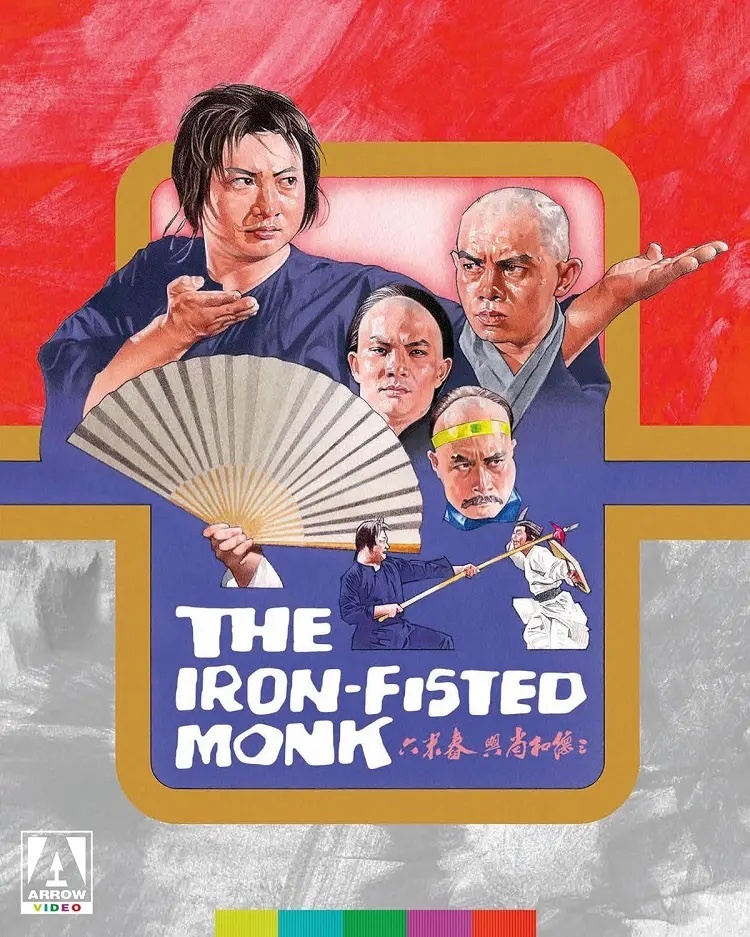
Arrow Video is doing what they do best this week – releasing a boxed set of relatively obscure genre films and loading them with extras. Blood Money: Four Classic Westerns includes four Italian Westerns (Mátalo!, Find a Place to Die, Vengeance is Mine, $10,000 Blood Money) that were made from 1967-1970. I don’t know anything about them, and I don’t have to. I want to buy this box and learn about them as I watch.

Also out this week that looks interesting:

Soundies: The Ultimate Collection: Around the time of WWII little jukebox type machines started showing up in bars, honkytonks, and night clubs. For the drop of a coin you could watch what amounted to an early music video (or burlesque shows, or any number of other things). Kino Classics has put together a big collection of the music videos which star folks like Count Basie, Cab Calloway, Hoagy Carmichael, Doris Day and a ton of others. Sounds cool.

Paint: I would have bet you a lot of money that this comedy starring Owen Wilson was a weird biopic of Bob Ross, and I would have lost. Apparently Wilson’s character just looks like that painter of happy little clouds (and paints for a public television station), but that’s were the similarities end. Or something. The reviews have been terrible so I’ve not bothered to dig into it more.

The Broadway Melody: The first sound film to win an Oscar is also generally regarded as the first proper movie musical.

The War of the Worlds: This sci-fi classic from 1953 is getting a big 4K release for its 70th anniversary.

One False Move: Criterion is releasing this neo-noir classic about a police chief awaiting the arrival of some killers in a 4K set.

Chucky 4-7: Shout Factory presents this collection of Chucky films (Bride of Chucky, Seed of Chucky, Curse of Chucky, and Cult of Chucky) in a new 4K boxed set. I’ve never seen any of the Chucky films so this probably isn’t the place to start, but for fans it looks pretty cool.

The Friday Night Horror Movie: The Hunt (2020)

the hunt movie poster

A group of strangers wake up in an isolated forest with gags locked in their mouths. They stumble about until they find a large crate in the middle of a field. Inside the crate, they find a whole bunch of weapons. They find the key to their gags on the ground. As they are unlocking their gags and grabbing the weapons someone starts shooting at them. Several are killed and the rest scatter and run. They are being hunted.

The Hunt is an update on the classic story The Most Dangerous Game but with a lot of unnecessary and rather clunky political satire thrown in.

It was directed by Craig Zobel from a script by Nick Cuse and Damon Lindelof. It was produced under Blumouse Production and it has that same dull slickness that so many of his films contain. It looks good and its production values are nice but there isn’t a distinct directorial voice. It is entertaining, but ultimately forgettable.

The hunters pretty quickly take care of most of their prey, leaving only Crystal (Betty Gilpin) as the last one standing. They apparently didn’t do their homework as she is one tough cookie and has been in more than one fight before.

Gilpin is wonderful in this and she makes it all worth watching. She’s tough and savvy, and there is a little more than a glint in her eye as she takes down her attackers one by one. I’m a fan of The Most Dangerous Game stories (and there have been a lot of adaptations of the 1924 short story by Richard Connell) and I enjoyed seeing it in this modern update.

The hunters here are rich, liberal elites and they are preying on poor, illiterate rednecks whom they seem as contemptible (or deplorable if you will). The film tries to satirize both sides but its humor is too broad and blunt to actually be funny. My favorite bit comes when the hunters are choosing their prey by looking through a slide show of potential victims, all of whom have online profiles they disagree with. It is mostly white, bearded dudes but then a black guy in a cowboy hat shows up. Immediately the response is that they can’t hunt a black guy but then someone chimes in that they’ll get in trouble if they don’t have some diversity.

They bang the satiric drum throughout the film, mocking both sides with broad strokes so much that it distracted me completely from the pretty good humans hunting humans thriller aspects of the film.

The cast is filled with names you likely know – Emma Roberts, Ike Barinholtz, Sturgill Simpson, Macon Blair, Ethan Suplee, Glenn Howerton, and Hilary Swank – most of whom are making glorified cameos, many of which are promptly killed. I love when movies do that, and I love how those early deaths give the movie a feeling of anything can happen.

Of course, it then settles down into relative predictability, but for at least a few minutes I thought they were going off the rails in really interesting ways.

Like I said it ultimately winds up being an enjoyable but forgettable film. Gilpin absolutely makes it worth a watch.

Silkwood (1983)

silkwood movie poster

Meryl Streep is one of the world’s greatest actresses. She’s been nominated for a record 21 Academy Awards and won three. She is beloved by critics and fans alike. But the thing is, up until recently I’d not actually seen all that many of her movies. Oh sure I’d seen The Deer Hunter and Manhattan, Death Becomes Her and The Manchurian Candidate remake, but most of her big classic films had passed me by.

One of the things I’m realizing as I’m working my way through these early 1980s films is that a lot of these films seem to exist in my cultural memory but at the same time I haven’t actually watched many of them. This actually makes sense as I think about it. I was seven or eight years old when Silkwood came out. Of course, I wasn’t interested in a grand drama about a nuclear whistle-blower. But it was also one of the biggest movies of the year, making lots of money and being nominated for numerous awards. I’m sure I wasn’t following the Oscars at that young age but I mostly likely would have heard buzz about the film while my parents were watching television or seen Meryl Streep and Cher appearing in various magazines. No doubt the film was talked about often in the following years to come.

All I knew about the film up until watching it the other day was that Streep played some sort of whistle-blower and that she was killed for it. I assumed she worked at a nuclear power plant and that the film was going to be some sort of tense, nail-biting action film.

I was wrong on both accounts. Based on a true story Silkwood is the story of Karen Silkwood (Streep) who worked at a plant in Oklahoma that made Uranium fuel. She did become a whistle-blower and probably was killed for it, but the film is not at all a thriller. It is much more a character piece than anything else.

One of the things I found really fascinating about the film is that Karen is not a brilliant scientist or an expert on nuclear energy. She’s a fairly uneducated blue-collar worker. She’s basically working on an assembly line. Albeit a radioactive assembly line. One that can kill her. She’s not even that good at her job. The film shows her slacking off on numerous occasions. She often leaves the line to go chase down a friend to chat about something, or do some other task she could easily do on her break. She constantly stops working to converse with her fellow line workers. At one point she brings in a birthday cake, something likely not allowed on the uranium line. To leave her workstation she must waive her hands over a radioactive tester machine and she constantly has to be reminded to do this.

Her ex-husband and three small children live in Texas, but she rarely seems interested in them. Early in the film, she takes a couple of days off to go see them. She actually forgets to ask for the time off and has to beg her coworkers the day before to switch shifts with her. Once she arrives she learns that her ex has planned to take the kids to see his father. So she only gets a few hours with them so she takes them to a diner and spends more time talking to the friends she’s taken with her than her own kids. Later, we’ll see her call, but late at night when they are in bed.

She really just falls into activism. One day one of her friends comes up hot – the radiation monitor goes off and she must be thoroughly scrubbed down. Karen goes with her and comforts her. When she learns that they didn’t do a throat swab – testing for radiation inside her body she becomes furious. This leads to her raising concerns with her union rep. He takes her to see the national union people and from there, she becomes very engaged in union activities, much to the annoyance of her boyfriend and roommate.

She lives in a small house with her boyfriend Drew (Kurt Russell) and Dolly (Cher). Much of the film is spent with them just hanging out at the house. These are fun lovin’ people. Drew likes to drink beer and make love to Karen. Dolly is in love with Karen and wishes she could be hers. Later she gets a girlfriend and that causes more household tension.

The film doesn’t make much, if anything at all, about what the company thinks of her activism. It annoys her coworkers but only because they worry they will lose their jobs. It angers Drew and Dolly because it is interfering with the time they get to spend with her. If the company is planning on killing her we sure don’t see it. There aren’t any tense scenes showing mysterious men stalking her or leaving bullets in her mailbox. Even her death is left up in the air. We see her driving down the road, headed to a meeting. There is a car with its headlights shining brightly behind her. And then nothing. That’s more factual, I suppose because her death was ruled an accident and there are no documents indicating the company killed or even harassed her. There were some documents missing from her crashed car – documents she was taking to a meeting with the press that she was seen with not long before the accident. But that’s not proof of anything.

That’s not a ding on the film either. It isn’t really interested in the mystery of her death. Like I said it is a character piece. And a good one at that. Streep is just wonderful. She’s a very physical actor and a subtle one at that. She creates little ticks for her characters, she lets us understand her mood by a small facial expression or simple gesture. Cher is likewise fantastic. She’s much more natural in her performance, existing in it.

I definitely went down a rabbit hole after watching this film, looking up the real history of Karen Silkwood and the company she worked for. It is pretty fascinating.

Au Revoir France

I have now (re)posted my last experience in France (at least for our first stay there, I’ve been back a few times). Thank you for following along. And apologies to those who weren’t interested, I know sometimes it was a big dump of posts.

I had a lot of fun reading those old posts and reliving those experiences. It is weird because in my memory banks, I thought I had written a lot more about the minutia of life in Strasbourg. I thought I had written posts about trams and post offices, restaurants, and dog parks. But I think maybe I added a lot of that to my Webshots page with pictures and captions. That Webshots page is long gone, but maybe I’ll upload all my pictures from France someday and post them here.

It is also weird to read those old posts and revisit who I was all those years ago. I feel like I complain a lot, and I griped about my wife more than I expected. Two things are responsible, I now believe.

1.) I was trying to be funny. My writing was very casual in these posts. I wrote like I was talking to my friends (which in those early days that’s pretty much all who were reading my posts). So, I complained, in the same manner, you’d complain to your friends about inconveniences you experience on a road trip. Even though you are really having fun.

2.) I was in culture shock way more than I realized. France was amazing, but it was also a shock to the system. While a lot of our friends spoke English, I was surrounded by people speaking a language I didn’t understand. That was confusing and anxiety-inducing. The culture was very different than mine and that was challenging. I’m glad I experienced it, but I can see now how that stress came out in my blog.

Anyway, thanks for reading along.

I will continue to go through my old posts and repost them. I honestly don’t remember what I did with my blog when we got back. I know I kept writing movie/music/book reviews and talking about pop culture. I also posted a lot of what we now call memes – silly little things I found on the Internet. I’m pretty sure the day-to-day stuff mostly disappears. I know you all are just as excited as I am to find out 🙂

Criterion’s The Ranown Westerns Are the Pick of the Week

ranown westerns

Randolph Scott and director Budd Boetticher made seven films together during the 1950s. These are collectively known as the Ranown Cycle (which was the name of Scott’s production company.) If you get technical about it, two of the films don’t count as they were produced by other companies, but when it comes to movies, who wants to get technical?

I guess Criterion does because they are only including five films in this set. But every one of them is great and they are this week’s pick. You can read more about it here.

The Friday Night Horror Movie(s): Amityville II: The Possession (1982) & Amityvlle 3-D (1983)


imgboximgbox

The Amityville Horror (1979) is one of those movies that I want to like more than I actually do. It has a good cast – James Brolin looking all masculine in his flannel shirts and beard, Margot Kidder is just lovely and Rod Steiger is doing his best Max Von Sydow in The Exorcist (1973) impression. I like the idea of haunted house movies and this has the coolest looking haunted house ever. But ultimately I find the film to be a bit of a slog. It isn’t scary, or eerie. It isn’t even very moody.

When watching a horror movie from the 1940s I have no problem overlooking hoary old special effects like objects moving across a room or curtains billowing without wind. But in modern movies (and yes I’m counting 1979 as a modern movie as it premiered in my lifetime and feels much more modern than say something like The Uninvited (1944) or House on Haunted Hill (1959)) similar effects just seem silly. The Amityville Horror employs a lot of silly effects that just aren’t scary or all that interesting.

Still, every few years I find myself drawn to it. Like I said I love the idea of it.

Over the last couple of years, I’ve been watching a lot more horror films than I used to. This is mostly due to my creating this concept of the Friday Night Horror Movie. If I have to watch a horror movie (or more than often, two or three horror movies) every Friday then I’m going to naturally watch a lot of horror movies. One of the things I’ve been doing is watching a lot of horror sequels. It is a genre that naturally produces a lot of sequels and I’m finding it quite fun to watch them all in order. I’ve now seen all of the Friday the 13th films, the Nightmare on Elm Street movies, the entire Halloween franchise, and more.

This now brings us to The first two Amityville Horror sequels (there are technically a whole lot of sequels to The Amityville Horror because you cannot copyright the name of the town so anyone who wants to can throw Amityville in their name and tie it to the franchise. But the first two sequels are official and I watched them today.

But first, let’s briefly recap the original film. A newly married couple (played by Brolin and Kidder) along with their children move into a big, historical old house on Long Island. Quickly strange things begin to occur that can’t be naturally explained. By the film’s end, it is clear something has possessed the house and is trying to kill them. That something is the evil spirit that caused Ronald DeFeo, Jr. to kill his entire family with a rifle just one year prior.

Amityville II: The Possession is sort-of the story of what caused Ronald Jr to commit those murders. I say sort-of because in this film the family is called the Montelli’s and the murders happen in a slightly different manner than we see them occur in the first film.

But where The Amityville Horror was filled with classic haunted house tropes and was all the more dull for it, Amityville II just absolutely goes for it. There is no slow build-up, and no time to develop characters, it just takes off and hardly slows down to catch its breath. It begins once again with a new family moving into the house. But right off the bat, we realize this family is already messed up. The father (Burt Young) is abusive. He yells at the kids constantly and threatens to beat them, he actually does beat the wife and it is implied he forces himself on her. The kids are moody and angry.

On their first night they experience a mysterious banging on the door and a freaky drawing appears on the two small children’s bedroom wall. Soon enough the oldest boy (Jack Magner) becomes possessed. He starts hearing voices telling him to kill his family, he yells at his mom and seduces his sister.

It gets weirder from there. If the original played it safe then the sequel throws off the rails and just goes for it. Most of the script, especially the dialogue, is pretty bad, but I love that all of the actors and the direction just completely go all out.

Amityville 3-D (1983) is much more reserved, but I kind of liked it more than the other two. It is a for-real sequel in that it takes place after the events of the other films. By this point the house is famous, or maybe I should say notorious. It has set vacant for years because no one in their right mind would buy it.

Naturally, our film’s hero does just that. He is John Baxter (Tony Roberts) a journalist working for a magazine that specializes in debunking supernatural con artists. He and his coworker Melanie (Candy Clark) debunk a pair of hoaxsters working out the Amityville House and afterward, John decides to buy the place (he’s getting a divorce and it is being sold dirt cheap).

You know the story by now, weird stuff starts happening. What I like about this film is that John comes to the house knowing its history and he doesn’t care. He’s a skeptic. Because of this, the film rolls out its supernatural stuff very slowly. Some of the mysteries and even a couple of deaths happen outside of the house. For sure, supernatural events and gorey deaths happen, but it takes its time with them. The film is more the mood piece the original wanted to be, but here it is quite successful at it.

It was directed by Richard Fleischer who made great films like 20,000 Leagues Under the Sea (1954), Compulsion (1959), and my favorite Soylent Green (1973). This is a man who knows how to direct a film, not the usual hacks that wind up directing the third film in a horror franchise.

As the title implies it was originally shot in 3-D. While there are the usual effects you find in that type of film (various objects flying at the screen, long objects being turned slowly toward the camera) Fleisher and his cinematographer Fred Schuler make the best of the format. Their use of depth of field is masterful. There is almost something in the foreground – a lamp, a tree, anything – that gives the characters or other objects in the screen depth. Shots indoors often take place in a place that allows you to see down a hall or into other rooms. Characters move in and out of frame, etc. It must have been really something to have seen in 3-D, but even in 2-D it looks really cool.

The rest of the filmmaking is very good as well. The actors are quite good and I found the entire thing a pleasure to watch.