Westerns in March: Blood on the Moon (1948)

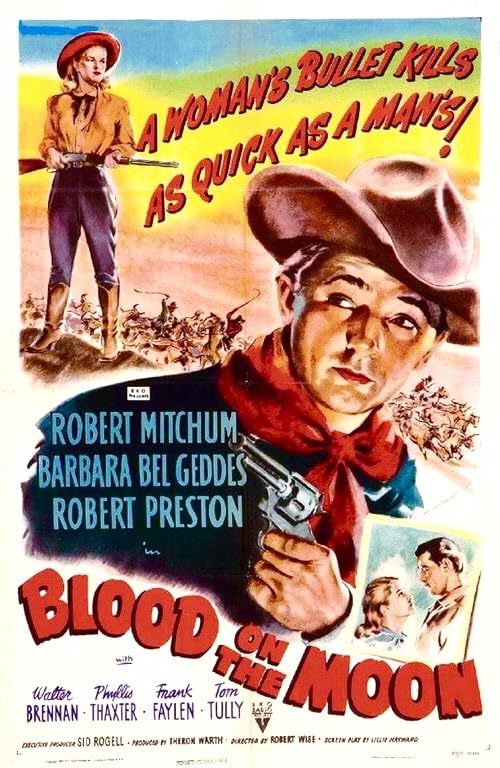
blood on the moon

On a surface level Westerns and Film Noirs have very little in common. Noirs tend to take place inside the big city. Westerns are all about the wide open spaces of the American West. Noirs usually occur in the present, whereas westerns (almost by definition) occur in a specific past. Noirs are filmed in black and white. They revel in shadows and light. They take place in smoky little bars and grubby flats. Westerns make great use of the widescreen format and technicolor. Classic Westerns are about good versus evil; the differences are plain. Noirs live in the grey, the morally ambiguous, the dark nights of the soul.

It is that last bit that sometimes allows the two genres that seem so far apart to grow a little closer. While Classic Westerns often do present moral absolutes with clear good guys and bad guys, as the genre grew older it began to change. Their heroes were sometimes morally grey. They wrestled with complex questions. Dealt with complex characters. Etc. They started to feel a little more like noirs. Not always, of course, the vast majority of westerns stuck to their lane, but some of them, some of the best of them, allowed themselves into murkier territory.

Blood on the Moon is a Western Noir. It is set in the Old West, its characters are old cowboys, and its plot involves cattle and Indians, but its hero is flawed and its cinematography is pure noir.

Robert Mitchum plays Jim Garrey, a man down on his luck. When his old pal Tate Riling (Robert Preston) offers him a job he takes it, no questions asked. He soon learns he should have asked questions because Riling is up to some shenanigans.

The plot (or I should say Riling’s plot) is convoluted and too complicated to get into here. Basically, he’s setting some homesteaders against a rancher in hopes of making himself rich. He needs Garrey as a mediator to arrange a deal over some cattle.

That part of the plot doesn’t really matter. It boils down to Riley using Garrey for some pretty shading dealings. Garrey is basically a good man, but he’s done some bad things which makes him feel like a scoundrel. He’s left with a decision on whether to do the right thing and go against an old friend, or stay the course and get rich in the process.

Honestly, I got a bit lost in the machinations of the plot but Mitchum is great as usual and cinematographer Nicholas Musuraca gets some great noir visuals out of his scraggly western landscape (and no wonder he shot a lot of great film noirs including Out of the Past and The Spiral Staircase). Preston seems a bit miscast to me. He’s great when he’s playing rascally con men, but he doesn’t quite exude the menace his character needs in this film.

Overall a decent example of both the Western and the film noir but there are better films in both genres.

He Walked By Night (1948)

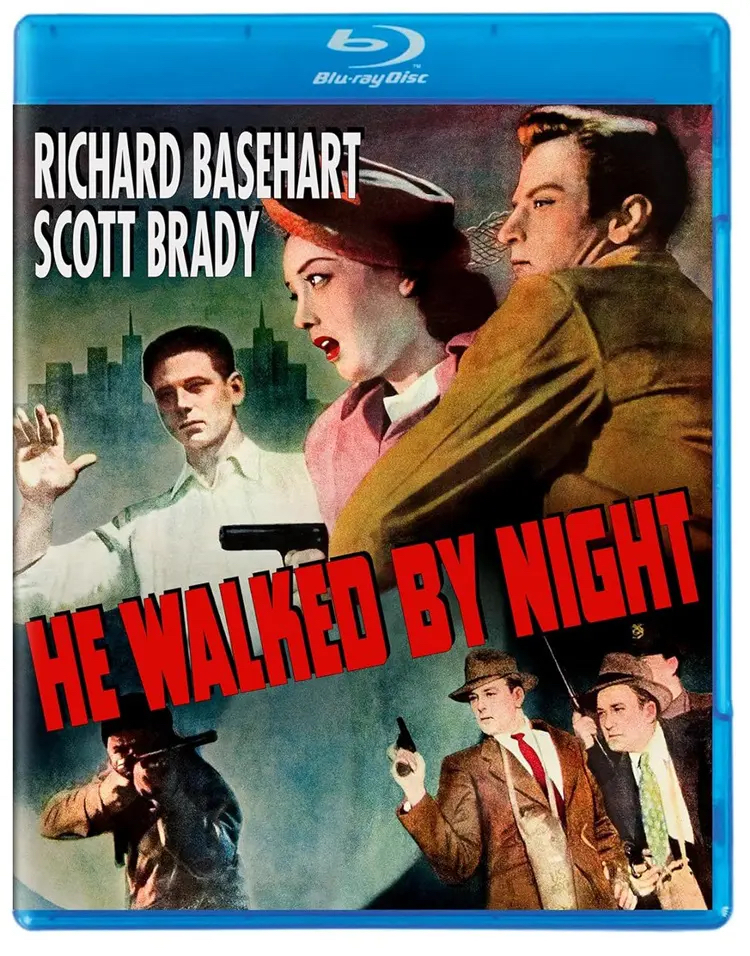
he walked by night

Every Noirvember I spend some time searching for film noirs that I’ve never seen. Last year I saw several lists including He Walked By Night as one of the great film noirs of all time. I had this vague notion that I’d seen it before but upon checking my Letterboxd feed I saw that I had never logged it. My Letterboxd feed is sacrosanct (except when it isn’t) and so I knew I had never watched it before.

But that nagging feeling that I had seen it kept me from putting it on that Noirvember. I got a chance to review the Blu-ray for Cinema Sentries and I figured it didn’t matter if I’d seen it before or not, it is considered a classic and therefore it would be good to have it in my collection.

I put the movie on thinking I’d definitely not seen it before. There was one scene in which a robber comes through a backdoor and is lit in a really interesting way that seemed familiar but I figured there were lots of scenes like that, probably, and I definitely hadn’t seen this one.

Then there was a scene where the cops are asking witnesses what the criminal looks like and it is such a fascinating scene that I immediately knew I’d seen it before.

Sometimes I forget to log things in my Letterboxd is what I’m saying.

Now that my pointless story is over you can read my actual review here.

Film Noir: The Dark Side of Cinema XVI

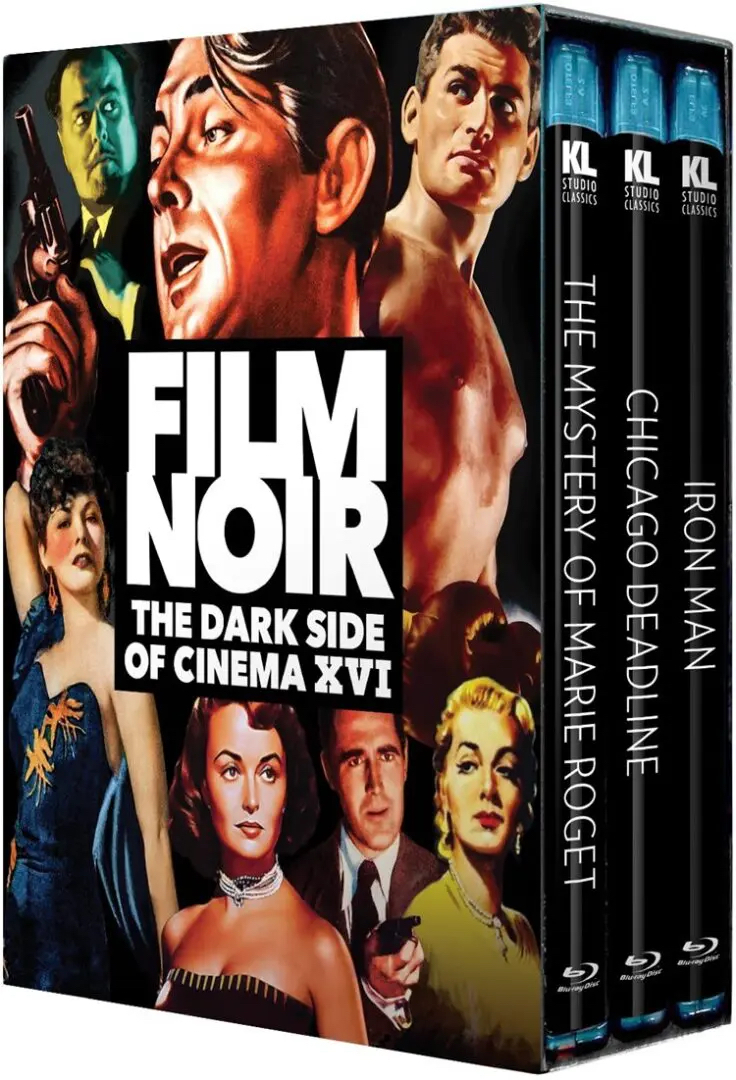
dark side of cinema

Kino Lorber, the boutique Blu-ray label has been releasing these sets of three relatively obscure film noirs for a few years now. I’ve reviewed quite a few of them, and while not every film is a classic, or even that good, I always enjoy watching them.

You can read my full review of this set over at Cinema Sentries. 

Noirvember: Beware, My Lovely (1952)

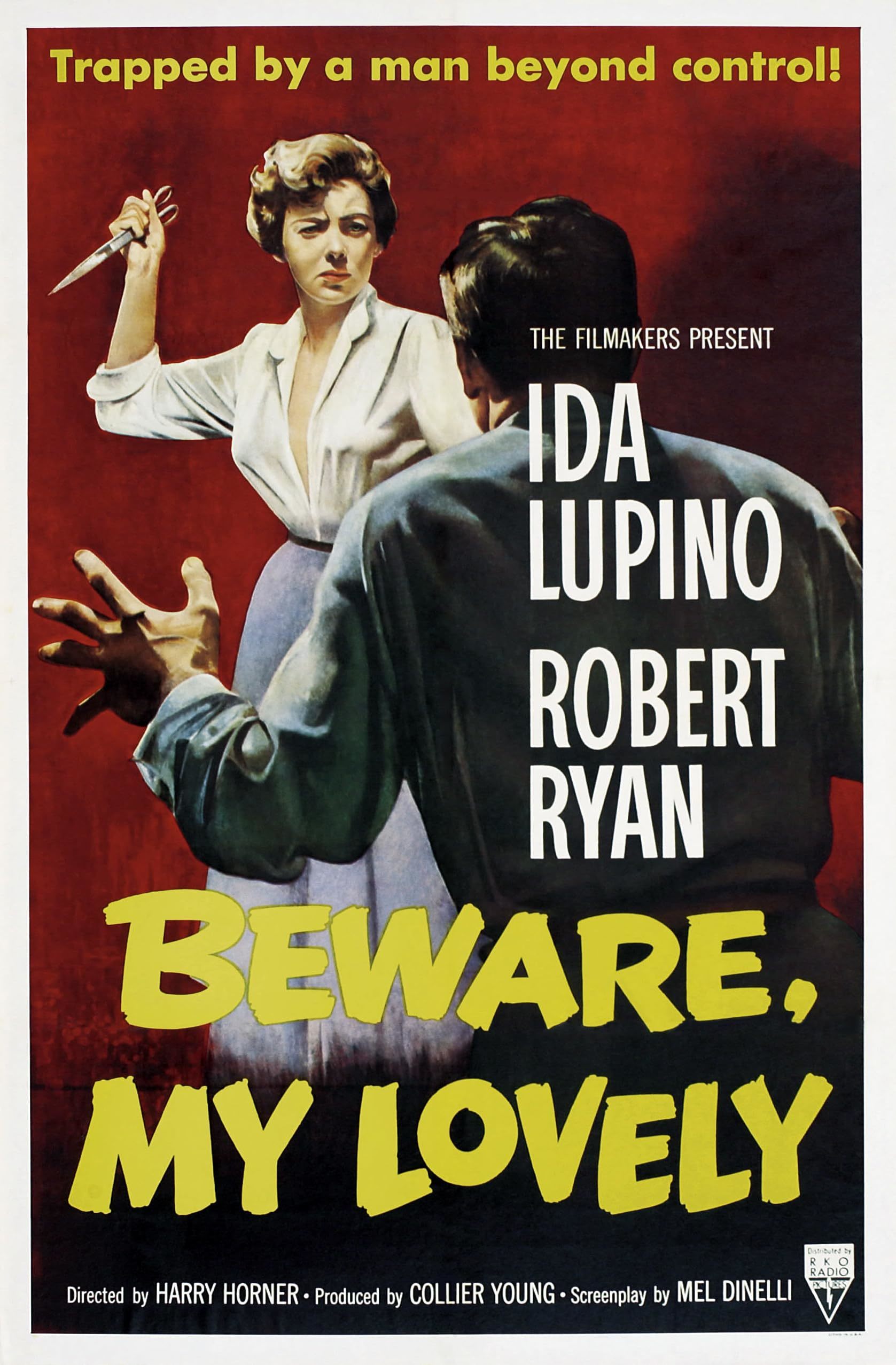
beware my lovely

Ida Lupino plays Helen Gordon a widow living in a great big house who takes care of children after school. We see her being kind to the children, and teaching them. Loving them. She has a big heart. She takes care of an old lodger as well. She’s a practical person, but also a bit scatter-brained and not very good at the housekeeping.

One day a man pops by. He says he’s in need of work and he’d be happy to help around the house. His name is Howard Wilton and he’s played by Robert Ryan. She says she’s got plenty of work for him to do and hires him on the spot.

What she doesn’t know, but we do, is that Howard is mentally unstable. We watched him at the beginning of the film working for someone else, someone we saw lying dead in her cupboard. Someone who, when Howard saw her dead, caused him to flee in terror.

The film builds the tension slowly. Because we know Howard is unstable we know he will eventually turn violent towards Helen, but the movie is in no rush to get there. At first, Howard exhibits some little quirks towards Helen. He’ll say something a little odd, or do some little something out of the ordinary. He might even call attention to it but Helen treats him like one of her kids.

As those quirks turn more sinister she’s still polite, still kind. She should just run, but she doesn’t want to hurt his feelings. When she finally realizes she must get out, it is too late. Howard keeps her from leaving.

The movie never quite boils over in the way I wanted it to. The tension stays on a low simmer, and I wanted it to explode. But the filmmaking is good. Ida Lupino is wonderful in everything she does and she’s terrific here. Her company The Filmmakers produced it. She was an extraordinary woman, I recommend reading up on her sometime.

Robert Ryan likewise is quite good. He’s always good as the heavy. There was something menacing about his presence.

Noirvember: Brighton Rock (1948)

brighton rock

Watch enough British cinema and you will eventually come across the name Graham Greene. He was a novelist whose books were often adapted for the screen. Eventually, he became a screenwriter himself. His films include The Third Man (1949), This Gun For Hire (1942), Went the Day Well? (1942), Ministry of Fear (1944), and many others. I’ve seen quite a few of them and there isn’t a bad one in the bunch.

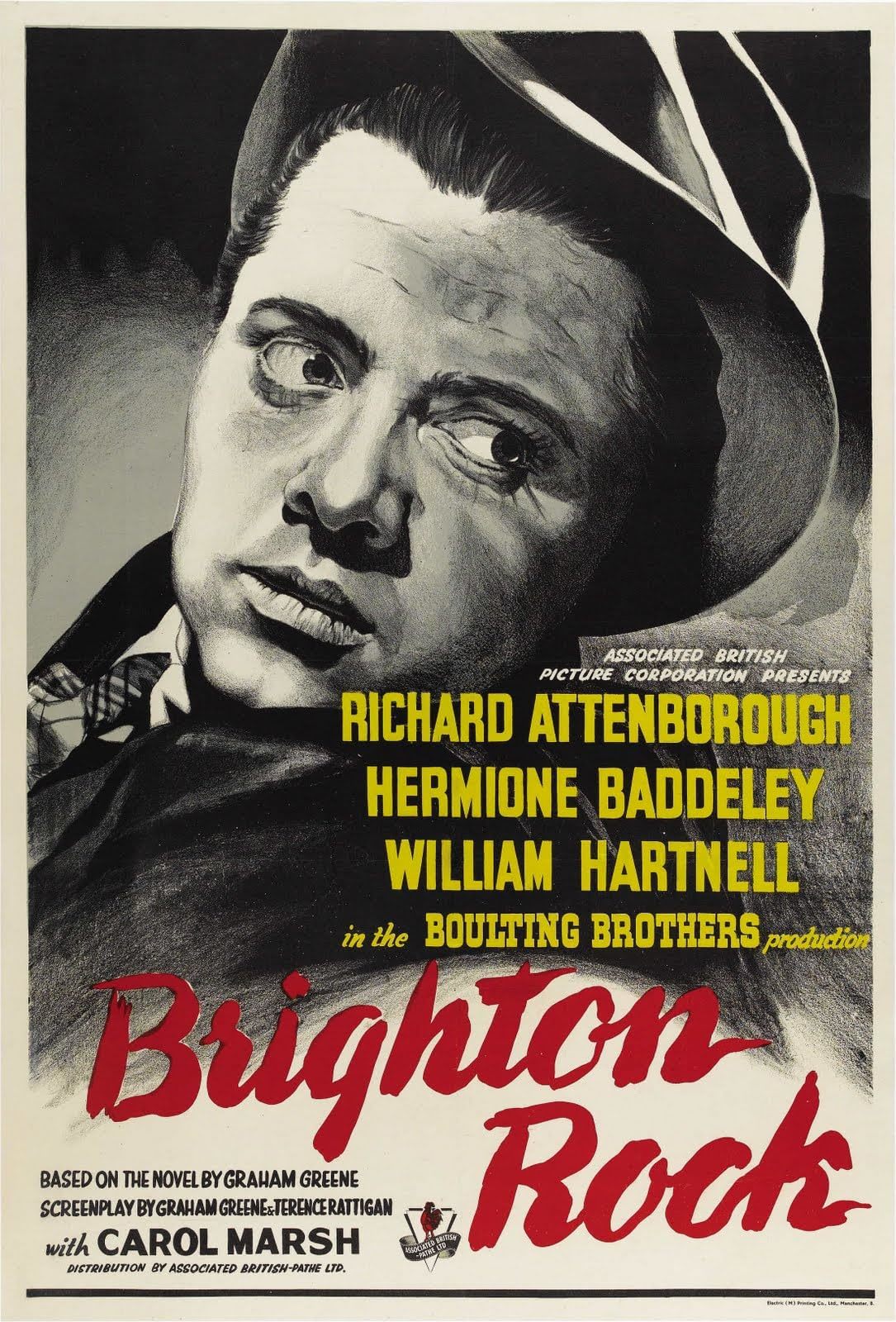
This includes Brighton Rock, a terrific little film noir about a group of hoodlums in the titular seaside English town. Richard Attenborough stars as Pinkie the razor-wielding, sadistic leader of a small gang of hoods. He happens across Fred (Alan Wheatley) a man he thinks is responsible for the death of the gang’s former leader.

He and the rest of the gang members (including the first Doctor Who, William Hartnell) chase Fred through a carnival until finally killing him on one of those creaky horror rides.

While trying to hide at the carnival Fred meets Ina (Hermione Baddeley), for having a woman by his side might work as a disguise. She winds up playing detective as no one else seems to care what happened to him.

Looking for an alibi Pinkie latches onto Rose (Carol Marsh) whom he comes across working as a waitress in a restaurant. She’s lonely and never had a guy before and falls in love immediately. He treats her terribly but says enough sweet things to keep her by his side (when he needs her to be).

It is an extraordinary performance from Richard Attenborough. I’ll always think of him as John Hammond in Jurassic Park (1993). He’s young here, and terrifying. He’s icy cold and the way he manipulates Rose is just awful (awfully good).

This is film noir all the way through with terrifically stark black-and-white photography, pitch-black characters, and wonderfully made from start to finish.

Noirvember: Man on the Run (1949)

man on the run

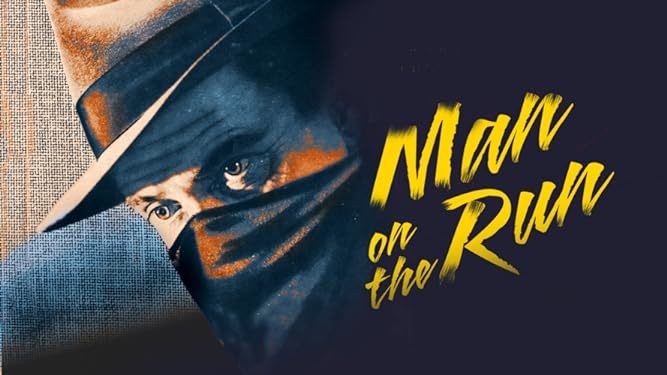
A man walks into a club and finds his old Army compatriot, Peter Burden (Derek Farr) working behind the bar. Peter is a deserter and as this is post-War England that’s a bad thing to be. The man tries to blackmail Peter so he flees. We see him doing a series of odd jobs throughout the country before, desperate, he walks into a pawn shop looking to sell his Army revolver. Just as he takes the gun out of his coat, but before he can say anything a couple of actual armed robbers come in and beat the proprietor senseless. Before he dies the proprietor gives a description of the only robber not wearing a mask – our hero Peter.

As the police close in on him, a desperate Peter busts into the home of a widow named Jean Adams (Joan Hopkins). He promises not to hurt her, but begs her to let him stay. She being kindly and perhaps a bit lonely allows him overnight. While there he tells her his story and she believes him.

Together they begin searching for the two real burglars who can set the police straight and set him free.

Man On the Run is a terrific little British Noir. It doesn’t do anything new or amazing with the genre, but what it does do it does really well. During my month of watching Great British Cinema, I fell in love with this type of film.

The Brits were great at making this kind of tidy, nuts-and-bolts thriller. I don’t mean to say that there isn’t artistry to this film, because there is. The sets are fantastic, as is the camera placement, and the lighting all has that wonderful noir shadowy thing going for it. It mostly takes place in bars, police stations, and houses which gives it a claustrophobic feel. But it’s a film that doesn’t wow you with that stuff, it isn’t overloaded with style. It is a really good story told really well.

The relationship between Peter and Jean does develop a little too quickly. It is difficult to believe that she’s gonna fall for this man who just busted into her home, clearly running from the police. But that’s the movies and I didn’t mind. Both actors are quite good in it and they do make their love as believable as it can be. The thriller aspects are tightly wound and make their plight quite exciting.

It is surprisingly sympathetic the Peter’s plight as a deserter, something that was quite contentious and in the minds of its British audience at the time. He’s served four years as a soldier but when he requests some additional time off due to family members being deathly ill, his request is denied. He takes them anyway and is considered a deserter. The film puts the moral wrestling over this type of thing in the background, but the fact that it is there at all, and that it lends sympathy to a man (and men like him) who technically deserted is interesting.

The whole thing may be a little too Hitchockian for some but I found it be be delightful all the way through.

Noirvember: The Killer Is Loose (1956)

the killer is loose poster

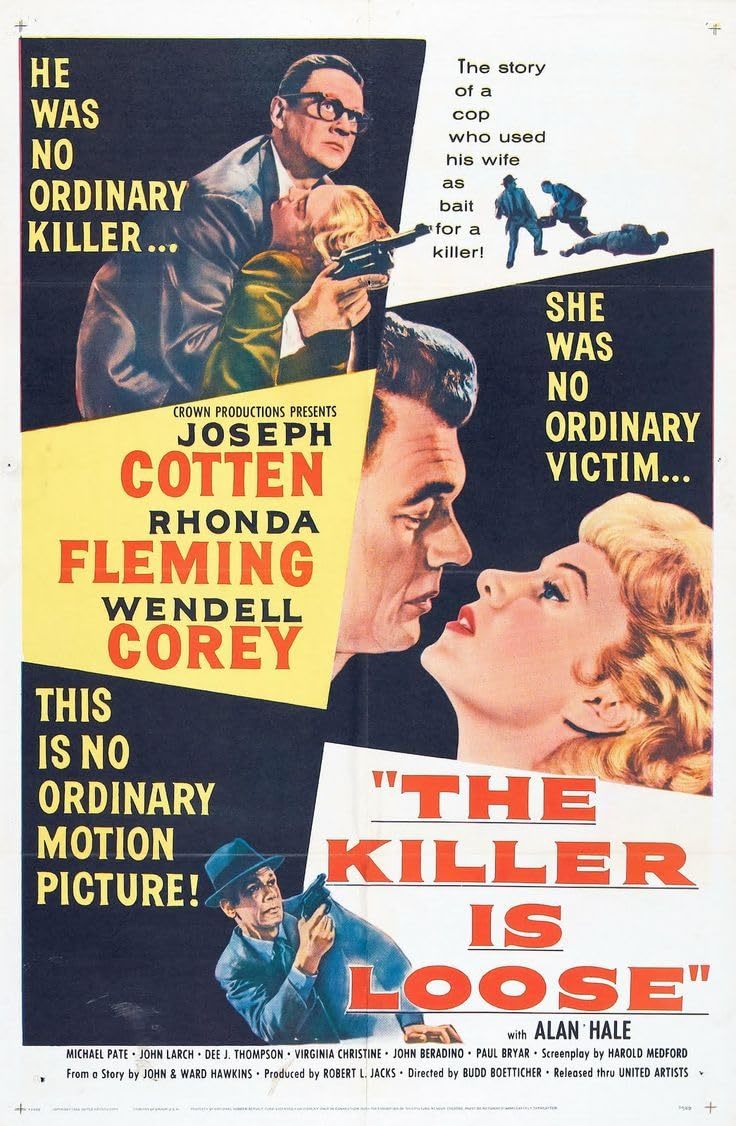
A bank is robbed in broad daylight. Everything about it indicates there was an inside man. Lt. Sam Wagner (Joseph Cotten) is on the case. Clues lean toward bank employee Leon Poole (Wendell Corey). When they come to his apartment to speak to him Poole shouts that he’s not coming out then shoots through the door, injuring one policeman. Wagner busts in, but with the lights out he can’t see. He sees a shadow and shoots. The victim isn’t Poole but his wife, who dies instantly. Poole is convicted and vows revenge.

For two years Poole is a model prisoner and he’s sent to a work camp with less security. When he’s asked to accompany a guard to go into town to help pick up a few things he sees his opportunity. He kills the guard and escapes. But it isn’t Sam Wagner he’s after, it’s his wife Lila (Rhonda Fleming) he wants to kill. An eye for an eye, or rather a wife for a wife is his feeling.

Director Budd Boetticher filmed The Killer is Loose in 15 days. In some ways, you can feel that time (and budget) constraint on screen. It often feels like a made-for-television movie. But in all the ways that count, the film is excellent.

I’ve seen quite a few of Boetticher’s films (including all five in the Ranown Cycle he made with Randolph Scott) and I’ve enjoyed them all. He wasn’t a flashy or even stylish director, but he knew how to get the most out of his limited resources. He was a master of efficiency and that’s certainly true here.

I’m very much a fan of Joseph Cotten as well, and he falls right in step with what Boetticher was going for. His performance is perfect, not flashy. It doesn’t draw attention to itself, it’s just a good performance by an absolute pro.

But it is Wendell Corey who catches my attention. He’s not showy, either, but he plays Poole like a wounded animal. There is a scene early on at the bank where his former Sergeant (John Larch) bumps into him. It seems Poole wasn’t much of a soldier and his Sergeant made fun of him ruthlessly. Later, while holding the Sergeant’s wife (Dee J. Thompson) hostage, he tells her that everyone has always made fun of him. Except his wife. In that moment we understand what he’s doing. It isn’t that the film exempts or forgives Poole of his murderous revenge, but the script and Corey’s performance make us understand, even sympathize to some extent.

Naturally, I always want all my films to be masterpieces, but if I can’t have that then I’ll take a solidly built, professionally created film every time. This is exactly that.

Noirvember: Black Angel (1946)

black angel poster

This twisty little noir finds Marty (Dan Duryea) teaming up with Catherine (June Vincent) to solve the murder of his wife. The first twist is that Catherine’s husband has already been convicted for that crime. But she still thinks he’s innocent, and Marty doesn’t particularly care for his scheming, femme fatale wife.

He plays piano and she sings pretty good so they decide to team up as an act and get a gig performing at Marko’s club. Marty saw Marko (Peter Lorre) heading into his wife’s apartment just before the murder so they figure he might be the killer.

The proof will be if Marko has a brooch that was stolen from the victim. If he’s got it then he is the killer. There are some nice, tense scenes in which Catherine tries to sway Marko into revealing something, and then later, as she tries to break into his safe.

It is a bit too relaxed to keep the tension going (there are at least two full-on musical numbers in the middle) and a giant red herring causes it to lose a bit of focus, but it is a mostly enjoyable little noir and worth seeking out.

Noirvember: Human Desire (1954)

human desire

Fritz Lang made quite a few film noirs in his storied career. Some of them are some of the greatest ever made. Films like M (1931), The Big Heat (1954), and The Woman in the Window (1944) are terrific examples of the genre.

Human Desire is not the best example of film noir, nor one of Lang’s best, but it’s still pretty great. You can read my review of it over at Cinema Sentries.

Film Noir: The Dark Side of Cinema XV

dark side of cinema

I’m finally through with watching all those Shaw Brothers kung fu flicks, and I’m now ready to start my Noirvember watching properly.

First up was this nice set of three films from Kino Lorber. These aren’t the greatest movies ever made, they’re not even the greatest film noirs ever made. Actually, they’re not all even that good. But I love that these obscure and not amazing films keep getting Blu-ray releases.

You can read my review over at Cinema Sentries.