The Friday Night Horror Movie: Child’s Play (1988)

childs play

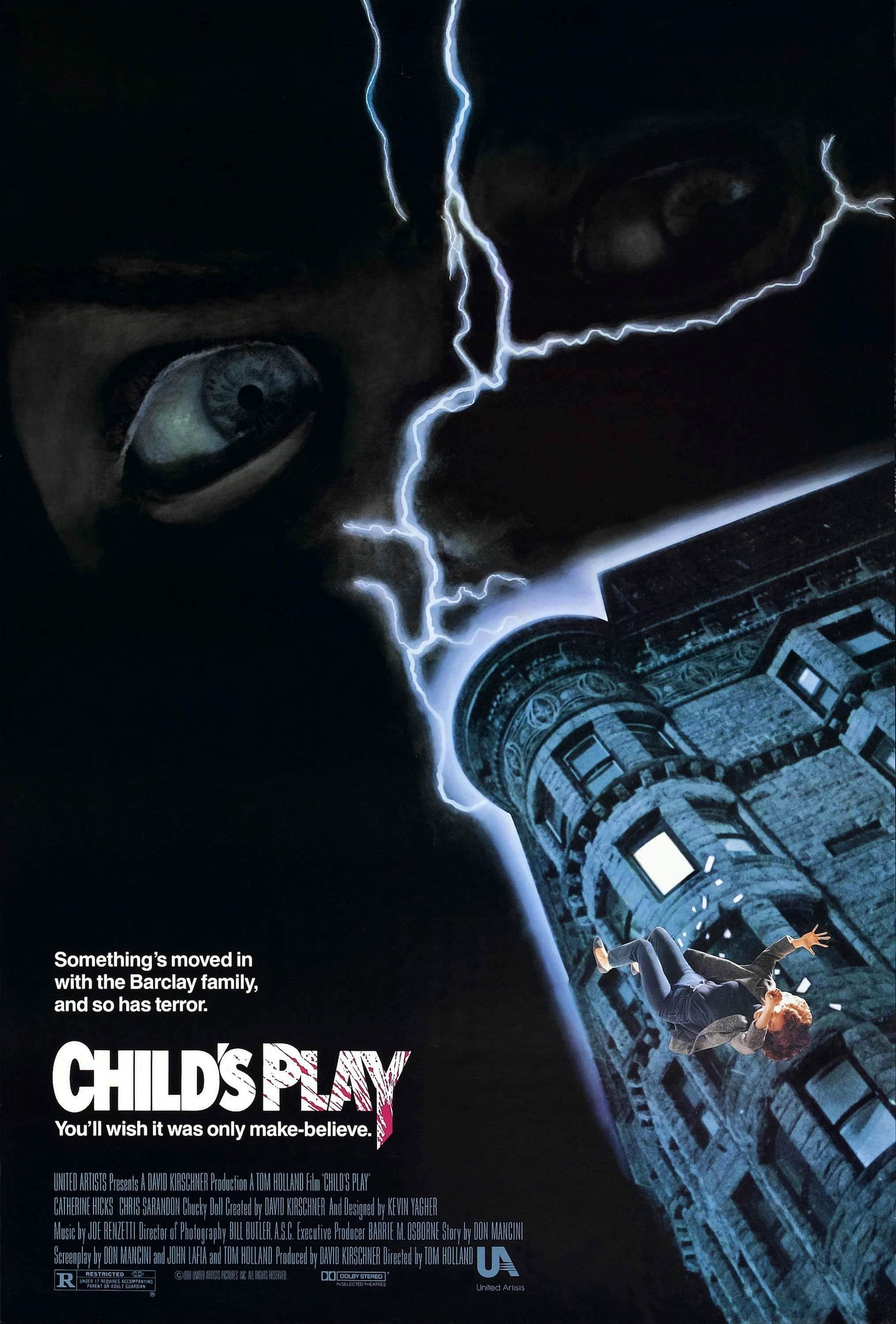
Out of all the classic 1980s horror icons – Jason, Freddy Kreuger, Michael Myers, Pinhead, etc – the only one I had never paid any attention to was Chucky. I don’t really know why. I was too young in 1988 to have seen the original in theaters, and it may have come too late in the cycle of ’80s horror films to have had the same cultural cache, or at least the same influence on me. Most of those other franchises had just about petered out by the time Child’s Play hit the screen. The exception would be the Hellraiser franchise which got its start in 1987, but I didn’t watch it until 2012.

Or maybe the Child’s Play films didn’t get the same late-night cable TV airplay as the others. Like I say, I don’t really know why I never got around to watching Child’s Play.

I rectified that tonight and while I’m glad I did, I can’t say that I’m all that upset it took me this long to get to it.

Chucky, the knife-wielding, homicidal doll (voiced by the always wonderful Brad Dourif) is an iconic character. I’m definitely familiar with him but that familiarity comes from seeing clips from all the movies and various commercials or specials or whatever.

The thing about the first film in a long-running franchise is that it is often more subdued than the subsequent films. Sequels have a tendency of ramping things up. So it is with Child’s Play. I was surprised at how long it takes for Chucky to really show himself.

First, there is a scene demonstrating how the crazed killer’s soul got into the doll. Then we have to introduce the family he’s going to terrorize. There’s the mom Karen (Catherine Hicks) and the little boy Andy (Alex Vincent). The boy precocious and smart. He’s introduced by fixing his mother breakfast in bed which consists of an overflowing (and over-sweetened) bowl of cereal and a huge blob of butter on burnt toast. He wants a Good Guy doll for his birthday but she can’t afford one. Later some homeless dude has one for sale for cheap.

At first the doll talks in its normal voice. Everything is normal about it. Then the babysitter gets pushed out the window of their high-rise apartment. Andy says Chucky scared her and she fell. Andy says Chucky speaks to him (and his language is pretty filthy).

No one believes Andy, including police detective Mike Norris (Chris Sarandon). We get a few POV shots from Chucky’s perspective and a glimpse of him moving around, but for a good chunk of the film we don’t really see him in action.

This isn’t to say the film would be improved if Chucky were to be seen early on wreaking murderous havoc. I suspect we’ll get more of that in the sequels. Rather I’m simply stating how surprising it was to me to find the story weaving a mystery for the characters about whether or not Andy was making Chucky up or not, even though as an audience we know the doll lives.

It makes sense from the perspective of the filmmakers. They didn’t know this was going to turn into an iconic franchise. They were just trying to make a scary movie about a killer doll. They needed an actual story, with plausible characters. Later it can have films with more murdering mayhem, but the first film in a franchise needs grounding.

Or something. That concept makes sense in my mind, but honestly, watching it was a little bit of a drag. I wanted more Chucky, not more story, more grounding. Once the doll does come out it is pretty cool. The animatronics are great, and while he’s not in full-on shite talking mode yet, he gets in a few good lines. And the ending is pretty great.

I’ll definitely be checking out those sequels.

The Friday Night Horror Movie: The Entity (1982)

the entity

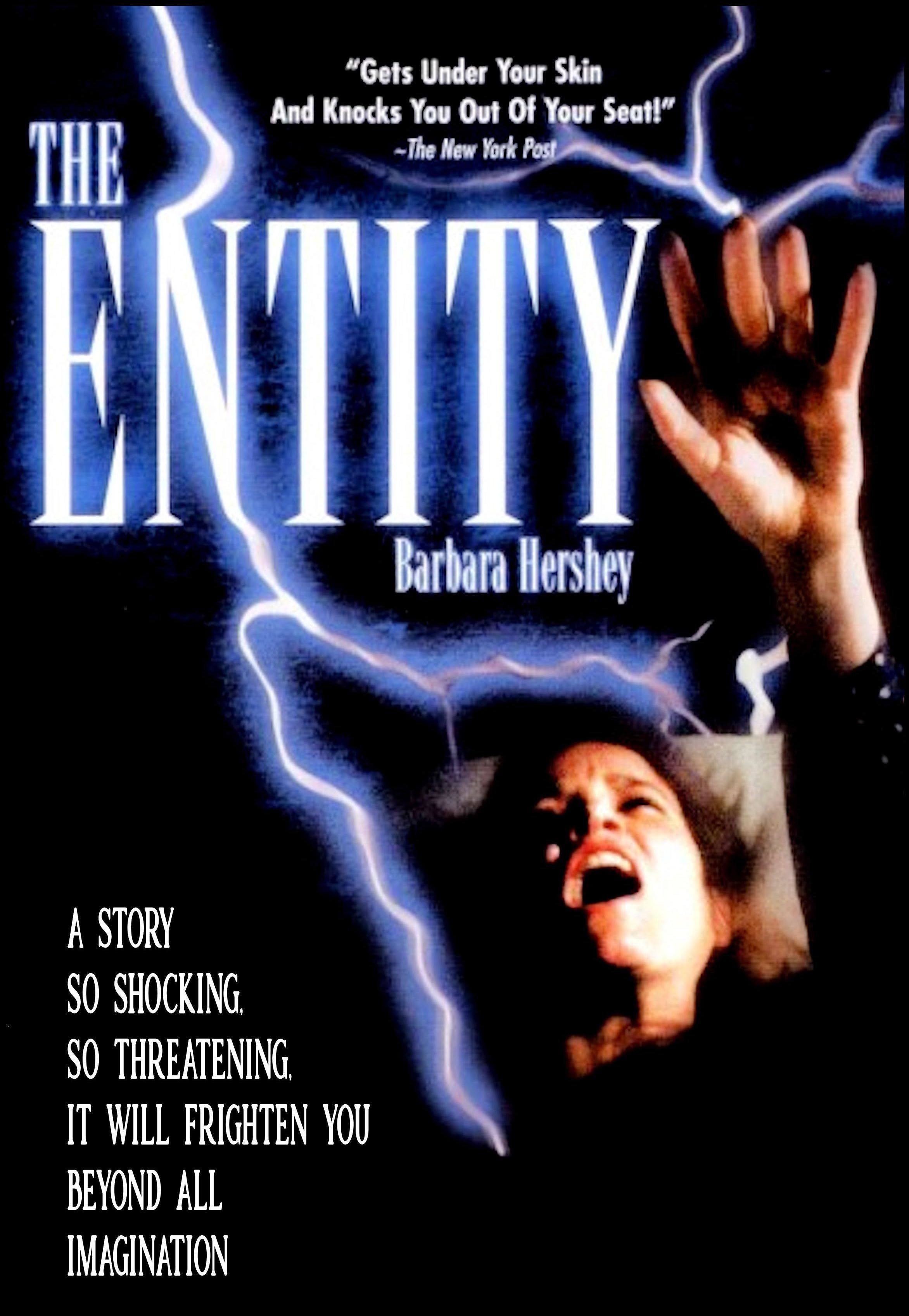
The Entity is a supernatural horror film that got lousy reviews upon its release and bombed at the box office. It was almost immediately overshadowed by Poltergeist which came out that same year and has now mostly been forgotten. But if you are a fan of things that go bump in the night and gnarly ghost stories then it is well worth checking out.

Carla Moran (Barbara Hershey) is a single mother of three kids who works all day and is taking classes at a secretarial school all night. She’s had a hard life, but she’s doing the best that she can. One night as she lies in bed she’s assaulted. She cannot see her attacker and when she is finally able to scream her teenage son Billy (David Labiosa) rushes in to find nobody in the room, nobody in the house, and all the doors and windows are locked. Perhaps it was just a terrible nightmare.

The next day she’s violently attacked again. This time her eyes are wide open and still she can see no one. The assailant is invisible. When the attack is over she loads the kids up and takes them to her friend’s apartment. She talks her into seeing a psychiatrist.

Dr. Sneiderman (Ron Silver) is incredibly kind. He never sneers at her claims of being raped by a poltergeist. He asks questions and responds. He doesn’t believe these supernatural occurrences really happened, but he never calls her crazy. He understands she believes they did. When she comes to his office covered in bruises, he asks a female nurse to come in while he takes a look at them. When he comes to her house to see the places in which she was attacked he repeatedly asks if it’s okay for him to come in (to the bathroom, her bedroom places of intimacy and privacy).

He believes her issues are deeply rooted in her psyche. Perhaps some childhood trauma. He wants to help. But the more they talk, the more he probes, the more violent the attacks seem to come.

She wants his help, but more than anything she wants him to believe her. When an attack happens at her friend Cindy’s (Margaret Blye) house Cindy’s belief in what is happening greatly moves Carla. At this, she begins pushing away from therapy and seeks the help of some parapsychologists. They take over her house with scientific equipment and eventually try to capture the Entity with specialty equipment.

The Entity is an odd mix of tone and a jumble of themes. Hershey and Silver are terrific as Carla and Dr. Sneiderman. I especially love those character details about Sneiderman. And Hershey portrays Carla with a great deal of empathy. Both go a little off the rails towards the end of the film, but that’s a script problem, not the actors. The best parts of the film are just them talking.

As you can probably see from this review some of the underlying themes of the film are about how women who make claims of assault are treated. The men in the film tend to not believe her, they make negative claims about her sanity. They objectify her or use her for their own purposes.

The worst part of the film is when she’s being attacked. There are a couple of really harsh assaults and even though we can’t see The Entity, his presence is felt. The scenes are meant to be uncomfortable and they are especially so as I was expecting something more along the lines of Poltergeist, not something so heavy.

From an audience perspective, we see that she is being attacked by some invisible force so all of the mystery of whether or not she’s just imagining it is sucked out of the room. The attacks are a blunt force. Almost immediately in the film, we witness her being attacked. Before we even get a picture of who she is, she’s being slung across the room. The film is relentless in that way. It isn’t a ghost story. There is no mystery. Perhaps that’s the point, it ties in better with how men tend to not believe women.

But it also wants to be a thriller, a scary horror film. And those two ideas – women are assaulted all the time and it is horrifying and they are rarely believed – and gee isn’t this an exciting horror film about ghosts and monsters attacking a woman seem to be at odds.

But there is enough here to like. Think of it as the opposite side of the Poltergeist coin and maybe you’ll enjoy what you see.

The Friday Night Horror Movie: Maximum Overdrive (1986)

poster

Stephen King stories have been adapted into countless films and television series. Some of them are good, a lot of them are bad, a few of them are great, and some aren’t even worth talking about. Opinions vary on which films fit which category with King himself disagreeing with most.

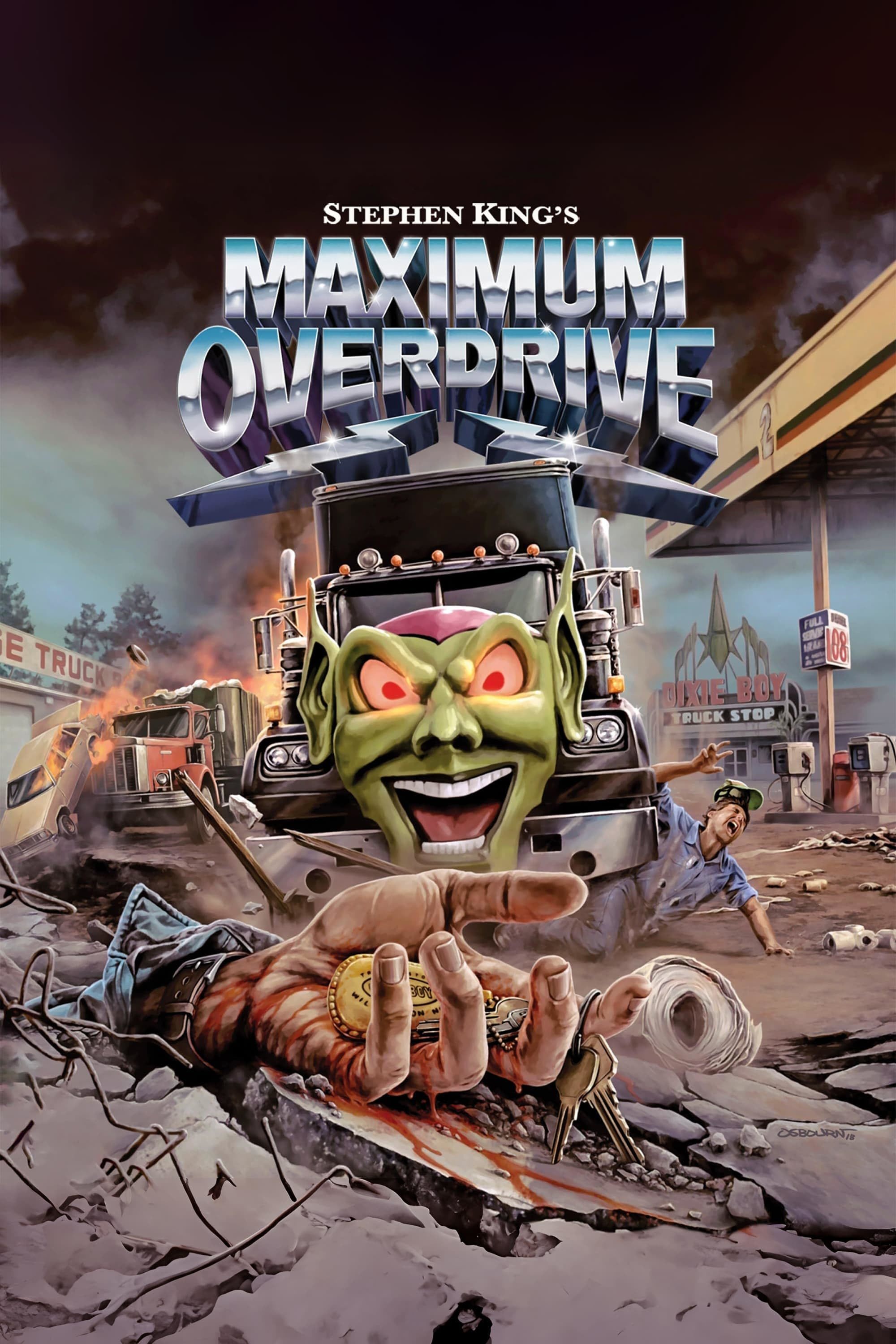
In 1986 for the first (and last) time Stephen King actually adapted one of his own stories for a film. Based on his short story Trucks, King wrote the screenplay and directed Maximum Overdrive. It bombed at the box office and is generally considered to be lousy in pretty much every way.

I’ve become a pretty big Stephen King fan over the last few years, and have tried to watch a lot of the adaptations of his work. I knew I needed to watch this at some point, but I tended to believe the critics on this one and kept putting it off.

But since it is the Awesome ’80s in April, I decided to give it a go.

I knew it wasn’t going to be good, but I had no idea how insanely incompetent it was going to be.

One can forgive a first-time director like Stephen King (and especially one who has no training in filmmaking) for not banging it out of the park, but you’d think a guy who has written a lot of wonderful stories, would know a thing or two about writing. But the script is just as bad as the direction. Maybe he just didn’t know the difference between writing for the screen and writing for the page.

The bare bones of the story are actually interesting (and most of it seems to have come from that short story – which I haven’t read). Extra-terrestrial forces pass by Earth causing all electronics to become sentient, and murderous. Several people get trapped at a truck stop by a bunch of semi-trucks bent on their destruction.

Technology becoming sentient and trying to destroy mankind is not a new idea, but it can be a good one in the right hands. I especially like the idea of big trucks attacking people. And I love a good people trapped in an enclosed space story. With a better script and a good director this film could have been cool.

King has admitted to having a cocaine addiction at the time, and he was still deep in his alcoholic phase, so no doubt that affected the production.

An example of how this film works. At the start of the film, the controls to a draw bridge come alive, raising the bridge when cars are on it. I swear the number of cars on the bridge at any given time changes, depending on the shot. The height to which the bridge is raised changes as well. Sometimes we’ll have a shot in which the bridge has just been raised to a slight angle, but then we’ll get shots of cars spinning their wheels trying to keep from sliding backward, while other cars slide into the trucks behind them. A wide shot will then show the bridge all the way up. Then it will switch to barely having been raised. There is no tension, it isn’t at all scary.

I can see King writing that scene. As a novelist, he’d take pages and pages to tell that part of the story. We’d get lots of details. We’d know several of the characters. We’d get a sense of the terror. There would be gory details of someone getting smashed up. But as a director, it feels like he didn’t know how to get those details cinematically. He didn’t know the types of shots he’d need or how to put them together.

The entire movie is like that. It feels cheap. Like some bad B-movie, you’d see late at night on cable TV. In part, I suspect this is intentional. I can see King trying to make a B-movie. The kind he might have watched when he was growing up. But those movies have an energy to them that is fun to watch. Maximum Overdrive is a dud from start to finish.

The Friday Night Horror Movie: Forbidden World (1982)

forbidden world

We are edging ever so close to Totally Awesome ’80s in April, so I thought I’d let my Friday Night Horror be an ’80s flick. I will have at least one more Western In March review up before the end of the month to make it not a total loss, but as I’ve mentioned before there aren’t a lot of Western horror flicks.

Roger Corman remade Alien and it’s pretty good, actually.

Corman was a prolific producer (who also directed some pretty great Edgar Alan Poe adaptations). He famously gave Martin Scorsese and Jonathan Demme their starts and mandated the films he produced have at least one scene of violence and/or sex every fifteen minutes.

Forbidden World has ample amounts of both. But it also has a bit of style, a pretty good story (even if it is mostly ripped off from other, better science fiction films), and it is rather entertaining.

Military fixer Mike Colby (Jesse Vint) is called to an isolated planet to investigate some troubling messages from an experimental research station there.

Upon landing, he learns that the scientists have been experimenting with a synthetic strain of DNA that when combined with another creature has turned into something strange and dangerous. Something alien you might say.

There are a couple of sexy scientists (Dawn Dunlap & June Chadwick), a disheveled, chain-smoking genius (Linden Chiles), and other miscellaneous (and thus disposable) crew members. The monster thing continues to change and grow and kill all the while the survivors try and…well…survive.

It is very much a low-rent Alien knock-off with bits of The Blob, Star Wars, and other science fiction/horror flicks from the time period thrown in for good measure. Oh, and at least a couple of naked shower scenes, because why not?

But it is well made for what it is, the effects are surprisingly good all things considered, and I found it to be quite a bit of fun.

The Friday Night Horror Movie: Spasmo (1974)

spasmo

I’ve come to realize the line between the horror genre and the crime genre is often a thin one. Sometimes horror films involve monsters or space aliens or the supernatural, but sometimes the villains are more pedestrian. Many horror films involve human killers – often of the psychopathic and serial variety – but human all the same. Many of these films follow a police detective private detective or some other normal citizen as they investigate the murders. This is, of course, what countless crime dramas do.

In these cases, it isn’t entirely clear as to what differentiates a horror movie from a crime one. Sometimes it might be a matter of the violence and gore, but I’ve seen plenty of detective movies/series that revel in the gruesome details. Maybe horror movies have more jump scares. Or maybe sometimes the genres rather blend together and you get to decide which one you are watching.

The Italian Giallo was pretty much always crime stories with a (usually leather-gloved, knife-wielding) killer on the loose and someone out to discover who he (or she) is. But they did so with a particular brand of style and a pension for graphic, sexualized violence.

Spasmo is a Giallo that works more like a standard crime mystery with a bit of (not very graphic at all) sexual psychology thrown in for good measure.

Christian (Robert Hoffman) and his girl go frolicking on some beach. They come across a woman face down in the sand. At first, they think she’s dead, but upon further inspection, they find she has just passed out. When she awakens she says her name is Barbara (Suzy Kendall) but she gets pretty cagey when asked any other questions. As soon as Christian’s back is turned she runs for her car and jets away.

But she leaves behind a bottle with the name “Tucania” written on it. Somehow they figure out the name is also the name of a boat and they jump aboard and attend a party going on there. As it happens Barbara is also aboard and before you know it Christian has dumped his girlfriend and run off with Barbara.

Strangely, Barbara is all about a little hanky panky but she forces Christian to shave his beard first. While he’s in the bathroom getting a face trim some dude busts in the window brandishing a gun and threatening to kill him. A Tussel ensues and Christian accidentally shoots the man dead (or is he?).

Barbara is weirdly chill about this fact, doesn’t even bother to look at the guy but does suggest that the two of them (her and this man she’s just met) go on the run together. But before they can leave Barbara’s boyfriend shows up and forces her to go with him. Christian takes off separately, then realizes he left a necklace at the house and returns to the scene. There he finds the dead man has vanished.

He regroups with Barbara at a chateau on the sea where they meet a couple of oddballs who tell them a story about a weird crime they just came across. Turns out someone is planting very lifelike dummies, dressed in lingerie and with knives sticking out of them all around the countryside. The film is littered with people discovering these strange creations.

Someone else attacks Christian and nearly kills him. His brother is somehow involved. Barbara seems to come and go. Christian begins to think he’s going crazy. At its heart this is a murder mystery, but also a psychological horror. We’re never quite sure what is real and what is being imagined by Christian.

The ending ties it all together with a twist that I won’t spoil, but it’s one of those things where once you see the conclusion the rest of the film makes more sense. I found myself thinking about the beginning and what was confusing got tied together. But that didn’t really make watching it the first time all that satisfying, and I’m not sure this film really merits a second viewing.

ScreeningNotes over at Letterboxd has a really interesting essay on the film. He ties it into the larger Italian cinema from the time frame. I’m not sure I buy into everything he’s spouting, but it is an interesting read anyway.

For my money, if you are a fan of the genre then this is worth watching, but you’ve really got to be a fan.

The Friday Night Horror Movie: Bone Tomahawk (2015)

bone tomahawk

There aren’t a lot of Western/Horror hybrids for some reason. I don’t know why as it would seem like the barren landscapes of the West and the isolated communities filled with all sorts of outlaws would lend itself to horror, but I guess not. Maybe the audiences for those two genres are considered too far apart to make bringing them together worth it.

Controversial director S. Craig Zahler gave it a pretty good shot with his debut film Bone Tomahawk. Storywise it is primarily a Western but its graphic use of violence and impending sense of doom give it a good dose of horror.

In discussing the Western Genre I’ve not spoken much about its depictions of Native Americans (though we did have a good discussion in the comments section a while back). Generally speaking, the Western’s depiction of Native Americans has not been good. They were usually depicted as nameless, faceless savages attacking, raping, and murdering the pure and righteous white people who had come to the new land to save them from their savage ways.

Zahler (who also wrote the script) tries to work his way around this problem within the genre by having an Indian character (Zahn McClarnon) state that the film’s villains aren’t real Indians, but Troglodytes, cannibalistic savages that belong to no tribe. And thus hand waiving the whole problem away. But this is a Western set in the American West and the villains sure do look a lot like Indians, and they sure are savage. If you can get past that (and the really, truly, gruesome violence) then you are in for a bit of a treat.

A stranger (David Arquette) stumbles into the small town of Bright Hope. He buries his ill-gotten treasure before wandering into a bar. The town’s Back-Up Deputy Chickory (Richard Jenkins) spies the bag burial and tells Sheriff Hunt (Kurt Russell) about the suspicious nature of it all. They question the man who pushes Chickory down and tries to escape, getting shot in the leg by Hunt for his trouble.

They call in the doctor’s daughter Samantha (Lili Simmons) to take the bullet out of the stranger’s leg. Somewhere in the night our villains sneak into town and kidnap the stranger, a deputy, and Samantha.

In the light of day Sheriff Hunt, Chickory, Samantha’s husband Arthur (Patrick Wilson) who has a broken leg, and a dandyish gunslinger named John Brooder (Matthew Fox) all head for the valley where the enemy camps.

All of this is fairly standard Western stuff. Zahler gives it a lazy energy in the first half which is punctuated by some wonderful dialog and terrific performances by all involved. As they finally come to the enemy camp things turn horrific as the bad guys are truly abhorrent. I won’t go into details but let’s just say cannibalism isn’t their worst trait.

I’ve seen a lot of horror films in my day so I’m fairly immune to graphic violence, but this gets pretty intense. I do appreciate a film that doesn’t shy away from the realities of violence. Westerns have a tendency to have bloodless gunfights where the worst that happens to a man when he gets shot is that he falls off a building. Real violence is full of blood and gore and is horrible in every way. There is something to be said for a film to show that.

If you can stomach the violence and the hand-waiving away of the genre’s casual racism, Bone Tomahawk is a rather terrific bit of genre filmmaking.

The Friday Night Horror Movie: The Faculty (1998)

the faculty

The Faculty is so of its time, so late 1990s that I spontaneously turned into a 22-year-old college senior again while watching it. It was produced by Miramax, the hippest studio at the time. It was directed by Robert Rodrigues at the very apex of his coolness factor. It was written by Kevin Williamson hot off his hit-making turns with Scream and I Know What You Did Last Summer. It stars a veritable who’s who of late ’90s hip young actors including Josh Hartnett, Elijah Wood, Clea Duvall, and Jordana Brewster. The soundtrack features Stabbing Westward, The Offspring, Soul Asylum, Creed, Garbage and Layne Staley with Tom Morello covering Pink Floyd’s “Another Brick in the Wall.” If it was any more late 1990s I think it would create a black hole time warp.

It was part of the late-90s horror boom that began with Scream in 1996 and catered to a more younger, cooler, and mainstream crowd that horror was used to. I was very much into that whole scene. I freaking loved Scream and was so excited that horror had become popular.

I hated The Faculty when I saw it in theaters. Hate is probably too strong of a word, but I was very disappointed with it. I dug Rodrigues and Williamson, I loved this new wave of horror, but something about The Faculty just didn’t sit right with me. Looking back on it now, I think it was that it is more of a throwback to older films. It clearly has influences in all those schlocky 1950s sci-fi/horror films, and it outright references Invasion of the Body Snatchers and The Thing (both films I wouldn’t see for several more years). I wasn’t hip to that vibe just yet so it all felt off to my brain.

I didn’t watch it again until tonight. I now am quite familiar with the film’s reference points and I think twenty years of distance has given me perspective on that particular wave of horror (it was mostly not very good) and so I found myself rather enjoying it. Don’t get me wrong, it is still not a great film, but it’s an enjoyable one.

Plotwise it takes a lot from Invasion of the Body Snatchers, but sets it mostly inside a high school where initially the teachers are the aliens and the kids are all that’s left to save humanity. And not just any kids, the outcasts, the freaks, and the nerds.

Wood is the book-smart nerd who everyone picks on. Hartnett is the drug-dealing tough kid. Duvall is the put-upon shy kid who wears all black and might be a lesbian (in 1998!) The teachers (including a goatee-wearing Jon Stewart, Piper Laurie, Famke Jannsen, Salma Hayek, Bebe Neuwirth, and Robert Patrick – geez this cast is stacked) get controlled by these little alien worm things and are out to invade the entire world.

Williamson’s script is smart (but not nearly as smart as he thinks it is, not Scream smart) and Rodriguez’s direction is steady. The cast is mostly great. Overall it is a pretty good little horror film with some nice comedic moments

When I started this review I noted that The Faculty was very much a movie of its time. Unfortunately, that time has not aged very well. The CGI effects look bad. There is a scene that directly references a scene from The Thing. Actually, there are a couple of them, but this particular scene apes some very effective practical effects from that John Carpenter film, but here they are all computer generated and they look terrible.

It is a Miramax film, which of course was run by Harvey Weinstein. Danny Masterson has a small role (his character is simply named F’%# Up #1 which is appropriate, I guess) and freaking Harry Knowles has a cameo so call this a sex pest trifecta.

If you can get past all of that, I think it is worth seeking out, especially if you are a fan of late 1990s horror and somehow missed this one.

The Friday Night Horror Movie: Shin Godzilla (2016)

shin godzilla
My daughter has started to get into Japanese culture, including Anime so I got her a subscription to the Crunchyroll streaming service. I noticed that Shin Godzilla was included in that service so I gave it go. I’d say I am a fan of the Godzilla movies, but I’m not hardcore about it. I’d been meaning to watch this one since it came out, and the reviews for the new one – Godzilla Minus One have been really good, so today seemed like a good day to watch a lizard monster attacking Japan. Godzilla Minus One isn’t a true sequel of Shin Godzilla but I still wanted to watch it before Godzilla Minus One.

Crunchyroll had two audio options. I could watch it in the original Japanese with English subtitles or I could watch an English dub. In general, I prefer to watch movies in their original language and so I chose that option. Unfortunately, the sync was off which meant I got the subtitles appearing on my screen about three seconds before the characters actually said them. This was especially true during the more frantic action sequences in which the dialogue is rapid-fire. It was very confusing so after about an hour I switched to the English dub. It was a very bad dub, but somehow I survived.

Made in 1954 the original Godzilla served as a metaphor for Japan’s post-war fears of another nuclear holocaust. Shin Godzilla is at least partially concerned with the ways in which bureaucracy stalls decisive government action in a time of crisis. Making it a metaphor for the Japanese government’s response to the Fukushima nuclear disaster.

Just off the coast of Japan, an eruption of some kind occurs in Tokyo Bay. The water begins to boil and an underground tunnel ruptures sending water flooding into traffic. The government meets to discuss the issue, they call in top scientists to figure out what is causing the eruption, but they do nothing.

Soon a tail emerges then a large lizard thing (with hilarious googly eyes. But not to worry, the scientists say, it probably can’t come on land. It’s legs are too small. Then it does come on land and mutates into something more Godzilla-like. More government discussion, but little action. They have to have meetings, you see, and decide what the laws say they can and cannot do during this crisis that no one in the history of the world is prepared for.

Some low-level agents form a secret board of folks willing to actually do something, and they (eventually) save the day. But not before Godzilla destroys most of the city with his super-awesome fire breath and lasers that shoot out of his scales and tail.

It is a curious mix of dudes in offices arguing over the correct procedures, other dudes in other offices actually trying to find a real solution, and some crazy Godzilla action.

Honestly, I was mostly bored during the office scenes. I got what it was trying to do within the first ten minutes or so and after that, it just felt redundant. But the Godzilla attacks stuff is pretty great.

The Friday Night Horror Movie: Paganini Horror (1988)

paganini horror

Horror, as a genre, can take some of the dumbest plot points and turn them into something fun, and interesting, and when you’re lucky, even scary. Killer clowns are living in the sewer, hatchet-wielding dudes slice up coeds in isolated campgrounds, killer tomatoes lurk at the grocery store, and just today I watched a short film called Hair Wolf.

Sometimes the movies are in on the gag (that killer tomato movie is full of winks towards the camera), sometimes they find ways to elevate the material, and sometimes they are just dumb.

Paganini Horror has a fairly interesting (if rather silly) idea but doesn’t find a way to do anything interesting with it.

An all-girl rock band is struggling to come up with their next big hit. Their producer Lavinia (Maria Cristina Mastrangeli) complains that all their new songs sound like their old ones. They need something new, something bold, something that will wow their fans.

Naturally, they buy an unpublished score by the famous Italian violinist and composer Paganini from an unscrupulous dealer (Donald Pleasence who doesn’t get to do much but has one scene in which he throws piles of cash off a tall building while muttering “fly away little demons.” Naturally, they decide to shoot a video of them performing their rock-n-roll version of the Paganini song inside the murder house where he lived. Naturally, this unleashes a gateway to Hell.

See what I mean? That’s not a bad setup. I mean, it’s pretty silly, but a good writer and director could do something with that. Instead, we get some half-thought-out ideas, a couple of decent bouts of gore and violence, and two (count them) two full-on music videos.

Daria Nicolodi who starred in a bunch of great Dario Argento films (and cowrote Suspiria with him) costars as the owner of the creepy mansion. She also co-wrote it with director Luigi Cozzi and Raimondo Del Balzo (who hasn’t done anything else I’ve seen). You can kind of see what they were going for, but without a true master like Argento to help out it all comes out as a big mess.

The Friday Night Horror Movie: House (1977)

house poster

Steven Spielberg’s Jaws was a massive worldwide hit in 1975. Naturally, studios from all over tried to find ways to replicate that success. The Japanese studio Toho was no exception and they hired Nobuhiko Obayashi to write something Jaws-like. What he came up with was one of the strangest, incomprehensible films I’ve ever seen.

The basic plot, if you want to call it that, is actually pretty simple. A teenaged girl nick-named Gorgeous (Kimiko Ikegami) (most of the characters in this film have goofy names like Kung Fu, Fantasy, and Sweet) invites several of her friends to spend summer vacation at her Aunt’s (Yōko Minamida) house. Strange things begin happening almost immediately once they arrive. It seems the house is haunted.

But any type of plot outline will do nothing to explain just how completely nuts this film is. Criterion describes it by saying that it’s like if an episode of Scooby Doo were directed by Mario Bava. I’d add that it’s a psychedelic cartoon turned into a live-action nightmare.

There is a floating head that bites one girl in the butt checks, a piano that eats people, an evil cat, a murderous futon, and so much more. The sets’ backdrops are gorgeous and intentionally designed to call attention to their fakeness. Obayashi uses fisheye lenses, superimposed images, freeze-frames, matte paintings, periodical animation, and every other cinematic trick at his disposal.

It feels both thrown together and tightly scripted. It is more comedic than horrifying, and more bizarre than thematically satisfying, but it truly is a film worth watching.

It is one of those films I’ve been hearing about for ages. The Criterion Collection got ahold of it a few years back and it’s been talked about ever since. But for one reason or another, I kept putting off watching it. I like weird films but I feel like I need to be in the mood for them, and I rarely feel like I’m really in the mood. But I needed a foreign language horror film and was struggling to find something so I put it on.

I’m so glad I did.