The Friday Night Horror Movie: Noroi: The Curse (2005)

noroi the curse

For a very brief period in the early 2000s, Americans became obsessed with a certain type of Japanese horror (or J-Horror as it was known). We’d spent the 1980s watching slasher films, but by the 1990s those had grown stale. We didn’t seem to know what should take its place. So much so that in 1996 Wes Craven directed Scream which was essentially a self-aware slasher with hot TV stars. 

Whereas American horror tended to be filled with horrendous violence and jump scares, Japanese horror at the time was more foreboding. The violence was toned down and in its place was psychological horror and a brooding atmosphere.

The Blair Witch Project introduced Americans to the found-footage genre in 1999. That movie, which is about some independent filmmakers making a documentary about a mythological witch that is supposed to haunt rural Maryland. They go missing and the film is supposedly made up of their leftover footage. It is a mix of their professionally made documentary footage and a lot of handheld camera work created by the actual actors living for a few weeks in the woods. It created a craze of found-footage horror.

Noroi: The Curse is a mixture of J-Horror and found footage films. It begins with a voiceover telling us about the life of Masafumi Kobayashi (Jin Muraki) who was a journalist investigating paranormal activity across Japan. Recently his house burned to the ground, killing his wife, but his body was not recovered and he is presumed missing.

He left behind a series of videotapes full of his research. The film presents those tapes along with a series of newsreels and television footage of various occult specials and the like. It all creates a sort of documentary approach to this fictional story.

At first, his investigative reports seem unrelated. There is a young girl with psychic abilities. An actress (Marika Matsumoto) sees something spooky in a graveyard and collapses. Another woman hears a baby crying next door, but the family’s children are all much older.

Slowly all of these various stories connect and point to a demon that was released from a village that is now buried under water after a dam was built. It seems to have possessed someone and is causing nearly everyone connected to the story to die under mysterious circumstances.

The violence is mostly off-screen and there is essentially zero gore. Tonally it is filled with an eeriness and the creepy soaks right through. I’m not a big fan of hand-held camerawork in movies as it tends to make me dizzy. There is some of that here, but mostly it’s used quite effectively. The camera is framed so that there are often strange little things in the background or on the edges of the screen. It makes you pay attention.

Like a lot of found footage films in which the characters seem to always be carrying a camera, there are times when I wanted to scream at them to put the camera down and run, or fight, or at least help that person getting pummelled by a demon. At least here our hero isn’t the one carrying the camera, he’s actually got a cameraman (working for his documentary) to do that for him.

The film uses the various footage in interesting ways. The way in which it moves between stuff shot by Kobayashi, and various television crews keeps the movie moving in a manner that other found footage films cannot keep up with.

I was a huge fan of J-horror during its initial craze, but I somehow missed this one. I’m glad I found it tonight as it is a good one.

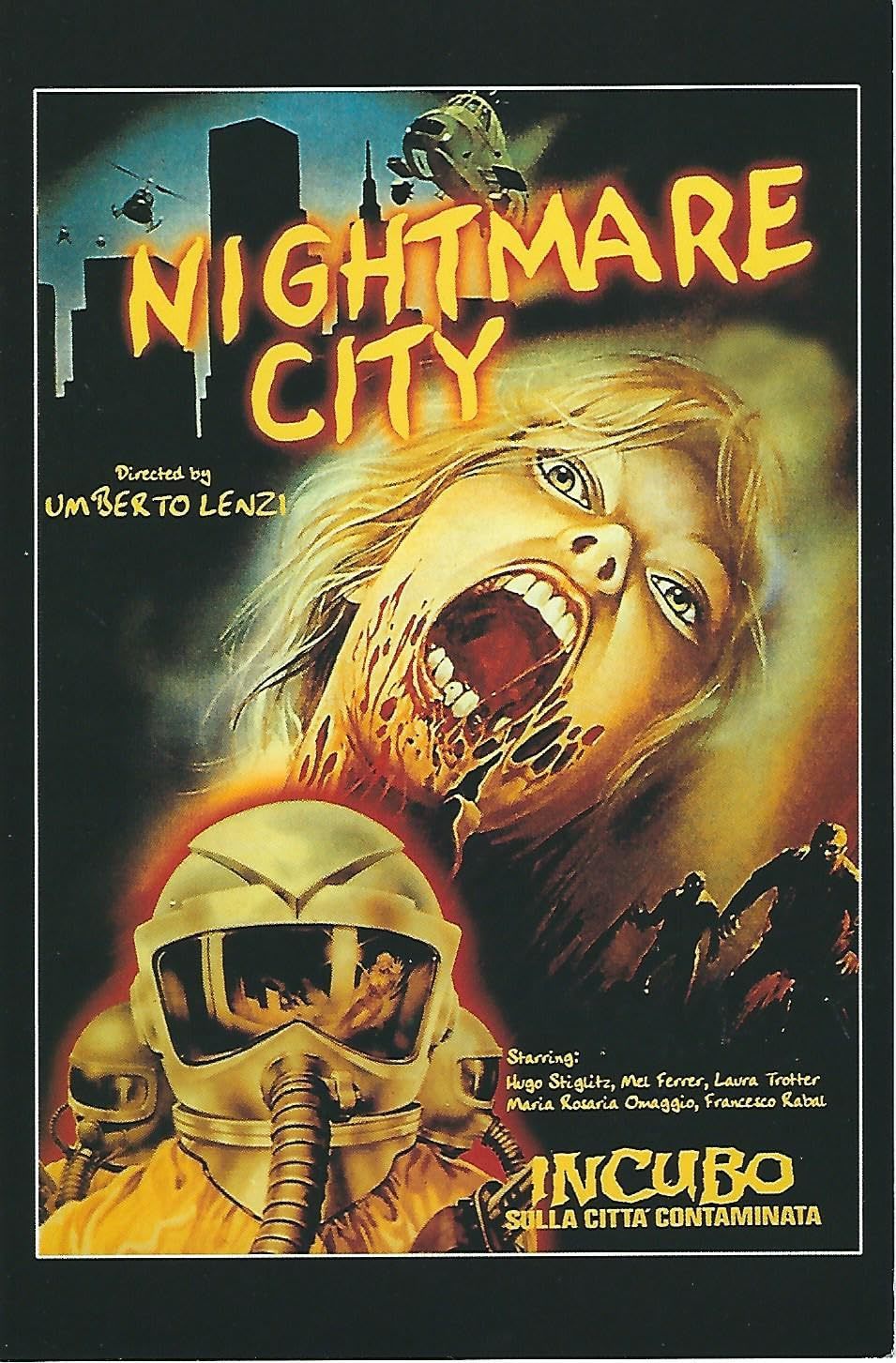
The Friday Night Horror Movie: Nightmare City (1980)

nightmare city

George A. Romero’s 1968 classic Night of the Living Dead didn’t exactly invent the zombie movie, but it perfected it and popularized most of the genre’s tropes. Ten years later he made a sequel, Dawn of the Dead. That film was a huge success in Italy, so successful that in 1979 Lucio Fulci made an unofficial sequel entitled Zombi 2 (Dawn of the Dead was renamed Zombi in Italy). It was a big hit and the Italian zombie crazy had begun. 

Lots and lots of Italian zombie films were made over the next several years. Some of them are great, some of them are terrible, but they are almost all worth watching. The Italians tended to go big – bigger violence and gore, more nudity and sex. What they miss in nuance and social commentary they more than make up for in over-the-top craziness.

They also allowed themselves to get a little weird, to play with the genre in interesting ways. In Nightmare City the zombies are not the slow-walking, brainless ghouls from Romero’s films, but rather somewhat intelligent, fast-moving monsters capable of using weapons and systematically invading places like hospitals and power stations.

It begins with an airplane flying towards some unnamed European airport. The tower gets no response when it asks the plane to identify itself. When it lands the police surround it, demanding whoever is inside come out with their hands up. When the door does open what comes out is a mass of knife-wielding maniacs whose faces are covered in scabs and scars (more like oatmeal and latex if you ask me). Guns seem to do nothing to these monsters; in an instant, they have killed everyone on sight.

Well, nearly everyone. Our hero, a news reporter named Dean Miller (Hugo Stiglitz) was there to interview a nuclear scientist, manages to escape.

What follows, plot-wise is your fairly typical city under siege storyline. The government orders everyone to stay in their homes and lock their doors. The military comes out in force to kill the zombies. Scientists scramble to figure out just exactly what’s going on (it was radiation, stupid).

Our hero rushes to the hospital to rescue his doctor’s wife and then they try to escape the city.

The script is a mess. There is a lot of speechifying about how mankind is a doomed species and how we’ve used technology to play god, etc. and so forth. It is nothing you haven’t heard in a million other science fiction films, and none of it is delivered confidently. The military and other law enforcement presence seems very small. You’d think they’d bring in tanks and jet planes to secure the area, but we see almost none of that. Presumably, the budget wasn’t big enough to bring in actual military vehicles (the best we get is a helicopter).

The violence is a funny mix of really bad to surprisingly gruesome. There are a lot of zombies with knives and hatches but their stabbing and slicing is often completely bloodless. Sometimes they don’t even break the skin though it seems to drop their victims stone dead. But in other scenes, we’ll see a guy get his eyeball ripped out with a stick, or a woman has her breast completely cut off.

There are a lot of naked breasts in this film. The men tend to get stabbed in the neck, but the women seem to almost always have their shirts ripped off and their boobs stabbed.

It is nothing new to have low-budget horror films throw a lot of gratuitous nudity at their viewers, but it happens so often here that it is both hilarious and tedious (and of course wildly sexist).

Despite all of this, I really rather enjoyed myself. You can’t go into a film like this expecting greatness. But director Umberto Lenzi keeps things moving at a steady pace and he has enough skill to not make the ridiculousness too inept. It all comes off as seriously ridiculous fun.

The Friday Night Horror Movie: Till Death (2021)

till death

Last week in my Friday Night Horror column I noted that I’d not done a lot of writing for my Frozen in January theme of the month, but that I hoped I’d get back in the groove soon. Obviously, that didn’t happen. I’ve watched quite a few films that fit the theme, but I just haven’t felt the desire to do much writing. I actually started writing a thing on The Martian (a man stranded on the desolate, frozen planet of Mars fits the bill I think – or at least I was gonna try and make it fit) but then a couple of paragraphs in and I couldn’t find the energy. 

That happens sometimes. To everyone I suppose. I just get in a funk and wonder what the heck I’m even doing. Once again I’ll hope that writing this column will get me back in the groove.

Till Death stars Megan Fox as Emma Davenport, a woman who at the beginning of the film is ending the affair she’s been having with Tom (Aml Ameen). It isn’t right, she says. She needs to go back to her husband Mark (Eoin Macken).

God knows why. As we’ll soon realize Mark is a terrible person. It is their anniversary and she meets him at a swanky restaurant. The first words out of his mouth are to complain she isn’t wearing the red dress he likes. She’s wearing a nice little black dress and she’s Megan Fox so she looks good. But it isn’t the dress he was expecting so after the meal he drives her home and forces her to put on the red one.

He’s the kind of guy who orders her dessert even though she says she’s full. He bought her a weird steel necklace for their anniversary and immediately puts it on her, but then frowns at the tickets she bought him to the Super Bowl.

He makes her wear a blindfold while he drives her out to the secluded cabin he owns in the woods. He forces her to keep it on the entire way even though it is at least an hour’s drive and she’s complaining it is making her car sick.

There are twenty minutes of this stuff. Of him being a jerk to her while she sits in sad silence. Twenty agonizing minutes just waiting for her to wake up handcuffed to his corpse.

That’s not really a spoiler because it is in all the promotional material, and any blurb you read about the film is gonna tell you that information. That’s the reason I watched the film. But I nearly turned it off before it got there, the film was so dumb.

So he takes her to this cabin. Makes her sit in the kitchen blindfolded (again) while he lays a bunch of rose petals down and lights a billion candles. Then she wanders around the house looking for him – she puts on the record he leaves a note telling her to play – and then when she finally finds him (in the bedroom of course) his words aren’t something sweet and romantic but a complaint that it took her too long to find him.

He then finally says something nice and they have sex. The next morning she wakes up to find herself handcuffed to him but before she can even really ask him why, he blows his brains out.

The rest of the film involves her trying to get the heck out of there. But the thing is, he’s drained the car of gasoline, broken her phone, and removed any sharp object that might allow herself to get free of him. Eventually, some other folks show up and things get even more difficult for her.

That part – woman handcuffed to a dead man in the middle of nowhere, in the middle of winter, with no means of escape – should be really good. But the character and the film make so many stupid decisions I just wanted it to be over way before the credits actually rolled.

To wit: after he kills himself, blowing blood and guts all over her face, she doesn’t scream or freak out. She doesn’t check for signs of life. She almost immediately drags his body over to the phone to call for help. When she finds it dead, she grabs the gun and tries to blow the handcuff chain to bits. She doesn’t check for a key in his pockets or anything. It takes her half an hour to clean the blood off her face.

She puts his shirt and pants on (for all she brought was that little red dress and apparently some skimpy pajamas, but not an actual over night bag for some reason) but not his socks and shoes even though she’ll spend lots of time wandering around outside in the snow.

Over and over she (and eventually the other characters) make the stupidest decisions ever. The film does dumb things too. Like skipping over important or interesting things. I mean how does she get his shirt off of him and on to her when they are handcuffed together. That’s the kind of thing we need to see!

Periodically Emma will make some kind of smart-ass comment. After dragging his corpse around the house looking for something that might help out she remarks that she was dragging his dead body around for years, long before he killed himself. Ha! and so forth. But there isn’t enough of that kind of thing to make her interesting.

I’m not a big fan of Megan Fox and while she isn’t bad here, she doesnt’ have the charm this kind of role calls for. The direction is fine, it keeps things fairly taut and moving. There are moments that are more or less thrilling, but all of the ridiculous stuff happening kept me shaking my head in annoyance.

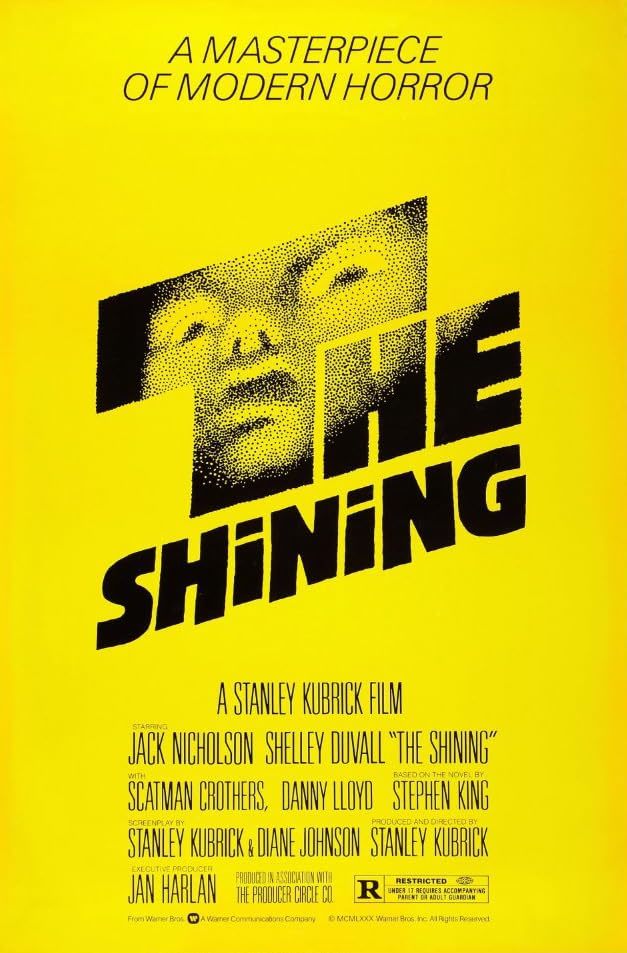
The Friday Night Horror Movie: The Shining (1980)

the shining

Though I keep saying that I love making these monthly movie themes and writing about them, I find it easy to slip out of that routine (especially in the writing department) and then quite difficult to slip back in. This time I have a pretty good excuse with Covid, but I’ve felt (more or less) well the last couple of days and yet have not had the energy to write any more Frozen in January reviews, despite having watched several more and (at least in theory) the desire to write about them.

Here’s hoping this Friday Night Horror Movie write-up will get me back in the spirit.

There is a documentary from 2012 called Room 237 which posits a number of theories about Stanley Kubrick’s The Shining (1980). Or rather it features a number of talking heads who all seem to think they know what The Shining is all about. What it all really means.

These range from the somewhat plausible – it’s about the assimilation of Native Americans and the destruction of their culture by rich white Americans – to the crack-pot – it is Kubrick’s apology for helping with the faking of the moon landing.

It is an interesting documentary, but what I really love about it is how it indicates just how malleable Kubrick’s film is. It is as if the director took Stephen King’s novel, and turned it into his own thing, and then when people ask what it all means, his answer is akin to:

It means what you want it to mean. Or it has no meaning. Or I don’t know what it means.

For those who don’t know The Shining is based on the Stephen King novel of the same name. Kubrick did make some significant changes to the book and King famously hates it. It tells the story of Jack Torrence (Jack Nicolson), a wannabe writer who is also an alcoholic, and abusive husband/father. After being fired from a teaching job he lands a job as the winter caretaker at the Overlook Hotel – a beautiful resort nestled deep within the Rocky Mountains. The long, meandering road into the hotel becomes too covered with snow to make it financially viable to stay open for five months in the winter so they hire someone to live there and keep it maintained.

Jack brings his wife Wendy (Shelley Duvall) and young son Danny (Danny Lloyd) who has some psychic ability (known as the Shining). The total isolation, the freezing cold (a huge blizzard traps them even further and isolates them more by knocking out the phone lines), and the ghosts push an already fragile Jack into psychotic territory.

The Overlook catered to the rich, powerful, and famous. People who make important decisions and devour depravity. Terrible things have happened there. Things the hotel is all too happy to cover up. In his initial meeting with the hotel manager, Jack is told of a previous caretaker whose cabin fever led him to murder his wife and two young daughters with an axe.

This violence and debauchery has left a psychic impressions on the hotel. Or perhaps, the hotel is a place of evil and it has left an impression on vulnerable people causing them to engage in horrible deeds. The film never gives an answer, it is a movie that wants you to come up with your own.

Kubrick films it in his usual technically proficient, yet emotionally detached way. His use of Steadicam (a fairly new technology) is masterful. Though the camera slowly wanders about the landscape of the hotel (truly making the setting a character unto itself) the geography of the place is disorienting. There are windows where there could feasibly be no windows, and doors that could only lead to nowhere. All of which makes the film deeply unsettling.

The performances while unanimously good, are cold and strange. Early in the film serious conversations are strangely monotone. Kubrick used many multiple takes (the scene in which Wendy swings her bat at Jack reported was shot over 100 times) to intentionally exhaust and unnerve the actors. The music is eerie and avant-garde.

It is nothing like a traditional horror film. While there are images of violence and horror – every character, especially Danny, flash on scenes from the hotel’s horrible past – the film unnerves you with its mood and calculating camera.

I love it. It is one of my favorite horror movies. I’m not alone in that assessment, and I’m sure many of you enjoy it as well. It works perfectly with this Frozen in January theme and I was happy to revisit it tonight.


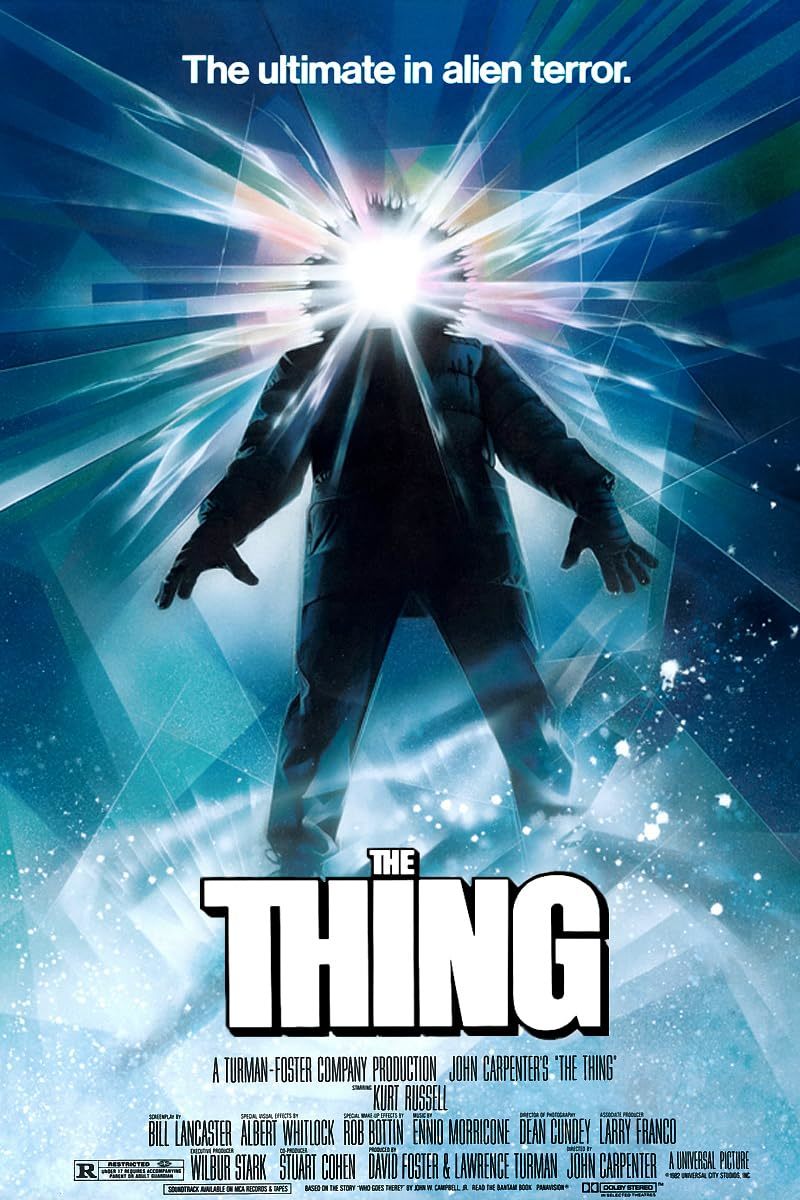
The Friday Night Horror Movie: The Thing (1982)

the thing movie poster

When I was first thinking about this month’s theme – Frozen in January – it was John Carpenter’s The Thing that came to mind. It is the perfect encapsulation of what I was going for. Its characters are trapped in an isolated place covered in snow and ice. An external force causes an already tense situation into turmoil. The weather and the cold, frozen setting aren’t just window dressing, they help inform the story. I actually didn’t love the movie the first time I watched it, but with each subsequent viewing, I like it more and more. Now I think it is just about perfect.

The Thing is based upon a novella by John W. Campbell entitled Who Goes There?. It was previously adapted into the pretty great film in 1951, The Thing From Another World. 

Set in an American research station in Antarctica The Thing stars Kurt Russell (and Wilford Brimley, and Keith David, and T.K. Carter and others, it really is a great cast) as a group of men who are already pushed beyond their limits. The isolation and the freezing weather are getting to them.

This is why, when a helicopter from the Norwegian station flies in shooting at some dog, and then at our heroes, they don’t initially think something is really wrong. They just chalk it up to those guys going stir-crazy.

I’ve seen this movie several times and I always forget how long it takes to get to the scenes I remember. The scenes in which the shape-shifting alien starts wiping everybody out. But before that, there are long, tension-building scenes, in which they try to figure out what’s going on at the Norwegian base. You’d think I’d remember them finding an alien spacecraft but I never do.

I think that is a testament to just how incredible the back half of this movie is. One of the many things I love about The Thing is that, unlike most of the films I’ve watched in this series, it really uses the freezing, isolated setting to help build the tension. As things ratchet up with the alien, we fully understand how there is no escape. Nowhere to go. No one will come to their rescue.

The alien is a shape-shifter so it can look like any one of them. No one knows who is human or something else. Carpenter makes us feel every moment of that horror.

The practical effects do look a bit unreal. I think that’s a big part of what I didn’t like about it on my first watch. They aren’t natural or realistic looking and that can take you out of the moment. Now I find that part of the film’s charm. The alien isn’t supposed to look real, not when it’s shifting into a chest cavity that can chop your hands off. It is supposed to look, well, alien. And cool. They look so cool. I’d love to see a behind-the-scenes look at how they made them.

John Carpenter really was a master of horror for so many years. The more I watch his classic films (and I’ve seen most of them several times) the more I think he’s one of the best who ever did it.

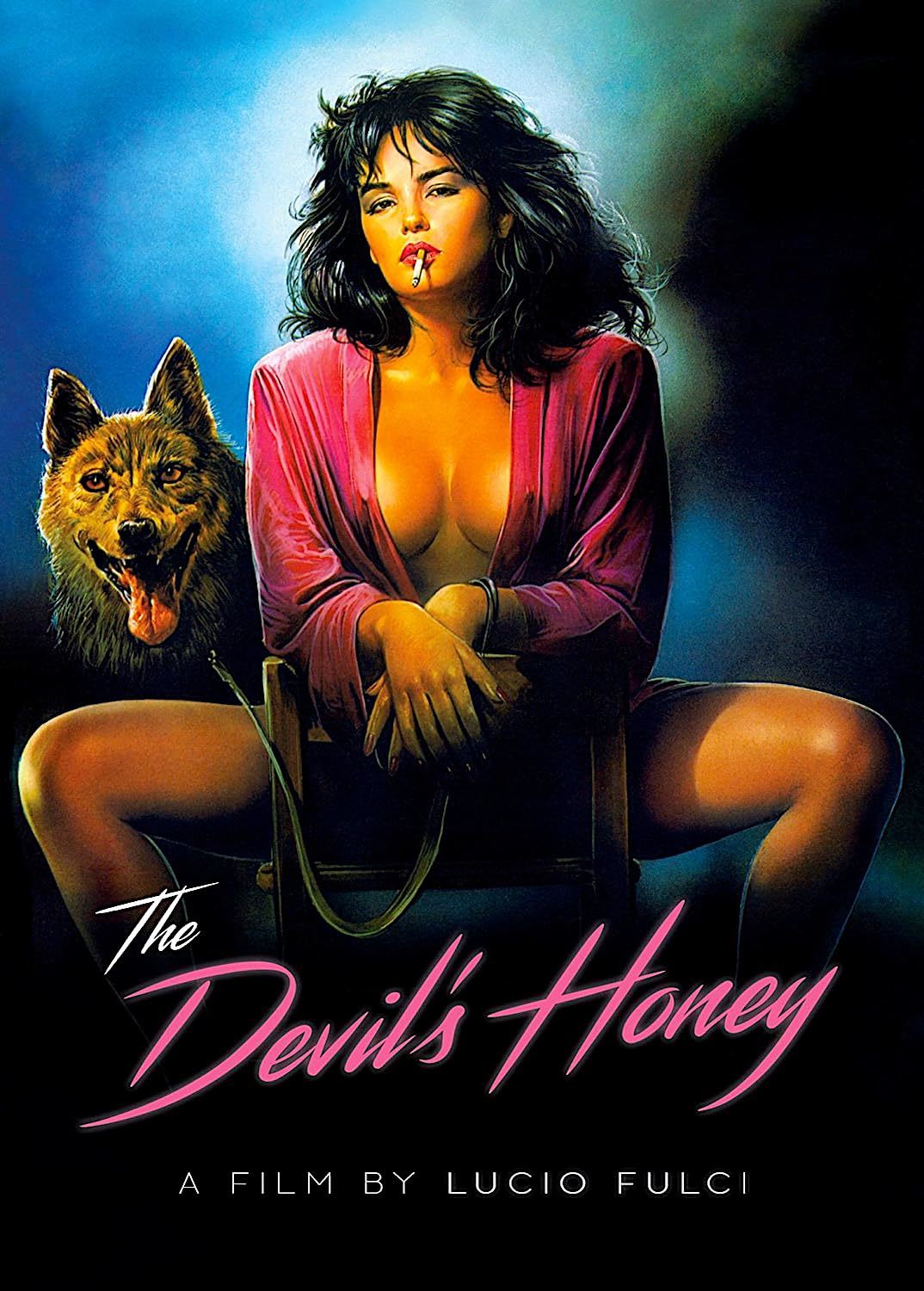
The Friday Night Horror Movie: The Devil’s Honey (1986)

the devils honey

One of the things I miss about the old video rental stores is the ability to walk in and find something you’ve never heard of, that was completely obscure and weird. You’d take it home not knowing what to expect. Sometimes it was crap, but every now and then you’d find a real gem.

Sure, you can do that with streaming, but it just isn’t the same. 

Growing up, we had this wonderful video store. It had previously been a Burger King, and when it closed down a place called Mega Movies moved in. They removed the kitchen providing a huge space for videos. I used to wander around that place for hours. I loved digging into the bowels of that place looking for something really weird.

As a virile teenage boy something really weird sometimes meant something with a scantily clad lady on the cover. I have this very distinct memory of a single scene from one of these movies. A beautiful woman was wearing nothing but a pair of pantyhose. A man stood nearby watching. She is repairing a run in her tights with some red nail polish which turns the man on, and soon enough she’s rubbing the polish in places nail polish should never go.

I couldn’t ever remember anything else about the movie. I’ve often wondered what that movie was, but I wasn’t about to go Googling “woman masturbates with nail polish” so it remained a mystery.

Until tonight. I have a list of unwatched horror movies and digging through it tonight for something to watch I landed on this movie, The Devil’s Honey by Lucio Fulci.

I’ve written about Fulcio before, he’s a guy who made a lot of movies – most of them low-budget, a lot of them full of blood and gore. They aren’t always great, but they are usually interesting.

I went into this movie expecting some good old-fashioned violence. I was not expecting a half-naked woman with nail polish. Certainly not the half-naked woman with nail polish locked inside my memory banks for going on three decades.

That particular scene happens within fifteen minutes of the opening credits. Before that, there is a scene in which a man gets a woman off by placing the end of a saxophone on her crotch and playing her a song. 

This isn’t the Lucio Fulci the Godfather of Gore, this is Fulci’s erotic thriller. Except, that it isn’t particularly erotic or thrilling, but it is amazingly weird and I’m always down for that.

The saxophonist is Johnny (Stefano Madia) and the girl is Jessica (Blanca Marsillach). They are tempestuous lovers. He’s obsessed with sex (as one might suspect from the display with the sax). She wants something more than that, usually protests at his fondling, but usually gives in.

There’s also a surgeon, Dr. Wendell Simpson (Brett Halsey), who is uninterested in sex with his wife but likes to go out with prostitutes (one of whom is the girl with the nail polish).

One day Johnny takes a tumble and bangs his head on a rock. At first, he seems fine, but later he collapses and is rushed to the hospital where Dr. Simpson tries to save him. Tries, but fails.

Awash in grief Jessica begins calling the Dr. on the regular, asking him why he let Johnny die. Eventually, she kidnaps the man and does a little sadomasochistic torture on him while periodically flashing back to more idyllic times with Johnny.

Though I’ve seen 16 of his films and written about him at least five times, I’ve never thought Fulci was that particularly great a director. He can create some interesting imagery, and he’s a wizard with low-budget gore effects, but his stories are usually a mess and his camerawork is nothing special. A film like this where the gore is minuscule and the violence, no matter how psycho-sexual, is mostly sidelined or at least restrained (for a Fulci film) finds itself with not much of interest to say.

There is enormous amounts of gratuitous nudity, loads of misogyny, and the whole thing is ridiculously dopey. Yet I kind of dug it. It is so wild and weird in a way that only Lucio Fulci can be that I had to sit back and marvel at it.

The Friday Night Horror Movie: The Masque of the Red Death (1964)

the masque of the read death

As I mentioned in my very first Friday Night Horror post I started watching horror movies on Friday night because my wife and daughter made a habit of watching silly Youtube videos upstairs in our bedroom. I’d go downstairs and put on a movie, and because it was late at night and because my wife wasn’t around to complain, I’d often put on a horror movie. Then it became a habit. Then I started writing about them each week.

My daughter is getting older. We still watch Doctor Who on most Friday nights, but it is often downstairs while eating our dinner. Then she wanders off to do her own thing and my wife winds up watching Youtube by herself while I find a horror movie to watch.

Lately, the daughter has often been invited over to a friend’s house for sleepovers on a Friday night leaving me and the wife home alone. This is not a problem as we enjoy spending time alone together.

But me being me I still want to get my Friday Night Horror movie in. I feel obligated to watch a movie and write about it no matter what (with few exceptions, including one that will likely happen in a couple of weeks). She doesn’t like horror movies so we compromise.

Vincent Price is a very nice compromise. (Also, as I write this I realize I’ve written some similar thoughts this past summer when my daughter was spending a Friday night at a friend’s).

I think I first came to know Vincent Price as that voice in Michael Jackson’s “Thriller” although I think at that point he was just one of those celebrities that everybody knew about, even dumb little kids who had never seen one of his movies. I think he showed up pretty regularly on game shows or as a special guest in various dramas and mysteries. I also enjoyed him in Edward Scissorhands.

It has only been in the last decade or so that I’ve really dug into his body of work and come to love him. He was a wonderful dramatic actor for many years, but of course, he eventually became beloved as an icon of horror movies. He is always a delight.

He certainly is in tonight’s film, The Masque of the Red Death, the penultimate film in director Roger Corman’s cycle of Edgar Allan Poe adaptations.

Price plays Prospero an evil prince living in medieval Italy. When a bout of a plague known as the Red Death is discovered Prospero invites various rich and noble folk into his castle for safety while allowing the common folk (or those who have offended him in some way) to suffer a long and horrible death (when he’s not outright killing them himself for pleasure).

He does allow three peasants inside his castle walls. Two men (played by David Weston and Nigel Green) dared to call him out on his evil deeds, and are now prisoners to be tortured. Francesca (Jane Asher) the daughter and fiancee of the men, begs for their lives and is invited to the castle to be Prospero’s plaything.

Turns out Prospero is a Satanist and his evil deeds are in service to the Dark Lord. Francesca is a devout Christian and he figures if he can turn her away from her faith it will prove his own dedication to Satan.

Things get a little bit crazy before Prospero gets his comeuppance and realizes that no matter what you believe it is death that comes for us all in the end.

Like a lot of Hammer Horror films The Masque of the Red Death mostly bores me with its plotting. There is a lot of plotting and talking and while it isn’t bad, it isn’t all that exciting either. Price (and everybody else, really) mostly plays it straight. He’s still a delightful screen presence, but there’s just a lot of exposition to get through, and I find myself drifting away while watching.

But what I absolutely adore about the film are the sets, the costumes, and the overall production design. It looks absolutely amazing. While watching my wife and I decided if we were rich we’d buy us an old gothic mansion and I’d wear nothing but satin dressing gowns and she’d don only long, flowing dresses. It doesn’t hurt that it was shot by Nicola Roeg who would go on to make some wonderful films himself.

So not a great movie, but one I still loved looking at.

The Friday Night Horror Movie: Hereditary (2018)

hereditary

This week I watched exactly one movie, Beau is Afraid the new horror film by Ari Aster. Honestly, I’m not sure what I think of it. It isn’t a bad film, exactly, but it did take me three days to complete it. There was just only so much of it I could take in one setting. It is a film with a particular point of view, and that POV is rather unsettling.

Joaquin Phoenix plays a man with intense anxiety. He is the sort of person who always imagines the absolute worst thing possible is going to happen. The film essentially stays in his point of view and so I was never sure what was real and what was just in his head. Critic Matt Singer has a very good review of the film and he explains it much better than I am.

I finished Beau is Afraid yesterday and so it is not the Friday Night Horror Movie, but watching that film made me want to return to Ari Aster’s first full-length feature film, Hereditary. And that is the FNHM.

Like Beau is Afraid, Hereditary is a strange, unsettling film and I’m not entirely sure what it all means, but I connected to it much more strongly than I did with Beau.

Like so many modern horror films Hereditary is about grief. It begins with the death of a matriarch, or rather the funeral of the matriarch. She was a complicated, sometimes difficult woman as we’ll learn by listening to her daughter, Annie (Toni Collette) give her eulogy. Mother and daughter had a strained relationship. The family has a long history of mental illness that ends in tragedy.

Later another terrible tragedy will strike sending the family spiraling. Annie begins having visions of the dead. Her husband Steve (Gabriel Byrne) tries to hold the family together but his own grief envelops him. The son, Peter (Alex Wolff) blames himself for the accident.

The film goes to unexpected and weird places, almost none of it is believable, and yet I was completely carried away by it. I don’t want to give away too much of the plot as to avoid spoilers but if you like horror that find a unique way to terrify then this is a movie worth checking out.

Collette gives an absolutely riveting performance. Ann Dowd shows up too as a, well, again I won’t spoil it, but she’s always worth watching.

The Friday Night Horror Movie: The Royal Hotel (2023)

the royal hotel

Hannah (Julia Garner) and Liv (Jessica Henwick) are backpacking in Australia. When they run out of money they go to an employment agency that specializes in finding gigs for travellers. They are sent to a remote mining town where they are employed as bartenders at a dirty, rundown pub/hotel.

It is run by a drunken bastard of a man who has clearly seen better days (a glorious Hugo Weaving), and it is patronized by a motley crew of miners who are as rowdy as they are misogynistic. They constantly harass with come-ons and sexist jokes.

Writer/director Kitty Green (along with co-writer Oscar Redding) fills The Royal Hotel with an unending sense of dread. From the moment Hannah and Liv arrive in town there is a feeling that something terrible is going to happen to them.

But this isn’t a movie filled with knife-wilding maniacs or skeezy rapists, or cannibals. It is more realistic than that. The men, for the most part, seem like decent blokes – hard-working, blue-collar, rough-around-the-edges blokes for sure, but not necessarily evil men.

But that’s the thing, that’s the point the film is trying to make. A couple of young women, out-of-towers, like these girls are, will inevitably face a litany of potential dangers in a place like this. And there is no way for them to tell who is essentially harmless, and who might cause them real horror.

Hannah is the one who recognizes the potential danger they face every night, while Liv seems more oblivious. She’s willing to accept the overt sexism as a cultural difference. It is up to Hannah then, to constantly steer Liv away from danger.

One of the locals, Matty (Toby Wallace) takes a shine to Hannah. He seems nice so the girls allow him to take them to a watering hole for a swim. They have a good time and get a little drunk. That night he puts a few moves on Matty. She rebuffs. Gently at first, but he persists. She tells him straight up “no” but he pushes back. Eventually, she has to get tough and yell at him. But at that moment it isn’t clear if he will leave.

Another customer, Dolly (Daniel Henshall) is seen lingering upstairs in the hall near their room. On another night he gets aggressively rude with Matty. But he’s sweet to Liv, especially when she’s drunk. On at least a couple of times, he steers her towards his car when she’s completely loaded.

It is a slow burn of a film. There isn’t a lot of incident. Not a lot happens. For most of the film’s run time, I felt myself waiting for something to happen. Something horrible. That’s not a knock on the film at all, I found it rather exhilarating. So many horror films go running straight to the jump scares and the violence, that it was rather pleasing to watch a film so willing to take its time.

I hesitated to make this my Friday Night Horror film because, well, to be honest, the horror never really comes. It doesn’t end in a bloodbath. Not to spoil things but it does end with a bit of violence, but not in the traditional horror movie sense. There are some tonal shifts moving the film between horror, thriller, and something like a workplace-from-hell drama that the film doesn’t quite pull off. But mostly it really worked for me.

The Friday Night Horror Movie: Knock at the Cabin (2023)

knock at the cabin

A young family is vacationing at a remote cabin in the woods. Seven-year-old Wen (Kristen Cui) is outside catching grasshoppers. A huge, hulking man slowly approaches. He says his name is Leonard (Dave Bautista) and despite his size, he’s gentle and kind. We’ll later learn he is an elementary teacher and we can believe that in his demeanor and actions.

But while he is being nice to Wen, engaging in her grasshopper collecting, he keeps looking over his shoulder as if something menacing is going to approach.

Moments later three people do appear. Leonard tells Wen that they are going to have to come into the cabin and that she should tell her dads.

Wen panics at this and then rushes to the cabin, and screams at her Dads – Eric (Jonathan Groff) and Andrew (Ben Aldridge) to come inside and lock the door. They try to calm her down but when they see Leonard, and all his girth, standing at the door they get worried. When they see the other three carrying what appear to be makeshift weapons, they panic.

Leonard tries to explain that they need to come inside. He does so in his school teacher’s voice. The film makes great use of Bautista’s size juxtaposed against his kindly demeanor. But he also says they will force themselves in if the men don’t unlock the doors.

The doors remain locked and these strangers do force themselves in. After a brief fight, where Eric sustains a concussion, Eric and Andrew are tied up.

The strangers, which also include a nurse, Sabrina (Nikki Amuka-Bird), a cook Adriane (Abby Quinn), and a violent redneck Redmond (Rupert Grint) tell a strange tale about how each of them has been having visions about the end of the world. About how Eric and Andrew must make a decision – a grave decision to stop it. They must choose one member of their family to sacrifice – to kill, to murder – to stop the oncoming apocalypse.

That’s completely mad. No one would believe a few nutters barging into their house spouting that nonsense. And our heroes don’t believe it. But then the film starts to make us, and them believe.

I won’t spoil the details but the film uses the isolated setting and a few other tricks to make this scenario plausible. Director M. Night Shyamalan is an expert in creating tension out of fantastical settings and stories.

Still, I never quite bought into the premise. The thing about a film like this is that you spend all your time wondering what the film is going to do in the end. Will the apocalypse come? Or will it be averted by someone being sacrificed? Or will they sacrifice someone only to realize that the strangers were in fact crazy and nothing actually happened on the outside? Or will it have an oblique ending, will we never know if the apocalypse was real or not?

Apparently, the movie ends differently than the book, and most people seem pretty upset with the changes they made. I’ve not read the book, but the ending definitely was not satisfying. But I’m not sure it could have done anything to really satisfy. As I said, I never quite bought into what the story was selling.

Still, I quite liked the film. Shyalaman is a very good director and a master of camera placement and movement. I was enthralled with the filmmaking even when the story let me down.