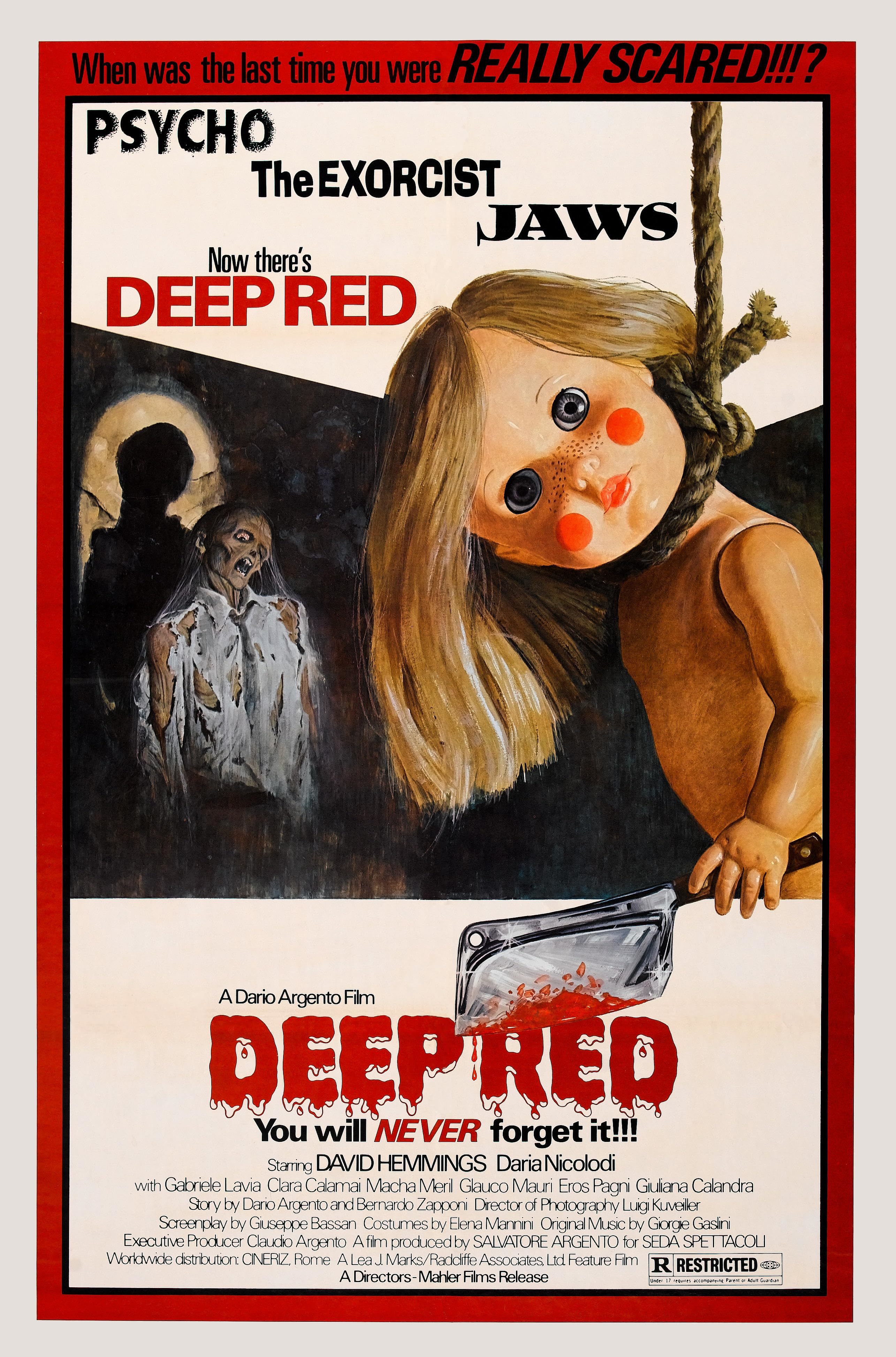
The Friday Night Horror Movie: Deep Red (1975)

deep red poster

I’ve mentioned Dario Argento several times before on this blog. He’s one of my favorite directors – certainly my favorite horror director. He didn’t invent the Giallo, but he definitely popularized it and perfected it. Deep Red is one of, it not my actual favorite films of his and possibly the best Giallo ever made.

The plot is deceptively simple – it is a relatively straightforward murder mystery – and yet also a convoluted mess. David Hemmings stars as a jazz pianist who witnesses his downstairs neighbor get brutally murdered. He teams up with a journalist played by Daria Nicolodi and tries to figure out what happened.

I’ve seen this film at least five different times, and I’m still not sure I understand everything that happens in the film or the real motivation of the killer.

And I don’t care in the least that I don’t.

Argento was a master of style and it is on full display here. It is full of dark, bold colors (especially red) and disturbing imagery. The camera moves and slides across corridors, it is filled with extreme closeups and wondrously stylized violence.

There is a scene about halfway through the film in which a character sits in his office. The camera and the music let us know that something scary is about to happen. That the killer is there. The character knows it. We hear the killer whisper. Then something happens, I won’t spoil it here, but it is one of the most surprising and terrifying things I’ve ever witnessed at the cinema.

When my heart slows down I realize that this moment makes absolutely no logical sense, especially given who the killer turns out to be, but again I just don’t care.

The score by progressive rock band Goblin is kinetic, percussive, and heart-pounding. They wrote the scores for several other Argento films and they are all terrific. The director uses the music to great effect – stopping and starting it at crucial moments creating small, but effective adrenaline rushes.

If you are a horror fan I absolutely recommend Deep Red to you.

Like a lot of Italian productions at the time the film was shot without sync sound. All of the dialog was dubbed in post-production in both English and Italian. In previous watches I was always confused because periodically some characters would start speaking Italian without warning and then a moment later they would switch back to English. Bilingual people can, and often do this in real life, but there didn’t seem to be any rhyme or reason to it in this film.

Pulling out my Arrow Vidoe Blu-ray tonight I discovered why. They edited out several scenes (and snippets of scenes) for the exported cut of the film (which presumably means the copies sent to English-speaking countries) and thus they did not record English language tracks for those scenes. Or if they did the English tracks were lost at some point. Those scenes have since been added back into the English language version of the film but there are no English language audio for the new scenes. In some ways this adds to the already disjointedness of the film.
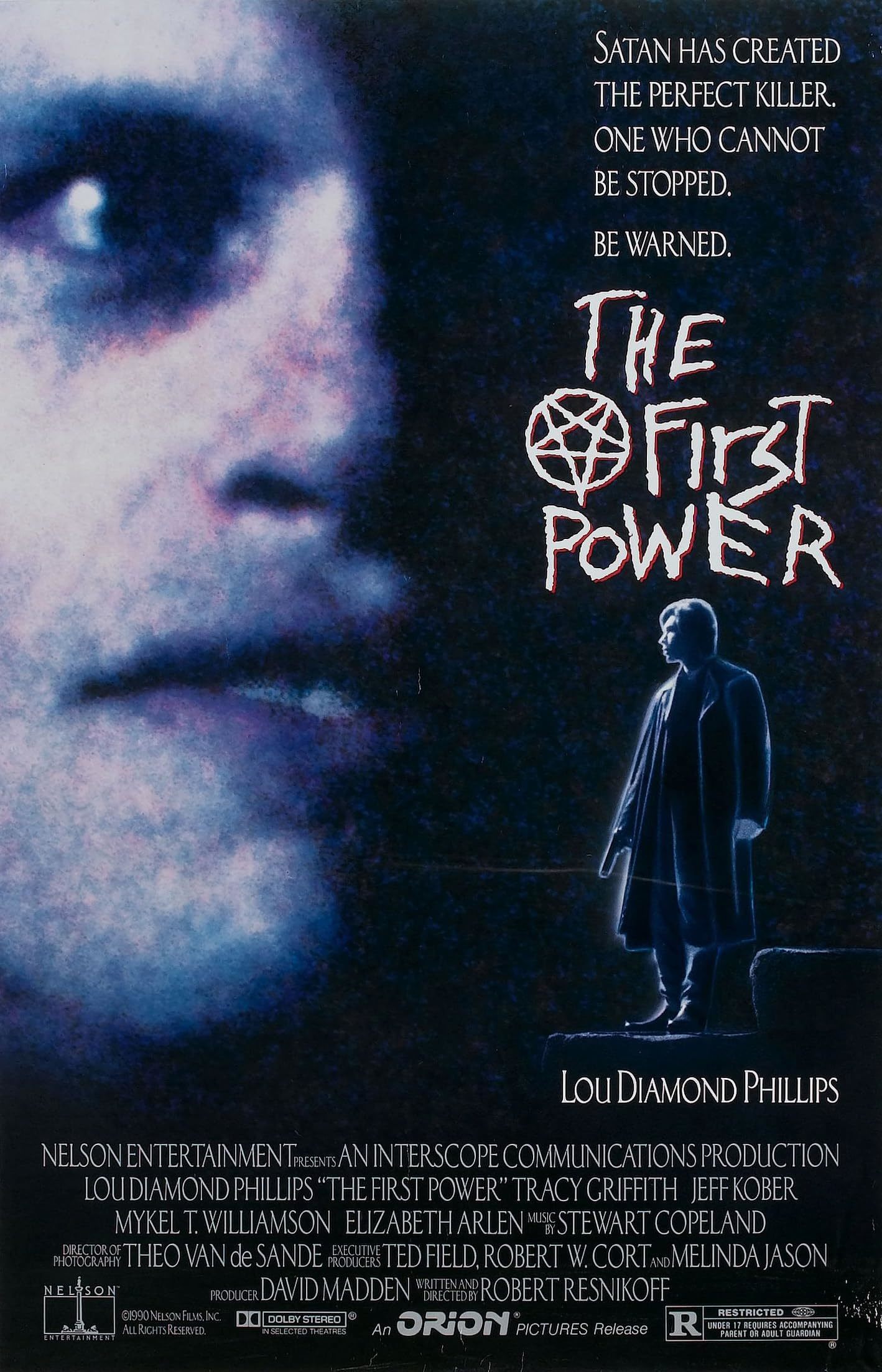
The Friday Night Horror Movie: The First Power (1990)

the first power

A crazy, satanic serial killer is on the loose in Los Angeles. Detective Russell Logan (Lou Diamond Phillips) is on the case. Or rather he’s chilling at home when a psychic (Tracy Griffith) calls him up and tells him where the killer’s next victim is going to occur. But she makes him promise that he won’t kill the killer nor will he allow him to get the death penalty.

Our hero gets the killer but he reneges on the deal to not let him get the death penalty. After he gets the gas chamber Detective Logan starts seeing horrific images and hearing the killer’s voice in his head.

The psychic shows up in person to let him know that the killer’s soul is now inhabiting the bodies of others and the killings will continue until they can stop them.

It is Noirvember and as I noted in today’s Daily Bootleg Post I’m gonna be busy watching a bunch of kung-fu movies over the next week or two. It is also Friday and I’m definitely not giving up my Friday Night Horror Movie. So, I was trying to find a way to blend those two things together.

Theoretically, that’s pretty easy to do. Film noir is hard to define and thus the definition is actually pretty flexible. Neo-noir is even more flexible. Both tend to involve crime, often murder. Sometimes serial murder. Horror films generally involve some murder and sometimes those murders are wrapped up in a murder mystery. A little Googling turned up a list of noir/horror hybrids and that’s how I discovered The First Power.

I wanna say I’ve seen this movie before but none of it rang any memory bells and I haven’t logged in on Letterboxd, so who knows. I definitely remember it coming out and wanting to see it.

It isn’t great. I love me some Lou Diamond Phillips. This film comes at the tail end of his first wave of popularity and it doesn’t work that well as a star vehicle for him. The script is pretty hokey, and it doesn’t lean hard enough on the whole satanic angle.

The killer carves pentagrams into his victims and they do bring a nun in at some point, but he’s never really involved in anything demonic. Most of it takes place in the city in broad daylight which is just weird for a horror movie about the occult. There are some scenes in dark warehouses and down in the bowels of the city’s water drainage. It does some nice things with light and shadow in those moments, but they don’t last.

The film posits that the killer’s soul is possessing various other people but it doesn’t really do much with that concept. Mostly we see him in the original body (played by Jeff Kober), but sometimes we see him in the body of whoever he’s possessing. But there are no scares involved in that. There is never any mystery of who he is possessing.

There are a few good, nut-ball moments like when a homeless woman floats in the air, or when the killer jumps off a ten-story roof and survives, or the fact that Los Angeles apparently has a giant boiling cauldron of flammable liquid in the bowels of their water drainage system, but mostly this is a by-the-numbers early 1990s horror/thriller.

31 Days of Horror: Halloween (2007)

image host

John Carpenter’s original Halloween (1978) didn’t invent the slasher genre. It has its roots in the Italian Giallo and films like Black Christmas (1974) came out earlier and contain all the elements of the genre. But Halloween really set the template for what slavers would become, and its immense popularity meant that it would be copied over and over again throughout the next decade.

It remains the greatest slasher ever made and is a truly great horror film. Much of this comes down to Carpenter’s economic direction. In just over 90 minutes he tells a complete story without an ounce of fat. It isn’t that the film is nonstop thrills either. There is a lot of exposition, we spend a lot of time just hanging out with the characters. But Carpenter makes them count. He lets us get to know the characters, especially Laurie Strode (Jamie Lee Curtis in a career-defining role), which allows us to actually care for them when the horror comes.

As Doctor Loomis (a wonderful Donald Pleasence) constantly lets us know Michael Myers is evil personified. The film doesn’t provide a back story. We don’t learn anything about who he is or why he kills. We don’t need to know.

Rob Zombie’s 2007 remake of Halloween is a terrible film. It takes all that makes Carpenter’s film great and chucks it out the window, then stomps on it with its dirty boots.

A good half of the film is filling in Michael Myers’s back story (played by Daeg Faerch as a ten-year-old boy and Tyler Mane as an adult). His mom is a stripper, her boyfriend is an alcoholic, abusive cripple. He’s bullied at school. Etc., etc., and so forth. It is all basic, boilerplate reasons for becoming a psychopath.

Here he doesn’t just kill his older sister as a child, but his entire family (excluding his baby sister, of course). We then spend a bunch of time with him at the mental institution where Doctor Loomis (Malcolm McDowell) tries to cure him. Or at least show him some kindness. Or at least talk to him. His mom visits every week, but Michael shrinks back into himself. He stops talking but continues to make little paper masks to put over his face and hide his true self from the world.

None of this is very interesting and it is all superfluous. Again, we don’t need to know why Michael Myers is a killer. Trying to give him human reasons for being who he is takes away the horror of who he was in the original.

When we finally arrive at Halloween night in the present (where the original film spends most of its time) I’d stop being interested in what this film was trying to do. Unfortunately, I had to keep watching for another hour.

Scout Taylor-Compton plays Lauri Strode in this version and all apologies to the actress, but she is not good. Jamie Lee Curtis portrayed the character as kind and good (it literally began the trope that the Final Girl in these films would be virtuous and a virgin), but also tough, a fighter. She’s innocent, but not naive or weak. Taylor-Compton turns her into a mostly whiny brat. Her girlfriends are even more obnoxious.

In the original, the teens do a bit of drinking and sexing, but Carpenter’s camera never leers at them. Zombie’s camera is nothing but leers. It lingers on the sex scenes, is zooms in on the nudity. There is a rape scene early on in the asylum that is as gross as it is gratuitous. The violence is more visceral as well, and not in a good way. I love horror movies and I’ve seen more than my fair share of gore and gratuitous sex. Maybe I’m just getting older, but so much of this film just felt like way too much.

I first watched this film in 2008 while living in Shanghai, China. In those days you could buy bootleg DVDs super cheap. There were literally guys on the street corners with boxes full of them. As soon as a film came out in the States we would get flooded with copies (usually cam copies where folks literally filmed the movie inside the theater). Sometimes we’d get weird cuts of films. After watching Halloween over there I was looking up reviews and realized I had seen a different cut than everyone else.

Apparently, there are three different versions of the film. There is a theatrical cut, a director’s cut, and an original version that was sent to test audiences. That last version didn’t do very well so they added some scenes and cut some things out. At a guess, I’d say what I originally saw was that first version. But I really don’t remember.

I believe what I watched tonight was the Director’s Cut. Whatever I watched, it was bad. Really bad. Just terrible actually.

I only watched it because the only film in the entire franchise I’ve never seen is the sequel to this. I was hoping to watch it on Halloween night. I guess I still will, but now I’m not looking forward to it.

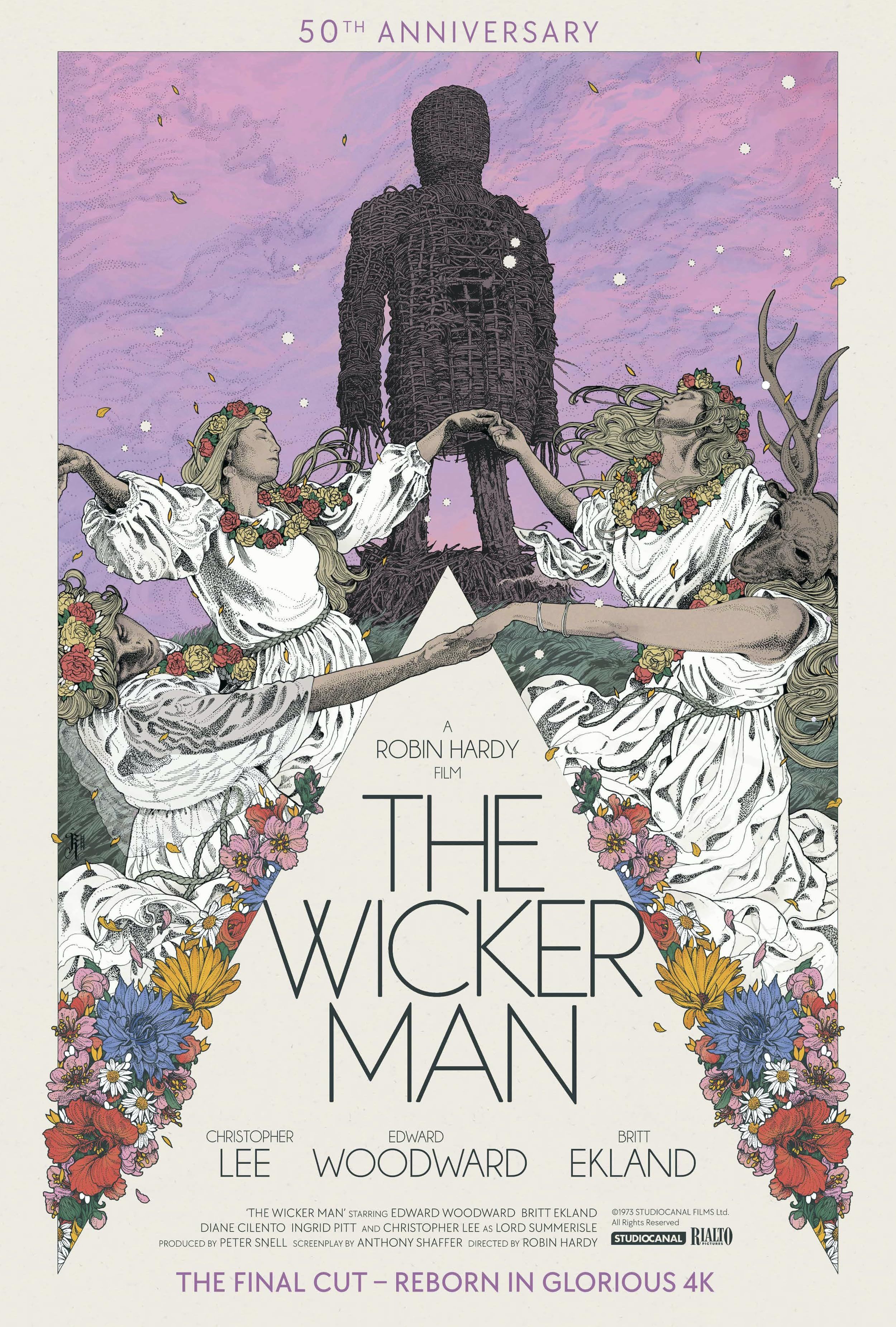
The Friday Night Horror Movie: The Wicker Man (1973)

The Wicker Man

A very conservative and deeply Christian police Sergeant receives a letter stating that a young girl has gone missing from a small, remote island off the coast of Scotland. He travels there by himself and discovers a strange pagan community where the children are taught about the phallic symbolization of the May Pole, where teenagers dance naked around a fire, and adults openly fornicate in a park in the evening.

The Sergeant, Neil Howie (Edward Woodward) is utterly shocked by all of this, but he’s a dutiful police officer and stays until he gets to the bottom of things. Not only are the villagers engaged in a litany of sins, but they are utterly unhelpful to his investigation. At first, they claim they have never seen the girl in their lives, but then it changes to how she was on the island but died tragically, and then…well it is best not to spoil things.

The Wicker Man has become a cult favorite and one of the premier films in the subgenre known as Folk Horror. It is also a truly strange little film. It is almost a musical as the villagers often break into goofy little folk songs and dance about (often naked). There is a very real sense of dread flooding the film. The camera is often tilted at odd angles making everything just slightly off. The villagers are ever so strange and are led by Lord Summerisle (Christopher Lee is one of his most interesting performances) who seems to take glee in making the Police Sergeant feel out of sorts.

There is a scene in which a woman puts a frog inside a child’s mouth to help her with a sore throat. A shop owner has a bottle full of foreskins. Britt Ekland plays the pretty daughter of the pub proprietor and at one point she sings a silly song whilst dancing in her room stark naked as an attempt to seduce the Sergeant. She beats wildly on his wall while he, soaked in sweat attempts to resist.

It is all a bit off-putting at first, but if you can roll with what it’s doing it is a rollicking good time. Not at all scary in the traditional sense, but it creates a wonderful sort of mood.

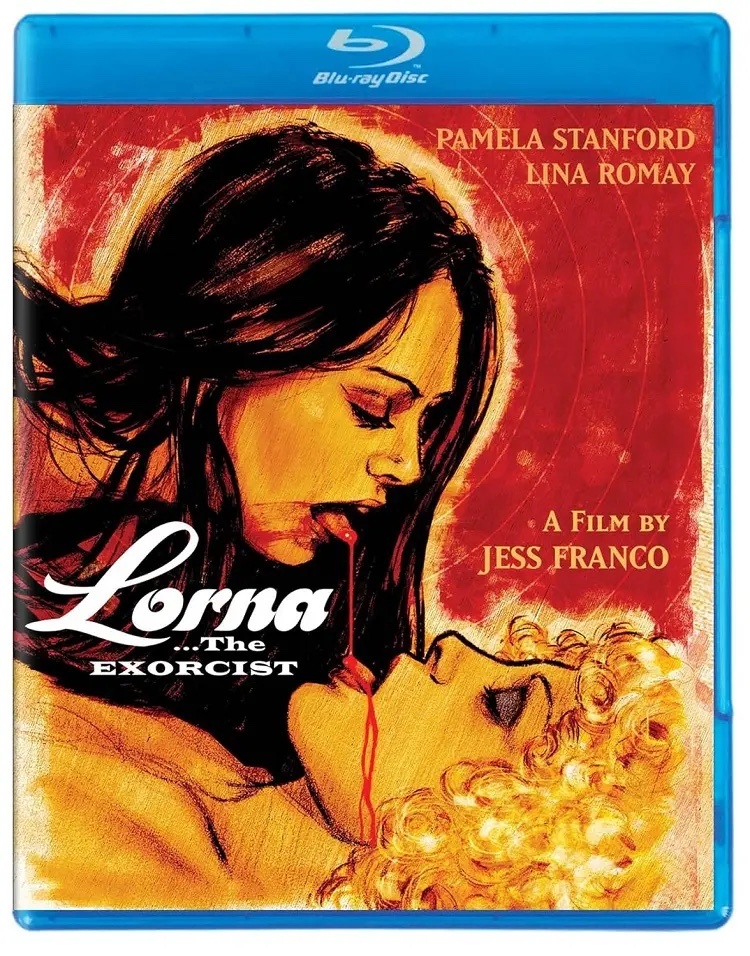
Lorna the Exorcist (1974)

lorna the exorcist bluray

Sorry for the lack of posts over the last couple of days. I had a really lousy weekend and that bled into Monday. And then I got some really great news Monday night. I’m still trying to wrap my head around it all.

I took a break from writing my 31 Days of Horror reviews because of this and now I’ve got to get back into that groove. Noirvember is coming soon and I do want to write a lot about it.

I also decided to change things up a bit with my bootleg posting. I’m not sure how long it will last, but I’m hoping to do something slightly different that will also be fun, but will also mean maybe I don’t post every day. But we’ll see how it goes. I may go right back to my old ways after a week or two.

Anyway, I wrote a review of this weird little horror film for Cinema Sentries and you can read it here.

31 Days of Horror: Castle of Blood (1964)

castle of blood

Alan Foster (Georges Rivière), a journalist meets Edgar Alan Poe (Silvano Tranquilli) at a pub. In the film’s reality, Poe is not a writer of fictions, but a documentarian of actual supernatural occurrences. He tells Foster this, but the journalist is a skeptic. Poe makes him a bet that he cannot spend the night in a haunted castle. Foster agrees.

Once there he is accosted by the usual haunted house trappings – spooky noises, candles getting blown out, strange sounds, and paintings that seem to stare back at him.

Then the ghosts come.

Luckily two out of the three ghosts are beautiful women (Barbara Steele and Margarete Robsahm), the other is a handsome, musclebound man. They were each murdered on the premises sometime in the past and now, once a year they must take the soul of a living human in order to remain in existence.

Ah, but Barbara Steele’s character falls in love with our hero and decides to help him survive the night, even though that will mean her own destruction.

Castle of Blood is pretty light on plot, but oh is it heavy on atmosphere. The camera investigates and lingers on every gothic inch of the castle. It is cobweb-filled, shadow-dense, and incredibly creepy. It longingly gazes at Barbara Steele who has a face custom-built for films like this. She is both incredibly beautiful and eerily terrifying.

This is the type of horror film my squeamish wife can watch with me. It is exactly the type of film I love.

31 Days of Horror: Murders in the Zoo (1931)

murders in the zoo

Here’s another Pre-Code film that couldn’t have been made just a few years later. Murders in the Zoo is an astonishingly violent film for its time, I’m rather surprised it got a full release even if it was made before the Production Code was in full effect.

It begins with a man getting his mouth sewed closed (and as you can see the film delightfully gives us that image) because he dared kiss another man’s wife. Several other people are murdered by snake bite and one woman is tossed into an alligator pit where she’s ripped to shreds.

still from murder in the zoo

Obviously, there isn’t a lot of gore in this film made some 90 years ago, the blood and guts are decidedly off-screen, but that’s still a lot of violent deaths for such an early Hollywood film.

Lionel Atwill is Eric Gorman, our murdering psychopath. He’s a big game hunter and zoo owner who is insanely jealous of his wife Jerry (Gail Patrick). Admittedly, she regularly seems to have affairs and wants to divorce him, but that doesn’t quite call for brutally murdering everybody who looks longingly in her general direction.

Randolph Scott is the doctor who comes up with an antidote for the snake venom (something that will come in handy when he gets bit). Oh, the snake is a super poisonous mamba. Gorman brings one back from Africa and uses it to kill a couple of his wife’s suitors.

Charlie Ruggles is Peter Yates a newly hired press agent who is scared silly of pretty much all the animals in the zoo. He’s ostensibly our hero and very much the comic relief.

The story is mostly silly, and the comedy mostly didn’t work for me, but it gets good use out of its animals. There are big cats, and alligators, and snakes, and the film gets its money’s worth out of them.

What really makes the film worth watching is just how much they got away with. I’m not a big fan of acting like modern audiences are more sophisticated, or intelligent, or even less prudish than audiences from times before. There were intelligent, sophisticated people 90 years ago. They understood violence. The papers were full of it. And yet, the violence on screen in this film does seem shocking. That opening scene where the guy gets his eyes sewn shut is wild. You know it is happening off-screen and watching it I sat there wondering if they would actually show it, thinking there was no way we’d get something like that in a film from 1933.

And then he came out, eyes shown shut.

That’s one of the many reasons I love Pre-Code cinema.

31 Days of Horror: Murder Rock: Dancing Death (1984)

murder rock

Lucio Fulci is often called The Godfather of Gore, and it is true, he did make a lot of horror films with copious amounts of violence, buckets of blood, and tons of gore. But he worked in many other genres throughout his long career including westerns, sword and sandal epics, and even comedy. What one would not expect from him is a musical, which is exactly (well, more or less) what he made with Murder Rock: Dancing Death.

It isn’t technically a musical since the characters don’t actually sing, but there is a lot of music (which was written by Keith Emerson) and a whole lot of dancing. But it is really a horror movie. Actually, it is the best-looking Giallo Fulci ever made.

It takes place at a New York City dance studio where one by one the female dancers are being stabbed through the heart with a long, needle-like hairpin by a black gloved killed. The studio is so hardcore that after the first girl is killed, the instructor basically tells the other dancers to stop whining and get back to work.

Meanwhile, Candice (Olga Karlatos) begins having dreams of being murdered by a man she’s never seen before. When she sees the dream man’s face on a billboard she tracks him down only to discover he’s a disheveled drunk. Instead of shrugging it off or running away in terror, she decides to sleep with him.

The film is filled with red herrings and a cop (Cosimo Cinieri) who is both lackadaisical about the whole thing and rather sadistic. It is all a bit complicated and rather silly, but I really kind of loved it. I mean most Giallos are complicated and silly, but this one pushes it to the edge and then some.

But it is stunningly gorgeous to look at. Fulci and his cinematographer have lit the heck out of it and filled it with beautiful, colorful images. The music and dancing give it an unusual energy and it’s just a lot of fun to watch.

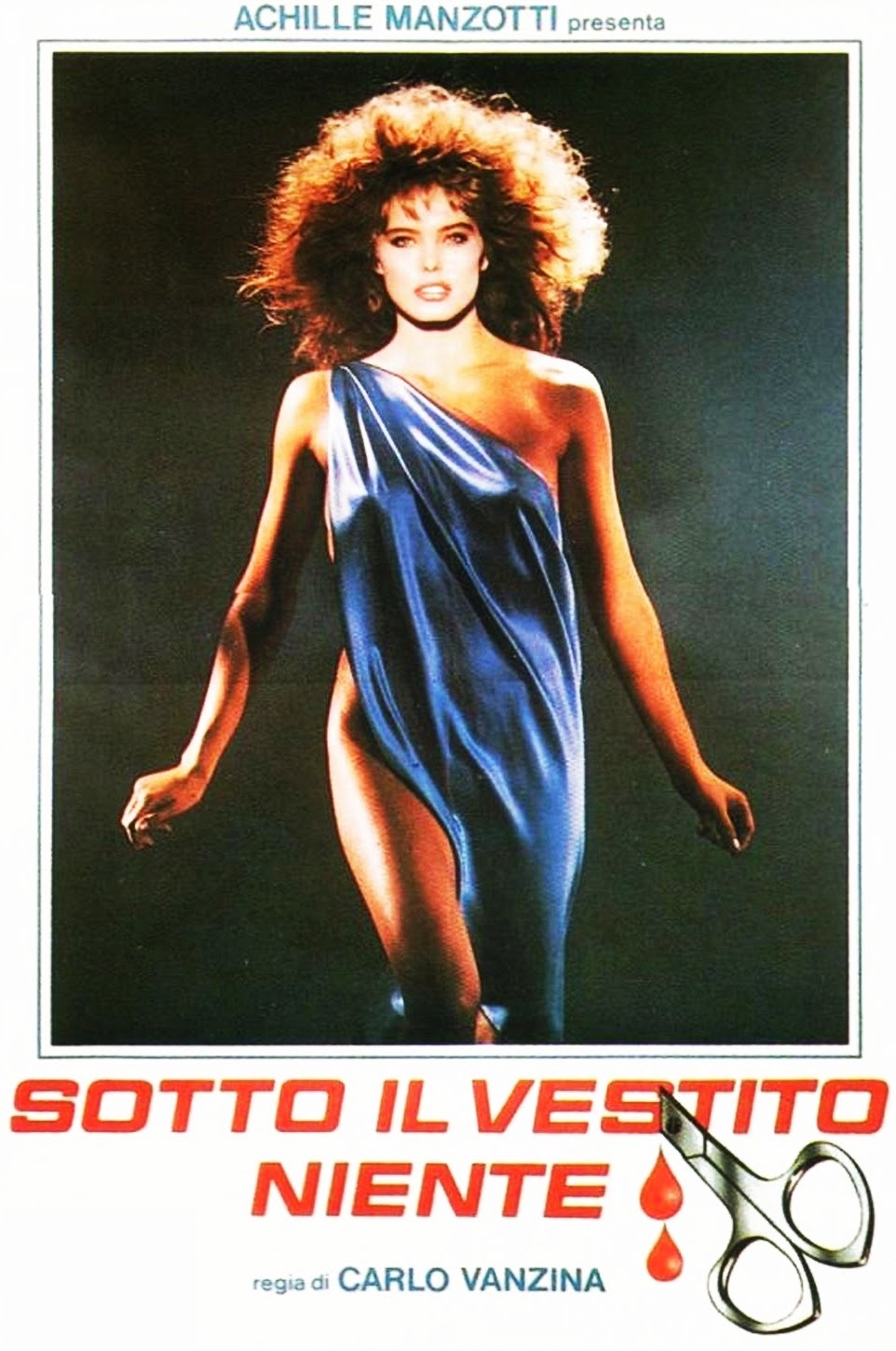
31 Days of Horror: Nothing Underneath (1985)

nothing underneath

Much like film noir, the Italian giallo is a genre without a clear-cut definition. There is a specific time period in which they flourished (the 1940s-1950s for noir and the late 1960s to the early 1980s for giallo) and certain stylistic certainties in which they operate, but there are so many outliers within each genre that pinning down an actual definition is nearly impossible. The later a film is made within their respective time periods the more fuzzy they tend to exist within the genres.

Nothing Underneath came out in the very late period of gialli, you might even call it post-giallo (although Dario Argento made Opera in 1987 and it is one of the very best gialli ever made, so go figure.) Even within the very fuzzy confines of giallo definitions, it remains a very fuzzy example of the genre.

It begins in the most unlikely of places for a giallo – Yellowstone National Park where we find our hero Bob (Tom Schanley) a ranger. He has a psychic connection to his sister, Jessica (Nicola Perring) who is a fashion model in London. While walking amongst the mountains and the trees he has a vision that Jessica is being murdered by a black-gloved killer with a pair of scissors.

Bob immediately flies to London and attempts to warn his sister of her impending doom but she’s gone missing. There is no evidence of murder, but nobody seems to know anything about where she might have gone. His investigations find that she was at a party hosted by fashion designer Giorgio Zanoni (Cyrus Elias) where he bribed several models (including Jessica) to play a game of Russian Roulette for a cache of diamonds.

Soon enough some of the women at that party start getting murdered with a pair of scissors just like in the vision. Bob teams up with Inspector Danesi (Donald Pleasence sporting a terrible Italian accent) to solve the case.

The black-gloved killer, the fashion models (providing ample excuses for casual nudity), and the killer’s point-of-view shots are all classic gialli tropes. It actually reminded me quite a bit of Brian DePalma’s work in the 1980s, but of course, he was highly influenced by the giallo genre. It lacks his formal command and the genre’s sense of style. It definitely feels like giallo-lite, or that it has outgrown the genre in some way. Or, more than likely, it just isn’t very well made.

If you are a fan of the genre and have seen all the classics then this one is worth watching. All others need not apply.

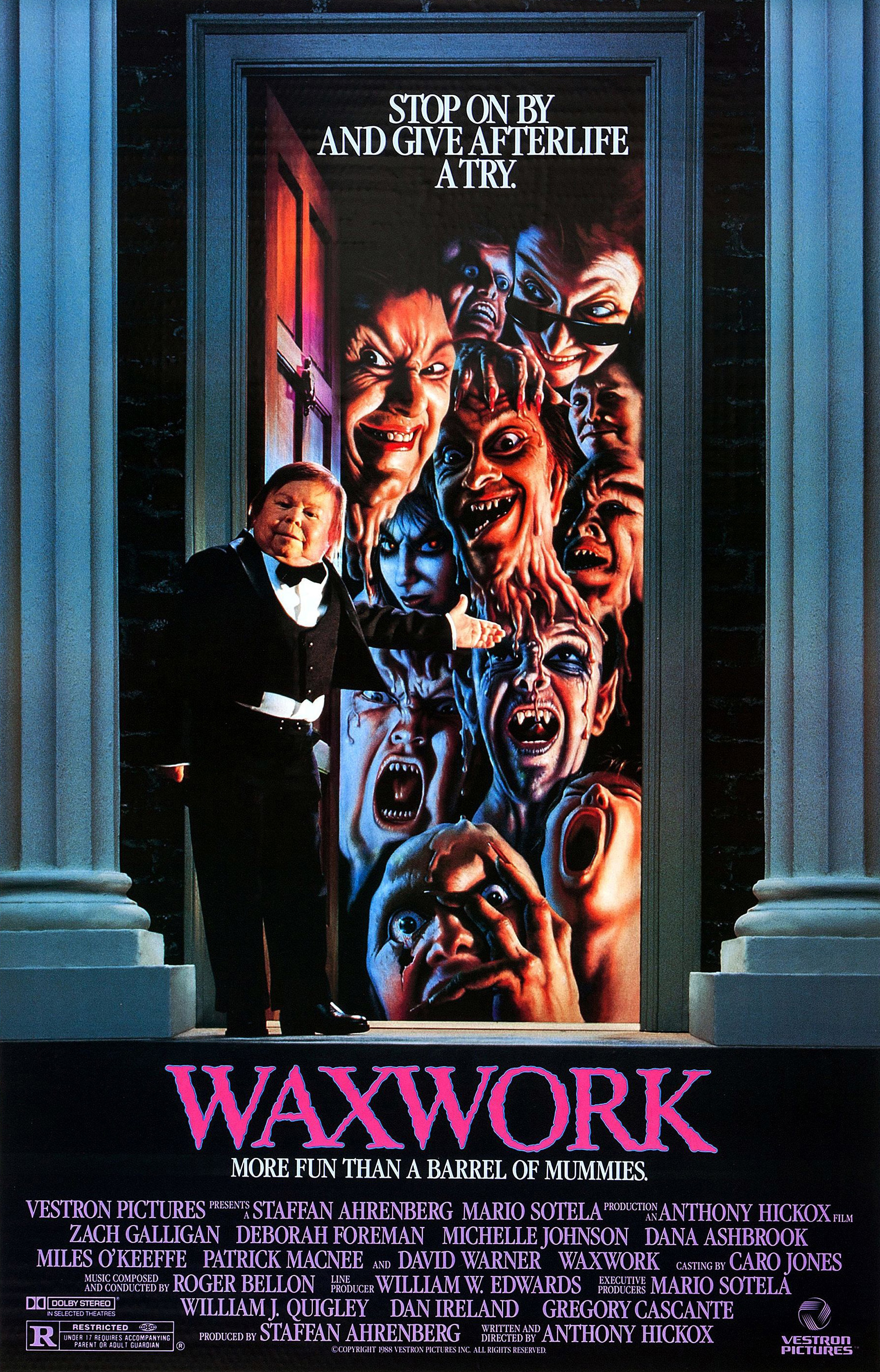
31 Days of Horror: Waxwork (1988)

waxwork

I have a habit of following various cinematic rabbit holes when it suits me. Sometimes I’ll watch a bunch of movies with the same actor in it, or from the same director. Other times I’ll watch movies set in the same city, or that tell similar stories. Those are the most fun to watch. Sometimes that means I’m watching sequels or remakes, or whatever, but other times films will just tell similar stories that have actually nothing to do with one another.

The other night I watched Mystery of the Wax Museum (1933) and enjoyed it. This afternoon I was flipping through my unwatched horror queue and came across Waxwork. That’s a film I’ve known existed for some time in that I’d probably seen its cover art in some old video store back in the VHS days but had never been all that interested in watching it. But now that I was connecting it with Mystery of the Wax Museum I gave it a go. I’m glad I did.

Waxwork has nothing to do with that old film except that it is a horror film set in a wax museum. This one stars Zach Galligan as Mark a bored, rich kid. He and a few friends get invited to a secret opening of a waxworks by a creepy dude who appears out of nowhere (David Warner).

The waxwork has various displays of classic horror characters (Dracula, a werewolf, the Marquis De Sade, zombies, etc). The thing is if you step inside the display you are transported to a pocket dimension where you are a character in that particular display’s story.

One by one the kids get picked off except for Mark and his friend Sarah (Deborah Foremen). They escape and spend some time figuring out exactly what is going on. I won’t bore you with those details except to say they are pretty boring.

What makes the film worth watching is the adventures inside the displays. The film has a lot of fun playing inside the various horror subgenres and updating them to the 1980s. There are slices of Hammer Horror, Universal Horror, and George A. Romero Horror and they are a treat to watch.

I enjoyed Zach Galligan in the Gremlins films but here he can’t cut it as the leading man (it doesn’t help that he’s sporting an atrociously bad haircut) and the rest of the cast isn’t much better. Everything outside of the display scenes just isn’t that interesting.

But those display scenes really are worth the price of admission.