
Westerns in March: Hour of the Gun (1964)

hour of the gun

Welcome back to Westerns in March. This is my fourth year doing this theme, and I’ve come to really enjoy it. There is something wonderful about this genre with its wide-open spaces, its barroom brawls, and its shootouts. So let’s get started.

Director John Sturges made Gunfight at the OK Corral in 1957 with Burt Lancaster as Wyatt Earp and Kirk Douglas as Doc Holliday. It is a darn good film. It ends with the titular gunfight.

Ten years later Sturges revisited the story with this film, a sort of sequel with James Garner in the Earp role and Jason Robards as Holiday. It begins with the gunfight at the OK Corral and then deals with its aftermath.

An opening title notes that “This picture is based on Fact. This is the way it happened” and Sturges did strive for more historical accuracy than is usually told with these stories, though, of course, he still changed quite a bit to suit his needs.

Ike Clanton (Robert Ryan) survived the gunfight (something he did in real life but did not in the previous film) and is now taking our heroes to court. He claims his men were unarmed and had raised their hands in the air when Earp and his men shot them dead.

Clanton loses the court case but sets up his own personal war with Earp, his brothers, and Holiday. Some of them get shot, some of them get killed. Wyatt is determined to stop them, but his moral code demands he do it legally. But his stubbornness makes him bend the law to suit his needs.

Robards is terrific as Doc Holiday. This is a very different performance from Val Kilmer’s portrayal in Tombstone, but it’s still real good. I never really buy James Garner as Wyatt Earp. I’m so used to him playing rascally wiseacres that it is difficult to buy him as the deadly serious man he’s playing here.

Robert Ryan barely has any screen time, and when he does, he isn’t nearly menacing enough. He’s the main villain, and he’s far too tame to be threatening. Which is a weird thing to say about Robert Ryan, who is usually so good at playing scary dudes.

Sturges’s direction is steady but not memorable. Ultimately, the film is worth watching for Robards’s performance and if you are interested in what happened after the famous gunfight.
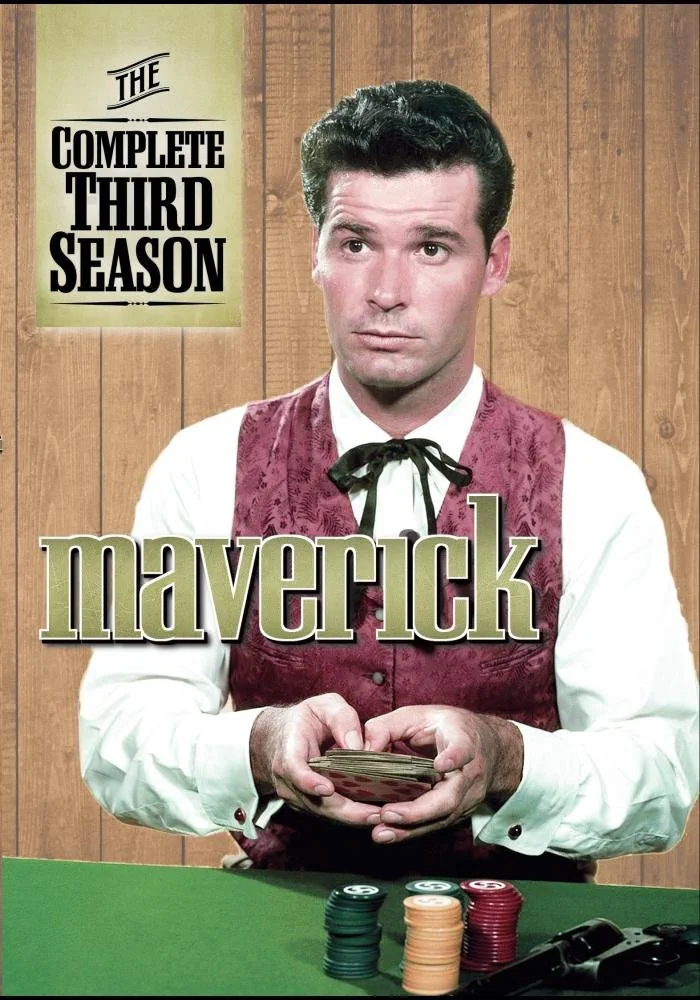
Maverick: The Complete Third and Fourth Seasons

cover art

Maverick, the television series, ran for several seasons in the late 1950s to the early 1960s. It starred James Garner (amongst others) as a wise-cracking, woman-chasing gambler in the old west who gets in lots of trouble every episode. In 1994 they made a movie out of it starring Mel Gibson, Jodie Foster, and James Garner. I’ve seen the movie multiple times. Every few years I put it on thinking that I like it. Every time I’m disappointed. The cast is charming and the story isn’t bad, but something about it just annoys me.

I probably ordered this DVD set misremembering how much I liked the movie. The series isn’t bad, but it definitely wasn’t for me. You can read my full thoughts here.

Murder Mysteries In May: Marlowe (1969)

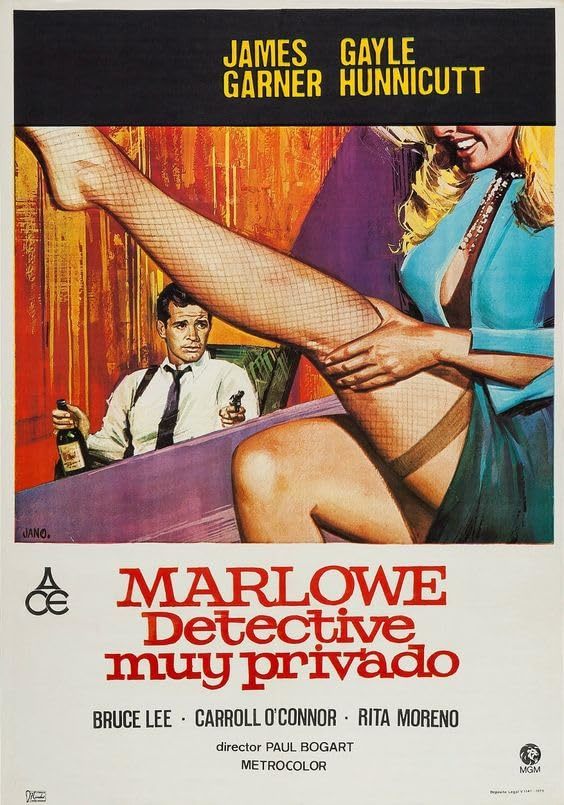
poster

Phillip Marlowe is, perhaps, the quintessential hard-boiled detective. He is smart and tough. He has a moral code, but isn’t afraid to get his hands dirty. He works alone. He’s a hard drinker and plays chess by mail. It may take him a while, but he always solves his case. Humphrey Bogart’s portrayal of Phillip Marlowe in The Big Sleep is, perhaps, the quintessential cinematic depiction of the hard-boiled detective in film noir.

That character and Bogart’s portrayal of him, influenced countless detectives in countless movies throughout the 1940s and 1950s. But as the 1950s turned into the 1960s that hard-boiled film noir style was, well, going out of style.

In 1973 Robert Altman adapted Raymond Chandler’s The Long Goodbye with Elliott Gould as Marlowe. Altman has a lot of fun throwing this 1930s detective into the wild 1970s. Gould plays him as a sort of Rip Van Winkle, a man who has awoke from a long sleep only to find himself in a world he no longer understands. He kind of wanders, mumbling through the whole film, while the entirety of the uninhibited 1970s California sprawls out before him. It is a fantastic movie.

Marlowe sits somewhere between Bogart in The Big Sleep and Gould in The Long Goodbye. It is very much set in the late 1960s. The skirts are short, the music psychedelic, there is ample use of split screen and hippies abound. But the story sticks pretty close to the classic mold.

James Garner plays Marlowe like, well, James Garner, with a smirk to his delivery and a tongue planted firmly in his cheek. He’s smooth and slick, and rather delightful.

The plot is adapted from Chandler’s novel The Little Sister and finds Marlowe being hired by a squeaky young girl from Kansas to find her brother, lost in the big city of angels. There are mobsters and television stars, murders with ice picks, a strip tease act from Rita Moreno, and Bruce Lee tearing up Marlowe’s office.

It doesn’t always work. At times it feels more like a schtick than a fully thought-out movie. Altman’s film never has that problem. I love me some James Garner and he mostly works for me here, but in the same way that the film sometimes feels like a schtick, his act doesn’t always work for Phillip Marlowe.

But it is a fascinating time capsule of a movie, trying to move the film noir forward, making it current for the times. It is also quite a bit of fun.