The Friday Night Horror Movie: Halloween (1978)

halloween poster

I don’t remember the first time I watched John Carpenter’s Halloween. I don’t think I saw it while in high school; it was probably college that found me first seeing it. Whenever it was, I’ve seen it many times since. It has become part of my DNA. I love it deep down in my bones. So I was surprised to realize that I’ve never actually written about it. I’ve written about several of the sequels and the remakes, but never the original. I’ve gotten into the habit over the last several years of watching one of the Halloween movies on Halloween, so I decided it was high time I watched the original on this, the spookiest of evenings, and then finally wrote something about it.

Reading some of my other Halloween reviews, I find that I’ve talked quite a lot about Carpenter’s film and its place in popular culture, so I don’t want to go too heavy in that direction here. Though it is often cited as the first slasher, you can actually go back as far as Psycho and Peeping Tom (both released in 1960) to find films that fit the mold. Italian giallos certainly had a lot of influence over the slasher genre and could even be considered slashers themselves. Technically Black Christmas, a very good slasher itself, was released a few years before Halloween. But it was Carpenter’s film that popularized the genre and solidified the tropes.

While this is true, I would argue that Friday the 13th (1980) truly solidified everything the slasher would become over the remaining decade. Sean S. Cunningham was clearly inspired by Halloween‘s success, and he distilled the Carpenter film down to its very essence. It has a group of sexy teens getting killed off one by one by a blade-wielding maniac. The final girl is virginal and thus pure in the film’s point of view. The killings all stem from something in the killers’ past. Etc. Even the title is taking the holiday premise from Carpenter. Friday the 13th takes the tropes established in Halloween and grinds them down, then exploits the hell out of them. The sex and nudity are more gratuitous, the violence more gore-filled. 

Carpenter is on record stating that the notion that Laurie Strode survives Halloween due to her “purity” was purely accidental. And it’s true, Laurie isn’t some paragon of virtue. We see her smoking in one scene, and she doesn’t seem opposed to drinking or the fact that her friends are screwing their boyfriends at the drop of a hat. Her virginity seems to be more of a product of her own shyness and lack of confidence than any sense of morality. She is a “good girl” in the sense that she tries hard at school and genuinely seems to care about the kids she’s sitting with (unlike one of her friends who constantly yells at her charge and dumps her off at Laurie’s as soon as possible.)

Friday the 13th doubles down on the tropes. Its success led to many more slashers in the ensuing years, and most of them kept the distilled versions of these ideas and codified them.

It is always surprising to me how much Halloween takes its time getting to the killing.  There is a murder in the opening flashback and then a long period of nothing. After a fantastic credit sequence (featuring a beautifully lit jack-o’-lantern and that iconic score), we open in 1963. A long POV shot shows us Michael Myers stabbing his sister to death (after she’s had some sexy fun times with her boyfriend). But the sex is off-screen, and the violence is fairly tame. Even the nudity feels not particularly gratuitous.

Then we move to the present day (1978) and find Dr. Loomis (Donald Pleasence) for some reason driving to the asylum where Michael Myers is kept with a nurse in the middle of the night. Michael has escaped, attacks the nurse, and gets away. Dr. Loomis tracks him to his hometown of Haddonfield, IL. Loomis is our expositional bank. He keeps finding people to talk to about how Michael Myers isn’t human, he’s evil incarnate, he’s an unstoppable killing machine. Intercut with his hunt for Michael, we find Laurie Strode (Jamie Lee Curtis) going to school and hanging out with her friends Annie (Nancy Loomis) and Lynda (PJ Soles.) They are typical teenagers. They smoke, they drive around town, and they talk about boys. Laurie gets teased because she cares about her grades and she’s shy around boys, but they genuinely seem to like each other.

In the background is Michael Myers. Standing tall, dressed in coveralls with that weird mask on, just stalking them. We’ll see him driving around, following Laurie. He’s standing outside her bedroom window or her classroom or down the road, but then he’ll quickly disappear. Because Loomis is constantly telling us about how evil Myers is, we feel that tension. Even when Laurie is doing something perfectly boring like making popcorn for the little boy she’s sitting, we know Michael is out there, just waiting to kill her. 

The sequels will give Michael Myers a connection to Laurie. This will give him a reason to constantly be coming after her, but in this first film that connection hasn’t been made. His obsession with her is random, and all the more terrifying for it.

When the killings do come, they are fairly tame. There is very little bloodletting or gore. Michael does stab one guy so hard the knife pins him to a wall, and there is another scene in which a body is staged on a bed, and others fall out of closets, but they’d pass a TV edit these days.

But they work because they are so well staged by Carpenter. The way he sets them up and films them, the way he has spent the first 45 minutes setting up Michael Myers as this merciless killer, makes them incredibly effective. Dean Cundey’s cinematography is evocative. A lot of the scenes happen in darkness, but he finds a way to let just enough light in to shine across Michael’s face, or his victims as they flee in terror.

It isn’t a perfect film. There are times when it’s a very small-budget show. You can see some of the seems, but I don’t care. I just love every loving minute of it. It doesn’t get better than Halloween in terms of slashers.
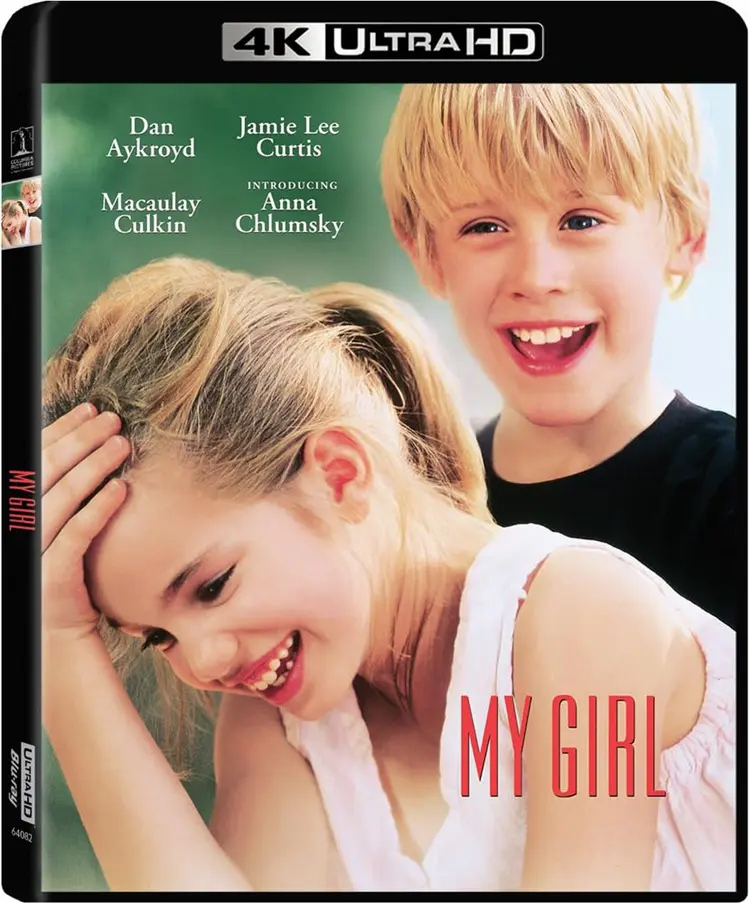
My Girl (1991)4K UHD Reivew

image host

When my copy of this disc arrived in the mail, I was confused and a little disappointed. Confused because I couldn’t remember ordering it and disappointed because I knew I had to review it. I do that sometimes – I’ll get a series of PR emails offering all sorts of discs and that little kid inside of me who can’t believe they actually send me free movies if I’ll just write a few paragraphs about them gets all excited. I say “yes” to everything and then when they arrive I wonder what the heck I’m doing.

Generally, I love getting movies in the mail – watching them and reviewing them. But sometimes I get a little overwhelmed with them and I start thinking about the other movies I want to watch. Movies that might fit my monthly theme or something and I’m annoyed at being forced to do something. It is like in school when the teacher makes you read a book. You don’t want to do it even if it sounds interesting.

I was disappointed at receiving My Girl because my memory of it (admittedly a very vague one) was that I didn’t really like the film. Looking at Letterboxd confirmed that opinion with the general consensus being that it wasn’t great.

But I had to watch it and so I did. It was better than I remembered. It is a cute little coming-of-age tale set in the 1970s with a strong performance by the central moppet. It isn’t amazing or anything, but I’m glad I watched it again.

You can read my full review here.

31 Days of Horror: The Fog (1980)

the fog poster

John Carpenter’s The Fog begins with a cheesy old campfire tale told by an old man that essentially gives us the backstory to the movie we’re about to see. Both the backstory and the actual story are pretty silly. The monsters are goofy, and the ending somewhat anti-climatic. Yet I love the film through and through.

Carpenter is the master of creating a mood and The Fog finds him at his moodiest. Since time immemorial (or at least the time in which films have existed) movies have used fog to create a spooky, eerie mood. Fog was made for cinema. It is both opaque and translucent. It obfuscates your vision and yet seem to reveal. It crawls in and moves with the wind. And it looks great when lit up.

One hundred years ago, on a dark foggy night the founders of Antonio Bay, a small coastal town in Northern California murdered a group of lepers for their gold. Now as the town celebrates its centennial anniversary the fog is back, as are the lepers and they are looking for revenge.

Our heroes are Stevie Wayne (Adrienne Barbeau) who owns and DJs the coolest looking lo-fi radio station inside a lighthouse, fisherman Nick Castle (Tom Atkins), and Elizabeth Solley (Jamie Lee Curtis) the hitchhiker Nick picked up one foggy night.

Stevie spends most of her time in the lighthouse talking to her listeners (and us) whilst playing light jazz records. She acts almost like a narrator, feeding her listeners (and us) information. Nick and Elizabeth run around trying to figure out what is happening.

The monsters apparently only appear between the hours of 12 midnight and 1 AM. They show up the first night mostly messing with electronic equipment and freaking everybody out, and then on the second night, the night of the actual anniversary they start killing people.

Whatever, the story takes second chair to the general creepiness Carpenter is creating. As usual, Carpenter wrote his own score and it is terrific. The film looks terrific and there is an enormous amount of creepy fog drifting into town across the bay, floating across streets and into rooms. The film lights it up giving it a hypnotic look.

It isn’t particularly scary and there are just a few scenes of genuine violence (although none of it is bloody) but the general vibe is excellent.

31 Days of Horror: Halloween (2007)

image host

John Carpenter’s original Halloween (1978) didn’t invent the slasher genre. It has its roots in the Italian Giallo and films like Black Christmas (1974) came out earlier and contain all the elements of the genre. But Halloween really set the template for what slavers would become, and its immense popularity meant that it would be copied over and over again throughout the next decade.

It remains the greatest slasher ever made and is a truly great horror film. Much of this comes down to Carpenter’s economic direction. In just over 90 minutes he tells a complete story without an ounce of fat. It isn’t that the film is nonstop thrills either. There is a lot of exposition, we spend a lot of time just hanging out with the characters. But Carpenter makes them count. He lets us get to know the characters, especially Laurie Strode (Jamie Lee Curtis in a career-defining role), which allows us to actually care for them when the horror comes.

As Doctor Loomis (a wonderful Donald Pleasence) constantly lets us know Michael Myers is evil personified. The film doesn’t provide a back story. We don’t learn anything about who he is or why he kills. We don’t need to know.

Rob Zombie’s 2007 remake of Halloween is a terrible film. It takes all that makes Carpenter’s film great and chucks it out the window, then stomps on it with its dirty boots.

A good half of the film is filling in Michael Myers’s back story (played by Daeg Faerch as a ten-year-old boy and Tyler Mane as an adult). His mom is a stripper, her boyfriend is an alcoholic, abusive cripple. He’s bullied at school. Etc., etc., and so forth. It is all basic, boilerplate reasons for becoming a psychopath.

Here he doesn’t just kill his older sister as a child, but his entire family (excluding his baby sister, of course). We then spend a bunch of time with him at the mental institution where Doctor Loomis (Malcolm McDowell) tries to cure him. Or at least show him some kindness. Or at least talk to him. His mom visits every week, but Michael shrinks back into himself. He stops talking but continues to make little paper masks to put over his face and hide his true self from the world.

None of this is very interesting and it is all superfluous. Again, we don’t need to know why Michael Myers is a killer. Trying to give him human reasons for being who he is takes away the horror of who he was in the original.

When we finally arrive at Halloween night in the present (where the original film spends most of its time) I’d stop being interested in what this film was trying to do. Unfortunately, I had to keep watching for another hour.

Scout Taylor-Compton plays Lauri Strode in this version and all apologies to the actress, but she is not good. Jamie Lee Curtis portrayed the character as kind and good (it literally began the trope that the Final Girl in these films would be virtuous and a virgin), but also tough, a fighter. She’s innocent, but not naive or weak. Taylor-Compton turns her into a mostly whiny brat. Her girlfriends are even more obnoxious.

In the original, the teens do a bit of drinking and sexing, but Carpenter’s camera never leers at them. Zombie’s camera is nothing but leers. It lingers on the sex scenes, is zooms in on the nudity. There is a rape scene early on in the asylum that is as gross as it is gratuitous. The violence is more visceral as well, and not in a good way. I love horror movies and I’ve seen more than my fair share of gore and gratuitous sex. Maybe I’m just getting older, but so much of this film just felt like way too much.

I first watched this film in 2008 while living in Shanghai, China. In those days you could buy bootleg DVDs super cheap. There were literally guys on the street corners with boxes full of them. As soon as a film came out in the States we would get flooded with copies (usually cam copies where folks literally filmed the movie inside the theater). Sometimes we’d get weird cuts of films. After watching Halloween over there I was looking up reviews and realized I had seen a different cut than everyone else.

Apparently, there are three different versions of the film. There is a theatrical cut, a director’s cut, and an original version that was sent to test audiences. That last version didn’t do very well so they added some scenes and cut some things out. At a guess, I’d say what I originally saw was that first version. But I really don’t remember.

I believe what I watched tonight was the Director’s Cut. Whatever I watched, it was bad. Really bad. Just terrible actually.

I only watched it because the only film in the entire franchise I’ve never seen is the sequel to this. I was hoping to watch it on Halloween night. I guess I still will, but now I’m not looking forward to it.

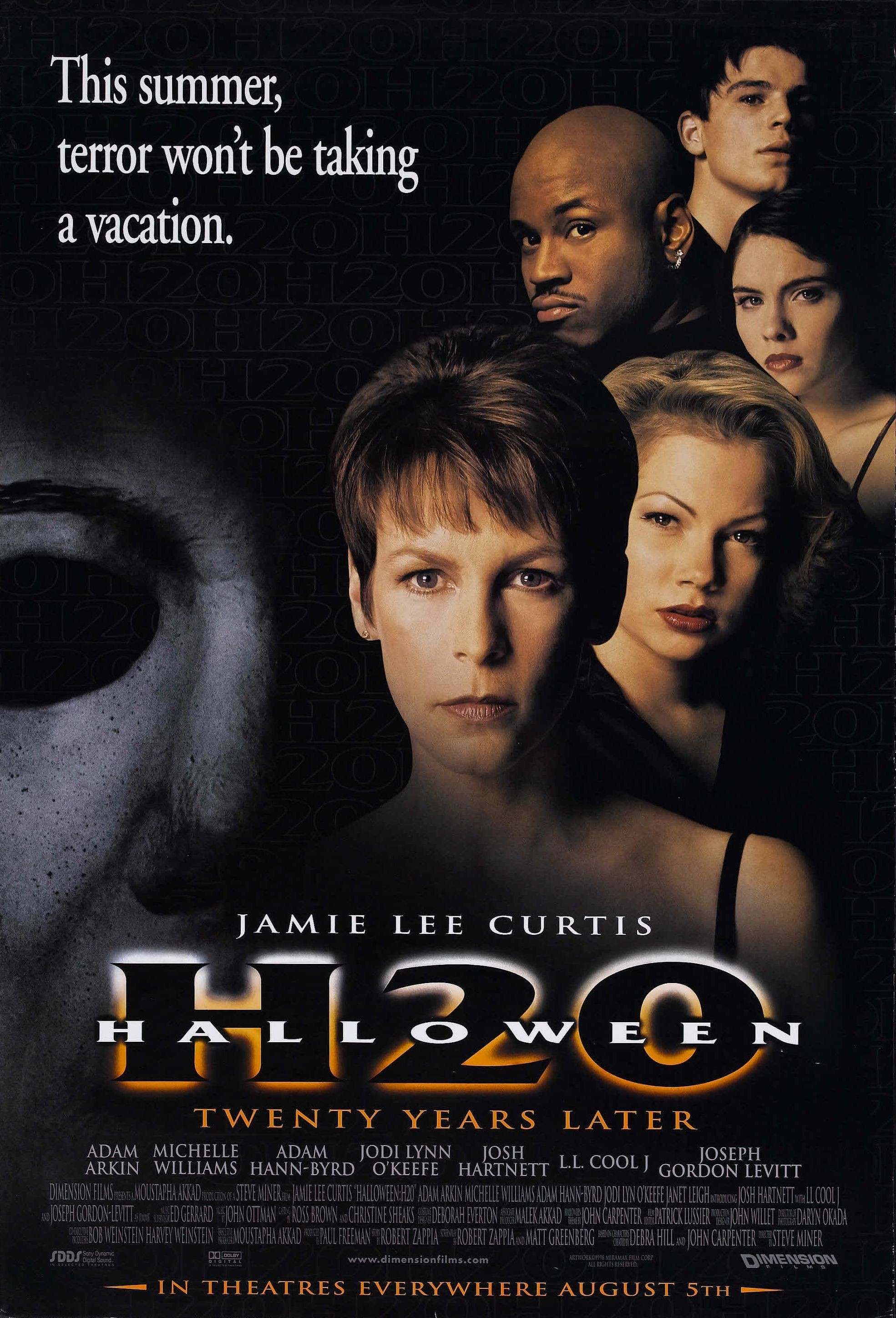
31 Days of Horror: Halloween H20: 20 Years Later (1998)

summer of sam poster


I’ve talked quite a bit about how I grew up watching slasher movies like Friday the 13th, A Nightmare on Elm Street, etc. I am a child of the ’80s and slashers were all the rage. But while I am a child of the ’80s I really came of age in the ’90s. This is a fallow period for horror movies. Slasher movies were either straight-to-video schlock or the 7th or 8th sequel to a long-since stale franchise.

Then in 1996 Scream was released and things changed. Written by Kevin Williamson, a horror buff, and directed by Wes Craven who directed many a horror film including the original A Nightmare on Elm Street. These were people who knew the genre and loved it. They also knew the tropes, and how tired they had become and made a film that played around with them. The characters in Scream are fans of horror movies and talk about the rules and tropes of the genre whilst simultaneously living through one. It is a self-aware slasher film, but one that is also a really good version of the genre.

I injected it straight into my veins. It was hugely successful and like all cinematic successes, it spawned countless imitators. They all had a cast of attractive up-and-comers (who were usually stars on the small screen but had yet to break onto the big screen) were filled with self-aware characters and the music was very much of the time (mostly 1990s alt-rock). Most of them were also instantly forgettable.

When Halloween H20: 20 Years Later came out I was all on board. I loved the original John Carpenter film (which essentially ignited the slasher craze of the 1980s) and I thought it would be really fun to give that film a boost with this new updated version of the old film. I hated it on that first viewing.

It is here that I admit that at this point I had only seen the original Halloween, but none of the sequels. So I was not well knowledged in the Halloween-verse lore. I was also expecting more Scream-esque shenanigans and got very little of that.

But I’ve seen the film a few times since that initial viewing and I’ve really come around to the film. I’ve also seen all the other Halloween films (excepting the Rob Zombie-directed Halloween II) so I’m better prepared to see how it fits into the canon.

Halloween H20 essentially pretends that every film after Halloween II (the original not the Rob Zombie remake, man this series gets weird with their naming) doesn’t exist. Laurie Strode (Jamie Lee Curtis) survived the attacks from Michael Myers, then faked her death and got on with her life. She’s now the headmistress of a posh, exclusive, and secluded prep school in California. She might be a functioning alcoholic, and she pops a lot of pills, but she’s not living in fear. Well, maybe she lives in a little fear, especially when the calendar gets closer to Halloween. Maybe a lot of fear when it is almost Halloween, and her son, John (Josh Hartnett) is about to turn 17, the same age she was when Michael Myers attacked.

Much like the original, this Halloween movie takes its time getting to the killings. Oh, there is a pretty great opening scene in which Michael Myers kills his former nurse to get some files on where Laurie is currently living, and he kills a couple of people along his route. But mostly the film is about how Laurie has started her new life. She seems to be a good teacher. She has a steady boyfriend (Adam Arkin). She is learning how to deal with her growing son, etc. We spend quite a bit of time with her son and his friends.

I liked these scenes. It is a film about trauma and how the violence of the early films has stayed with Laurie even as she tries to pretend everything is fine. These days it seems like every other film is about trauma (and certainly the new Halloween movies dig deep into that idea), but at the time this was something of a rarity. There are callbacks to earlier films but they don’t hit you on that head with it.

This isn’t a film that is self-aware like the Scream movies are. Nobody reference other horror movies or their tropes. LL Cool J provides some comic relief as a security guard who secretly wants to write romance novels, but that’s as jokey as it gets. The teenagers are young, and attractive, and populated by up-and-coming actors (Michelle Williams and Joseph Gordon-Levitt appear). The soundtrack is filled with cool alt-rock from the period. But it feels less like a 1990s new-slasher film than an update of the original.

When Michael Myers does show up the kills and the final battle are well-staged. There is nothing here that will make a highlight reel of the best kill scenes, but it does the job. And that really sums up the film. It is well made and well acted, it works as a serviceable slasher and a nice updating of the original. But there is nothing here that makes it special. But in a world filled with really terrible horror films, perfectly serviceable is a perfectly reasonable thing to hope for.