About Schmidt (2002)

about schmidt movie poster

Alexander Payne’s 2002 film, About Schmidt, is just as much the transformation of its star Jack Nicholson as it is the transformation of the character Jack plays “Warren Schmidt.” Here Nicholson is no longer the swaggering, smart-alecked, tough guy we have seen throughout his long, illustrious career but a quiet, shell of a nice guy trying to understand his life after retirement. Nicholson does such an amazing job portraying this loser of a character one wonders why he hasn’t been playing this type all along.

The movie begins with the retirement of Warren Schmidt. He is a typical Midwestern “good guy” who is retiring as an executive from an insurance company. Schmidt is an everyman schlub. He has worked hard to have a “normal” life. He has a good job, a good wife, and a nice daughter. Yet upon retiring, the death of a loved one, and his daughter’s imminent marriage Schmidt must take a harder look at his life. In doing so he comes to realize there isn’t much to it, really. The bulk of the movie centers on Schmidt traveling to Colorado to try to stop his daughter from marrying a redneck boob.

There are numerous perfect spoofs of Midwestern living. From Schmidt’s life to his retirement plans of living in a trailer, the details of a typical Midwestern life are just about perfect. While on the road, Schmidt stops at numerous Interstate museums that are so banal it is hilarious. Once he arrives in Colorado the characterizations of the fiancee and his family are both hilarious and frighteningly real.

Dermot Mulroney plays the mullet-wearing, salesman fiancee, and Kathy Bates plays the still living in the 60’s time of free love soon-to-be mother-in-law. The family dinner before the wedding is reminiscent of real life, mixing hilarity and sadness with the eye of an artist. The actual wedding is so dead on perfect that I believe I have actually attended that very ceremony. From the off-key singing of the schmaltzy “Longer” to the self-written vows (I will love you every day, and when I say day I mean all 24 hours, and when I say hours I mean…) the ceremony is hilarious in its real-life cheeseball hokeyness and yet manages to remain as sweet.

This is what makes the film so memorable. While it pokes fun and satirizes everyday Midwestern life it is full of rich glowing love for that very life. Schmidt is a normal schmuck who has lived his life by the rules. While at the end of his life he begins to regret that simple life, I don’t believe the film is suggesting that this type of life is meaningless. Just the opposite, in fact, I believe it is showing all of us, every day schmucks, that living a normal life can be glorious in its own way when we help those around us.

Saw (2004)

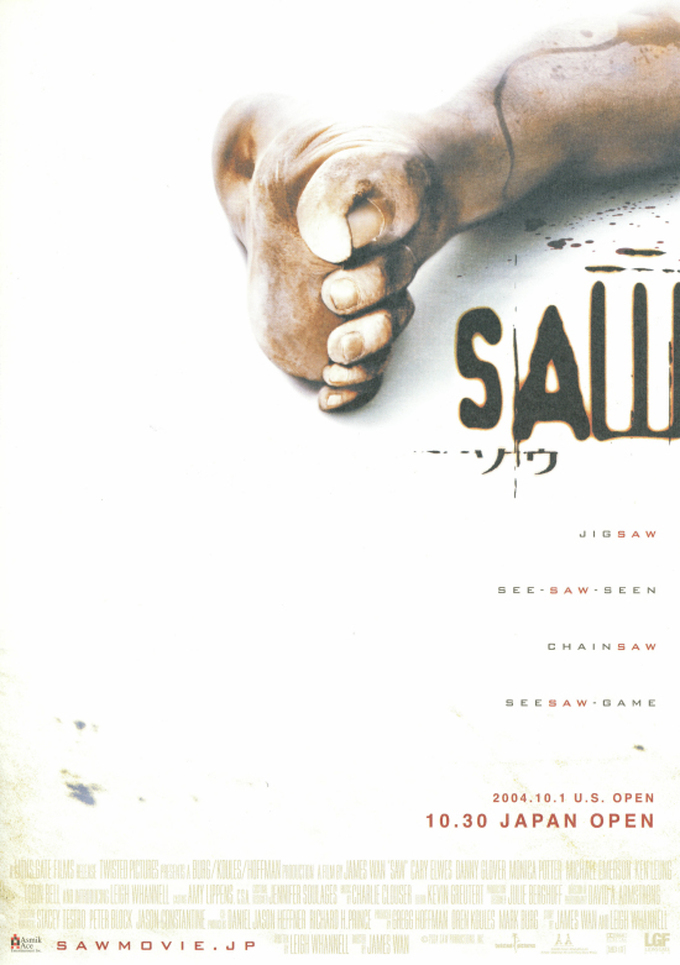
saw movie poster

I knew very little about Saw before I watched it yesterday. It came out during the time I was too busy moving out of my house and preparing to leave for France to pay much attention to upcoming movies. In France, I heard a little buzz on the internet about it being a very captivating and scary thriller. I tried not to pay much more attention than that because there is nothing worse than learning too much about a scary movie before you go see it.

Yesterday, while Amy (who doesn’t like horror movies)was out all day in class, I took my chance and sat down to watch it. Upon first viewing, I thought it was a really top-notch piece of horror (well all except that ending.) First-time director James Wan does an excellent job creating a dark, creepy mood. The set pieces are continually dirty and slimy looking, which is perfect for the setting. The story is intriguing enough to keep you from paying too much attention to the subpar acting and the numerous plot holes. It’s the kind of movie that kept me still for an hour after seeing it and thinking it over. And there lies the problem. After putting some thought into what I had just seen the movie crumbled.

But first, a little more on what is right about the film. The opening sequence is one of the more imaginatively openings I have seen in a long time. The movie opens in a rat hole of a bathroom buried deep in some long deserted public building. The two main characters, Cary Elwes and Leigh Whannel are on opposite sides of the room shackled by the ankles with a short chain connected to rusty pipes. They have no recollection of how they got there, or why. Oh, and there is a dead guy with his head blown off laying in the middle of the floor. I won’t give any other plot details away than this, but the remainder of the film centers on those two characters trying to find a way to get out of the room while playing a vicious game with a mad serial killer.

The design of the killer is also done quite imaginatively. Throughout the movie, we get brief glimpses into several other victims and the games they had to play. The killer’s design and the games he creates are quite frightening and original. Unfortunately, they are also quite implausible. There is no conceivable way that the killer could create his deadly games in the places he does without being noticed and eventually caught. I’m all for suspension of disbelief, but I believe a portion of the horror in this film is meant to be that this kind of sick killer could be quite real. He is not Jason, Freddy, or Mike Myers, but a more realistic psychopath. As such his killings are so complicated as to make them absurd.

There are several similarities to the superior piece of cinema Seven (1995). Both films are set in the seedier areas of a large city. The cinematography is both dark and moody. And both feature a moralistic serial killer who creates inventive and complicated murders. Yet where Seven succeeded in making a classic thriller all the way through, Saw fails about 3/4ths of the way in. The easier part of a horror/thriller is devising an original killer. Where the plot gets difficult is finding a resolution of why he is killing and how he is caught. Saw tries to be original by first giving the viewer a cliche fake ending, only to give a real surprise ending later. I wasn’t amused.

In order to fill out the plot and, I suppose, take up some time. The filmmakers create some characters that have no use. Danny Glover’s subplot adds to the ‘whodunnit’ aspects to a movie that doesn’t need to be a ‘whodunnit.’ Detective mysteries, cop shows, and murder plots create tension by giving various clues to who the villain could be. In a horror/thrill such as Saw, there is no need for the audience to figure out who it could be. We only need to be thrilled by the murderer and grasp with the victims for escape.

You never expect the acting to be brilliant in a small-budget horror film, and this film won’t surprise you in that area. Cary Elwes was a surpise to see in such a film. Though I know he has done similar fare I will always remember him for his role in The Princess Bride (1987). He doesn’t add much to the film in acting. He is also almost too pretty for the role. It seems as if the filmmakers recognized this because as the movie rolled on his makeup got more and more dirty and grotesque.

Overall Saw creates an unusual situation that is thrilling enough in the first viewing. However, after a truly good beginning the movie sinks into implausible and isn’t smart enough to figure out how to end itself.

Frida (2002) and Seven Brides For Seven Brothers (1954)

movie posters

We recently borrowed Seven Brides for Seven Brothers and Frida from some friends. While completely different movies I don’t have enough on either of them for full reviews so I’m bunching them up in the same post.

Seven Brides for Seven Brothers is a pretty by-the-books MGM musical. It is based on a book entitled The Sobbin’ Women which is in turn based on a Roman story titled The Rape of the Sabine Women. Which, like the title implies is about the kidnapping and rape of several young women who eventually come to ‘love’ their captors. How someone decided to make a musical out of this one wonders.

The movie is very sexist. The oldest brother, Adam (Howard Keel), sets out at the beginning of the movie to find a wife. He doesn’t do this because he is lonesome, or loveless, or in need of company. No, he seeks a wife because he lives in the mountains with six brothers and they need someone to cook for them and clean up after them. Even his method of finding a wife is pretty awful. He comes to town to shop for various goods and reckons to add a wife to that list. The remainder of the story focuses on the wife he finds, named Millie (Jane Powell), and how she manages to turn the brothers into refined gentlemen. The original story figures in with a kidnapping plot designed to win the hearts of potential brides for the remaining single brothers.

Sexist plot aside Seven Brides really does sparkle as a gem in the musical hat of MGM. This can be mainly attributed to some fine songs by Johnny Mercer (including the hillbilly charm of “Bless Your Beautiful Hide”) and some incredible choreography by Michael Kid. The ‘Barn Raising’ scene is worth the price of the ticket alone. Add to that the subtle beauty of ‘Lonesome Polecat’ and you have a winner.

I have personal memories of this film being watched in a dormitory lobby in college. Some bubbly friends of mine insisted that we had to watch it immediately after finding I had never seen it. They proceeded to quote most of the lines, sing every song, and practically dance along with every scene. They did so with such energy that I was swept along as well, hardly paying attention to the jokes or the plot. Upon viewing it again I couldn’t help but remember that enthusiasm, but this time I was unable to miss the bothersome plot. In the end, one must realize the time and place this movie came from without overlooking what is a pretty disturbing bit of plotting. The songs and the movements will most assuredly win most of the skeptics over though.

When Frida was released into theatres I had absolutely no desire to see it. I’m not a fan of Salma Hayek, biopics in general, and biopics about artists especially. Add to that my zero knowledge about the artist Frida herself and the movie’s fate was sealed into never being seen by the likes of me. However, my general lack of new movies here in France and being able to borrow them from a friend for free helped me to reconsider watching it. When I realized it was directed by Julie Taymor who also directed a marvelously beautiful version of Titus then I was actually excited by it (almost).

Like Titus, Frida is an amazingly visual movie. Taymor, who is known mainly for her Broadway adaptation of the Lion King, has an artist’s eye for visual flair. She has found a way to take something as static as a painting and made it alive. Throughout the film, she recreates several of Frida’s works and makes them a part of the action. It’s impossible to explain on paper (or cyberspace) but what she creates is something pure magic.

I can’t say how accurately Frida is portrayed in this movie. The picture we get is of a rather flawed woman who lived with a great deal of suffering. Her suffering comes in both physical ways (stemming from an accident early in life) and emotionally (from a cheating husband and her own mistakes). Yet it is this suffering that creates such remarkable art. Taymor manages to create an interesting and moving story within her excellent images.

Both Salma Hayek and Alfred Molina pull out excellent performances. I was especially impressed with Molina portraying the very flawed and yet sympathetic Diego. I had pretty much written this actor off after playing Doc Oc in the highly overrated Spider-man 2. But here he shows a real sensitivity to his character. Don’t be fooled by the billing of this film. The cover of the DVD would have you believe that Ed Norton, Antonio Banderas, Ashley Judd, and Geoffrey Rush all star in it. In fact, with the exception of Geoffrey Rush, all of them have, what amounts to cameos in the picture. Rush is in the movie a bit more, but I wouldn’t call even that a starring role.

Though neither Seven Brides or Frida are perfect films. Both of them win you over with sheer energy and charm.

The Abyss (1989)

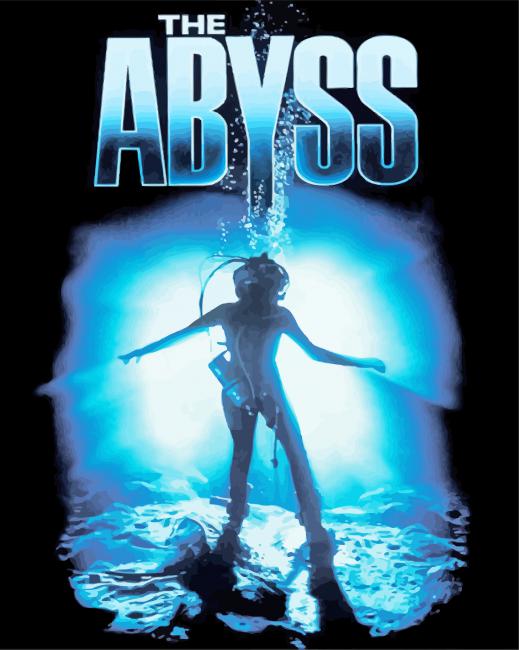
the abyss movie poster

THERE WILL BE SPOILERS. YOU HAVE BEEN WARNED

James Cameron as a director is a bit of a mixed bag. He has created some of the most phenomenal action showcases cinema has ever seen. His movies make loads of money and create a spectacle like no other. He has been part of the Alien quadrilogy, he created the Terminator, and there was that little movie about a couple of lovers on a sinking boat. For that little picture, he even won an Oscar. However, as a writer, he has also given us some patently ridiculous dialogue. It’s like he can create some pretty interesting story concepts, generate a great deal of tension between characters and pull off amazing action, but when it gets to finding the heart and soul of a character he pulls out the cheese. It is interesting than that my favorite Cameron movie would be so character-driven with only a few moments of grandiose action.

The Abyss came out in 1989 with a trimmed-down 146-minute run time. Later when the movie came to video Cameron released his director’s cut adding a significant amount of footage and bringing the time to 171 minutes. Most of this extra footage comes in at the end of the film and stands to clear up some major confusion wrought in the theatrical version. It seems that there are some creatures living at the bottom of the ocean and are rather perturbed at humanity’s prevalence for violence. It seems these creatures (aliens?) can manipulate water and have forced giant tidal waves to start approaching every major port. Humanity is saved when the creatures see the true love between the two main characters. It reminded me of the beginning quote from Genesis where God agrees to save Sodom and Gomorrah if He can find just 10 righteous people. In their case, He didn’t, and the cities were destroyed by sulfur and fire, but in Cameron’s tale, it seems that the rekindling of love between Ed Harris and Mary Elizabeth Mastrantonio does save humanity.

What Cameron does extremely well in this picture is to create tension. From the claustrophobic setting of an underwater oil rig to the potential nuclear meltdown each scene slowly tightens the screws of suspense. The cold war plot raging outside of the main action reminded me a lot of 2010: the Year We Make Contact. In both pictures the main characters are isolated on vessels (a spaceship in 2010, an underwater oil well in The Abyss) while the USA and Russia bring conflict close to nuclear war back on earth (or above water). In both movies, this helps to add tension as it also dates the movies since the cold war is now over.

One of my favorite scenes involves the flooding of parts of the rig. Water comes rushing into the rig and several of the characters scurry to make it to safety and close off the doors to isolate the flooding. Ed Harris is saved by his wedding ring. One of the doors automatically starts to close and Harris sticks his hand in to stop the door, which normally would have crushed his hand, but because he still wears the ring the door does not fully close. This gives him enough time to be saved from the flooding waters. There was an earlier scene in which his wife asks him why he still wears the ring since they have separated. When I chose my own wedding ring I opted for a titanium band known for its extra strength. I can’t help but think of that scene every time I look at my own ring.

Much of the dialogue in The Abyss is of the heavy-handed, cliched variety that Cameron brings to pretty much all of his movies. Some of the extemporaneous characters bring little to the overall movie and help distract the viewer from the main plot. I think Cameron has done a very good job with the two main characters though. Ed Harris does a remarkable job playing his role as ‘boss’ on the rig while still arguing with his wife. Mastrantonio also does a fine job of portraying the tough-as-nails “Lindsay” while still remaining feminine and sympathetic.

The director’s cut ending is much debated in the online world. While it serves to clarify what was a rather abrupt and confusing ending in the original it also becomes quite preachy and is at a loss for any type of subtlety. Cameron attacks his anti-war message like Ripley against an Alien.

Even with some awful dialogue and a preachy ending, The Abyss still remains one of my favorite sci-fi movies. James Cameron creates tension like a master auteur and creates two of his best characters to date.

To Catch a Thief (1955)

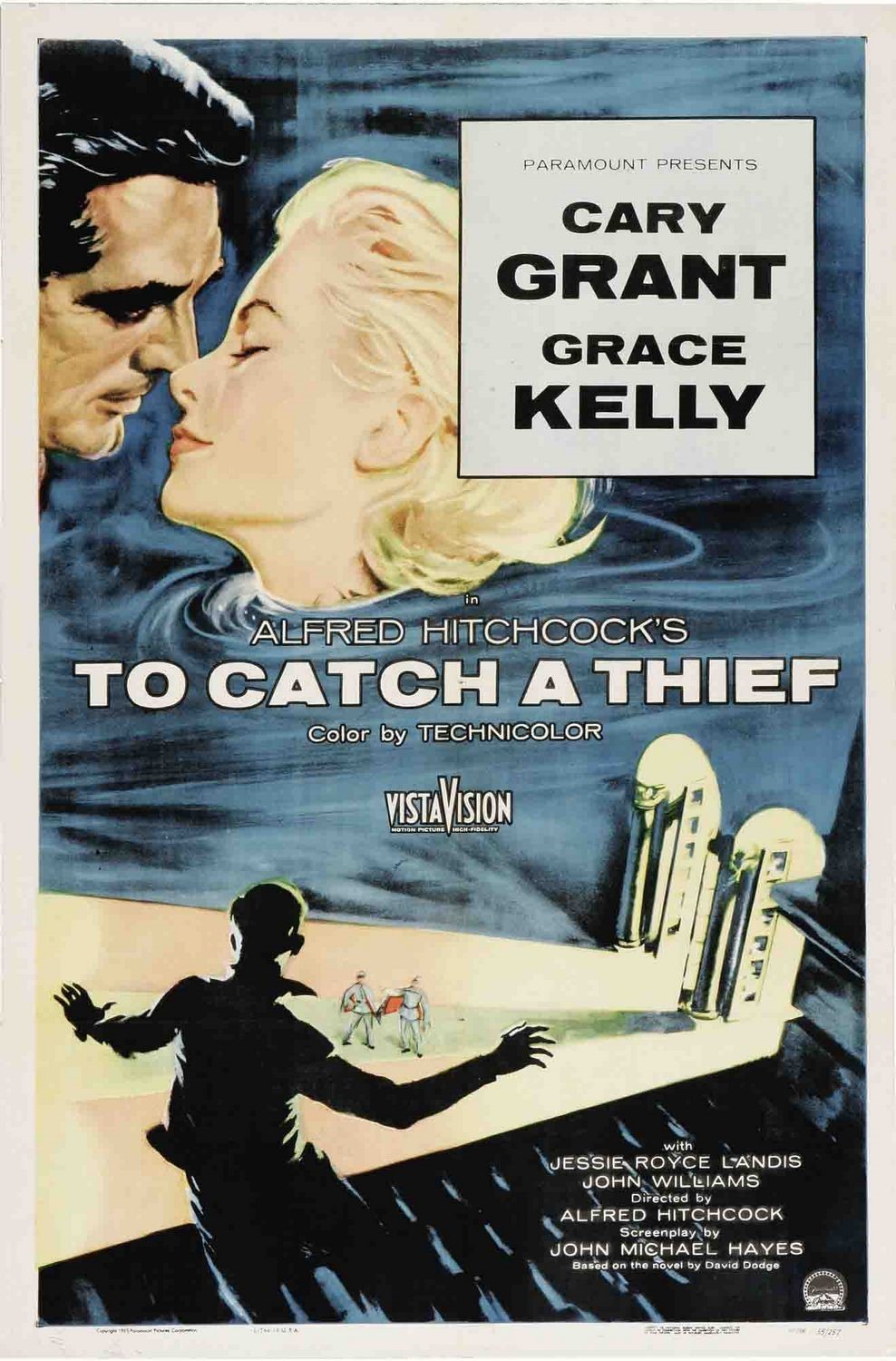
to catch a thief poster

Alfred Hitchcock’s 1955 film To Catch a Thief is a light, fluffy picture that differs in content from much of the suspense masters’ other pictures. Cary Grant stars as a former thief, and patriot of the French Resistance, who is currently suspected of a new series of crimes. Grace Kelly plays the beautiful daughter of a rich American woman who is high on the list of possible victims of the new cat burglar.

The plot is all cotton candy. Shot in the French Riviera, Hitchcock allows his camera to take all of the beauty in. There are lots of lovely traveling shots of the location. Hitchcock follows cars driving the streets in high crane shots, simmers through the sea on a boat ride, and stops to take in the view of Cary Grant and Grace Kelly at a picnic overlooking a stunning valley.

Cary Grant is playing Cary Grant at this point, but that’s perfectly fine since there are few actors I enjoy more. Grace Kelly is simply gorgeous. Hitchcock’s camera is as admiring as a new suitor. Their interplay is fun, witty, and sensuous. A famous scene between them intercuts their developing romance with fireworks and is pure sizzle.

If you are looking to write a thesis on the genius of suspense then you should look elsewhere. But for a beautifully shot, light-hearted romance for a Saturday night, it would be difficult to find a better picture.

The Poseidon Adventure (1972)

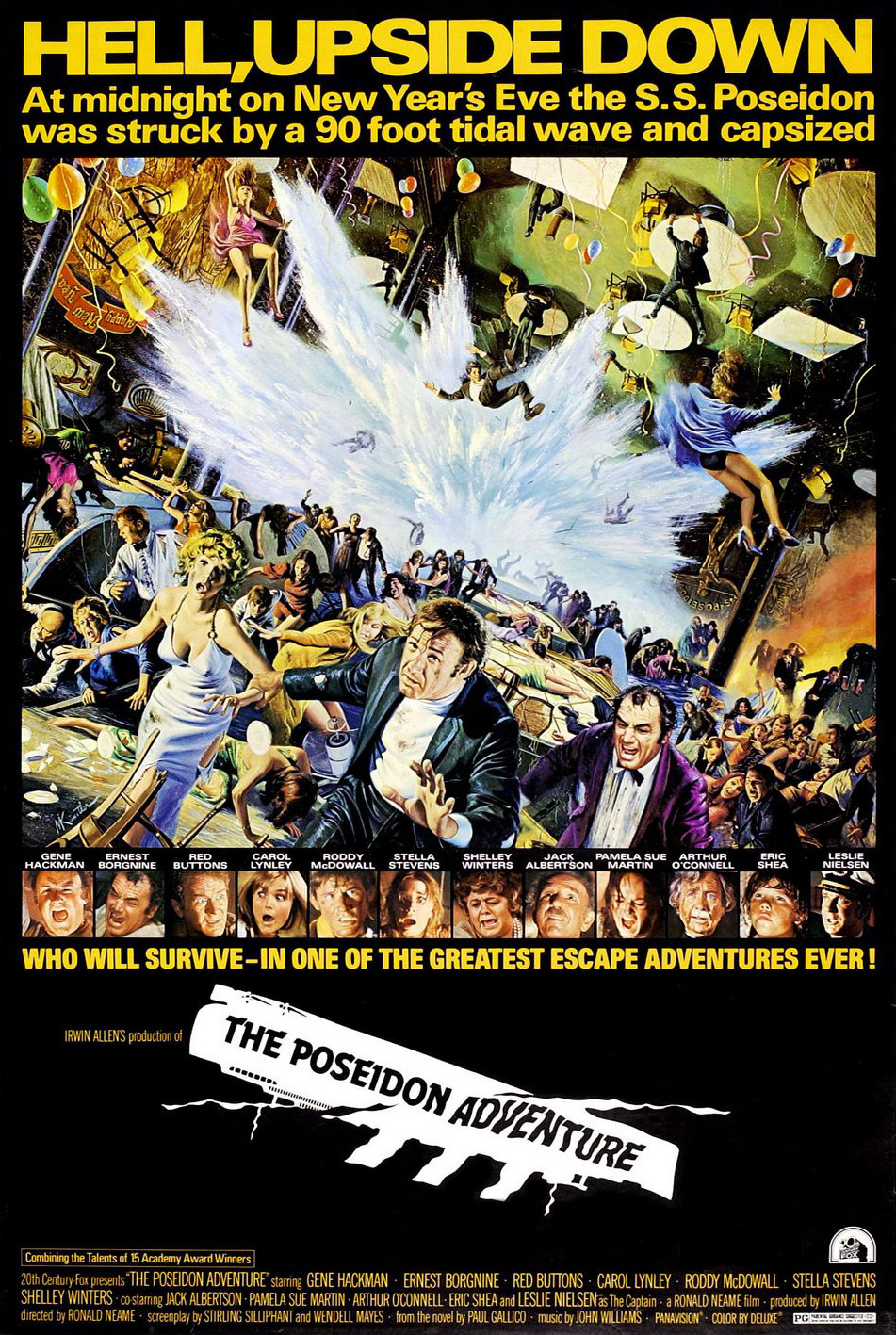
the poseidon adventure

This was written way back in 2004. It was one of the first movie reviews I ever wrote.  I wrote in an earlier post that some of my old reviews were embarrassing to read now.  This is what I was talking about. But as I also said I’ll be posting these warts and all and I’ve got to stand by them.  But please, be kind.  Mat in 2022.

As a child, I mostly watched whatever kid-friendly movie was showing at the local cineplex. We got our first Betamax when I was maybe 12 or so and we’d rent all kinds of movies.  Some of them were genuine classics like To Kill a Mockingbird which instilled in me a sense that beauty and art can be found in a film. Others were like The Poseidon Adventure which while not particularly masterful films still showed me that there were many other films out there than what I was used to watching.  These films eventually opened up to me the world of cinema.

I first saw the Poseidon Adventure at Grandma and Papa’s house. I had been dropped off by my mother for an afternoon while she went shopping or some other mundane task. After flipping channels for a while I came across this great sinking ship and fell mystified into a grand epic adventure. To this day I recall my mother coming home during the final 20 minutes or so and me making her stay because I just had to see the ending. She had seen the film, but praised it as a classic adventure and allowed me to see the end. Periodically I have caught bits and pieces of the movie again on cable and always pause to watch a scene or two. I bought it in a bargain bin a few months back and joyfully added it to my collection. Last night Amy and I decided to watch it.

Watching it on DVD I realize this was the first time I have ever actually seen the very beginning of the movie. As a child, I caught the picture 10-20 minutes into it, and all subsequent viewings have all been by catching it part way through on television. I am afraid the movie as a whole doesn’t hold up all that well to my childhood memory. Oh, it’s a big, grand adventure, but like the ship of the movie, it starts to sink under its own enormousness.

It has a basic 70’s disaster movie plot. The big ocean cruise liner is hit by an enormous wave and is turned upside down, killing nearly everyone. A few survivors are followed as they make their way up (or rather down) the ship to it’s hull, and try to escape. It is way over the top and it almost seems as if the director Ronald Neame told his actors to ham it up in every scene. Gene Hackman and Ernest Borgnine just howl at each other for much of the film’s runtime.

The script follows very basic rules. It rolls like something you would see in a basic screenwriter’s class. You start with an establishing shot and follow it with a basic introduction of your main characters while making sure their essential character motivation is directly handed to the audience in their first few minutes of screen time. Then you set your plot into action. Its disaster is even set into action by a classic evil corporate leader. Leslie Nielson plays the good captain who is hounded by a goon sent from the ship’s corporate owner to ensure it ports for its final time on the right date. The corporate goon orders Nielson’s captain to increase speed though Nielson argues this will surely cause the old ship to sink. The corporate goon, of course, wins and sets up the disaster. On a side note, it is unintentionally funny to watch Nielson in a serious role when everyone knows his slew of later, goofier roles in movies such as the Naked Gun and Airplane.

This film acts like it invented implausibly. Gene Hackman’s preacher moves acts, and orders others around like he’s the ship’s captain though he has no previous knowledge of how the ship’s design, or conceivably the physics of a cruise liner. Yet his motivation for acting like this was set up earlier. Before the ship sinks we get a sermon from this unorthodox preacher who believes in helping oneself instead of relying on Divine intervention. Likewise, all the other characters follow along in their previously established types, never budging from this set character mold and certainly not evolving in any meaningful way.

All of this is not to say the film isn’t enjoyable. It is not high art after all. It knows full well its purpose is to entertain the audience and nothing more. It does this quite well. Though its plot is strained it moves along at a quick pace and maintains a claustrophobic tension throughout. I have not seen many of the other disaster movies of the era so I cannot place the Poseidon Adventure accordingly among their ranks. But as an action/adventure flick, you could do worse.

2010: The Year We Make Contact (1984)

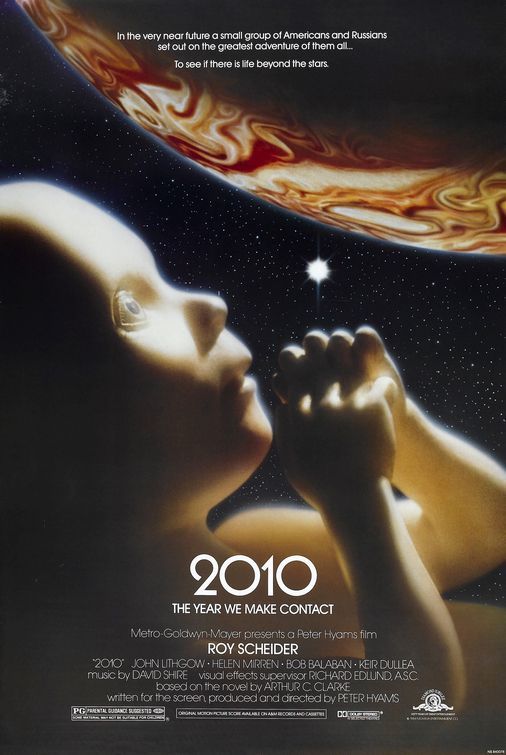
2010 the year we make contact poster

Editor’s Note:  Early in this blog I decided it would be fun to go through my DVD collection and watch and review every movie I owned. This idea didn’t last long, but you’ll find me talking about it in this (and other) reviews.

Like several movies in my DVD collection, I did not purchase 2010: The Year We Make Contact. It was a movie my folks owned and decided to get rid of. Never being one to turn down a movie, I took it.

I watched 2001 for the first time in college. I had no intention of seeing the sequel because I knew it was not made by Kubrick and felt it would probably be very inferior. Even though my parents gave it to me a couple of years ago, I have had no desire to actually watch it. But since I have vowed to review all the movies in my collection I did my duty this evening. I was mildly surprised, but not at all impressed.

In watching this movie I did my best to remove the idea that this is a sequel out of my head and just tried to enjoy it as a science fiction film. This was increasingly difficult since a great deal of time in this film is spent going back and explaining all of the events in 2001. This is probably my greatest complaint about the film. Where 2001 works not by not giving any answer, 2010 works too hard to give meaning not only to itself but also 2001. Where 2001 is silent, allowing images to tell the story, 2010 fills nearly every moment with noise.

The visuals of 2010 were very well done. I felt the images of the spaceships, planets, and space travel were quite nice. The special effects, in general, were also very nice. The film does get severely dated with its cold war subplot. Americans and Russians working together in space while their political counterparts wage war on the Earth below may have been effective at the time, but today it only seems cheesy.

I have not read the books to 2001 or 2010 so I do not know if their explanation of HAL’s “malfunction” are the same as the movies. I can’t help but feel disappointed with the explanation either way. I have always felt that part of the power of 2001 was how it didn’t answer many of the questions it asked. How there was no explanation of where the monoliths came from, no explanation of what went wrong with HAL, no explanation of what the long sequence at the end meant. It’s as if by not giving us explanations, the viewer has to fill in the gaps. In 2010 we get more answers than we need. Any real explanation of why HAL went bad, no matter how logical, seems to dull the experience of watching 2001. Now again, I haven’t read the books, where I believe those very things are explained. So those who have read the books may not feel the same way, but this is my experience.

In the end, that is the better way, to sum up my feelings about this movie. If you have never read the books, but find 2001 to be an immensely satisfying film experience then 2010 is most likely to be disappointing. However, if you have read the books and have already had much of the meaning behind 2001 explained to you, then you may find more enjoyment in the sequel. Likewise, if you have never seen the art that is 2001, or found it too heady to understand, then 2010 may be an enjoyable piece of science fiction.

2001: A Space Odyssey (1968)

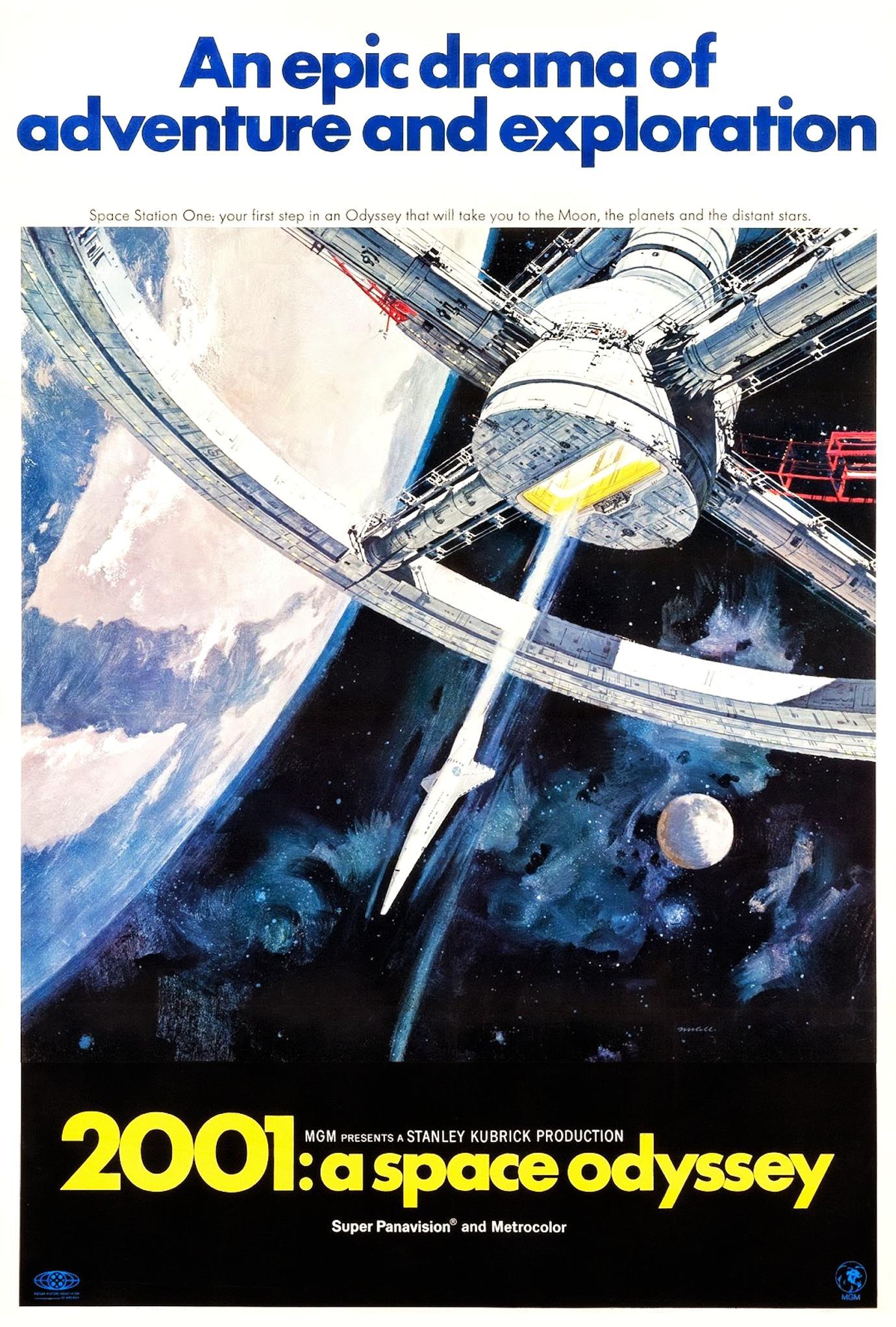
2001 a space odyssey poster

Editors Note:  I have watched this film many times since I wrote this review in December of 2004 and I no longer find it boring at all.  It is one of my all-time favorite films.  I might have to watch it again this weekend 😉

I will not attempt to discuss the meaning of this film or to answer most of the questions it poses. There are plenty of places on the internet that try to do that.

2001 is one of the few films I find absolutely amazing, and that I dread to watch. Like Citizen Kane I find this movie to be technically brilliant, but mostly boring. It was the first or second DVD that I purchased when I bought my player back in 1999. Yet in the interim 5 odd years, I have watched 2001 in its entirety only once or twice. Several times I have started to sit and watch it, but I just can’t get through it all at once. Even for this review, I watched it in sections.

It doesn’t help that the section I enjoy the most (the section involving the mission to Jupiter with HAL) is a good hour into the movie. It’s not that the other sections do not have meaning to me, it’s just that I find them very difficult to get through. The opening sequence “The Dawn of Man” is very well filmed, is vital to understanding the whole movie, and begins to ask some very good questions (does the advent of technology bring us closer to destruction as it also furthers our race?) Yet, I find this section mind-numbingly dull. Upon first viewing it was interesting, but now I know that the monolith is coming, I know that the ape-men discover the use of the bones as tools and this leads to their use as weapons. My knowledge of the action now bores me. I am the type of person who enjoys watching a movie repeatedly. I have a pretty large collection of DVDs and watch many of them often. So knowing the outcome of a scene does not always necessitate my boredom. It is just so with this particular film.

Likewise the next section of the film leading to the discovery of the monolith on the moon I find to be quite boring. It is only when we get to the middle chapter of the movie dealing with the journey to Jupiter and the madness of HAL that I remain interested as a film watcher. This section also happens to be the one I find most technically interesting. I must also admit this is the section with the most dialogue and most action. But I am not ready to say that this is the cause of my enjoyment. Because by most standards there is still not a lot of action or dialogue going on in the film. What I do enjoy is the use of sets to create the space station atmosphere. For example, I love trying to determine how they created the scenes where the astronauts appear to walk upside down or ‘turn’ with the ship? The atmosphere created by the use of the silence of space, the loneliness of the ship, and the remoteness of the all-seeing HAL eye is pitch-perfect. Kubrick builds the tension between the two conscience astronauts and HAL brilliantly. The scene in which HAL reads the astronaut’s lips is still one of my favorites in any film, ever. HAL, though a computer, has been rated as one of the greatest screen villains of all time, and rightly so. He is as calculating as he is cold.

Once this section ends, though we slip back into the brilliant but boring mode of the film. When Dave slips into the wormhole (did anyone call it a wormhole back then?) we are treated to a psychedelic ride of crazy colors and trippy music. But it goes on so long that I wish I did acid or smoked pot to keep me interested. It’s like the whale chapters of Moby Dick, where I have to agree that they are important for the sake of the novel, but I’d rather just skip past them and get on with the story. I believe the parts I find boring in the movie are essential to the film, and in many ways they make it the masterpiece of cinema that it is. This being so doesn’t make me watch it more than once every few years.

Close Encounters of the Third Kind (1977)

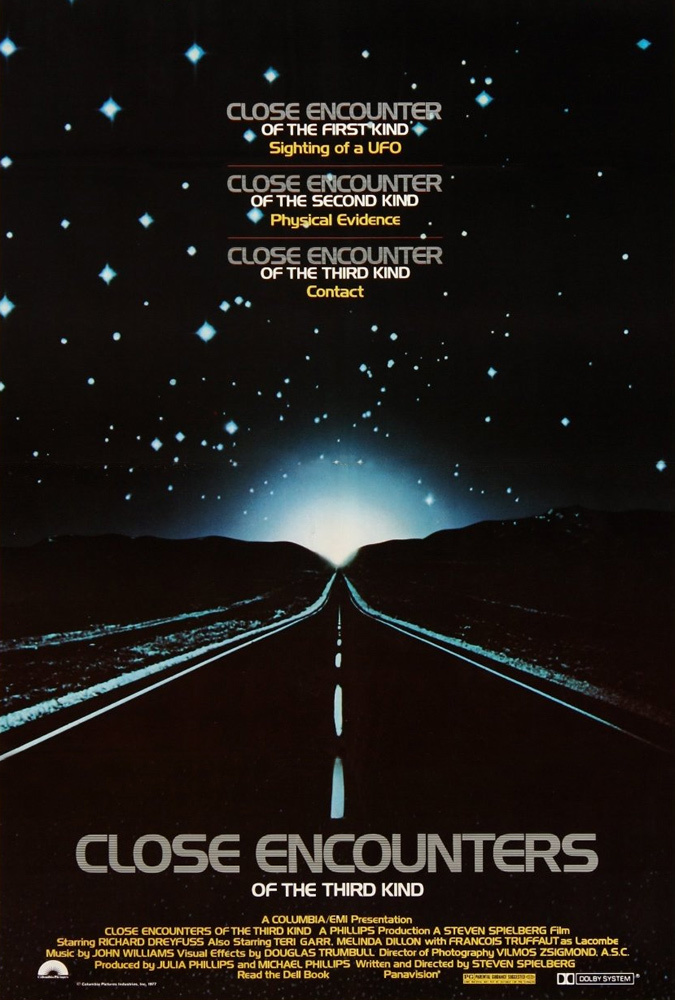
close encounters of the third kind poster

Editor’s Note:  This is one of the earliest reviews I ever wrote. It is interesting (at least to me) to see how I’m trying to find my voice, trying to figure out exactly how to review a film.

This movie is pure joy to me. This makes it rather difficult for me to actually review the movie and not just give it praise. Since I have seen it numerous times, and there are then no surprises for me, so I must warn the reader that there will probably be **spoilers** in this review. So if you have not seen it and do not want any details of the film, stop reading now.

There were a few differences with this viewing than in previous viewings. First I have actually been to the Devil’s Tower in Wyoming. Having actually seen this natural monument takes a little mystery out of it in the film. For years it seemed more like something out of the filmmaker’s imagination, something of the dreams of Hollywood, than something real. Something made of rocks and dirt. The mysterious glow that surrounded the rock in the film, and especially the first actual appearance in the film on television, has been dimmed a little. Likewise, as Richard Dreyfuss sculpts the mount in the beginning I wanted to shout at him to flatten the top.

Secondly, I am now quite familiar with a number of Francois Truffaut’s films. He plays the mysterious French scientist in the film, but is in reality, a gifted director and pioneer in the French New Wave. Being familiar with who the actor is, gave the character more depth and mystery. I wonder how Spielberg talked him into becoming an actor in his film. If he had any influence on the direction of the film.

Having learned a little French myself, and having a very good translator beside me also shed some light on what was actually being said in the French conversations. There are several moments in the film when Truffaut speaks in French and Spielberg uses no subtitles. I always felt this was intentional to give the film a little more mystery, to add the international, interwordly feel to the film. So it was interesting now to actually understand what was being said.

I have also, for the past few years, lived in Indiana. Much of the movie takes place in Muncie, Indiana and I found the same joy that I always find when a movie, book, or song takes place somewhere I know or have been to. As if it becomes more real simply because I know the places it occurs.

To me, the film is less about aliens and more about a sense of wonderment. In a famous scene, a small boy stands in front of an open door that is ablaze in a fiery glow. You cannot see what is outside, but you have spent the previous minutes watching the boy’s mother become very frightened as the aliens attempt to enter the house. Yet the boy standing close to these unseen and unknown creatures stands unafraid, even curious. There are many beautiful shots of a night sky with billions of brilliant stars sparkling. Throughout the film, Spielberg seems to be using space and aliens as a means to express wonder and amazement at the unknown.

Richard Dreyfuss’ character loses interest in his family and outside life except for the mystery of the things he saw in the night sky and the recurrent thought of the mysterious mountain. Several times as he builds the mountain out of clay, dirt, and mashed potatoes he proclaims that it must mean something, but isn’t sure of what. Even in the last scene when he boards the alien craft there is no final meaning given. It’s as if Speilberg is saying that it is the search for meaning in the universe, it is in looking with wonder at the great mysteries of the world that we in fact find some purpose, some meaning.

I was reading a review of Steven Spielberg as a director and one of the things it discussed was the director’s tendency of not moving his camera. That he tends to allow action to come to the camera’s view instead of following the action with the camera. So as I watched this film I kept a keen eye out for camera movement. I did find this to be true. That’s not to say the camera was only in one place. In fact, it often was placed in different parts of a room for a scene, but in any given shot, there was little movement. No sweeping shots, no long-tracking scenes. The biggest movement I saw was when Richard Dreyfuss and Melinda Dillon arrive at the Devil’s Tower. The camera then sweeps over the car and follows the characters up a hill to reveal, finally, the giant rock in a real shot. I’m not sure what to make of this but found it interesting.

As in many Spielberg’s films there is marital strife in this movie. Richard Dreyfuss and Terri Garr’s marriage literally falls apart as Dreyfuss becomes more and more obsessed with his visions. There is one scene in particular where Dreyfuss is locked in a shower crying and Terri Garr begins to scream at him and scream at the children to go to their rooms. Speilberg uses several close-up shots of the children to show how this fighting disturbs them. Spielberg has been on record saying that his own parent’s divorce disturbed him deeply. Many of his films either show the distress of an unhealthy marriage or the products of divorce.

In this film, the problems of the marriage are Richard Dreyfuss’ character’s obsession.  He is also the hero of the film and is whisked away in the wonderful alien ship. I view this not as a detraction from the film but as an artistic endeavor. Spielberg takes time out of his alien picture to show the hurt and pain Dreyfuss causes. Dreyfuss’s character also shows remorse over his actions yet cannot turn away from his obsession. As he begins to tear down his scrapbooks of alien abductions he tears the pointy top of his clay Devil’s Tower and becomes obsessed all over again. Though in reality, I would see such a person’s actions in disgust and contempt in the context of the film I see it as a broader artistic action toward the overall goal of seeking deeper meaning and wonderment. Just as I can cheer for the violent destruction of the bad guy in an action movie when the reality which is abhorrent and gruesome.

And that’s my review. I am reluctant to give any kind of official 5-star rating or whatever because that seems so arbitrary. And as happens when I begin rating anything I find trouble in giving Evil Dead II the same rating as To Kill a Mockingbird because one is a much better piece of cinema but the other is also a wonderful flick.