
What Is It Good For? War Movies In June: Army of Shadows (1969)

image host

I did an absolutely terrible job of watching and reviewing war movies for this theme. I rewatched the great Army of Shadows this past month, and while I didn’t get around to writing anything about it this time, I did jot down some thoughts on my Letterboxd the first time I watched it a few years ago. So, I thought I’d reproduce those here:

There is a scene early in Army of Shadows in which three French Resistance fighters capture a traitor. They take him to an abandoned house to execute him. When they arrive, they find a family has moved in next door. The gun they hoped to use is of no use. It is too loud. The family would hear. 

They search the house for a knife. No luck. The basement connects to the neighbors’. No good. They stand together, these three men, alongside the man they plan to kill, discussing what to do. 

They could take him somewhere else. No time. They could call a friend and have him do it. No, it is their job. They could strangle him with a towel tied around a stick that would slowly tighten around his neck. Yes, that would work.

The trouble is, none of these men are trained killers or soldiers. They were regular people before the war, but now they’ve joined a make-shift army. They’ve found a cause. They cannot let this man live, or they jeopardize everything. 

They were prepared to shoot the traitor, which is impersonal and quick. They are not trained to watch the life drain out of him as they slowly tighten the towel. They do the deed and leave not as great heroes, but men who’ve lost some part of themselves, deflated, almost defeated.

Jean-Pierre Melville was a member of the French Resistance, and Army of Shadows is his film about the deep wounds, physical, psychological, and spiritual such a thing leaves inside a person. It isn’t a film with a lot of thrilling action sequences or where great heroes emerge. Like the scene I’ve just described, it is a movie about men and women who fight for a cause they believe in, who are willing to do things that destroy them inside for the greater good. 

This was my sixth Melville film in the last couple of weeks. I’ve loved nearly all of them, but this is his masterpiece.
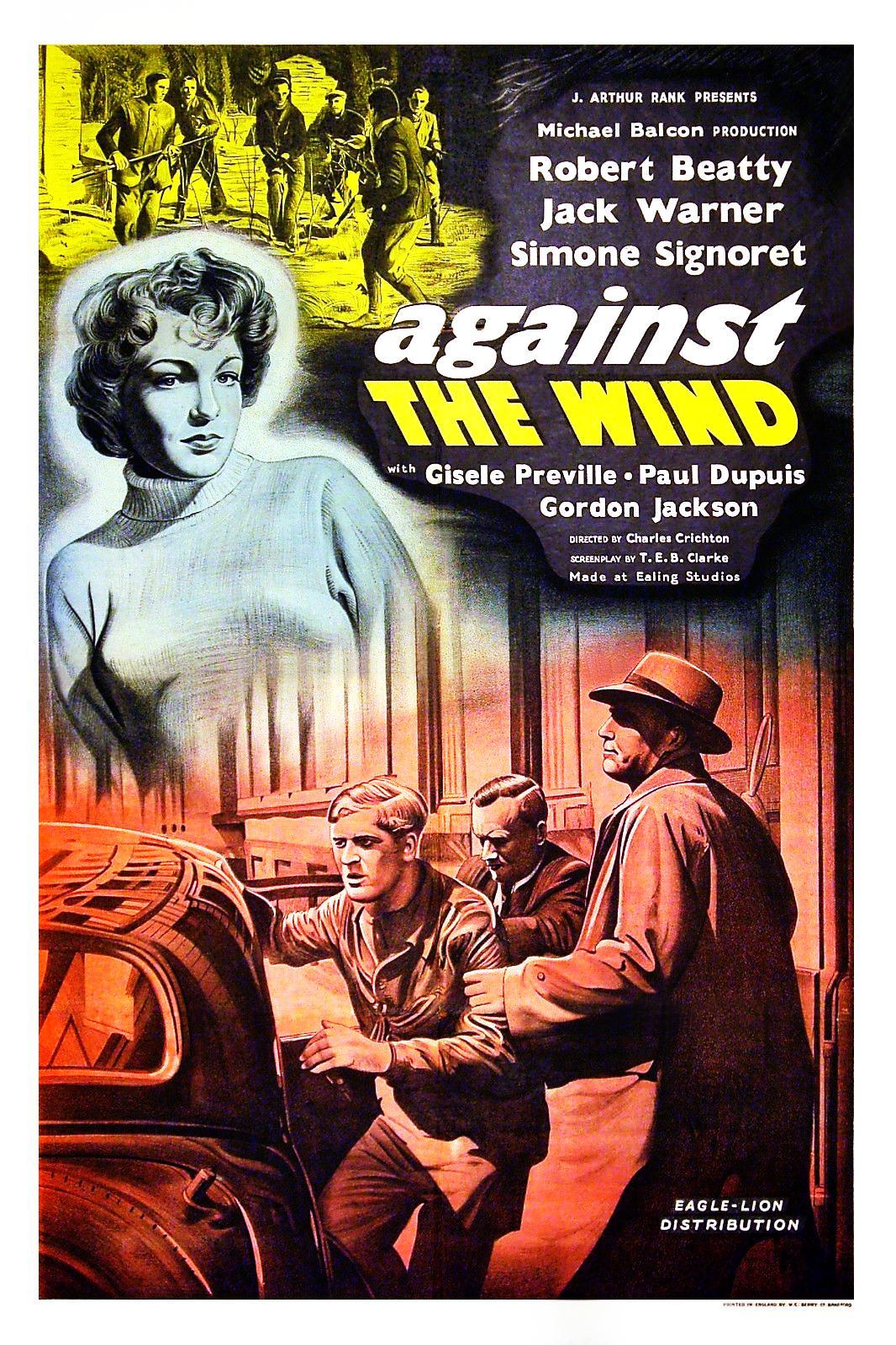
Great British Cinema: Against the Wind (1948)

against the wind

When I decided the theme of this month would be British Cinema, I had no idea I’d wind up watching so many World War II films. It makes perfect sense that the British film industry would make a lot of these types of films as it was an extremely important part of their history. They lived through it. They were there from the beginning. I just didn’t realize I’d enjoy them so much.

What I’m loving is how different British war films are from their American counterparts. As Americans, I think we tend to believe the war started with the bombing of Pearl Harbor in the South Pacific and D-Day on the European front. That’s nonsense of course, but we Americans are a selfish lot and we care about things only when they affect us. Or at least our movies tend to focus on the war efforts directly involving Americans. They also tend to be more action-oriented, more about actual warfare than the behind-the-scenes things.

British films are often about spies and more personal battles on the home front. Americans sent soldiers across the great seas to fight, England was right there, close to the front lines from the beginning. They were being bombed right at home.

I’m digressing, I’m also way behind on writing about all the British films I’ve been watching. The thing is I’ve wound up watching a lot of World War II-era films, and I wanted to think about why that was, and also warn you all that more reviews along the same lines are coming.

So, Against the Wind is a spy film set (obviously) during World War II. It takes a nuts-and-bolts approach to spycraft (something else I love about these British war films is how they tend to approach things like war and spying, life and death, in such a practical, no-nonsense way).

We spend time in Belgium with our characters as they are trained to be spies and then follow a few of them into enemy territory as they work to complete their mission.

This is the point where I admit that I watched this film a couple of weeks ago, that I’ve watched a dozen films since then – several of which were British spy films – and that I no longer really remember the details of this one.

It stars Robert Beatty as a Catholic Priest turned spy, Simone Signoret in her first English language film, and the always reliable Jack Warner. It is also very good with some terrifically taut scenes.