What Is It Good For: War Movies In June – The Wild Geese (1978)

image host

I wrote about this for a Now Watching segment but since it is a war movie I wanted to expand upon those thoughts here.

I’m usually a big fan of these men-on-a-mission type films. You know, the ones where a disparate group of men come together to perform a nearly impossible task. Movies like The Dirty Dozen or The Guns of Navarone are great fun, but The Wild Geese fails at nearly every turn. It isn’t the fault of the cast, which is pretty well stacked, featuring Richard Burton, Roger Moore, and Richard Harris amongst others. But I found it interminably dull.

Burton plays Allen Faulkner, a retired British Army Colonel turned mercenary. He’s tasked with rescuing Julius Limbani (Winston Ntshona), an imprisoned African President who is set to be executed by the military leaders who arrested him during a coup. Faulkner recruits Captain Rafer Janders (Harris), Lieutenant Shawn Fynn (Moore), and a host of others.

The men receive some training from a hard drill sergeant, and then are flown to the prison location and parachute in. They attack the base, rescue Limbani, but have trouble escaping. Later, there will be a (completely) obvious twist.

The plot is so basic, I knew pretty much what was going to happen once it began. You know exactly which of the main cast will die from their introductions. The script plods. There are lots of action sequences, but they are so dully directed that one hardly notices.

The film makes faint nods towards anti-colonial, anti-racist sentiments, but they are poorly done. One of the men is an out-and-out racist, throwing around the N-word and making sarcastic remarks towards the Limbani. But then he gets a scene in which he sits and talks to Limbani, and the President’s calm manner and reasonable discussions miraculously turn the racist around.

Limbani is regularly described as a great man, but as a character, he’s given very little to do and very few lines to say. He’s just someone these kind, white, British people have to rescue, not a real character.

You could almost forgive that if the action was any good. Or if you actually cared about any of these characters. Instead I just scratched my head at it all and hoped it would soon come to an end.

Saigon (1948)

cover art

Veronica Lake and Alan Ladd made four films together. Three of them – This Gun For Hire, The Glass Key, & The Blue Dahlia are terrific film noirs. Their final film together Saigon is a bit of a dud. It isn’t a film noir but an exotic post-war picture. They made a lot of those during and just after World War II where they put American characters in exotic locales (but still shot them in California sound stages) and gave the locals quite a thrill.

Some of them (including my favorite film of all time, Casablanca) are quite good, others, like Saigon just never really go anywhere. You can read my full review here.

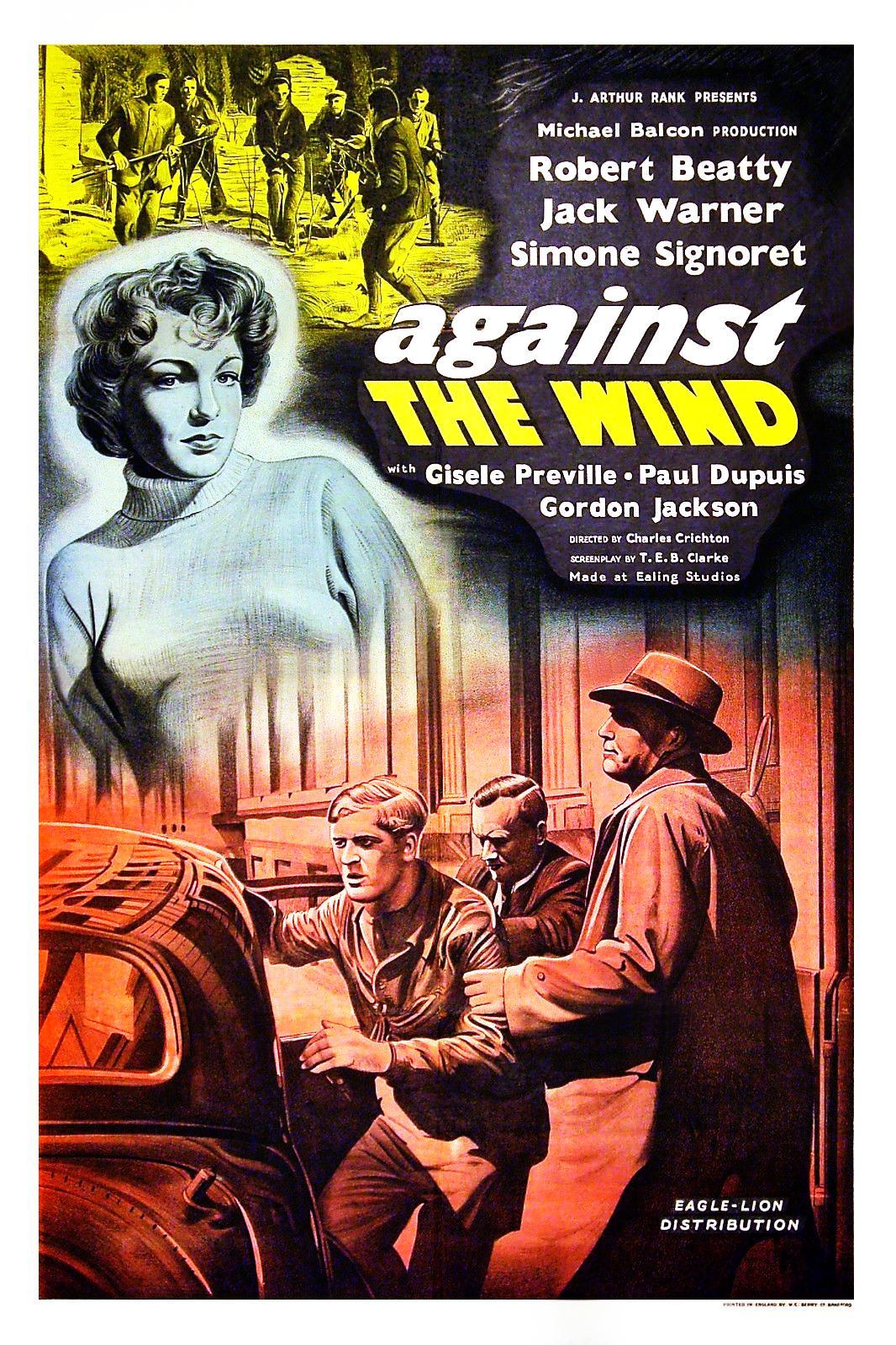
Great British Cinema: Against the Wind (1948)

against the wind

When I decided the theme of this month would be British Cinema, I had no idea I’d wind up watching so many World War II films. It makes perfect sense that the British film industry would make a lot of these types of films as it was an extremely important part of their history. They lived through it. They were there from the beginning. I just didn’t realize I’d enjoy them so much.

What I’m loving is how different British war films are from their American counterparts. As Americans, I think we tend to believe the war started with the bombing of Pearl Harbor in the South Pacific and D-Day on the European front. That’s nonsense of course, but we Americans are a selfish lot and we care about things only when they affect us. Or at least our movies tend to focus on the war efforts directly involving Americans. They also tend to be more action-oriented, more about actual warfare than the behind-the-scenes things.

British films are often about spies and more personal battles on the home front. Americans sent soldiers across the great seas to fight, England was right there, close to the front lines from the beginning. They were being bombed right at home.

I’m digressing, I’m also way behind on writing about all the British films I’ve been watching. The thing is I’ve wound up watching a lot of World War II-era films, and I wanted to think about why that was, and also warn you all that more reviews along the same lines are coming.

So, Against the Wind is a spy film set (obviously) during World War II. It takes a nuts-and-bolts approach to spycraft (something else I love about these British war films is how they tend to approach things like war and spying, life and death, in such a practical, no-nonsense way).

We spend time in Belgium with our characters as they are trained to be spies and then follow a few of them into enemy territory as they work to complete their mission.

This is the point where I admit that I watched this film a couple of weeks ago, that I’ve watched a dozen films since then – several of which were British spy films – and that I no longer really remember the details of this one.

It stars Robert Beatty as a Catholic Priest turned spy, Simone Signoret in her first English language film, and the always reliable Jack Warner. It is also very good with some terrifically taut scenes.