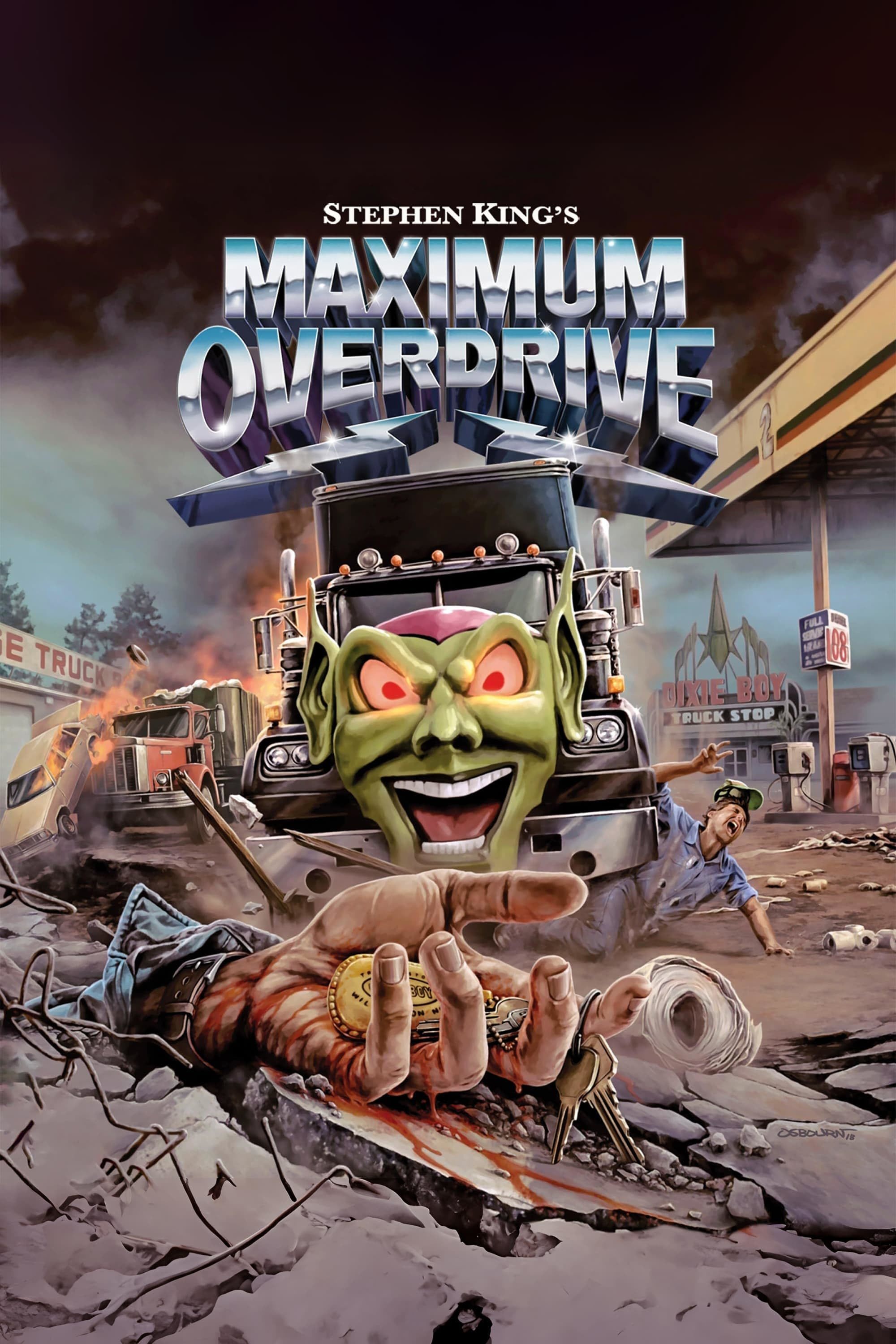
The Friday Night Horror Movie: Maximum Overdrive (1986)

poster

Stephen King stories have been adapted into countless films and television series. Some of them are good, a lot of them are bad, a few of them are great, and some aren’t even worth talking about. Opinions vary on which films fit which category with King himself disagreeing with most.

In 1986 for the first (and last) time Stephen King actually adapted one of his own stories for a film. Based on his short story Trucks, King wrote the screenplay and directed Maximum Overdrive. It bombed at the box office and is generally considered to be lousy in pretty much every way.

I’ve become a pretty big Stephen King fan over the last few years, and have tried to watch a lot of the adaptations of his work. I knew I needed to watch this at some point, but I tended to believe the critics on this one and kept putting it off.

But since it is the Awesome ’80s in April, I decided to give it a go.

I knew it wasn’t going to be good, but I had no idea how insanely incompetent it was going to be.

One can forgive a first-time director like Stephen King (and especially one who has no training in filmmaking) for not banging it out of the park, but you’d think a guy who has written a lot of wonderful stories, would know a thing or two about writing. But the script is just as bad as the direction. Maybe he just didn’t know the difference between writing for the screen and writing for the page.

The bare bones of the story are actually interesting (and most of it seems to have come from that short story – which I haven’t read). Extra-terrestrial forces pass by Earth causing all electronics to become sentient, and murderous. Several people get trapped at a truck stop by a bunch of semi-trucks bent on their destruction.

Technology becoming sentient and trying to destroy mankind is not a new idea, but it can be a good one in the right hands. I especially like the idea of big trucks attacking people. And I love a good people trapped in an enclosed space story. With a better script and a good director this film could have been cool.

King has admitted to having a cocaine addiction at the time, and he was still deep in his alcoholic phase, so no doubt that affected the production.

An example of how this film works. At the start of the film, the controls to a draw bridge come alive, raising the bridge when cars are on it. I swear the number of cars on the bridge at any given time changes, depending on the shot. The height to which the bridge is raised changes as well. Sometimes we’ll have a shot in which the bridge has just been raised to a slight angle, but then we’ll get shots of cars spinning their wheels trying to keep from sliding backward, while other cars slide into the trucks behind them. A wide shot will then show the bridge all the way up. Then it will switch to barely having been raised. There is no tension, it isn’t at all scary.

I can see King writing that scene. As a novelist, he’d take pages and pages to tell that part of the story. We’d get lots of details. We’d know several of the characters. We’d get a sense of the terror. There would be gory details of someone getting smashed up. But as a director, it feels like he didn’t know how to get those details cinematically. He didn’t know the types of shots he’d need or how to put them together.

The entire movie is like that. It feels cheap. Like some bad B-movie, you’d see late at night on cable TV. In part, I suspect this is intentional. I can see King trying to make a B-movie. The kind he might have watched when he was growing up. But those movies have an energy to them that is fun to watch. Maximum Overdrive is a dud from start to finish.

Totally Awesome ’80s in April: 2024 Edition

back to the future

The Awesome ’80s are back, and better than ever! Looking through last year’s posts I see that I did really well with this theme, I watched a lot of movies, and I wrote a lot of reviews. Let’s hope I do the same this year.

As I noted in last year’s keynote I grew up in the 1980s. It’s when I really started watching movies. According to Letterboxd I’ve watched more films from the 1980s than any other decade. And yet, it is not at all my favorite decade for movies. When I think about my favorite eras for cinema, I start talking about the 1940s or the 1970s, or maybe even 1999. But the 1980s won’t get much of a mention.

There were some great movies made in the 1980s. I think, for me, in some ways the decade comes up short because I grew up in it, but I was too young to watch a lot of the best films from that period. I love 1980s Spielberg films, John Hughes’s teen flicks, and Robert Zemeckis and all that classic ’80s stuff. A lot of it holds up, and some of it is really good. But a lot of it was crap, kid stuff. I think my memory blends all of that together and the decade comes out as a mishmash of nostalgic gold and syrupy slop.

So, once again, this year I’m going to try to find and watch films that I would have missed as a kid. Movies that were maybe inappropriate for pre-teen me, or that I would have found hopelessly boring. I don’t want to say I’m gonna watch movies for adults, or mature films as that bring up images of me sitting in a dark room sweating, but movies for grown-ups lets say. And then maybe some silly, goofy totally 1980s movies.

I already watched the original Rambo trilogy if that tells you anything about where this is going :). Look forward to that review soon.

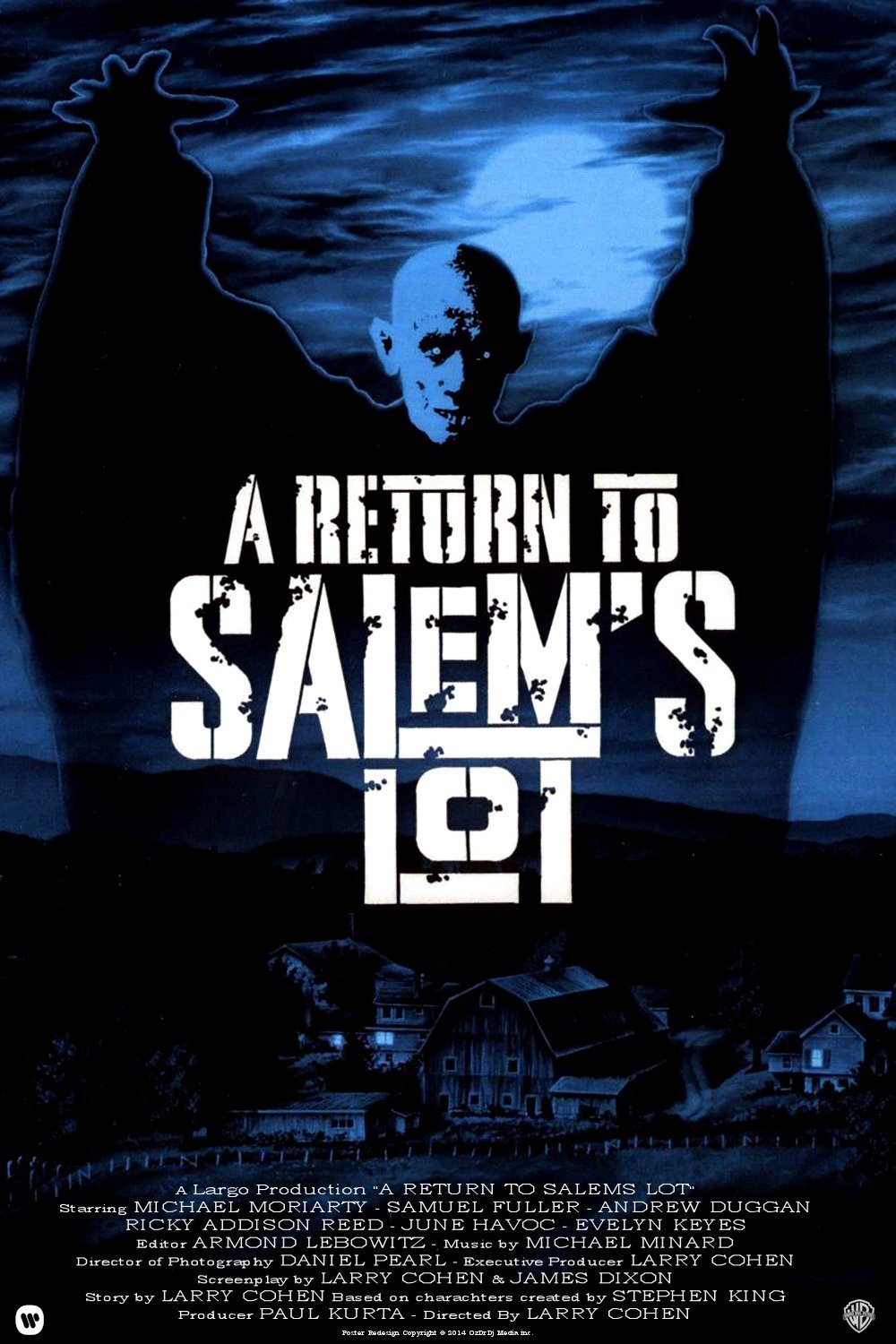
The Friday Night Horror Movie: A Return to Salem’s Lot (1987)

a return to salmes lot poster

‘Salem’s Lot was one of the first Stephen King novels I ever read. It remains one of my favorites. Tobe Hooper made a pretty good TV mini-series out of it in 1979. Apparently, Larry Cohen had originally been slotted to adapt the book, but the executives hated his screenplay and gave Hooper the job instead.

Years later Warner Brothers approached Cohen to direct a low-budget horror film for them and he pitched the idea of a sequel. Interestingly, the sequel was intended as a theatrical film and in fact, debuted at the Cannes Film Festival and saw a limited American release. But the reviews were terrible and the box office a dud and so it pretty quickly went straight to the VHS shelves.

Outside of a few gorey effects, a couple of naked breasts, and a lot of children swearing, the film feels very much like a made-for-TV movie. The budget was clearly small, the acting amateurish, and it is edited within an inch of its life.

It follows Joe Webber (Michael Moriarty), an anthropologist who is called away from studying a native tribe in the South American jungle to take care of his young, troubled son Jeremy (Ricky Addison). He takes him to a run-down house he’s inherited in the small New England town of Jerusalem’s Lot (or Salem’s Lot as it is sometimes called).

Pretty quickly he realizes the town’s inhabitants are either vampires or their human slaves. Actually, they pretty much straight-up tell them who they are because they want him to write a book about them. To convince him to do this they kidnap the boy and get a young vampire girl to sweet-talk him into becoming a vampire as well.

Joe figures this is a good time to hook up with his childhood sweetheart and do a little remodeling of his old homestead. Seriously, the film makes some really odd choices.

Soon enough a Van Helsing-like vampire hunter shows up (played by director Samuel Fuller in a rare acting role) and eventually our heroes get to some actual vampire slaying.

A Return to Salem’s Lot feels like it should have been a mini-series. There are a lot of ideas floating around in it, but few of them get explored. A lot of scenes feel like they were cut short, as if maybe a lot of footage was shot but due to time constraints they had to be cut. Or maybe they just didn’t have the budget to shoot everything in the script.

As it is it feels very disjointed, and unrealized. There are some interesting ideas. The original story is basically ‘what if Dracula showed up in a small American town’ and this one takes that concept and has the vampires take over the entire town. Yet here they are also a persecuted minority. They fled Europe with the Pilgrims for the safety of the new world. They are good Americans. They don’t even kill humans (well, most of the time) but breed cows for their blood needs – and it is quite a scene watching some elderly actors pretend to suck the blood out of cows lying in a pasture.

All of this creates some light satire of American consumer culture, but again it is pretty disjointed and cut to shreds.

Despite all of this I still rather enjoyed it. Cohen knows his way around a low-budget picture and he gives it enough oomph to make it not terrible. Fuller is having a blast playing the crotchety old hunter.

Not a great movie by any means, but a fun one to watch.

Awesome ’80s in April: The Big Red One (1980)

the big red one poster

I’ve talked a little in this series about memory and the movies. Or rather, how this series continually brings up memories of both me watching certain movies or just knowing about their existence in various ways. That probably isn’t interesting to anyone but me, but I find it fascinating, and this is my blog so I’m gonna keep talking about it 🙂

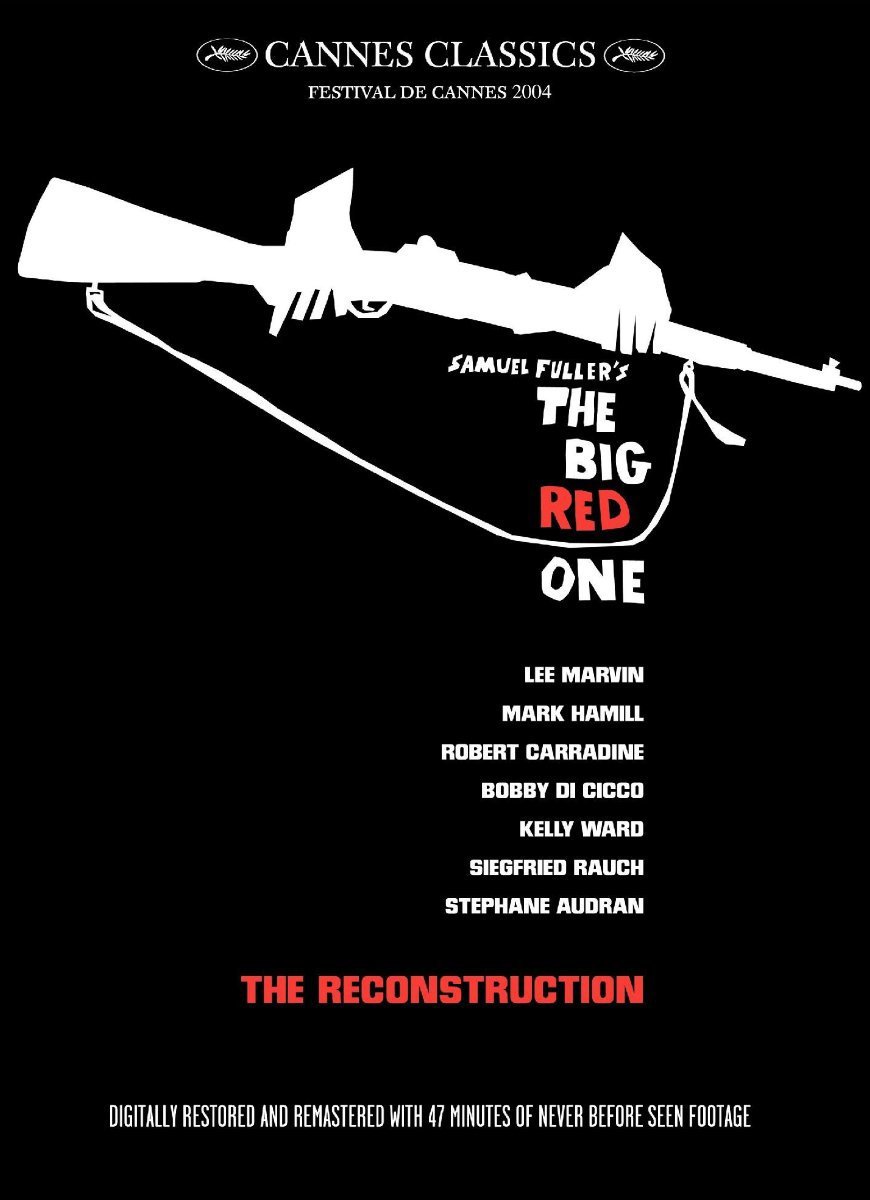
My first memory of The Big Red One, Samuel Fuller’s movie loosely based on his experiences in World War II, is of the DVD cover. I was in Walmart many years ago looking through their movie selection and came across a copy of The Big Red One. It was an evocative cover that was mostly black with a big white outline of a rifle and the title was all in white except for the word “red.” Well, you can see what I mean up above.

I immediately wanted it. I read the back cover and it promised to be a full restoration of Fuller’s lost film. It had lots of extra footage. It was a masterpiece. That sounded great.

I put the film back. I’ve been burned before. The film sounded interesting but I wasn’t ready for another blind buy.

I haven’t really thought about the film since. Oh, every now and again it would pop up on a streaming service or whatever and I’d think about watching it. Then I’d find something else. And now, I’ve finally seen it.

It is pretty good. Unfortunately, I wasn’t paying attention and I watched the original, non-director’s cut which is missing something like 45 minutes of footage. I might go back and watch that version someday. But not anytime soon.

The film follows a man only known as Sergeant (Lee Marvin) as he leads a squad of infantrymen from the 1st Infantry Division (who were known as The Big Red One due to the patch on their shirts.)

It reminded me quite a bit of the HBO series Band of Brothers as it follows this squad From North Africa to D-Day, the liberation of France to a concentration camp. They deal with battles and injuries, death, and replacements. In its own way, it is just as episodic as that series.

It was made on a low budget and unfortunately, it shows. The battle sequences aren’t particularly exciting. There are quite a few characters, but none of them are all that memorable. Mark Hamill is second billed but he gets very few lines of dialogue. His performance is mostly reaction shots. Most of the other characters are indistinguishable. I’d be hard-pressed to tell you any of their names or what they did. Marvin is great and he gets almost all of the screen time. He’s a hard-worn war veteran (in an early scene we see him as a private in World War I), but he’s kind to his men.

There are some really wonderful scenes. One inside a mental institution stands out. And the D-Day landing involves the Sergeant sending his men, one by one, across the beach to try and blow up a barbed wire fence keeping everyone from advancing. One guy goes, gets shot and he sends another. Then another. And another. He calls them out by number, not by name. It is harrowing to watch. These men are literal cannon fodder. More meat for the grinder.

It very much feels like an incomplete film. I’d like to see the longer cut (which was put together from surviving footage based on Fuller’s notes, he was dead when it was done). Forty minutes is a lot of time for these characters to be better filled out and their lives explored.

This version isn’t enough for me to be begging to see even more of this film, and the reviews of the extended cut don’t call it a masterpiece, so I expect it will be a few years before I decide to go back. But it is an interesting film, and I’d be interested to see if any of my readers have seen the longer version.

Awesome ’80s in April: The Final Countdown (1980)

the final countown

I used to be really fascinated with time travel. I guess I still am, but I used to spend a lot of time pondering whether time travel could ever be real. One of the questions I raised was that if you could travel in time then wouldn’t you try to kill Hitler? Wouldn’t you find a way to stop the Holocaust from happening? But then maybe there is such a thing as fixed points in time. Certain events have to happen and you simply cannot stop them.

Or maybe time travel is real, but it isn’t invented for many thousands of years in the future. The Holocaust is one of the more terrible events of the last century, but for those removed from it by millenea it might just become a footnote in the history books.

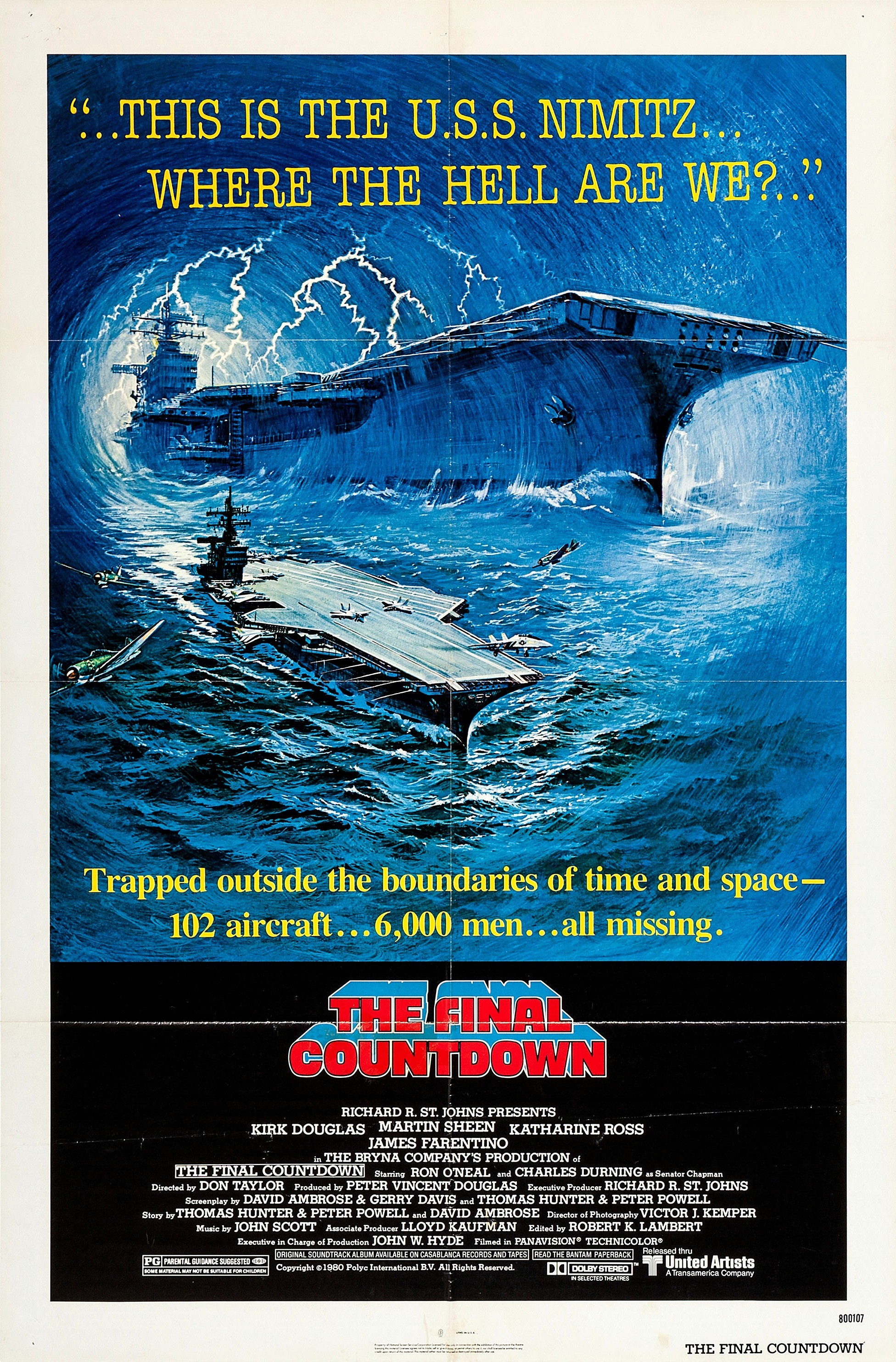
Or something. I’m not smart enough to understand the complications of time travel. But I still enjoy a good time travel story. The Final Countdown is about an aircraft carrier from 1980 accidentally traveling back in time to 1941 just one day before the Japanese attacked Pearl Harbor. The ship’s crew must then decide if they will try to stop it from happening.

That’s a pretty cool idea, but the film doesn’t seem to know what to do with it.

Kirk Douglas is the captain of the ship. Martin Sheen is a civilian observer on board to make suggestions on how to improve efficiency. Charles Durning plays a US Senator from 1941 who just happens to be taking a leisure cruise on his yacht along with his assistant – played by Katharine Ross – off the shores of Hawaii on that fateful day.

The Senator is important because in real life (or at least the film’s version of real life) because he was someone who had warned of the Japanese attacking Pearl Habor and was in a position to become Vice President before the attack. But he mysteriously disappeared on that day. If the ship can save him it would impact history in unknown ways. Destroying the Japanese fleet would impact history too, of course, but there is a question of when they should attack. If they hit the Japanese before they hit the US then that could be seen as a sign of aggression, an act of war. But if they don’t then American lives will be lost.

Again all of this is interesting, but the film never makes it exciting. It is too busy moving to the next scene to allow time for the characters to chew on the dilemmas.

One of the difficulties for a film like this is how to end it. If they change history then we, as an audience, know the film is a fraud. It feels fake somehow. All cinema is fake, but alternate histories feel even faker. But if the characters wind up not changing history, then what’s the point?

I don’t mind so much when the film is good. But I found The Final Countdown to be rather dull. It doesn’t help that they gained full cooperation from the US Military and in return the film is filled with a lot of footage of the ship’s crew going about their work. If you like to see planes take off and land on a carrier (and it is technically impressive) then this film is for you. If you want some real action or drama, then you might look eslewhere.

Awesome ’80s in April: Night Game (1989)

night game poster

Jaws (1975) is one of my all-time favorite movies. It is practically perfect in every way. It is a film I’ve seen dozens of times. It is a film that I put on when I’m sick and miserable. It cheers me up every time. I love Roy Scheider in that film and he’s only my third favorite character in that film.

Scheider was an interesting actor. He starred in many movies through the 1970s and 1980s and was by all accounts a big film star (he made lots of movies up until his death in 2008 but these two decades saw him as a big movie star). But I feel like outside of Jaws, and maybe The French Connection, he’s mostly been forgotten.

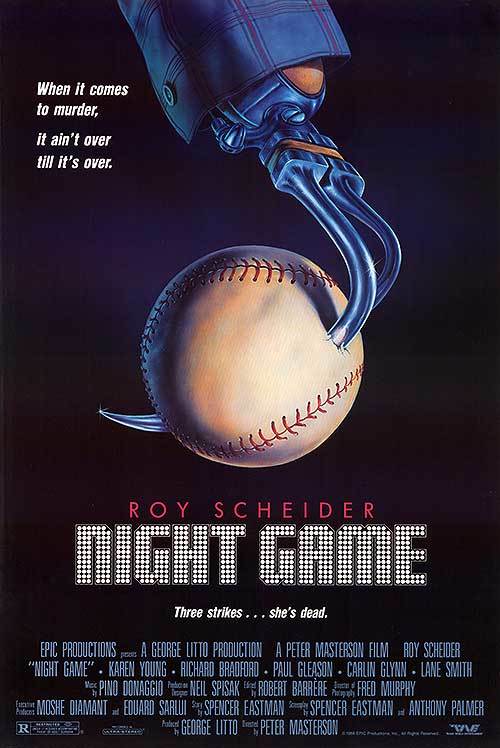
He’s about the only thing that makes Night Game interesting. He plays Mike Seaver a Texas cop who might just love the Astros more than his (much younger) girlfriend Roxy (Karen Young). Somebody is slicing and dicing hot blondes on the oceanfront and it is up to Seaver to figure out who.

Given the title and his fondness for the Astros you know the killer is going to have something to do with baseball. If you are a fan there is quite a bit of gameplay on-screen and parts of it are filmed in the Astrodome. If you aren’t, well there is still Scheider doing his darndest to make a limp script exciting.

I didn’t hate it, but it is definitely forgettable. I watched it this weekend and I had to brush up on the plot via Wikipedia to write this review. It feels like a made-for-TV movie but with more violence and naked parts.

Awesome ’80s in April: Yes, Madam! (1985)

yes madam

When I decided to watch a bunch of movies from the 1980s this month I was thinking about all of the stereotypical films from that decade that I knew of as a kid. I was thinking about dumb comedies, big action flicks, slashers, and low-budget B-movies. Lots of other movies were made in the 1980s, of course, but my plan was to stick to the kinds of movies that made me think of the ’80s. I wasn’t interested in foreign language films, or art-house movies.

I’ve mostly stuck to that, but the Criterion Channel is running a series of films starring Michelle Yeoh and I just “had” to watch at least one. Yes, Madam! is the film that made her a star in Hong Kong and is at least partially responsible for a slate of action films starring women that became popular at the time.

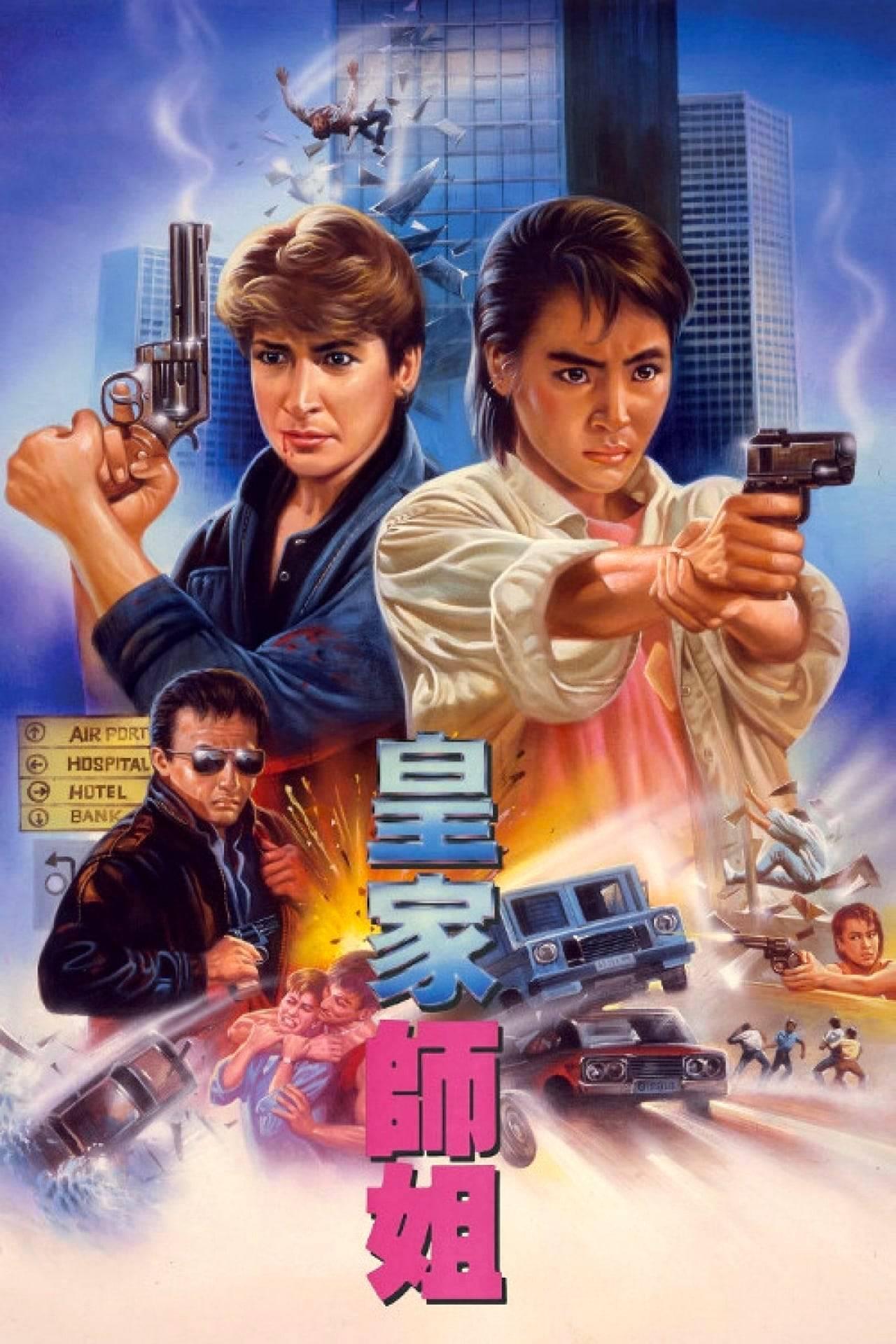
Yeoh stars as Senior Inspector Ng, a Hong Kong detective who teams up with Senior Inspector Morris (Cynthia Rothrock in her first big role) from London. They are after some secret microfilm stolen by some gangsters.

Well, actually it was accidentally stolen by a couple of bumbling crooks, but the gangsters want it so you get the cops and the gangsters chasing the dimwits, and the gangsters doing everything they can to keep the cops from getting it first.

It is very similar to a lot of American action movies made in the 1980s. The plot is pretty silly, and the acting is not always great, but the action is a lot of fun. American films tend to involve a lot of gunplay, but Hong Kong films eschew the bang bang for the kung pow. Both types of films usually involve some comedy, but American films tend to have a wise-cracking lead hero, and their Hong Kong counterparts are more slapstick, and more physical with the comedy.

So it is with Yes, Madam! Yeoh and Rothrock kick some serious ass. There are a lot of fight scenes and all of them are fun to watch. The comedy doesn’t fare as well, but I’ve never been a fan of slapstick silliness. It is big, goofy fun, and well worth the watching.

Awesome ’80s in April: The Bedroom Window (1987)

the bedroom window poster

After a work party, Terry (Steve Guttenberg) talks Sylvia (Isabelle Hubbert), his boss’ wife, into going back to his apartment and to bed with him. After the lovemaking, Terry goes to the bathroom. Sylvia hears a noise outside. She sees a man attacking a woman. She struggles with opening the window and the noise startles the man, and he runs away.

She thinks about calling the cops to tell them what she’s seen, but she fears this will lead to her husband finding out about the affair. The next day they learn a different woman was raped and murdered not far from the apartment, just 30 minutes after the attack Sylvia witnessed.

Still fearing retribution from the husband, but now believing the man Sylvia saw was likely the man who murdered the other woman, Terry decides to call the police and pretend he was the witness. Sylvia gives him the details of the attacker and at first, the conversation with the police goes well.

Naturally, there are complications.

In order to arrest the killer they need more information from Terry, but he can’t give that information because he really didn’t witness anything. More murders occur and Terry’s desire to tell the real truth increases, but Sylvia remains unwilling to come forward. Terry does some investigating on his own and meets Denise (Elizabeth McGovern) the girl who was attacked outside his apartment.

The Bedroom Window follows some standard Noir tropes but with interesting modifications. Steve Guttenberg is either a brilliant choice for the lead actor, or an awful one. I know him from the Police Academy movies and Three Men and a Baby. He has such a goofy, gentle presence it is difficult to believe he could seduce someone like Isabelle Hubbert. Though it is quite easy to believe he could be the typical noir patsy.

But that’s just it, Sylvia isn’t the typical femme fatale. She isn’t involved in the murders. She doesn’t set Terry up. She simply witnessed one assault. She does become a cold fish the more Terry tries to convince her to come forward as a witness, but before that, she seems like a lady in a loveless marriage looking for some fun.

Denise is an interesting monkey wrench in the proceedings as well. She becomes a secondary love interest to Terry, but she’s also deep into the mix of trying to figure out who the killer is. She seems more out of a detective story – the plucky kid who helps the detective – than a film noir. She’s also the only actor who even attempts a Baltimore accent which is kind of distracting.

Terry makes idiotic decision after idiotic decision which digs him deeper into trouble. The film never quite makes me believe he’s as dumb as his actions make him out to be which caused me to yell at the TV more than once.

Director Curtis Hanson, who would later make LA Confidential one of the all-time great neo-noirs, keeps things moving briskly and with great style. The Bedroom Window isn’t great, but it is well worth watching if you dig neo-noirs with a slice of erotic thrillers thrown in.

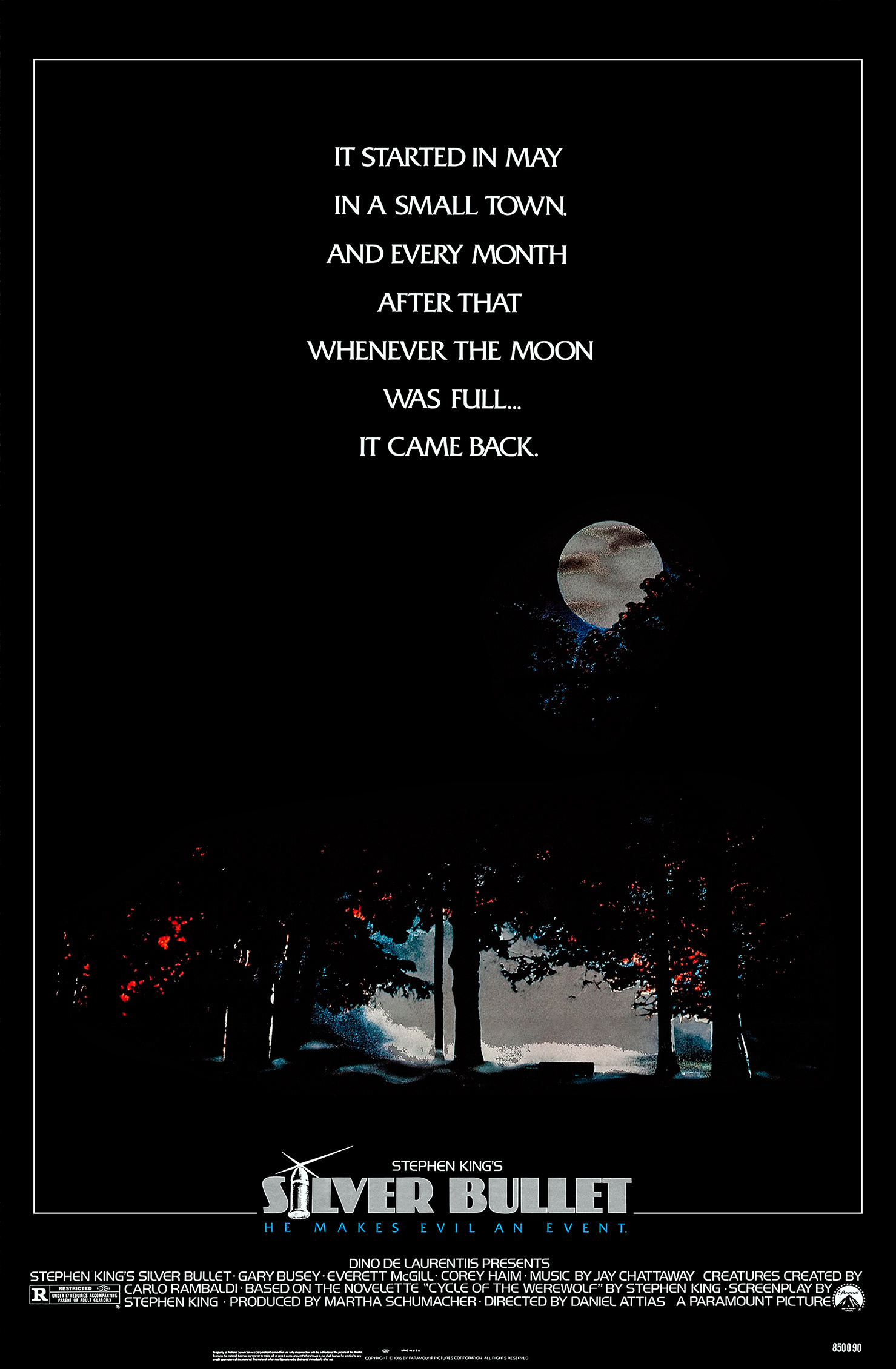
Awesome ’80s in April: Silver Bullet (1985)

silver bullet poster

For the last few years, I’ve been steadily (if perhaps a bit slowly) reading my way through Stephen King’s bibliography. I’m not even halfway through. Dude has written a lot of books. People have made a lot of movies based on those books. Most of them aren’t very good.

My working theory is that filmmakers focus on the monsters – the killer clowns, rabid dogs, vampires, and other assorted creatures of the night – and ignore the world-building, the characters, and all other non-horrifying story development. But while readers may come to King for the monsters, they stay for all that other stuff. At least I do. And so the movies wind up focusing on the wrong things that make King’s stories so interesting. That’s my theory anyway.

Based upon King’s Cycle of the Werewolf novella, Silver Bullet is (obviously) about a werewolf stalking a small town. Our hero is young Marty Coslaw (Corey Haim) who is bound to a souped-up wheelchair (which is named, in its very Stephen King way, the Silver Bullet). He has a nagging sister, Jane (Megan Follows) who narrates the film as an adult (another Stephen King trope) and a goofy, alcoholic uncle (a wonderfully hilarious Gary Busey).

There is a lot of small-town life that fills this film. There are community gatherings, family parties, funerals, and lots of Marty showing off his ability to get around without the use of his legs (he climbs trees and into his second-story window). The uncle rigs up an even better souped-up wheelchair that whizzes down the road at 60 MPH.

And of course, there is a lot of mutilations by a werewolf. None of it is particularly well done, and it is all pretty silly. You could call it a bad movie, and you wouldn’t be wrong, but it is also quite entertaining. It is exactly what I want a 1980s adaptation of a Stephen King werewolf movie to be.

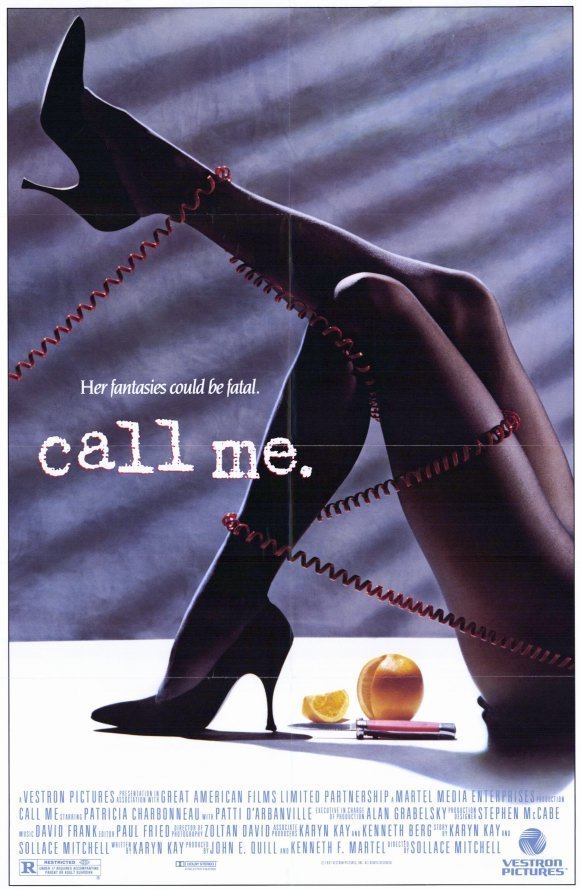
Awesome ’80s in April: Call Me (1985)

call me movie poster

I freaking love the Criterion Channel. I say that every time I resubscribe. I don’t know why I ever take a break from it. I try to keep the number of streaming services I subscribe to down to three each month. Generally speaking, the wife gets a service, the daughter gets a service and I get one. I love Criterion but sometimes I want to watch a show on HBO Max or some other service and so I’ll pause my Criterion subscription. I’m always so excited when I come back.

Seriously, why do I ever leave?

Beyond having an amazing selection of incredible movies, the Criterion Channel is one of the few subscription services that actually bother to curate their films. They group their films by themes, or actors/directors, or other ideas. They often have interesting people come on and talk about their films. They include extras like audio commentaries and old making-of documentaries. Etc., etc., etc., It is a brilliant streaming service.

This month they are doing a series on Erotic Thrillers of the 1980s and 1990s. I’m thinking very seriously about making that my movie theme for May, but for now I’m talking about Call Me, a film I’d never heard of until I resubscribed to Criterion Channel (one of the many other wonderful reasons to subscribe).

Anna (Patricia Charbonneau) is a young journalist for an indie newspaper in New York. She’s in a fairly lifeless relationship with her boyfriend. One night she gets an obscene phone call from what she thinks is her boyfriend. The dude tells her to show up at a local bar and to leave her panties behind. The boyfriend is a no-show, but there is a strange dude who starts to hit on her. Getting away from him she hides in the bathroom where she witnesses a cop kill a transwoman over some stolen cash.

The obscene calls keep coming. She soon realizes they aren’t coming from her boyfriend but some stranger. She likes what he says. She gets really into it. She’s pretty sure the caller is the weird guy who was hitting on her in the bar (Stephen McHattie). He happens to be connected to the murder but she doesn’t know that yet. A young Steve Buscemi is also connected to it. He plays a character called Switchblade which is pretty awesome.

It never quite finds a way to seamlessly combine the erotic parts of the film with the thriller. So you wind up with some scenes where these scary dudes are trying to locate Anna because they think she’s got the cash, and scenes where she’s doing the sexy talk with some random on the phone. Eventually, those things come together but for most of the film’s run time, it feels like two different movies.

I quite liked Patricia Charbonneau in this, I’ll be interested in catching some other things she’s done, although looking at her career on IMDB it appears to be spotty at best. I do really like films from the 1980s that were shot on location in New York. It is always cool to see the city during this time period.