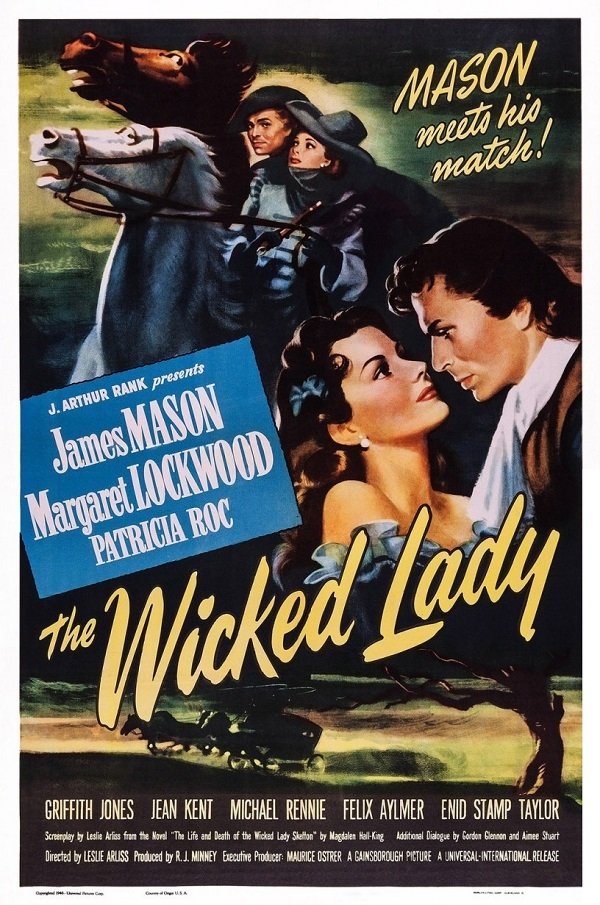
Great British Cinema: The Wicked Lady (1945)

the wicked lady

The Wicked Lady was an enormous hit at the time. It broke box-office records in Britain. Hilariously, before it could be shown in the United States several scenes had to be reshot because the American censors couldn’t handle the bountiful bosoms heaving out of the (period-appropriate) dresses.

It is easy to see why it was such a success in 1945. The story is about a proper lady who steps out of her boring life and becomes a highwayman. Women at the time could have seen it as a story of independence, of throwing off the shackles of oppression instituted by the culture of the time.

What I think is so interesting about this type of film is that because it is set in the past certain types of people could watch it, recognize that it is a liberating film, but then think to themselves “Look at how far we’ve come” and pat themselves on the back. But those in the know would recognize how far we still have to go.

And now, of course, we can look at this film made in 1945 and think similar things.

Our film begins with Caroline (Patricia Roc) preparing for her marriage to Sir Ralph Skelton (Griffith Jones). They do not truly love each other but they have a deep kinship and both need marriage partners. The night before their marriage Caroline invites her dear friend Barbara (Margaret Lockwood) to their home. She being a treacherous, scheming woman immediately sets her eyes on Sir Skelton and uses her feminine charms to win him away from Caroline. They soon marry, leaving Caroline in the lurch.

Barbara assumed Sir Skelton’s riches and station would bring her happiness but soon finds herself bored. Country living doesn’t suit her and Sir Skelton does not like venturing into the city. When she learns that one room in the mansion has a secret passageway leading to the gardens she moves in and quickly begins sneaking out at night acting as a highwayman – robbing coaches in a mask. From there she meets Jerry Jackson (James Mason) a notorious highwayman and the two begin working together. Barbara loves the life of crime and becomes cutthroat about it. Jackson might be a thief, but he has a code. He never uses real violence. Barbara is willing to kill.

One of the things I love about this film is that Barbara is not a good woman who has temporarily lost her way. She’s not some bored housewife who went looking for a little excitement and got into a spot of trouble. She is a lost woman. Irredeemable, and loving it. She enjoys the crime, she likes the violence. I’m not sure what that does to my theory that this is a liberating, feminist film.

I feel like I’m making this movie sound better than it actually is. Honestly, I found it rather dull. Margaret Lockwood is a lot of fun to watch, she seems to be loving playing this character who is joyously evil. But James Mason seems out of place and Patricia Roc and Griffith Jones are a bit bland. The action is mostly off-screen (the actual robberies we do see are dully filmed) so what’s left is a lot of people talking about them and various romances that don’t have any heat.

It isn’t a bad film, and it is interesting for the reasons I describe. Obviously, people at the time just loved it. They actually remade it in 1983 with Faye Dunaway and Alan Bates. I’d be interested to see how they updated it.
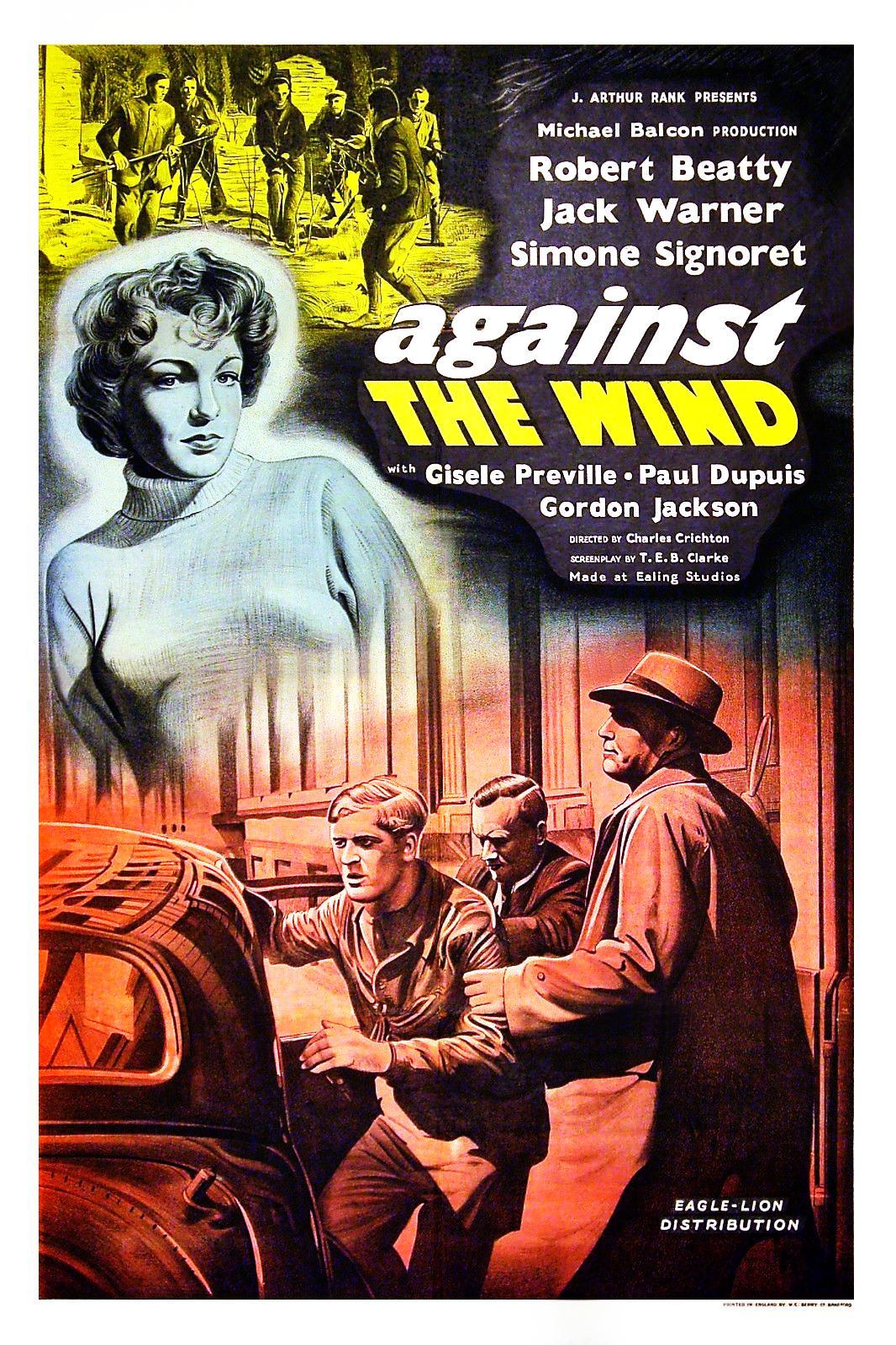
Great British Cinema: Against the Wind (1948)

against the wind

When I decided the theme of this month would be British Cinema, I had no idea I’d wind up watching so many World War II films. It makes perfect sense that the British film industry would make a lot of these types of films as it was an extremely important part of their history. They lived through it. They were there from the beginning. I just didn’t realize I’d enjoy them so much.

What I’m loving is how different British war films are from their American counterparts. As Americans, I think we tend to believe the war started with the bombing of Pearl Harbor in the South Pacific and D-Day on the European front. That’s nonsense of course, but we Americans are a selfish lot and we care about things only when they affect us. Or at least our movies tend to focus on the war efforts directly involving Americans. They also tend to be more action-oriented, more about actual warfare than the behind-the-scenes things.

British films are often about spies and more personal battles on the home front. Americans sent soldiers across the great seas to fight, England was right there, close to the front lines from the beginning. They were being bombed right at home.

I’m digressing, I’m also way behind on writing about all the British films I’ve been watching. The thing is I’ve wound up watching a lot of World War II-era films, and I wanted to think about why that was, and also warn you all that more reviews along the same lines are coming.

So, Against the Wind is a spy film set (obviously) during World War II. It takes a nuts-and-bolts approach to spycraft (something else I love about these British war films is how they tend to approach things like war and spying, life and death, in such a practical, no-nonsense way).

We spend time in Belgium with our characters as they are trained to be spies and then follow a few of them into enemy territory as they work to complete their mission.

This is the point where I admit that I watched this film a couple of weeks ago, that I’ve watched a dozen films since then – several of which were British spy films – and that I no longer really remember the details of this one.

It stars Robert Beatty as a Catholic Priest turned spy, Simone Signoret in her first English language film, and the always reliable Jack Warner. It is also very good with some terrifically taut scenes.

The Friday Night Horror Movies: The Purge: Anarchy (2014) & The Purge: Election Year (2016)

the purge

I’ve watched several old British films for my Friday Night Horror the last few weeks so I wanted to watch something more modern and the first two Purge sequels fit the bill.

So, The Purge Franchise is set in a dystopian future. At some point in the past America was overrun with crime and violence. To curb this violence it was decided that one night a year, for a 12-hour period all crime, including murder, will be made legal. The thought is that this will allow everyone to get it out of their system, and for the rest of the year everyone will be chill.

Though the films lean on the idea that we aren’t all that far off from something like that actually happening, the concept is actually completely ridiculous. For real life I mean. For a movie, it’s really pretty cool.

The first film, simply titled The Purge (2013) focused on one (rich, white) family trying to survive the night. Things get complicated when they allow a stranger into their home and give him protection and a group of crazies come to say he is the very person they want to Purge. It isn’t a bad little thriller but it tends to lose focus on its conceptual idea and winds up focusing on the more generic base under siege aspects of the story.

I had minor hopes the sequels would spend more time on the bigger ideas. They sort-of do. While The Purge focused on one family inside their house The Purge: Anarchy and The Purge: Election Year expand the stories to larger groups of people and allow us to see more of the outside world.

The problem with all three of these films is that they all have a vague political message that boils down to The Purge is run by rich white people who benefit from the violence, while poor people of color suffer the most. A relevant message, but not one they hit on very hard, nor make very specific.

A concept like The Purge could make for a really great science fiction film with all sorts of allegories, but these films want to be money-making franchise machines in the horror genre and they don’t seem to have the stomach for more direct political messaging.

Yet they rarely nail the thriller/horror aspects either. If you are going to make a horror film about a period of time in which all crime is legal, then you should really go all in. Give us some Tobe Hooper-style insanity.

There is one really great scene during The Purge: Election Year that nails what I’m talking about. A car decked out in Christmas lights pulls up to a locked-up and barricaded convenience store. A group of women dressed in sexy Halloween costumes and carrying swords, saws, and machine guns get out and demand they be let inside, for the leader of the gang wants a candy bar. The subsequent battle is just as nuts. It is a well-staged sequence and it totally worked for me because it leans into the absolute insanity of the concept. The rest of the film doesn’t work nearly as well.

Thus far, the films have only had one character carry over from one film to the other. In The Purge: Anarchy we find Leo Barnes (Frank Grillo) on a mission to seek out some revenge on Purge Night. Along the way, he stumbles on several people who are clearly out of their depth and need help. By the film’s end, he’s become a reluctant hero.

In The Purge: Election Year he’s become head of security for Senator Charlie Roan (Elizabeth Mitchell) who is running for President on a ticket that promises to outlaw The Purge. Honestly, he’s kind of a generic action hero which is kind of my problem with the whole franchise thus far. My problem with most of the Blumhouse films I’ve seen, to be honest. They lack a specificity that can turn a high concept like this one into something great. Movies need a particular point of view, they need to find interesting ways to tell their stories. Otherwise, they wind up feeling generic, and just like a million other films.

These three The Purge films lack that specificity, that point of view. They take an interesting idea and turn it into something just average. That doesn’t make them bad films. I mostly enjoyed watching them. But it keeps them from being truly great or interesting.

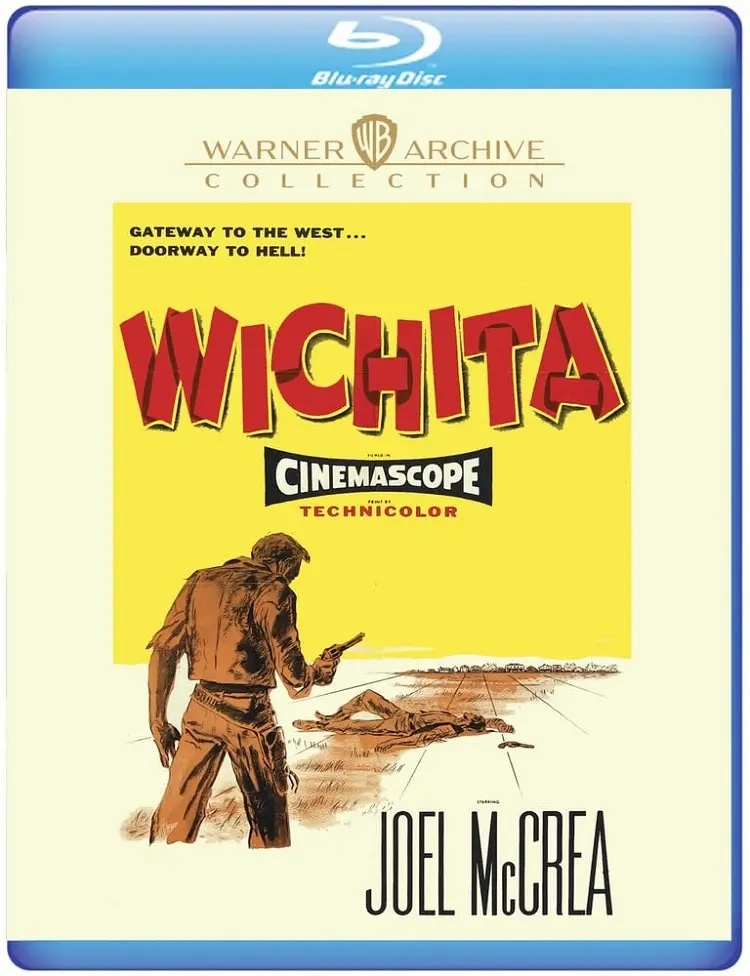
Wichita (1955)

wichita movie

Wyatt Earp stands tall amongst figures of the Old West. He’s one of America’s great old legends. There have been a lot of movies made about his life. Wichita is kind of an origin story for the legend as it begins before he became a lawman and tells the story of how he wound up being a Marshall.

It isn’t particularly good, but if you like westerns I’d recommend it. You can read my full review here.

They Live (1988)

they live

There is a company called Fathom Events that bring classic (and not so classic) films as well as live theater and other special events to movie theaters across the country.

I used to go to their events fairly often, but then COVID hit and other things happened and I stopped going to the theater all together. I’m hoping to get back to it a little more often and was thrilled when I saw Fathom was doing some John Carpenter movies.

I got to saw They Live and wrote a little thing about it for Cinema Sentries.

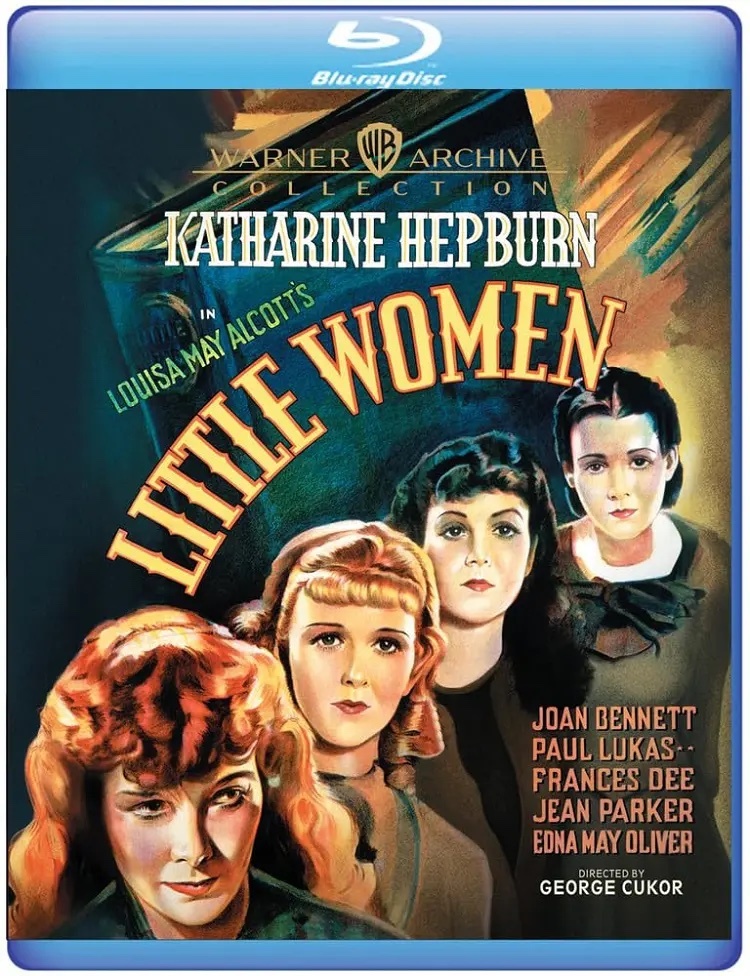
Little Women (1933)

little women bluray cover

I’ve had several movies to watch and review for Cinema Sentries which explains why I haven’t been writing much for my Great British Cinema Series. I have watched several British films in the interim and will write about them soon. But for now I’ll catch you up on my Cinema Sentries writing.

For large swaths of my life I tended to stay away from what is sometimes derogatorily called Women’s Pictures or Chick Flicks. I wasn’t necesarilly a man’s man either, I grew out of action movies early in college. But emotionally charged films about women in need of romance and other such things held very little interest for me.

I can’t say that I am mainlining romantic comedies these days, but I’ve soften somewhat in this regard. As you’ll read in my review, I first saw a version of Little Women in college and didn’t much care for it, but I’ve come to rather love it. This version starring Katharine Hepburn is one of my favorites.

Rest In Peace Olof Bjorner

Olaf Bjorner, the Swedish researcher who tirelessly documented Bob Dylan’s performances has died. I didn’t know him personally, but everything I’ve read about him was that he was a kind, generous man. Certainly, his website is indispensable for Dylan fans.

You can read a little more about him in the Peter Stone Brown archives.

Rest now, good sir, the world is a better place because of your life.