Au Revoir France

I have now (re)posted my last experience in France (at least for our first stay there, I’ve been back a few times). Thank you for following along. And apologies to those who weren’t interested, I know sometimes it was a big dump of posts.

I had a lot of fun reading those old posts and reliving those experiences. It is weird because in my memory banks, I thought I had written a lot more about the minutia of life in Strasbourg. I thought I had written posts about trams and post offices, restaurants, and dog parks. But I think maybe I added a lot of that to my Webshots page with pictures and captions. That Webshots page is long gone, but maybe I’ll upload all my pictures from France someday and post them here.

It is also weird to read those old posts and revisit who I was all those years ago. I feel like I complain a lot, and I griped about my wife more than I expected. Two things are responsible, I now believe.

1.) I was trying to be funny. My writing was very casual in these posts. I wrote like I was talking to my friends (which in those early days that’s pretty much all who were reading my posts). So, I complained, in the same manner, you’d complain to your friends about inconveniences you experience on a road trip. Even though you are really having fun.

2.) I was in culture shock way more than I realized. France was amazing, but it was also a shock to the system. While a lot of our friends spoke English, I was surrounded by people speaking a language I didn’t understand. That was confusing and anxiety-inducing. The culture was very different than mine and that was challenging. I’m glad I experienced it, but I can see now how that stress came out in my blog.

Anyway, thanks for reading along.

I will continue to go through my old posts and repost them. I honestly don’t remember what I did with my blog when we got back. I know I kept writing movie/music/book reviews and talking about pop culture. I also posted a lot of what we now call memes – silly little things I found on the Internet. I’m pretty sure the day-to-day stuff mostly disappears. I know you all are just as excited as I am to find out 🙂

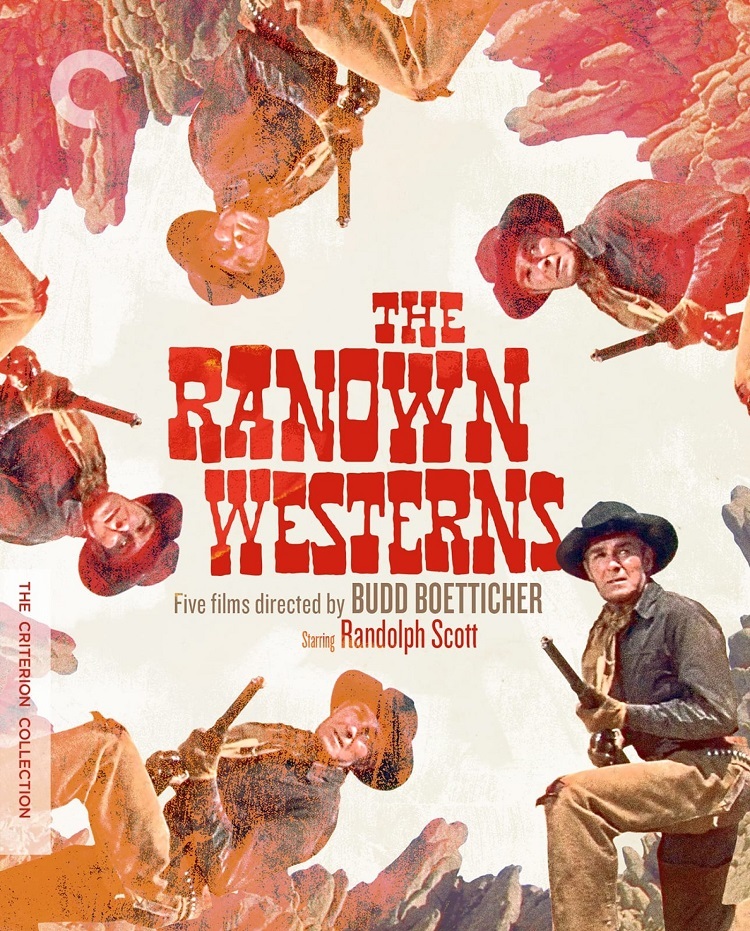
Criterion’s The Ranown Westerns Are the Pick of the Week

ranown westerns

Randolph Scott and director Budd Boetticher made seven films together during the 1950s. These are collectively known as the Ranown Cycle (which was the name of Scott’s production company.) If you get technical about it, two of the films don’t count as they were produced by other companies, but when it comes to movies, who wants to get technical?

I guess Criterion does because they are only including five films in this set. But every one of them is great and they are this week’s pick. You can read more about it here.

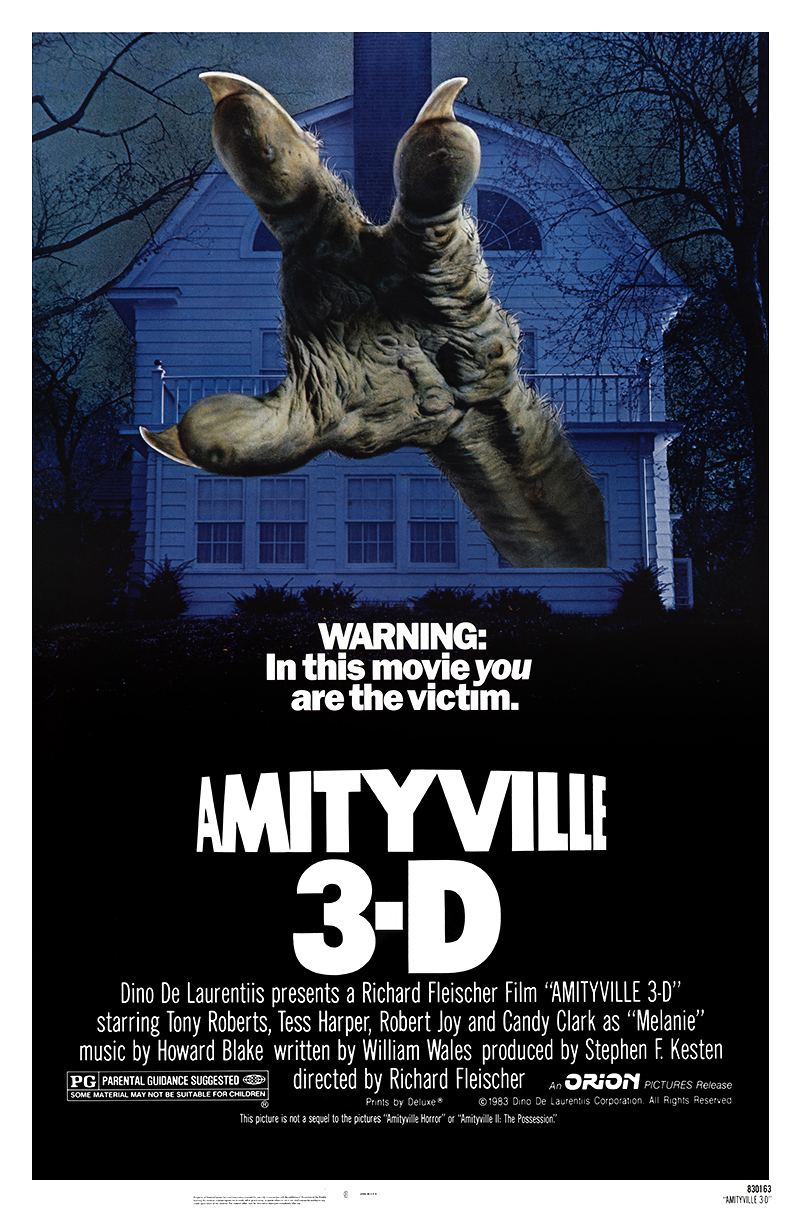
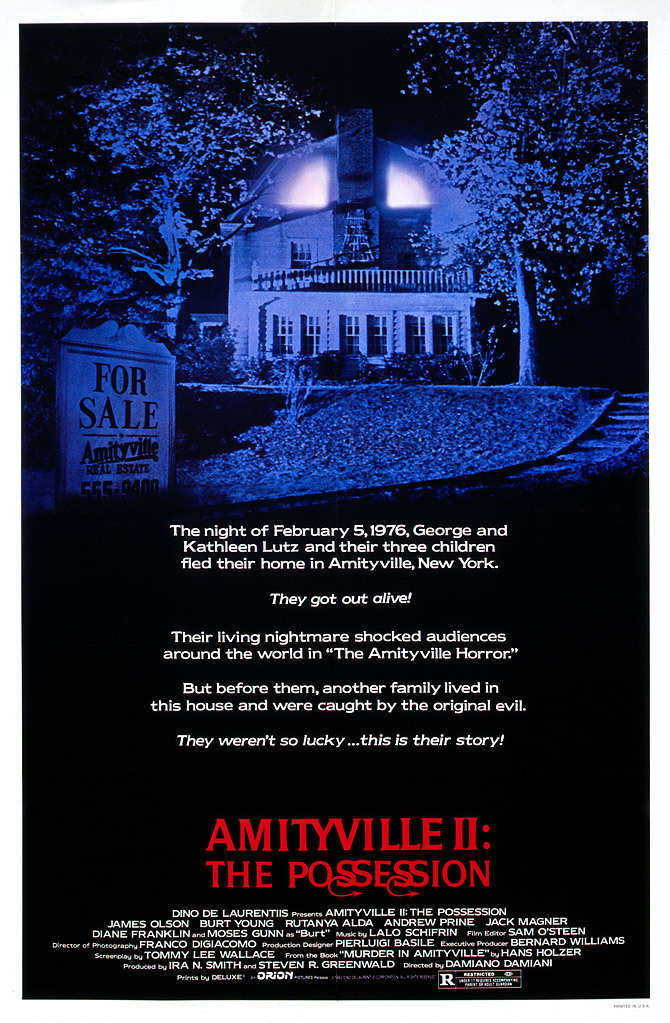
The Friday Night Horror Movie(s): Amityville II: The Possession (1982) & Amityvlle 3-D (1983)


imgboximgbox

The Amityville Horror (1979) is one of those movies that I want to like more than I actually do. It has a good cast – James Brolin looking all masculine in his flannel shirts and beard, Margot Kidder is just lovely and Rod Steiger is doing his best Max Von Sydow in The Exorcist (1973) impression. I like the idea of haunted house movies and this has the coolest looking haunted house ever. But ultimately I find the film to be a bit of a slog. It isn’t scary, or eerie. It isn’t even very moody.

When watching a horror movie from the 1940s I have no problem overlooking hoary old special effects like objects moving across a room or curtains billowing without wind. But in modern movies (and yes I’m counting 1979 as a modern movie as it premiered in my lifetime and feels much more modern than say something like The Uninvited (1944) or House on Haunted Hill (1959)) similar effects just seem silly. The Amityville Horror employs a lot of silly effects that just aren’t scary or all that interesting.

Still, every few years I find myself drawn to it. Like I said I love the idea of it.

Over the last couple of years, I’ve been watching a lot more horror films than I used to. This is mostly due to my creating this concept of the Friday Night Horror Movie. If I have to watch a horror movie (or more than often, two or three horror movies) every Friday then I’m going to naturally watch a lot of horror movies. One of the things I’ve been doing is watching a lot of horror sequels. It is a genre that naturally produces a lot of sequels and I’m finding it quite fun to watch them all in order. I’ve now seen all of the Friday the 13th films, the Nightmare on Elm Street movies, the entire Halloween franchise, and more.

This now brings us to The first two Amityville Horror sequels (there are technically a whole lot of sequels to The Amityville Horror because you cannot copyright the name of the town so anyone who wants to can throw Amityville in their name and tie it to the franchise. But the first two sequels are official and I watched them today.

But first, let’s briefly recap the original film. A newly married couple (played by Brolin and Kidder) along with their children move into a big, historical old house on Long Island. Quickly strange things begin to occur that can’t be naturally explained. By the film’s end, it is clear something has possessed the house and is trying to kill them. That something is the evil spirit that caused Ronald DeFeo, Jr. to kill his entire family with a rifle just one year prior.

Amityville II: The Possession is sort-of the story of what caused Ronald Jr to commit those murders. I say sort-of because in this film the family is called the Montelli’s and the murders happen in a slightly different manner than we see them occur in the first film.

But where The Amityville Horror was filled with classic haunted house tropes and was all the more dull for it, Amityville II just absolutely goes for it. There is no slow build-up, and no time to develop characters, it just takes off and hardly slows down to catch its breath. It begins once again with a new family moving into the house. But right off the bat, we realize this family is already messed up. The father (Burt Young) is abusive. He yells at the kids constantly and threatens to beat them, he actually does beat the wife and it is implied he forces himself on her. The kids are moody and angry.

On their first night they experience a mysterious banging on the door and a freaky drawing appears on the two small children’s bedroom wall. Soon enough the oldest boy (Jack Magner) becomes possessed. He starts hearing voices telling him to kill his family, he yells at his mom and seduces his sister.

It gets weirder from there. If the original played it safe then the sequel throws off the rails and just goes for it. Most of the script, especially the dialogue, is pretty bad, but I love that all of the actors and the direction just completely go all out.

Amityville 3-D (1983) is much more reserved, but I kind of liked it more than the other two. It is a for-real sequel in that it takes place after the events of the other films. By this point the house is famous, or maybe I should say notorious. It has set vacant for years because no one in their right mind would buy it.

Naturally, our film’s hero does just that. He is John Baxter (Tony Roberts) a journalist working for a magazine that specializes in debunking supernatural con artists. He and his coworker Melanie (Candy Clark) debunk a pair of hoaxsters working out the Amityville House and afterward, John decides to buy the place (he’s getting a divorce and it is being sold dirt cheap).

You know the story by now, weird stuff starts happening. What I like about this film is that John comes to the house knowing its history and he doesn’t care. He’s a skeptic. Because of this, the film rolls out its supernatural stuff very slowly. Some of the mysteries and even a couple of deaths happen outside of the house. For sure, supernatural events and gorey deaths happen, but it takes its time with them. The film is more the mood piece the original wanted to be, but here it is quite successful at it.

It was directed by Richard Fleischer who made great films like 20,000 Leagues Under the Sea (1954), Compulsion (1959), and my favorite Soylent Green (1973). This is a man who knows how to direct a film, not the usual hacks that wind up directing the third film in a horror franchise.

As the title implies it was originally shot in 3-D. While there are the usual effects you find in that type of film (various objects flying at the screen, long objects being turned slowly toward the camera) Fleisher and his cinematographer Fred Schuler make the best of the format. Their use of depth of field is masterful. There is almost something in the foreground – a lamp, a tree, anything – that gives the characters or other objects in the screen depth. Shots indoors often take place in a place that allows you to see down a hall or into other rooms. Characters move in and out of frame, etc. It must have been really something to have seen in 3-D, but even in 2-D it looks really cool.

The rest of the filmmaking is very good as well. The actors are quite good and I found the entire thing a pleasure to watch.

Hanky Panky (1982)

hanky panky poster

About thirty minutes into Hanky Panky a film that stars Gene Wilder and Gilda Radner, I turned to my wife and said, “I thought this movie would be a lot wackier.” Up until that point, it is a fairly straightforward thriller. It does get a little bit zany once Gilda shows up, but it never quite figures out how to balance the thriller aspects of the film with its comedy.

Wilder plays Michael Jordon, a guy-next-door architect who jumps into a cab that is already occupied by Janet Dunn (Kathleen Quinlin. Despite her obviously being distraught Michael aggressively flirts with her. As an audience, we know that she is being chased by unknown assailants for unknown reasons. Looking about, not knowing if she’s managed to lose her attackers, she puts something into a package and addresses it. Michael, trying to be chivalrous I guess, takes the package and drops it in the mailbox.

The bad guys witness this and figure Michael knows what’s going on. They kill her and attack him asking him where she mailed the package to. He escapes and we’re treated to a cross-country chase. Along the way, he meets Kate Hellman (Radner) who may not be what she claims to be.

There is a lot of North By Northwest DNA living inside Hanky Panky what with an average man getting caught up in incredible events, and being chased by assailants across the USA (this film begins in New York City and concludes at the Grand Canyon). But though I do love both Wilder and Radner they are not Cary Grant and Eva Marie Saint, and Sidney Poitier (who directed) is not even close to Alfred Hitchcock (at least when it comes to directing.)

Which brings me to the comedy. For a film like this to work the comedy has to come naturally from the characters and the situation. It needs to come organically out of the story. While the movie doesn’t necessarily have to be completely realistic, it needs to at least have the facade of realism. The comedy in Hanky Panky is too farcical, it feels like it comes straight out of vaudeville.

Two examples

Michael and Kate have to rush out of his apartment during one scene. He is still in his bathrobe so they slip into a theater and steal a magician’s tuxedo. Later they get onto a bus. When the driver asks for exact change Michael pulls out some coins from the tuxedo pocket only to have them explode in his hand. He then tries to exchange a dollar bill for some coins and when he jerks his hand forward a bouquet of flowers pops out. This causes a sneezing fit to which Kate tries to hand him a handkerchief from his chest pocket. It is a never-ending handkerchief.

Later Michael and Kate are on a small helicopter. The pilot (Pat Corley) mentions he’s not feeling well and then proceeds to belch. A lot. He belches for several minutes, over and over. It is as if Mr. Corley decided to see how long he could let the gag continue until they made him stop. Wilder and Radner are clearly enjoying it as they keep breaking character and cracking up. I suspect Sidney Poitier also thought it was hilarious and just couldn’t help but keep the entire thing in the movie.

Both of these scenes are actually funny, more or less. I chuckled. My wife just guffawed when I was talking about it. But they don’t fit in with the rest of the movie. That scene with the helicopter – Michael and Kate are running for their lives. As the pilot is belching he’s flying is erratic and they nearly crash. So much of the film is very serious, and then there are these random moments of utter silliness. Those two tones crash into each other in incredibly distracting ways.

The serious thriller aspects of the film worked better for me than the comedy. They are still second-rate Hitchcock, but still relatively enjoyable. Wilder and Radner were incredibly talented comedic talents and I’ve enjoyed them both in other things, but they are utterly wasted in this film.

Criterion’s Release of After Hours Is the Pick of the Week

after hours criterion

I first started writing these picks of the week a little over ten years ago. A lot has changed in the home video market in those years. Streaming did exist but it was still early days. Blu-rays had been out for a few years, but DVDs were the most popular option. 4K wasn’t even on the map. Choosing the week’s pick was fairly easy. I mostly voted for the best film. If the release had lots of extras or some cool packaging then all the better, but I mostly picked movies that I liked and were finally getting a release on home video.

These days, things are complicated. Whereas ten years ago almost every film that made it to theaters got a home video release (usually a few months after it left theaters) now many major movies don’t even make it to the theater. Netflix, Amazon, Apple, and other streamers regularly release movies straight to their services, bypassing movie theaters altogether. And since the major streaming services want you to subscribe to them there is no reason for them to release their movies on any other format. Why spend the money on a Blu-ray release when what you really want is for people to subscribe to your service for another month?

At the same time, lots of companies have sprung up over the last decade that specialize in releasing movies on physical media. Criterion, Arrow Video, Synapse, and Kino Lorber to name but just a few, all specialize in physical media. Most of the movies are for what you might call niche markets. Criterion deals with arthouse and classic movies, Arrow and Synapse specialize in the low-budget genre movie market. Etc. They often release their films with cleaned-up audio and video, loads of extras including audio commentaries and behind-the-scenes features, and even include cool booklets with essays on the film, posters, lobby cards, and other collectibles.

Beyond these Boutique Blu-rays labels, everybody is getting into 4K, the super high definition format, not to mention all sorts of special editions and exclusive releases to places like Target and Best Buy.

What I’m saying is that the decision on what to pick each week has gotten complicated. It can no longer be just based on the film itself, but you have to factor in the bit rates, special features, and how many other releases that particular film has received. I will admit that I don’t own a 4K player and my interest in that format is pretty small. Put me in a showroom and I will do the appropriate “oohs” and “ahs” over how incredible a 4K film looks, but at home, I just don’t care that much. I still watch terrible-looking prints of old and obscure movies and I just don’t care that much about super high-quality images. Especially if that means I have to not only buy a new, expensive player, but I have to rebuy many of the films I already own. I’ll mention a 4K release if I think it merits it, but I am not going to do so just because a film receives a 4K release.

Personally, I also tend to not pick the biggest movies coming out on any given week. Anybody who cares already knows that Avatar or the latest Marvel movie is coming out. I’ll give those movies a mention in my articles, but I’m going to rarely pick them. I like to pick something a little more obscure, something that deserves a little attention. But I also try to avoid picking the same type of releases each week. It would be easy just to pick whatever Criterion is putting out each week because I pretty much love everything they do. But that seems boring. Speaking of which I’m nearly a thousand words in so I must be boring everybody by now.

After Hours is a marvelous movie by Martin Scorsese. It came out in 1985 which is smack dab in the middle of what many people consider to be a low period for the famed director. I love pretty much everything he’s ever done and this one is no different. It stars Griffin Dunne as a man with a boring life who ventures to downtown Manhattan to hook up with a beautiful woman and has one crazy adventure after another. Criterion has given it a 4K upgrade and their usual treatment in terms of excellent extras.

Also out this week that looks interesting

Beau is Afraid: With Hereditary and Midsommer director Ari Aster has cemented himself as one of our modern masters of horror. His latest stars Joaquin Phoenix as a mild-mannered man confronting his darkest fear as he embarks on a Kafkaesque adventure home.

Are You There God? It’s Me, Margaret.: Based upon the beloved book by Judy Blume this film adaptation got a lot of surprisingly great reviews and more or less bombed at the box office. I never did read the book (it is about a young, teenage girl dealing with young, teenage girl problems so I wasn’t really the target demographic) but I have a lot of friends who loved it when they were growing up. My own daughter is the perfect age for both the book and the movie so I suspect we’ll be watching it soon.

Scream VI: I recently watched all of the Scream films in order so that I could come to this new one pumped and primed. It was both a blessing and a curse to watch them all so close together. It helped me to see all the connections the films make with each other and helped smooth out some of the rougher spots. But it also let me see just how far this series has fallen. The original Scream was so good because it made fun of the slew of generic slasher films that were being churned out through the last 1980s while also being a great example of what the best of those films could be. Scream VI isn’t at all bad, but it feels very much like those generic films the original was making fun of.

The Watermelon Woman: Criterion is releasing this romantic comedy about a black lesbian woman who is trying to make a film about a Black actress known for playing the stereotypical “Mammy” roles in the 1930s. Criterion says it is a pioneering film in queer cinema and I always take their word for it.

Doctor Who: Jon Pertwee Complete Season Three: As I’ve stated many times I’m a big fan of Doctor Who. Over the last few years, they’ve been releasing these really wonderful full seasons of the classic series on Blu-ray chock full of extras and special features. Pertwee is one of my favorite Doctors and while I believe I’ve seen all the stories from this season (Day of the Daleks, The Curse of Peladon, The Sea Devils, The Mutants, and The Time Monster) I couldn’t tell you a thing about them. But I’m already excited to watch them again.

The Burning: Shout Factory is releasing this “classic” 1980s horror film about a camp prank that goes horribly wrong leaving a man disfigured who returns years later to enact his vengeance, with a new 4K scan and lots of extras.

Film Noir: The Dark Side of Cinema XV: (Man Afraid / The Girl in the Kremlin / The Tattered Dress): I love these Kino Lorber releases of obscure film noirs. Sadly, they did not send me a review copy of this set, but I’ll likely buy it sometime anyway.

Johanna Enlists: One of the amazing things about this new resurgence of boutique Blu-ray labels is how they are finding some really old films, cleaning them up, and giving them a proper release. This drama starring Mary Pickford was originally released in 1918. I’m guessing it has been released on home video before, but likely from a terrible print with absolutely no care given to it.