Outland (1981)

outland poster

It has been a lot of fun working through my life in movies. That sounds wrong. These movies actually have no connection with my life, my one rule is that I’ve never seen them. I should say I’m having fun watching movies from all the years I’ve been alive in chronological order. But that’s a mouthful, I really do need to find some snappy title for this feature that will easily describe what I’m doing.

The one rule is that each movie has to have never been seen by me before. But that’s not always easy to follow. I keep track of what I watch through Letterboxd, but it isn’t always accurate. Sometimes I forget to log a movie. And for movies, I watched before Letterboxd existed, before even IMDB existed, well those are hard to track. Who can remember all the films they watched when they were a kid? Sometimes I watch a movie I think I’ve seen before only to find absolutely none of it ringing any memory bells. Other times I start a movie that I think is new to me and realize that I have actually seen it before.

Outland is a film I thought I had never seen. But after I watched it the other day, I discovered that I had actually logged it on Letterboxd. But there wasn’t a single scene, a single image that was familiar to me. The logging was dated before Letterboxd existed which means I found it at some point, thought I had seen it, and guessed when that might have been. So, I really have no idea whether or not I had actually seen it before. Maybe I did and have forgotten the film altogether, or maybe I just thought I had and logged it.

Either way, I’m counting it for this silly little endeavor of mine.

Outland is a space western. It’s basically High Noon (1952) in space. Sean Connery plays Federal Marshal William O’Niel who has been assigned to a tiny mining outpost on Jupiter’s moon, IO. He quickly becomes concerned with the number of workers who seem to be going crazy and committing suicide. Everybody else, including the operations doctor, Marian Lazarus (Frances Sternhagen) chalk it up to the poor living conditions on the station and the utter isolation. But O’Neil figures it is happening way too often for it to just be bouts or stir craziness.

Eventually, he discovers an illegal drug trade. A synthetic stimulant is being brought in and given to the workers to increase production. Use it enough and you eventually go psychotic. O’Neil tries to put a stop to it, but naturally, he comes up against the Company (who don’t officially approve of the use of the drug, but sure do like the boost in productivity).

There is a lot of Alien (1979) DNA in Outland, especially in the rugged, lived-in quality of the outpost, and the blue-collar nature of the people. Outland is rough and dirty, and the workers are tough and rowdy. They live in small spaces, their beds stacked one on top of the other with little privacy afforded to them. In contrast, O’Neil and the other high administrative positions live in comparatively fancy quarters with plenty of space and luxury. Also as in Alien, the real villain of the film is the faceless corporation, always putting profit above human lives.

It isn’t nearly as good as Alien. Director Peter Hyams doesn’t have nearly the skill or artistry of Ridley Scott. The script (also by Hyams) isn’t as tight either. But the world that he has created is really quite something, and Sean Connery gives one of his finer performances.

9 To 5 (1980)

9 to 5 movie poster

I really should come up with a catchy name for this series (the one where I’m watching one movie from every year that I’ve been alive, in chronological order), but I can’t think of anything. I’ve been using a website/app called Track to help me finds movies to watch for this series. Basically, I use it to sort movies by year and then scroll down through that list until I find something that both looks interesting and that I haven’t seen. They automatically sort their movies by some sort of popularity rating so I usually have to scroll down for a bit before I find films that I haven’t seen before. After that I’ve generally been able to find something interesting, some film I’ve been meaning to watch, and plug it in.

For whatever reason, I really struggled to find something for 1980. I’ve seen a lot of films from that year and the ones I haven’t mostly looked uninteresting. It didn’t help that my wife was hanging out in the living room where I was preparing to watch a film. She wasn’t necessarily looking to watch a movie with me, she was doing some hand-sewing and that’s just where she was sitting. But that did mean she would be there with me as I watched a movie, which means that she would not be interested in me watching certain types of films, like horror.

Eventually, I landed on 9 to 5, and it turns out I rather liked it. It is a film that I was very aware of growing up, but for one reason or another, I never sat down and watched it. I was only four years old when it came out so I clearly wasn’t going to see it in the theater, or really even be aware of its existence. I’m thinking it must have played regularly on some cable TV stations throughout the 1980s because I really do have strong memories of knowing about it. Certainly, I loved the Dolly Parton song. I figure a movie about three working women fighting against their sexist boss had little appeal to me as a young teenager. Then, later, when something like that might have appealed to me a little more, the movie had lost its cultural cache. It isn’t a film you really hear about anymore.

So, Dolly Parton, Lily Tomlin, and Jane Fonda play the three working girls. They are employed at some giant conglomerate with thousands of employees. Their boss is played by Dabney Coleman. He is a sexist pig. He constantly makes advances toward his secretary (Parton) or positions himself to look down her top. He steals ideas from Tomlin’s character and presents them as his own, all the while passing her up for promotions (and giving less experienced men the jobs). Fonda is a recently divorced housewife who has just gotten a job in the secretarial pool. Coleman hardly gives her a glance.

For the first act things are played pretty straight with these women being mistreated on the job and having no real recourse to put things straight. Then things go really sideways and they find themselves back at Fonda’s house drinking themselves silly, smoking a little pot, and dreaming of what they’d really like to do to the boss.

From here the film turns into a straight-up farce. We are treated to three very silly fantasy sequences showing what the ladies would like to do to the boss. Then they kidnap him and take over the company (they pretend the boss is still working by conveniently having him step out of the office whenever anyone needs to see him and forging his signature on lots of company memos).

It is all pretty ridiculous and silly, and sometimes quite funny. My wife really seemed to enjoy herself, while I mostly just lightly chuckled. It is very much a movie of its time and it is interesting to think about how different films of different eras handle things like sexism in the workplace.

I have a hard time with big, broad comedy and that’s mostly what you get here. The three leads are very good (this was Dolly’s first big chance to show she had acting chops and she nails it). Dabney Coleman is great as the guy you love to hate. Again, my wife laughed herself silly, and I’m sure many others did as well. It was a big hit when it came out. I’m just weird when it comes to comedy.

The Friday Night Horror Movie: The Whip and the Body (1963)

the whip and the body

At an isolated castle in the 19th Century, on some isolated European coast, Kurt (Christopher Lee), the prodigal son returns. There is no fatted calf for this son though, as his father (Gustavo De Nardo) is unwilling to forgive his many trespasses. The most treacherous of which was seducing the maid’s daughter and then leaving her, causing her to commit suicide in his wake.

The maid, Giorgia (Harriet Medin) has vowed her revenge a hundred times over, and there is no lost blood between him and his younger brother Cristiano (Tony Kendall). Thus when Kurt turns up murdered, there are plenty of suspects.

Nevenka (Daliah Lavi) who had been engaged to Kurt before the whole maid’s daughter incident occurred, and is now married to Cristiano, begins seeing visions of Kurt whenever she turns. When more bodies start to drop the rest of the family begins to wonder if he hasn’t returned from the grave to seek his revenge.

Mario Bava was one of the great Italian horror directors. He was a pioneer of gothic horror and his film Blood and Black Lace (1964) is often credited as the first Giallo film ever made. Bava began his career in special effects, working his way into cinematography before finally directing. His films are noted for their visual beauty and style. When not shooting in stark black and white he made bold use of color.

The Whip and the Body makes great use of its gothic setting and tropes. The design of the castle in which most of the film takes place is as haunting as it is beautiful. The film is simply bathed in purples. It makes use of greens and reds, but bold purple permeates every shot.

As the title implies the sex gets a bit kinky, surprisingly so for a film made in 1963. Nevenka, who in most aspects of her life has to be subservient to the men in her life, takes control of her own sexuality. She hands Kurt a whip more than once and writhes in passion as he uses it on her. She married Christiano, because that’s what she was suppossed to do, but it is Kurt she truly loves. It is Kurt she continues to long for and envision even after his death (Or did he fake that? Or has his ghost returned from the dead? The film has fun toying with those ideas).

I’m making it sound more exciting than it is. The Whip and the Body is more of a gothic romance/drama than a horror. There is a lot of talking and passionate declarations. Too much for my taste, if I’m being honest. But it is so beautiful to look at, I never much minded.

Mad Max (1979)

mad max poster

I’ve watched the Mad Max series kind of backward. I saw Fury Road (2015) in the theaters, and really quite loved it, while also noting its utter ridiculousness. Then I watched Mad Max 2 (1981) a couple of months ago and followed it up pretty quickly with Mad Max Beyond Thunderdome (1985). Truth is I had always heard that the first Mad Max film wasn’t all that good and that’s why I skipped it. Until now.

The film is quite a bit different than its sequels. Whereas they are set in a post-apocalyptic world in which society has completely broken down, in this one society seems to be mostly intact. For sure some things are broken, but it feels more in line with similar films from the era in which urban crime is high and the police seem helpless to fix it.

Mel Gibson stars as Max Rockatansky, an Australian police officer who is decidedly not the super awesome butt kicker he is in the sequels. Well, sort of not. In a pretty great opening sequence, some crazy bikers are being chased by Max’s fellow officer. They create all sorts of havoc until Max is called in and chases them down. But after that scene we find Max to be a gentle family man with a wife and small child. He takes them to the countryside and they have a nice holiday.

Of course, things eventually turn bad and Max becomes the man we’ve come to know and love in those later films. But it does take a while to get there. I feel like watching this series out of order was actually helpful. Had I watched the first one first I might not have gotten around to watching the sequels. But by watching the original after I had seen all the sequels, the original film now feels like an origin story, a prequel. And as such, while still not as good as any of the sequels, it fills in some character details and lets me know how Max became Mad Max.

There are some pretty spectacular car crashes, made even more incredibly realizing they all had to be done in one take as the tiny budget wouldn’t have allowed for more.

So, yeah, this feels like a warm-up for what is to come. Consider it practice for the terrible beauty of Mad Max 2 and Fury Road. Or look at it like a full-length DVD extra origin story.

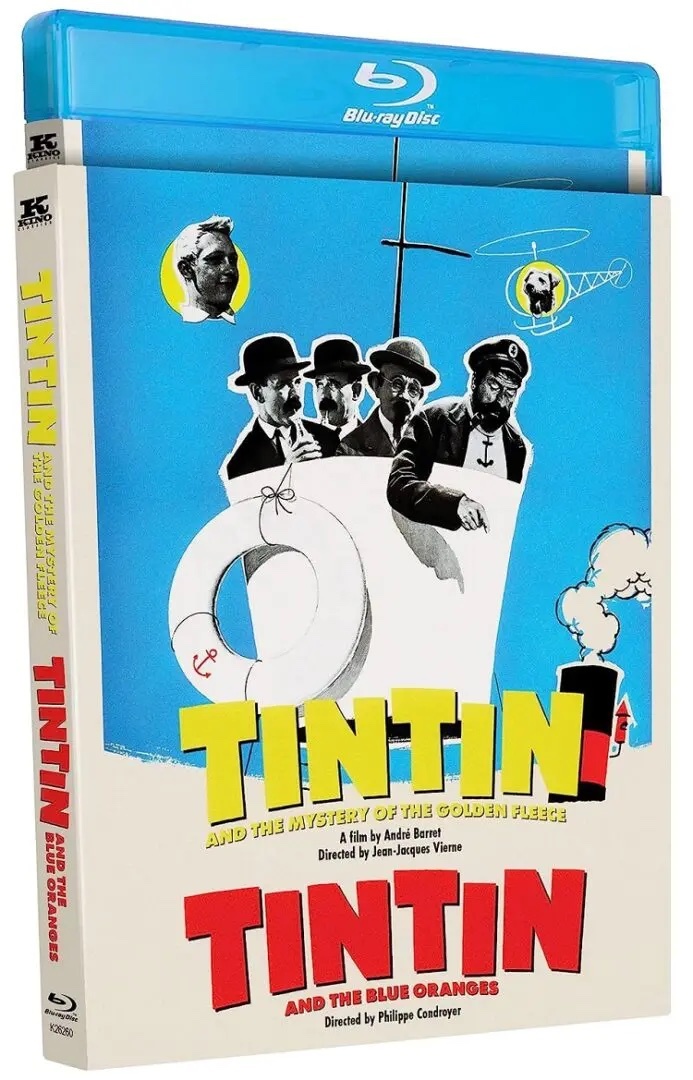
Tintin Double Feature Is the Pick of the Week

tintin

I remembered to write my Pick of the Week column this week for Cinema Sentries and then I totally forgot to link to it here. So, I’m a few days late, but I think you will forgive me.

Since the Fourth of July fell on Tuesday this year (which is when most Blu-rays are released) the powers that be decided that nobody will be buying movies this week and so the release schedule is pretty wimpy. But there is a Tintin double feature out and that’s what I picked. You can read all about it here.

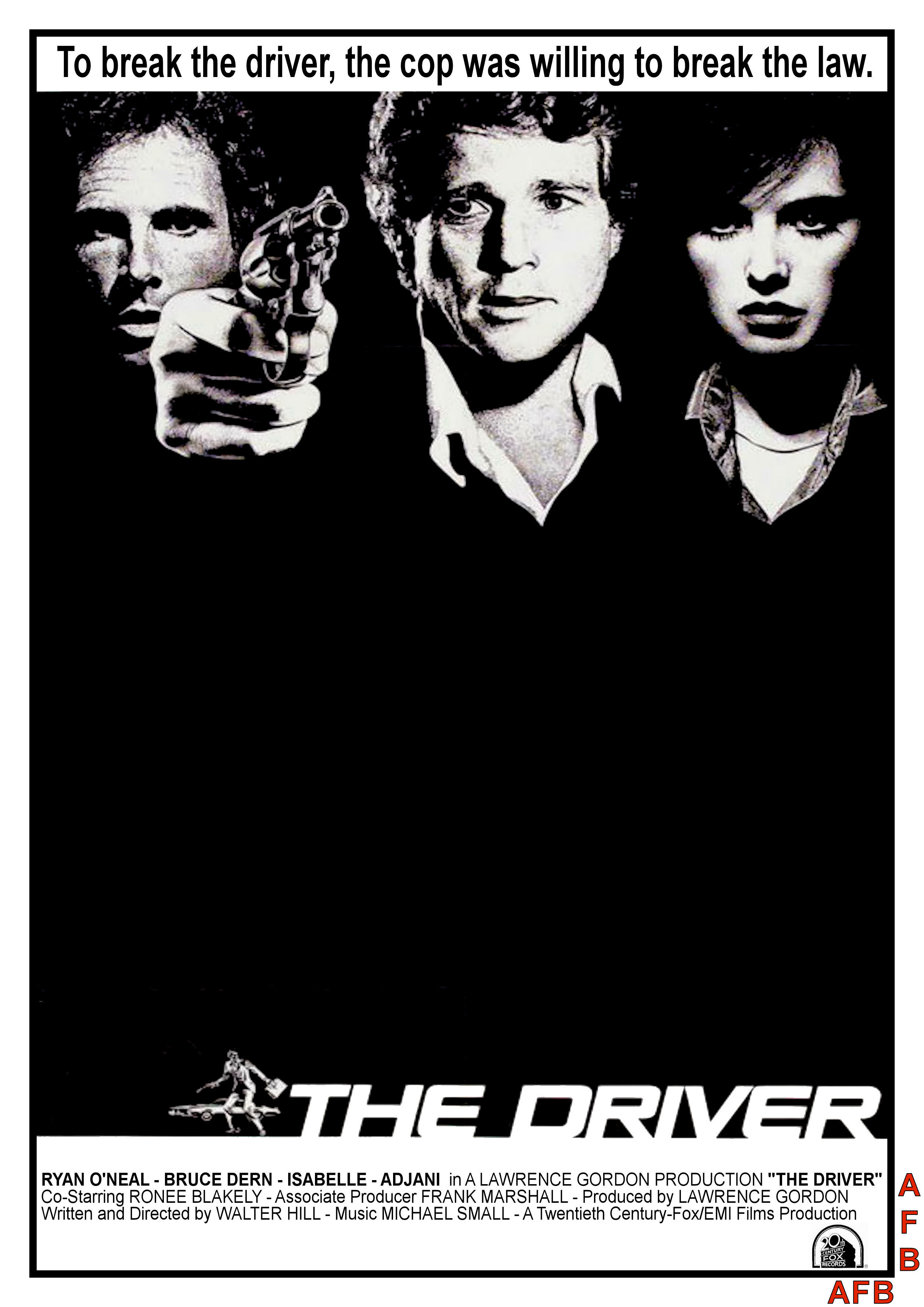
The Driver (1978)

the driver movie poster

The Driver is a professional. He’s the best at what he does. He won’t take a job if he doesn’t like it. He’ll never work with you again if you don’t follow his rules. He has no attachments. He gets the job done. He’s paid well for his services. He takes a job he shouldn’t have. He gets entangled with a woman. Things get complicated

If that plot synopsis sounds familiar that’s because The Driver (1978) was a clear inspiration for both Drive (2011) and Baby Driver (2017). I’d argue both of those later movies are better than The Driver, but certainly, it has its merits. The car chase sequences alone are worth the price of admission. Director Walter Hill uses every ounce of his relatively small budget in several automobile-heavy action sequences. They aren’t as stylish as the ones in Drive or Baby Driver but they do pack a punch.

Ryan O’Neal plays The Driver (none of the characters are given names in the film, they are named by their functions in the credits) as a man of few words, who keeps everything close to his chest. He won’t take a job if he feels it is too risky, or if he knows guns will be involved, yet he is not afraid to deal out violence when he feels it is needed. He’s being chased by The Detective (a snarling Bruce Dern), who sets up a trap for The Driver in which he forces three other cons (who are named Glasses, Teeth, and Fingers) to talk The Driver into doing a job with them. The idea is that The Detective will know all the ins and outs of the job and will be able to catch The Driver red-handed. The Driver recognizes it is a setup and refuses to have anything to do with it, but then basically The Detective dares him to do it and like Marty McFly in Back to the Future, our hero can’t back down when someone calls him a chicken.

There is a love interest, of sorts. She’s called The Player (Isabelle Adjani) and she was a witness to the first job we see in the film, but she refuses to name The Driver to The Detective. He paid her off and they do a little flirting, but not much more. There’s also The Connection (Ronee Blakley) who works as The Driver’s handler. But all of this is just a way for the film to give us another action sequence.

I don’t want to sell those scenes short. They really are terrifically staged. I really dug a scene in the middle where The Driver is showing off. He runs the car all around a big underground garage, running it in and out of cars and those big concrete pillars. Then he very strategically smashes into things knocking bits and pieces of the car off. There is something very down and dirty to the way Walter Hill films those scenes. Drive is sleek and noirish, and Baby Driver is set perfectly to pop songs, but The Driver shoots them like fight scenes – rugged and brutal.

Definitely a film worth seeking out.

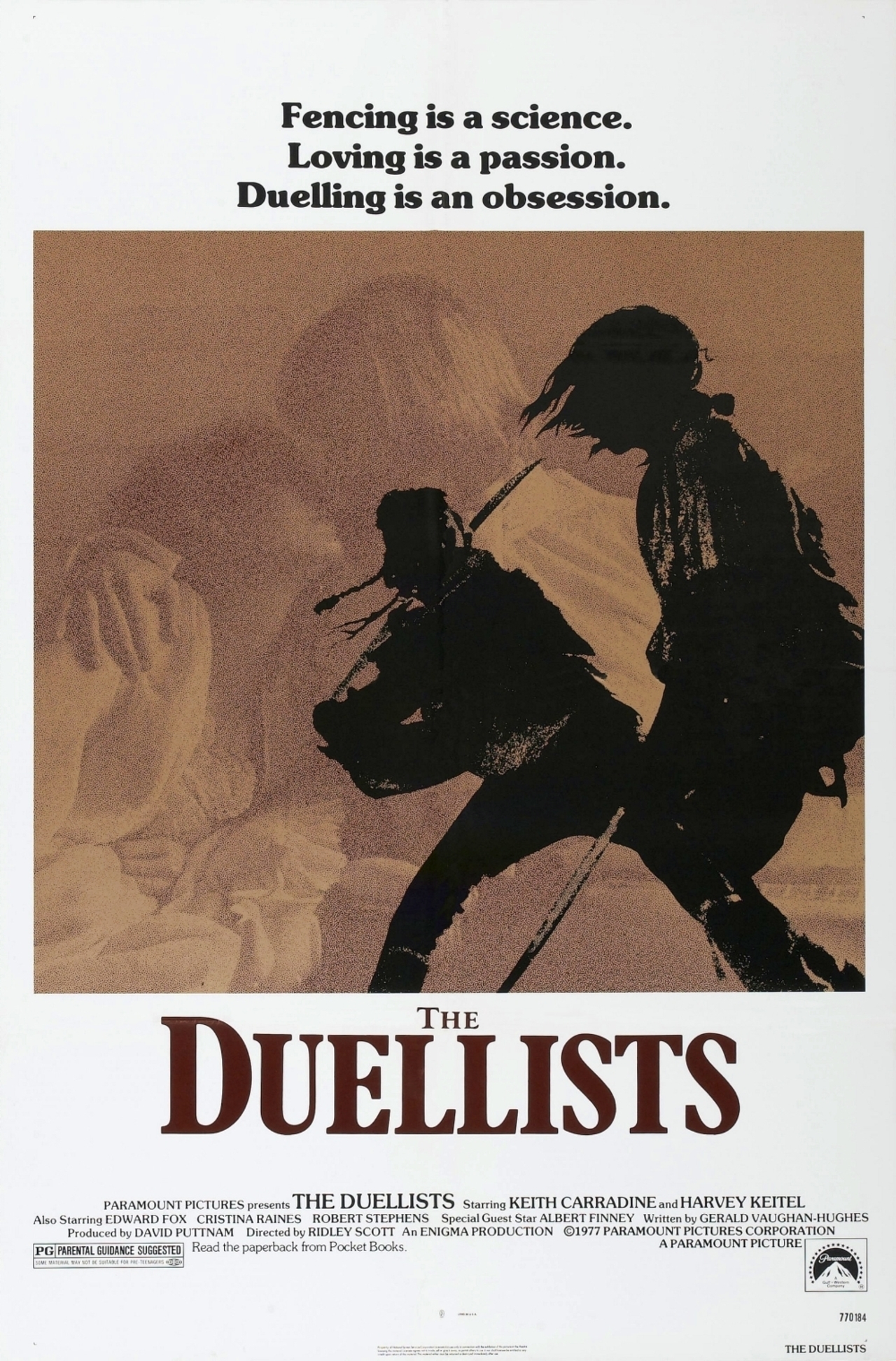
The Duellists (1977)

the duellists poster

For a while now I’ve had this idea of creating a list of my favorite films from every year that I’ve been alive. I was born in 1976 so I’d start there and then move forward. I’ve never actually gotten around to it because I figure I need to make sure I’ve seen all of the “classic” movies from each of those years. I don’t want to talk about my favorite films from say 1982 and have somebody chastise me for having never seen Fanny & Alexander or whatever. From there I figure I need to designate a month to each year and watch as many films from that year in that month and then I can really tackle that project. Then I realize I’m 47 years old and it will take me a few years to do that and I just give up.

The other day I randomly watched The Cassandra Crossing which was made in 1976, the year I was born. A new idea was born in my mind. What if I watched one film from every year that I’ve been alive, and do it in chronological order? That seems fun. The only rule would be it has to be a movie I’ve never seen before. And so here we are.

The Duellists is one of those films that’s been on my list to see for a very long time. It was Ridley Scott’s first film and while he is not by any means my favorite director, when he’s good he’s really good and I’d heard this one was really good. I heard correctly.

Based on a Joseph Conrad short story The Duellists focuses on two French soldiers during the Napoleonic Wars. It begins with Lieutenant Gabriel Feraud (Harvey Keitel) dueling with a young man, whom he promptly skewers with his sword. Turns out the young man was the son of the mayor of Strasbourg which puts Feraud into hot water. The higher-ups send Lieutenant Armand d’Hubert (Keith Carradine) to put Feraud under house arrest. He’s having none of that and immediately challenges Armand to a duel. Armand initially thinks the whole idea is ridiculous, dueling with a man he has been sent to arrest for dulling, but Feraud is relentless and the two eventually do duel. The fight ends when Armand knocks Feraud unconscious and is then clawed in the face by his mistress.

A few months later they duel once again and Armand is seriously wounded. Over the next decade, they duel several more times. It is never made clear why Feraud insists on dueling Armand every time they meet. For his part, Armand wants no part of it, but he is duty-bound. If Feraud claims some offense and demands a duel, then he must agree. They cannot duel if Armand outranks Feraud, nor if France is engaged in war. Luckily for Armand, Napoleon is in charge, and Napoleon is always at war.

The film never lets us know if there was an offense to begin with. It sometimes hints that it might have been over a woman, or perhaps Feraud thinks Armand is not loyal enough to Napoleon. But it doesn’t really latch onto either of these ideas. Maybe Feraud hates Armand for some imagined slight. Or perhaps he just likes to duel. The film mostly follows Armand, only letting us see Feraund during the duels, so maybe he spends all of his free time dueling as many people as he can.

The film was influenced by Barry Lyndon (1975) the only Stanley Kubrick film I have yet to watch. The cinematography is lush and beautiful. Keith Carradine is one of those actors whose name always rings a bell, but I can never remember who is he or what he’s starred in. Until I see his face and hear his voice, then I remember how good he is in everything. He’s terrific here. He is a man who wants a simple life, and mostly finds it, but that life is constantly interrupted by Feraud and his demands for duels. When he sees Feraud in a cafe, Armand promptly leaves. He doesn’t want to fight. Yet he always does because he feels honor bound.

The movie is all about honor and duty and how those are often foolish and futile things. Feraud wants to kill Armand over some perceived slight that is so minuscule Armand doesn’t even know what it is. Armand is willing to die (or to kill) to uphold his honor. One could easily expand these thoughts broadly into the futility and foolishness of war between nations. The movie doesn’t get bogged down into these high-minded ideas. It keeps things grounded.

It is amazing to think this was Ridley Scott’s first film. It is an ambitious film for any filmmaker and for it to be his first time as a director it is rather stupendous. That he followed this with Alien(1979) and then Blade Runner (1982) is astounding. Sadly, the rest of his career has not always been so monumental, but for those three films alone he may stand tall.

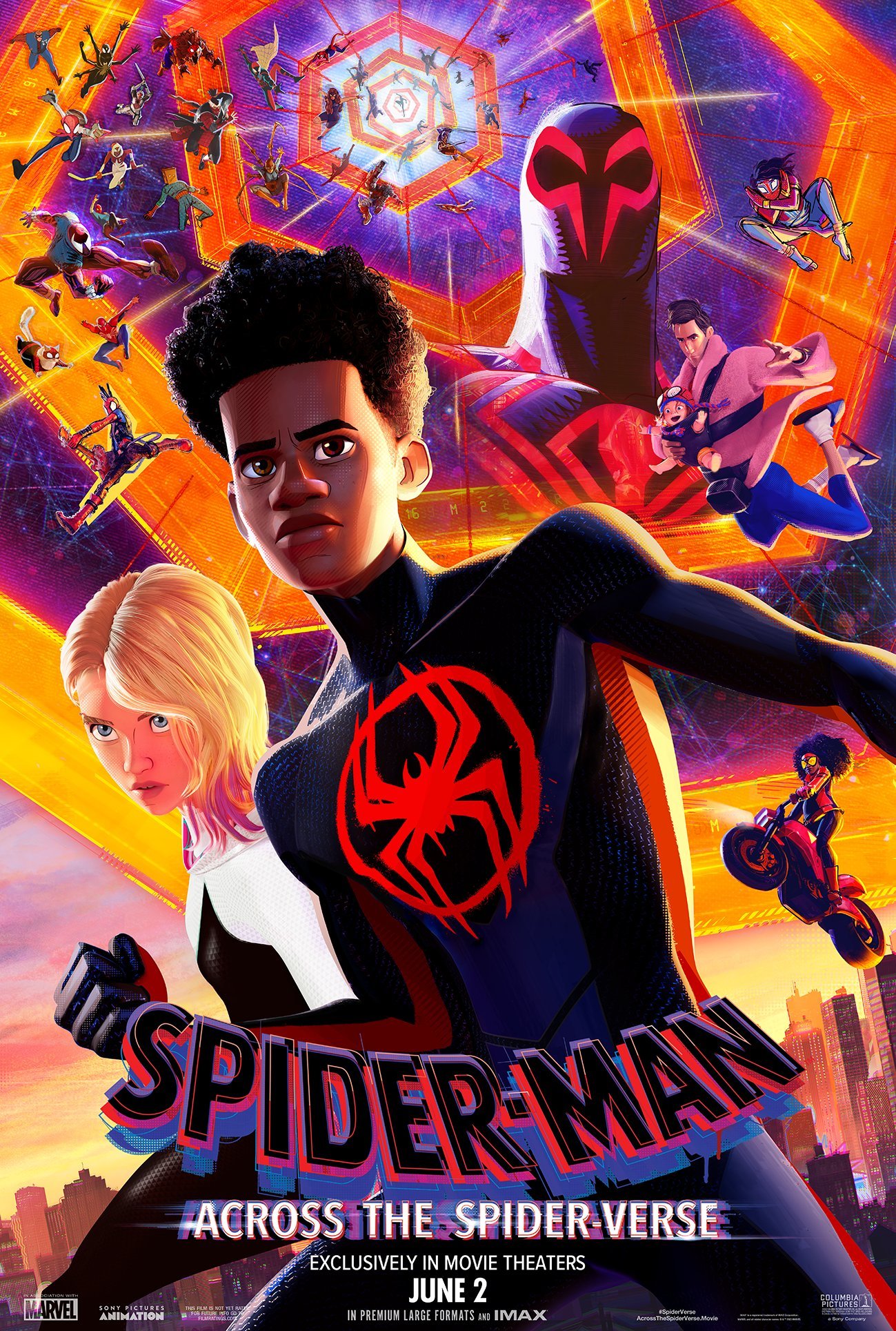
The Movie Journal: June 2023

across the spider-verse

I watched 46 movies in the month of June. Thirty-eight of those were new to me. Twenty-five of them were made before I was born.

I didn’t have a theme this month though I did have quite a bit of review material to watch which dictated my viewings somewhat. I also went down a bit of a 1980s rabbit hole for a little while.

I’ve started a series where I plan to watch one movie from every year I was born in chronological order. I’ll talk more about that in a different post, but that will explain why, here at the end of the month, I started watching a bunch of movies from the late 1970s.

Favorite new watches of the month include The Duellists, Ace in the Hole, and Spider-Man: Across the Spider-Verse (a rare film watched in the theater).

James Coburn has entered my list of Top Actors Watched this month, he’s tied with Courteney Cox and Roger Jackson with six films watched this year. Randolph Scott and Wilbur Mack also enter the list with five films. I got a Scott boxed set for Father’s Day and have watched several films from it. Wilbur Mack starred in all of the Mr. Wong movies and I watched them for a review.

William Nigh jumps up to the number two spot for the Top Directors Watched list, he directed the Mr. Wong movies.

Here’s the complete list

Taste of Fear (1961)
Dracula: Prince of Darkness (1966)
Mad Max (1979)
The Driver (1978)
The Duellists (1977)
The Cassandra Crossing (1976)
Waterworld (1995)
Christine (1983)
The Old Dark House (1963)
The Mosquito Coast (1986)
Footloose (1984)
Bloody Hell (2020)
Cold Eyes of Fear (1971)
Queen Christina (1933)
Ace in the Hole (1951)
Cocaine Bear (2023)
The Stranger Wore a Gun (1953)
Hangman’s Knot (1952)
The Mad Miss Manton (1938)
Doomed to Die (1940)
Boom Town (1940)
The Shout (1978)
The Fatal Hour (1940)
12 Feet Deep (2017)
Mr. Wong in Chinatown (1939)
The Scarlet Claw (1944)
The Mystery of Mr. Wong (1939)
The Bribe (1949)
Dead Men Don’t Wear Plaid (1982)
Meyer from Berlin (1919)
The Oyster Princess (1919)
Basic Instinct (1992)
Maggie (2015)
Caliber 9 (1972)
Ginger Snaps 2: Unleashed (2004)
Rise: Blood Hunter 2007
Doctor Who: Black Orchid 1982
Mr. Wong, Detective (1938)
Spider-Man: Across the Spider-Verse (2023)
The Package (1989)
Bus Stop (1956)
Harakiri (1962)
The Night Runner (1957)
Dawn of the Dead (2004)
Special Effects (1984)
Step Down to Terror (1958)

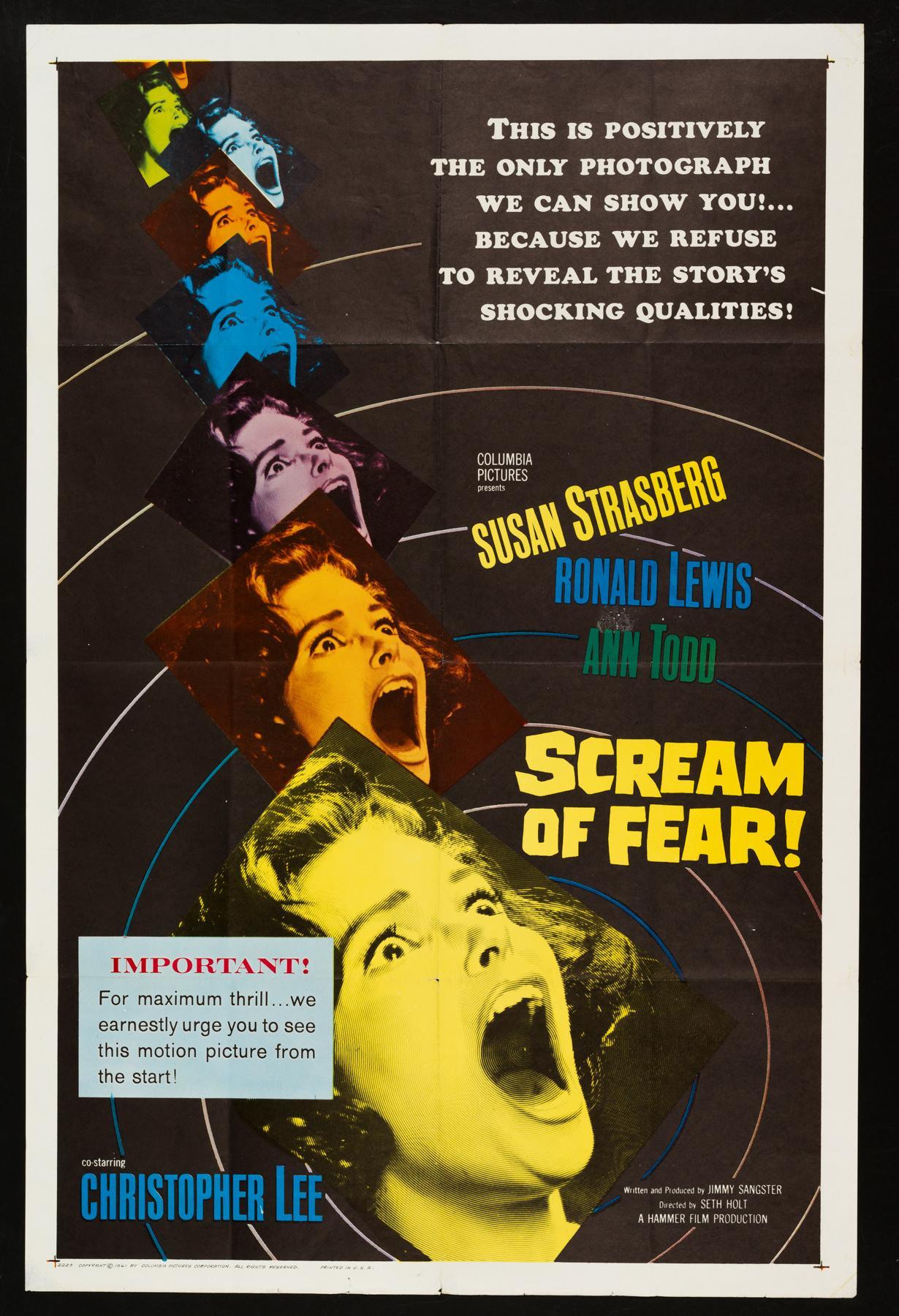
The Friday Night Horror Movie: Taste of Fear (1961)

taste of fear

On Friday nights me and the family usually go upstairs to my room and watch Doctor Who. Afterward, the wife and daughter remain in our room to watch Youtube videos, while I go downstairs and watch a horror movie. Tonight, the daughter is staying over at a friend’s house. Which leaves me and the wife here alone.

Friends, I have to admit I didn’t know what to do with myself. We were too tired and poor to really go out for a date night. It is too hot outside to go to the park or anything. So, we had a little dinner and watched a movie. Two movies, actually.

Because I am a creature of habit I could only watch a horror movie tonight. That’s just what I do on Friday nights. Also, I write this article and I couldn’t let you all down, could I? I know every single one of my readers waits for me to tell them what horror movie I watch on Friday nights. 🙂

But my wife doesn’t like horror movies. So, I had to find something she could enjoy as well. Enter Hammer Studios. They made a whole lot of horror movies in the 1960s and 1970s that are not too scary, or gore-filled but are also a lot of fun. My wife can enjoy that sort of thing, and actually quite likes Hammer Horror as a genre.

The first film we watched was Dracula: Prince of Darkness (1966) which is the third film in Hammer’s Dracula series and the second to star Christopher Lee as the vampire (the second film The Brides of Dracula (1960) doesn’t actually have Dracula in it at all). It wasn’t great and since we decided to watch another film after that one, and it is actually quite good, I’ve decided to talk about it instead.

Taste of Fear (sometimes called Scream of Fear) is a wonderful bit of gothic psychological horror. It stars Susan Strasberg as Penny Appleby a wheelchair-bound heiress who has been away from home for ten years. When her father summons her she returns to his estate on the French Riviera. Strangely, when she arrives she finds that her father has just left on business. Stranger still, that night she sees a light on in the no longer used summer cottage attached to the estate. Upon investigating she finds the corpse of her father sitting in a chair.

Fleeing, she accidentally falls into the pool and knocks herself unconscious. When she awakes she is assured by everyone that it was all just a hallucination caused by fatigue and too much wine. As an avid moviegoer, I know at this point she’s being gaslit, but the reasons why are unclear.

The film has a lot of fun (very slowly) unveiling those reasons. Penny continues to see and hear things that make her believe her father is at the house, but no one will believe her. Well, almost no one. The chauffeur (Ronald Lewis) eventually does and becomes the love interest. The film gives us so many twists and turns that it is hard to know what is real and what isn’t. Just when I thought I knew what was happening the film mixed things up and I was completely surprised.

It is a bit of a slow burn, it takes its time to get interesting, but it is beautifully shot in black and white and is filled to the brim with atmosphere and mood. Once things do take off it becomes really quite wonderful.

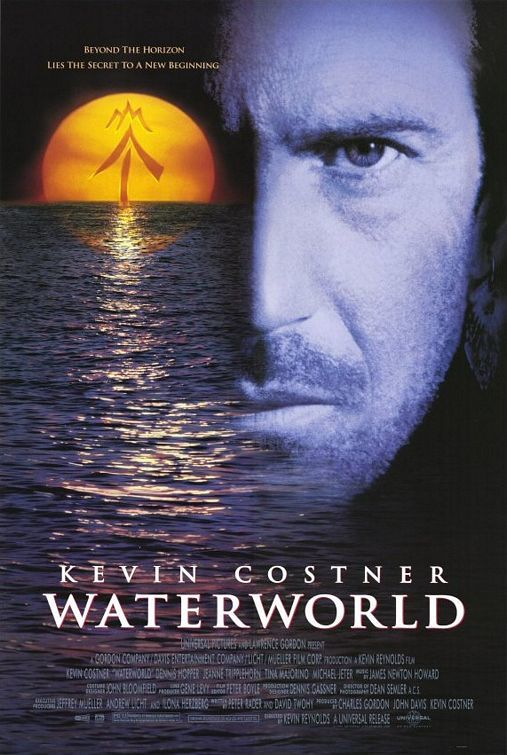
Waterworld (1995)

waterworld

This film had a notoriously troubled production and was, at that time the most expensive film ever made. I still remember newscasts breathlessly talking about production delays and cost overruns. It became one of the more famous cinematic bombs.

The story is actually pretty cool – the polar ice caps have melted covering all the land with water, creating an apocalyptic world where everyone survives on boats and you have to barter for everything. It is like Mad Max, but on water instead of the desert.

The sets and effects are all practically done, and I love that. They built a huge floating atoll and shot it on the ocean just off of Hawaii. The world-building is very cool.

The script is bad. It is filled with a lot of cheesy gags and ridiculousness. Kevin Costner is half-fish for some reason. Dennis Hopper, as the villain, is way over the top and just awful. The direction is sloppy. I kept thinking if it had been directed by George Miller it would have been a stone-cold classic. As it is, it is marginally worth watching, but just barely. I watched the studio cut which runs just over 2 hours. There is an extended cut that lasts over three. Maybe that one is better, but I can’t imagine sitting through it.