Dario Argento’s Deep Cuts Blu-ray Reivew

image host

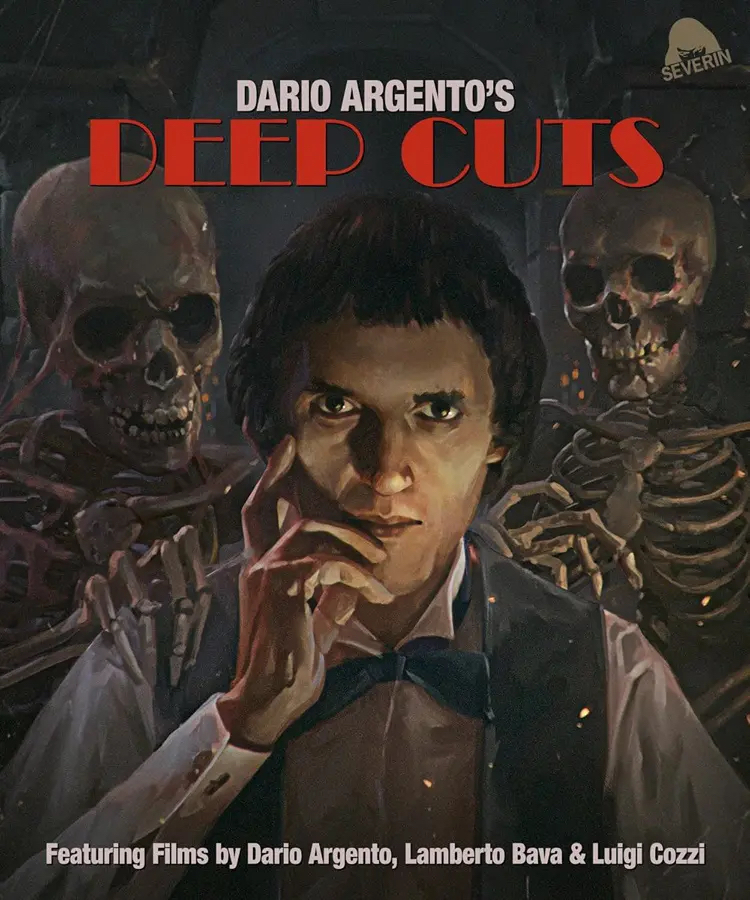
I’ve talked about Dario Argento, the Italian horror director, many times on this site. He’s one of my favorite horror directors, and certainly my favorite director of Gialli. For a time, during the 1970s and 1980s, he styled himself as something of an Alfred Hitchcock figure – a persona bigger than the movies he made. He produced and hosted several different television series for Italian TV and Severin Films has boxed them all together in this nice little set.

You can read my full review of everything inside over at Cinema Sentries.

The Friday Night Horror Movie: Opera (1987) & Tenebrae (1982)

image host

Apologies for my delay in getting The Friday Night Horror Movie out last night. For once I actually went to a movie theater and watched not one, but two horror movies. By the time I got back, it was late and I was too exhausted to write anything.

The Circle Cinema in Tulsa is one of my favorite places to see a movie. It opened in 1928 as a neighborhood movie house and ran as such until the late 1970s. By that time Tulsa had changed so much that the neighborhood wasn’t in much need of a neighborhood cinema and it closed its doors. Soon after it was purchased by another company and became a porno house.

In 1983 Francis Ford Coppola used it in his film The Outsiders. Then it closed its doors for a long time until reopening as an arthouse theater in the early 2000s. It has stayed as such ever since.

It does show some mainstream films, most likely to pay the bills, but its focus is on smaller-budget, foreign, and arthouse movies. It also does a lot of fun special screenings and events. I got to see James Ellroy give a talk before a screening of LA Confidential. They show Silent Movies on Saturdays with a live organ accompaniment. I’ve now seen four Dario Argento films there on a late-night showing.

I’ve always been a bit of a homebody. Covid has only intensified that aspect of my personality. I’ve come to realize I don’t go out nearly as much as I used to. I mean I was never one for clubbing or parties, but we did like to go to the park once and a while, or to fun local events. But over the last few years, we’ve mostly just stayed home and watched movies.

I’ve decided that 2025 is a year for change. I’m going to get out more. Do more fun things. Maybe meet some people. So when I learned that the Circle Cinema was doing a Dario Argento double feature last night I knew I needed to go.

They made it a fun event by calling it Splatter University. Before the films, they displayed a bunch of trivia about Argento, Giallo, and other horror films. The organizer gave a little talk before each film and at the end, they gave us a goofy little diploma.

Though I nearly fell asleep in the second feature (it didn’t start until after 10) I had a great time. They do these types of events pretty regularly and I hope to make it a habit.

The films, of course, are great. Opera is Dario Argento’s last great film. He’s made some decent films since then, but none of come close to the heights he reached at his peak. It is about a young opera singer (Christina Marsillach) who gets a chance to star in a production of Verdi’s Macbeth when the original lead singer gets into a terrible accident.

She is a great success, but soon enough a madman starts killing everyone she knows, often tying her up and making her watch in the process. In one of Argento’s great uses of violence, the killer tapes needles to her eyes forcing her to watch for if she blinks she’ll cut herself.

Made five years earlier Tenebrae stars Anthony Franciosa as an American writer of violent mysteries visiting Rome on a book tour. Soon enough someone starts killing people as a sick tribute to his latest novel, also called Tenebrae. (You can read my full review here.)

Argento is known for films with complicated, sometimes ridiculous plots and these two are no exceptions. I’ve seen them both several times before but it was fun watching them with a crowd, laughing at some of the sillier moments. But what the director lacks in plot cohesiveness he more than makes up for in style. Seeing these films on the big screen was enormously satisfying.

I’d previously watched Argento’s Suspiria and Deep Red at the Circle Cinema and I hope they’ll continue showing his films in the years to come.

Bring Out the Perverts: Tenebrae (1982)


cover

While Mario Bava may have invented the Giallo, it was Dario Argento who popularized it in 1970 with The Bird With the Crystal Plumage. Without that film, we wouldn’t be talking about Giallo at all. Then in 1975, he perfected the genre with Deep Red.

While the genre was a very popular one, it had its critics. Many criticized its overt sexualization of violence and its graphic violence towards women. In 1982, just over a decade after making The Bird With the Crystal Plumage and thus creating the Giallo craze, Argento made Tenebrae, a film that can be viewed as the director’s direct response to the criticism of his films. While the genre would continue to be popular throughout the 1980s and Argento would make several more, Tenebrae can also be looked at as a final statement about the genre from the director.

While The Bird With the Crystal Plumage opens with the killer typing something on a typewriter – he is the creator of the art, Tenebrae opens with the killer reading an already-published novel – he is an audience to the art. That novel, also titled Tenebrae, was written by our protagonist Peter Neal (Anthony Franciosa) and it could rightly be considered a Giallo. It is about a killer who attacks women he considers to be perversions to society.

The real killer acts like a copycat to the killer inside the book (inside this film). We see him murder a woman who offers herself up sexually in order to get out of a shoplifting charge, and then later a lesbian couple with an open relationship. Like Travis Bickle in Taxi Driver, the killer believes he has been sent to rid the streets of so-called scum.

Peter Neal is in Rome for a book tour celebrating Tenebrae. His agent Bullmer (John Saxon) keeps booking him interviews in which Peter is constantly being asked about what effects the violence in his book may create in society. That’s Argento getting meta, as he was often asked similar questions about his movies.

When one of the murder victims has pages of his book inserted into her mouth the police begin asking Peter questions. Later the killer will slide quotes from Tenebrae under his door. Peter and his assistant Anne (Daria Nicolodi) start their own investigation.

The film is filled with scenes exactly what you’ve come to expect from an Argento-directed Giallo. There are sly camera angles, extreme close-ups, surprising jump-scares, blood-soaked violence, and a righteous score from Goblin (well, three of the members at least).

While the film does present lots of questions about violence and art – does it create violence in society or is it simply a depiction of the existing violence in society? Argento doesn’t give us any concrete answers. His on-screen surrogate, Peter Neal bats the questions away with pat answers, but the movie seems to indulge the idea both ways. Perhaps his films are a reflection of the real-life violence Argento was surrounded by, or perhaps his films influenced others to violence in society. Maybe a little bit of both occurred. It is clear Argento loved depicting violence in his films. I suspect he was never ever to truly untangle the reasons why. I love his films and abhor real-life violence so I have no pat answers either.

What we are left with is a pretty darn good little film filled with stylish violence and an interesting mystery. That is more than enough for me.

Bring Out the Perverts: Deep Red (1975)

poster

I wrote about Deep Red for my Friday Night Horror movie a little over a year ago. I don’t know that I have a whole lot more to say about it. It is my favorite Giallo. I think it perfectly encapsulates everything I love about the genre.

Dario Argento is a master of creating fascinating visual images. Working with cinematographer Luigi Kuveiller they created a film that is stunningly beautiful, thrilling, and often quite terrifying.

I’ve seen it at least half a dozen times and it has never lost its allure for me. I’m always captivated.

I still do get it confused with The Bird with the Crystal Plumage. They have similar plots starting with a protagonist who witnesses a murder inside a building while he is on the streets of Rome. There is some detail he saw but can’t quite put his finger on.

But it doesn’t matter. Plots really don’t matter in these things, especially in Deep Red. I still couldn’t tell you all the details of what happens in this film, or at least what they mean. There are moments and entire scenes that don’t make any sort of logical sense, but they completely work for me. They are frightening, alluring, or at the very least visually interesting.

The score from the progressive rock band Goblin is an all-timer for me. It is sometimes a bit over the top but it somehow works perfectly within this film.

Everything works perfectly within this film. I love it so much.

Bring Out the Perverts: The Bird With the Crystal Plumage (1970)

cover

Dario Argento’s debut film was not the first Giallo ever made (Mario Bava’s 1963 film The Girl Who Knew Too Much usually gets that honor, followed by another Bava film Blood and Black Lace from 1964 – both of which I’ll be writing about later). Nor did it create any of the hallmarks usually associated with the genre (black-gloved killers, bold use of color and camera angles, psycho-sexual motives, etc). I wouldn’t even say he perfected it (at least not with this film). Still, The Bird With the Crystal Plumage was exceedingly successful, helping to popularize the genre and influencing a decade’s worth of Italian horror films.

It is a bit like how John Carpenter’s Halloween didn’t invent the slasher (a genre greatly influenced by the Giallo) but it popularized it to the degree that without it 1980s horror would look extraordinarily different.

The thing to remember about Giallo is that they are all essentially murder mysteries. Someone is killed (usually female, usually graphically), and someone else (usually not a cop) tries to solve the crime. They fall into the horror category because the violence is often stylized, brutal, and blood-soaked, and the killer often pops out of nowhere leading to jump scares. But at their heart, they are no different from other crime stories.

The genre in general, and Argento in specific never seem to care that much about the details of the crime or its solution. If, upon examination, some part of the story doesn’t make logical sense, that’s okay. What matters is the style and the execution (of the story, not the victims, although the kills are an important part of the genre.)

So it is with The Bird With the Crystal Plumage. Some of the plot points are a little goofy and the final solution is a bit ham-fisted, but I never care no matter how many times I watch it.

Sam Dalmas (Tony Musante) is an American writer vacationing in Rome. While walking home one evening he sees what appears to be a woman attacked by a man wearing a black trench coat, black gloves, and a black fedora. The woman is stabbed and the man runs away through a back door.

Sam tries to help but finds himself stuck between two sliding doors. He stands there helpless, watching this woman bleed out. Eventually, he manages to flag down a passerby who calls the police. The woman lives.

The police think the assailant has also killed three other women in the city within the last few weeks. Sam is haunted by what he saw. He thinks about that scene over and over again. He can’t even make love to his girlfriend without thinking about it. He’s convinced he missed some vital detail. Perhaps he saw the man’s face and can’t remember it. Or maybe there is some other clue he’s not seeing.

The film keeps flashing back to that moment as well. We see the attack from slightly different angles. In slow motion. It zooms in. As an audience, we examine the scene, looking for some vital clue. All cinema is voyeurism, but Argento makes it explicit. We are a part of this movie.

In another scene, the killer will look at his potential victim. He’ll snap photographs of her. The movie camera will look through the photographer’s lens. Voyeurism upon voyeurism.

The film opens with the killer in his black coat, donning his black gloves typing at a typewriter. Anecdotally I know that it was Dario Argento himself wearing those gloves, being seen creating words on a typewriter. In this moment the creator of the film portrays the killer creating something. Creation is art and art is violence.

Sam begins his own investigation into the crime. He visits an antique shop where one of the victims worked. The last thing she sold was a strange painting of a girl getting stabbed in the snow. More art. More violence. He visits the artist and finds that his painting is based on a real incident that happened several years before.

Meanwhile, the killer makes a few attempts on Sam’s life. In one stunning scene, he’ll attack his girlfriend in her apartment. The killer makes threatening phone calls. All the while Sam and the police get closer to him.

The ending is a bit of a letdown. It reminded me a little of Pscyho which is also a fantastic film right up until the end.

The Bird With the Crystal Plumage isn’t my favorite Giallo, it isn’t even my favorite Argento film but it is a stunning debut and helped crystalize what the genre was about, and certainly influenced nearly every Giallo that came after.

I previously reviewed this film for Cinema Sentries.

The Friday Night Horror Movie: Deep Red (1975)

deep red poster

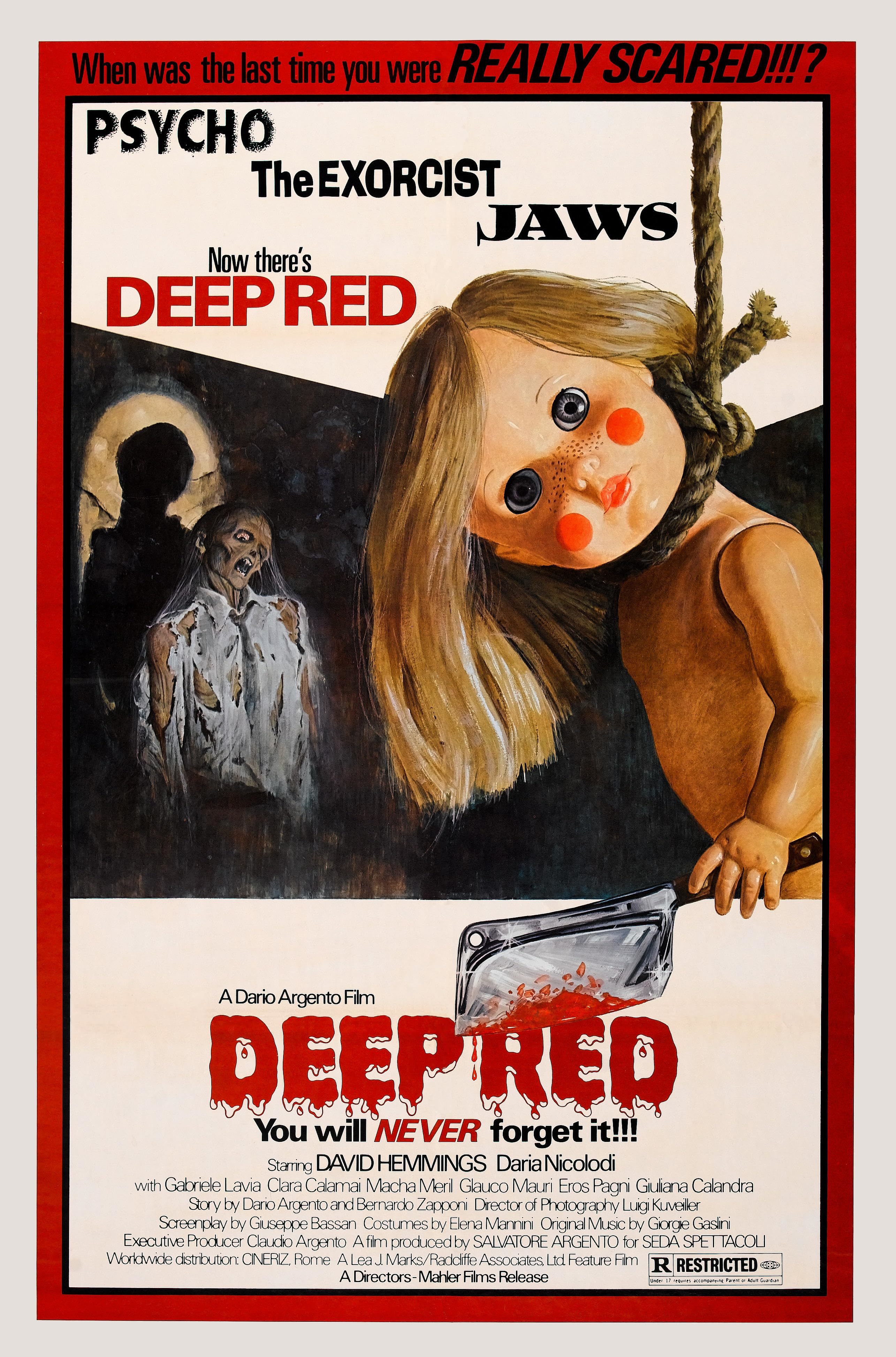
I’ve mentioned Dario Argento several times before on this blog. He’s one of my favorite directors – certainly my favorite horror director. He didn’t invent the Giallo, but he definitely popularized it and perfected it. Deep Red is one of, it not my actual favorite films of his and possibly the best Giallo ever made.

The plot is deceptively simple – it is a relatively straightforward murder mystery – and yet also a convoluted mess. David Hemmings stars as a jazz pianist who witnesses his downstairs neighbor get brutally murdered. He teams up with a journalist played by Daria Nicolodi and tries to figure out what happened.

I’ve seen this film at least five different times, and I’m still not sure I understand everything that happens in the film or the real motivation of the killer.

And I don’t care in the least that I don’t.

Argento was a master of style and it is on full display here. It is full of dark, bold colors (especially red) and disturbing imagery. The camera moves and slides across corridors, it is filled with extreme closeups and wondrously stylized violence.

There is a scene about halfway through the film in which a character sits in his office. The camera and the music let us know that something scary is about to happen. That the killer is there. The character knows it. We hear the killer whisper. Then something happens, I won’t spoil it here, but it is one of the most surprising and terrifying things I’ve ever witnessed at the cinema.

When my heart slows down I realize that this moment makes absolutely no logical sense, especially given who the killer turns out to be, but again I just don’t care.

The score by progressive rock band Goblin is kinetic, percussive, and heart-pounding. They wrote the scores for several other Argento films and they are all terrific. The director uses the music to great effect – stopping and starting it at crucial moments creating small, but effective adrenaline rushes.

If you are a horror fan I absolutely recommend Deep Red to you.

Like a lot of Italian productions at the time the film was shot without sync sound. All of the dialog was dubbed in post-production in both English and Italian. In previous watches I was always confused because periodically some characters would start speaking Italian without warning and then a moment later they would switch back to English. Bilingual people can, and often do this in real life, but there didn’t seem to be any rhyme or reason to it in this film.

Pulling out my Arrow Vidoe Blu-ray tonight I discovered why. They edited out several scenes (and snippets of scenes) for the exported cut of the film (which presumably means the copies sent to English-speaking countries) and thus they did not record English language tracks for those scenes. Or if they did the English tracks were lost at some point. Those scenes have since been added back into the English language version of the film but there are no English language audio for the new scenes. In some ways this adds to the already disjointedness of the film.

The Week In Movies: February 26 – March 04, 2023

the big trail poster

I watched eight movies this past week only one of which I’d seen before. Most of them were pretty good. Also, I did really well writing about a lot of these movies as I watched them. I’m proud of myself.

El Dorado (1966): I mentioned this one last week as it worked well as a double feature with Rio Bravo (1959). It follows a very similar plot structure as that movie with John Wayne playing a gunfighter for hire who teams with a drunk, a young buck with something to prove, and an old codger who stand against a villainous crew. It moves quicker than Rio Bravo and is funnier, but I’d give the earlier film a slight advantage.

Welcome to the Sticks (2008): A very silly, very funny comedy from France. I wrote about it here.

The Cariboo Trail (1950): A not particularly great western with Randolph Scott. I wrote a review which you can read here.

The Naked Spur (1953): A fantastic western with James Stewart, Janet Leigh, and Robert Ryan. I wrote about it here.

Sleepless (2001): Dario Argento’s late-career work has been fairly spotty, but this is a good one. I wrote about it in my Friday Night Horror column.

Looker (1981): I loved Michael Crichton’s books when I was a teenager. His method of blending slightly futuristic science with a very human story was right up my alley. As a director, his stories have remained interesting, but stylistically they tend to be pretty dull. Looker is my favorite of his films that I’ve seen so far.

I wrote a spoiler-y review of it on my Letterboxd.

Dark Phoenix (2019): I’d been putting off watching this film because the reviews have been generally terrible and I love the original comic. It wasn’t as bad as I expected, but yeah, it is not good. It has been so long ago that I read the comic that I don’t have much to say about how faithful it is, except that it clearly added quite a bit of stuff. Which I get because the comic isn’t exactly cinematic.

I didn’t actually mind the story while watching it. Thinking back on it now there is a lot of stuff in it that doesn’t make much sense, but in the moment I followed along alright. But the direction, especially the many fight scenes, is just bad. It was directed by Simon Kinberg who has a long career as a writer/producer but had never directed a movie before. And it shows. The action is muddled and flat and really hard to follow.

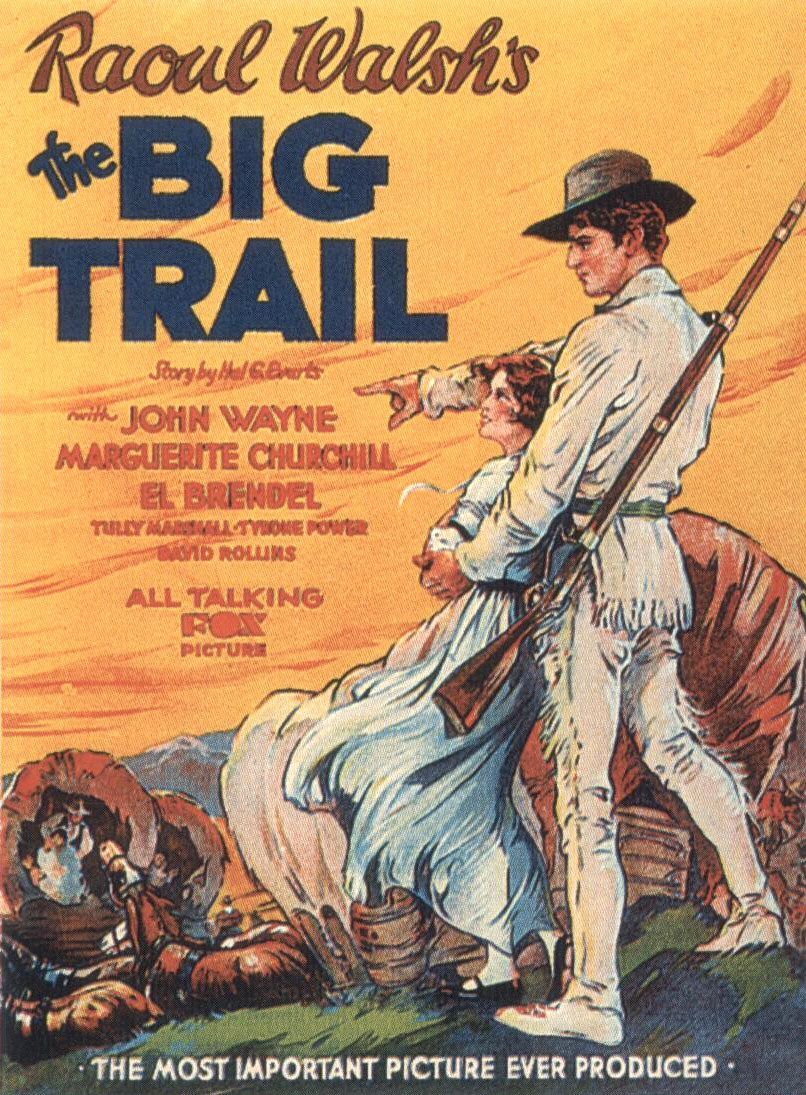
The Big Trail (1930): Nine years before John Ford made him a movie star John Wayne got his first starring role in this Raoul Walsh western episode. I will be writing a full review soon but for now I’ll just say that while the story mostly didn’t work for me, Walsh’s use of the wide screen format and his depth of field is simply astonishing.

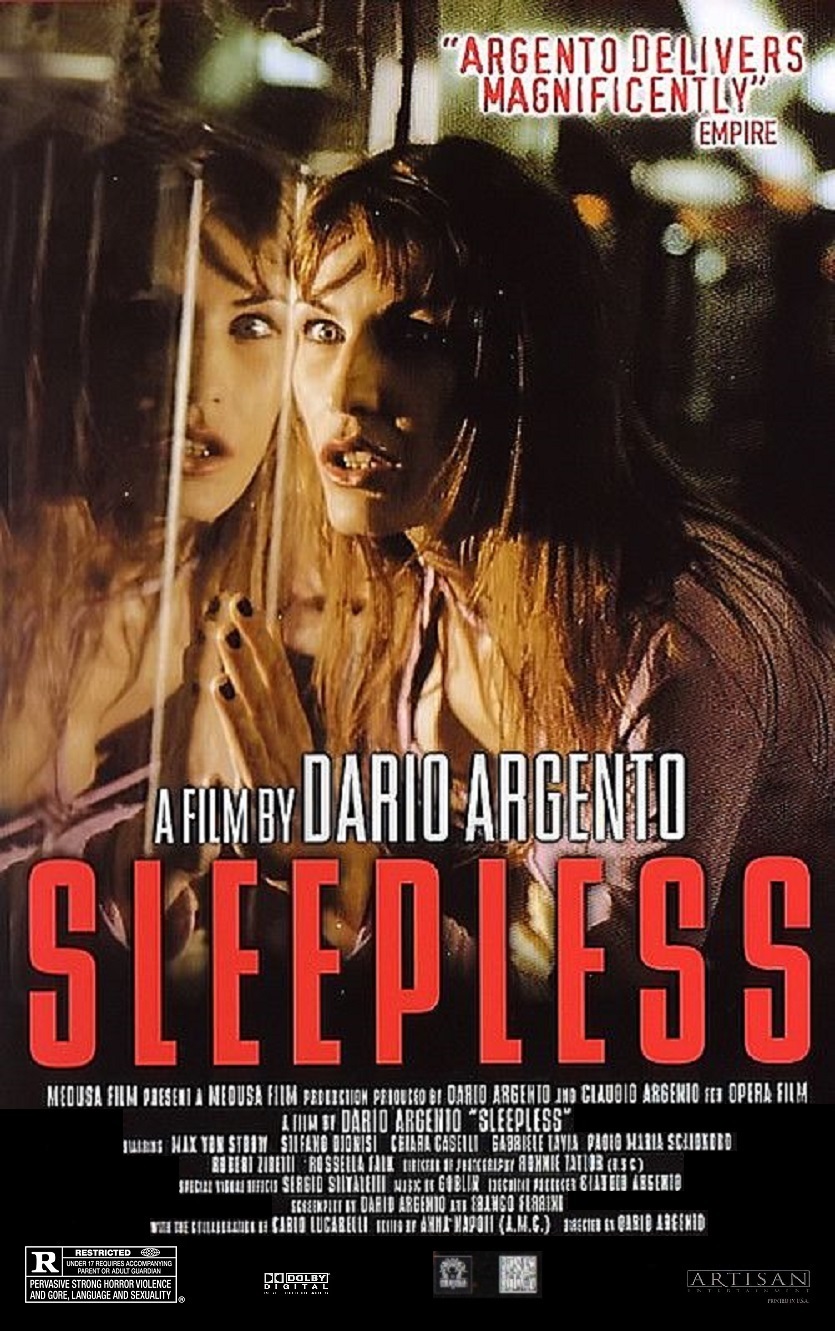
The Friday Night Horror Movie: Sleepless (2001)

sleepless movie poster

This is the third film from Dario Argento that I’ve featured in The Friday Night Movie posts. Clearly, I like the director. I’ve been trying to catch up on his filmography past the period of what would generally be called his prime. He’s definitely made some bad movies, most of them being made in the 1990s and beyond, and there was a time when I would have said he’d not made a good movie since Opera in 1987 (in fact I more or less said that in my review of Dark Sunglasses). But I think my opinion is changing.

Nobody is going to call his late career movies better than his output in the 1970s into the 1980s, but some of his later movies aren’t bad. Sleepless falls easily into that category. He’s very much aping some of those early films with a black-gloved killer, lots of stylish camerawork, red herrings galore, plenty of blood-soaked violence and he even got Goblin to do the music.

Unfortunately, it feels a little too much like an old master copying his greatest pieces long after he’s lost the particular genius that made them so special.

The great Max Von Sydow plays an aging, retired detective who gets sucked back into an old case, one he thought was solved years ago. But when more people start being murdered in the same manner he begins to realize he pinned the wrong man all those years ago.

He teams up with a man whose mother was killed by the murderer when he was just a boy. There are a lot of twists and turns and expectations that the killer is this person or that only to have everything upturned right at the end.

Argento’s signature style is there, but it feels a little muted. There isn’t any particular image that really stood out to me. Though there is a nice bit showing the insides of an answering machine that was pretty cool. The director never shied away from extreme violence, but here he leans more toward blood and gore than stylishness.

It isn’t top-tier Argento, but it is a long way from his worst and that’s always good to see at this stage in his career.

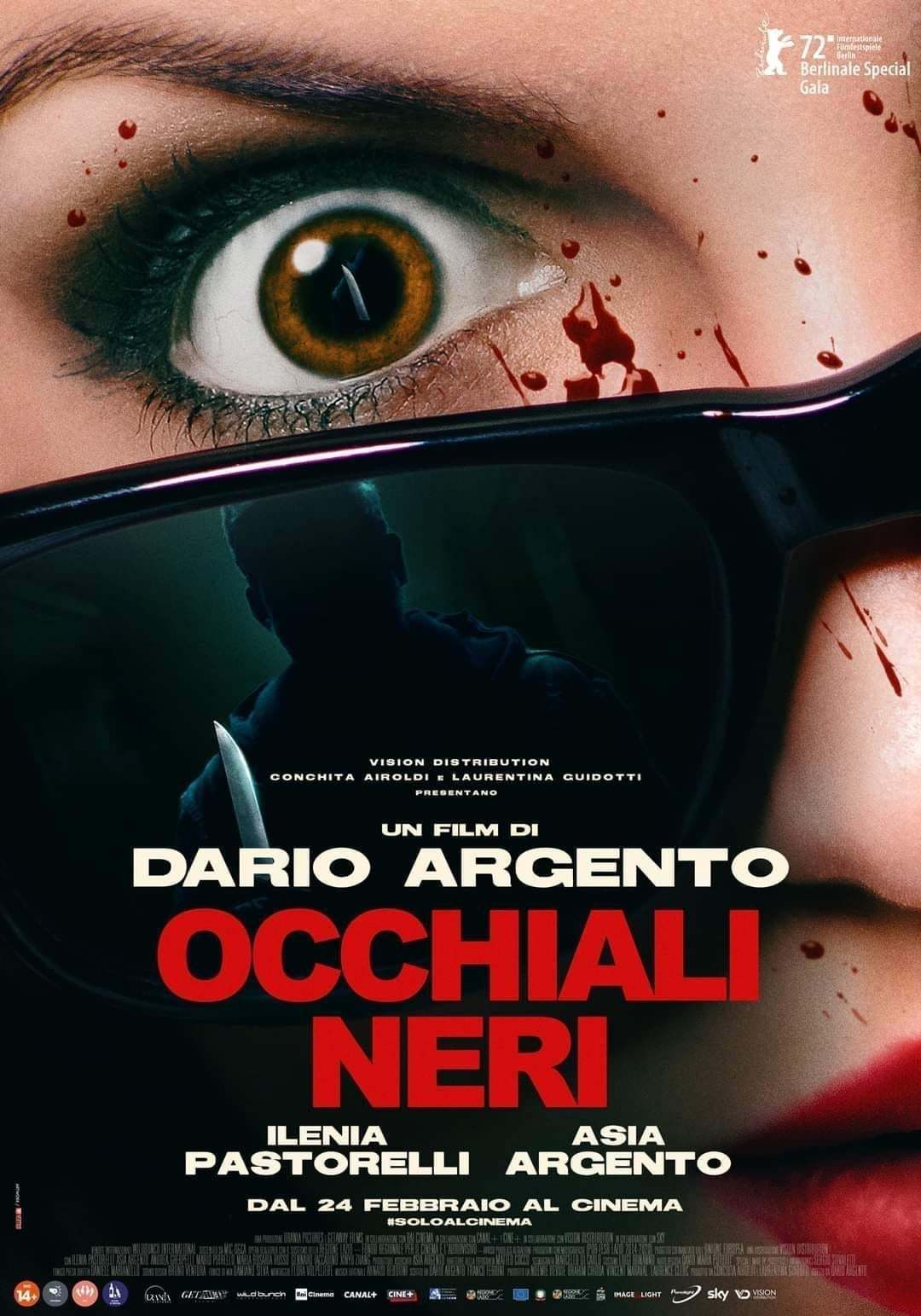
The Friday Night Horror Movie: Dark Glasses (2022)

dark glasses argento poster<

I am a very big fan of Dario Argento. He was one of the originators and the perfector of the Italian Giallo. Throughout the 1970s and much of the 1980s, he churned out one masterpiece after another. But the hard truth is he hasn’t made a good movie in a very long time, and most of his output since the 1990s has been terrible.

So it was with some trepidation that I came to Dark Glasses, his first film since the godawful Dracula in 2012. Well, I’m happy to say Argento is back, baby.

This is not Argento at his peak. It isn’t as good as Suspiria or Dark Red, but it is still pretty darn good. Gone is the shoddy CGI and dull cinematography. The film looks great and it absolutely contains some of his famous stylistic flairs.

The story involves a woman who is blinded in an accident and chased by a crazed maniac. It is none too special in that department but it works well enough. There are enough surprises to keep you guessing, and while the killer’s reveal is pretty dumb, getting there is quite effective.

This is a film that were it directed by someone else, some up-and-comer, you’d be hearing a lot more chatter about it. But because it is from a master of horror, and that it is perhaps not the peak of his career it is already being forgotten about. That’s a shame because I really liked it.

The Friday Night Horror Movie: Two Evil Eyes (1990)

image host

When my daughter was much younger, and we were living in a little apartment we used to have what we called sleepover nights. Regularly, on a Friday night, my wife and I would drag our mattress into the living room and we’d make up the couch into a little bed for the girl. We’d make some popcorn and stay up late watching movies. Then we’d all sleep together in the living room. It was always a very fun time.

Then we bought a two-story house. The bedrooms were all upstairs so it was impossible to drag a mattress downstairs to the living room. Luckily, we have a television in our bedroom so we’d make a palette for the daughter on the floor and continued our sleepovers there.

Eventually, my daughter decided my wife and I snored too loud and she stopped sleeping in our room. But we’d still stay up late on Friday nights watching movies. One Friday night I realized our local college TV station was playing Tom Baker-era Doctor Who stories and I started watching them each week. My wife likes classic Doctor Who as well so she’d join me. My daughter loves Nu-Who, but she’s never quite got the appeal of the classic series. Still, she’d bring in her toys and play while we watched the TV show.

Eventually, this turned into us just watching the new series so my daughter could enjoy it with us. At some point, I started going downstairs after the show was over and my wife and daughter would stay in our bedroom watching YouTube videos.

I’d usually turn on a movie downstairs, usually falling asleep on the couch. Eventually, random movies turned into horror movies. Friday has become my favorite night of the week as we order a pizza, watch Doctor Who and then I watch a horror movie late into the evening.

I thought it might be fun to make a regular post of my Friday Night Horror Movies, so here we are.

The thing is, I haven’t actually watched the movie yet, and this will be true of every Friday night posting. Like I said I usually fall asleep on the couch watching the movie and so I won’t be able to actually talk about what I’ve watched until Saturday. But it seems silly to have a post called The Friday Night Horror Movie when I’m writing it on a Saturday morning.

What I’d like to do is start the post on Friday Nights and then maybe sometime on Saturday edit in a review.

This week’s movie is Two Evil Eyes, which is actually two movies in one. Originally planned as an anthology movie with multiple directors it turned into two one-hour films with Dario Argento and George A. Romero taking a stab at adapting an Edgar Allan Poe story. I’ll let you know what I think of it tomorrow.


Ok, it is Sunday now, so obviously I forgot to tell you what I thought “tomorrow.”

And now I’ve seen like five movies since watching this one so my memory is a little blurry. Basically, I liked this movie pretty well. I’m not well read in Poe’s books. I’ve read one or two stories and of course “The Raven” but that’s about it. I have seen several different cinematic adaptations of The Black Cat, two of which were adapted by Argento’s Italian compatriots Sergio Martino and Lucio Fulci. So that story is quite familiar to me even if I haven’t read the book.

The Romero story, The Facts in the Case of M. Valdem, is completely unfamiliar to me. It involves a woman who married an old, rich bastard in order to get his money. But he’s taking too long to die so she and an ex-boyfriend hatch a plan to hypnotize him, get him to sign over all his wealth to her, and then murder him. Everything goes to plan except after he’s dead he keeps on living.

Or something. It isn’t very clear whether he turns into a zombie or a ghost or something else. It has Romero’s typical social commentary (rich people are both horrible and weird), some nice gore, and little else.

Argento’s Black Cat adaptation doesn’t do anything new with the material. A crime scene photographer (played with gusto by Harvey Keitel) kills his girlfriend, ties her corpse to some coat hangers then builds a wall around her. A black cat helps get him captured by the police.

It has some of Argento’s typical style (there is a POV shot of the cat and some great extreme close-ups) and lots of blood-soaked violence. The opening scene is basically the aftermath of Poe’s story The Pit and the Pendulum.

All in all neither film is particularly great, but if you are a fan of either director there is enough here to make it worth your time.