Foreign Film February: The Magician (1958)

the magician poster

The Magician often gets overlooked when it comes to discussing the films of Ingmar Bergman. Part of this is due to timing. Made just a year after the duo masterpieces The Seventh Seal and Wild Strawberries it feels small and lesser in comparison. He followed it with The Virgin Spring, Through a Glass Darkly, and Winter Light, three deeply felt films that wrestle with the existence of God and human suffering.

But while The Magician certainly is a lesser film when compared with those movies, I wouldn’t skip it when taking in Bergman’s filmography. Were it made by a lesser director, or perhaps if it had even fallen somewhere else in his oeuvre I suspect The Magician would be talked about much more.

A traveling troupe of performers who sometimes sell themselves as magicians or spiritualists, and sometimes work as healers selling various medicinal concoctions are on the run from the law.

When they arrive in a small village in Sweden they are immediately stopped by the police and taken to a large house where they are questioned by the Police Superintendent (Toivo Pawlo), Dr. Vergerus, the Minister of Health (Gunnar Björnstrand), and Consul Egerman (Erland Josephson). Egerman, who is fascinated by the occult makes a wager with Vergerus, a skeptic, about the veracity of the troupe’s supernatural abilities.

After answering some questions the troupe agrees to perform their act the next morning. The troupe is ostensibly led by Tubal (Åke Fridell) who is the talker, the showman of the bunch, but the Magician is Vogler (Max Von Sydow) who pretends to be mute for much of the film. He is assisted by his wife Manda (Ingrid Thulin) who dresses as and pretends to be a man. There is also an old lady, simply called Granny (Naima Wifstrand), and their driver Simson (Lars Ekborg).

Because this is a Bergman film he is interested in the tension between the supernatural and science, faith and unbelief. It plays a little with whether or not the troupe has real powers before they admit they are frauds.

At the evening meal, Tubal tries to sell some of Granny’s potions. One of the maids is very interested in a love potion. She happily buys it from him then sly admits she doesn’t want it, but rather she wants him. Another maid (Bibi Andersson) drinks the potion and uses it as an excuse to seduce Simson. Everyone uses superstition to get what they want.

One of the other reasons I suspect this film doesn’t get its due is that tonally it is working in a few different playgrounds. It is sometimes a farce, playing the situation for laughs, and then it will switch into something more dramatic, towards the end it gives us a ten-minute scene that is pure horror. Those things don’t always gel well, but it mostly worked for me. The horror segment especially. It isn’t particularly scary, but Bergman, working with cinematographer Gunnar Fischer are such great technicians the scene works perfectly on a technical level.

The cast is as good as you would expect. I love when Von Sydow works with Bergman and he’s as wonderful as ever. It is a beautifully shot and constructed film. I’m always in awe of how gorgeous Bergman’s films look and this is especially beautiful, even though most of it takes place indoors.

It isn’t Bergman’s best film by far, but it proves that even when his films aren’t masterpieces, there is still plenty to enjoy and ponder.
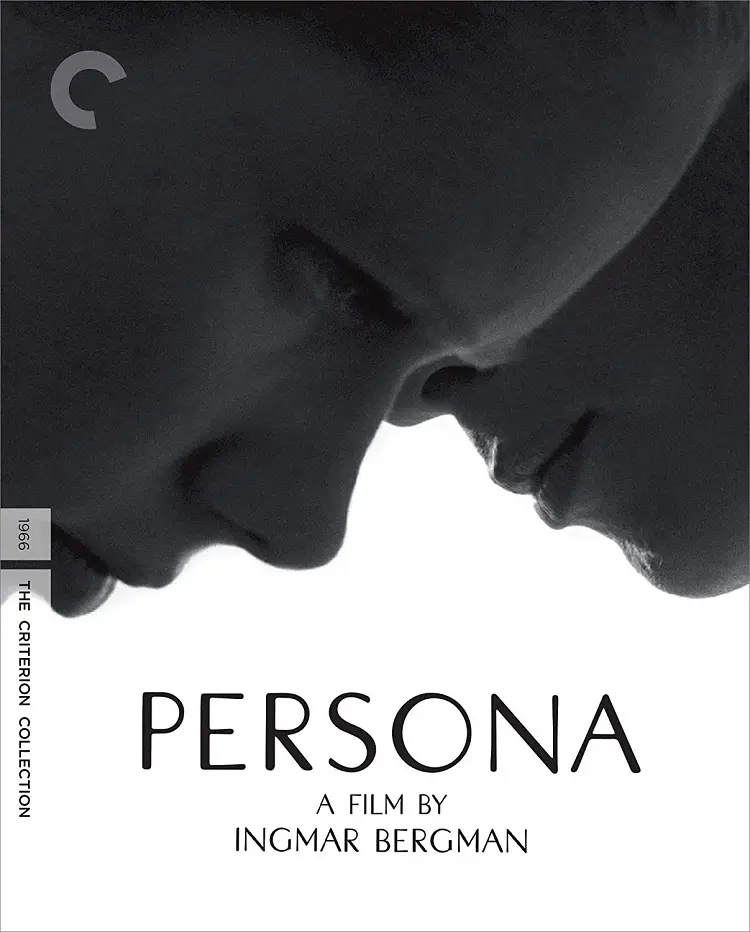
Persona (1966)

cover art

I am not a great intellectual. I’m not even that smart. When I talk about movies I try to impart at least some sense of their themes and meaning, but I’m not very good at it.

I tend to connect to movies with my gut not my brain. I talk about them from an emotional standpoint not necessarily an intellectual one. I don’t know if that’s good, or bad, but that’s the way it is.

I love Ingmar Bergman’s films. He is, perhaps, one of the most intellectual filmmakers to have ever made a film. I do connect to them emotionally, but I have a difficult time understanding why. Persona is one of his most difficult films to understand, and yet I love it still.

I struggled with my review over it because I felt I needed to talk about it from an intellectual point of view, and yet I’m not sure I understood anything about what it means. You don’t have to. It stands on its own as a beautiful mystery.

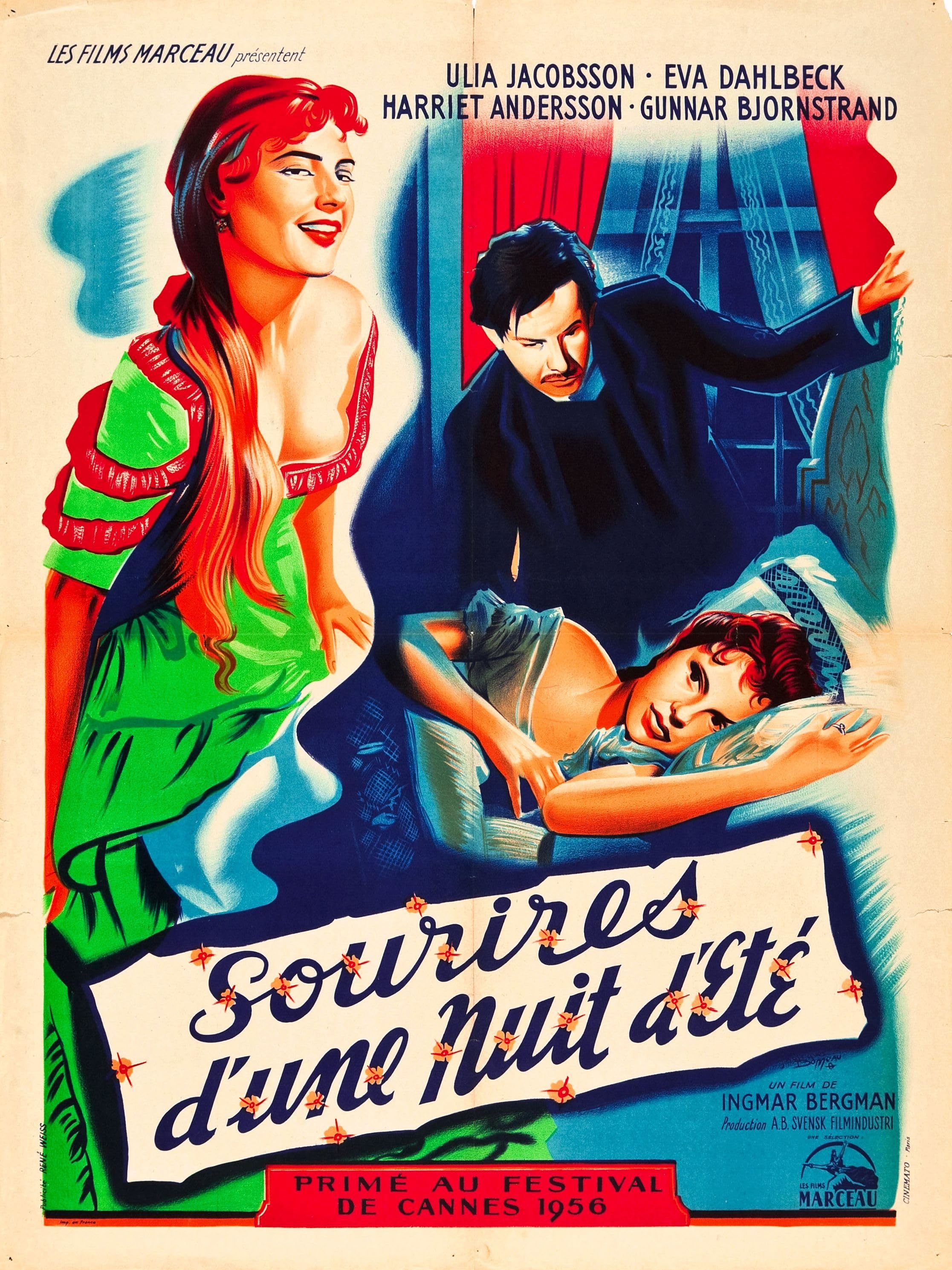
Foreign Film February: Smiles of a Summer Night (1955)

smiles of a summer night

Several years ago, probably during one of their semi-annual 50% off sales, I bought the Criterion Collection’s big boxed set of Ingmar Bergman’s movies. Ingmar Bergman is a titan of cinema. He’s widely considered one of the world’s greatest film directors, having helmed many of the greatest movies ever made.

His films are intellectual, somber, sometimes experimental, and almost always challenging. He made movies about life and death, spirituality, and religion (he made an entire trilogy from the Silence of God). As such his films are often difficult to watch. I love many of his films and yet this boxed set has set on my shelf mostly gathering dust. Bergman films are a bit like “Dark Stars” from 1969 – infinitely rewarding, but you’ve got to be in the right head space and you’ve definitely got to pay attention to what they are trying to do.

Since it is Foreign Film February I knew I wanted to watch a Bergman (I think I said the same thing last year and didn’t manage to do it). The Criterion set doesn’t present the films chronologically, but rather as one might if you were creating a film festival for the director’s works. Previously, I randomly picked films out of the collection to watch but this time I decided to begin at the beginning, the Collection’s “Opening Night” selection, Smiles of a Summer Night (1955).

Smiles was made at a difficult time in Bergman’s life. His previous two films had not done well and the studio essentially told him if his next film wasn’t a success he was done. His personal life was in turmoil and, according to the liner notes included in the Criterion set, he decided he was either going to make a new film or commit suicide.

So, Ingmar Bergman, a director famed for his sober, austere films about the meaning of life, during one of the lowest points in his life made a light comedy.

And honest-to-God it is funny.

When I read Bergman had made a comedy I figured it would be more like Shakespearian comedies, meaning that it wasn’t a tragedy – that it didn’t end in the death of everybody. But no, it is a laugh-out-loud, full of clever wordplay and incident comedy.

It is a comedy of manners. It reminded me of the works of Moliere or Oscar Wilde or some other writer I studied in school and have long since forgotten.

The dialogue is clever and droll, and Bergman uses such a light touch that one sometimes has to stop and wonder where all this fancifulness came from.

Fredrik Egerman (Gunnar Björnstrand) is a successful, respected, middle-aged lawyer. He’s married to the much younger Anne (Ulla Jacobsson). It is his second marriage, his first wife died some years ago. Before he met Anne he was involved in a torrid romance with Desiree (Eva Dahlbeck), a famous actress.

When he learns that Desiree is in town starring in a show, he gets two tickets and decides to take his wife. But before they go they take a nap together (as one does). While sleeping he reaches over and caresses Anne. She’s pretty excited by this because even though they’ve been married for a couple of years they’ve never had sex. He doesn’t want to spoil her or some such nonsense. So he’s caressing her and getting all sexy and stuff and then he says her name, and how much he loves her. Except the name he says isn’t Anne, it’s Desiree.

Oops.

They go to the theater, but Anne is understandably upset. When she realizes that the star is named Desiree and that her husband keeps looking at her through the opera glasses, she feigns illness and goes home. Once he’s settled her into bed he slips back out and goes to the theater.

They go back to their place where they barb, jab, and argue over why they broke up in the first place. Frederik solicits help from Desiree for his marital strife, but it is clear they both still have some feelings for each other.

Then Count Carl-Magnus Malcolm (Jarl Kulle) shows up. He’s Desiree’s current lover and he’s insanely jealous. He’s also married. To a girl named Charlotte Malcolm (Margit Carlqvist). At one point without a bit of irony, he utters the line “I can tolerate my wife’s infidelity, but if anyone touches my mistress, I become a tiger.”

Naturally, the five of them wind up together at a dinner party before the film ends. Plenty of mix-ups, double entendres, and verbal jousts ensue. It really is astounding just how light and effervescent this film is. It is hard to believe that the same man who directed this film would go on to direct The Seventh Seal and Wild Strawberries just two years later.

That isn’t to say everything is carefree and happy in this film, it is still a Bergman after all. There is a duel in which two characters play Russian Roulette. And one of the film’s best gags comes at the end of a suicide attempt.

One can’t help but wonder what cinema would be like had Bergman gone on to make delightful romantic comedies. Who knows what else we might have gotten. Instead, we got a plethora of serious dramatic masterpieces. I’ll certainly take that any day of the week.

Autumn Sonata (1978)

autumn sonata criterion bluray

I have not yet watched an Ingmar Bergman film for this year’s Foreign Film February. I really should remedy that. I bought a big boxed set of his films from the Criterion Collection a couple of years ago and haven’t begun to really scratch the surface of it. Bergman films tend to be very weighty, which sometimes makes them difficult to watch. They are often rewarding, but the effort it takes to watch them often makes me put them off. Foreign Film February is always a good excuse to make me make that effort, but I haven’t yet.

Goals!

I did watch this one several years ago and reviewed it here. It is definitely a rewarding watch.

Wild Strawberries (1957)

wild strawberries criterion

I often think that Ingmar Bergman is the reason most Americans don’t like foreign films. Bergman often made emotionally heavy, deeply symbolic, and frankly not all that easy to watch movies. He is the epitome of the intellectual, art-house type of filmmaker that I think a lot of Americans think of when they think of foreign language films. The fact that there are all kinds of films – silly comedies, dumb action films, etc. – being made in countries that aren’t American doesn’t matter. Foreign films = inexplicable movies that only smarty-pants film critics like.

Or something. I generalize. But it is true that when I talk to my friends who don’t like foreign films they seem to think that all foreign films are European art-house films of the kind that Bergman specialized in.

Which, is perhaps, a weird way of saying I actually love Bergman. I find most of his films to be utterly fascinating. Wild Strawberries is one of his best. Criterion released a Blu-ray of it a few years back, and I’ve got a review.