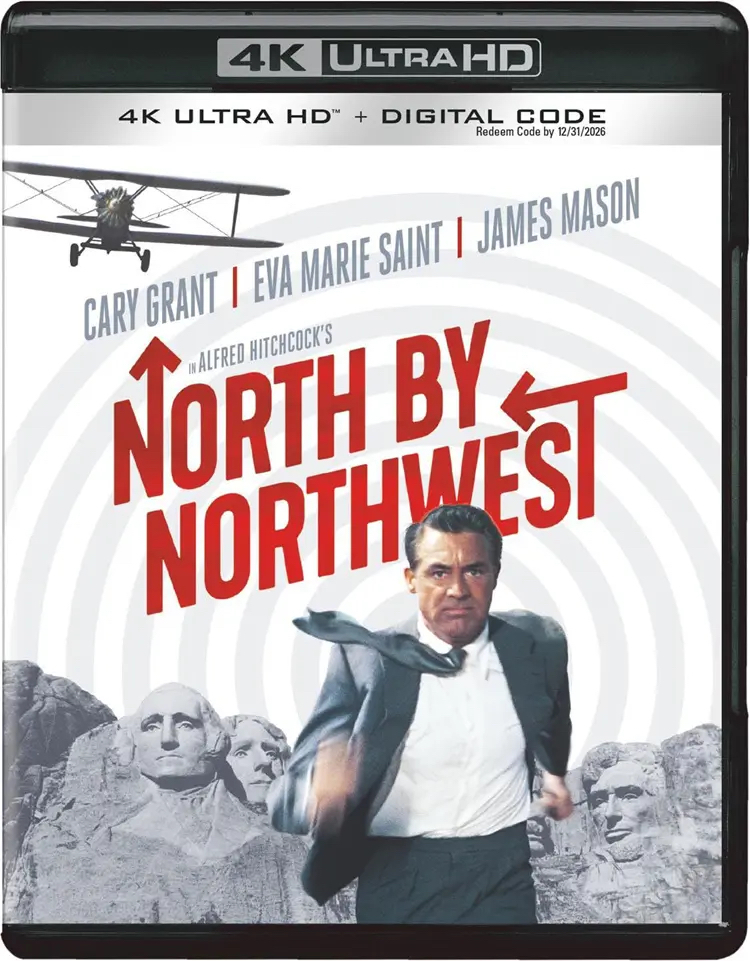
North by Northwest (1959) 4K UHD Review

image host

In my most recent movie journal, I rated North by Northwest with one star. Reader CleJackson noted this and said he was looking forward to reading my one-star review.

Of course, that rating was an accident. North by Northwest is one of my favorite movies. It is the perfect entertainment. It is Alfred Hitchcock at the height of his powers directing Cary Grant at the height of his charm.

I love it so much. I did review the new 4K UHD release of the movie and I definitely did not give it a one-star rating. You can read my thoughts over at Cinema Sentries.

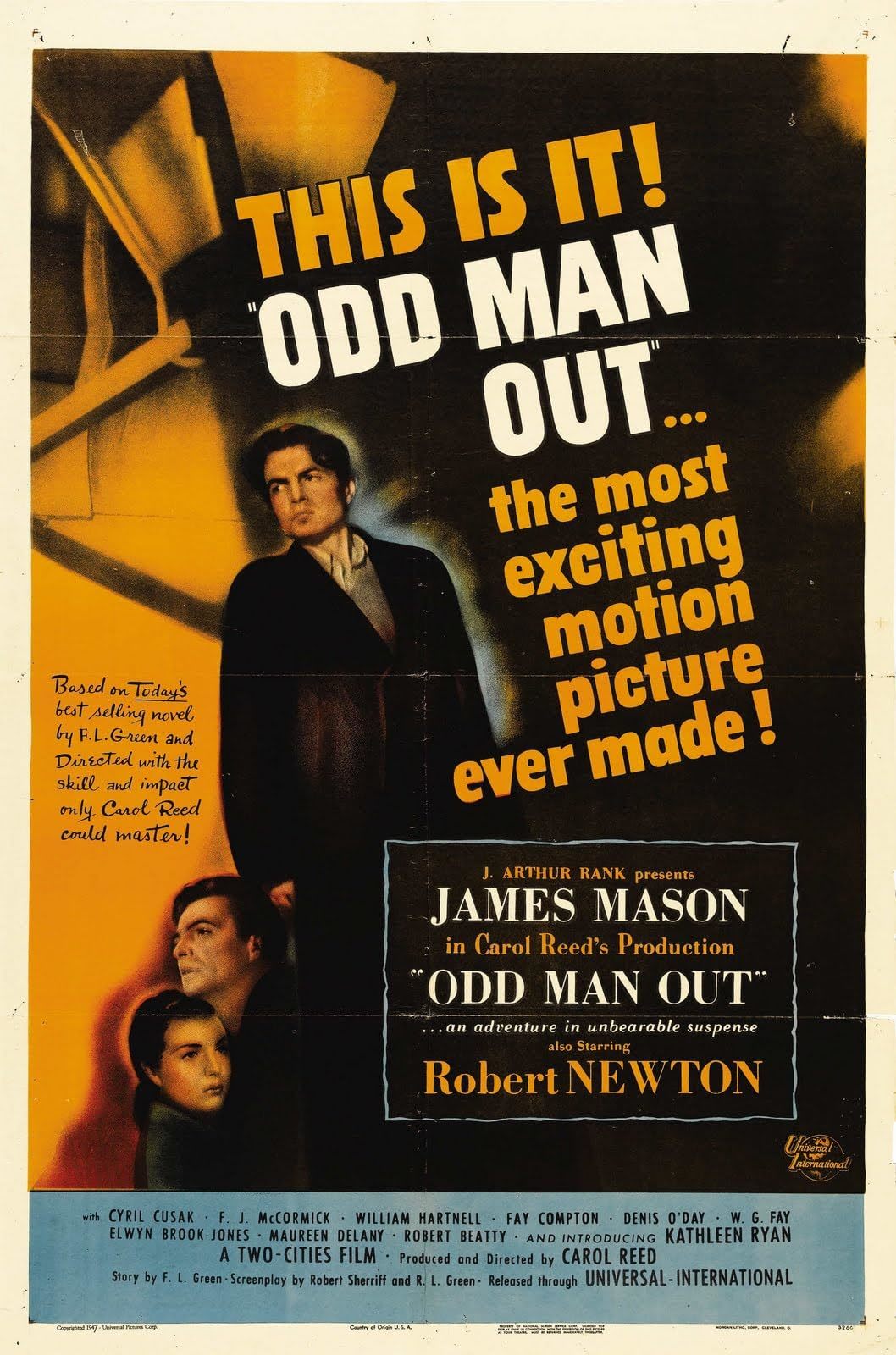
Noirvember: Odd Man Out (1947)

odd man out poster

Sometimes people suggest that The Third Man which was directed by Carol Reed and stars Orson Welles in a pivotal role was also secretly directed by Welles. Or that at the very least Welles gave Reed plenty of advice. The Third Man indeed contains the types of skewed camera angles and shrewd use of shadows and light that Welles so loved, but anyone suggesting that Carol Reed was incapable of such things has apparently never watched Odd Man Out. For it contains many such moments and it came out three years before The Third Man.

Odd Man Out stars James Mason as Johnny McQueen, an Irish Nationalist leader who becomes wounded after a botched robbery attempt. The film follows along as his friend and the police scour the city looking for him, while continually checking back on him as he hides out in an air raid shelter, a local pub, and finally an artist’s residence.

What is remarkable about the film (besides the filmmaking itself which is brilliant) is how much the film makes us care about all of these characters. Johnny is a criminal. He commits that robbery for the money, not out of desperation or need (there are political motivations, but the film never delves into what they are). He kills a man while fleeing the crime scene. While the film shows him remorseful for that act it never once lets us forget it. But it also makes us feel and care for him as a person.

Thematically the film delves deep into that question as to how we are as a society to deal with and react to a criminal – a fugitive from justice.

A couple of elderly women see Johnny fallen on the street. They think he has been hit by a truck. They take him in and attempt to patch him up. But once they realize he has been shot, and thus who he is, they change. They are no longer helping a wounded man but are aiding and abetting a criminal.

A priest asks for information about Jonny’s whereabouts. He won’t protect him from the police but would like to hear his confession. A local street hood tries to sell his hiding place to the highest bidder. An artist wants to paint him as he dies. Johnny’s girl Kathleen (Kathleen Ryan) will do anything to save him, even risk her life.

The film takes us through all of these interactions with great care and style. It doesn’t so much judge these characters as it asks us to ponder their dilemmas. Shot in stark black and white it makes great use of its sets, its location settings, shadows, and lights. It is breathtaking to look at. It is the sort of film that makes you think maybe Orson Welles learned a thing or two from Carol Reed.

It made for the perfect conclusion to Noirvember.

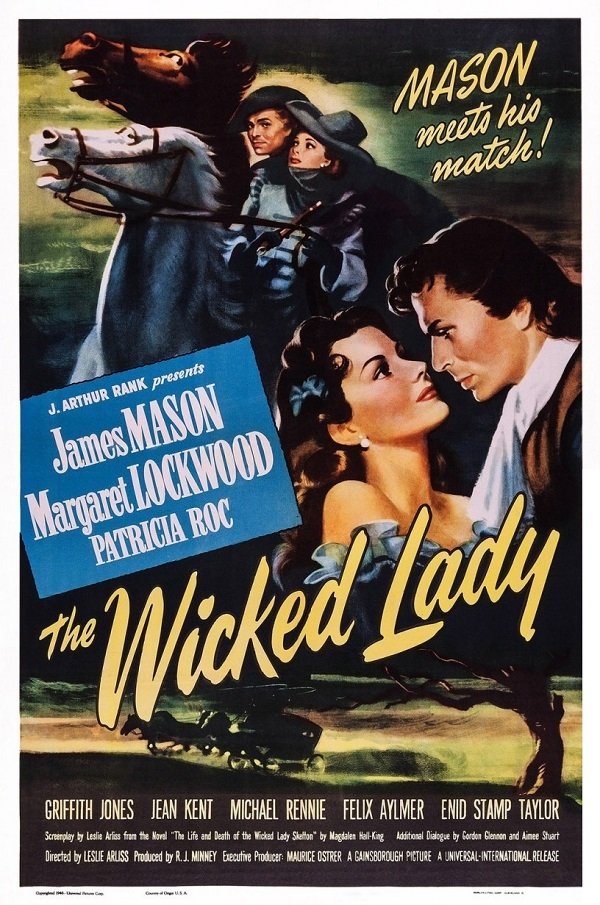
Great British Cinema: The Wicked Lady (1945)

the wicked lady

The Wicked Lady was an enormous hit at the time. It broke box-office records in Britain. Hilariously, before it could be shown in the United States several scenes had to be reshot because the American censors couldn’t handle the bountiful bosoms heaving out of the (period-appropriate) dresses.

It is easy to see why it was such a success in 1945. The story is about a proper lady who steps out of her boring life and becomes a highwayman. Women at the time could have seen it as a story of independence, of throwing off the shackles of oppression instituted by the culture of the time.

What I think is so interesting about this type of film is that because it is set in the past certain types of people could watch it, recognize that it is a liberating film, but then think to themselves “Look at how far we’ve come” and pat themselves on the back. But those in the know would recognize how far we still have to go.

And now, of course, we can look at this film made in 1945 and think similar things.

Our film begins with Caroline (Patricia Roc) preparing for her marriage to Sir Ralph Skelton (Griffith Jones). They do not truly love each other but they have a deep kinship and both need marriage partners. The night before their marriage Caroline invites her dear friend Barbara (Margaret Lockwood) to their home. She being a treacherous, scheming woman immediately sets her eyes on Sir Skelton and uses her feminine charms to win him away from Caroline. They soon marry, leaving Caroline in the lurch.

Barbara assumed Sir Skelton’s riches and station would bring her happiness but soon finds herself bored. Country living doesn’t suit her and Sir Skelton does not like venturing into the city. When she learns that one room in the mansion has a secret passageway leading to the gardens she moves in and quickly begins sneaking out at night acting as a highwayman – robbing coaches in a mask. From there she meets Jerry Jackson (James Mason) a notorious highwayman and the two begin working together. Barbara loves the life of crime and becomes cutthroat about it. Jackson might be a thief, but he has a code. He never uses real violence. Barbara is willing to kill.

One of the things I love about this film is that Barbara is not a good woman who has temporarily lost her way. She’s not some bored housewife who went looking for a little excitement and got into a spot of trouble. She is a lost woman. Irredeemable, and loving it. She enjoys the crime, she likes the violence. I’m not sure what that does to my theory that this is a liberating, feminist film.

I feel like I’m making this movie sound better than it actually is. Honestly, I found it rather dull. Margaret Lockwood is a lot of fun to watch, she seems to be loving playing this character who is joyously evil. But James Mason seems out of place and Patricia Roc and Griffith Jones are a bit bland. The action is mostly off-screen (the actual robberies we do see are dully filmed) so what’s left is a lot of people talking about them and various romances that don’t have any heat.

It isn’t a bad film, and it is interesting for the reasons I describe. Obviously, people at the time just loved it. They actually remade it in 1983 with Faye Dunaway and Alan Bates. I’d be interested to see how they updated it.

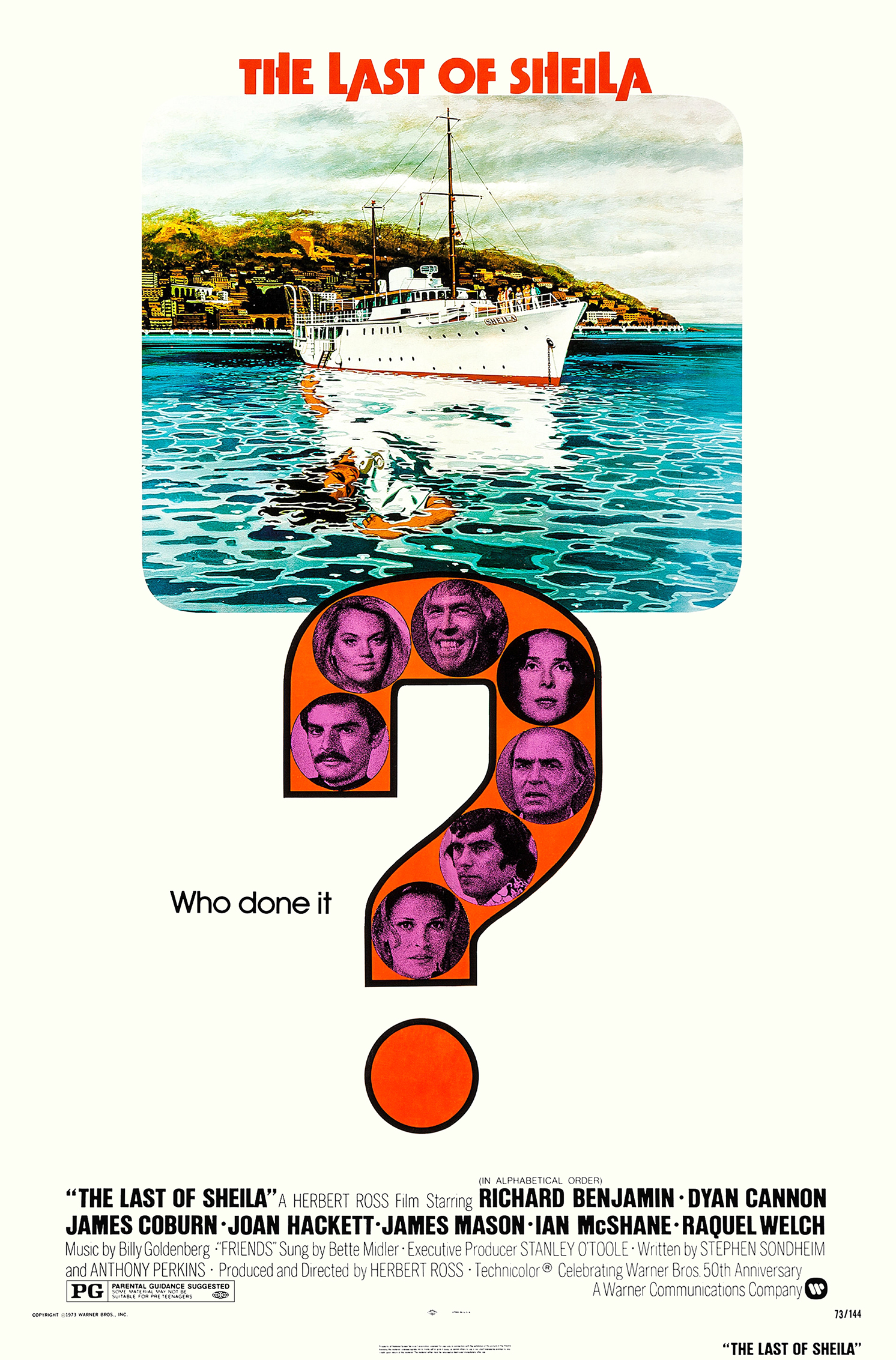
The Last of Sheila (1973)

the last of sheila

Rian Johnson listed this film as an influence on Glass Onion, his recent Knives Out sequel for Netflix (which is excellent, I highly recommend it) so I thought I’d give it a watch. Almost immediately the influences come flying right at you from the television screen.

The story involves a group of rich, beautiful, (mostly) young people who have found success in the movie industry. They’ve been invited by their friend Clinton (James Coburn) for a week aboard his yacht where he had prepared some delightfully complicated game.

The game involves revealing select secrets from each person (alcoholic, ex-convict, homosexual, child molester, etc) and will conclude with the revelation of who ran over Clinton’s wife one year prior and didn’t have the decency to stay with her and maybe call for help. Everyone more or less enjoys the game until someone actually dies and then it becomes a very real murder mystery.

Glass Onion is a lot bigger, a lot bolder, and a lot more fun, but The Last of Sheila is rather delightful in its own way. The cast includes James Mason, Ian McShane, Raquel Welch, and Dyan Cannon. It was shot on location in the Mediterranean. It was written by Stephen Sondheim and Anthony Perkins of all people.

Clinton is a movie producer and he has an idea bout making a movie about his dead wife’s life. He wants everyone he’s invited on the boat to help him make it. They, scriptwriters, directors, and actors all, desperately need him and this movie to help their sagging careers. It is full of twists and turns, mysteries and reveals. The cast is clearly having a good time.

It isn’t quite as punchy as I’d like it to be, and the direction by Herbert Ross never excites. He certainly doesn’t make great use of the beautiful setting. It feels very much of its time. One of the big secrets is the character is homosexual which wouldn’t be a big deal now, but in 1973 could be quite detrimental for a celebrity working in Hollywood. That is more scandalous within the film (as is being an alcoholic and a shoplifter) than the revelation that one of them is a child molester which is shrugged off by the characters and the film. But mostly the film is a lot of fun and if you liked Glass Onion I highly recommend it.