Foreign Film February – Mothra Vs Godzilla (1964)

image host

When I was a kid, all those old Godzilla movies were on television regularly. I’m guessing they were Saturday night movies on one of the local UHF stations, but I don’t really remember. What I do remember is how much I loved them. My favorite was Godzilla vs. Mechagodzilla. Not because I thought the film was superior to the others but because in that boyhood way of arguing who could beat who in a fight, I thought Mechagodzilla was best equipped to defeat regular Godzilla. T my young mind a robot Godzilla was the coolest. My friends would choose King Ghidorah, or Rodan, or one of the other monsters and we’d endlessly argue over who would win in a fight.

I more or less forgot about Godzilla once I became a teenager. I had no interest in the 1998 film starring Matthew Broderick or the 2014 film with Aaron Taylor Johnson. And then the Criterion Collection released the original Godzilla.

The original Godzilla was released in 1954. It was a huge success in Japan and in 1956 the rights were sold for an American release. The Americans dubbed it into English, cut most of the political allegory out of it, and did a bunch of inserts starring Raymond Burr. I’m sure it was that version I watched growing up. The Criterion release included the Japanese version of the film and that got a lot of press. I bought that disc and loved the film.

Later Criterion released an incredible boxed set featuring all of the so-called Showa Films. I bought that set (it sits proudly next to my Ingmar Bergman boxed set from Criterion making it look like Godzilla is touching Liv Ullmann’s face.)

image host

I’m slowly working my way through all the Godzilla films and I recently sat down with Mothra vs Godzilla. Like a lot of Godzilla films from this era, there is a lot of buildup before we even get to Godzilla much less his battle with another monster.

A beach is wrecked by a typhoon. Afterward, a giant blueish egg washes ashore. Some greedy businessmen purchase the egg from the fishermen who have rights to everything inside the cove. They immediately start building a theme park around the egg dreaming of the millions they will make off of it.

They are visited by a couple of twin fairies who say the egg was laid by Mothra a giant moth-shaped god that protects their island. They beg the businessmen to return the egg to Mothra, but instead, the men try to capture the fairies.

After I watched the film I learned there was a previous film entitled Mothra that deepens the legend behind the moth-god. The fairies befriend some kindly reporters before returning home.

Enter Godzilla. Once again he wreaks havoc upon the Japanese island. The reporters beg the fairies to help them destroy Godzilla. Mothra agrees only when Godzilla makes eyes for the giant egg.

Before you think that a moth, no matter how giant, could do anything against an enormous radioactive dinosaur, let me just tell you that Mothra’s wings are so powerful they essentially cause a hurricane whenever she flies. She’s also got some badass powder that hurts Godzilla in some way.

Godzilla ultimately defeats Mothra with his radioactive breath. But it is the egg that saves the day. When it hatches it releases some killer caterpillars with monster choppers and an ability to spray weblike stuff from their hind quarters.

Godzilla movies are inherently silly. And awesome. You can spend all sorts of time trying to point out their various themes and trying to suss out some deeper meaning. Or you can just enjoy a giant lizard fighting an enormous moth.

The Legend of Hei (2019)

image host

My daughter has gotten into anime in a big way. She watches a lot of the series and some of the movies. She’s started reading the mangas and her art is often based around those characters (not to mention her cosplaying). She tries to get me into some of it. Sometimes it takes, but often she’s enjoying it at a much faster pace than I can tolerate.

I don’t think she’s seen this film, as I wrote my review of it in 2021 which I think was before her obsessions with the format began, but I’ll have to show it to her as I remember it being quite good.

Foreign Film February: Hokuriku Proxy War (1977)

image host

I continue to sing Radiance Films praises. They are carving out a nice little niche market in the larger Boutique Blu-ray landscape. Their focus seems to be on foreign language arthouse films that are lesser known. The type of film that would be skipped by Criterion but are generally still quite good.

Hokuriku Proxy War is a fun little Japanese Crime Drama that is a bit confusing in the story department but more than makes up for it in its action. You can read my full review here.

Foreign Film February: The Third Murder (2017)

image host

Our second film in this year’s Foreign Film February is a Japanese legal thriller that starts out strong but quickly gets muddled and ultimately wound up kind of boring me.

In the opening scene, we see a man bludgeon another man to death and then set him on fire. Then the film moves forward in time with the killer, Misumi Takashi (Kōji Yakusho) under arrest and being questioned by his defense attorneys.

He fully admits to killing the man but his story regularly changes in regards to what actually happened and why he did it. His attorneys argue over the best way to defend their client and keep him from being executed.

The devil, they say, is in the details, and while there are a lot of details in this film, I had a difficult time caring about them. This is a film that makes quite a to-do over whether he should be charged with Robbery-Murder or Murder-Robbery. The difference being in his intentions. If his intentions were robbery and the murder came after then his motive is greed, but if he murdered him for some other emotional reason (such as anger over being fired – for the dead man was his boss) and robbed him afterward then the jury might be more sympathetic.

That’s an important legal distinction, I guess, but not one that makes for compelling cinema.

It is well-acted and well made and some of the revelations are interesting, but overall I found myself ready for it to be over long before it actually was.

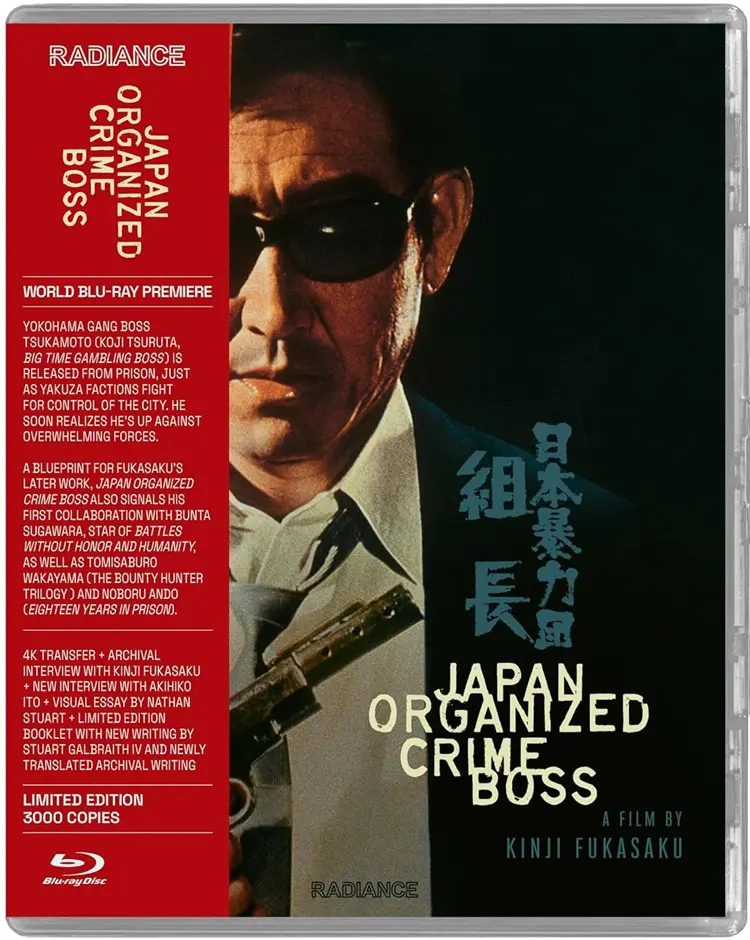
Japan Organized Crime Boss (1969)

japan organied crime boss

Kenji Fukasaku’s Japan Organized Crime Boss is a film about a man lost in time. He’s an old Yakuza who still lives by a code. But he’s been in prison for a while and that has made him want to live a quiet life. But like Michael Corleone the people all around him keep dragging him back in. But those people don’t have a code. The world is changing and it’s left him behind.

This is a good film, but a more thoughtful film than you might imagine with that title. It is shot like a documentary and is building a mythology around the Yakuza that probably never existed. You can read my full review over at Cinema Sentries.

Noirvember: Rusty Knife (1958)

rusty knife poster

I’ve mostly been watching American noir this Noirvember, but I wanted to get into something Japanese before the month was over. Rusty Knife is one of the films in Criterion’s Nikkatsu Noir set. Nikkatsu is one of Japan’s oldest, and most popular film studios. But by 1958 their popularity had waned due to the influx of Hollywood movies in Japan. To compete they started putting out American style crime stories.

It is set in Udaka, a new city made incredibly prosperous incredibly fast in Japan’s post-war industrial boom. With economic growth comes a criminal element ready to take advantage of both the city’s prosperity and its still-developing political machinery. The film follows Yukihiko Tachibana (Yūjirō Ishihara) an ex-convict just released from prison who wants to make a go of straight life.

Tachibana was in prison for murdering a man he thought had raped his wife which caused her to commit suicide. But as the film progresses he’ll learn it was much more complicated than just one man doing something heinous for his own pleasure.

To make things even more complicated before he went to prison Tachibana and two other guys, while out committing a burglary, witnessed the murder of a politician. It was gangsters that did it, making it look like a suicide. When they realize Tachibana and his friends saw the whole thing the head gangster, Katsumata (Noaki Sugiura) pays them off for their silence.

The police have been trying to put Katsumata in prison for years. When they learn that Tachibana and his friends witnessed the politician’s murder they pressure them to become witnesses.

At first, Tachibana refuses. He might be going straight but he’s no snitch. But as he learns more about his wife’s assault and Katsumata’s hand in it things become more complicated.

I liked Rusty Knife pretty well, but there was nothing to really distinguish it from the many other similar crime films I’ve watched in my lifetime. It says some things about Japan in the years that followed World War II, but again I’m not sure it says it any better than numerous other films from the era.
It is worth watching if you are a fan of this type of cinema as it does everything well. It just isn’t the best at what it does.

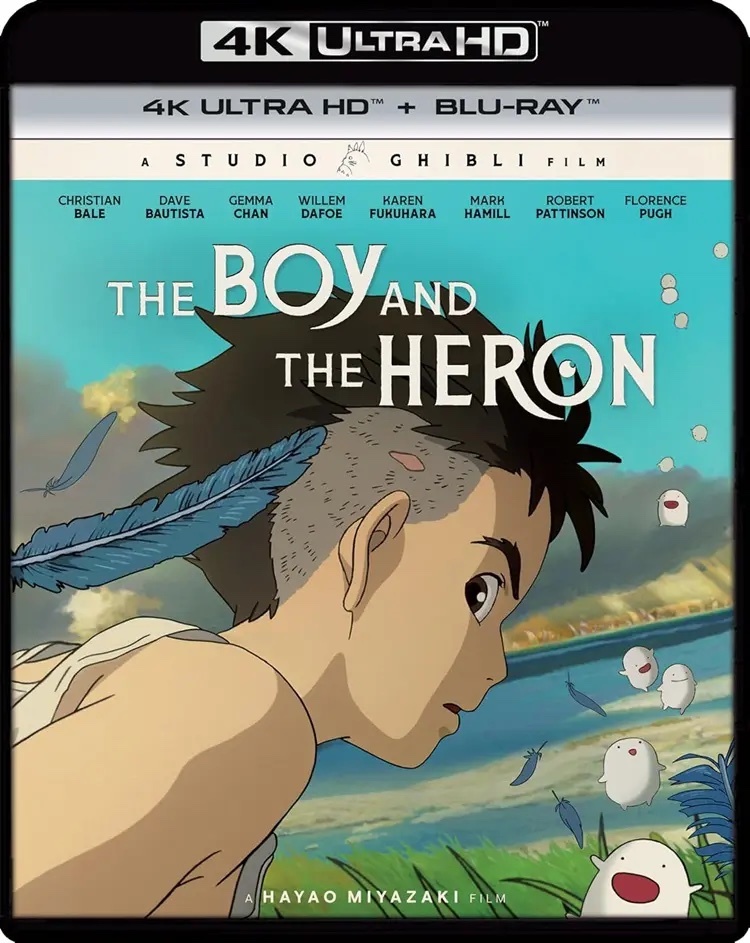
The Boy and the Heron (2024)

image host

Hayao Miyazaki came out of retirement and made one of his best films. The Boy and the Heron is everything you want a Studio Ghibli film to be – exciting, adventurous, weird, funny, and ultimately moving. I love it. You can read my review of the 4K UHD disc over at Cinema Sentries.

The Friday Night Horror Movie: Ju-On: The Grudge 2 (2003)

ju on the grudge 2 poster

The Criterion Channel is featuring a plethora of horror movies this month. They have at least three different horror themes going on, one of which is Japanese Horror. Naturally, I’ve seen almost all of them, but I’d never watched this sequel. I try to watch the originals again before I watch the sequel which is why you were treated to my thoughts on Ju-On: The Grudge yesterday.

This sequel is basically the same film with different characters. Once again it acts like a series of vignettes in which a bunch of people are haunted, terrified, and murdered by some evil spirits. The same evil spirits that haunted the house in the first movie (er, the third movie as there were two films before Ju-On: The Grudge). There is the creepy kid and the freaky girl who can twist her body in extreme ways.

This one does have more of a semblance of a plot and there is a bit of a through line, but it still jumbles up the chronology. It, more or less, follows horror film actress “Horror Queen” Kyoko Harase (Noriko Sakai) who is given a role in a paranormal television show. They “investigate” haunted houses and the like. For this episode, they visit the house from the last film.

Naturally, things do not go well. Nearly everyone involved in the shoot is haunted by the curse and killed. The kills remain quite effective and creepy. I might even give the ones in this film a slight edge over the last one.

There is an excellent sequence in which a woman keeps hearing a banging on her apartment wall at a certain time at night. The reasons behind it are quite clever and scary.

The way this film moves back and forth in time is much more effective than the previous one. I was often confused during the previous film, but here they will show a snippet of the same scene, albeit from a different character’s point of view, before moving on to something we haven’t seen before. Those connecting points allowed me to understand what was happening at all times. That worked for me much better than in the previous film.

But really, much like the other film, the plot in this one is just an excuse to move us from one creepy scene to another. And again this worked completely for me.

31 Days of Horror: Ju-On: The Grudge (2002)

ju on the grudge poster

A title card tells us that a Ju-On is a curse that is born when a person dies in a deep and powerful rage. The film will then spend the next 90 minutes showing us exactly what it means.

Ju-On: The Grudge was part of a cycle of Japanese horror films (collectively known as J-Horror) that came out in the late 1990s and early 2000s. Unlike their American counterparts (which were mostly self-aware slashers and other schlocky, gore-inflicted films) J-Horror tended to focus more on mood, and the psychology of fear, with plots that revolved around Japanese folklore. The violence was usually off-screen and not very graphic (though there were exceptions – I’m looking at you, Takashi Miike).

For a few years, J-horror became quite popular in America and several of them were remade by Hollywood. Someday I may do a theme where I review the Japanese horror films alongside their American remakes, but for now, we’re just talking about this one.

Ju-On: The Grudge was actually the third film in the Ju-On franchise (the previous two were straight-to-video releases) but it was the first one most of us watched (I’ve only seen this one and the first American remake).

The film is really a series of vignettes, each focusing on a different character, most of which are set in the same house located in Nerima, Tokyo.

I’ll be honest here, I just watched the film but if you paid me $1,000 to explain who each character was and what their relationship to each other is, I’d still be broke. Each vignette is so short, and each character is given so little to distinguish each other from each other I’m at a loss to tell you who is who.

They all do seem to be related to one another either by family or friendship or work. It begins with Rika (Megumi Okina) a social worker volunteer being tasked by her boss to visit an old lady at the cursed house (though neither of them realizes it is cursed at this point.) She enters to find the old lady in a daze, lying in bed. She picks her up to find that she has soiled herself.

After cleaning her up and doing a little housekeeping she hears a noise upstairs. In the bedroom, she finds a closet that has been taped over and she hears a cat meowing inside. Opening it she sees the cat and then a small, pale boy. She goes downstairs to call her boss and witnesses a black fog kill the old lady. Rika then passes out.

Others come to the house and most find themselves infected by the curse. They’ll become haunted by the boy, the cat, and the boy’s parents. Sometimes they’ll be killed inside the house, other times they’ll take the curse with them infecting their homes.

The film jumps around in time, making it a bit disorienting.

We will learn more about the boy and his family, and why they are haunting this house, but it really doesn’t matter. The plot isn’t really the point. Scaring the bejeebus out of us is the point and this film does that really well.

There are jump scares aplenty, and all sorts of creepy noises and visuals. These evil spirits appear out of nowhere – sometimes they attack, sometimes they just scare the characters, and sometimes they aren’t even seen by the character but by the audience giving us a jolt of fear. This happens so often that you’ll find yourself tensing up in anticipation, looking in corners and backgrounds half-expecting to see a ghost.

Quite a few of these sequences have become iconic for horror fans. The girl walking on all fours, contorting herself in unusual ways, the hand in the shower, the girl under the covers, etc. have all become part of our communal horror fabric.

I can’t say that Ju-On: The Grudge is a great film in any sort of artistic, cinematic sense, but it is a great one to put on late at night when you are all alone and scare yourself silly.

Animation in August: Princess Mononoke (1997)

cover

Like most kids, I suppose I grew up watching animation. I loved Disney films and the movies of Don Bluth. Every afternoon and Saturday morning I watched television series like G.I. Joe, Thundercats, The Smurfs, and Muppet Babies. Later I fell in love with the films from Pixar.

While these types of films told different stories and used somewhat different animation styles, they all held a certain familiarity. They were all distinctly American.

Princess Mononoke was the first Studio Ghibli film I’d ever seen. This was the late 1990s, maybe or possibly early 2000. I was just becoming a true cinephile. I’d heard rumblings about Studio Ghibli for a while but I think this was the first big breakout it had in the States. Or maybe just in my orbit. It definitely got a big American release because the English dub included folks like Billy Crudup, Billy Bob Thornton, Claire Danes, and Gillian Anderson.

Anyway, I sat down with Princess Mononoke with high hopes. All the critics loved it. Honestly, I was a little disappointed. No, disappointed isn’t really the right word. I just didn’t know what to make of it. It was like no movie I’d ever seen before.

The animation was strange. In the opening scene, a demon attacks a village. But it doesn’t look like any demon I’d ever seen before. It wasn’t full of fire and horns. It was an enormous boar covered in slithering black worms. Later we meet tree spirits with human bodies and rattle-like heads, and a Great Forest Spirit with a deer-like body and an almost human face.

The story wasn’t like typical American animation with clear-cut good and bad guys. The characters were murkier. Our hero sometimes brutally murdered his enemies. The villain, if you can even call her that, rescued young women from a life of prostitution.

I think on that first viewing I just didn’t know how to process what I was watching. It was so different than anything else I’d ever seen, I wasn’t sure of what to make of it.

I’ve seen it several more times since then (and many more Studio Ghibli films) and now I just love it. What was so strange on that first viewing is endearing to me now. I love that it is different from most animated films.

So, quickly, the story involves Ashitaka (Crudup) the last prince of a small village (the one that gets attacked by that demon). He kills the demon and in the process, his arm is infected by it. This gives him super strength, but also seems to possess him at times and ultimately will kill him. When he learns that an iron ball lodged inside its body is what turned the Boar God into a demon he sets off to find out how it got lodged there.

The iron ball was actually a bullet from the newly invented gun (the film is set vaguely in the time before modern warfare) and it came from Iron Town, which is run by Lady Iboshi (Minnie Driver). She’s ostensibly the villain. But she’s also the one I was talking about earlier who has rescued women from a life of prostitution and given them a certain amount of autonomy. She also uses old men, warn down by disease and injury in her town. In many ways, she’s a good person. But she also has no problem destroying nature (and the gods that protect it) to enrich herself.

Ashitaka is ostensibly our hero, and yet we see him cut the heads off of numerous soldiers (accidentally, sort of – his demon-possessed arm gives him super strength which does most of the brutal damage but he’s still out to kill them.)

It is a movie filled with morally ambiguous characters, people who aren’t fully good or fully evil. They are complex, just like real people. And those gods? They have no problem with destruction either. The Great Forest Spirit indiscriminately kills.

The titular Princess (Claire Danes) is a human girl, raised by a wolf goddess and she hates humans. She wants to destroy them.

I love that. It is a complex, beautifully drawn story. The animation, while strange to my American eyes at first is beautiful as well.

Hayao Miyazaki who founded Studio Ghibli, and wrote/directed this film is one of the greatest animators of all time. I won’t say Princess Mononoke is his greatest achievement, but I won’t deny it either.