Midnight (1934)

midnight movie poster

I’m thinking about doing a Top Five noir films starring Humphrey Bogart, so I did a little searching. The trouble with film noir is there are no real clear definitions. Unlike westerns or action films, the dividing lines between, say, a crime thriller and a film noir are pretty nebulous. So I wanted to make a list of all the noirs Bogart had starred in. One of the sites I found mentioned this film, so I gave it a watch.

I definitely would not call it a noir, so I’m not counting it for Noirvember, but I thought I’d talk about it a little bit anyway. Bogart was originally credited in eighth place, but the film was rereleased in 1949 as Call It Murder, after he’d become a star, and he then received top billing. 

It is more of a morality play than a film noir or even a good movie. A woman kills her husband and is caught and convicted for it. There is speculation she’ll get off as she’s a woman and it was a crime of passion, but the foreman of the jury, Edward Weldon (OP Heggie), pushes for a guilty verdict and gets it. She’s sentenced to die. 

There is some publicity and public support for the convicted woman, including from Weldon’s daughter, Stella (Sidney Fox.) She met Gar Boni (Bogart) at the trial, and in the ensuing weeks she’s fallen in love. I think he had some connection to the convicted girl, but I’m honestly not sure. He definitely is supportive of her not dying and convinces Stella to feel the same.

Anyway, the bulk of the film takes place on the day of the execution. Friends and family have gathered at Weldon’s house, and they spend a lot of time talking about the trial. He is unmoved. He stands by his decision to convict and notes that it was not his decision that she get the death penalty, but that is the law. 

Before the film ends, something will happen to challenge that idea. I won’t spoil it, but you’ll probably figure it out before it actually happens. I know I did. There isn’t much to the filmmaking. It very much feels like a filmed play, which is pretty much what it is. There is no style to it. Nothing opens it up cinematically. They don’t even use a musical score, which is really weird. Music really does add so much to a film like this. 

Bogart’s role is small but pivotal. He’s fine in it, but not particularly memorable. At this point in his career, he was playing a lot of heavies who were a long way from getting top billing. He’s really the only reason to watch this. Otherwise it would have been completely forgotten (and it’s hardly remembered despite his presence).

It’s funny because I have this idea of doing what I call “Now Watching” articles. The idea of those being that sometimes I watch a film but don’t really want to do a full review of it, but I would like to at least mention the watching. So I post the title of the film, the director and stars, and then a little synopsis. My review is typically just a couple of paragraphs, and then I’m done. It is a fun, fast way of keeping track of my movie watching while also reminding me of what I thought.

I had intended this to be one of those, and then I just kept writing. So I guess I’m calling this a full review 🙂

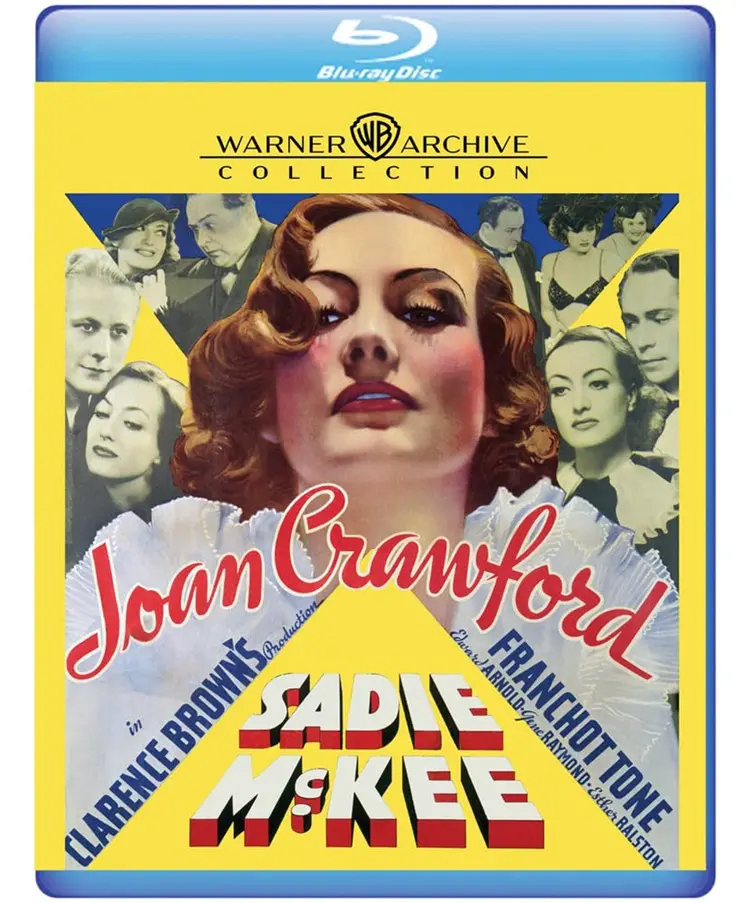
Sadie McKee (1934)

sadie mckee bluray

Sadie McKee is a Pre-Code film starring Joan Crawford and Franchot Tone. It is a weird film in that is profers Crawford three bachelors to choose from, but it seems to want her to love the one most ill-suited to her. He’s a jerk, one who literally leaves her at the altar, but hey its true love so its all okay, I guess.

It isn’t a great film, but Crawford is great in it. You can read my full review at Cinema Sentries.

The Sign of the Cross (1932)

the sign of the cross bluray

I love a good Pre-Code film. These films were made before the censorship of the notorious Production Code really took effect. Most of them are pretty tame by today’s standards, but there is something wild about watching a film from the early 1930s that is more progressive in its dealings with sex and violence than most of the films that came after it for 30 years.

The Sign of the Cross is one of the most notorious Pre-Code films, for a lot of reasons but mainly because it features Claudette Colbert taking a naked milk bath.

It is completely wild, but it is also a pretty good movie. You can read my full review at Cinema Sentries.

31 Days of Horror: Murders in the Zoo (1931)

murders in the zoo

Here’s another Pre-Code film that couldn’t have been made just a few years later. Murders in the Zoo is an astonishingly violent film for its time, I’m rather surprised it got a full release even if it was made before the Production Code was in full effect.

It begins with a man getting his mouth sewed closed (and as you can see the film delightfully gives us that image) because he dared kiss another man’s wife. Several other people are murdered by snake bite and one woman is tossed into an alligator pit where she’s ripped to shreds.

still from murder in the zoo

Obviously, there isn’t a lot of gore in this film made some 90 years ago, the blood and guts are decidedly off-screen, but that’s still a lot of violent deaths for such an early Hollywood film.

Lionel Atwill is Eric Gorman, our murdering psychopath. He’s a big game hunter and zoo owner who is insanely jealous of his wife Jerry (Gail Patrick). Admittedly, she regularly seems to have affairs and wants to divorce him, but that doesn’t quite call for brutally murdering everybody who looks longingly in her general direction.

Randolph Scott is the doctor who comes up with an antidote for the snake venom (something that will come in handy when he gets bit). Oh, the snake is a super poisonous mamba. Gorman brings one back from Africa and uses it to kill a couple of his wife’s suitors.

Charlie Ruggles is Peter Yates a newly hired press agent who is scared silly of pretty much all the animals in the zoo. He’s ostensibly our hero and very much the comic relief.

The story is mostly silly, and the comedy mostly didn’t work for me, but it gets good use out of its animals. There are big cats, and alligators, and snakes, and the film gets its money’s worth out of them.

What really makes the film worth watching is just how much they got away with. I’m not a big fan of acting like modern audiences are more sophisticated, or intelligent, or even less prudish than audiences from times before. There were intelligent, sophisticated people 90 years ago. They understood violence. The papers were full of it. And yet, the violence on screen in this film does seem shocking. That opening scene where the guy gets his eyes sewn shut is wild. You know it is happening off-screen and watching it I sat there wondering if they would actually show it, thinking there was no way we’d get something like that in a film from 1933.

And then he came out, eyes shown shut.

That’s one of the many reasons I love Pre-Code cinema.

31 Days of Horror: Thirteen Women (1932)

thirteen women

As it turns out the trivia surrounding Thirteen Women is more interesting than the actual movie. Due to some copious editing, two actresses’ roles were completely removed from the film leaving only 11 women on the screen. The book is apparently more lurid. One character begins the story as a virgin owing to her great beauty scaring all potential suitors off. Later she becomes a lesbian after the wife of her doctor seduces her. She then starves herself to death after being placed in a sanitorium due to her heartache over her lover abandoning her. That character (in a decidedly toned down part) was played by Peg Entwistle who famously killed herself not long after shooting this film, by jumping off of the “H” in the Hollywood sign.

The movie doesn’t live up to that hype. Not many movies could.

Thirteen sorority sisters all write to a psychic who sends them their futures via horoscope in a letter. All of their horoscopes predict doom. Soon after the girls begin dying, many from suicide. Suspicion falls upon the swami (C. Henry Gordon), but he’s secretly being controlled by another woman. I won’t spoil who she is or what her motives are but it hardly matters.

A lot of Pre-Code films are problematic in their depictions of…well just about everybody, and Thirteen Women is no different. The very white Myrna Loy plays a half-English/half-Javanese woman whom the film depicts sympathetically right before giving her mystic oriental powers.

Irene Dunne plays the hero and Ricardo Cortez plays the detective. Naturally, a romance develops between them.

It is a film that I wish had gone a little further in its Pre-Code possibilities. The descriptions of the book make it sound even more problematic than the film, but at least it sounds fun. The film tones it down so much there isn’t much to enjoy.

31 Days of Horror: Doctor X (1932)

doctor x poster


So, I watched and reviewed a movie entitled The Return of Doctor X the other day. As far as I can tell it is not in any way a sequel to this film entitled Doctor X. It seems to be one of those things where one movie was popular and so they decided to make a new film and give it a similar title as a type of cash-in. Or at least the hope of a cash-in, whereupon people who enjoyed the first film might see the second film based on the title alone.

No one involved in the first film was involved in the second one. And while the plots are in the same ball field as one another, there isn’t any lap over in terms of characters or anything else other than a bunch of murders being solved, in part, by a news reporter.

A series of brutal murders have been committed in New York City over the last several months. They always occur during the full moon, and the bodies have been cannibalized.

Ace reporter Lee Taylor (Lee Tracy) is on the case. The police have learned that each victim has been killed by a highly specialized scalpel. One that only exists in one place in the city – Doctor Xavier’s (Lionel Atwill) institution. They figure one of Xavier’s scientists must be responsible.

The scientists are all mad and perfectly suited for these murders – one of them is fascinated by cannibalism, another by how the moon affects our psyches, another fetishized voyeurism, and the other is a grouchy paralytic (and thus could not have possibly committed the crimes…or could he?)

The good Doctor X is worried that if the police rush in and start questioning everybody it will ruin the institute’s reputation. He asks to be able to run his own investigation and surprisingly they agree. He does an early version of a lie detector test, hooking everybody up to some gadgets that monitor their heart rate and then he stages the murder scene. The first test finds no answers but does cause a blackout inside of which someone else is murdered.

Doctor X has a daughter, Joanne (Fay Wray) who mainly exists to give exposition and to be the love interest for Lee Taylor. He mainly exists for comic relief. He mostly plays it too big and too broad to be funny, but there are a couple of good bits including one in which he’s locked inside a closet with a skeleton.

The whole film is goofy, and a lot of fun. The sets are amazing, especially the testing arena. Michael Curtiz directed and he keeps things moving at a clip and makes it all visually interesting. It was shot in a two-tone color format which gives the whole thing an other-wordly feel. Made in 1932 it is a Pre-Code film and while not particularly scandalous when viewed with today’s eyes at the time a film dealing with murder and cannibalism (it also includes a brothel and talk of rape) was quite a thing.

The comedy often takes you out of the horror/mystery elements and none of it gels very well, but mostly it is a fairly forgettable, but rather enjoyable little film.

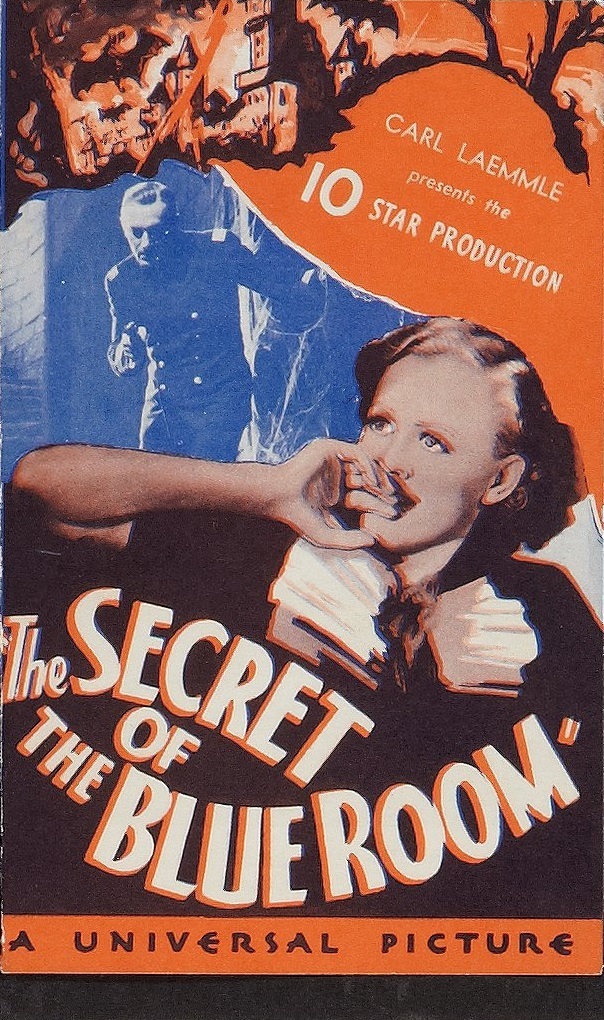
31 Days of Horror: The Secret of the Blue Room (1933)

blue room

The Criterion Channel is hosting several horror films made before the Production Code was rigidly enforced starting in 1934 – calling it Pre-Code Horror.

Pre-Code films are fascinating in part because it sounds so tantalizing. Films made before the Code got away with a lot and they can be shocking to someone who watches a lot of films made under the scrutiny of the Code. But it isn’t like these films were employing hard-core nudity and extreme violence. They were still under the preview of the cultural morals of the time.

The Secret of the Blue Room is not particularly scandalous at all. The most worrisome moment in the entire film is when a young lady kisses her father and three suitors full on the mouth, but that seems more like an old-fashioned cultural moment than anything actually scandalous.

The woman, Irene von Helldorf (Gloria Stuart) is celebrating her twenty-first birthday with her father, Robert (Lionel Atwill), her suitor Thomas (William Janney), and two other dudes who’d like to get with her, Walter (Paul Lucas) and Frank (Onslow Stevens). For some reason, they celebrate the birthday at the stroke of midnight and then tell the story of the blue room.

It is a locked-up room inside the Helldorf’s mansion. Years ago three people on separate occasions died inside the room at exactly 1 in the AM. Men being men they all decide that they will each successively sleep in the room to prove their manliness to Irine and probably win her heart.

The first one disappears without a trace, the second is shot dead and Irene is attacked in the room one morning by a mysterious man. Somehow, through all of this, none of them think to do something logical like call the police. Or search the house for the strange man. Or systematically go through the room looking for secret entrances, or try to understand the mystery.

Eventually, they do report things to the police and an investigation of sorts does occur. None of it is particularly interesting, but it isn’t grown-worthy either. I find a lot of really old films have this effect on me. It is like watching a television series from my youth. I recognize that it’s not really all that good, but it is a pleasant enough way to spend an hour of your time (The Secret of the Blue Room clocks in at 66 minutes.)

It is a remake of a German film from 1932 and it was remade two additional times, once in 1938 and again in 1944. Which just goes to show that Hollywood was cannibalizing itself long before its current trend of only making films with existing IP.

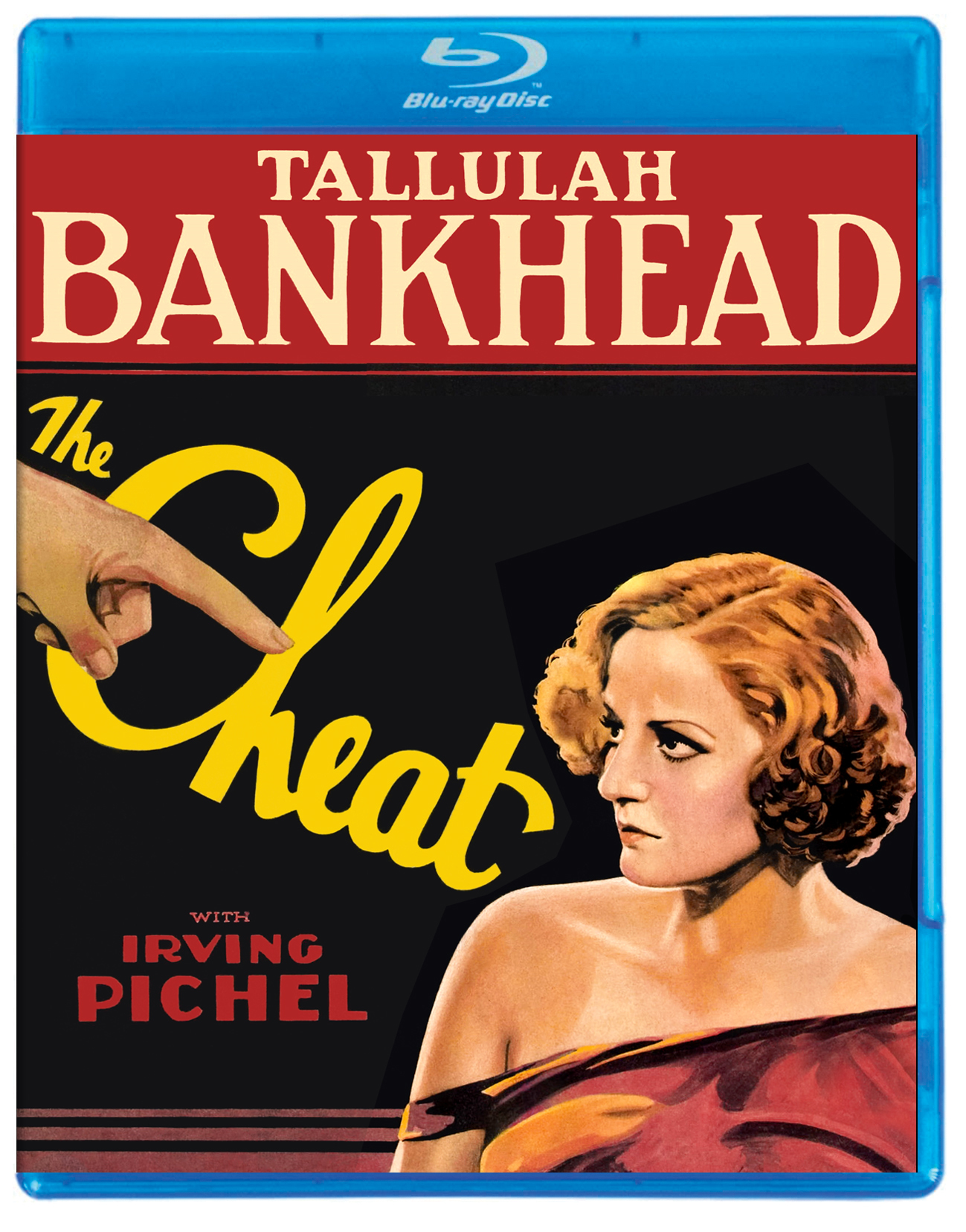
The Cheat (1931)

the cheat bluray

Not all classic films are true “classics” if you catch my meaning. Case in point is this Tallulah Bankhead film which is rather dull to watch. It does have some great Pre-Code moments – sexual innuendo, human branding and attempted rape – but that still can’t save it from being an utter bore. Here’s my full review.

Torch Singer (1933)

torch singer

One of the challenges you face when watching old movies is butting heads with some of its outdated morals. I always find it tough to watch films that portray the slave-owning confederates as heroes. Torch Singer doesn’t have any of that, in fact, it is fairly progressive in its point of view, but I still wrestle with how best to watch it in my review.