Five Cool Things and George Wendt

image host

George Wendt, the actor most known for portraying Norm on Cheers, passed away a couple of weeks ago. I absolutely loved that show and especially that character.

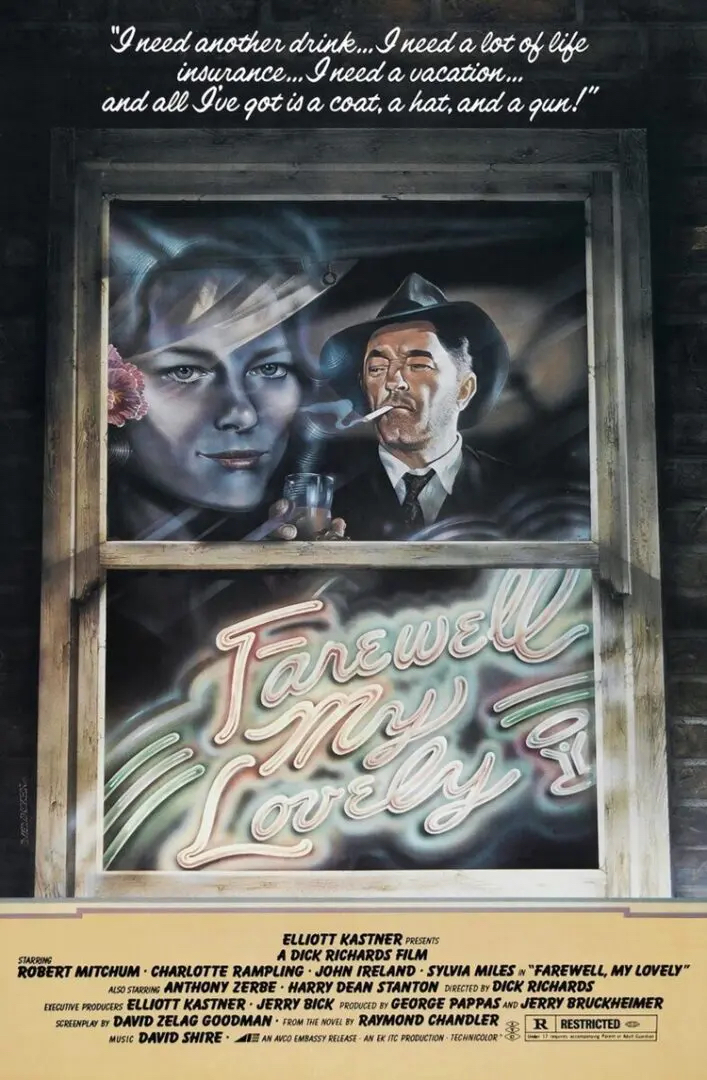
I paid tribute to him and wrote about three Raymond Chandler adaptations, a Thin Man sequel, and the opening credits to a fun new show in my latest Five Cool Things article.

You can read all about it over at Cinema Sentries.

Murder Mysteries In May: Marlowe (1969)

poster

Phillip Marlowe is, perhaps, the quintessential hard-boiled detective. He is smart and tough. He has a moral code, but isn’t afraid to get his hands dirty. He works alone. He’s a hard drinker and plays chess by mail. It may take him a while, but he always solves his case. Humphrey Bogart’s portrayal of Phillip Marlowe in The Big Sleep is, perhaps, the quintessential cinematic depiction of the hard-boiled detective in film noir.

That character and Bogart’s portrayal of him, influenced countless detectives in countless movies throughout the 1940s and 1950s. But as the 1950s turned into the 1960s that hard-boiled film noir style was, well, going out of style.

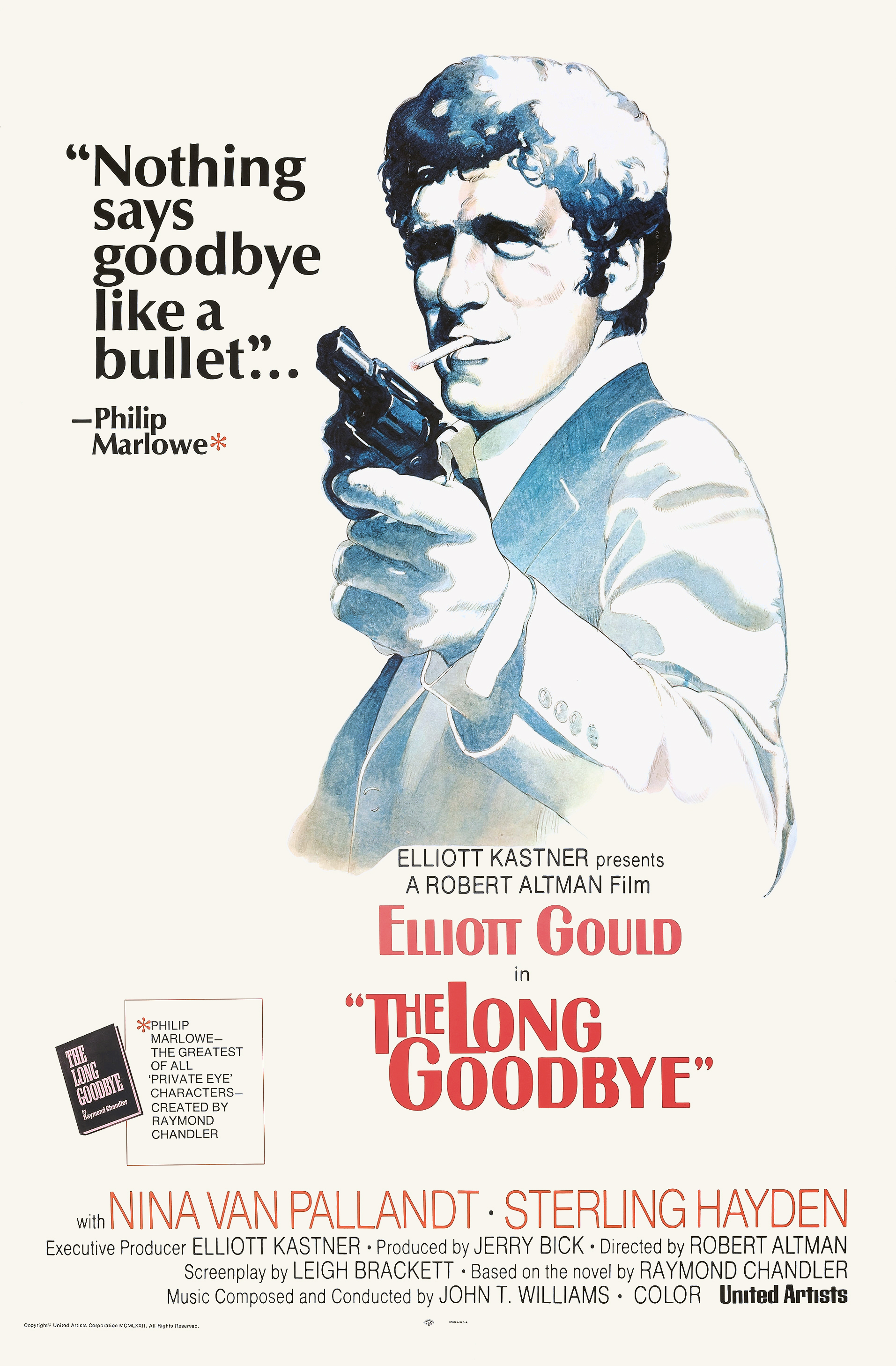
In 1973 Robert Altman adapted Raymond Chandler’s The Long Goodbye with Elliott Gould as Marlowe. Altman has a lot of fun throwing this 1930s detective into the wild 1970s. Gould plays him as a sort of Rip Van Winkle, a man who has awoke from a long sleep only to find himself in a world he no longer understands. He kind of wanders, mumbling through the whole film, while the entirety of the uninhibited 1970s California sprawls out before him. It is a fantastic movie.

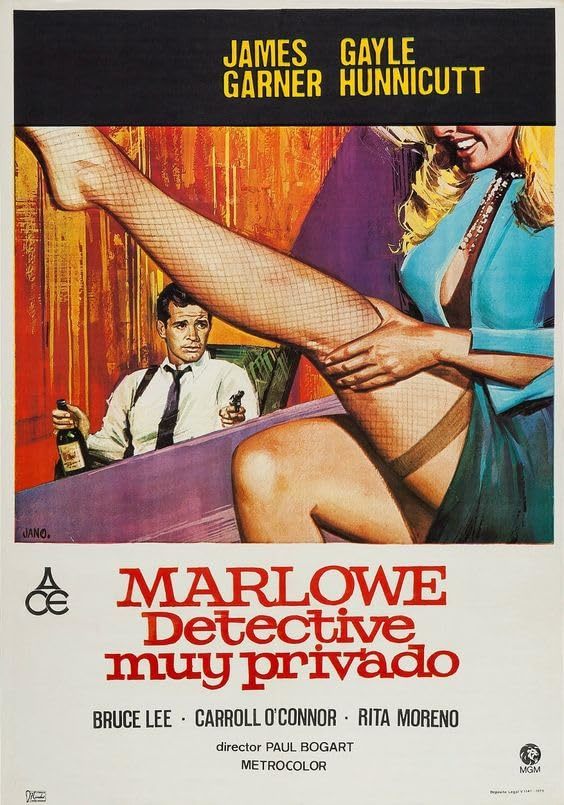
Marlowe sits somewhere between Bogart in The Big Sleep and Gould in The Long Goodbye. It is very much set in the late 1960s. The skirts are short, the music psychedelic, there is ample use of split screen and hippies abound. But the story sticks pretty close to the classic mold.

James Garner plays Marlowe like, well, James Garner, with a smirk to his delivery and a tongue planted firmly in his cheek. He’s smooth and slick, and rather delightful.

The plot is adapted from Chandler’s novel The Little Sister and finds Marlowe being hired by a squeaky young girl from Kansas to find her brother, lost in the big city of angels. There are mobsters and television stars, murders with ice picks, a strip tease act from Rita Moreno, and Bruce Lee tearing up Marlowe’s office.

It doesn’t always work. At times it feels more like a schtick than a fully thought-out movie. Altman’s film never has that problem. I love me some James Garner and he mostly works for me here, but in the same way that the film sometimes feels like a schtick, his act doesn’t always work for Phillip Marlowe.

But it is a fascinating time capsule of a movie, trying to move the film noir forward, making it current for the times. It is also quite a bit of fun.

The Long Goodbye (1973)

the long goodbye movie poster

During a documentary extra on the DVD version of The Long Goodbye, director Robert Altman says they called Elliott Gould’s version of Phillip Marlowe “Rip Van Marlowe” because it’s like the iconic 1940s detective character fell asleep for 30 years and awoke in the 1970s.

True to form, the opening scene shows Marlowe being jolted out of a deep sleep. Gould plays Marlowe like he has stumbled out of hibernation and is completely baffled by everything going on around him. He does, however, take it with a 70’s stoned indifference.

The film opens with interconnecting scenes between Phillip Marlowe and Terry Lennox (Jim Bouton). The soundtrack plays the same song through both scenes, but in completely different styles. Over Marlowe’s scenes, the music is soft and jazz-like, while when Lennox is on screen it becomes edgier, more rock-influenced. It is a brilliant way to introduce characters and give us a sense of who they are.

This is not Howard Hawk’s Raymond Chandler. Gone are the dark shadows and production code of film noir. Sex and violence are no longer hidden under innuendo and suggestion. Here Marlowe’s neighbors are drug-ingesting nudists. This is Altman’s subversion of a genre.

This is definitely a Robert Altman picture. There are plenty of trademark long shots, and overlapping dialogue. He is less interested in the Chandler story than in a sense of style and the juxtaposition of classically moral 1930s detective in the amoral times of the swinging 1970s.

The story loosely follows Raymond Chandler’s novel. Marlowe drives his friend, Lennox, to the Tijuana border only to return home to an apartment full of cops ready to arrest him for aiding and abetting Lennox, who is suspected of murdering his wife. Meanwhile, Eileen Wade (Nina Van Pallandt) hires Marlowe to find her alcoholic husband who has disappeared. Between the cops and the missing husband Marlowe is accosted by local gangsters who want the money Lennox owes them. The three stories meet and interconnect in an ending that is vastly different from the novel.

There is a wonderful scene after the cops arrest Marlowe and are interrogating him. It begins as the standard interrogation scene with Marlowe in a small room being slapped around by tough cops, while others watch through a two-way mirror. Altman invigorates the scene by inter-cutting the two rooms together. While the camera is in the interrogation room, the mirror is always in sight. When the scene moves into the outer room, we see through the mirror and can hear the Marlowe conversation as it overlaps with what the watching cops are saying.

Elliott Gould is brilliant as Phillip Marlowe. He seems completely amiss from his surroundings, oblivious to all the things going on all around him. He keeps the Chandler wisecracks going but sends the tough guy gumshoe routine packing.

Though not a film for noir or even Chandler purists, it is a brilliant piece of cinema. In subverting a genre Altman has created a new kind of detective drama. One that is humorous, thrilling, and cinematic.

The Little Sister by Raymond Chandler

the little sister

Raymond Chandler once wrote that Dashiell Hammett “Gave murder back to the kind of people that commit it for reasons, not just to provide a corpse.” In his essay “The Simple Art of Murder,” he continues to praise Hammett while berating Agatha Christie types who set murders at tea parties and ended them by bringing all the suspects into one room while the detective ran over all the clues before them, causing the killer to jump out and confess. Chandler set out to write Fiction, with a capital “ART”, that it happened to involve pimps, drug fiends, mobsters, and lots of murders is secondary.

It is difficult to review a single work of Chandlers, they all kind of fuse into a sort-of biography for his singular detective, Phillip Marlowe. His novels are very similar, in that they involve the seedier aspects of the city, are all told in the first person by Marlowe, always include various crimes, usually murder, and are filled with an assortment of double-crossing, corrupt folks. But, novels are not the same in the way novels by the likes of Dean Koontz or Mary Higgins Clark are the same. Where they seem to have a dozen storylines and can simply fill in different character names and settings. No, though Chandler’s stories are similar in many ways, they differ in the means by which they are told. Like the way snowflakes look the same in one drift, but upon observation are each different. Or the way in which dollar bills are the same aesthetically, but are spent in a million different ways. Chandler’s writing sparkles amidst the slums and degenerates he writes about. His dialogue sparkles as Marlowe’s sarcasm cracks your lips into a smile.

The Little Sister starts with a little nebbish girl, from nowhere-Kansas who asks Marlowe to help her find her brother. From there the plot involves Cincinnati mobsters, Hollywood agents, starlets, and a few ice picks sticking out of a few necks. As always, Chandler’s plot gets very complicated very fast. The joy of the novel is not in trying to figure out who is who, and who did what, but in the way Chandler lets the mystery unfold. The murders are always at the center of the story, but there is something else hanging near, something more akin to great literature, than dirty detective stories.

By the time he wrote The Little Sister, Chandler had written several screenplays for Hollywood pictures. He seemed to not like the experience one bit. There is plenty of cynicism directed toward Tinseltown here. The agents are like kings who will sell souls faster than Doctor Faustus and the starlets are empty, callous girls who sell sex like McDonalds sells French fries.

Reading The Little Sister was a little sad for me since it is the last Chandler novel that I had not read. There are still his short story collections to look forward to. It feels like the end of an era. His novels still swarm around in my head, and give me hope as a writer. Here is someone who wrote stories, not just to entertain, but to try to find something more-Literature or Art- and maybe, in doing so helped us to understand what it means to be a writer.

Rambling About Mysteries

Editors Note: The first couple of paragraphs of this post talk about a counter that I no longer have installed on the site. I’m keeping them up because some comments refer to it, and ultimately I want to keep almost everything I’ve written on this site to stay up as a sort-of historical marker to my thoughts.

Made a few changes to the site. Added a permanent link in the sidebar to a posting about the books I have read since coming to France. For the last several years I have meant to start keeping track of the books I read in a given year, but never do a good job of it. I believe this blog will help me do the trick. If I get real good I might actually review/rate them as I go along. If people seem to like it I just might add movies and music to the list as well.

My counter (which is now set to produce random numbers on the actual blog site, but give me real numbers by logging in) from bravenet.com has some sort of referral program with it. It says it is supposed to bring a lot of new hits to my site. It is pretty vague about how it does it and I’m thinking it  probably has to do with pop-up ads. Since my IP address is disallowed from the program I’m gonna need some help. If you are getting pop-ups when you go to my blog please let me know. If that is the method of getting more hits, I’d rather find a better way. Pop ups stink!

Anyway to get along with the subject of this blog. I have been trying to read some of the classics of the mystery genre. Or more literally the detective subgenre of the mystery genre. The three main writers I have been reading in this subgenre are Raymond Chandler, Dashiell Hammett, and Agatha Christie. All three are very good writers in their own right, but whom bring something different to the genre.

I first started reading Dashiell Hammett because I had heard more about him through the film The Maltese Falcon (1941 )and he was purportedly a big influence on the Coen Brothers. I have read all of his novels: The Maltese Falcon, Red Harvest, The Glass Key, The Dain Curse, and the The Thin Man. Each one is original and very different stylistically. It’s as if he intentionally wrote each novel as a different sub-sub genre. Red Harvest uses the unnamed Continental Op (who was the main character in many of his short stories as well as The Dain Curse) as a prototypical hard-boiled private-eye to tell his story. This character uses allegiances in two rival gangs to clean up a small city while trying not to go “blood simple” (excited to the point of amorality by excessive violence). The Coen Brothers were highly influenced by this book using blood simple as the title of their first movie, and many of it’s plot points in their gangster movie, Miller’s Crossing (1990). It also influenced other films such as Akira Kurasawa’s Yojimbo (1961), Sergio Leone’s A Fistful of Dollars (1964), and many more.

Hammett’s The Dain Curse again uses the Continental Op as his story teller but this time he is entwined in an episodic, melodramatic mystery. Its plot is as convoluted as it gets involving stolen jewels, drugs, a religious cult, and murder to name a few things. It’s also my least favorite of Hammett’s novels.

In The Maltese Falcon, Hammett turns things right again. Though everyone remembers Sam Spade as being portrayed by Humphrey Bogart in the 1941 John Huston picture. There were actually two other movies based on the novel (1931’s Dangerous Female and 1936’s Satan Met a Lady) that were lackluster at the box office. Bogarts portrayal of the hardboiled, but sensitive at heart private eye made him a star. That picture is pretty much spot on with the novel. Both are considered classics of the genre. The subgenre for Hammett here is the quest story with a wild assortment of characters. Sam Spade is our detective hero sorting through classic oddballs to find the mysterious, and very valuable bird of the title. For beginners into Hammett’s writings (or for detective stories in general) this is an excellent place to begin.

The Glass Key is a political drama without much of a detective in sight. Oh, it’s still dark and cynical as all get out, but it deals more with the corruption of city officials than any murder mystery. It also was a great influence on Miller’s Crossing and was made into a very good film noir of the same name in 1942.

The Thin Man is a more comic tale than any of his other work. Detectives are back this time in the guise of socialite Nick Charles and his wife Nora. Here Hammett plays up the high society couple as snoopers subgenre. When the Charles aren’t tossing back martinis and hob-nobbing with the rich they are solving murders. Hollywood came calling again with this one and created a whole series of Thin Man pictures starring William Powell and Myrna Loy.

***

Agatha Christie is probably the most well-known of the classic mystery writers. She wrote some 60 stories in her lifetime, most of which starred the eccentric, genius Belgian detective Hercule Poirot (Yes, I am now fully aware Christie wrote many books with other detectives including Miss Marple – Mat). I have only begun reading her novels having just finished Murder on the Orient Express and Death on the Nile. These novels are excellent representations of the “whodunit” version of the detective crime novel.

She masterly develops setting, imaginative characters and then deals in a murder or three. Clues are paced throughout in what has become a cliched manner. Though Christie has been imitated by umpteenth followers, nobody has topped her style. I typically do not enjoy mysteries because they follow a pattern Christie seems to have invented. The genre has gone stagnant with so many plots following the same pattern.

Odd-ball characters gather in a stylish setting. A murder is committed and then the reader is led down a path (often the wrong one) following a series of clues leading to the final scene where everyone is brought together and the mystery is explained. Christie follows this almost to a tea in both the Orient Express and Murder on the Nile. Yet, somehow she makes it all seem fresh. Her characters are inventive and thoroughly interesting. Hercule Poirot is the perfect detective. Smart, sensitive, and eccentric. And the following of clues is never too clever or too dull to drive me crazy. There are films based on both the books I’ve mentioned here as well as many of her other novels.

****

Raymond Chandler deserves a genre of his own. All of his novels feature the same main character, Phillip Marlowe. Marlowe is as hardboiled as they come. Dark, cynical, sarcastic, tough, and funny in a sick sort of way. There is almost always a murder (sometimes several), and plenty of drinking, smoking, and sometimes sex. Yet his stories are not so much about solving a crime as it is an insight into a certain time, in a certain place with certain characters. He dwells in the seedier, darker places of the American cities, and the human soul. His stories are never pretty, but often beautiful. I would hold up any of his novels high in the canon of literature.

My favorite novel of Chandler’s that I have read was also made into an excellent Humphrey Bogart picture, The Big Sleep. Other novels of his that I have read include The High Window, The Lady in the Lake, and Farewell, My Lovely. All of them are well excellent and an excellent introduction into the detective mystery genre.

“”Tall, aren’t you?” she said.
“I didn’t mean to be.”
Her eyes rounded. She was puzzled. She was thinking. I could see, even on that short acquaintance, that thinking was always going to be a bother to her.”
—The Big Sleep (Chapter 1)

“I’m an occasional drinker, the kind of guy who goes out for a beer and wakes up in Singapore with a full beard.”
–The King in Yellow

Anybody who can write dialogue like that is well worth a read in my book.

A Great Mystery?

Editors Note: From September of 2004 to around May of 2005 my wife and I lived in Strasbourg, France. I started this blog as a way of journaling my experience there. Over time I grew tired of writing about baguettes and ventured into pop culture. This was one of my first forays into such things.  I wasn’t really sure what I was doing.  I still don’t.  But here’s a little discussion on a couple of mystery writers.

So I finished my Chandler and the Mary Higgins Clark book. I had thought of reviewing the books, but I’ve never given a real review of a book, and frankly, I’m not sure how. These two books were very similar and yet vastly different in quality. I found Chandler’s “The High Window” to be very good and Clark’s “All Around the Town” to be quite awful. So here I will try to describe why I liked one and not the other.

I say they are both similar and they are. Both are in the mystery/suspense genre. Both involve murders and subsequent investigations to solve them. Yet in terms of how they are written and how they get to the solution are vastly different.

As always Chandler writes in the first person from the perspective of his classic detective, Phillip Marlowe. Clark writes in the third person. As a reader of “The High Window”, you only know as much as Marlowe does. We see the world threw his eyes, follow his clues, and do not know who the culprit is until the very end. Or at least I didn’t. This is not all that odd for me since I tend to let mysteries take me where they want without spending a lot of time trying to determine who the culprit is before I am given the final solution. But Chandler never points the reader in a specific way to misdirect. You meet new and often suspicious characters throughout the story, but never see what they are doing when they are not with Marlowe. This leads to a more realistic story. You read along with the one man and thus are him in a sense. You are given no special insight into what is happening.

Clark writes in a nearly all-knowing third person. As a reader, you learn information that not any one character knows. Several times you are misdirected into believing one person or another committed the crime only to be later led to believe you were mistaken. This happens until the final few pages when SURPRISE it wasn’t who you thought. I literally groaned in disbelief when given several plot points. The general story involves a kidnapping, the kidnappee who later develops multiple personality disorders, and some villains who are also televangelists. All three are plot points that are so cliched and overused it makes me ill. While Chandler writes different and interesting characters who act realistically, if often brutal, Clark writes cardboard characters with stock personalities and then manipulates them to rush the reader along to a final pinnacle.

My biggest objection is one that I find hard to define. I want to say that both writers give ample details about their characters and settings, but Chandler gives the right details whereas Clark gives the wrong ones. To better reveal this I have chosen two selections from the books below.

Chandler:

“A long-limbed languorous type of showgirl blonde lay at her ease in one of the chairs, with her feet raised on a padded rest and a tall misted glass at her elbow, near a silver ice bucket and a Scotch bottle. She looked at us lazily as we came over the grass. From thirty feet away she looked like a lot of class. From ten feet away she looked like something made up to be seen from thirty feet away. Her mouth was too wide, her eyes were too blue, her make-up was too vivid, the thin arch of her eyebrows was almost fantastic in its curve and spread, and the mascara was so thick on her eyelashes that they looked like miniature iron railings.

She wore white duck slacks, blue and white open-toed sandals over bare feet and crimson lake toenails, a white silk blouse, and a necklace of green stones that were not square-cut emeralds. Her hair was as artificial as a night-club lobby.”

Clark:

“His office was deliberately cozy: pale green walls, tieback draperies in tones of green and white, a mahogany desk with a cluster of small flowering plants, a roomy wine-colored leather armchair opposite his swivel chair, a matching couch facing away from the windows.

When Sarah was ushered in by his secretary, Carpenter studied the attractive young woman in the simple blue suit. Her lean, athletic body moved with ease. She wore no makeup, and a smattering of freckles was visible across her nose. Charcoal brown brows and lashes accentuated the sadness in her luminous gray eyes. Her hair was pulled severely back from her face and held by a narrow blue band. Behind the band a cloud of dark red waves floated, ending just below her ears.”

Clark tells us how we’re supposed to feel about the setting and character before she actually describes it. “His office was cozy,” she says and then describes it in bland, descriptive terms. Or Sarah is attractive to Dr. Carpenter, yet she is also sad because it tells us so: “sadness in her luminous gray eyes.” It’s as if it is written by a first-year writing student, who has been told to supply lots of descriptive details. The details seem taken from a big box labeled “character details.”

Chandler gives some of the same details describing the type of clothes she has on and that there is a bottle of Scotch nearby, but he doesn’t tell us how to feel about it. He doesn’t tell us the lady is an out-of-luck alcoholic showgirl. He gives us the details of having the Scotch nearby, of how shabbily she is made up that let us know what type of person she is without actually stating so in bold type. Chandler’s style is also laid out. Within the physical details is a sarcastic wit that shines.

With all of this, I don’t care if anyone reads Mary Higgins Clark or even really likes her. The written word like any art is often in the eye of the beholder. Truth be told I couldn’t write a book as well as Ms. Clark did. Now I wouldn’t have evil evangelists or multiple personalities in my book, but the quality would be just as shabby I suspect. But just because I cannot produce a good novel doesn’t mean I cannot critique them. Honestly, I don’t know who is going to be interested in my critiques of novels that were written in 1942 and 1992 anyway. I write them to try to hone some of my limited writing skills and to get a better understanding of why I find certain books really good, and others quite terrible.