
Noirvember: No Way Out (1950)

now way out poster

Dr. Luther Brooks (Sidney Poitier) is the first African American doctor at the county hospital. He’s assigned to the prison ward where his first patients are the racist Biddle brothers who have just been brought in after a botched robbery.

Both brothers were shot in the leg. Ray (Richard Widmark) fixes up easily, but George (Harry Bellaver) seems to have unrelated symptoms. Luther does all he can for him, including administering a spinal tap, but ultimately George dies in the hospital. Ray, who did nothing but throw racial insults at Dr. Brooks while he was working lays the blame for his brother’s death at his feet.

Luther’s boss clears him of any wrongdoing, but Luther is rattled just the same. Maybe there was something he could have done differently. Maybe the racist insults clouded his judgment. An autopsy is the only way to be sure. But he can’t get that without a member of the family’s approval. Naturally, Ray doesn’t want to grant that approval, but maybe his sister will.

The film spends a lot of time with Luther’s family. He is a good man and his family are good people. But they are black in a time and place where that makes life difficult. Even with Luther’s success life can be hard.

Ray and his friends are planning an attack on Luther and his family. The African American community hears about this and they plan their own pre-emptive attack. Luther speaks to the hospital’s elevator operator about this and advises caution, that they should be better than them. Which prompts this response from the operator:

“Ain’t it asking a lot for us to be better than them when we get killed just trying to prove we’re as good?”

Poitier played in a lot of films like this during this time period. He played good African Americans awash in a sea of racism. He was a great actor, perhaps the prominent black actor of his time. This was a period when America was legally segregated, but that was slowly beginning to change. I’m no historian so I’ll leave that discussion to others but it is interesting to watch films like this try to deal with institutional racism on an artistic level.

Not all of the films Poitier played in like this were good, but this one is terrific. I love how it spends a lot of time with Luther and his family. It is a slice-of-life portrayal of these people in this place at this specific time, and the every-day, working-class racism that pervades their lives.

But it is also a pretty terrific little thriller. Richard Widmark is as terrifying as Ray. They say he often apologized to Poitier after a scene of him spitting racism at him. It can feel a little dated at times, but at the same time, it remains quite contemporary.
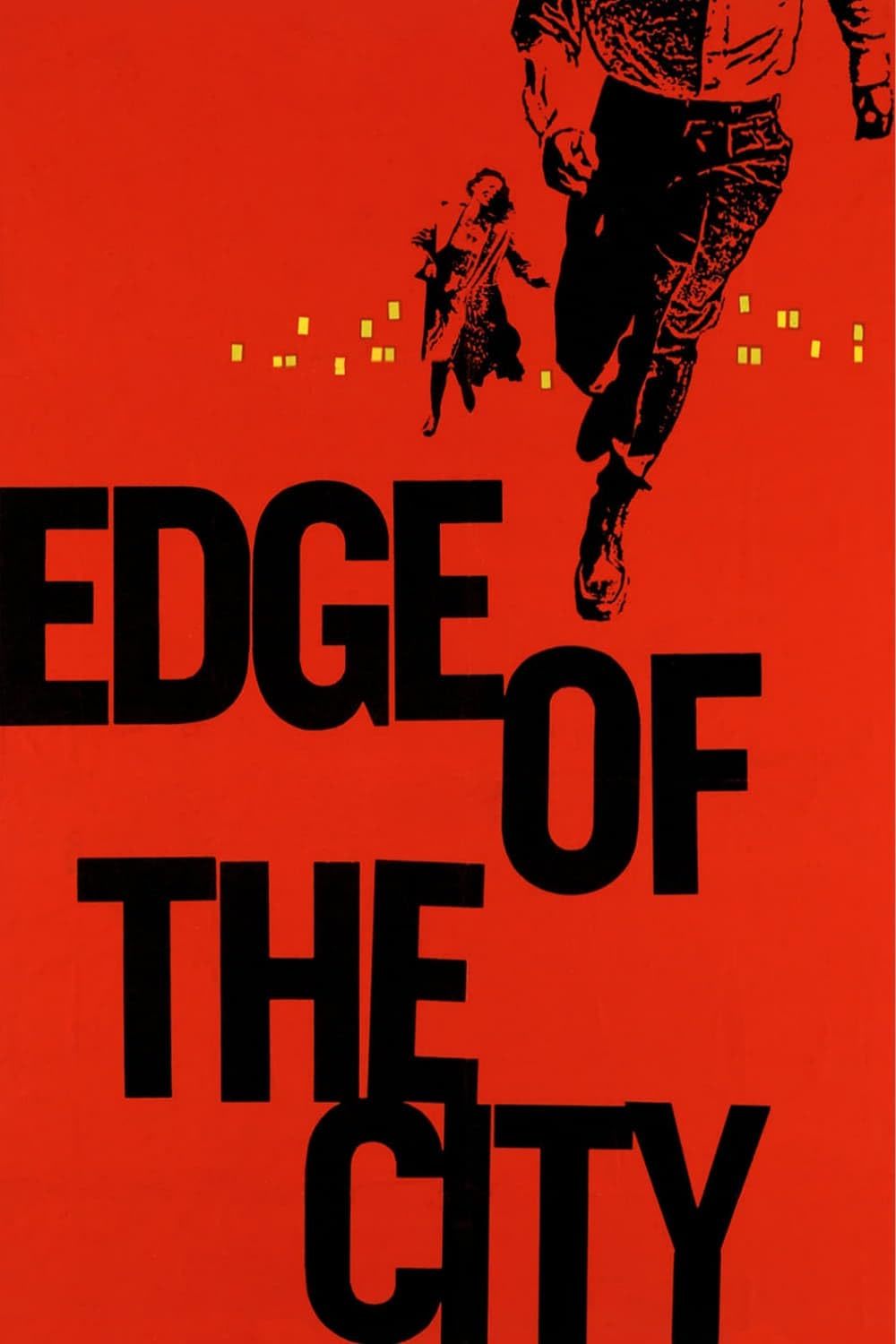
Edge of the City (1957)

poster

Sidney Poitier was one of the first African American actors to become a true Hollywood star. He was the first to win an Oscar for acting. He led the way for countless African American stars to follow.

John Cassavetes was a pioneer of American independent cinema. He wrote, directed, produced, and financed several important films through the 1970s.

These two trailblazers teamed up for Edge of the City in 1957 to fantastic results.

Axel North (Cassavetes) is a drifter with a shady past. Early in the film, we see him call his parents, but he doesn’t speak, he just listens to them call out to him in anguish and anger.

He gets a job on the docks (the literal edge of the city) in New York. He gets the job by using Charlie Malick (Jack Warden) as a reference. He doesn’t really know Charlie but he’s heard using his name can secure him the job. Charlie is a chiseler and forces Axel to give him part of his hourly wages in order to keep the job.

Quicky he meets Tommy Tyler (Poitier) a charming, intelligent, kind man. They become fast friends. It is here that the film excels. We watch the two as they hang out and talk, as they laugh and dream. Axel comes over and meets Tommy’s equally charming wife (Ruby Dee) and young son. Tommy sets Axel up with a mousy but sweet girl (Kathleen Maguire).

For a while, it is a hang-out movie and it is a joy to watch. The difference between these two men – one black, one white – is there but it isn’t highlighted. They are constantly hassled by racists or anything. They are just two guys who get along together.

The antagonist is Charlie. He doesn’t like Tommy, he is prejudiced against him. He doesn’t like his friendship with Axel. He certainly doesn’t like that Axel is learning to stand up for himself and pushes back against his need to give Charlie some of his wages.

This is the film at its weakest. Tension grows between the two men which eventually leads to violence. It grows naturally and still works within the film, but I much preferred these two friends just hanging out.

Regardless Edge of the City is a great film. I highly recommend it.

Hanky Panky (1982)

hanky panky poster

About thirty minutes into Hanky Panky a film that stars Gene Wilder and Gilda Radner, I turned to my wife and said, “I thought this movie would be a lot wackier.” Up until that point, it is a fairly straightforward thriller. It does get a little bit zany once Gilda shows up, but it never quite figures out how to balance the thriller aspects of the film with its comedy.

Wilder plays Michael Jordon, a guy-next-door architect who jumps into a cab that is already occupied by Janet Dunn (Kathleen Quinlin. Despite her obviously being distraught Michael aggressively flirts with her. As an audience, we know that she is being chased by unknown assailants for unknown reasons. Looking about, not knowing if she’s managed to lose her attackers, she puts something into a package and addresses it. Michael, trying to be chivalrous I guess, takes the package and drops it in the mailbox.

The bad guys witness this and figure Michael knows what’s going on. They kill her and attack him asking him where she mailed the package to. He escapes and we’re treated to a cross-country chase. Along the way, he meets Kate Hellman (Radner) who may not be what she claims to be.

There is a lot of North By Northwest DNA living inside Hanky Panky what with an average man getting caught up in incredible events, and being chased by assailants across the USA (this film begins in New York City and concludes at the Grand Canyon). But though I do love both Wilder and Radner they are not Cary Grant and Eva Marie Saint, and Sidney Poitier (who directed) is not even close to Alfred Hitchcock (at least when it comes to directing.)

Which brings me to the comedy. For a film like this to work the comedy has to come naturally from the characters and the situation. It needs to come organically out of the story. While the movie doesn’t necessarily have to be completely realistic, it needs to at least have the facade of realism. The comedy in Hanky Panky is too farcical, it feels like it comes straight out of vaudeville.

Two examples

Michael and Kate have to rush out of his apartment during one scene. He is still in his bathrobe so they slip into a theater and steal a magician’s tuxedo. Later they get onto a bus. When the driver asks for exact change Michael pulls out some coins from the tuxedo pocket only to have them explode in his hand. He then tries to exchange a dollar bill for some coins and when he jerks his hand forward a bouquet of flowers pops out. This causes a sneezing fit to which Kate tries to hand him a handkerchief from his chest pocket. It is a never-ending handkerchief.

Later Michael and Kate are on a small helicopter. The pilot (Pat Corley) mentions he’s not feeling well and then proceeds to belch. A lot. He belches for several minutes, over and over. It is as if Mr. Corley decided to see how long he could let the gag continue until they made him stop. Wilder and Radner are clearly enjoying it as they keep breaking character and cracking up. I suspect Sidney Poitier also thought it was hilarious and just couldn’t help but keep the entire thing in the movie.

Both of these scenes are actually funny, more or less. I chuckled. My wife just guffawed when I was talking about it. But they don’t fit in with the rest of the movie. That scene with the helicopter – Michael and Kate are running for their lives. As the pilot is belching he’s flying is erratic and they nearly crash. So much of the film is very serious, and then there are these random moments of utter silliness. Those two tones crash into each other in incredibly distracting ways.

The serious thriller aspects of the film worked better for me than the comedy. They are still second-rate Hitchcock, but still relatively enjoyable. Wilder and Radner were incredibly talented comedic talents and I’ve enjoyed them both in other things, but they are utterly wasted in this film.

Blackboard Jungle (1955)

blackboard jungle poster

Ten years ago Larry Clark released his controversial film, Kids (1995), about teens having sex, doing drugs, and generally acting like delinquents. The world was shocked (SHOCKED, I tell you) that a film would depict teenagers behaving so badly. Surely, it was an exaggeration. There were exposes on the national news shows, and lines formed outside the theatres picketing and boycotting the pictures.

I had just graduated from high school a few months before I saw the film, and while I found the picture to be a good one the only shock I felt was that of disbelief that parents were so unaware by their children’s behavior. Those kids seemed a lot like the ones I went to high school with. Of course, kids were, and are, having sex and doing drugs. The quarterback of our football team bragged about having sex on the 50-yard line. Another used to tell us about having sex underneath the soundboard in the light booth of the auditorium (sorry Mrs. Patton). The headbangers used to make bongs out of stolen beakers from the chemistry lab.

They say similar reactions came from screenings of the 1955 classic Blackboard Jungle, and its depictions of juvenile behavior in an inner-city high school. After watching the film all I can say is that parents seem to be as unaware of their children then as they are now.

It’s not that the film is a bad one, in fact, it is rather good, it just seems strange that anything appearing in the film was controversial at one time. It feels tame by today’s standard.

It’s like Rock Around the Clock, the Bill Haley song that opens and closes the film, apparently caused quite a stir amongst moviegoers and critics alike. With songs by shock rockers like Marilyn Manson and Trent Reznor filling up the airwaves and movie soundtrack it’s hard to imagine how such a tame “oldie” could ever create the smallest wave of shock.

What we get from the actual film is a story about a high school teacher who takes his first job in an inner city school filled with all kinds of hoodlums. The teachers and staff that have been there for years are all content with simply maintaining some type of order. Of doing little more than surviving, and certainly not trying to do any actual teaching.

The new teacher, Richard Dadier (played superbly by Glenn Ford) actually cares about his students and wants them to succeed both academically and as fellow humans. Though he takes more than one beating (both philosophically and literally) he never gives up his task of being a teacher, of being a guide to those students.

The always impeccable Sidney Poitier, in one of his earlier roles, plays Greg Miller, an obviously intelligent student who acts as a leader for one of the school gangs. Dadier sees in Miller a chink in the student’s resistance and attempts to pull him into his side. Miller resists at first, but in a move that must be obvious to even the most half-hearted filmgoer, he eventually proves a powerful ally to the teacher.

It is here that my biggest complaint about the film lies. Much of the plot turns are telegraphed to the viewer way in advance. There is no doubt about how the film is going to end, nor even much of how it is going to get there. The film could use some real surprises, or at least bring to the table something deeper, or more original in terms of story.

That being said it is still an interesting ride to ride out, by the means in which the story is told. The acting is filled with fine, nuanced performances highlighted by Ford and Poitier’s scenes together. Director Richard Brooks adds some real tension to scenes in which we already know the outcome.

It is interesting to see films seeking to enlighten an audience by turning a blind eye to juvenile delinquency. It becomes preachy at times even beginning the film with a card noting the problem of the unruliness of the nation’s teenagers and that this must be stopped. That, along with some of the more trite plot points, it can sometimes feel like you’re attending a sermon, not watching a movie. It is to the director’s credit and the fine performances that the film mostly rises above the material and presents a solid piece of filmmaking.