Five Cool Things and George Wendt

image host

George Wendt, the actor most known for portraying Norm on Cheers, passed away a couple of weeks ago. I absolutely loved that show and especially that character.

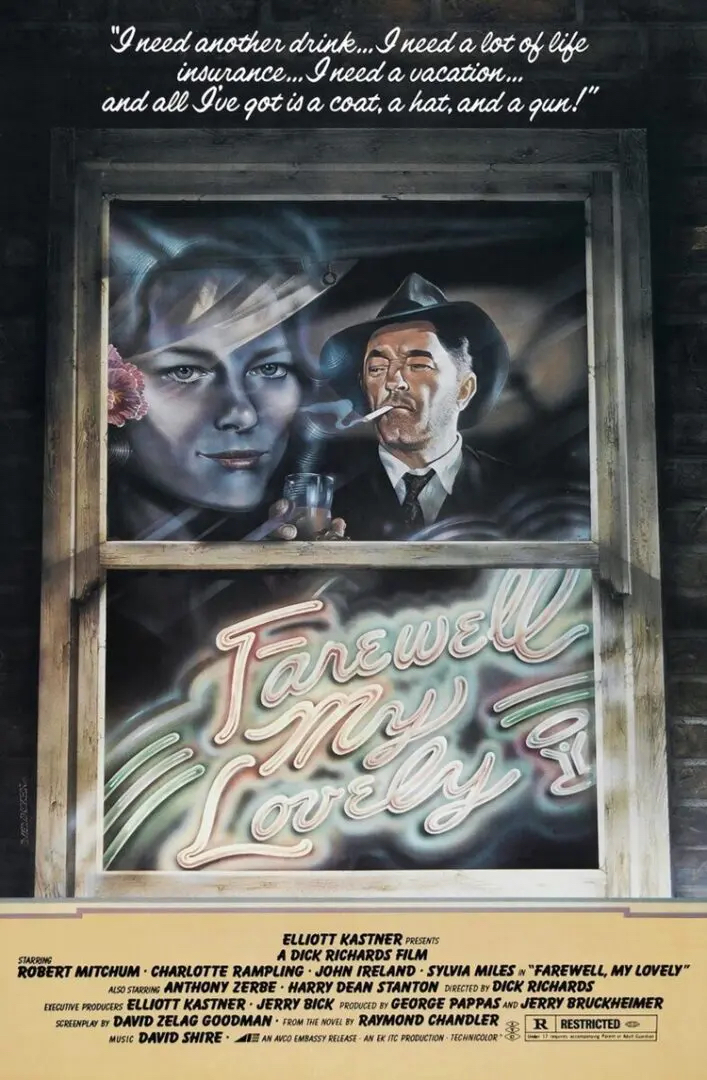
I paid tribute to him and wrote about three Raymond Chandler adaptations, a Thin Man sequel, and the opening credits to a fun new show in my latest Five Cool Things article.

You can read all about it over at Cinema Sentries.

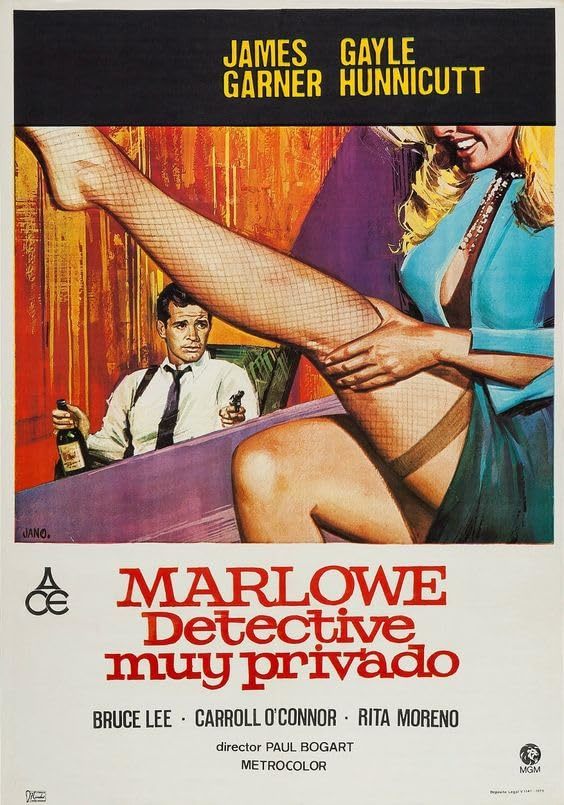
Murder Mysteries In May: Marlowe (1969)

poster

Phillip Marlowe is, perhaps, the quintessential hard-boiled detective. He is smart and tough. He has a moral code, but isn’t afraid to get his hands dirty. He works alone. He’s a hard drinker and plays chess by mail. It may take him a while, but he always solves his case. Humphrey Bogart’s portrayal of Phillip Marlowe in The Big Sleep is, perhaps, the quintessential cinematic depiction of the hard-boiled detective in film noir.

That character and Bogart’s portrayal of him, influenced countless detectives in countless movies throughout the 1940s and 1950s. But as the 1950s turned into the 1960s that hard-boiled film noir style was, well, going out of style.

In 1973 Robert Altman adapted Raymond Chandler’s The Long Goodbye with Elliott Gould as Marlowe. Altman has a lot of fun throwing this 1930s detective into the wild 1970s. Gould plays him as a sort of Rip Van Winkle, a man who has awoke from a long sleep only to find himself in a world he no longer understands. He kind of wanders, mumbling through the whole film, while the entirety of the uninhibited 1970s California sprawls out before him. It is a fantastic movie.

Marlowe sits somewhere between Bogart in The Big Sleep and Gould in The Long Goodbye. It is very much set in the late 1960s. The skirts are short, the music psychedelic, there is ample use of split screen and hippies abound. But the story sticks pretty close to the classic mold.

James Garner plays Marlowe like, well, James Garner, with a smirk to his delivery and a tongue planted firmly in his cheek. He’s smooth and slick, and rather delightful.

The plot is adapted from Chandler’s novel The Little Sister and finds Marlowe being hired by a squeaky young girl from Kansas to find her brother, lost in the big city of angels. There are mobsters and television stars, murders with ice picks, a strip tease act from Rita Moreno, and Bruce Lee tearing up Marlowe’s office.

It doesn’t always work. At times it feels more like a schtick than a fully thought-out movie. Altman’s film never has that problem. I love me some James Garner and he mostly works for me here, but in the same way that the film sometimes feels like a schtick, his act doesn’t always work for Phillip Marlowe.

But it is a fascinating time capsule of a movie, trying to move the film noir forward, making it current for the times. It is also quite a bit of fun.

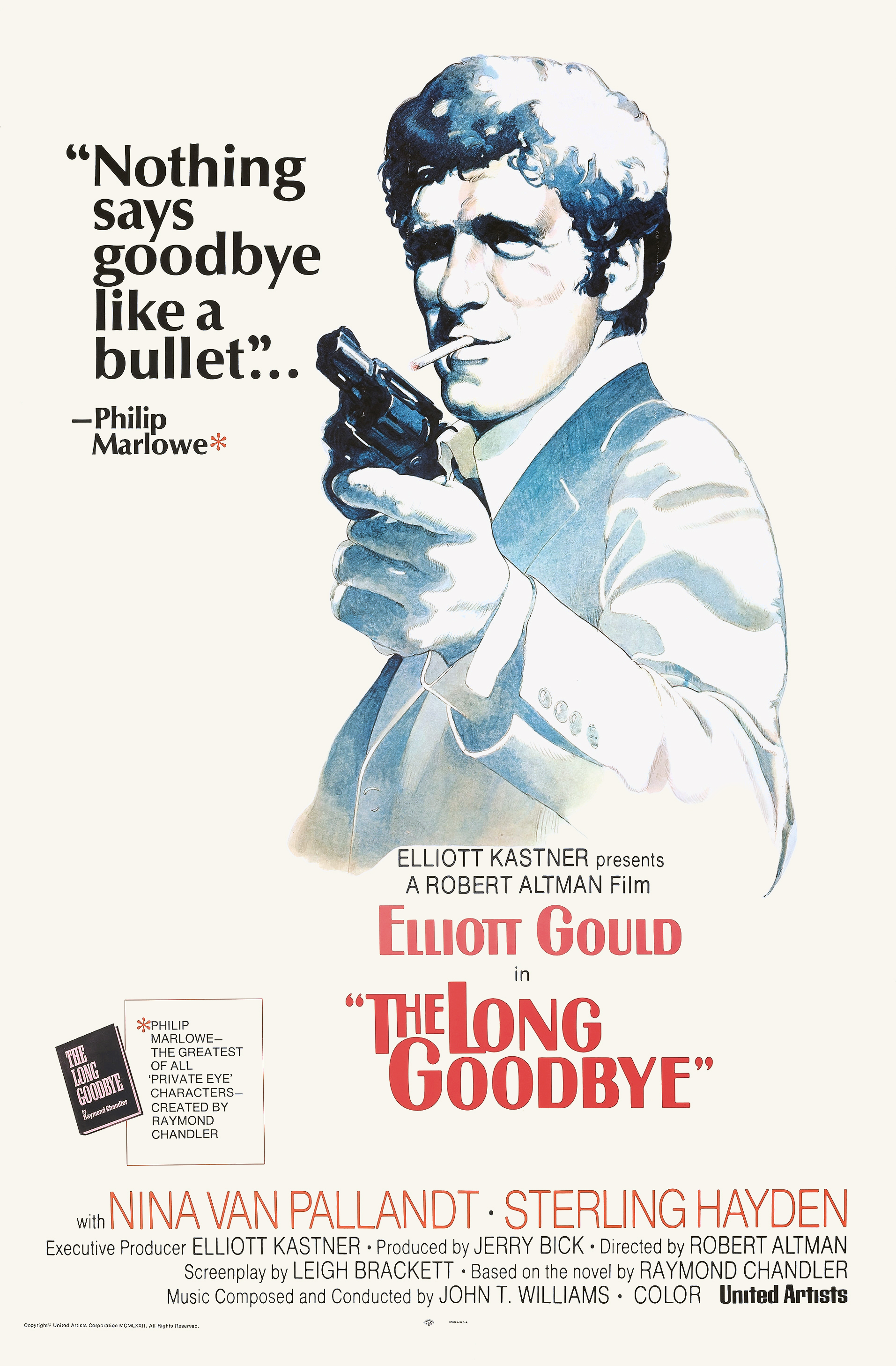
The Long Goodbye (1973)

the long goodbye movie poster

During a documentary extra on the DVD version of The Long Goodbye, director Robert Altman says they called Elliott Gould’s version of Phillip Marlowe “Rip Van Marlowe” because it’s like the iconic 1940s detective character fell asleep for 30 years and awoke in the 1970s.

True to form, the opening scene shows Marlowe being jolted out of a deep sleep. Gould plays Marlowe like he has stumbled out of hibernation and is completely baffled by everything going on around him. He does, however, take it with a 70’s stoned indifference.

The film opens with interconnecting scenes between Phillip Marlowe and Terry Lennox (Jim Bouton). The soundtrack plays the same song through both scenes, but in completely different styles. Over Marlowe’s scenes, the music is soft and jazz-like, while when Lennox is on screen it becomes edgier, more rock-influenced. It is a brilliant way to introduce characters and give us a sense of who they are.

This is not Howard Hawk’s Raymond Chandler. Gone are the dark shadows and production code of film noir. Sex and violence are no longer hidden under innuendo and suggestion. Here Marlowe’s neighbors are drug-ingesting nudists. This is Altman’s subversion of a genre.

This is definitely a Robert Altman picture. There are plenty of trademark long shots, and overlapping dialogue. He is less interested in the Chandler story than in a sense of style and the juxtaposition of classically moral 1930s detective in the amoral times of the swinging 1970s.

The story loosely follows Raymond Chandler’s novel. Marlowe drives his friend, Lennox, to the Tijuana border only to return home to an apartment full of cops ready to arrest him for aiding and abetting Lennox, who is suspected of murdering his wife. Meanwhile, Eileen Wade (Nina Van Pallandt) hires Marlowe to find her alcoholic husband who has disappeared. Between the cops and the missing husband Marlowe is accosted by local gangsters who want the money Lennox owes them. The three stories meet and interconnect in an ending that is vastly different from the novel.

There is a wonderful scene after the cops arrest Marlowe and are interrogating him. It begins as the standard interrogation scene with Marlowe in a small room being slapped around by tough cops, while others watch through a two-way mirror. Altman invigorates the scene by inter-cutting the two rooms together. While the camera is in the interrogation room, the mirror is always in sight. When the scene moves into the outer room, we see through the mirror and can hear the Marlowe conversation as it overlaps with what the watching cops are saying.

Elliott Gould is brilliant as Phillip Marlowe. He seems completely amiss from his surroundings, oblivious to all the things going on all around him. He keeps the Chandler wisecracks going but sends the tough guy gumshoe routine packing.

Though not a film for noir or even Chandler purists, it is a brilliant piece of cinema. In subverting a genre Altman has created a new kind of detective drama. One that is humorous, thrilling, and cinematic.