Westerns In March: The Big Trail (1930)

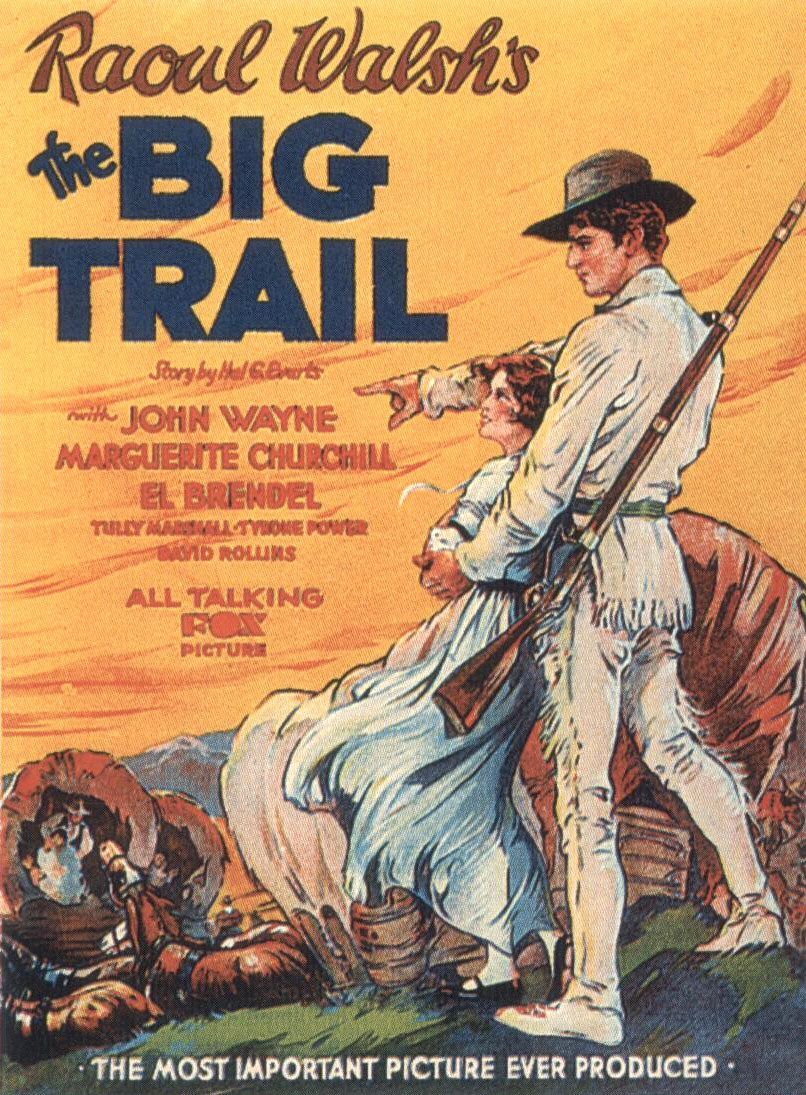
the big trail poster

John Wayne started his movie career as a prop boy. He was given numerous roles as an extra, mostly by John Ford, before landing his first starring role in Raoul Walsh’s The Big Trail. The film was a box office flop and Wayne would fritter away for the next decade making poverty row westerns until John Ford put him in Stagecoach (1940) and made him a star.

The Big Trail is epic in every conceivable way (which makes it all the more astounding they were willing to put the unknown Wayne in as the lead). It was shot on a new 70mm film process called Grandeur. Filming took place over four months in seven different states. He hired over 700 Indians from five different tribes and used some 185 wagons, 1,800 cows, 1,400 horses, 500 buffalos, and 700 chickens, pigs, and dogs in the production.

I can’t imagine what it would have been like to have seen it on the big screen in glorious 70mm. Most people can’t because it was only shown that way in a few theaters. For proper viewing, theaters needed to upgrade their screens and most were unwilling to do so having just spent a small fortune upgrading for sound. The 70mm print was nearly lost to time, but the original negative was lovingly restored in the 1980s.

Watching it on the small screen is still a sight to behold. Walsh makes every use out of the grand scale. The plot, about a caravan of settlers crossing the Oregon Trail, allows for great use of the widescreen format. We see hundreds of settlers on horses, oxen and in wagons rolling across the land, the camera shooting from far off allowing us to see the American west in all of its glory.

There is a scene in which the settlers must cross a river. The rapids rage and horses and pushed downriver like little plastic toys. Wagons lose their footing and are rushed downstream while men desperately try to rescue the women and children on board.

Another scene has the settlers lowering themselves, their cattle, and their wagons by rope down a steep cliff. Once again the camera sits back showing us the massive scope of this endeavor.

But even in smaller scenes, Walsh makes use of this new format. The film begins on the banks of the Mississippi River. A scene will involve a few people talking in the foreground, but behind them, the camera shows a mass of humans, animals, buildings, and ships going about their business. Interior scenes leave a door or window open allowing a steady stream of traffic to mingle about just outside. There must have been a dozen people hired just to handle all the extras.

Unfortunately, the plot doesn’t quite live up to the filmmaking. The main story, that of the settlers traveling west is good. It really demonstrates just how harrowing and difficult that trip must have been.

But the b-stories are not particularly interesting. Wayne plays Breck Coleman who is hired on as a scout for the caravan. He agrees to the trip because he believes that the man hired to lead the caravan, Red Flack (Tyrone Power, Sr.), and his companion Lopez (Charles Stevens) murdered his friend and stole his wolf furs. But this story never creates any real tension. Power is enjoyable in the role, but I was never really interested in the outcome of their battle. Marguerite Churchill is the love interest, but the two fail to sizzle.

Wayne is good. And young. And surprisingly beautiful. He has the walk and some of the talk, but the swagger isn’t quite there. He’s a young man looking for fame and glory, not the older man I’m used to seeing who already has it.

Ultimately, the film is an odd mix of a sometimes rather dull plot mixed with some remarkable filmmaking and stunning visuals. The latter absolutely make the former worth sitting through.

Westerns In March: The Naked Spur (1953)

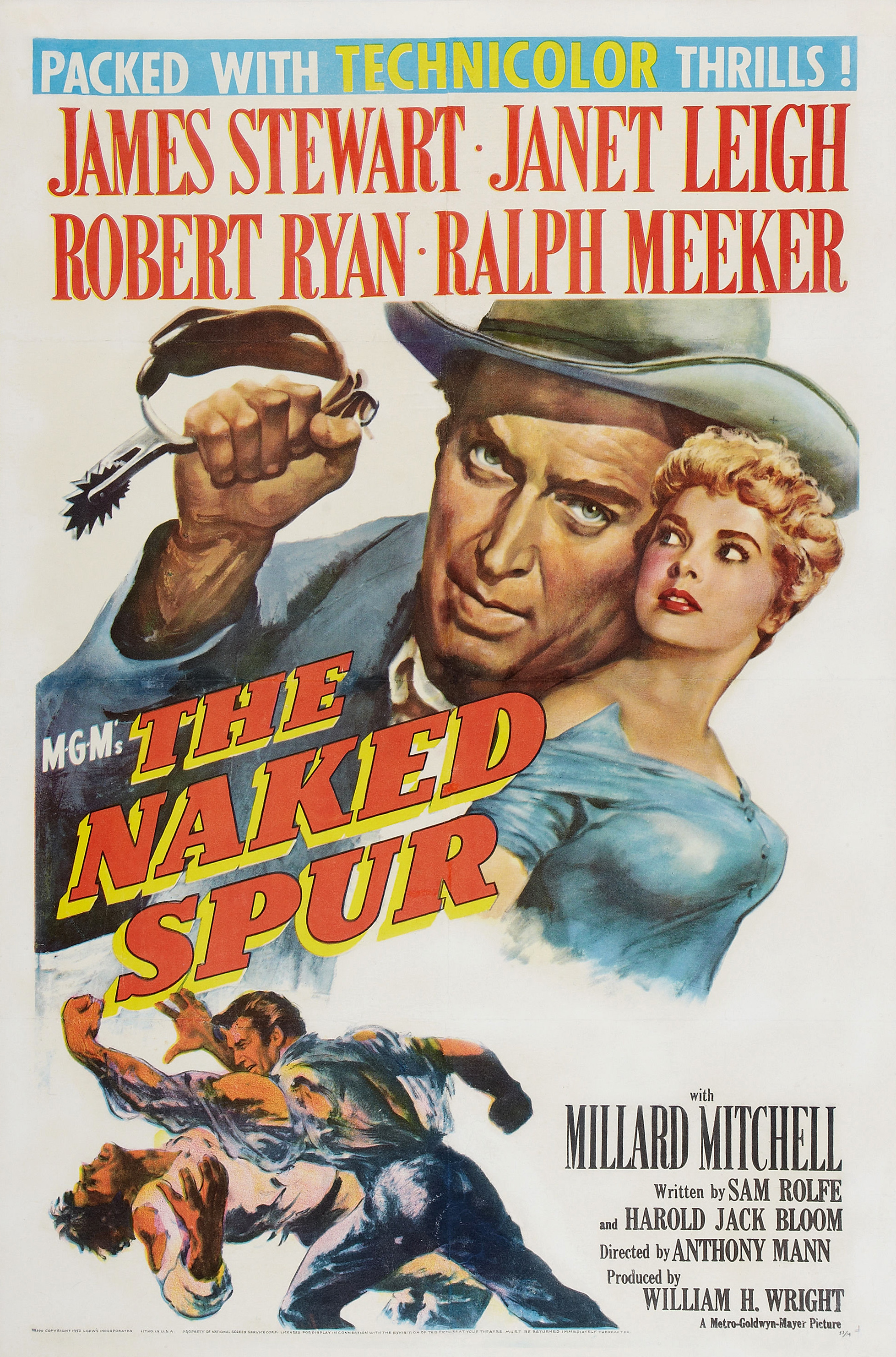
the naked spur poster

Westerns in the 1950s began to change. The days of heroes dressed in white and villains clad in black were not entirely gone, but they were slowly being replaced by westerns with more nuance. Films brimming with anxiety, that were concerned with the consequences of violence and the psychology of those who lived on the edges of society (and you don’t get farther onto the edge than the old west) began filling up the movie screens.

Perhaps no other director better exemplifies the psychological western than Anthony Mann. He made numerous westerns in his career, half a dozen of them starred James Stewart. These films are filled with men seeking revenge or otherwise revealing the old west as a dark, dirty place full of violence and greed.

The Naked Spur is possibly their darkest collaboration, and one of their best. Stewart plays Howard Kemp who has been tracking Ben Vandergroat (Robert Ryan), a wanted killer, across the country.

In the Rocky Mountains Kemp enlists the help of an old prospector, Jesse Tate (Millard Mitchell) to help track Ben down. They locate him and his companion Lina (Janet Leigh) at the top of a ridge. Their shots draw the help of an ex-solider, Roy Anderson (Ralph Meeker).

Once they’ve captured Ben, Kemp tries to send the others on their way, but Ben stops them noting that there is a large reward coming to those who bring him in. He does this not out of some sense of altruism, but knowing that if he can set the three against each other he has a shot at getting away.

For the rest of the film, Kemp continually finds ways to set his captors against each other. Each man has their own dark secrets. Stewart, playing against type, is a man who lost his farm to a girl. He gave her the deed when he went away to war and she sold it out from underneath him. He’s now desperate to buy it back but needs all the reward money to do so. He might just be willing to do the others harm in order to collect it.

Shot on location the scenery is gorgeous which makes it a nice contrast to all the dark, evil deeds brewing in the men’s hearts. But while there are some nice vistas Mann keeps things pretty tight, focusing on the faces of his characters as they all try to figure out to get the best of one another.

It ends with some of the nastiest scenes ever seen in a classic western. I won’t spoil it, but it is a one-two punch that really must be seen.

Westerns In March: The Cariboo Trail (1950)

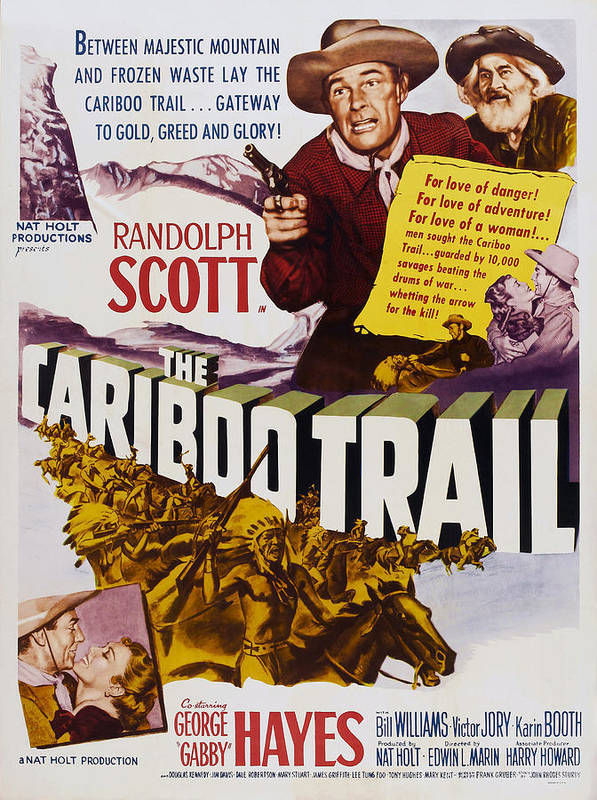
cariboo trail poster

I’ve mentioned a few times in these pages how much I love Randolph Scott. Truth be told I don’t think he was that great of an actor, but he was one of those guys who figured out the type of character he could play well and he stuck to that. While he acted in many types of films, he mostly stuck to westerns and was almost always the hero.

He was also the sort of actor who seems like he would star in any movie the studios asked him to. He made over 100 films, both good and bad, well made and quickly shot b-films. I’ve been trying to watch as many of his movies as I can, and that means sometimes I get one that is not so good.

In The Cariboo Trail, he stars as Jim Redford who, along with his friend Mike Evans (Billy Williams) heads to Canada along the Cariboo Trail. They are looking for gold. For Jim the gold is a means to an end, it will finance his dreams of becoming a rancher, but for Mike the gold is the goal.

The two almost immediately find trouble. There is a short bridge over a small river. The builders of the bridge try to make them pay an expensive toll to cross, but our heroes are having none of that. They run their cattle over the bridge, wrecking it in the process, and making an enemy out of the man who owns the bridge. He owns a lot of the nearby town too.

Mike gets injured after a cattle stampede which was likely started by the men at the bridge. This makes him angry and bitter and he ultimately teams up with the enemy. Jim travels farther north and finds an untouched patch of land that will be just perfect for a cattle ranch.

He also finds Grizzly (Gabby Haynes in his final role) and an old prospector. The two team together to try to find some gold. There’s also a love interest. Actually, there are two, for every woman who comes in contact with Jim seems to fall immediately in love with him. But he has no interest in women, or anything other than finding gold and getting his ranch.

The film was clearly made on the cheap and most of its ideas don’t feel fully developed. My guess is either the writers didn’t have time to finish the story or the budget didn’t have enough money to film them. Either way the film feels a little disjointed.

Scotts is always enjoyable and Gabby Haynes is a lot of fun. This is mostly skippable unless you are a fan of Randolph Scott and even then I’d probably hold off on it until you’ve seen his classics.

Westerns In March

Westerns were massively popular from the 1940s up until about 1960. As their popularity waned in the United States European studios began making them on the cheap. These so-called Spaghetti Westerns amped up the sex and violence and often eschewed the traditional conventions of the genre. By the end of the 1970s, the genre was entirely out of favor pretty much everywhere.

Much like the Hollywood musical, a good western pops up every few years, generates some buzz that maybe the genre is back, and then it disappears again.

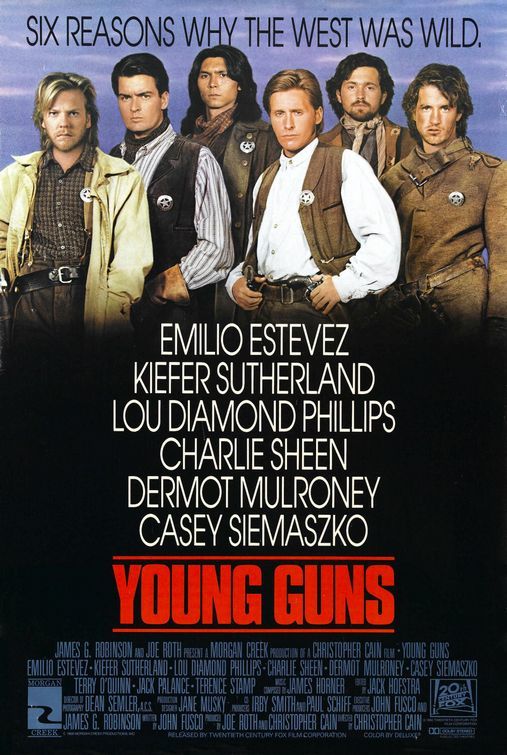
I grew up in the 1980s, came of age in the 1990s. Westerns had mostly passed me by. I do remember Young Guns and The Three Amigos, Tombstone, and The Unforgiven. I liked those movies, but the western was still something foreign to me. It wasn’t something I would seek out. At least not for many years anyhow.

Oh, I’d watch some of the classics, films like True Grit and Rio Bravo, but mostly I stuck to other genres. But over the last few years I’ve started to really enjoy westerns and have begun digging deeper into its large well.

So I thought I’d make the theme for my March movie-watching westerns. I started to make a Letterboxd list of westerns I wanted to watch this month, but it was taking me too long to get it together so instead, I’ll just wing it. Most streaming services have a Westerns category and I’m sure to find others in various ways.

I couldn’t think of a catchy title for this theme so it’s just gonna be Westerns in March. But I look forward to watching lots of cowboys and gunfights, horses and the wise open plains. I hope you will too.