Westerns in March: Django (1966)

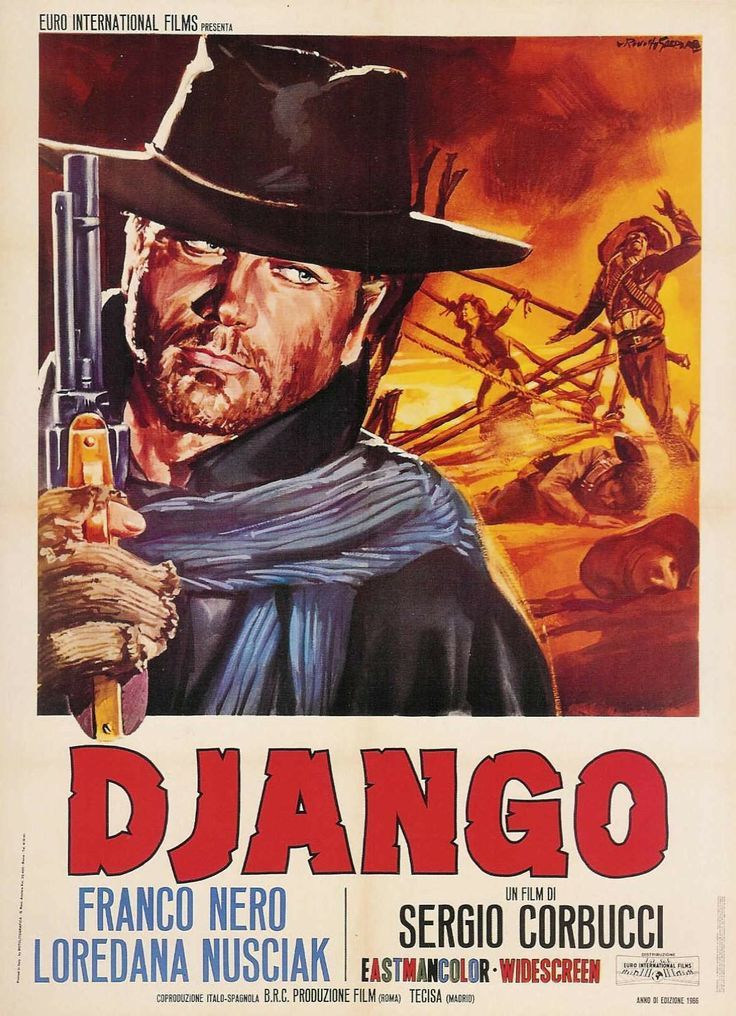
django poster

As the popularity of westerns began to wane in America, the Italians picked up the mantle and ran with it. A number of westerns had been produced in Europe before Sergio Leone’s A Fistful of Dollars in 1964 but it was that film that is generally credited as the first Spaghetti Western. With its distinctive visual style, unusual score by Ennio Morricone, and iconic anti-hero played by Clint Eastwood, A Fistful of Dollars set the template for all the Spaghetti Westerns to follow.

It was a huge success and naturally, numerous films came out soon after, that aped its style and tried to cash in on its success. Perhaps the most successful, both financially and artistically, was Sergio Corbucci’s Django. It was also a big success. It launched the career of Franco Nero and spawned some 30 different sequels (most of them unofficial).

It begins with our hero, Django (Nero), a former Union soldier walking alone in the wilderness somewhere along the US/Mexican border, dragging a coffin behind him. It is a magnificent image to open a film on, one of the all-time great opening images in fact. The movie ends with another indelible image, one that I won’t spoil, but it, too, is an all-timer. The film that happens in between those fantastic moments is also quite good.

Django stumbles upon a prostitute (Loredana Nusciak) about to be literally crucified upon a burning cross by some racist Red Shirts. Django shoots the men and offers the woman protection.

The two walk to a nearby town, half-deserted save for a bartender named Nathaniel (Ángel Álvarez) and a handful of prostitutes. Nathaniel tells them that the townspeople have mostly been killed off due to the feud between the Redshirts and some Mexican revolutionaries.

The plot, with Django working both sides of the fight, is very similar to A Fistful of Dollars (which itself was inspired by Akira Kurosawa’s Yojimbo, which in turn was inspired by Dashiell Hammett’s novels The Glass Key and Red Harvest.)

But first, there is a lot of discussion as to just exactly what is in that coffin he’s been dragging around. Most seem to think it holds an actual body which produces a lot of signs of the cross. His enemies often joke that he’s just being helpful, bringing his own coffin along as they are about to kill him.

But friends, and this does count as a spoiler, that thing holds one big ass machine gun. When the Red Shirts come down he hauls it out and mows them down in glorious fashion.

He works with the Mexicans for a time, but he has no interest in their politics. Like Eastwood in those Leone films, Django is a man on his own. It is frequently violent, periodically hilarious, and always cool.

It isn’t quite as stylish as Leone’s Dollars Trilogy but it is still pretty darn great. Franco Nero is terrific as Django and the score from Luis Bacalov is fantastic. It makes a terrific way for me to end my Westerns in March series.
Mary Poppins (1964)

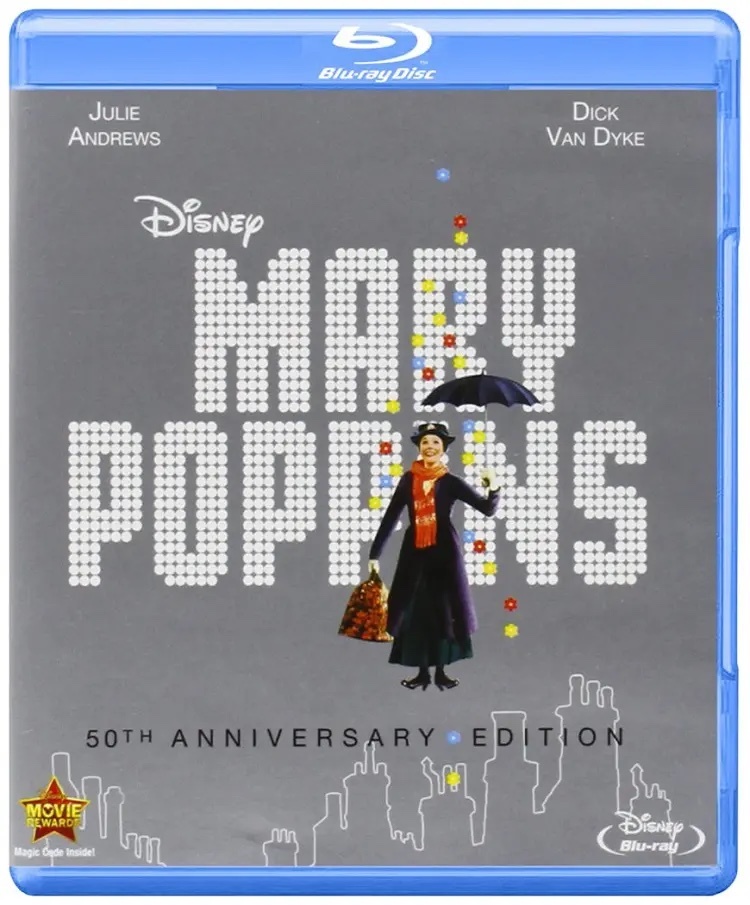
mary poppins blu-ray cover

One of the (many, many) joys of being a father is watching some of your favorite movies with your child. We introduced our daughter to classic Walt Disney movies very early in her life and she’s been a fan ever since. One of the (many, many) delightful aspects to this is watching movies I hadn’t seen in a long time, and probably would not have watched were it not for my daughter.

Mary Poppins is a delightful classic and I got to watch and review a special edition Blu-ray of the film a few years ago. You can read it here.

Blood on the Docks

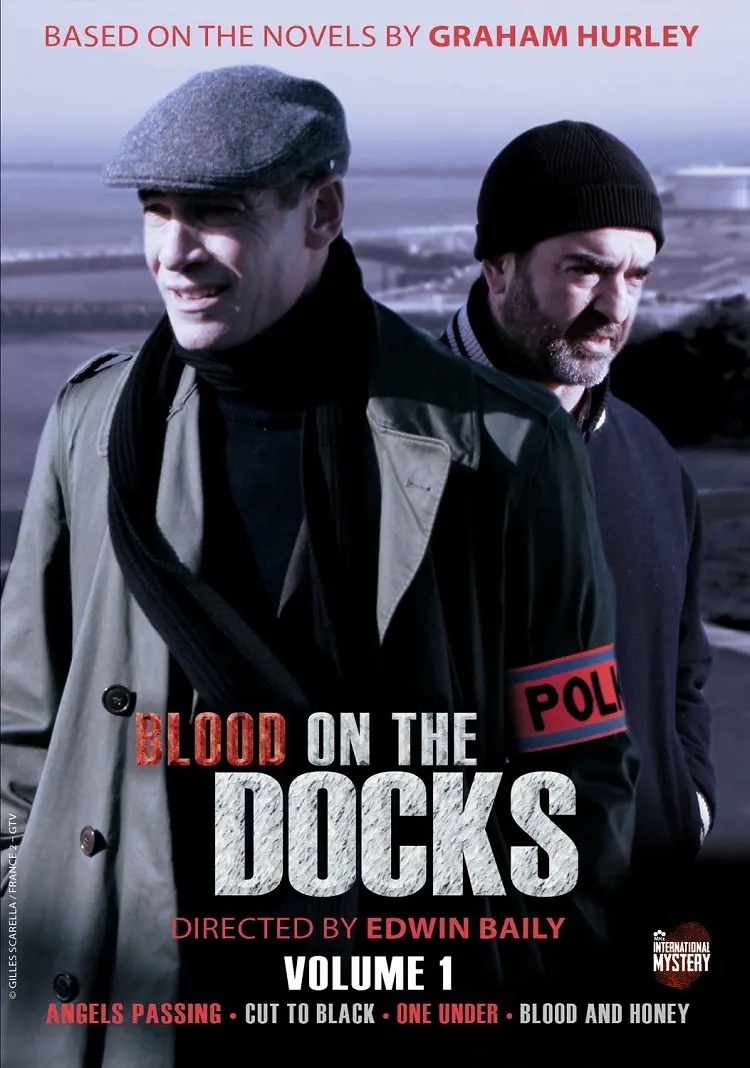
blood on the docks dvd cover

I watch a lot of television crime dramas. The very nature of television series and crime dramas tends to push these things to similar formulas. One of the classic character tropes in crime dramas that feature police as their main characters is to have one be perfectly straight-laced and by the books and another to be a wild card, willing to do what it takes to solve the case even if that means bending the rules.

Blood on the Tracks is as formulaic as it gets (at least according to my review, as I really don’t remember anything about it), but apparently, it works. And that’s the thing about a good formula, you can make it work pretty easily, especially if you have good actors.

You can read my full review here.

Doctor Who: Terror of the Zygons

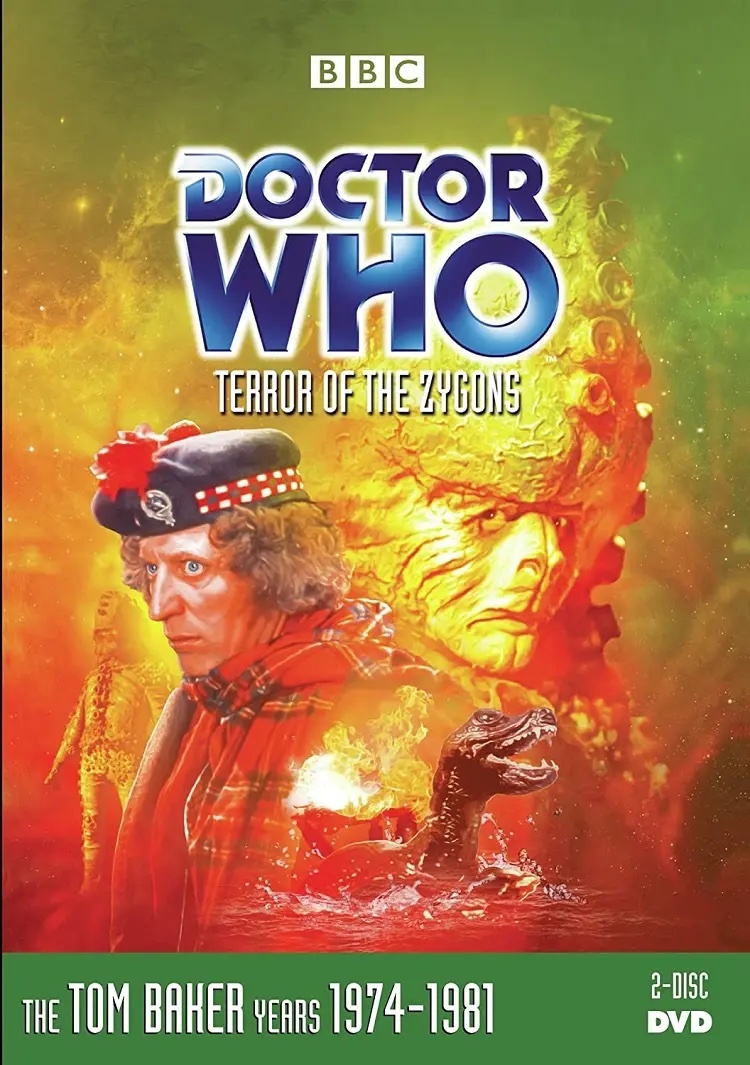
doctor who terror of the zygons dvd cover

Doctor Who
Terror of the Zygons
Season 13, Story 80
Original Air Date: August 30-September 05, 1975

Classic Doctor Who first came to America in 1972 with Jon Pertwee portraying The Doctor, but it didn’t do very well and was quickly dropped. A few years later, with Tom Baker now in the lead role, the series was sold to PBS and became a cult hit. Most fans of a certain age hold a special place in their hearts for those Tom Baker stories, including me. Sort of.

I wasn’t really a fan of the series when I was growing up. If memory serves the series came on here late on Saturday nights. I remember watching it a few times (and I have a very specific memory have the bejeezus scared out of me by the Daleks which made me ask my mother to lie down with me even though I was old enough to be embarrassed by that request). But it is Baker who fills my earliest memories of the series. It was many years later, in fact, that I even knew The Doctor was played by multiple actors.

Anyways, when I was first getting into Classic Doctor Who stories I watched and reviewed this Tom Baker story, and you can read my review here.

My Week in Movies March 19-25, 2033

butch cassidy and the sundance kid poster

I watched ten movies last week, seven of which were new to me. Two of which were westerns that I will talk about later this week in more depth.

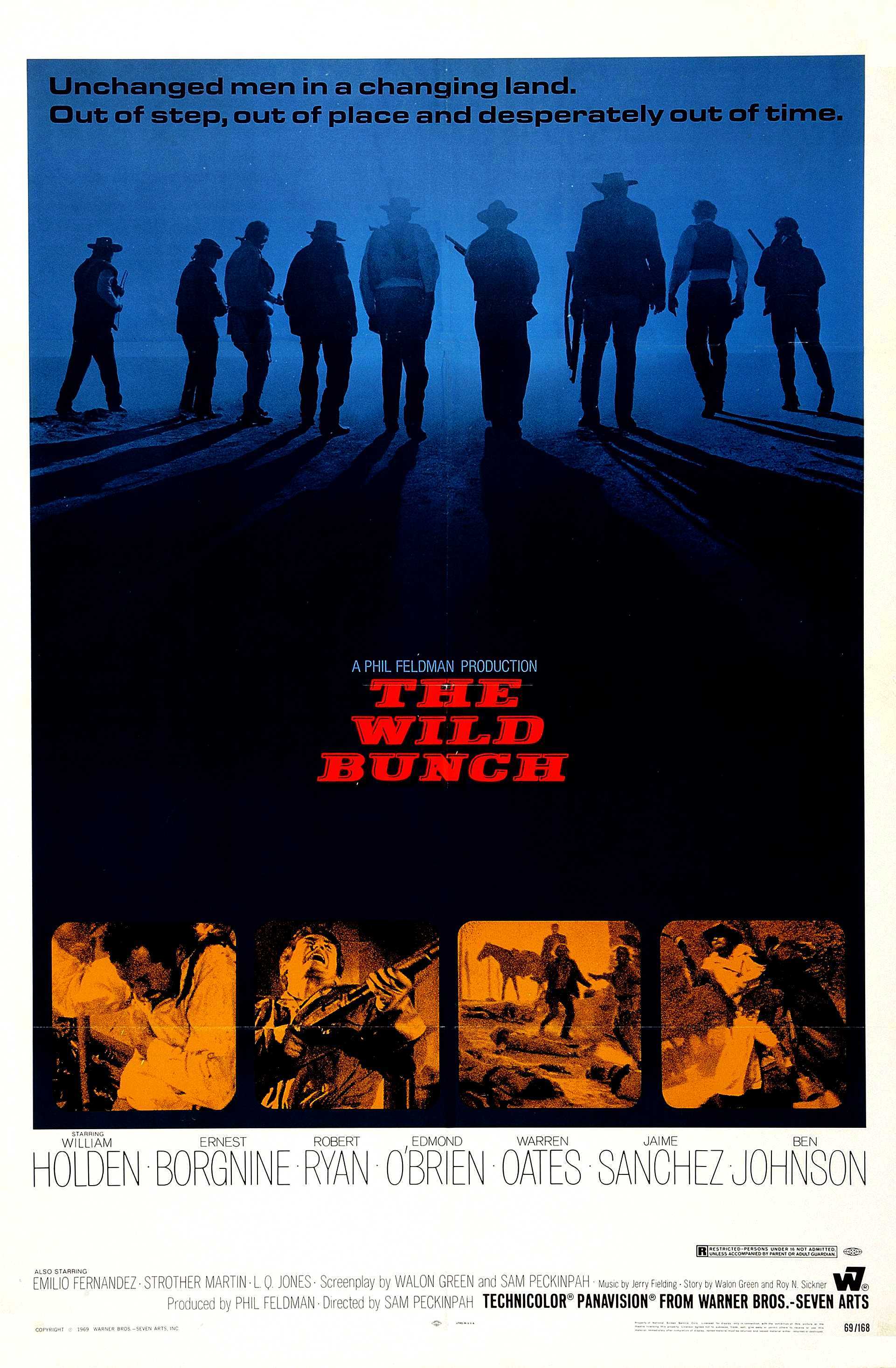
The Wild Bunch (1969): Sam Peckinpah made several westerns before this one, but this is his masterpiece, the culmination of his thoughts on the genre. It is brutally violent, dark, cynical, and pretty fantastic. I’ll have more thoughts on it when I write my full review.

Small Town Crime (2017): A small, twisty, noir-tinged thriller starring John Hawkes as a disgraced, alcoholic former cop who discovers a body on the side of the road. He convinces the girl’s father (Robert Forster) to let him work the case as a private detective. The case gives him a new lease on life to actually do something besides drink himself into an early grave. The plot is pretty standard stuff, but it is done well and Hawkes is great as usual. I’d love to see him in an HBO-type series where he solves crimes every week.

Double Indemnity (1973): A television remake of the classic film noir with Richard Crenna in the Fred MacMurray role, Samantha Eggar taking over the Barbara Stanwyck part, and Lee J. Cobb as Edward G. Robinson. It follows the original script pretty closely (though it does edit parts out to cut down on the total time), but pales in comparison.

But it isn’t as bad as it’s been made out to be. It is a perfectly serviceable TV movie. If the original didn’t exist this would be, well it would be completely forgotten as it isn’t good enough to really be remembered, but if you picked it up in the $2 DVD bin you wouldn’t think it was a waste of your money.

But since the original does exist there is no real reason to watch it other than to make you realize how perfect the original is in every way. I watched it because it came as an extra on my Blu-ray of the original and I was curious about it.

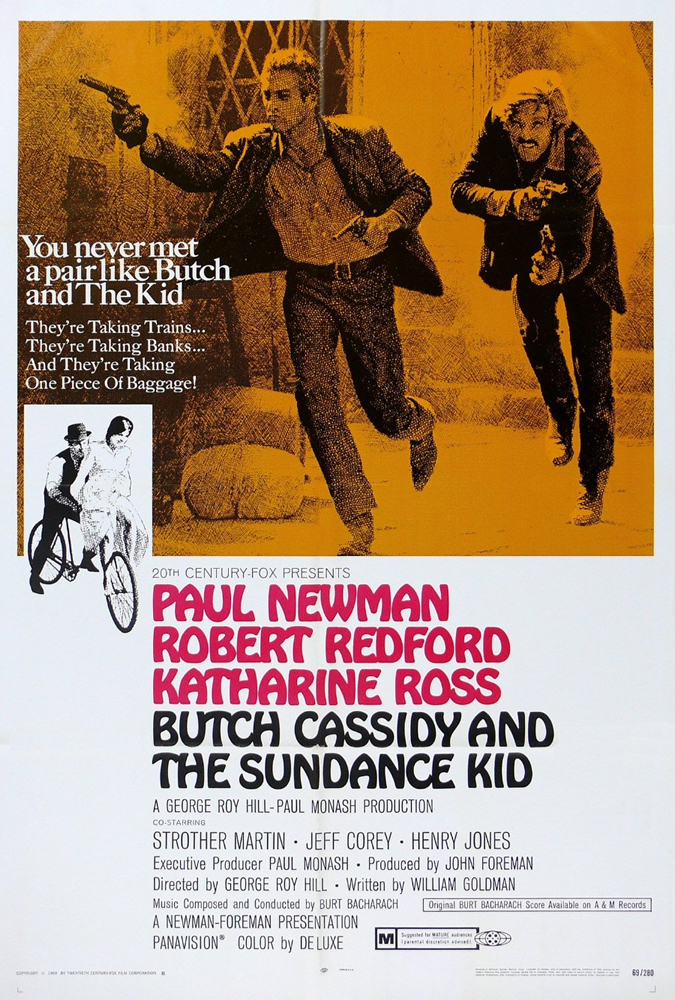
Butch Cassidy and the Sundance Kid (1969): One of my favorite westerns. It feels like the opposite side of the same coin The Wild Bunch comes from. This is a lot more fun to watch and Paul Newman and Robert Redford have never been more charming.

The Lodger: A Story of the London Fog (1927): Alfred Hitchcock’s first big hit and his first truly Hitchcockian film has been a gaping hole in my cinematic knowledge for far too long. I remedied this week and I can’t really fathom why it took me so long.

The plot follows a London family after they have taken in a mysterious lodger who might just be a Jack the Ripper-style killer. It is full of creeping dread and suspense while utilizing what would become many of the director’s trademark styles. Even without sound, he proves himself a master of camera placement and movement, and editing.

Barbarian (2022): A pretty terrific little horror film that I talked about in my Friday Night Horror piece.

Sabotage (1939): The Lodger got me into the mood for another early Hitchcock film. I’d seen this one before but it is so worth watching again. It is about a man who is enlisted by foreign agents to commit acts of sabotage in London. It follows his wife and a young police detective as they try to determine whether or not that’s actually true.

Strangely, this one doesn’t seem all that beloved by Hitchcock fans and classic movie nerds, but I love it. It is full of that classic Hitchcock suspense and it makes great use of its setting (the family runs an old movie theater.)

Excalibur (1981): I have this distinct little memory of my mother renting this movie when I was a kid. I was very excited to watch it because it had knights in shining armor and wizards and it looked really cool. But Mom watched it before me and decided that the nudity, sex, and violence were not appropriate for little old me. I was so disappointed.

That memory has stayed with me, but I somehow only got around to watching the film now. What a strange, long, freaky movie it is. The plot is a retelling of the King Arthur myth. It looks great, the set design is wondrous and the lighting and camera placement are all really interesting. But the story just plods along and the action is clumsy at best.

John Boorman directed it. He made Zardoz a few years earlier. It is just as weird and stylish but its actually good.

Gold Diggers of 1933 (1933): Joan Blondell and Dick Powell star in this wonderful little musical with choreography from Busby Berkeley. The film opens with Blondell, Ginger Rogers and a host of chorus girls decked out in dresses made of gold coins singing “We’re in the Money” and it just gets better from there.

Every Secret Thing (2014): Two very young girls are convicted of kidnapping and then murdering a baby. Years later, just after they are released from juvenile correction another little girl goes missing. The story moves from the first crime to the next connecting how what we did in our past influences who we are and what we can do in our present and future.

Did you all watch anything interesting this week?

Westerns In March: The Wild Bunch(1969) & Butch Cassidy and the Sundance Kid (1969)

butch cassidy movie posterthe wild bunch poster

While the western was a hugely popular genre (some figures have the genre comprising up to 1/5th of the total output from Hollywood through the 1950s – call it the MCU of the classic era) it declined sharply in the 1960s. About that time the Europeans, especially the Italians, picked up the western handle and made many more films in the genre – some were great like Sergio Leonne’s Man with No Name Trilogy, but many were pretty terrible.

But in America, the western pretty much died out. Oh here and there a new western would pop up, but they were no longer the preeminent genre and have never regained that title.

Somewhere between the peak of western popularity and the death of it, there began a new kind of western, call it revisionist western. Where classic westerns tended to side with the Europeans in things like Manifest Destiny and treated the natives with contempt – making them faceless, nameless hordes of blood-thirsty monsters – revisionist westerns saw things differently. They dealt in shades of gray instead black and white.

Last week I watched two revisionist westerns from 1969. While they both subvert the classic western tropes, they are vastly different in the stories they tell and the tone in which they take. Call them two sides of the same coin. I thought it would be fun to talk about them both in this post.

The Wild Bunch is a pessimistic, dark, and violent film. It begins with a group of children watching with glee some scorpions get devoured by a million ants. A little later they will set them all on fire. In between those moments, we watch The Wild Bunch (led by William Holden and Ernest Borgnine) rob a bank. A posse (led by Robert Ryan) hired by the railroad to stop the Bunch opens fire as soon as they come out. They kill some of the gang, but a bunch of innocent citizens as well.

The movie, as directed by Sam Peckinpah, seems to announce, This is Not Your Daddy’s Western. Classic westerns were violent – there was plenty of gunplay and death – but they tended to not be particularly bloody. When a man was shot rarely do you see a bullet hole in his clothes, much less blood spurting out. I reckon half The Wild Bunch’s budget was spent on squibs and fake blood.

Butch Cassidy and the Sundance Kid begins with a card game. Sundance (Robert Redford) is winning but is accused of cheating. Butch (Paul Newman) tries to tell him to just let it go, but Sundance can’t. The confrontation ends with Sundance literally shooting the pants (or the belt, rather) right off his accuser. It is a completely unrealistic maneuver (the bullet would easily go through the belt and into the man, but doesn’t) but it sets the playful, humorous tone of the entire film.

Butch and Sundance spend most of the film wisecracking and generally having fun being outlaws. The Wild Bunch often laughs, but it is a desperate laugh, the laugh of men headed toward their demise.

Not to spoil both films, albeit ones that are more than 50 years old and such a part of the cultural zeitgeist you likely know how they both end, but all of these characters are headed toward their demise. None of our heroes live out their lives in peace and prosperity. Part of what revisionist westerns often did, and these two films in particular definitely do, is recognize that life in the Old West was often short and very violent. They also act as codas of sorts to the western genre itself.

It is fascinating how these two films are saying similar things but in such different ways. The Wild Bunch is realistic, dark, and gritty. Butch and Sundance is a light, buoyant, and joyful. I love them both, but on any particular day I’m gonna reach for Butch Cassidy far more often than The Wild Bunch.

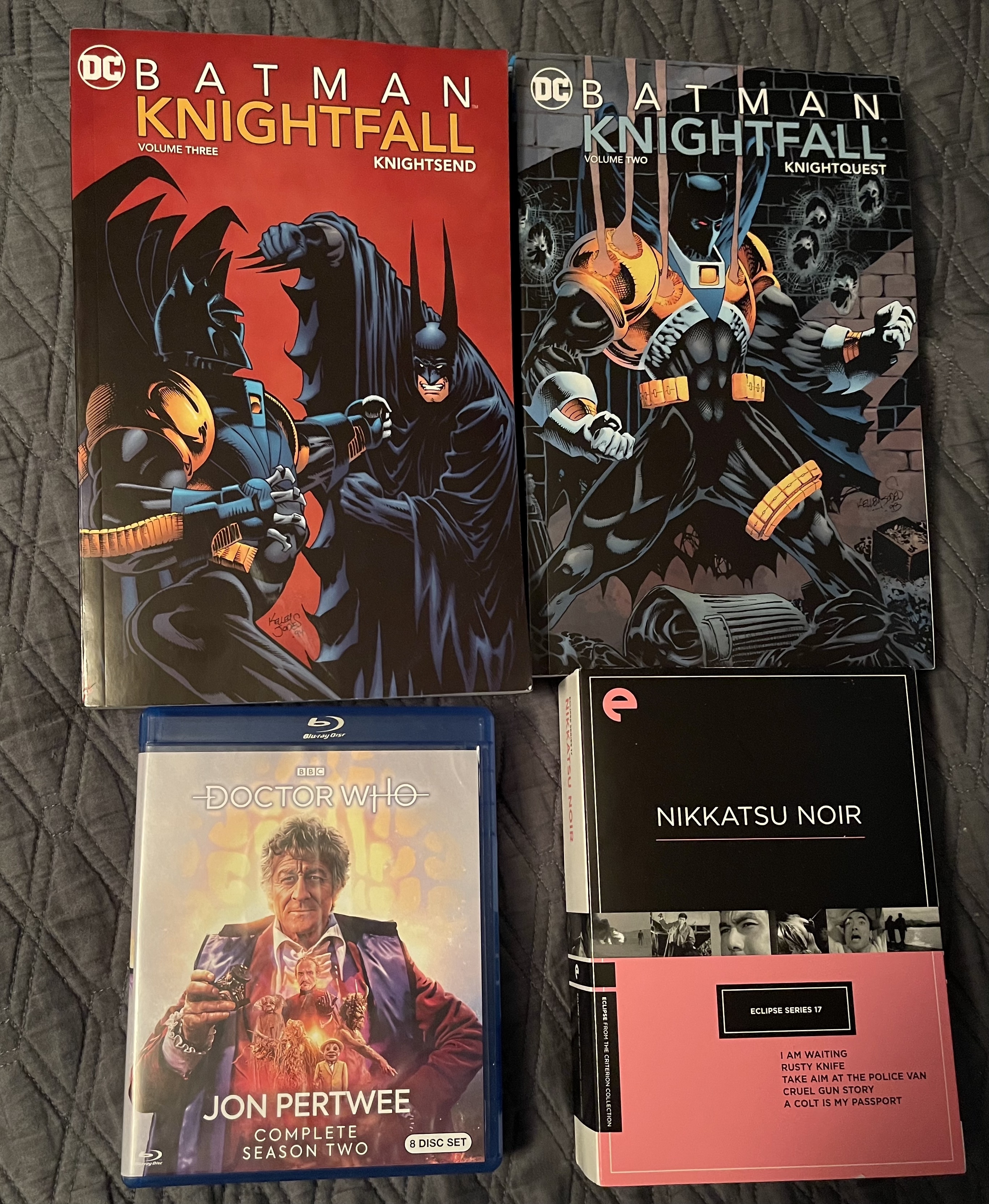
The Birthday Haul

blurays and comic books

As I mentioned in today’s bootleg post it is my birthday. Birthdays aren’t a big deal to me, so we didn’t do anything too exciting. We had plans to see Bill Frisell in a little club, which would have been awesome, but the budget has been tight of late, so that wasn’t in the works.

Instead, the wife bought me a few gifts and it was a lovely day and we went to the park. The daffodils were blooming and they were wonderful.

Thanks to everyone who wished me a happy day, it was a good one.

The Friday Night Horror Movie: Barbarian (2022)

barbarian movie

It is very rare that a movie surprises me. Rarer still is a horror movie that surprises. Barbarian surprised me at least twice and left me breathless on multiple occasions. We’re not talking jump scares – though there are plenty of those – or just general weirdness (though it is a deeply weird movie). Barbarian surprised me in ways that supplanted my expectations. In the best possible ways. That it doesn’t quite stick its ending, and that its Horror was a little too much for me, doesn’t change the fact that this is exactly the kind of horror movie I love to see.

It is also a movie that truly is best seen completely cold, so I will do my best to remain vague and spoiler free.

Tess (Georgina Campbell) travels to Detroit for a job interview. She books an Airbnb and arrives late at night in the pouring rain. The lockbox opens but is missing the key. The rental agency does not answer the phone. Just as she’s leaving, a man, Keith (Bill Skarsgård), opens the door. Turns out he also rented the place for the night.

Being in a strange city, in the middle of the night, during a rainstorm, finding herself stuck staying in a house with a complete stranger doesn’t exactly make Tess feel comfortable. The film has a lot of interesting things to say about the ways men and women must travel through the world in different ways to feel safe.

It also does a great job of building tension around this situation. We (and therefore Tess) are never quite sure whether or not Keith is a potential friend or a danger. In order to not spoil what comes next I’ll fast forward to a second story the movie tells.

But let’s just say this is a horror story.

AJ Gilbrade (Justin Long) is a working actor – not quite rich and famous yet, but he’s getting there. He’s introduced driving a convertible down an ocean-side highway singing along to Donovan’s “Riki Tiki Tavi.” A phone calls interrupts this happy moment and he’s informed that his costar on his upcoming television series has accused him of sexual misconduct.

Losing that job and basically becoming untouchable to everyone else, AJ realizes he needs to liquidate some things fast in order to have the money to live on while things get sorted. Queue him traveling to Detroit to sell one of his rental properties.

Guess which house is his?

The two stories intersect but again it goes in directions I was not expecting at all.

Justin Long is a likable actor and we naturally assume that his declarations of innocence over the misconduct allegations are true. The film teases out what actually happened in some really interesting ways, and makes some comparisons to…well, again I don’t want to spoil anything.

I’ll say no more about the plot. Writer/director Zach Cregger has created a most interesting story and found ways to interject something new into some pretty familiar-sounding horror tropes. As a director, he creates a good sense of space and an eerie sense of mood and creeping horror.

The jump scares mostly worked on me but they were the least interesting aspects of the film. Likewise, the actual horror parts of the film, by which I mean the more atypical scary parts of the movie (sorry, I do want to be vague and that makes it difficult to say what I mean just here) were a little too over the top for my tastes. But otherwise I completely fell for this film.