Foreign Film February: The Bicycle Thieves (1948)

the bicycle thieves

The Bicycle Thieves is generally considered one of the greatest films ever made. It topped the Sight & Sound (often considered the best, or most important of these types of polls) list in 1952, the first time they made a poll. It has since slipped further and further down that list, but it is still highly regarded amongst critics directors and cinephiles.

It has been on my list of films to watch for a very long time, but I’ve always put it off. It has always seemed to me to be a film that would be difficult to watch – in that way important films can sometimes feel like homework. I knew I’d need to be in the right mood to watch it and that mod never seemed to come. It is part of and is often considered the best example of, the Italian Neorealism movement. As the name implies these are films that were designed to be as realistic as possible. They were shot on location, used non-professional actors, were generally about the working class, and dealt with social and political themes.

I am not the biggest fan of the genre. Cinema works best to me when it is, at least somewhat, unrealistic. I don’t necessarily mean it needs to be pure fantasy or science fiction. Simple plots about real people can still bedazzle us with unique camera movements, or music, or stylistic choices. I love the cinematic aspects of cinema and so a more naturalistic handle on the material isn’t as interesting to me. I don’t want to belabor that point, as I could come up with plenty of naturalistic films that I love, but The Bicycle Thieves’ neorealism is one of the things that kept me from watching it.

Until today.

Like almost every film that is universally beloved, I liked The Bicycle Thieves quite a lot. There is a reason certain films are considered the best of the best, and it is rare that I really dislike any of them. But I definitely didn’t love this one.

The plot is simple. In post-war Italy Antonio (Lamberto Maggiorani) is desperate for work He stands in line with dozens of others every day hoping the employment office will have something for him. On this day it does, he’s offered a job putting up advertisement posters throughout Rome. But he needs a bike, it is necessary for the job.

Antonio has a bike, but it was pawned. His wife tears off the sheets from their bed and folds most of their linen up. They take it to the pawn shop and sell it. The camera follows the worker as he climbs a ladder and places their linen in a huge pile with hundreds of other sheets they have purchased. They use the money to buy back the bike (which likewise is in the shop next to a long line of other bikes. Pawning one’s stuff is necessary for so many just to survive another day.)

She visits a Wise Woman, kind of a fortune teller, to pay her respects since earlier the Woman had told her that he would get a job. Antonio leaves the bike in the street and follows her up. We expect the bike to be gone when he returns but the film is playing with us, the bike is still there. It does get stolen on the first day on the job. While Antonio is putting glue on the poster a young man swipes it.

The rest of the film follows Antonio and his young son as they wander the streets of Rome looking for it. They go to the police but all they can do is take a report. His friend shows him some open-air markets where thieves often try to sell stolen bikes. He eventually runs into the thief but without proof that he stole the bike, there is nothing anyone can do. As the day goes on Antonio gets increasingly desperate and exasperated.

I won’t spoil the ending but the final moments are incredibly moving.

Director Vittorio De Sica shoots the film naturalistically. He shot on location in Rome. All of the actors were not professionals. The camera acts as an observer and there is nothing splashy about any of the filmmaking. It is a simple story told simply. This was startling to audiences at the time who had grown accustomed to the style and glitz of Hollywood films. It was exciting to see a film stripped down to its essence. Or so I’m told. Watching it now, that excitement has been washed away. What we’re left with is a very nice story, one that can be quite moving even. But not one I’ll be voting for as the best ever made.

I will admit that had I watched it in a different way my feelings may be different. Had I watched it in a movie theater where I could pay sole attention to it instead of my bedroom where distractions abounded I might have tuned into its simple pleasures more. Or were I in a different headspace I may have found the story more emotionally engaging. But for now, I can only recognize that it is a good film, but perhaps not entirely for me.

The Friday Night Horror Movie C.H.U.D. (1984)

chud movie

The 1980s were a wild time for horror movies. The advent of home video and the rise of cable/satellite TV meant a massive uptick in potential viewership. No longer did low-budget horror movies have to rely on midnight movie screenings in large cities to make their money, there were now thousands of movie rental houses looking to fill up their shelf space, and dozens of new cable channels with time to fill. Horror Hounds have never let low budgets or shoddy effects keep them from watching a movie and so the 1980s were filled to the brim with horror movies of all shapes and sizes being churned out in straight-to-video releases.

C.H.U.D. actually received a theatrical release (at least in a limited capacity) and had a not terribly tiny budget of $1.25 million, but it is very much a movie of the ’80s. John Heard and Daniel Stern star as fashion photographers and soup kitchen operator who begin an investigation of the disappearance of numerous NYC homeless people. Stern’s character notices that the missing people were all underground dwellers, those who live in the various tunnels underneath the city.

At the same time, Bosch (Christopher Curry) a police Captain begins his own investigation despite the protests of his boss and a Nuclear Regulatory Commission goon (George Martin) both of whom are trying to cover up the disappearances.

What they find under the city are killer mutants known as C.H.U.D.s (Cannibalistic Humanoid Underground Dwellers) which – surprise surprise – were caused by the NRC goon dumping all kinds of industrial waste in those underground tunnels. It is all very silly and kind of dumb, but also charming in its own way.

It also stars Kim Greist (in her film debut) as Heard’s wife. She manages to be a surprisingly tough character who fights off the mutants with a sword. John Goodman, Jay Thomas, and Jon Polito also have minor roles.

Links of the Day: February 2, 2023

Wilco Announced As End of The Road 2023 Headliners: This is Dig

The Color of Money (1986): Revisiting a Tom Cruise Classic: JoBlo

The Band’s Massive Weight: On Martin Scorsese’s “The Last Waltz” and Jeff Sellars and Kevin C. Neece’s “Rags and Bones”: Los Angeles Review of Books

Bobby Weir & Wolf Bros Trio Plot Five Night Run at The Guild Theatre in Menlo Park: JamBands

Les Claypool Talks Regrouping the Frog Brigade, Announces Summer of Green Tour: Relix

David Crosby Returns to Americana/Folk Albums Top 10, Surges on Multiple Charts: Billboard

Elton John Now Holds Record For ‘Highest Grossing Tour Of All Time’: I Heart Radio

Live Review: Lucinda Williams at Barbican, London – January 21, 2023: Beats Per Minute

Tim Blake Nelson talks Hollywood novel, Coen Brothers and Nora Ephron: OCRegister

Martin Scorsese Changed Killers Of The Flower Moon To Work With The Osage Nation: Slash/Film

How Bob Dylan’s ‘Time Out Of Mind’ Got Stripped Down, Reimagined on New Bootleg Series: Rolling Stone

Some Recent Pickups

pickups

I keep meaning to do stuff like this and I keep forgetting. In various places like Twitter and Reddit physical media collectors love to share their recent purchases and pickups. As I continue to try to make this blog my own personal social media space, I hope to do this here more often.

This collection is a mixture of things I recently bought, something my mother gave me and a few review pieces. The local used media shop periodically sends me coupons and last week I got a buy one get one deal and so I picked up a DVD copy of Criterion’s release of The Killers which is actually two films, two adaptations of the same Hemmingway story and Dario Argento’s Trauma. The films in the middle are all review copies which I’ll link to soon. The Dietrich book I picked up at a used store a few weeks back and my mother gave me a copy of The Irishman – I loved that film so I’m interested to see how the book is.

What have you guys picked up lately?

Foreign Film February

nostalghia

Many years ago, not long after I had moved to Texas (don’t worry, I didn’t stay in that state long :)), I was invited to someone’s house for food and games. We played this game where everybody sat in a circle and this little computer tablet was passed around. The tablet displayed a word and whenever you were handed the tablet you had to try and get anybody else to say that word. The trick was you weren’t allowed to say it yourself. So you had to describe the word or say something that would remind others of what that word was. It was a bit like that old TV gameshow The $25,000 pyramid if you remember that. Once your word was guessed then you passed the tablet to the person next to you and they had to do a different word. There was a timer, and when that timer went off, whoever was holding the tablet was out.

It was a fun game. One of my words was “fin”. My mind immediately registered it as the French word for “end.” Except I didn’t actually know it was a French word, I just knew it was used at the end of a lot of the foreign language films I liked to watch. I spent several minutes trying to explain that it was the word you’d see at the end of a foreign film, before I realized that the easier way to do it was to talk about a fish.

I don’t remember the first foreign film I watched (and yes, I know “foreign film” doesn’t mean movies not in English to large portions of the world, but I’m a dumb American and that’s the way I use it in this context). I was probably a teenager as my parents weren’t exactly the type of people to watch movies in a language they didn’t speak. If I were to guess I’d say it was probably something on Bravo, the cable TV station. They used to show lots of cool art house movies before becoming nothing but reality TV fashion shows.

If I’m being honest, I started watching them because European arthouse films were a lot more relaxed with sex and nudity than American films were at the time, at least the ones my parent’s let me watch. Or maybe Bravo was a lot more willing to show those things than other basic cable channels were, at least back then anyhow. As a pubescent boy a naked breast on television was quite exciting. This was long before the internet made nudity so easily accessible to young boys, you understand.

But the thing is, I found I rather liked those films outside of the excitement that overcame my own budding sexuality. They were different – exotic even – and widely interesting. As I grew as a cinephile I learned to watch more and more films with subtitles.

A few years ago I latched onto the idea of Foreign Film February and here we are. I’ve decided not to come up with a list of films I want to watch this month. Honestly, I just forgot about it until last night and I was too tired to come up with a list. But foreign language films are also really easy to find on most streaming services and in my own library. Much like 31 Days of Horror and Noirvember, I’ll try to write about as many foreign films as I can this month. I hope you enjoy.

The Movie Journal: January 2023

decision to leave

We watch movies, we read books, we listen to music, but what do we do when we’re talking in general about all art? I used to say we consumed it, but now that brings up negative connotations. In the movie world, the people who finance movies and television shows – studios and streaming services like Netflix – speak of movies and shows not as if they were creative arts but as content. Something we consume like we consume potato chips, Snickers bars, and wet wipes. But art is so much more than something we just casually consume. So I need another word when talking about partaking in art.

I’m always fascinated by the ways in which I consume Art. Sometimes it is random, like when I put my music collection on shuffle mode, or grab a book off my bookshelf when I’m headed to the bathroom for a visit. Sometimes it is intentional like the movie I watch in October or Noirvember. Other times the Art informs what I watch (or read, or listen to, or consume) next.

So, for example, earlier this month I watched Caliber 9 (1972) an Italian crime thriller. I liked it and so I watched another one, then another one…I watched five in total. Sometimes these types of films are called poliziotteschi, kind of like how a subgenre of Italian horror is Giallo. I first heard about poliziotteschis a couple of years ago and I’ve been watching them ever since, but they aren’t something I necessarily go looking for (unlike Giallo which I regularly hunt down). But because I randomly watched Caliber 9, I can now say I’ve seen five other films in the genre.

I don’t know why that is so satisfying to me. It scratches the same itch that collecting every one of Bob Dylan’s LB# or the Grateful Dead’s shinds.

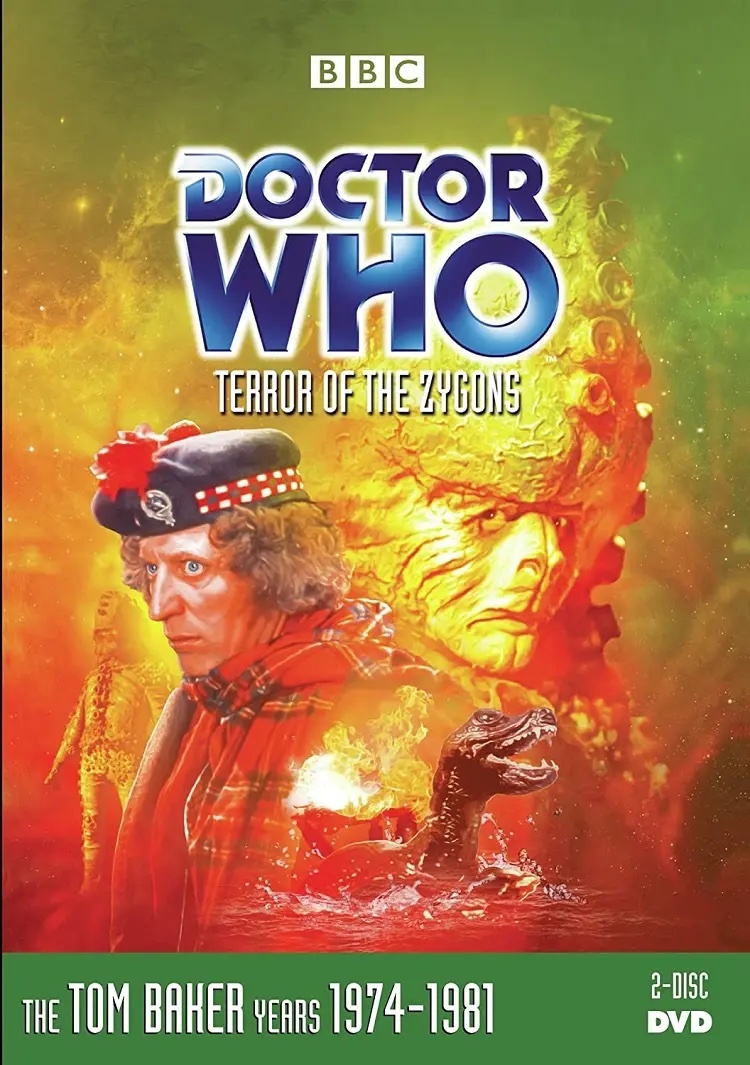
It is like how I watched Doctor Who: Remembrance of the Daleks and then had to go back and watch the first story from that season and then the one after. Or once I watched Reservoir Dogs (1992) I had to then watch Pulp Fiction (1994) and Jackie Brown (1997) (and remind me I started writing a whole separate post for Tarantino’s first three films.)

There is some weird part of my brain that likes to organize things, and collect them. I’m endlessly fascinated by how my brain connects the things I consume and leads me to something else. I mean, usually, it isn’t that complicated. Those Italian films were featured on The Criterion Channel, and I suspect lots of people have watched Tarantino’s first films in a row like that. But I still find it interesting.

In January 2023 I watched 50 films. 41 of them were new to me.

Letterboxd allows me to see who my top actors and directors are in a given year. I always like looking at that. For January my top actors are all Italians who starred in those crime dramas, and the top director is Fernando Di Leo who directed them. That’s not surprising. It will be interesting to see who beats them next month.

Lastly, 26 of the films I watched this month were made before I was born. I always count the movies I watch that was made before I was born because I’m a huge classic movie fan, but defining what constitutes a classic is complicated.I used to have cable television and my favorite station was Turner Classic Movies. I no longer have cable but I’m still connected to various fansites for TCM and there are endless debates on what constitutes a classic movie.

When I was growing up classic movies were films made in the 1930s and 1940s. That was simple enough. Bu that was the 1980s, that classic movie were made 40+ years earlier. But now it is 2023, and movies made 40 years ago were made in the 1980s. So, where do you draw the line? I draw the line at movies made before I was born. I was born in 1976 so there you go.

And here is the complete list:

The Bride Wore Black (1968)
Mississippi Mermaid (1969)
The Predator (2018)
The Damned (1962)
Prey (2022)
The Net (1995)
Murder by Contract (1958)
Hud (1963)
The Wailing (2016)
The Wanderers (1979)
American Gigolo (1980)
The Strawberry Blonde (1941)
White Woman (1933)
Jackie Brown (1997)
Pulp Fiction (1994)
Reservoir Dogs (1992)
Enola Holmes 2 (2022)
Sharky’s Machine (1981)
The Mutations (1974)
John Dies at the End (2012)
T2 Trainspotting (2017)
Trainspotting (1996)
Doctor Who: The Happiness Patrol (1988)
Doctor Who: Dragonfire (1987)
Kidnap Syndicate (1975)
Shoot First, Die Later (1974)
2 Days in the Valley (1996)
Zardoz (1974)
Doctor Who: Remembrance of the Daleks (1988)
The Boss (1973)
The Curse of the Mummy’s Tomb (1964)
The Vampire Doll (1970)
The Revenge of Frankenstein (1958)
The Italian Connection (1972)
Caliber 9 (1972)
Decision to Leave (2022)
Playing with Fire (1975)
The Pale Blue Eye (2022)
San Quentin (1937)
Nope (2022)
The Black Phone (2021)
The Ninth Gate (1999)
The Card Player (2004)
The Poseidon Adventure (1972)
The Last of Sheila (1973)
The Earrings of Madame de… (1953)
Anna Christie (1930)
It’s Not Just You, Murray! (1964)
What’s a Nice Girl Like You Doing in a Place Like This? (1963)
The Big Shave (1967)

Twixt (2011)

twixt

Francis Ford Coppola made some of the greatest films of the 1970s. The Godfather (parts I and II), The Conversation, and Apocalypse Now rank as some of the best films ever made. He seems to have struggled in the decades since, his output has been spotty at best. Over the last twenty years or so he’s made very few films and all of them have been independently financed. Still, he is a director worth paying attention to. I watched Twixt back in 2013, wrote this review, and haven’t thought about it since.

Reading that review now, even though I more or less panned the film, makes me want to watch it again. The story sounds pretty cool, and it is sometimes fun to revisit a film you didn’t like years ago to see if the changes in your own life affect the way you see the film now.

Laura (1944)

laura

I am of an age when I came to know Vincent Price as the creepy voice who narrated Michael Jackson’s “Thriller.” I knew who he was before that – I knew he was a guy who starred in a bunch of old horror movies – but I had never seen any of those movies. As an adult, I’ve watched tons of those old horror movies. He, along with Peter Cushing and Christopher Lee, were staples in the Hammer Studios horror stable and I love them all.

Of course, Vincent Price wasn’t just a hammy horror actor, he made lots of other films. But it always surprises me when he does. He plays it completely straight in Laura, one of the great film noirs. He’s good in it, too, but it is hard not to watch the film and not expect him to start killing people.

Anyway, you can read my review here.

Babette’s Feast (1987)

babettes feast

In my review of this film over at Cinema Sentries I talk about how we (used) to have a monthly film night in which we invited some friends over and watched a non-English language film. Not long after writing that review my family and I moved to another state and those foreign film nights dried up. I really miss them. We tried briefly to have a regular movie night (our new set of friends in this place most likely wouldn’t take to films, not in English, sigh) but it didn’t go so well. Then COVID hit and we pretty much never have anyone over anymore.

I think I’d like to try again sometime. Maybe we should have a Midnight Cafe movie night 🙂

Until then, you can read my review here. Babette’s Feast really is a lovely film.

The Friday Night Horror Movie: The Wailing (2016)

the wailing

A policeman, Jong-Goo (Kwak Do-won) is awakened from his slumber in the pre-dawn hours in a small Korean village. Someone had died, possibly murdered. But first Jong-Goo has his breakfast. The murder was brutal. The man was stabbed multiple times. His wife was chopped up and put into a bag. The likely suspect sits outside the scene, covered in blood and mud. He’s visibly shaken and does not speak.

The next night Jong-Goo and his partner are chatting about the case at the police station. In the midst of a powerful thunderstorm, just as the electricity goes out, a naked woman appears at the window covered in blood and dirt. She disappears before they can talk to her. The following day another murder was committed. That woman is at the scene screaming and yes, wailing. She’ll hang herself before the sun sets again.

As the eating his breakfast before attending to his murder scene attests, Jong-Goo is not a great policeman. In fact, he’s fairly useless. But he’s the only one that thinks there is more to these two cases than meets the eye. The official response from the higher-ups is that there has been a bad batch of mushrooms afflicting the village causing some psychotic breaks. He thinks, perhaps, there is a serial killer on the loose, or maybe something more sinister.

Local gossip points their fingers at a Japanese man who recently showed up in the village. Others think it might be an evil spirit. When Jon-Goo’s daughter stars acting strangely he pays the Japanese man a visit.

To go further into the plot would be to spoil The Wailing’s many surprises. Director Na Hong-jin’s film is busting at the seams with ideas and influences. It is a film full of mythology, folk tales, and religion. Jong-Goo will call upon both a shame and a Catholic priest for help. It feels like about four horror films in one. It is violent and goofy, thrilling and terrifying.

It is perhaps just a tad too much. With a run time of around 2 and a half hours, it feels a little longer than it needs to be. There are a lot of twists and turns, and red herrings galore. I’m not quite sure it will stand up under scrutiny, but I really enjoyed myself while in the midst of it. I’m too tired at the moment to write much more, but it is definitely worth checking out if you are a fan of horror and are looking for something a little different.