The Friday Night Horror Movie: The Devil’s Honey (1986)

the devils honey

One of the things I miss about the old video rental stores is the ability to walk in and find something you’ve never heard of, that was completely obscure and weird. You’d take it home not knowing what to expect. Sometimes it was crap, but every now and then you’d find a real gem.

Sure, you can do that with streaming, but it just isn’t the same. 

Growing up, we had this wonderful video store. It had previously been a Burger King, and when it closed down a place called Mega Movies moved in. They removed the kitchen providing a huge space for videos. I used to wander around that place for hours. I loved digging into the bowels of that place looking for something really weird.

As a virile teenage boy something really weird sometimes meant something with a scantily clad lady on the cover. I have this very distinct memory of a single scene from one of these movies. A beautiful woman was wearing nothing but a pair of pantyhose. A man stood nearby watching. She is repairing a run in her tights with some red nail polish which turns the man on, and soon enough she’s rubbing the polish in places nail polish should never go.

I couldn’t ever remember anything else about the movie. I’ve often wondered what that movie was, but I wasn’t about to go Googling “woman masturbates with nail polish” so it remained a mystery.

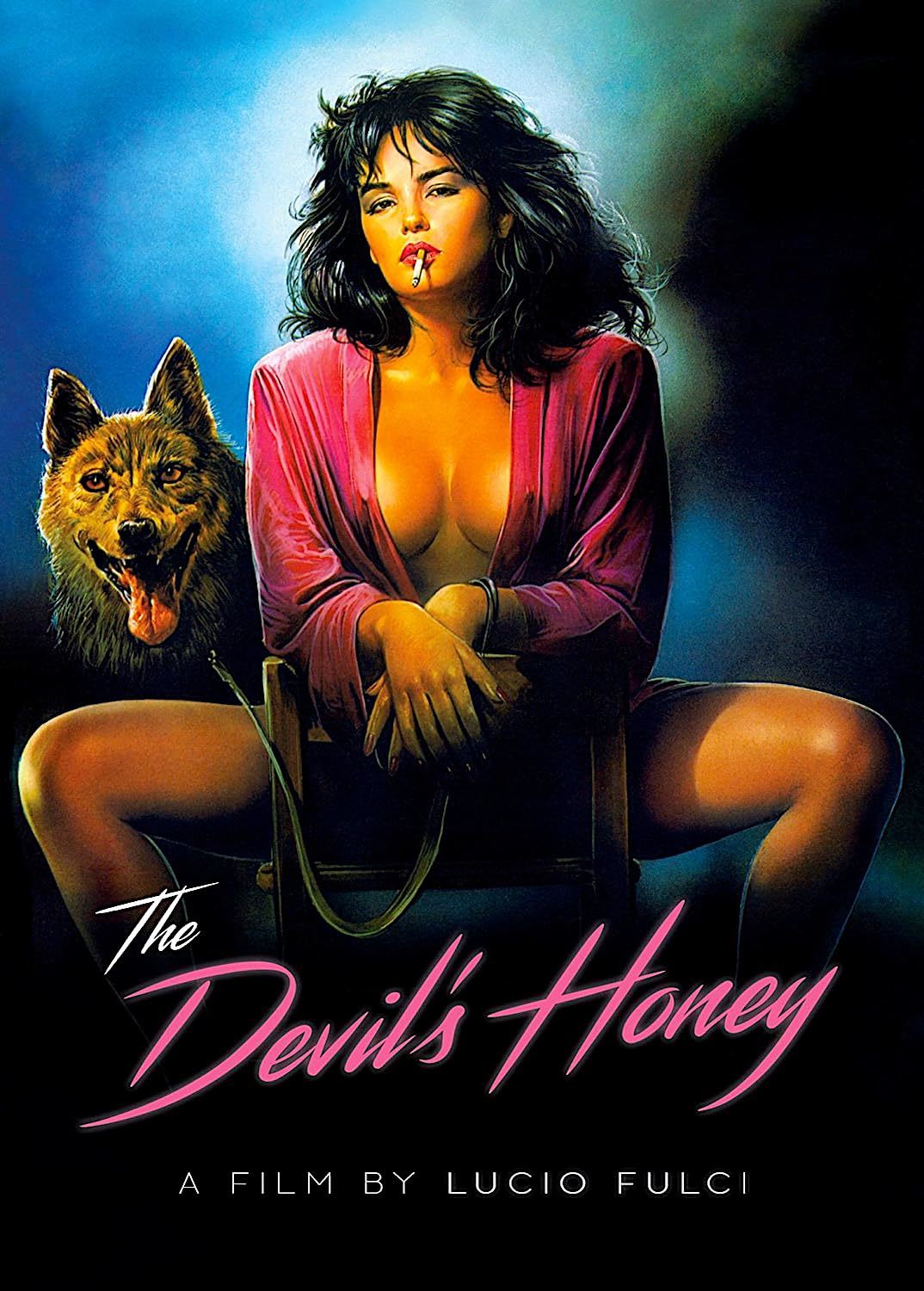
Until tonight. I have a list of unwatched horror movies and digging through it tonight for something to watch I landed on this movie, The Devil’s Honey by Lucio Fulci.

I’ve written about Fulcio before, he’s a guy who made a lot of movies – most of them low-budget, a lot of them full of blood and gore. They aren’t always great, but they are usually interesting.

I went into this movie expecting some good old-fashioned violence. I was not expecting a half-naked woman with nail polish. Certainly not the half-naked woman with nail polish locked inside my memory banks for going on three decades.

That particular scene happens within fifteen minutes of the opening credits. Before that, there is a scene in which a man gets a woman off by placing the end of a saxophone on her crotch and playing her a song. 

This isn’t the Lucio Fulci the Godfather of Gore, this is Fulci’s erotic thriller. Except, that it isn’t particularly erotic or thrilling, but it is amazingly weird and I’m always down for that.

The saxophonist is Johnny (Stefano Madia) and the girl is Jessica (Blanca Marsillach). They are tempestuous lovers. He’s obsessed with sex (as one might suspect from the display with the sax). She wants something more than that, usually protests at his fondling, but usually gives in.

There’s also a surgeon, Dr. Wendell Simpson (Brett Halsey), who is uninterested in sex with his wife but likes to go out with prostitutes (one of whom is the girl with the nail polish).

One day Johnny takes a tumble and bangs his head on a rock. At first, he seems fine, but later he collapses and is rushed to the hospital where Dr. Simpson tries to save him. Tries, but fails.

Awash in grief Jessica begins calling the Dr. on the regular, asking him why he let Johnny die. Eventually, she kidnaps the man and does a little sadomasochistic torture on him while periodically flashing back to more idyllic times with Johnny.

Though I’ve seen 16 of his films and written about him at least five times, I’ve never thought Fulci was that particularly great a director. He can create some interesting imagery, and he’s a wizard with low-budget gore effects, but his stories are usually a mess and his camerawork is nothing special. A film like this where the gore is minuscule and the violence, no matter how psycho-sexual, is mostly sidelined or at least restrained (for a Fulci film) finds itself with not much of interest to say.

There is enormous amounts of gratuitous nudity, loads of misogyny, and the whole thing is ridiculously dopey. Yet I kind of dug it. It is so wild and weird in a way that only Lucio Fulci can be that I had to sit back and marvel at it.

The Friday Night Horror Movie: Deep Red (1975)

deep red poster

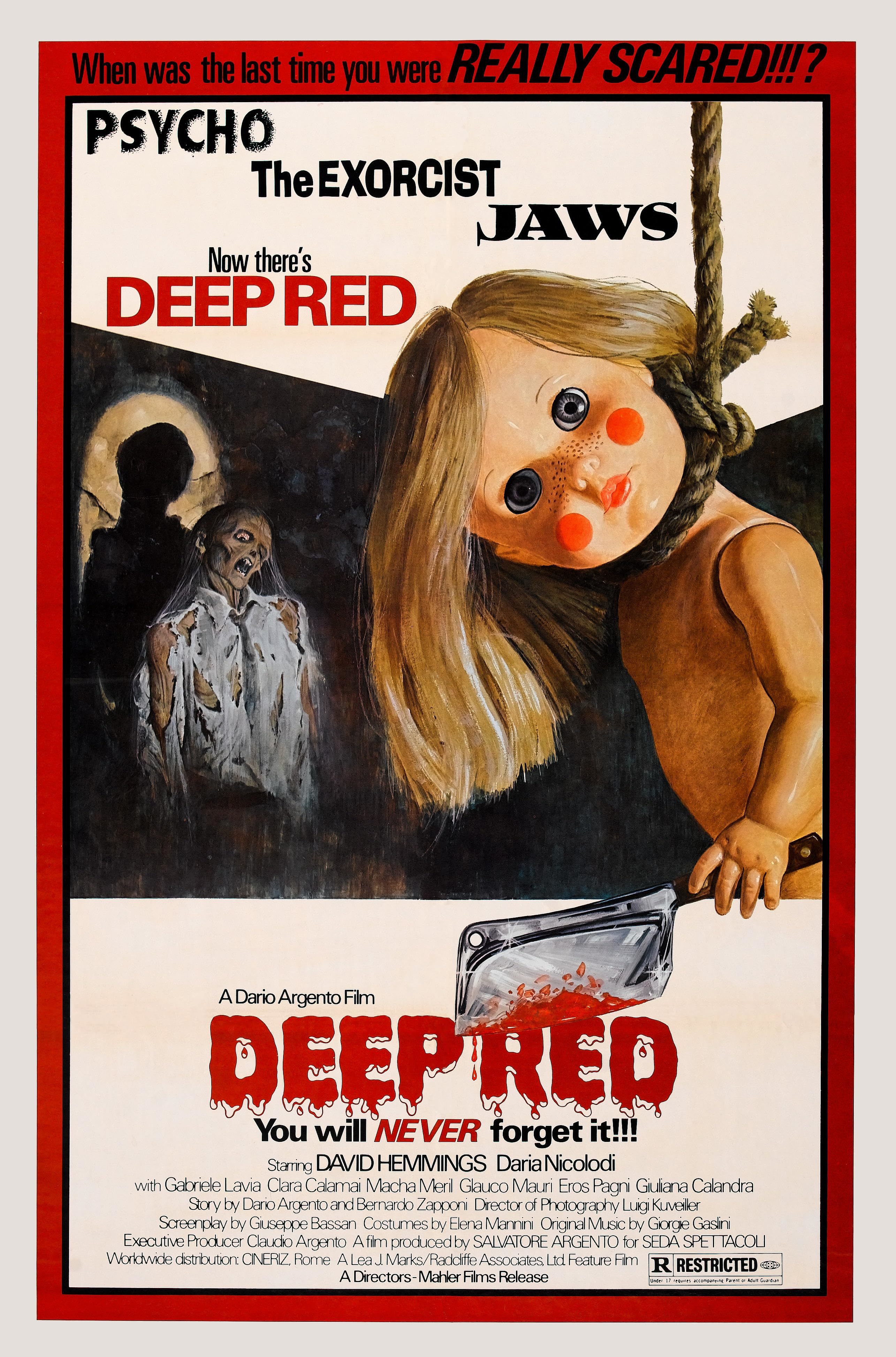
I’ve mentioned Dario Argento several times before on this blog. He’s one of my favorite directors – certainly my favorite horror director. He didn’t invent the Giallo, but he definitely popularized it and perfected it. Deep Red is one of, it not my actual favorite films of his and possibly the best Giallo ever made.

The plot is deceptively simple – it is a relatively straightforward murder mystery – and yet also a convoluted mess. David Hemmings stars as a jazz pianist who witnesses his downstairs neighbor get brutally murdered. He teams up with a journalist played by Daria Nicolodi and tries to figure out what happened.

I’ve seen this film at least five different times, and I’m still not sure I understand everything that happens in the film or the real motivation of the killer.

And I don’t care in the least that I don’t.

Argento was a master of style and it is on full display here. It is full of dark, bold colors (especially red) and disturbing imagery. The camera moves and slides across corridors, it is filled with extreme closeups and wondrously stylized violence.

There is a scene about halfway through the film in which a character sits in his office. The camera and the music let us know that something scary is about to happen. That the killer is there. The character knows it. We hear the killer whisper. Then something happens, I won’t spoil it here, but it is one of the most surprising and terrifying things I’ve ever witnessed at the cinema.

When my heart slows down I realize that this moment makes absolutely no logical sense, especially given who the killer turns out to be, but again I just don’t care.

The score by progressive rock band Goblin is kinetic, percussive, and heart-pounding. They wrote the scores for several other Argento films and they are all terrific. The director uses the music to great effect – stopping and starting it at crucial moments creating small, but effective adrenaline rushes.

If you are a horror fan I absolutely recommend Deep Red to you.

Like a lot of Italian productions at the time the film was shot without sync sound. All of the dialog was dubbed in post-production in both English and Italian. In previous watches I was always confused because periodically some characters would start speaking Italian without warning and then a moment later they would switch back to English. Bilingual people can, and often do this in real life, but there didn’t seem to be any rhyme or reason to it in this film.

Pulling out my Arrow Vidoe Blu-ray tonight I discovered why. They edited out several scenes (and snippets of scenes) for the exported cut of the film (which presumably means the copies sent to English-speaking countries) and thus they did not record English language tracks for those scenes. Or if they did the English tracks were lost at some point. Those scenes have since been added back into the English language version of the film but there are no English language audio for the new scenes. In some ways this adds to the already disjointedness of the film.

31 Days of Horror: Murder Rock: Dancing Death (1984)

murder rock

Lucio Fulci is often called The Godfather of Gore, and it is true, he did make a lot of horror films with copious amounts of violence, buckets of blood, and tons of gore. But he worked in many other genres throughout his long career including westerns, sword and sandal epics, and even comedy. What one would not expect from him is a musical, which is exactly (well, more or less) what he made with Murder Rock: Dancing Death.

It isn’t technically a musical since the characters don’t actually sing, but there is a lot of music (which was written by Keith Emerson) and a whole lot of dancing. But it is really a horror movie. Actually, it is the best-looking Giallo Fulci ever made.

It takes place at a New York City dance studio where one by one the female dancers are being stabbed through the heart with a long, needle-like hairpin by a black gloved killed. The studio is so hardcore that after the first girl is killed, the instructor basically tells the other dancers to stop whining and get back to work.

Meanwhile, Candice (Olga Karlatos) begins having dreams of being murdered by a man she’s never seen before. When she sees the dream man’s face on a billboard she tracks him down only to discover he’s a disheveled drunk. Instead of shrugging it off or running away in terror, she decides to sleep with him.

The film is filled with red herrings and a cop (Cosimo Cinieri) who is both lackadaisical about the whole thing and rather sadistic. It is all a bit complicated and rather silly, but I really kind of loved it. I mean most Giallos are complicated and silly, but this one pushes it to the edge and then some.

But it is stunningly gorgeous to look at. Fulci and his cinematographer have lit the heck out of it and filled it with beautiful, colorful images. The music and dancing give it an unusual energy and it’s just a lot of fun to watch.

31 Days of Horror: Nothing Underneath (1985)

nothing underneath

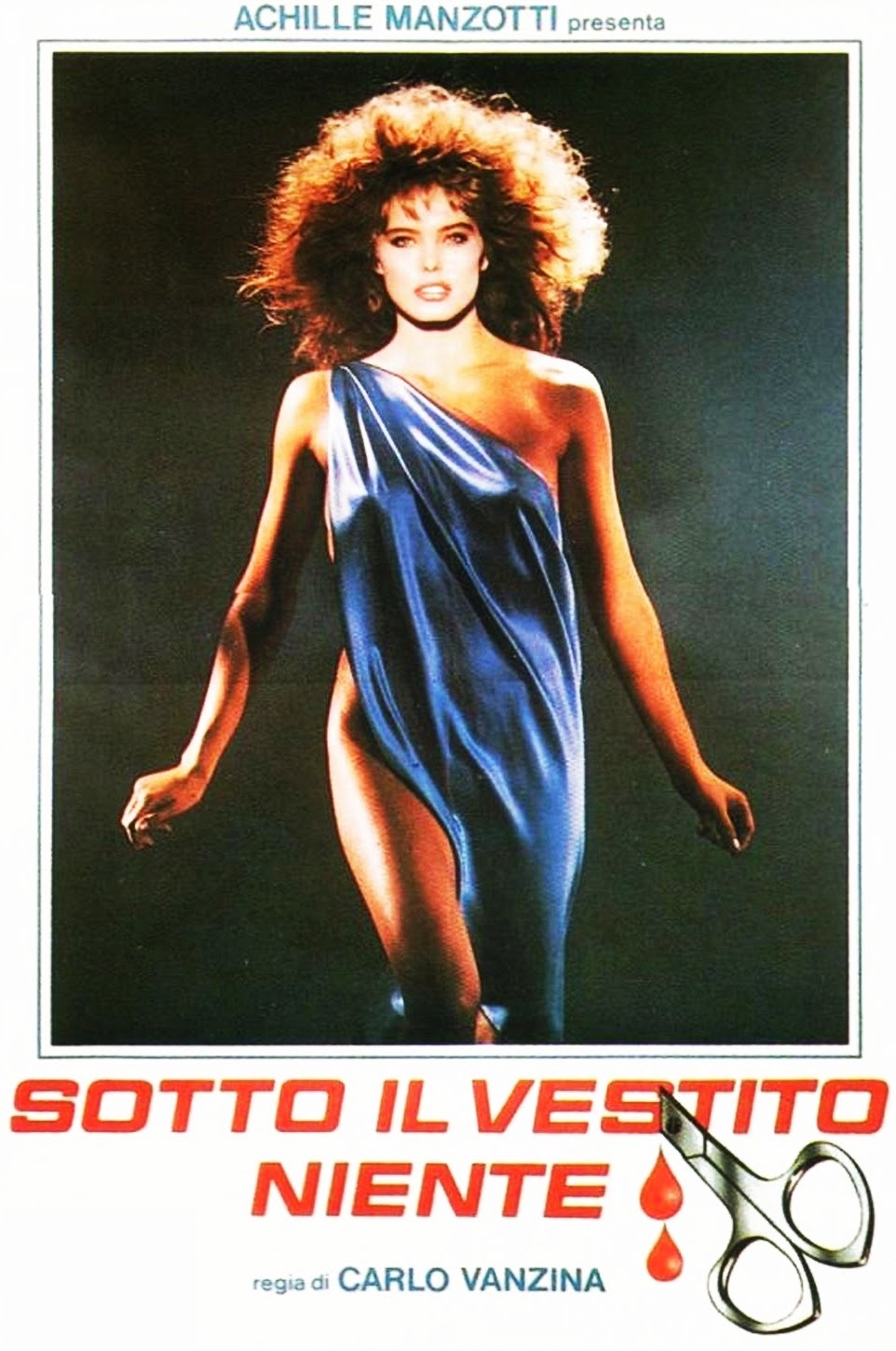
Much like film noir, the Italian giallo is a genre without a clear-cut definition. There is a specific time period in which they flourished (the 1940s-1950s for noir and the late 1960s to the early 1980s for giallo) and certain stylistic certainties in which they operate, but there are so many outliers within each genre that pinning down an actual definition is nearly impossible. The later a film is made within their respective time periods the more fuzzy they tend to exist within the genres.

Nothing Underneath came out in the very late period of gialli, you might even call it post-giallo (although Dario Argento made Opera in 1987 and it is one of the very best gialli ever made, so go figure.) Even within the very fuzzy confines of giallo definitions, it remains a very fuzzy example of the genre.

It begins in the most unlikely of places for a giallo – Yellowstone National Park where we find our hero Bob (Tom Schanley) a ranger. He has a psychic connection to his sister, Jessica (Nicola Perring) who is a fashion model in London. While walking amongst the mountains and the trees he has a vision that Jessica is being murdered by a black-gloved killer with a pair of scissors.

Bob immediately flies to London and attempts to warn his sister of her impending doom but she’s gone missing. There is no evidence of murder, but nobody seems to know anything about where she might have gone. His investigations find that she was at a party hosted by fashion designer Giorgio Zanoni (Cyrus Elias) where he bribed several models (including Jessica) to play a game of Russian Roulette for a cache of diamonds.

Soon enough some of the women at that party start getting murdered with a pair of scissors just like in the vision. Bob teams up with Inspector Danesi (Donald Pleasence sporting a terrible Italian accent) to solve the case.

The black-gloved killer, the fashion models (providing ample excuses for casual nudity), and the killer’s point-of-view shots are all classic gialli tropes. It actually reminded me quite a bit of Brian DePalma’s work in the 1980s, but of course, he was highly influenced by the giallo genre. It lacks his formal command and the genre’s sense of style. It definitely feels like giallo-lite, or that it has outgrown the genre in some way. Or, more than likely, it just isn’t very well made.

If you are a fan of the genre and have seen all the classics then this one is worth watching. All others need not apply.

The Friday Night Horror Movie: The Whip and the Body (1963)

the whip and the body

At an isolated castle in the 19th Century, on some isolated European coast, Kurt (Christopher Lee), the prodigal son returns. There is no fatted calf for this son though, as his father (Gustavo De Nardo) is unwilling to forgive his many trespasses. The most treacherous of which was seducing the maid’s daughter and then leaving her, causing her to commit suicide in his wake.

The maid, Giorgia (Harriet Medin) has vowed her revenge a hundred times over, and there is no lost blood between him and his younger brother Cristiano (Tony Kendall). Thus when Kurt turns up murdered, there are plenty of suspects.

Nevenka (Daliah Lavi) who had been engaged to Kurt before the whole maid’s daughter incident occurred, and is now married to Cristiano, begins seeing visions of Kurt whenever she turns. When more bodies start to drop the rest of the family begins to wonder if he hasn’t returned from the grave to seek his revenge.

Mario Bava was one of the great Italian horror directors. He was a pioneer of gothic horror and his film Blood and Black Lace (1964) is often credited as the first Giallo film ever made. Bava began his career in special effects, working his way into cinematography before finally directing. His films are noted for their visual beauty and style. When not shooting in stark black and white he made bold use of color.

The Whip and the Body makes great use of its gothic setting and tropes. The design of the castle in which most of the film takes place is as haunting as it is beautiful. The film is simply bathed in purples. It makes use of greens and reds, but bold purple permeates every shot.

As the title implies the sex gets a bit kinky, surprisingly so for a film made in 1963. Nevenka, who in most aspects of her life has to be subservient to the men in her life, takes control of her own sexuality. She hands Kurt a whip more than once and writhes in passion as he uses it on her. She married Christiano, because that’s what she was suppossed to do, but it is Kurt she truly loves. It is Kurt she continues to long for and envision even after his death (Or did he fake that? Or has his ghost returned from the dead? The film has fun toying with those ideas).

I’m making it sound more exciting than it is. The Whip and the Body is more of a gothic romance/drama than a horror. There is a lot of talking and passionate declarations. Too much for my taste, if I’m being honest. But it is so beautiful to look at, I never much minded.

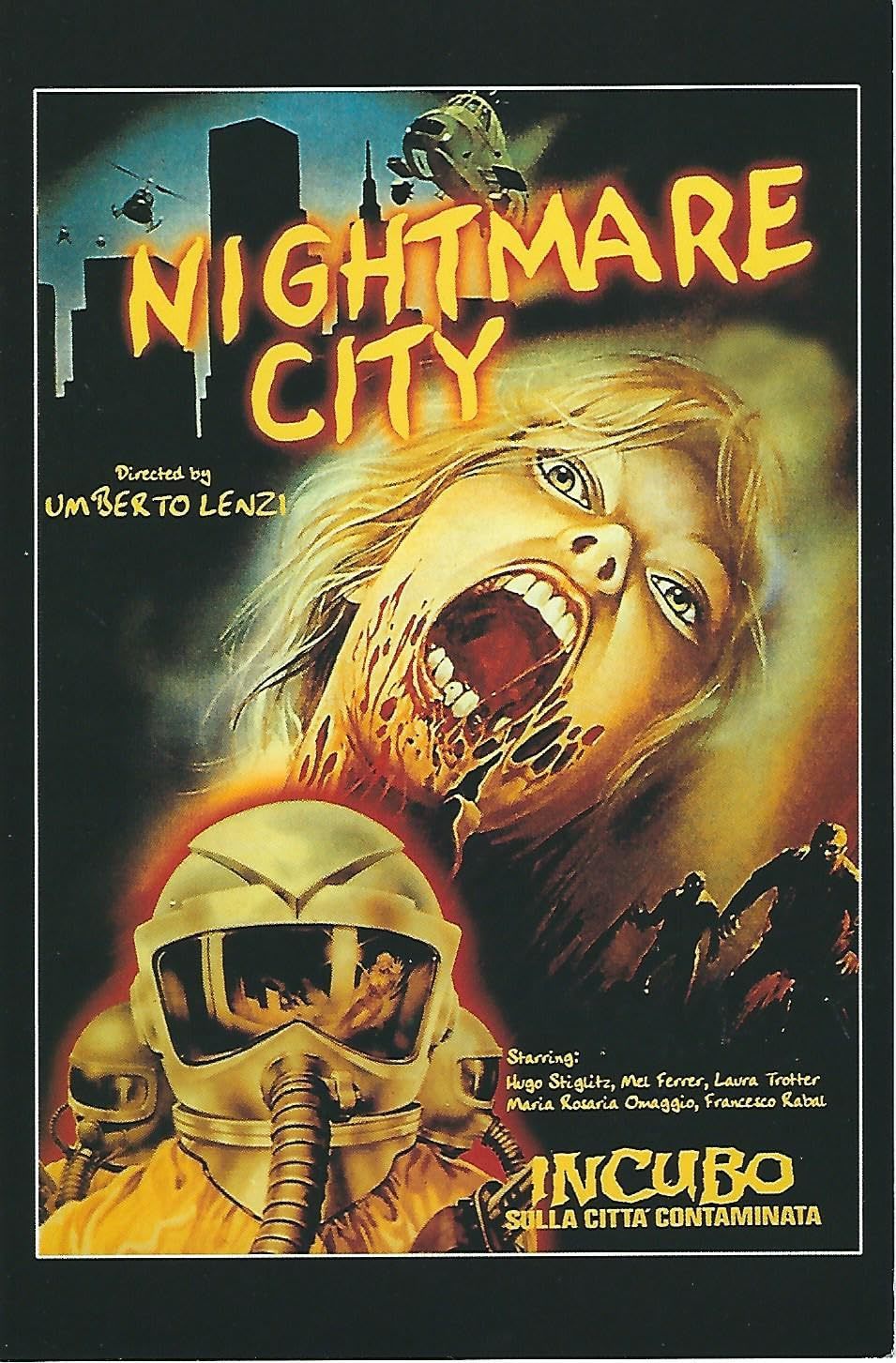
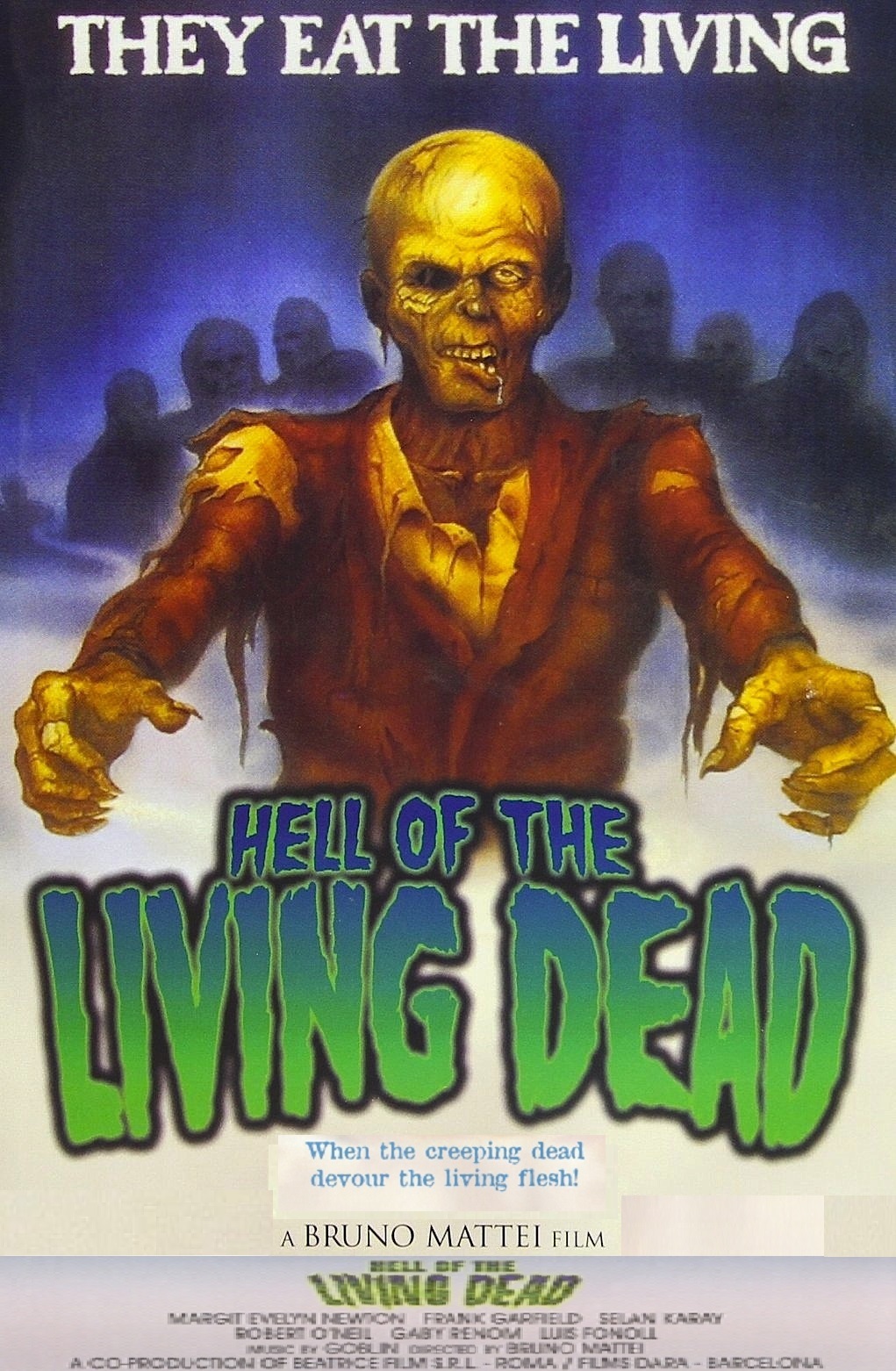
The Friday Night Horror Movie: Hell of the Living Dead (1980)

hell of the living dead poster

George A. Romero’s Dawn of the Dead (1978) was a huge international success. It made over $1 million in Italy alone. In 1979 Lucio Fulci made an unofficial sequel, Zombi 2 (Dawn was titled Zombi in Italy). It was quite successful as well and for the next few years, the Italians began churning out one zombie film after another.

In 1980 Bruno Mattei got into the game with Hell of the Living Dead, aka Virus, aka Night of the Zombies, aka Zombie Creeping Flesh, aka half a dozen other things. It is, well it is a mess, but kind of a glorious, ridiculous, god-awful mess. It’s also a lot of fun in a late-night weekend kind of way.

The plot, such as it is, involves a research facility in Papua New Guinea that accidentally releases an experimental gas called “Operation Sweet Death” which turns the recently deceased into flesh-eating monsters.

The government sends in an elite SWAT team to take care of business. Along the way they run into two reporters and together, they make their way through the jungle, battling hordes of monsters, to the research facility to…well it’s never exactly clear what their ultimate goal is, but there sure takes a lot of gore-filled violence to get there.

Most of the plot makes very little sense. The dubbed dialogue is hilariously bad, and the acting is atrocious. There is a ton of very obvious stock footage of animals and natives thrown in to boost the run time. The score is by the very excellent band Goblin, but all of it is recycled from various other films.

The characters make ridiculous decisions after ridiculous decisions. Though early on they figure out the only way to kill the zombies is to shoot them in the head, they constantly shoot them everywhere but the brain pan. One guy liked to taunt them and dance around them for some reason. Whenever a zombie attacks the other characters literally just stand there for the longest time watching them eat their friends until finally decide to act. Etc,. etc.

I’ve seen a lot of bad horror movies. I’ve seen a lot of bad zombie movies. This is one of the worst ones I’ve ever seen. And yet, under the right circumstance, in the right mood this film kind of works.

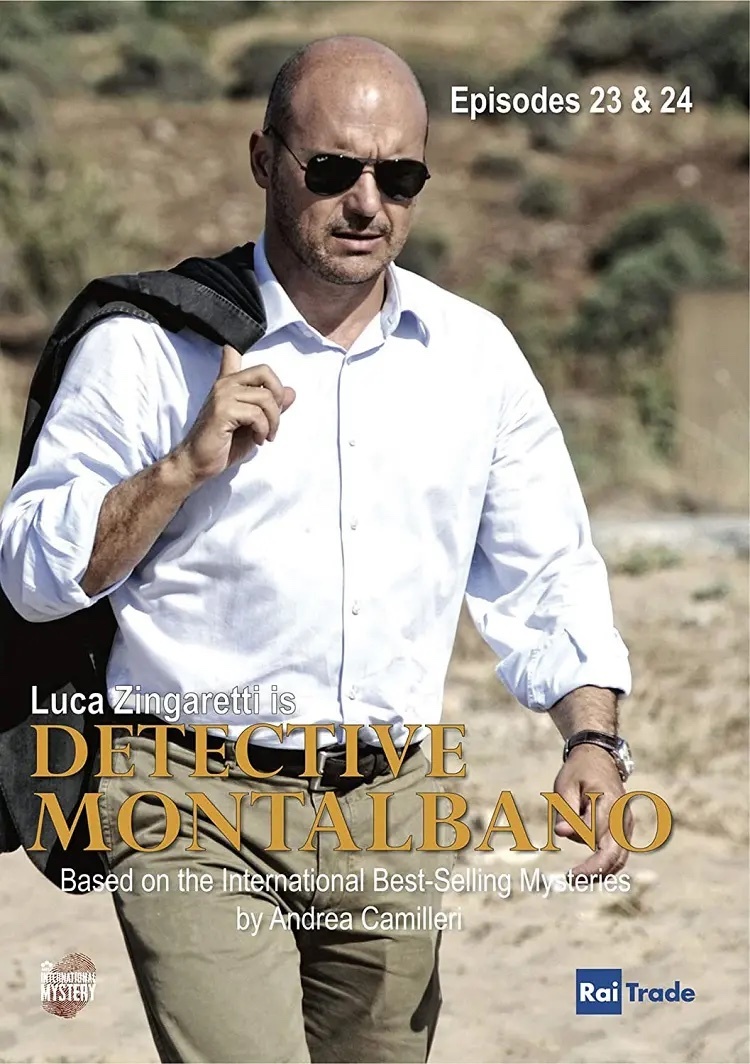
Detective Montalbano: Episodes 23-26

detective montalbano

For a brief period, I was reviewing a lot of international crime dramas from around the world, all released by a company called MHZ. The shows were usually good, the DVDs were pretty bare-boned, and the cover art was often terrible. I mean just look at this image. My daughter has better design skills, and she’s only 11. It looks like someone took a random screenshot and then added the most generic-looking text on top of it and called it a day.

The show, as you can read in this review, was pretty good.

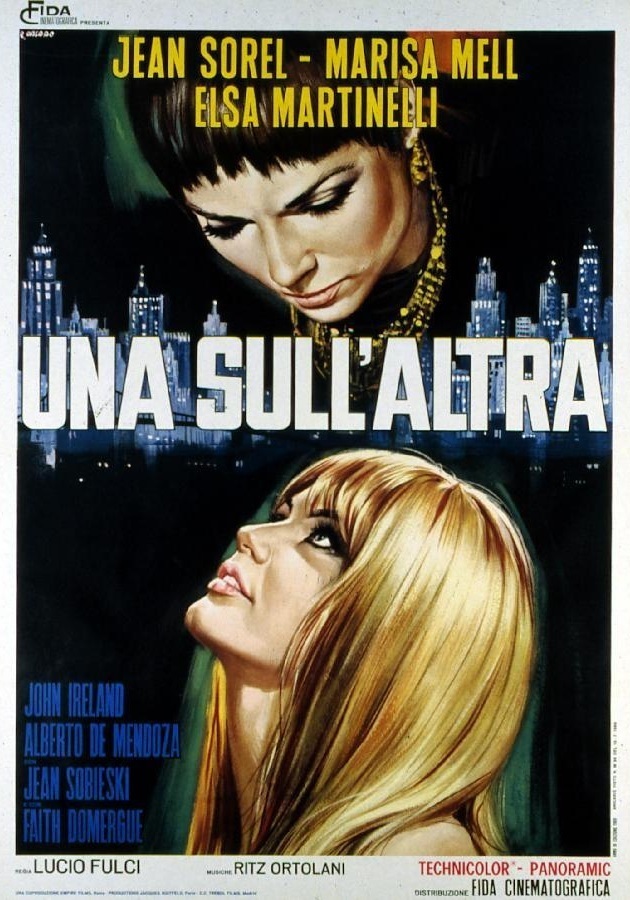
Foreign Film February: One On Top Of The Other (1969)

one on top of the other poster

While I obviously like horror films, I wouldn’t exactly call myself a super fan of the genre. I’m no horror hound who goes to see every horror film as soon as it is released. I’m not exactly a snob about it either, as there are plenty of really terrible horror films that I love. But for most of my life horror wasn’t necessarily something I set out to watch on a regular basis. I watched new horror films that were getting good reviews, and I tried to watch the classics, but weeks or even months would go by sometimes between my viewing of that genre.

Then sometime in the last few years, I started watching horror movies on Friday nights and that became the Friday Night Horror Movie and now I am seeking horror films on a regular basis. More than ever before I’m actually seeking out new horror films to watch. That’s allowed me to not only watch some of the classics that have been on my list for a while, but to find new films, or to dig deeper into certain directors’ catalogs.

Lucio Fulci is one of the godfathers of Italian horror. I’ve now seen 18 of his films. I wouldn’t consider any of them masterpieces. Some of them aren’t very good at all. They mostly slide into that good, but not great category, with bonus points being given to the great practical effects he uses for the large amounts of gore he likes to add to his films.

One On Top Of The Other is more of a crime film than a horror one. It feels like his attempt to remake Vertigo as a film noir with a copious amount of sleaze and a terrifically wonky jazz score.

A wealthy doctor has a sick wife and a pretty girlfriend. The wife dies and he gets a large insurance settlement. An anonymous tip leads him to a strip club where one of the dancers bears an incredible resemblance to his recently deceased wife. The police have been following him due to the insurance money and when they discover the doppelganger, well, things start to get hairy for our hero.

There are a lot of cool twists and turns in the story and it all looks and sounds good. But Fulci seems more interested in watching the women take off their clothes and get sexy with various men than he is in paying attention to the story. This is too bad because there is a pretty great film hidden underneath all the sleaze.

Foreign Film February: The Bicycle Thieves (1948)

the bicycle thieves

The Bicycle Thieves is generally considered one of the greatest films ever made. It topped the Sight & Sound (often considered the best, or most important of these types of polls) list in 1952, the first time they made a poll. It has since slipped further and further down that list, but it is still highly regarded amongst critics directors and cinephiles.

It has been on my list of films to watch for a very long time, but I’ve always put it off. It has always seemed to me to be a film that would be difficult to watch – in that way important films can sometimes feel like homework. I knew I’d need to be in the right mood to watch it and that mod never seemed to come. It is part of and is often considered the best example of, the Italian Neorealism movement. As the name implies these are films that were designed to be as realistic as possible. They were shot on location, used non-professional actors, were generally about the working class, and dealt with social and political themes.

I am not the biggest fan of the genre. Cinema works best to me when it is, at least somewhat, unrealistic. I don’t necessarily mean it needs to be pure fantasy or science fiction. Simple plots about real people can still bedazzle us with unique camera movements, or music, or stylistic choices. I love the cinematic aspects of cinema and so a more naturalistic handle on the material isn’t as interesting to me. I don’t want to belabor that point, as I could come up with plenty of naturalistic films that I love, but The Bicycle Thieves’ neorealism is one of the things that kept me from watching it.

Until today.

Like almost every film that is universally beloved, I liked The Bicycle Thieves quite a lot. There is a reason certain films are considered the best of the best, and it is rare that I really dislike any of them. But I definitely didn’t love this one.

The plot is simple. In post-war Italy Antonio (Lamberto Maggiorani) is desperate for work He stands in line with dozens of others every day hoping the employment office will have something for him. On this day it does, he’s offered a job putting up advertisement posters throughout Rome. But he needs a bike, it is necessary for the job.

Antonio has a bike, but it was pawned. His wife tears off the sheets from their bed and folds most of their linen up. They take it to the pawn shop and sell it. The camera follows the worker as he climbs a ladder and places their linen in a huge pile with hundreds of other sheets they have purchased. They use the money to buy back the bike (which likewise is in the shop next to a long line of other bikes. Pawning one’s stuff is necessary for so many just to survive another day.)

She visits a Wise Woman, kind of a fortune teller, to pay her respects since earlier the Woman had told her that he would get a job. Antonio leaves the bike in the street and follows her up. We expect the bike to be gone when he returns but the film is playing with us, the bike is still there. It does get stolen on the first day on the job. While Antonio is putting glue on the poster a young man swipes it.

The rest of the film follows Antonio and his young son as they wander the streets of Rome looking for it. They go to the police but all they can do is take a report. His friend shows him some open-air markets where thieves often try to sell stolen bikes. He eventually runs into the thief but without proof that he stole the bike, there is nothing anyone can do. As the day goes on Antonio gets increasingly desperate and exasperated.

I won’t spoil the ending but the final moments are incredibly moving.

Director Vittorio De Sica shoots the film naturalistically. He shot on location in Rome. All of the actors were not professionals. The camera acts as an observer and there is nothing splashy about any of the filmmaking. It is a simple story told simply. This was startling to audiences at the time who had grown accustomed to the style and glitz of Hollywood films. It was exciting to see a film stripped down to its essence. Or so I’m told. Watching it now, that excitement has been washed away. What we’re left with is a very nice story, one that can be quite moving even. But not one I’ll be voting for as the best ever made.

I will admit that had I watched it in a different way my feelings may be different. Had I watched it in a movie theater where I could pay sole attention to it instead of my bedroom where distractions abounded I might have tuned into its simple pleasures more. Or were I in a different headspace I may have found the story more emotionally engaging. But for now, I can only recognize that it is a good film, but perhaps not entirely for me.

Detective De Luca

detective de luca

I love a good crime drama. There is something very satisfying about watching someone try to solve a murder or some other heinous crime. The conventions of the genre are somehow comforting as you more or less know what is going to happen (a crime will be committed, questions will be asked, and the criminal will be caught). The best stories find ways to subvert those conventions and do something interesting.

I also love that crime dramas work well all over the world. Just about every culture that makes movies and TV shows makes crime dramas. MHZ used to put out a lot of DVDs of crime dramas and mysteries from all across Europe and other countries. They might still do that, I’ve just lost touch with them. I know they do have a streaming service and I’ve been meaning to give it a try.

Detective de Luca is a cool little series of detective movies from Italy. I reviewed it several years ago and now you can read my thoughts here.