The Friday Night Horror Movie: The Vampire Doll (1970)

the vampire doll

I’ve talked about how the Criterion Channel is one of my favorite streaming services. Mubi is fast becoming a contender in that category. Mubi actually works as a kind of sister channel to Criterion. Where Criterion focuses on the world’s greatest films and lots of classic Hollywood films (and lots of other more esoteric themes like Snow Westerns and 1970s sci-fi) Mubi’s focus is on more modern art-house fair. They show films that premiere at film festivals like Cannes and Sundance, but that doesn’t necessarily reach a wider audience.

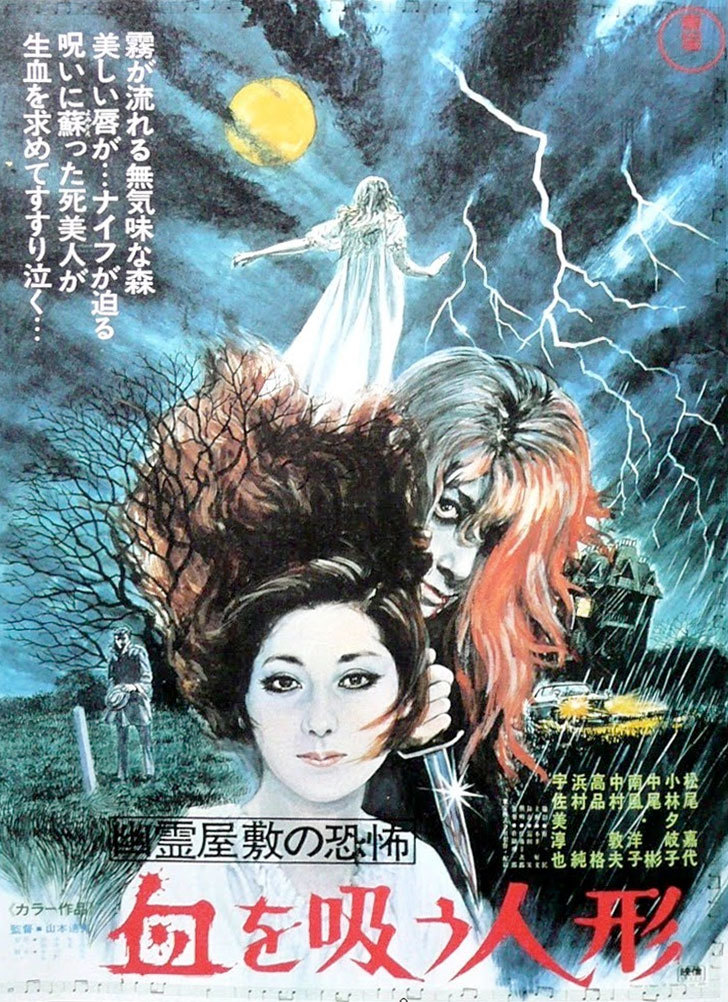
They also have a lot of what you might call cult films – genre movies that have been all but forgotten except by a small group of fans. The Vampire Doll is a good example of what I’m talking about. This was the Japanese film company Toho’s attempt at cashing in on the horror craze that so popular at the time.

It looks and feels like a Hammer Horror film with its creaky old mansion as a setting and its moody supernatural storyline. A man who has been traveling abroad for the last few months returns home to Japan. He immediately rides out to the country to see his girlfriend Yuko (Yukiko Kobayashi). Upon arrival, he is told by her mother (Yôko Minakaze) that Yuko is dead. She died in an automobile accident a few weeks prior.

That evening he sees a woman that appears to be Yuko. Flash forward a few days and the man’s sister, Keiko (Kayo Matsuo) and her fiancee Hiroshi (Akira Nakao) visit the old mansion because they have not heard from her brother in a while and that is unusual. Keiko immediately senses something is wrong and decides to stick around and investigate.

With a 70-minute run time, the plot moves along pretty quickly. Honestly, storywise the film isn’t great. It doesn’t do anything we haven’t seen before. But it works really well as a mood piece. The mansion is full of creepy shadows, and the music is particularly moody. I mentioned Hammer Horror earlier and that is fitting. If you’ve ever seen any of those old movies then you’ll know what I’m talking about. They have a particular look and feel to them that is perfect for this type of gothic horror.

And that’s why I love sites like Mubi. I’d never heard of this film before, but they spotlighted it and now I’ve seen it and I’m glad that I did.
31 Days of Horror: Perfect Blue (1997)

perfect blue

It feels like such a treat to get an animated horror film. I’m a relatively big fan of animation and I realize that there are a lot of animated films being made that are not what you would call family-friendly. GKids has been putting out a lot of great stuff that deals with very mature themes and are meant for mature adults. Yet, in the USA animation seems primarily aimed and children. Even the great films Pixar have been putting out, many of which do deal with things like sadness and death, keep everything cheerful enough for the kiddos to watch.

So I say again, it feels like such a treat to get an animated horror film, even if this one did come out in 1997.

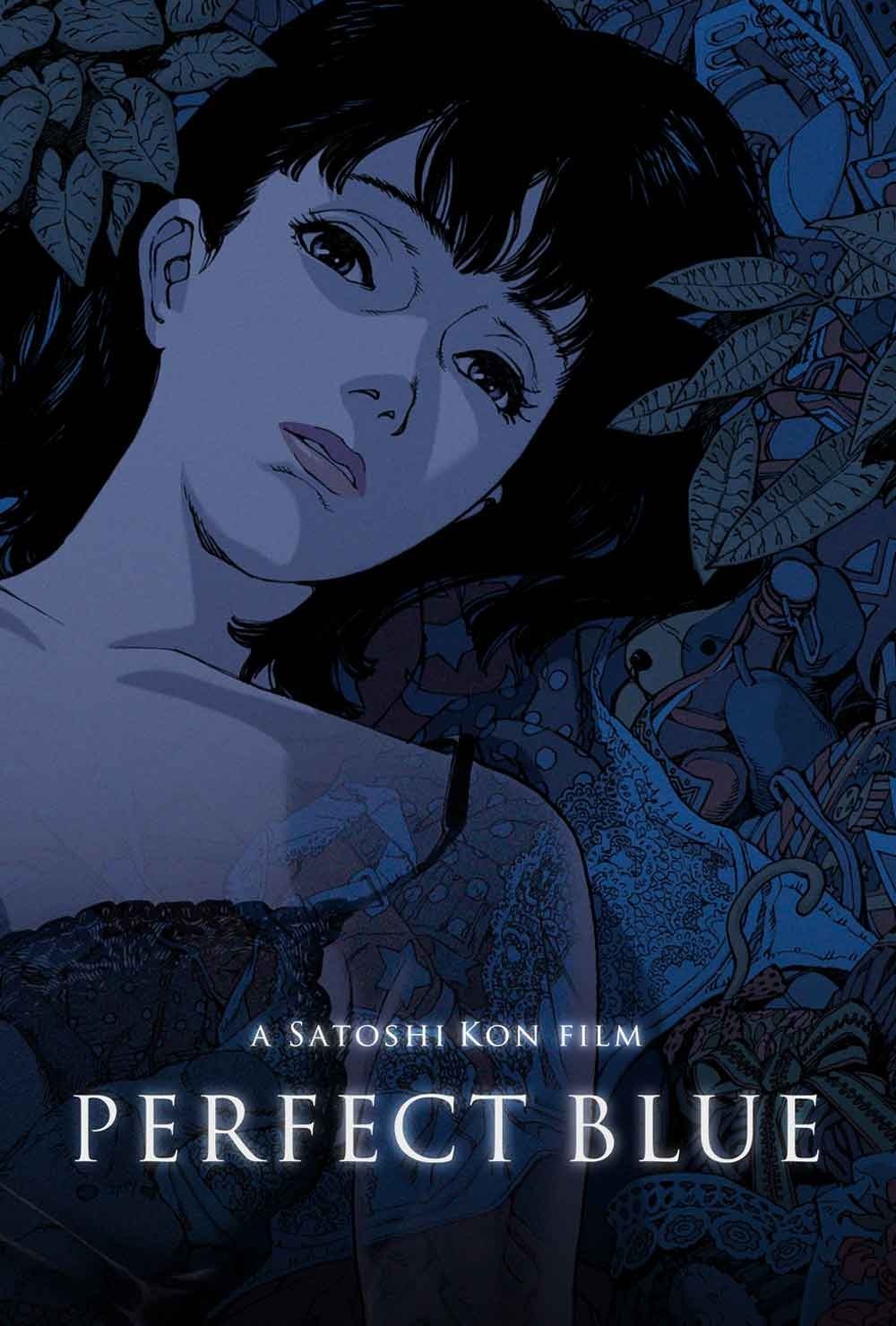
Perfect Blue is about Mima (voiced by Junko Iwao) a pop singer who is putting down her microphone in order to become a serious actress. In order to make that transition, she has to do things like pose nude in a magazine and perform in a brutal rape scene. All of which puts a bit of a crack in her psyche.

It doesn’t help that some crazed fan is stalking her, pretending to be her in online chat rooms, and murdering the people in her life.

The film blends reality and fiction in really interesting ways. There are lots of scenes that appear to be real only then to pull the curtain and make us realize it is a scene the actress is performing in or just a dream. I’m still not sure exactly what happened in it. But I rather loved watching every bit of it.

Howl’s Moving Castle (2004)

howls moving castle poster

Originally written on Mary 12, 2006

It seems Japan is the country of mention when it comes to film these days. Not only have they produced some of the best horror films of the last decade (see Ichi the Killer and Ringu) but they’ve made some incredibly imaginative animated films as well.

The most well-known animated director is a man named Hayao Miyazaki. A few of his films to make it over the pond are Spirited Away, Princess Mononoke, and most recently Howl’s Moving Castle.

Most of his films live in a fantasy world where mysterious, enchanting creatures roam freely with humans in a land where time seems to have escaped. People use modern conveniences along with ancient methods of living. There is usually a small, weaker protagonist up against massive odds.

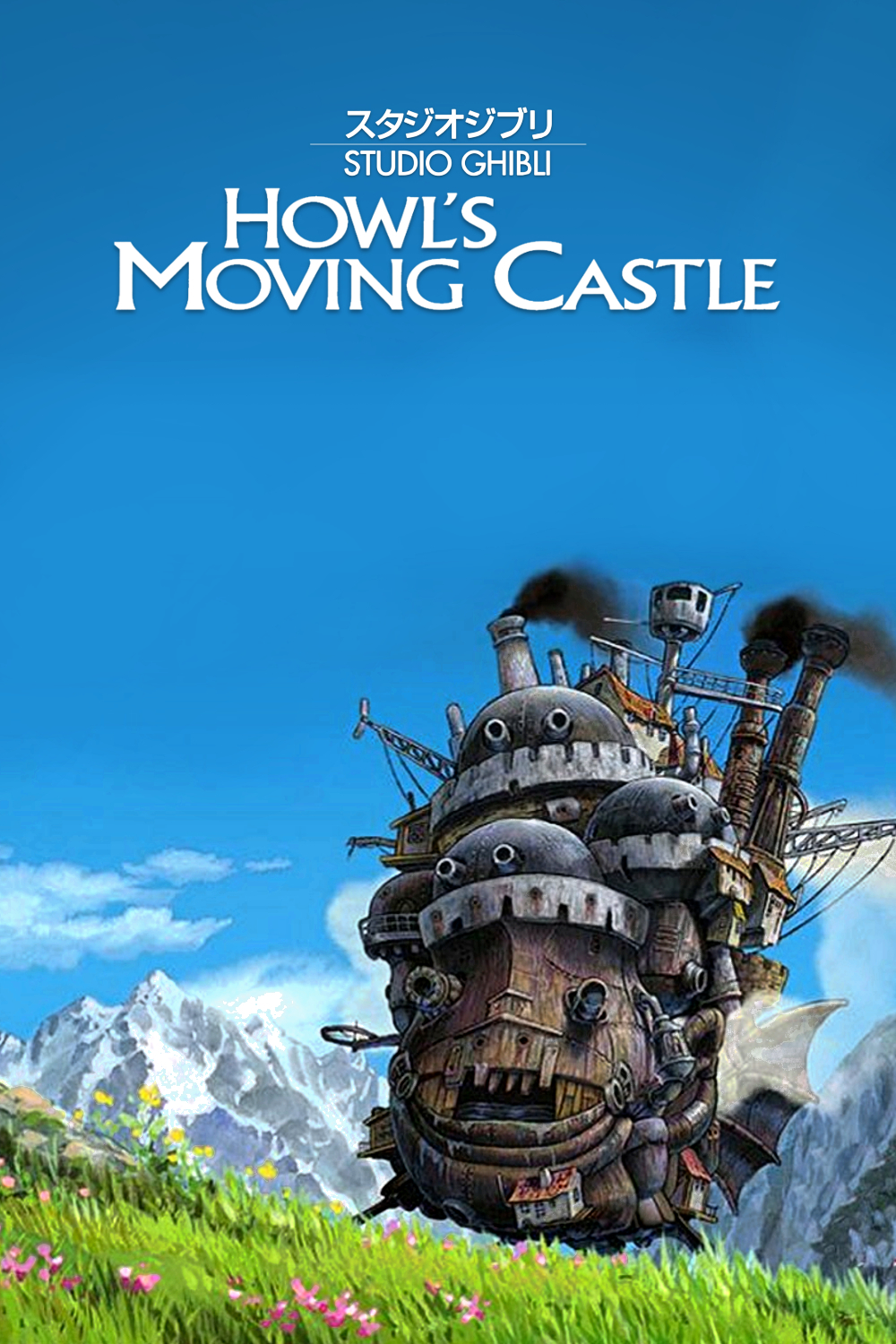
In Howl’s Moving Castle, a young, unconfident girl, named Sofi has a spell cast upon her by an evil witch causing her to appear as an old woman. As this woman, Sofi gains some confidence and takes off for the moving castle which wanders through the countryside.

In it, she meets up with a young boy, a demon living in the body of a constant fire, and Howl himself. Howl is a wizard, who has nearly slipped into oblivion over self-doubt. He does, however, slip out of his castle to help stop a war going on between his own country’s land and another.

It is a moving story of characters finding their own character and becoming strong humans. It is told in a creative, beautiful way and is truly a cartoon that means just as much to adults as children.

Miyazaki creates animated features that are fit for the whole family in a way that is entirely different than those films from American companies like Pixar. Films like Toy Story appeal to all ages in that they are hilarious to everybody. The jokes hit on kid levels and adult levels without ever becoming saccharine or too mature. I love Pixar films, but Miyazaki films are so incredibly different.

There is humor in his films, but it comes from a very human place. In Howl’s Moving Castle, the only really jokey character is the demon fire, and that mainly comes from the fact that Billy Crystal does the English voice for the character. Mostly, there aren’t a lot of jokes as much as humor that comes from the situations.

It is more of a fantasy than a comedy, with fantastic characters and mesmerizing animation. Fully and highly recommended for anyone.

The Eye (2002)

the eye movie poster

There is an old horror story about a normal law-abiding citizen getting a transplant from a psychopathic killer. The killer’s body part still has the memory of its former owner and wants to take up the killings again.

This premise has been aped in countless movies and TV shows, most notably in Body Parts starring Jeff Fahey and that Simpsons episode where Homer has Snakes hair transplanted to his bald head. It is a pretty tired premise; one that has been done so many times all the originality has been drained from it. I’m waiting for the day when Hollywood green lights a picture about a little girl who gets a toe transplant from Charles Manson.

Chinese directors, the Pang brothers try to breathe some life into the concept with their 2002 feature, The Eye. Unfortunately, it is the first of the so-called Asian Extreme pictures that I’ve seen that I’ve found to be rather lackluster.

It isn’t for a lack of trying. The Pang brothers bring an eye of originality to the premise and create an atmosphere that is quite creepy and interesting. At least in the first half.

In this case, the transplanted body parts are eyeballs. A young blind girl, Wong Kar Mun (Angelica Lee) receives an eye transplant and thusly begins seeing dead people, a la The Sixth Sense.

The Brothers Pang introduce this concept by having the dead show up in shadows. Visually the first half of the film is stunning. We see the world through Mun’s adjusting-to-sight eyes and there are creeping things lurking just about everywhere. In an impossible-to-explain, but absolutely must-see series of scenes Mun comes to understand that what she sees with her eyes is beyond the realm of the natural. As a viewer, I was knocked upside the head by the brilliant display of imagery

There is no “I see dead people” revelation here. The revelations come slowly, building tension along the way. Having no concept of vision, Mun has no understanding of what is real and what may be supernatural. By allowing the audience to understand quickly what Mun must slowly learn, the film is quite effective in creating a sense of horror.

The camera pans slowly around corners as the music builds anticipation to what could be hiding just out of sight. There are nice jolts of music as the camera reveals a new surprise. Here it seems the Pang brothers have taken a page out of the American scary movie pages instead of the Asian counterpart. Scare the people with jolts instead of developing actual creepy situations.

In the second half, the film begins to truly unravel. With only a few conversations, Mun manages to have her psychotherapist, fall in love with her and be willing to drop everything and travel to Thailand to investigate the donor of her dead-seeing eyes.

From horror, the movie now travels into a melodramatic mystery. The doctor and Mun find dark secrets in the story of the young lady who had Mun’s eyes first. Of course, they are forced into setting things right, and the movie pretty much falls apart. Oh, it’s nothing terrible or cringe-inducing, but it is formulaic and not nearly as interesting as the first two-thirds of the film.

I found The Eye in the foreign section of my local Blockbuster. It was well worth the five dollars I laid down for it, if just for the glorious visuals of the first half.

Suicide Club (2001)

suicide club poster

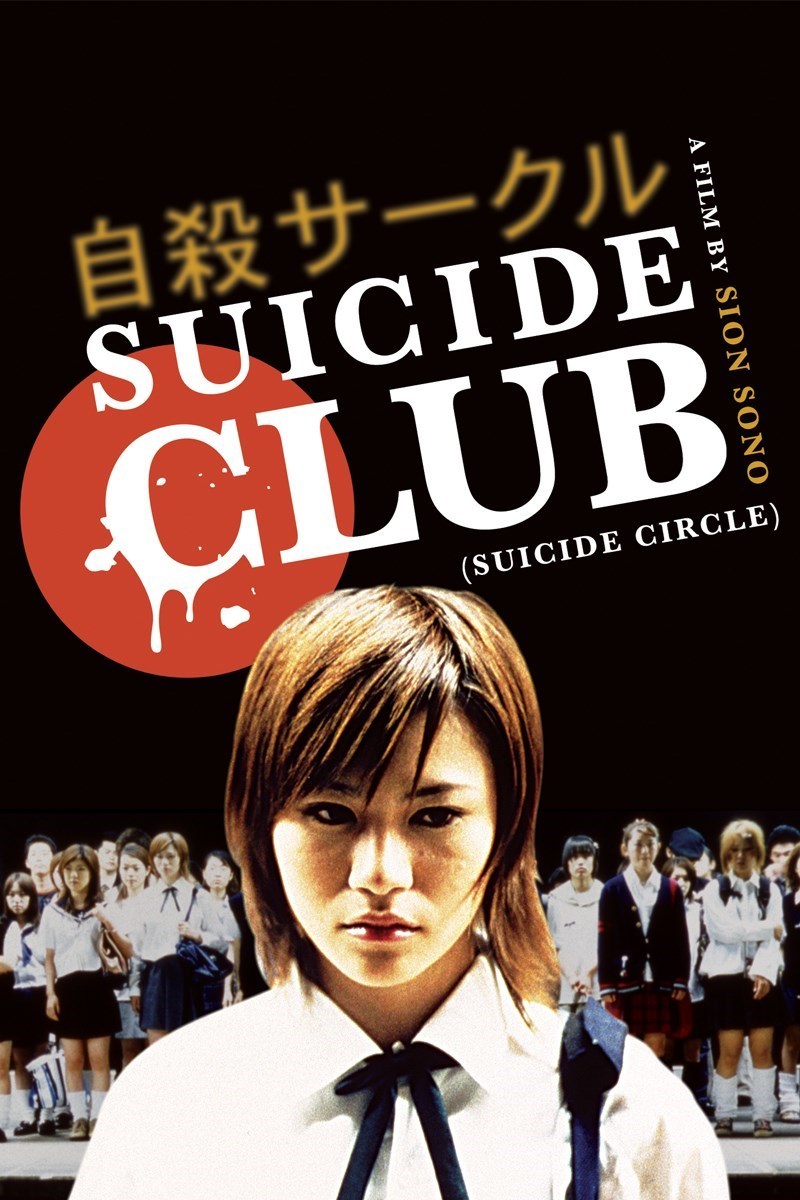
Fifty-four Japanese schoolgirls stand on a train platform, holding hands, singing, and laughing. As the train approaches they clasp their hands tighter, and in sing-song fashion start to count. As the train arrives, the counting stops, and all 54 of them jump in front of the train. Buckets of blood and guts spray the train, the passengers, and the people passing by.

Later, another group of teenagers sits on the roof of a school building during their lunch break. They are eating and laughing and looking like happy schoolchildren. Conversations turn to the 54 and how cool it would be to form their own suicide circle. Amongst much joking and a good time having, a crew decides to end their lives then and there. Standing on the edge of the rooftop they hold hands and plunge their way to the bottom. Buckets of blood and guts spray all over the school grounds, teachers and students.

Amongst the bloodletting are some scenes about a pop group whose Britney Spearesesque pop wailings are irresistible to every teen. Adults everywhere do their best to quash any talk about the deaths being a part of a suicide club movement.  A theme develops about society’s herd mentality.

Call it Japanese horror with a message.

The cops have to rule all of these deaths as accidents for there seems to be no foul play involved. That is until a bag filled with little rectangles of skin sewn together shows up. Then the suicides become a matter of detective work.

The detectives begin getting calls from a cyber-savvy woman who seems to know more than she lets on, calling herself the Bat. She leads the detectives to an internet site keeping a count of the suicides before they actually happen. One of the detective’s kids finds another site with some peculiar type clues.

Call it a Japanese horror, detective thriller with a message.

Through all this shocking, blood-splattering suicidal carnage continues to occur.

The detectives find a suspect who acts like a cross between Ziggy Stardust and Graham Norton. He’s definitely a bad fellow, what with the squishing of animals, kidnapping, and the random sexing with girls wrapped in pillowcases lying in a bowling alley. But he may not be behind all the suicides.

Call it a Japanese horror, detective thriller by way of Asian MTV, with a message.

In the end, we’re left with nary an explanation of the suicides, but that’s not really the point anyway. There is lots of gory violence if you like that kind of thing. And let’s be honest if you are taking the time to search out a copy of a relatively obscure Japanese horror film called Suicide Club, you probably do. There are gobs of creepy, moody suspense, with some very dark humor thrown in. All mixed in with some pretty in-your-face, and spot-on social commentary.

What’s not to love?