The Friday Night Horror Movie: Salem’s Lot (2024)

salems lot poster

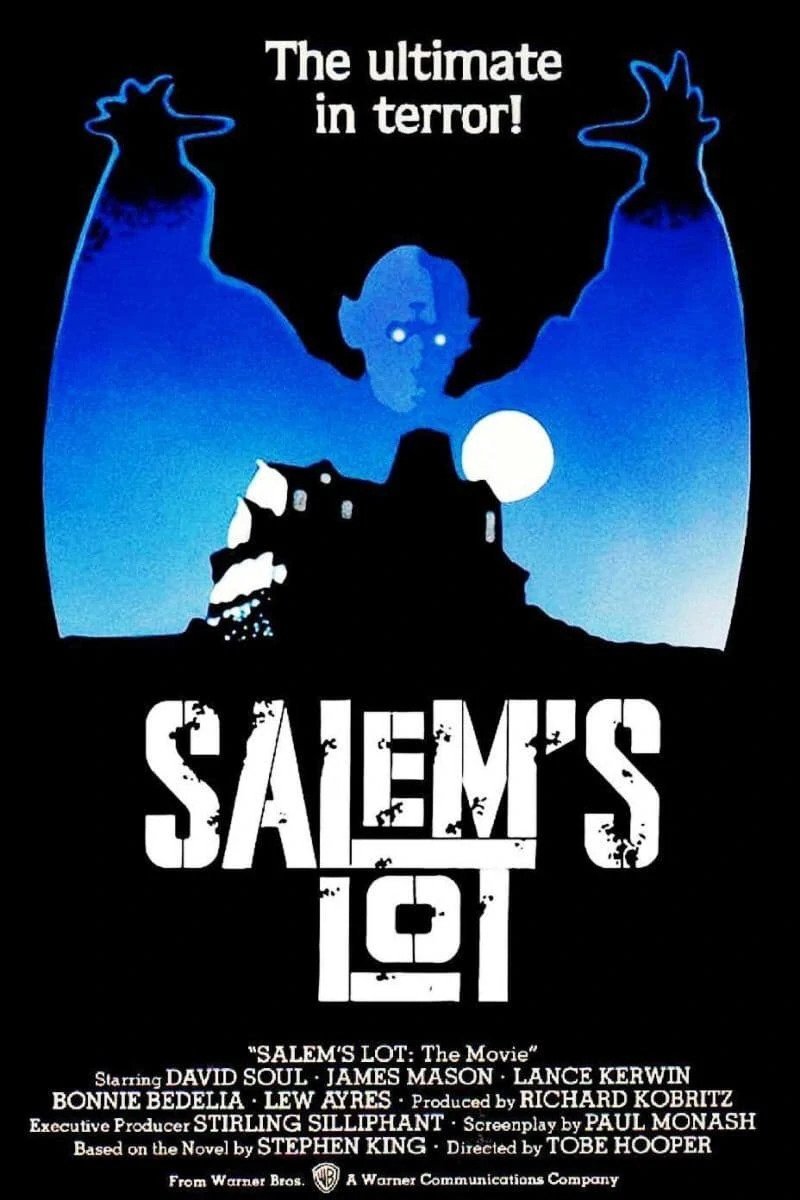
‘Salem’s Lot was not the first Stephen King book I ever read (that honor would go to the short story The Langoliers) nor was it the one that turned me into a lifelong fan (that would be Mr. Mercedes) but it was the one where I realized how good of a writer he is and that I should maybe start paying attention to him (I wouldn’t do that for a few more years, but the seed was planted then.)

It remains one of my favorite King books.

The story’s basic idea is: what if a vampire came to a small town? But like so many of King’s books, it is so much more than that. It follows Ben Mears, a writer who has returned to the small town of Jerusalem’s Lot, where he grew up, to write about the Marsten House. That’s your classic old spooky mansion on top of the hill, where he saw a ghost as a child.

Naturally, that’s where the vampire lives. But before he gets there Ben makes a friend with a schoolteacher and falls in love with a girl, and meets lots of interesting people. That’s what I love about Stephen King. Sure, he’s written a terrifying story about an ancient vampire taking over a small town, but it is really a story about small-town living and the characters that fill it up.

Tobe Hooper directed a two-part miniseries of Salem’s Lot for CBS in 1979. It is far from perfect, but Hooper understands the heart of the story is its characters and the scares should be built around that. But he also creates some truly memorably scary images.

TNT adapted a version of the story with Rob Lowe in the lead in 2004 but the less said about it the better.

When I heard that had made a new adaptation for Max I was excited. I’m always excited to learn about new Stephen King adaptations. Then I watched the trailer and that excitement flew right out the window. It looked cheap. Worse than that it looked like it was going to rely too heavily on violence and jump scares. Then the reviews started coming in and they were not good.

But it is spooky season and I’m still a sucker for King adaptations so I crossed my fingers and pressed Play.

My friends I am happy to report it is not that bad. It is a long way from great, and you won’t exchange this for the Hooper version in your collection, but it is worth the watching.

They say writer/director Gary Dauberman has a three-hour cut but Max made him edit it down to just under 2 and you can feel it. The movie plays like the greatest hits of the story. It isn’t so much that it jumps straight to the action, but that it shortcuts through everything.

We meet Ben (Lewis Pullman) as he’s driving into town (the soundtrack plays Gordon Lightfoot’s “Sundown” which is a great choice) he meets Susan (Makenzie Leigh) at the real estate office. She’s reading his book but doesn’t recognize him. But by the next scene, she’s inviting him to the movies, and we learn both their stories within a few minutes. Movies always have characters falling in love way too fast, but here it is even faster.

The realization that the weird stuff going on in this town is caused by vampires happens extraordinarily fast as well. Ben’s newfound friend, Matt (the always great Bill Camp) sees a friend in a bar looking a little pale and pekid. He takes him home and notices the guy has a couple of little scars on his neck. Later he thinks he sees the guy scurrying into an upstairs window.

That little bit of information convinces him that the town is full of vampires. He quickly convinces Ben and Susan of this information. Then the alcoholic priest (John Benjamin Hickey). The new schoolboy in town, Mark Petrie (Jordan Preston Carter) doesn’t need to be convinced, he already knows. He’s an old-school horror nerd who doesn’t take crap from nobody.

This happens throughout the film. Relationships deepen and plot points happen offscreen, in the cuts. Before I realized that they were literally happening in the cuts, that more details had been shot and then edited out at the last minute I thought it was an interesting story choice. Now it just seems distracting.

But what is left is well done, if a little disjointed. The editing is interesting. There are a lot of shots like one in which a man is alone on a bed. The camera moves slowly to look under the bed, then it moves upward and the room is full of people – a great deal of time has shifted while the camera was under the bed. Or the camera will focus on an object and then it will cut to a similar object in a different scene.

When the violence comes it comes with that frantic modern style of scaring you with jumps, and quick edits, which is not to my liking at all. They changed the ending quite a bit. Some of it I liked – they moved it from the Marsten House to somewhere interesting. Some of it I did not – far too much generic action. But more or less it worked for me. Or perhaps my expectations were so low that anything not terrible would have been enjoyed by me at this point.

The Friday Night Horror Movie: Needful Things (1993)

poster

Stephen King is one of the world’s most popular authors. His works have been adapted into movies more than just about anyone else. On paper that makes sense. Beyond his immense popularity, his books are full of well-drawn characters, plots that generally swing, and all sorts of killer clowns, small-town vampires, the living dead, rabid dogs, and murderous cars. That should easily translate to the cinema.

More often than not it doesn’t. Movies based on Stephen King’s books are usually pretty bad. Needful Things is no exception. My continuing theory is that the movies tend to focus on those crazy monsters and the supernatural, but as any fan of King’s books can tell you, you might come to King for the killer clowns, but you stay for his descriptive abilities, and the way he fully draws his characters. The movies tend to shorten the character development in order to focus on the monsters and other craziness.

I’ve not read Needful Things, but I can feel the filmmakers doing that with the story. The basic outline is that a strange character named Leland Gaunt (Max Von Sydow) opens a shop called Needful Things in the small town of Castle Rock, Maine. He’ll sell you the thing you most desire. And he’ll sell it to you for cheap. A little cash and maybe a favor or two.

The favors, of course, are of evil intent. He’ll get you to do something bad, but not too bad. At least it doesn’t seem that bad to the person doing it. He gives a young boy a Mickey Mantle baseball card and in return asks him to smear some mud on a lady’s clean sheets, hanging out to dry. That’s mean, maybe, but not evil. Except what the boy doesn’t know is that this lady will blame Nettie Cobb (Amanda Plummer) a waitress she’s been feuding with. Someone else will be tasked to do something against Nettie who will blame the sheet lady. On and on it will go until the two women are coming at each other with knives and a cleaver. Soon enough the entire town is at each other’s throats.

But the thing is in the King novel (I presume, still haven’t read it, but I’d be willing to bet money this is true) he plumbs into the details of each character’s desires and what makes those favors so disastrous.

For example, there is one character who is sold an old high school athletic jacket. One imagines that in the book King spends multiple pages telling us about this guy. Digging into how his best days were in high school, playing sports, getting the girl, and exceeding at life. About how every day after that has been a steady series of letdowns. We’d understand who this guy was, and why that jacket means everything to him. In the movie, we get a ten-second flashback of him riding around in a convertible with his jacket on and a girl at his side. That gets the point across, but not enough to make me actually care.

That happens over and over in the film. There are a lot of characters who buy a lot of things from Gaunt and have to perform a lot of favors for him. We get the gist of everything, but none of the details. And it’s the details that make us care.

The cast, including Ed Harris as our hero the sheriff, and J.T. Walsh as an asshole businessman are all good for what little they are given. Max Von Sydow is clearly having a wonderful time. He’s worth the price of admission alone.

In the end it isn’t the worst Stephen King adaptation, but it is far from the best.

The Friday Night Horror Movie: Maximum Overdrive (1986)

poster

Stephen King stories have been adapted into countless films and television series. Some of them are good, a lot of them are bad, a few of them are great, and some aren’t even worth talking about. Opinions vary on which films fit which category with King himself disagreeing with most.

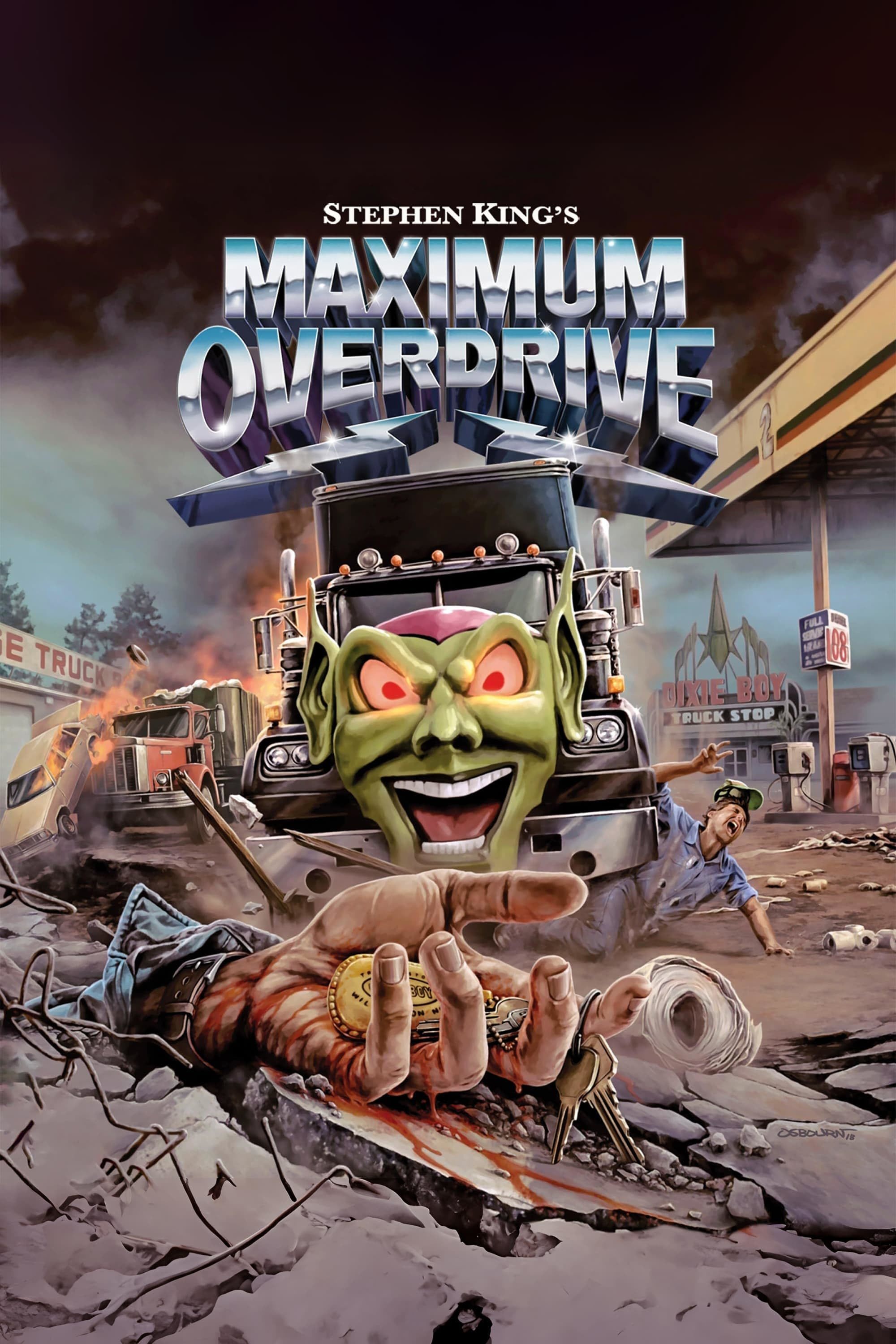
In 1986 for the first (and last) time Stephen King actually adapted one of his own stories for a film. Based on his short story Trucks, King wrote the screenplay and directed Maximum Overdrive. It bombed at the box office and is generally considered to be lousy in pretty much every way.

I’ve become a pretty big Stephen King fan over the last few years, and have tried to watch a lot of the adaptations of his work. I knew I needed to watch this at some point, but I tended to believe the critics on this one and kept putting it off.

But since it is the Awesome ’80s in April, I decided to give it a go.

I knew it wasn’t going to be good, but I had no idea how insanely incompetent it was going to be.

One can forgive a first-time director like Stephen King (and especially one who has no training in filmmaking) for not banging it out of the park, but you’d think a guy who has written a lot of wonderful stories, would know a thing or two about writing. But the script is just as bad as the direction. Maybe he just didn’t know the difference between writing for the screen and writing for the page.

The bare bones of the story are actually interesting (and most of it seems to have come from that short story – which I haven’t read). Extra-terrestrial forces pass by Earth causing all electronics to become sentient, and murderous. Several people get trapped at a truck stop by a bunch of semi-trucks bent on their destruction.

Technology becoming sentient and trying to destroy mankind is not a new idea, but it can be a good one in the right hands. I especially like the idea of big trucks attacking people. And I love a good people trapped in an enclosed space story. With a better script and a good director this film could have been cool.

King has admitted to having a cocaine addiction at the time, and he was still deep in his alcoholic phase, so no doubt that affected the production.

An example of how this film works. At the start of the film, the controls to a draw bridge come alive, raising the bridge when cars are on it. I swear the number of cars on the bridge at any given time changes, depending on the shot. The height to which the bridge is raised changes as well. Sometimes we’ll have a shot in which the bridge has just been raised to a slight angle, but then we’ll get shots of cars spinning their wheels trying to keep from sliding backward, while other cars slide into the trucks behind them. A wide shot will then show the bridge all the way up. Then it will switch to barely having been raised. There is no tension, it isn’t at all scary.

I can see King writing that scene. As a novelist, he’d take pages and pages to tell that part of the story. We’d get lots of details. We’d know several of the characters. We’d get a sense of the terror. There would be gory details of someone getting smashed up. But as a director, it feels like he didn’t know how to get those details cinematically. He didn’t know the types of shots he’d need or how to put them together.

The entire movie is like that. It feels cheap. Like some bad B-movie, you’d see late at night on cable TV. In part, I suspect this is intentional. I can see King trying to make a B-movie. The kind he might have watched when he was growing up. But those movies have an energy to them that is fun to watch. Maximum Overdrive is a dud from start to finish.

The Friday Night Horror Movie: The Shining (1980)

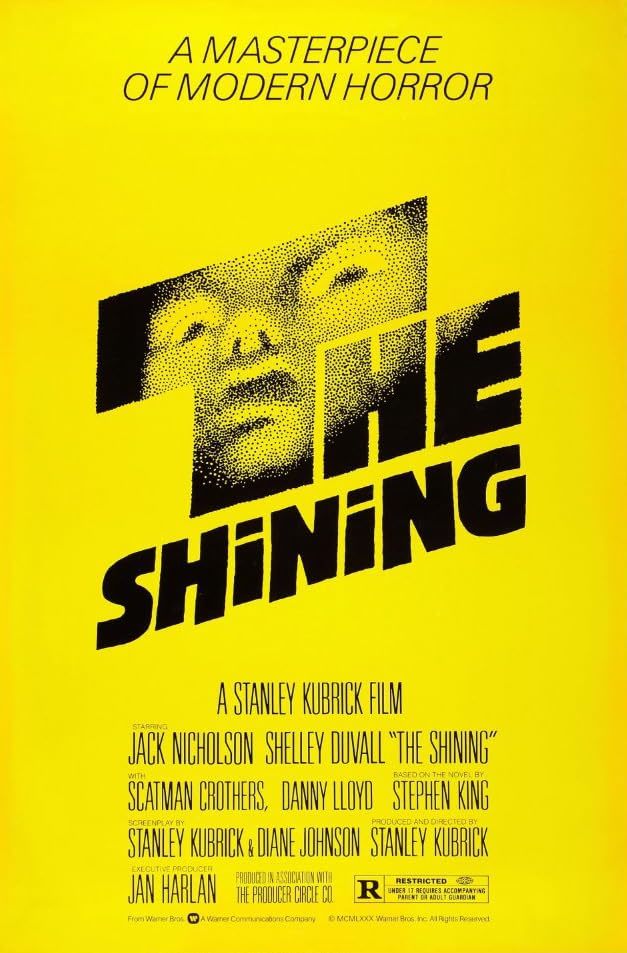
the shining

Though I keep saying that I love making these monthly movie themes and writing about them, I find it easy to slip out of that routine (especially in the writing department) and then quite difficult to slip back in. This time I have a pretty good excuse with Covid, but I’ve felt (more or less) well the last couple of days and yet have not had the energy to write any more Frozen in January reviews, despite having watched several more and (at least in theory) the desire to write about them.

Here’s hoping this Friday Night Horror Movie write-up will get me back in the spirit.

There is a documentary from 2012 called Room 237 which posits a number of theories about Stanley Kubrick’s The Shining (1980). Or rather it features a number of talking heads who all seem to think they know what The Shining is all about. What it all really means.

These range from the somewhat plausible – it’s about the assimilation of Native Americans and the destruction of their culture by rich white Americans – to the crack-pot – it is Kubrick’s apology for helping with the faking of the moon landing.

It is an interesting documentary, but what I really love about it is how it indicates just how malleable Kubrick’s film is. It is as if the director took Stephen King’s novel, and turned it into his own thing, and then when people ask what it all means, his answer is akin to:

It means what you want it to mean. Or it has no meaning. Or I don’t know what it means.

For those who don’t know The Shining is based on the Stephen King novel of the same name. Kubrick did make some significant changes to the book and King famously hates it. It tells the story of Jack Torrence (Jack Nicolson), a wannabe writer who is also an alcoholic, and abusive husband/father. After being fired from a teaching job he lands a job as the winter caretaker at the Overlook Hotel – a beautiful resort nestled deep within the Rocky Mountains. The long, meandering road into the hotel becomes too covered with snow to make it financially viable to stay open for five months in the winter so they hire someone to live there and keep it maintained.

Jack brings his wife Wendy (Shelley Duvall) and young son Danny (Danny Lloyd) who has some psychic ability (known as the Shining). The total isolation, the freezing cold (a huge blizzard traps them even further and isolates them more by knocking out the phone lines), and the ghosts push an already fragile Jack into psychotic territory.

The Overlook catered to the rich, powerful, and famous. People who make important decisions and devour depravity. Terrible things have happened there. Things the hotel is all too happy to cover up. In his initial meeting with the hotel manager, Jack is told of a previous caretaker whose cabin fever led him to murder his wife and two young daughters with an axe.

This violence and debauchery has left a psychic impressions on the hotel. Or perhaps, the hotel is a place of evil and it has left an impression on vulnerable people causing them to engage in horrible deeds. The film never gives an answer, it is a movie that wants you to come up with your own.

Kubrick films it in his usual technically proficient, yet emotionally detached way. His use of Steadicam (a fairly new technology) is masterful. Though the camera slowly wanders about the landscape of the hotel (truly making the setting a character unto itself) the geography of the place is disorienting. There are windows where there could feasibly be no windows, and doors that could only lead to nowhere. All of which makes the film deeply unsettling.

The performances while unanimously good, are cold and strange. Early in the film serious conversations are strangely monotone. Kubrick used many multiple takes (the scene in which Wendy swings her bat at Jack reported was shot over 100 times) to intentionally exhaust and unnerve the actors. The music is eerie and avant-garde.

It is nothing like a traditional horror film. While there are images of violence and horror – every character, especially Danny, flash on scenes from the hotel’s horrible past – the film unnerves you with its mood and calculating camera.

I love it. It is one of my favorite horror movies. I’m not alone in that assessment, and I’m sure many of you enjoy it as well. It works perfectly with this Frozen in January theme and I was happy to revisit it tonight.


The Friday Night Horror Movie: A Return to Salem’s Lot (1987)

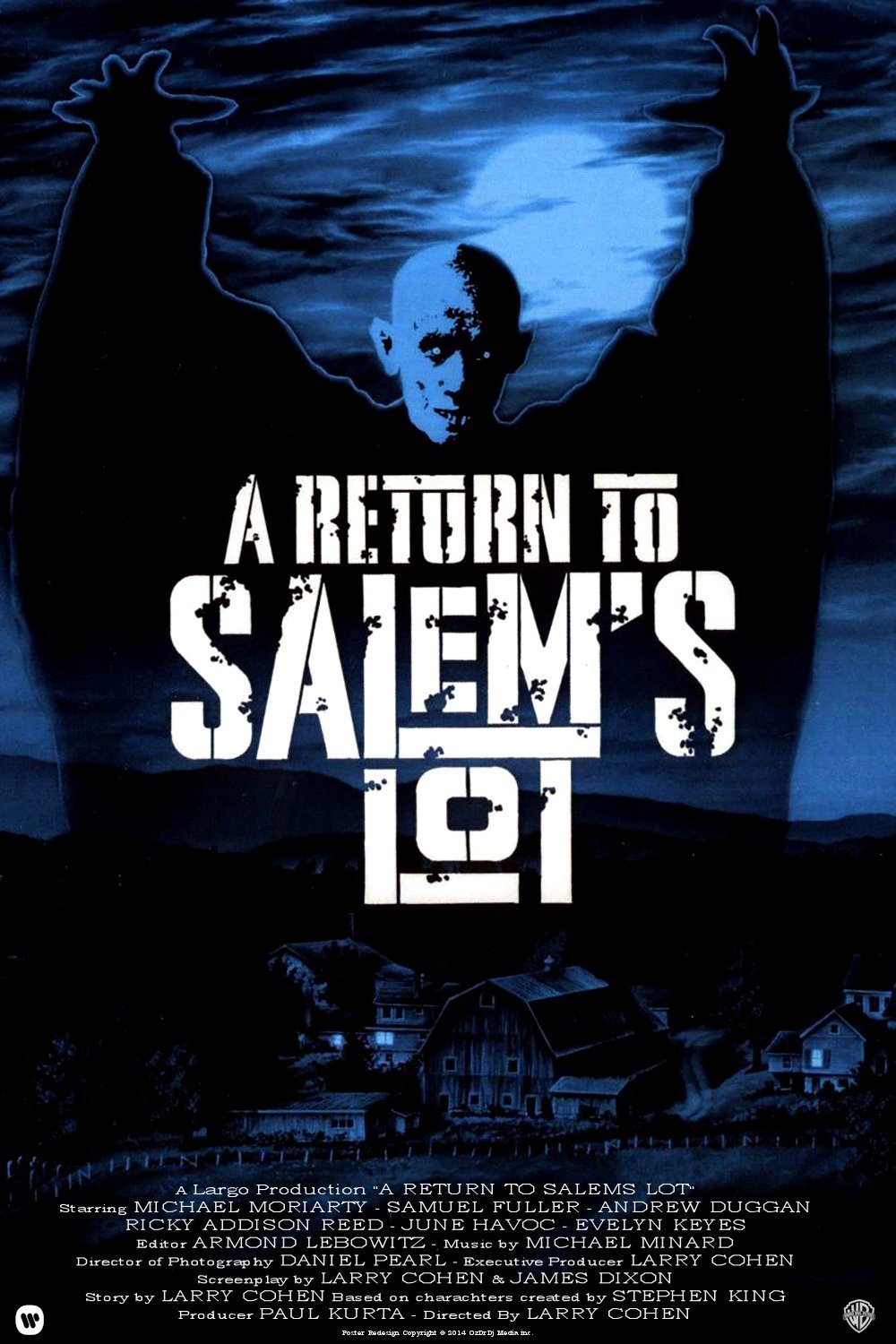
a return to salmes lot poster

‘Salem’s Lot was one of the first Stephen King novels I ever read. It remains one of my favorites. Tobe Hooper made a pretty good TV mini-series out of it in 1979. Apparently, Larry Cohen had originally been slotted to adapt the book, but the executives hated his screenplay and gave Hooper the job instead.

Years later Warner Brothers approached Cohen to direct a low-budget horror film for them and he pitched the idea of a sequel. Interestingly, the sequel was intended as a theatrical film and in fact, debuted at the Cannes Film Festival and saw a limited American release. But the reviews were terrible and the box office a dud and so it pretty quickly went straight to the VHS shelves.

Outside of a few gorey effects, a couple of naked breasts, and a lot of children swearing, the film feels very much like a made-for-TV movie. The budget was clearly small, the acting amateurish, and it is edited within an inch of its life.

It follows Joe Webber (Michael Moriarty), an anthropologist who is called away from studying a native tribe in the South American jungle to take care of his young, troubled son Jeremy (Ricky Addison). He takes him to a run-down house he’s inherited in the small New England town of Jerusalem’s Lot (or Salem’s Lot as it is sometimes called).

Pretty quickly he realizes the town’s inhabitants are either vampires or their human slaves. Actually, they pretty much straight-up tell them who they are because they want him to write a book about them. To convince him to do this they kidnap the boy and get a young vampire girl to sweet-talk him into becoming a vampire as well.

Joe figures this is a good time to hook up with his childhood sweetheart and do a little remodeling of his old homestead. Seriously, the film makes some really odd choices.

Soon enough a Van Helsing-like vampire hunter shows up (played by director Samuel Fuller in a rare acting role) and eventually our heroes get to some actual vampire slaying.

A Return to Salem’s Lot feels like it should have been a mini-series. There are a lot of ideas floating around in it, but few of them get explored. A lot of scenes feel like they were cut short, as if maybe a lot of footage was shot but due to time constraints they had to be cut. Or maybe they just didn’t have the budget to shoot everything in the script.

As it is it feels very disjointed, and unrealized. There are some interesting ideas. The original story is basically ‘what if Dracula showed up in a small American town’ and this one takes that concept and has the vampires take over the entire town. Yet here they are also a persecuted minority. They fled Europe with the Pilgrims for the safety of the new world. They are good Americans. They don’t even kill humans (well, most of the time) but breed cows for their blood needs – and it is quite a scene watching some elderly actors pretend to suck the blood out of cows lying in a pasture.

All of this creates some light satire of American consumer culture, but again it is pretty disjointed and cut to shreds.

Despite all of this I still rather enjoyed it. Cohen knows his way around a low-budget picture and he gives it enough oomph to make it not terrible. Fuller is having a blast playing the crotchety old hunter.

Not a great movie by any means, but a fun one to watch.

Awesome ’80s in April: Silver Bullet (1985)

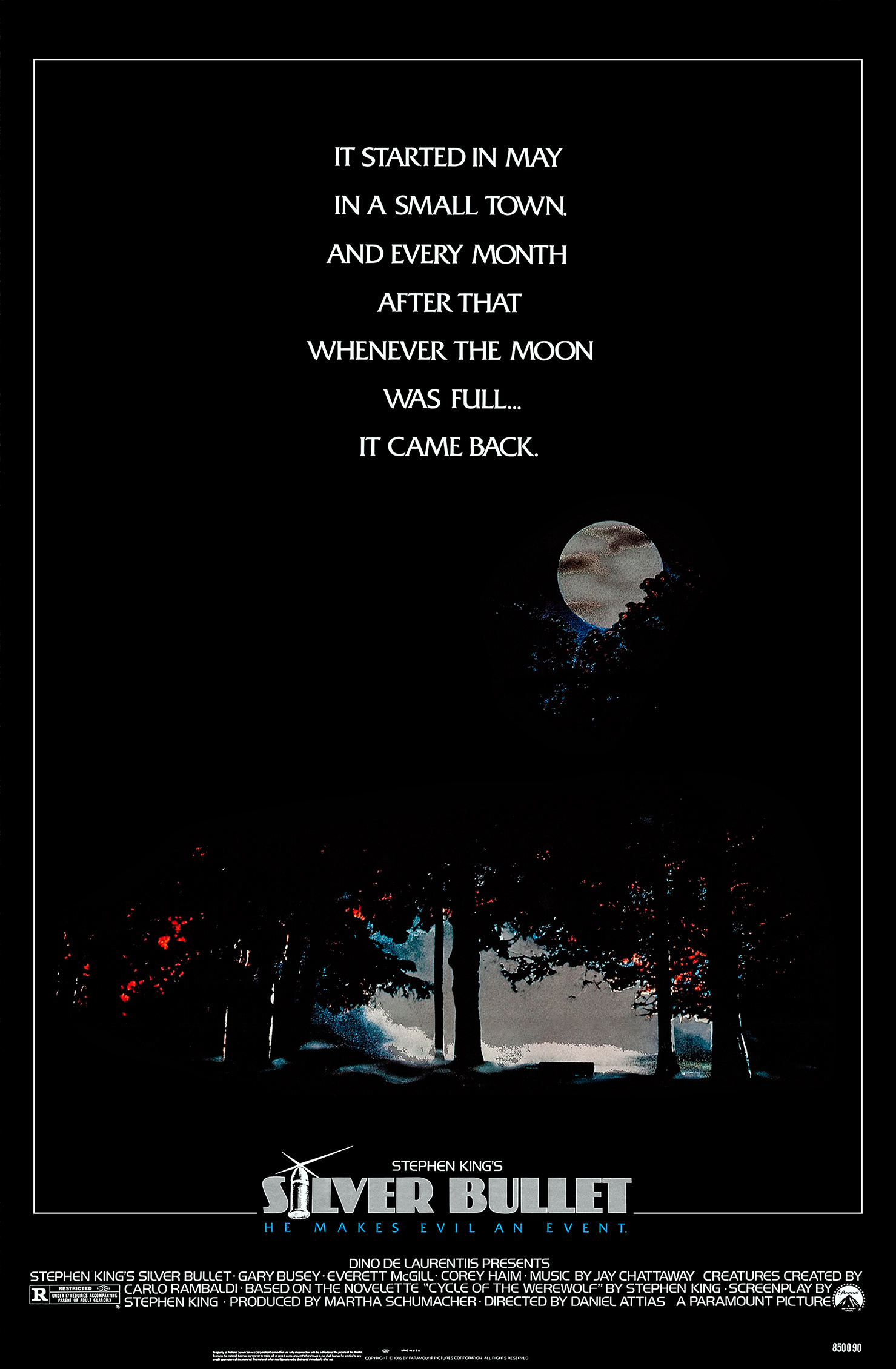
silver bullet poster

For the last few years, I’ve been steadily (if perhaps a bit slowly) reading my way through Stephen King’s bibliography. I’m not even halfway through. Dude has written a lot of books. People have made a lot of movies based on those books. Most of them aren’t very good.

My working theory is that filmmakers focus on the monsters – the killer clowns, rabid dogs, vampires, and other assorted creatures of the night – and ignore the world-building, the characters, and all other non-horrifying story development. But while readers may come to King for the monsters, they stay for all that other stuff. At least I do. And so the movies wind up focusing on the wrong things that make King’s stories so interesting. That’s my theory anyway.

Based upon King’s Cycle of the Werewolf novella, Silver Bullet is (obviously) about a werewolf stalking a small town. Our hero is young Marty Coslaw (Corey Haim) who is bound to a souped-up wheelchair (which is named, in its very Stephen King way, the Silver Bullet). He has a nagging sister, Jane (Megan Follows) who narrates the film as an adult (another Stephen King trope) and a goofy, alcoholic uncle (a wonderfully hilarious Gary Busey).

There is a lot of small-town life that fills this film. There are community gatherings, family parties, funerals, and lots of Marty showing off his ability to get around without the use of his legs (he climbs trees and into his second-story window). The uncle rigs up an even better souped-up wheelchair that whizzes down the road at 60 MPH.

And of course, there is a lot of mutilations by a werewolf. None of it is particularly well done, and it is all pretty silly. You could call it a bad movie, and you wouldn’t be wrong, but it is also quite entertaining. It is exactly what I want a 1980s adaptation of a Stephen King werewolf movie to be.

Awesome ’80s In April: Firestarter (1984)

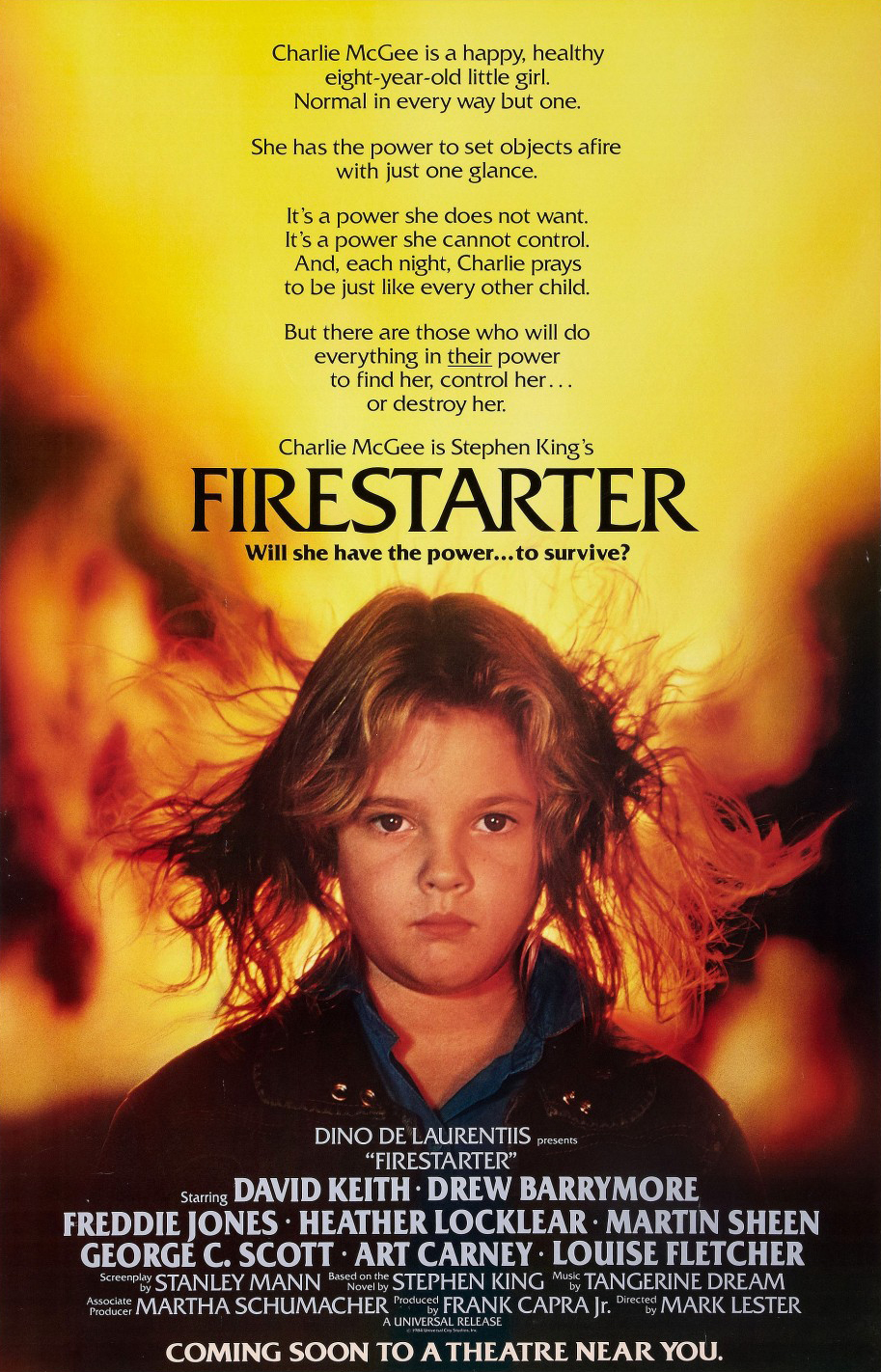
firestarter poster

One of my aims for this series is to watch films that I knew about as a kid during the 1980s but for whatever reason have never bothered to watch. All kinds of films were floating around the cultural ether – films that I’d seen trailers for or seen on Siskel & Ebert, or that my friends were talking about, but that didn’t appeal to me for some reason. Or that I just never wound up seeing. As an adult, a lot of these films have some kind of appeal, but not enough to usually make me sit down and watch them.

Firestarter is a good example of this. It starred Drew Barrymore, who was the biggest child star at the time. I was actually too young to watch the film when it came out in 1984, but she had something of a career resurgence in the 1990s by taking on more mature (and sometimes scandalous) movies like Poison Ivy (1992), The Amy Fisher Story (1993), and Boys on the Side (1995). I was a fan of the actress as a teenager and though Firestarter was a few years old at that point it was still very much part of the culture. It was often shown on cable television and the video stores still had copies of it on their shelves.

I guess what I’m trying to say is that Firestarter was part of my cinematic memory, even though I never did watch it. It is that kind of thing that fascinates me and those are the types of movies I’ll be trying to watch this month.

The film is based on the Stephen King novel of the same name and follows one of his more regular themes – that of people with psychic ability and the secret government agencies that want to exploit it.

Barrymore plays Charlie a girl with pyrokinetic powers. She and her father Andrew (David Keith) are on the run from those secret government agents. Years before Andrew and his wife were given experimental drugs by that agency which gave her the ability to read minds and him the ability to control them. The agency killed his wife and kidnapped Charlie. He got her back and that’s why they are on the run.

Eventually, they get caught and the Agency director (Martin Sheen) and his hitman (George C. Scott pretending to be Native American and sporting the most ridiculous-looking ponytail) attempt to befriend Charlie so they can get her to master her powers.

Writing all that out makes the film sound pretty good, but I’m afraid I have to tell you it is mostly a snore. The government plot is dull as can be, George C. Scott’s performance is just plain odd, and for a more about a girl who can start fires with her mind (and is titled Firestarter), it sure takes its time letting the girl start fires with her mind. It finally gets going in the last fifteen minutes or so and that scene is a real corker with tons of action and blazing fire action. But getting there takes a lot of effort.

Oddly enough it did make me want to read the book. The bones of the plot are good, and exactly the sort of thing King is good at writing. There is a scene in the film where Charlie and the father are picked up by an old man and taken back to his home where the man’s wife fixes them lunch. It is a perfectly fine little scene in the movie, but you just know King expanded it for multiple chapters allowing these characters to really bond and for us to get to know them. That’s the sort of thing King excels at, but that tends to get shortened down to nothing on the big screen.

More Pickups

image host

My daughter has outgrown dolls. My wife, however, has grown into them. She learned to sew probably 15 years ago. She used to make herself various outfits, but once my daughter was born she began exclusively making her dresses. But my daughter no longer likes dresses (she prefers black pants and hoodies now) and so my wife has started making clothes for the dolls. She’s really gotten into it and even has an Instagram account for it (and she would be thrilled with more followers if you are into that sort of thing) She does a great job, even if I find the whole grownups play with dolls thing a little bit strange.

Anyway, there is a little toy shop that she likes to go to for bargains on Barbies and accessories. She wanted to go today and we made a family outing of it. They have other collectibles and other random stuff. I found a copy of Pitch Black and Fargo Season 2. Pitch Black is a surprisingly good little sci-fi/horror film that briefly made me think Vin Diesel was a good actor. Fargo is a terrific television show based on the wonderful Coen Brothers movie of the same name. Or at least the first two seasons are excellent, I still haven’t seen past that.

Afterward, we dropped by a Goodwill and I picked up The Black Box and The Running Man. I recently watched Bosch, the TV series, and quite liked it so I’ve been reading the Michael Connely books the series was based on. I’ve only read a couple of them but I’ve enjoyed what I’ve read. I’ve only been into Stephe King for a few years now but I am steadily working my way through them and I always buy the ones I don’t have at any used store we visit.

Spa is a comic book that I’ll be reviewing soon. It is utterly bizarre and it doesn’t make much logical sense, but the artwork is really interesting (and bizarre and horrifying).

Have you all picked up anything interesting lately?

Salem’s Lot (1979)

salems lot poster

I was slow coming ’round to Stephen King. Growing up I was more of a Dean Kontz man. I read the short story The Langoliers when I was in high school and loved it, but for some reason didn’t even both finishing the other short stories in the book much less read any other King. In college, I read Dolores Claiborne, and loved it, and then didn’t get around to reading any other King books until a few years later. And so it went for a long time. I’d read a King book, love it, and then not pick one up again for many months or years. And then four or five years ago I got a copy of the Mr. Mercedes audiobook from the library and really dug it, then picked up the sequel, Finder’s Keepers, and I was off to the races. I’ve been reading him steadily ever since.

I read ‘Salem’s Lot about 12 years ago and absolutely loved it. I’m a sucker for vampire stories and King tells a really good one. It remains one of my favorite novels of his. Tobe Hooper directed a two-part TV miniseries back in 1979 and I decided to rewatch it this week. It is surprisingly good.

The story concerns Ben Mears (David Soul) a writer (the first of many times the protagonist in a King story would have that occupation) who grew up in the small town of Salem’s Lot, but moved away as a boy. He comes back to write about a spooky old house up on a hill that has a sordid history and is rumored to be haunted. He plans on renting it but as it turns out the house has just been purchased by the mysterious Richard Straker (James Mason, completely enjoying himself), and his absent partner Kurt Barlow.

Turns out Barlow is an ancient vampire and Straker is his familiar. But the movie takes its time getting to that part. First Ben has to meet Susan (Bonnie Bedelia), the romantic interest, plus other assortments of characters. It isn’t until the second part of the movie, more than 90 minutes into its three-hour runtime that we actually see the vampire. Mysterious things do happen, people get sick, a kid dies, a dog is murdered, etc., but Hooper keeps the pace slow and the eeriness high.

There is quite a lot of padding, as one would expect from a TV movie made in 1979. And the production values fit within that genre as well. But Hooper gives some good jump scares and several truly spooky scenes. There’s one in which a vampire kid floats into another kid’s room which is an all-timer. The look of the main vampire is very Nosferatu-esque and pretty darn terrific.

It is a film that, if you consider the budget and its limitations, comes across as surprisingly great, and well worth watching.