Several years ago, probably during one of their semi-annual 50% off sales, I bought the Criterion Collection’s big boxed set of Ingmar Bergman’s movies. Ingmar Bergman is a titan of cinema. He’s widely considered one of the world’s greatest film directors, having helmed many of the greatest movies ever made.
His films are intellectual, somber, sometimes experimental, and almost always challenging. He made movies about life and death, spirituality, and religion (he made an entire trilogy from the Silence of God). As such his films are often difficult to watch. I love many of his films and yet this boxed set has set on my shelf mostly gathering dust. Bergman films are a bit like “Dark Stars” from 1969 – infinitely rewarding, but you’ve got to be in the right head space and you’ve definitely got to pay attention to what they are trying to do.
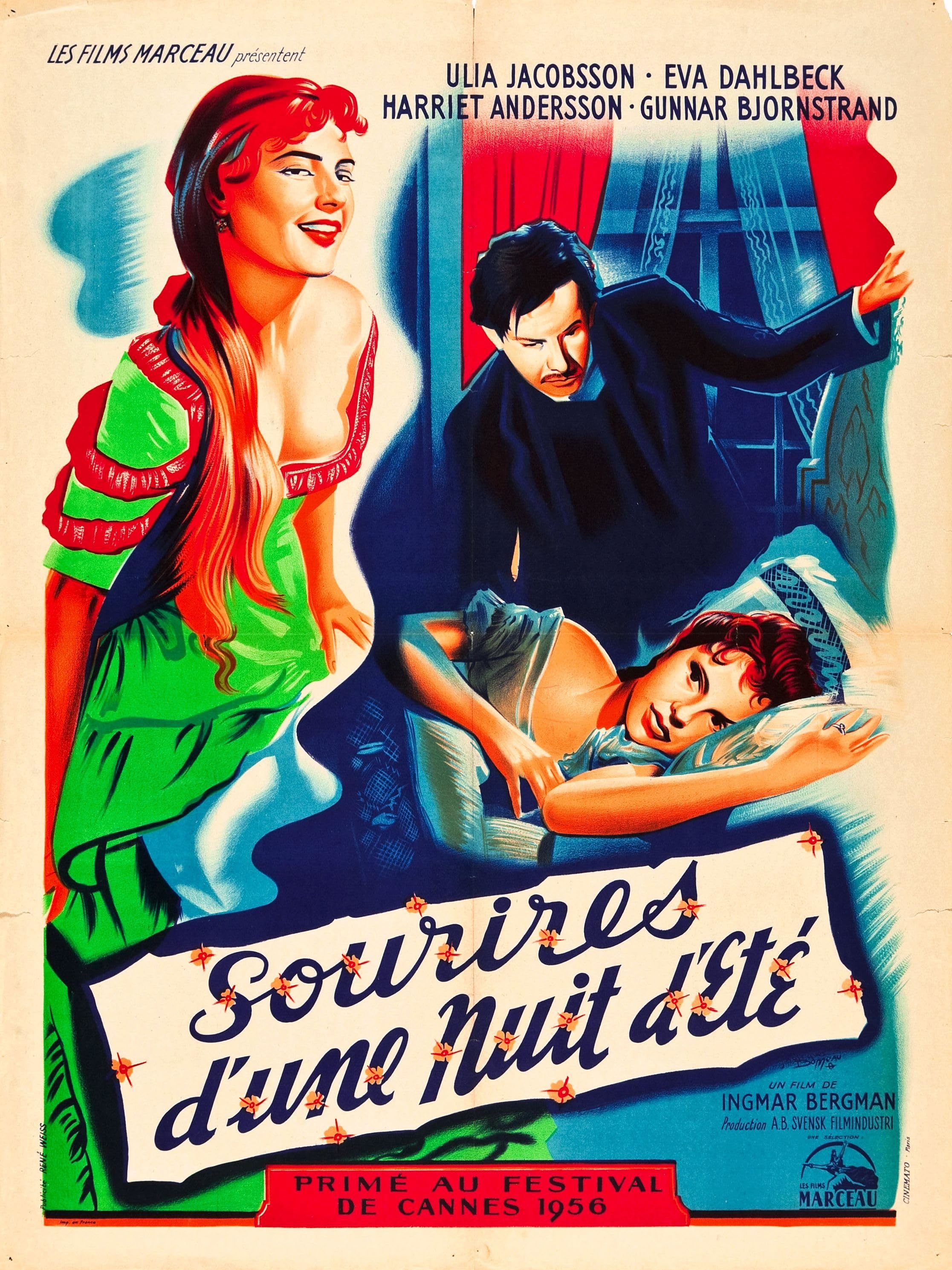
Since it is Foreign Film February I knew I wanted to watch a Bergman (I think I said the same thing last year and didn’t manage to do it). The Criterion set doesn’t present the films chronologically, but rather as one might if you were creating a film festival for the director’s works. Previously, I randomly picked films out of the collection to watch but this time I decided to begin at the beginning, the Collection’s “Opening Night” selection, Smiles of a Summer Night (1955).
Smiles was made at a difficult time in Bergman’s life. His previous two films had not done well and the studio essentially told him if his next film wasn’t a success he was done. His personal life was in turmoil and, according to the liner notes included in the Criterion set, he decided he was either going to make a new film or commit suicide.
So, Ingmar Bergman, a director famed for his sober, austere films about the meaning of life, during one of the lowest points in his life made a light comedy.
And honest-to-God it is funny.
When I read Bergman had made a comedy I figured it would be more like Shakespearian comedies, meaning that it wasn’t a tragedy – that it didn’t end in the death of everybody. But no, it is a laugh-out-loud, full of clever wordplay and incident comedy.
It is a comedy of manners. It reminded me of the works of Moliere or Oscar Wilde or some other writer I studied in school and have long since forgotten.
The dialogue is clever and droll, and Bergman uses such a light touch that one sometimes has to stop and wonder where all this fancifulness came from.
Fredrik Egerman (Gunnar Björnstrand) is a successful, respected, middle-aged lawyer. He’s married to the much younger Anne (Ulla Jacobsson). It is his second marriage, his first wife died some years ago. Before he met Anne he was involved in a torrid romance with Desiree (Eva Dahlbeck), a famous actress.
When he learns that Desiree is in town starring in a show, he gets two tickets and decides to take his wife. But before they go they take a nap together (as one does). While sleeping he reaches over and caresses Anne. She’s pretty excited by this because even though they’ve been married for a couple of years they’ve never had sex. He doesn’t want to spoil her or some such nonsense. So he’s caressing her and getting all sexy and stuff and then he says her name, and how much he loves her. Except the name he says isn’t Anne, it’s Desiree.
Oops.
They go to the theater, but Anne is understandably upset. When she realizes that the star is named Desiree and that her husband keeps looking at her through the opera glasses, she feigns illness and goes home. Once he’s settled her into bed he slips back out and goes to the theater.
They go back to their place where they barb, jab, and argue over why they broke up in the first place. Frederik solicits help from Desiree for his marital strife, but it is clear they both still have some feelings for each other.
Then Count Carl-Magnus Malcolm (Jarl Kulle) shows up. He’s Desiree’s current lover and he’s insanely jealous. He’s also married. To a girl named Charlotte Malcolm (Margit Carlqvist). At one point without a bit of irony, he utters the line “I can tolerate my wife’s infidelity, but if anyone touches my mistress, I become a tiger.”
Naturally, the five of them wind up together at a dinner party before the film ends. Plenty of mix-ups, double entendres, and verbal jousts ensue. It really is astounding just how light and effervescent this film is. It is hard to believe that the same man who directed this film would go on to direct The Seventh Seal and Wild Strawberries just two years later.
That isn’t to say everything is carefree and happy in this film, it is still a Bergman after all. There is a duel in which two characters play Russian Roulette. And one of the film’s best gags comes at the end of a suicide attempt.
One can’t help but wonder what cinema would be like had Bergman gone on to make delightful romantic comedies. Who knows what else we might have gotten. Instead, we got a plethora of serious dramatic masterpieces. I’ll certainly take that any day of the week.





 themidnightcafe.org