
Author: Mat Brewster
Welcome to the Midnight Cafe group of sites.
Watch Jason Isbell Perform “King of Oklahoma” in Fayetteville, AR
Watch Molly Tuttle Cover The Rolling Stones “She’s A Rainbow”
Criterion’s Release of After Hours Is the Pick of the Week

I first started writing these picks of the week a little over ten years ago. A lot has changed in the home video market in those years. Streaming did exist but it was still early days. Blu-rays had been out for a few years, but DVDs were the most popular option. 4K wasn’t even on the map. Choosing the week’s pick was fairly easy. I mostly voted for the best film. If the release had lots of extras or some cool packaging then all the better, but I mostly picked movies that I liked and were finally getting a release on home video.
These days, things are complicated. Whereas ten years ago almost every film that made it to theaters got a home video release (usually a few months after it left theaters) now many major movies don’t even make it to the theater. Netflix, Amazon, Apple, and other streamers regularly release movies straight to their services, bypassing movie theaters altogether. And since the major streaming services want you to subscribe to them there is no reason for them to release their movies on any other format. Why spend the money on a Blu-ray release when what you really want is for people to subscribe to your service for another month?
At the same time, lots of companies have sprung up over the last decade that specialize in releasing movies on physical media. Criterion, Arrow Video, Synapse, and Kino Lorber to name but just a few, all specialize in physical media. Most of the movies are for what you might call niche markets. Criterion deals with arthouse and classic movies, Arrow and Synapse specialize in the low-budget genre movie market. Etc. They often release their films with cleaned-up audio and video, loads of extras including audio commentaries and behind-the-scenes features, and even include cool booklets with essays on the film, posters, lobby cards, and other collectibles.
Beyond these Boutique Blu-rays labels, everybody is getting into 4K, the super high definition format, not to mention all sorts of special editions and exclusive releases to places like Target and Best Buy.
What I’m saying is that the decision on what to pick each week has gotten complicated. It can no longer be just based on the film itself, but you have to factor in the bit rates, special features, and how many other releases that particular film has received. I will admit that I don’t own a 4K player and my interest in that format is pretty small. Put me in a showroom and I will do the appropriate “oohs” and “ahs” over how incredible a 4K film looks, but at home, I just don’t care that much. I still watch terrible-looking prints of old and obscure movies and I just don’t care that much about super high-quality images. Especially if that means I have to not only buy a new, expensive player, but I have to rebuy many of the films I already own. I’ll mention a 4K release if I think it merits it, but I am not going to do so just because a film receives a 4K release.
Personally, I also tend to not pick the biggest movies coming out on any given week. Anybody who cares already knows that Avatar or the latest Marvel movie is coming out. I’ll give those movies a mention in my articles, but I’m going to rarely pick them. I like to pick something a little more obscure, something that deserves a little attention. But I also try to avoid picking the same type of releases each week. It would be easy just to pick whatever Criterion is putting out each week because I pretty much love everything they do. But that seems boring. Speaking of which I’m nearly a thousand words in so I must be boring everybody by now.
After Hours is a marvelous movie by Martin Scorsese. It came out in 1985 which is smack dab in the middle of what many people consider to be a low period for the famed director. I love pretty much everything he’s ever done and this one is no different. It stars Griffin Dunne as a man with a boring life who ventures to downtown Manhattan to hook up with a beautiful woman and has one crazy adventure after another. Criterion has given it a 4K upgrade and their usual treatment in terms of excellent extras.
Also out this week that looks interesting
Beau is Afraid: With Hereditary and Midsommer director Ari Aster has cemented himself as one of our modern masters of horror. His latest stars Joaquin Phoenix as a mild-mannered man confronting his darkest fear as he embarks on a Kafkaesque adventure home.
Are You There God? It’s Me, Margaret.: Based upon the beloved book by Judy Blume this film adaptation got a lot of surprisingly great reviews and more or less bombed at the box office. I never did read the book (it is about a young, teenage girl dealing with young, teenage girl problems so I wasn’t really the target demographic) but I have a lot of friends who loved it when they were growing up. My own daughter is the perfect age for both the book and the movie so I suspect we’ll be watching it soon.
Scream VI: I recently watched all of the Scream films in order so that I could come to this new one pumped and primed. It was both a blessing and a curse to watch them all so close together. It helped me to see all the connections the films make with each other and helped smooth out some of the rougher spots. But it also let me see just how far this series has fallen. The original Scream was so good because it made fun of the slew of generic slasher films that were being churned out through the last 1980s while also being a great example of what the best of those films could be. Scream VI isn’t at all bad, but it feels very much like those generic films the original was making fun of.
The Watermelon Woman: Criterion is releasing this romantic comedy about a black lesbian woman who is trying to make a film about a Black actress known for playing the stereotypical “Mammy” roles in the 1930s. Criterion says it is a pioneering film in queer cinema and I always take their word for it.
Doctor Who: Jon Pertwee Complete Season Three: As I’ve stated many times I’m a big fan of Doctor Who. Over the last few years, they’ve been releasing these really wonderful full seasons of the classic series on Blu-ray chock full of extras and special features. Pertwee is one of my favorite Doctors and while I believe I’ve seen all the stories from this season (Day of the Daleks, The Curse of Peladon, The Sea Devils, The Mutants, and The Time Monster) I couldn’t tell you a thing about them. But I’m already excited to watch them again.
The Burning: Shout Factory is releasing this “classic” 1980s horror film about a camp prank that goes horribly wrong leaving a man disfigured who returns years later to enact his vengeance, with a new 4K scan and lots of extras.
Film Noir: The Dark Side of Cinema XV: (Man Afraid / The Girl in the Kremlin / The Tattered Dress): I love these Kino Lorber releases of obscure film noirs. Sadly, they did not send me a review copy of this set, but I’ll likely buy it sometime anyway.
Johanna Enlists: One of the amazing things about this new resurgence of boutique Blu-ray labels is how they are finding some really old films, cleaning them up, and giving them a proper release. This drama starring Mary Pickford was originally released in 1918. I’m guessing it has been released on home video before, but likely from a terrible print with absolutely no care given to it.
Outland (1981)

It has been a lot of fun working through my life in movies. That sounds wrong. These movies actually have no connection with my life, my one rule is that I’ve never seen them. I should say I’m having fun watching movies from all the years I’ve been alive in chronological order. But that’s a mouthful, I really do need to find some snappy title for this feature that will easily describe what I’m doing.
The one rule is that each movie has to have never been seen by me before. But that’s not always easy to follow. I keep track of what I watch through Letterboxd, but it isn’t always accurate. Sometimes I forget to log a movie. And for movies, I watched before Letterboxd existed, before even IMDB existed, well those are hard to track. Who can remember all the films they watched when they were a kid? Sometimes I watch a movie I think I’ve seen before only to find absolutely none of it ringing any memory bells. Other times I start a movie that I think is new to me and realize that I have actually seen it before.
Outland is a film I thought I had never seen. But after I watched it the other day, I discovered that I had actually logged it on Letterboxd. But there wasn’t a single scene, a single image that was familiar to me. The logging was dated before Letterboxd existed which means I found it at some point, thought I had seen it, and guessed when that might have been. So, I really have no idea whether or not I had actually seen it before. Maybe I did and have forgotten the film altogether, or maybe I just thought I had and logged it.
Either way, I’m counting it for this silly little endeavor of mine.
Outland is a space western. It’s basically High Noon (1952) in space. Sean Connery plays Federal Marshal William O’Niel who has been assigned to a tiny mining outpost on Jupiter’s moon, IO. He quickly becomes concerned with the number of workers who seem to be going crazy and committing suicide. Everybody else, including the operations doctor, Marian Lazarus (Frances Sternhagen) chalk it up to the poor living conditions on the station and the utter isolation. But O’Neil figures it is happening way too often for it to just be bouts or stir craziness.
Eventually, he discovers an illegal drug trade. A synthetic stimulant is being brought in and given to the workers to increase production. Use it enough and you eventually go psychotic. O’Neil tries to put a stop to it, but naturally, he comes up against the Company (who don’t officially approve of the use of the drug, but sure do like the boost in productivity).
There is a lot of Alien (1979) DNA in Outland, especially in the rugged, lived-in quality of the outpost, and the blue-collar nature of the people. Outland is rough and dirty, and the workers are tough and rowdy. They live in small spaces, their beds stacked one on top of the other with little privacy afforded to them. In contrast, O’Neil and the other high administrative positions live in comparatively fancy quarters with plenty of space and luxury. Also as in Alien, the real villain of the film is the faceless corporation, always putting profit above human lives.
It isn’t nearly as good as Alien. Director Peter Hyams doesn’t have nearly the skill or artistry of Ridley Scott. The script (also by Hyams) isn’t as tight either. But the world that he has created is really quite something, and Sean Connery gives one of his finer performances.
9 To 5 (1980)

I really should come up with a catchy name for this series (the one where I’m watching one movie from every year that I’ve been alive, in chronological order), but I can’t think of anything. I’ve been using a website/app called Track to help me finds movies to watch for this series. Basically, I use it to sort movies by year and then scroll down through that list until I find something that both looks interesting and that I haven’t seen. They automatically sort their movies by some sort of popularity rating so I usually have to scroll down for a bit before I find films that I haven’t seen before. After that I’ve generally been able to find something interesting, some film I’ve been meaning to watch, and plug it in.
For whatever reason, I really struggled to find something for 1980. I’ve seen a lot of films from that year and the ones I haven’t mostly looked uninteresting. It didn’t help that my wife was hanging out in the living room where I was preparing to watch a film. She wasn’t necessarily looking to watch a movie with me, she was doing some hand-sewing and that’s just where she was sitting. But that did mean she would be there with me as I watched a movie, which means that she would not be interested in me watching certain types of films, like horror.
Eventually, I landed on 9 to 5, and it turns out I rather liked it. It is a film that I was very aware of growing up, but for one reason or another, I never sat down and watched it. I was only four years old when it came out so I clearly wasn’t going to see it in the theater, or really even be aware of its existence. I’m thinking it must have played regularly on some cable TV stations throughout the 1980s because I really do have strong memories of knowing about it. Certainly, I loved the Dolly Parton song. I figure a movie about three working women fighting against their sexist boss had little appeal to me as a young teenager. Then, later, when something like that might have appealed to me a little more, the movie had lost its cultural cache. It isn’t a film you really hear about anymore.
So, Dolly Parton, Lily Tomlin, and Jane Fonda play the three working girls. They are employed at some giant conglomerate with thousands of employees. Their boss is played by Dabney Coleman. He is a sexist pig. He constantly makes advances toward his secretary (Parton) or positions himself to look down her top. He steals ideas from Tomlin’s character and presents them as his own, all the while passing her up for promotions (and giving less experienced men the jobs). Fonda is a recently divorced housewife who has just gotten a job in the secretarial pool. Coleman hardly gives her a glance.
For the first act things are played pretty straight with these women being mistreated on the job and having no real recourse to put things straight. Then things go really sideways and they find themselves back at Fonda’s house drinking themselves silly, smoking a little pot, and dreaming of what they’d really like to do to the boss.
From here the film turns into a straight-up farce. We are treated to three very silly fantasy sequences showing what the ladies would like to do to the boss. Then they kidnap him and take over the company (they pretend the boss is still working by conveniently having him step out of the office whenever anyone needs to see him and forging his signature on lots of company memos).
It is all pretty ridiculous and silly, and sometimes quite funny. My wife really seemed to enjoy herself, while I mostly just lightly chuckled. It is very much a movie of its time and it is interesting to think about how different films of different eras handle things like sexism in the workplace.
I have a hard time with big, broad comedy and that’s mostly what you get here. The three leads are very good (this was Dolly’s first big chance to show she had acting chops and she nails it). Dabney Coleman is great as the guy you love to hate. Again, my wife laughed herself silly, and I’m sure many others did as well. It was a big hit when it came out. I’m just weird when it comes to comedy.
The Friday Night Horror Movie: The Whip and the Body (1963)

At an isolated castle in the 19th Century, on some isolated European coast, Kurt (Christopher Lee), the prodigal son returns. There is no fatted calf for this son though, as his father (Gustavo De Nardo) is unwilling to forgive his many trespasses. The most treacherous of which was seducing the maid’s daughter and then leaving her, causing her to commit suicide in his wake.
The maid, Giorgia (Harriet Medin) has vowed her revenge a hundred times over, and there is no lost blood between him and his younger brother Cristiano (Tony Kendall). Thus when Kurt turns up murdered, there are plenty of suspects.
Nevenka (Daliah Lavi) who had been engaged to Kurt before the whole maid’s daughter incident occurred, and is now married to Cristiano, begins seeing visions of Kurt whenever she turns. When more bodies start to drop the rest of the family begins to wonder if he hasn’t returned from the grave to seek his revenge.
Mario Bava was one of the great Italian horror directors. He was a pioneer of gothic horror and his film Blood and Black Lace (1964) is often credited as the first Giallo film ever made. Bava began his career in special effects, working his way into cinematography before finally directing. His films are noted for their visual beauty and style. When not shooting in stark black and white he made bold use of color.
The Whip and the Body makes great use of its gothic setting and tropes. The design of the castle in which most of the film takes place is as haunting as it is beautiful. The film is simply bathed in purples. It makes use of greens and reds, but bold purple permeates every shot.
As the title implies the sex gets a bit kinky, surprisingly so for a film made in 1963. Nevenka, who in most aspects of her life has to be subservient to the men in her life, takes control of her own sexuality. She hands Kurt a whip more than once and writhes in passion as he uses it on her. She married Christiano, because that’s what she was suppossed to do, but it is Kurt she truly loves. It is Kurt she continues to long for and envision even after his death (Or did he fake that? Or has his ghost returned from the dead? The film has fun toying with those ideas).
I’m making it sound more exciting than it is. The Whip and the Body is more of a gothic romance/drama than a horror. There is a lot of talking and passionate declarations. Too much for my taste, if I’m being honest. But it is so beautiful to look at, I never much minded.
Mad Max (1979)

I’ve watched the Mad Max series kind of backward. I saw Fury Road (2015) in the theaters, and really quite loved it, while also noting its utter ridiculousness. Then I watched Mad Max 2 (1981) a couple of months ago and followed it up pretty quickly with Mad Max Beyond Thunderdome (1985). Truth is I had always heard that the first Mad Max film wasn’t all that good and that’s why I skipped it. Until now.
The film is quite a bit different than its sequels. Whereas they are set in a post-apocalyptic world in which society has completely broken down, in this one society seems to be mostly intact. For sure some things are broken, but it feels more in line with similar films from the era in which urban crime is high and the police seem helpless to fix it.
Mel Gibson stars as Max Rockatansky, an Australian police officer who is decidedly not the super awesome butt kicker he is in the sequels. Well, sort of not. In a pretty great opening sequence, some crazy bikers are being chased by Max’s fellow officer. They create all sorts of havoc until Max is called in and chases them down. But after that scene we find Max to be a gentle family man with a wife and small child. He takes them to the countryside and they have a nice holiday.
Of course, things eventually turn bad and Max becomes the man we’ve come to know and love in those later films. But it does take a while to get there. I feel like watching this series out of order was actually helpful. Had I watched the first one first I might not have gotten around to watching the sequels. But by watching the original after I had seen all the sequels, the original film now feels like an origin story, a prequel. And as such, while still not as good as any of the sequels, it fills in some character details and lets me know how Max became Mad Max.
There are some pretty spectacular car crashes, made even more incredibly realizing they all had to be done in one take as the tiny budget wouldn’t have allowed for more.
So, yeah, this feels like a warm-up for what is to come. Consider it practice for the terrible beauty of Mad Max 2 and Fury Road. Or look at it like a full-length DVD extra origin story.
Tintin Double Feature Is the Pick of the Week
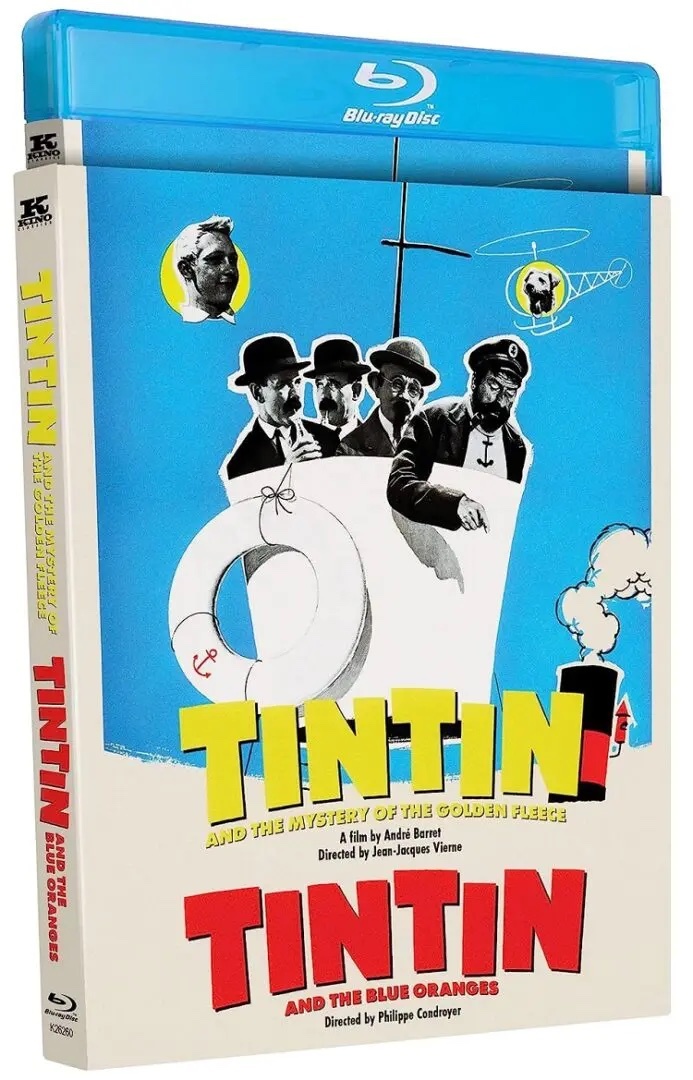
I remembered to write my Pick of the Week column this week for Cinema Sentries and then I totally forgot to link to it here. So, I’m a few days late, but I think you will forgive me.
Since the Fourth of July fell on Tuesday this year (which is when most Blu-rays are released) the powers that be decided that nobody will be buying movies this week and so the release schedule is pretty wimpy. But there is a Tintin double feature out and that’s what I picked. You can read all about it here.
The Driver (1978)
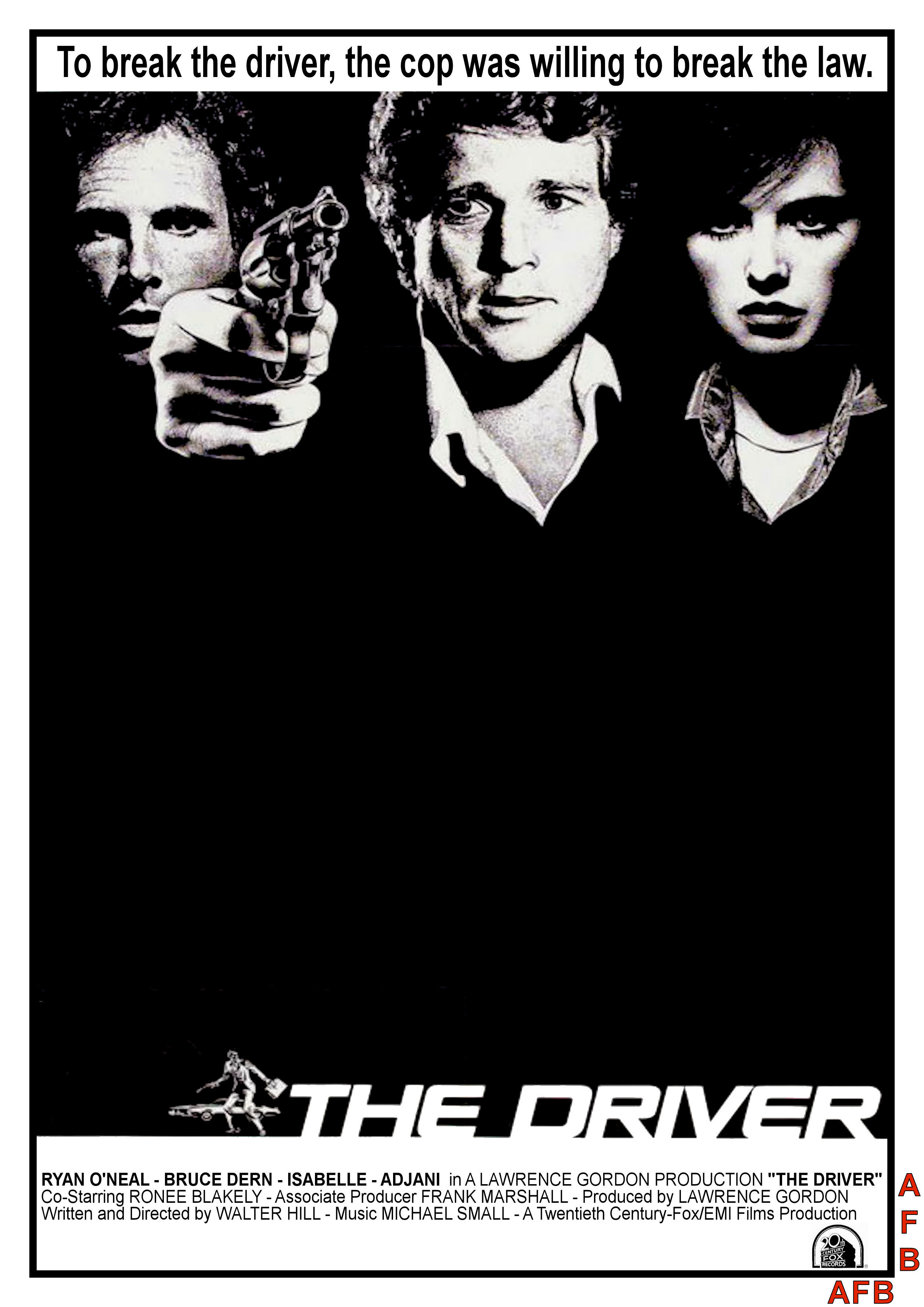
The Driver is a professional. He’s the best at what he does. He won’t take a job if he doesn’t like it. He’ll never work with you again if you don’t follow his rules. He has no attachments. He gets the job done. He’s paid well for his services. He takes a job he shouldn’t have. He gets entangled with a woman. Things get complicated
If that plot synopsis sounds familiar that’s because The Driver (1978) was a clear inspiration for both Drive (2011) and Baby Driver (2017). I’d argue both of those later movies are better than The Driver, but certainly, it has its merits. The car chase sequences alone are worth the price of admission. Director Walter Hill uses every ounce of his relatively small budget in several automobile-heavy action sequences. They aren’t as stylish as the ones in Drive or Baby Driver but they do pack a punch.
Ryan O’Neal plays The Driver (none of the characters are given names in the film, they are named by their functions in the credits) as a man of few words, who keeps everything close to his chest. He won’t take a job if he feels it is too risky, or if he knows guns will be involved, yet he is not afraid to deal out violence when he feels it is needed. He’s being chased by The Detective (a snarling Bruce Dern), who sets up a trap for The Driver in which he forces three other cons (who are named Glasses, Teeth, and Fingers) to talk The Driver into doing a job with them. The idea is that The Detective will know all the ins and outs of the job and will be able to catch The Driver red-handed. The Driver recognizes it is a setup and refuses to have anything to do with it, but then basically The Detective dares him to do it and like Marty McFly in Back to the Future, our hero can’t back down when someone calls him a chicken.
There is a love interest, of sorts. She’s called The Player (Isabelle Adjani) and she was a witness to the first job we see in the film, but she refuses to name The Driver to The Detective. He paid her off and they do a little flirting, but not much more. There’s also The Connection (Ronee Blakley) who works as The Driver’s handler. But all of this is just a way for the film to give us another action sequence.
I don’t want to sell those scenes short. They really are terrifically staged. I really dug a scene in the middle where The Driver is showing off. He runs the car all around a big underground garage, running it in and out of cars and those big concrete pillars. Then he very strategically smashes into things knocking bits and pieces of the car off. There is something very down and dirty to the way Walter Hill films those scenes. Drive is sleek and noirish, and Baby Driver is set perfectly to pop songs, but The Driver shoots them like fight scenes – rugged and brutal.
Definitely a film worth seeking out.
 themidnightcafe.org