Concert Review – Railroad Earth – Bloomington, IN (03/10/06)

Originally posted on March 12, 2006.

It has been over a year since my last real concert, something unheard of in Brewsterland. Sure, over the years my ability to go out and hear live music has decreased, but I’ve always managed to see a show at least once every few months.

I did go to the Strasbourg Music Festival last spring, but it was more about the madness and chaos of walking the densely populated city streets than really sitting and listening to one band play. Ah, a mad scene that was with local bands of all flavors playing on every corner, alleyway, and sidewalk. You couldn’t hear one band for the three others playing down the road.

But other than that it was the summer of 2004 since I caught anything live or musical. Wow, just reading that makes me sad.

There is nothing like live music. With all the technical wizardry and beeps and gadgets they come up with in the studio, as amazing as some of it is, it just can’t beat the magic that comes from hearing a band playing live for all they’ve got. Standing in a crowd of people moving in one groove as the sounds pump right through your insides is nothing short of awesome.

I once saw Phil Lesh one hot Thursday afternoon in Oklahoma City. It was well over a hundred degrees and I was standing in a patch of ground that had been baked into dust. I came home drenched in sweat, sunburned beyond recognition, and caked in dirt and dust. It was one of the best times of my life.

So, it was with great anticipation that I waited for Friday night to come and my chance to see Railroad Earth at the Bluebird in Bloomington, IN.

My wife laying low with a migraine I invited my friend and coworker to tag along.

Arriving I was a little trepidacious, having never been a part of the press corps, or guest list. I approached the ticket counter (actually a burly young man sitting in the first booth for the bar.)

“Do you have tickets?” he asked.

“Um, I should be on the guest list. It’s Mat Brewster.”

Scanning the two pages of the guest list he asked me again what my name was. Peering at the same list I could see a Mat Hutchins listed with Blogcritics next to it.

“Yeah, that’s me, I’m from Blogcritics. “

Both relieved that I got in and a little annoyed that they got my name completely wrong we went inside.

The Bluebird is an old country bar that saw its best days around a couple of decades ago. It is old and worn and best seen through a smoky haze, something you don’t get anymore since the city has outlawed smoking pretty much everywhere.

The stage has grown since the last time I visited. A couple of years ago I saw Sam Bush and his band could barely fit on the tiny platform. I’ve always loved the stage, though. It stands about waist high and is set up so that you can get within inches of the band.

I first came to know Railroad Earth, oddly enough, through a t-shirt of syndicated radio host, David Gans. After hearing him rave about them again on the Grateful Dead Hour I downloaded one of their shows on archive.org and found there really was something to rave about. Those boys can cook!

They are a hard band to describe. They play bluegrass instruments (banjo, fiddle, dobro, mandolin, etc.) but have a drummer and everything is plugged in and amped up. You can hear influences from bluegrass to jazz to straight-up rock and roll.

In an age where musicians get more hype for their clothes than their songs, it is refreshing to hear a band really getting off on music, without even a glance at the bottom line.

Even with six musicians on the stage, I could clearly hear each instrument. The band came to jam, and the improvisations often extended a song out for more than 15 minutes. Yet unlike so many jam bands their jams never turned into noodle fests. They were unique and interesting extensions and transitions of the songs, while still maintaining the integrity of the melody.

At the beginning of the second set, another fellow coworker showed up with some buddies, drunk off their arses, all three. Suddenly, I was in the middle of what I absolutely despise at concerts – a group who would rather talk, and make loud, dumb comments than listen. I hate those people, and now I was one of them.

What could I do, what can you do when you’ve got three drunks shouting at you that the place smells like a toilet and that there are no cute girls? Thankfully, they left after a couple of songs.

The crowd was fairly small, with the venue about half full. South-Central Indiana is a bit far off from their normal fan base. But those who were there were full of smiles and white boy dance grooves. It was an odd mix of frat boys, middle-aged couples, and neo-hippies.

God bless hippies.

Several beautiful young hippy ladies were dolled out in flowing, blowing long skirts. They danced, whirled, and twirled on the second-tier floor oblivious to everything and everyone but the songs.

My drunken friends returned and I had to swear that I was on my second beer (though I had only taken a few sips of my first) to keep my coworker quiet and calm. At this point, they were so zonked they pretended to dig the band so they could hit on the girls.

Ignoring them I continued to let the groove move me to other worlds. The psychedelic outings of “Warhead Boogie” and “Like a Buddha” left me more than emotionally erect, and fully satisfied. On these songs the band was so tight, so connected they moved as if they were a cohesive whole of one organism rather than six distinct individuals.

We headed home at 1:30. The band played a full 2 and half hours of joyful, mind-blowing music. I made it home exhausted, but completely satisfied.

Random Shuffle – March 7, 2006

the rolling stones now

The Rolling Stones
Everybody Needs Somebody to Love

From the album The Rolling Stones, Now!

I recently got my hands on a number of earlier classic Stones albums. In fact, I’ve only recently gotten into the Stones again. I’m continually amazed at their vast amount of really great music. It’s easy to listen to their “hits” collection played over and over on classic rock radio and overlook what amounts to one of the greatest masses of tunes in rock-n-roll.

This song is from their 1965 album of covers, which makes it their third album released in the US. You can still hear the early 1950s rock-n-roll influence and even some doo-wop slipping in. It’s a catchy little number, but something of a novelty throw-away in the pantheon of Rolling Stones music.

bob dylan biograph

Bob Dylan
I Don’t Believe You (She Acts Like We Never Have Met)

From the album Biograph

When I was first becoming a Dylan fan my mother bought me this boxed set. I didn’t know what to make of it at the time. It was filled with the hits and the obscure and live versions of songs like this.  This isn’t a favorite song for me, but as with many Dylan songs, even when they’re not great, their pretty stinking good.

Ryan Adams
Elizabeth You Were Born To Play That Part

From a live recording in Montreal, (05/01/05)

This comes from a five-disk compilation of live shows from 2005 called Bedhead which I assume comes from Ryan Adams generally disheveled coif. This is a quiet, beautiful piano ballad from the third of Ryan’s releases in 2005, 29. Like many of Ryan’s ballads this song is so quiet, it’s hard to actually hear what’s going on. But if you can manage to remove all distractions and really get into it, there is a song of heartbreaking proportions.

dicks picks 5

Grateful Dead – Drums
From the album Dick’s Picks, Vol.  5 (12-26-79)

The Dead always dug their drummers. So much so that they hired two of them. By 1979 Mickey Hart and Bill Kreutzmann had created a monolithic beast of every sort of drum and percussion instrument. At 4 minutes 22 seconds this is a relatively short (and tame) version of “Drums” but still manages to create an interesting snake-chasing menagerie of rhythm.

Random Shuffle – February 25, 2006

Editor’s Note: For a long while I wrote these posts where I’d put my music collection on shuffle and then talk about the songs that came up. As you will see, in the beginning, I just wrote a couple of sentences about each song, but over time I got to where I’d tell long stories.  I thought it would be fun to start working my way through those posts and making them visible again.  I don’t know if anyone will like the, but at least it is a break from movie reviews 🙂

Road to Joy – Bright Eyes
Thanks to the Duke de Mondo, I have become quite a fan of Bright Eyes. This is one of the better songs off the mostly excellent I’m Wide Awake, It’s Morning album.

You Never Give Me Your Money – The Beatles
One of my favorite songs, from my favorite Side B of any album anywhere. From the Angelically sad beginning to the schoolboy chanting at the end, I absolutely love this tune.

Desolation Row – Bob Dylan
From the underrated Unplugged album. Not my favorite Dylan tune by a long shot, but that still puts it far above half the songs ever written.

You’re the One – Paul Simon
One of about three decent songs on his last album. A song that will forever remind me of my wife, for it came about during the beginning of our heavy dating stage, and she really dug it.

I Thought You Were My Boyfriend – The Magnetic Fields
A peculiarly great song from a peculiarly great little band.

Graceland – Paul Simon
Out of the 1000+ songs sitting in my WinAmp right now, what are the odds I would get two Paul Simon tunes? Or how about two songs from the MTV show Unplugged?

Lengths – The Black Keys
A song just sent to me by my sister’s husband, Brian. It’s got a nice laid-back blues kind of feel to it, but I haven’t heard it enough to decide how I really feel about it.

Greensboro Woman – Townes Van Zandt
Honestly, if you don’t know Townes, then you really have no choice but to seek him out. Truly one of the great American songwriters of my time, or anyone elses. A great, lovely song, full of sadness and heartache.

You’re Gonna Make Me Lonesome – Bob Dylan
Really, what are the odds? Maybe it’s my shuffle mode. I do notice WinAmp tends to play a lot of the same songs while leaving out some other choices.

Well, there it is. I’m not sure what to make of it, honestly. Maybe I’ll make this a regular feature. Maybe I’ll never visit this again.

Railroad Earth – Elko

"railroad

To make a great live album takes several things. First, you’ve got to have a pristine sound. I need to hear all the instruments playing clearly, and the vocals need to be right up front. I wanna hear the crowd cheering, but only sometimes. Give me audience noise between songs and if there is a particularly brilliant bit of playing, otherwise keep the crowd in the far, far background. I really have no need to hear that guy screaming his request for “Free Bird”.

Next, I want a great setlist. Nothing sucks the life out of a concert like bad song choices. For me, this means not playing every song from the newly released studio album. If I haven’t had time to absorb the new songs, what can I sing along to? Man, I dig that you’ve gotta promote the new stuff, just mix it in with the old. A perfect set list includes some new songs, the greatest hits, some obscure b-sides, and a few choice covers.

Yeah, I dig covers. Nothing perks up a concert like hearing a cool cover of something you just weren’t expecting to hear. You get bonus points if the cover song is something totally off the wall or from a different genre even. Like Sam Bush covering Bob Marley, or bluegrass band Hayseed Dixie doing “Hell’s Bells”.

Bonus points go to reworking the melody of one of your old songs. Who can forget the laid-back version of “Layla” on Eric Clapton’s Unplugged?

Of course, all of these things mean bupkis if the music sucks. An absolute must for any live album is that the musicians have to be playing at the top of their game. I’m an old-school lover of improvisation. I dig the crap out of long, interesting jams. Nothing is more boring than an uninspired noodle fest, but a good band can turn a song on its head and create something inspiring out of the air. And if you can’t jam, then crank up the energy and give me something raw. If the song sounds exactly like the studio cut, then why am I paying for a concert ticket, when I can just stay home?

To release a live album takes a certain amount of balls. It’s expecting the audience to pay more money for songs they already have based on your ability to play in the moment. On the road, there is no studio enhancement, no overdubs or producers tweaking every note, every sound. It’s just the band and their songs.

To release a live album after only three studio albums and 5 years together as a band takes a lot more than balls. Yet that’s just what Railroad Earth has done with their latest album, the double live disk Elko.

Railroad Earth is something of a cross between the Grateful Dead and Sam Bush. It’s bluegrass through a jam band funnel. They are old-school songwriters who think nothing about jamming a song out for 15 minutes.

On Elko, they meet all of my criteria for a live album except playing covers. Every song is an original Railroad Earth tune, and it doesn’t hurt the album one bit. Honestly, I’m not overly familiar with any of their studio work, but there is enough improvisation and jamming here to make each song unique and certainly different than anything you’re going to find on a studio album.

Together the sextet plays over twelve instruments including the banjo, dobro, mandolin, pennywhistle, and flute (and that’s just Andy Goessling!) which come together to form a whirling, swirling soundscape. It’s music to get lost in and get up on your feet and boogie to as well.

Out of the twelve songs on this album five of them clock in at over 10 minutes. Improvisation is the name of the game. Mostly the boys carry it off. In songs like “Seven Story Mountain” and “Colorado,” the music stays fresh and remarkable throughout its long ride. Occasionally, the jamming gets a little repetitive, yet just as I’m about to get bored they bring it back get my feet tapping, and mouth smiling.

If I have a real complaint here, it’s that some of the songwriting isn’t all that strong. For sure many of the songs evoke a lovely rural image and a real joy for life. Songs like “Railroad Earth” and “The Old Man and the Land” create lovely images and evoke a sense of a warm sunny day. Yet a few of the tunes, like “Like a Buddha” or “Bird in a House” neither catch me in their lyrics or their melody. A song like “Warhead Boogie” is even quite silly with lyrics like:

They’re building lots of warheads/building them all around
They’re loading them up on pads/loading them up on subs
Flying around on airplanes/driving around on trucks
Driving around on trucks

Though, it must be said that the warhead certainly does boogie. With one of the strongest jams on the album, the music there, more than makes up for its flighty lyrics.

And in their defense, even the Beatles wrote a few less-than-stellar tunes. Railroad Earth is proving they can write some strong songs and be able to put on a live show worthy of a two-disk album. As a lover of live music, Elko is a welcome addition to my collection.

Hot Topic: FM is Stereo

Due to time limitations and a general lack of anything to say of late, I did not participate in the most recent edition of the Hot Topic. And as is the way with these things, this week’s edition became the Editor’s Choice for the week.

From the occasionally troubled minds of this disparate flock of bloggers, the question of whether technological advances weaken our senses is tossed about, and I revisit the lost art of installing car stereos.

Plus, The Duke discusses the medical retraction of jewels, Eric admits he knows not what he does, and Mark ponders the value of internet-savvy refrigerators.

From: Bennett Dawson
To: The Hot Topic Team
Re: FM Is Stereo

My lovely wife and I were talking about those “Top-Ten Hit CDs” from the sixties and seventies. You know, the ones that get hustled on those 30-minute late-night infomercials. Me saying that they’re really cool because “…those are all the songs that buzzed out of my candle wax-covered AM clock radio when I was a teenybopper…”

Back in 1970, dig?

My wife looked puzzled, trying to absorb a stone-age concept. AM clock radio?

Before I could explain, a sideways brain connection fizzled through my synapses, and I started wondering about “When did FM start broadcasting?” and “Do I actually remember that historic event?”

Yes, folks, it’s sad but true. In 1970, FM was just like HDTV – meaning I didn’t have it.

This led to a brief discussion about the difference between AM and FM, and to my surprise, my wife couldn’t tell me the profound difference between the two. Now let me say that my wife is brilliant in her field of expertise, and knows many things that I haven’t a clue about. But she had a slightly different upbringing (she’s a girl), and was eight years further down the timeline than me. That being the case, FM radio was all she ever listened to.

“All the music was on FM, and AM was all talk radio and traffic and weather.”

She knew that FM stations “sounded better” in her car, but that’s about it. The “stereo” in the house sounded good because it had two speakers and besides, we paid more money for it than the clock radio, so it had to sound better.

She never truly realized that with stereo, each speaker has slightly different music coming out of it, two distinct tracks. I have no idea what she thought about the sound system in her relatively new Jetta, with speakers every few inches in the doors and body panels. ‘More speakers = better sound’ is what I’d suppose. Understanding that AM is one track and FM is two tracks was not part of her grip on aural reality.

She protests. “That’s not true!” she says. “My CD Walkman has different sounds for each ear, I just never wondered why or how.”

Lemme tell ya, my generation was intensely aware of “stereo” and knew exactly what it was. Dammit, we wanted stereo! Our first used cars (junker cars from the fifties and sixties) had an AM push-button radio with one speaker in the dashboard. NOT cool.

So we installed a new FM radio under the dash (possibly a cassette or eight-track tape player… woo hoo!) and two speakers in the rear window deck. We cut holes and ran wires and hooked up fuses, and then we cruised down the road grooving to ‘stereophonic sound’.

Nowadays, everything is pre-wired with stereo. Teenagers don’t know how to run speaker wires, what channels are, or how a noise suppressor gets rid of the clicking sound coming from the ignition system. Hell, let’s be real – nowadays, kids don’t even know what an ignition system is. Technology has moved on and the inner workings of a car are as mysterious as the inner workings of a nuclear reactor. If your car breaks down, you use your cell phone to call a tow truck!

What other basic knowledge of ‘how things work’ has dropped from our pop culture? The home fuse box? Batteries? Pilot lights?

Have we morphed into an icon-driven world, with no understanding of what lies beneath the shiny plastic logo-embossed surface? Is it really possible to take stereo so much for granted that folks have no understanding of what they’re hearing? Are we being blinded by science?

Or is this just yer standard progression of technology – unfortunately revealing that I’m one old, and somewhat obsolete fella?

By the way, while I was writing this piece, my 21-year-old stepdaughter called, and she has no idea what the word “stereo” means. “A synonym for sound system” was her best guess.

From: Duke De Mondo
To: The Hot Topic Team
Re: FM Is Stereo

This is all the most intriguing in the world. Maybe we ARE those icon-driven hordes ain’t got a clue how the torch works but sod it, it’s sleek an’ white an’ the ladies wanna touch me when I got it in the paw.

I’m a software sort, yes, with nary a clue about hardware. I’m gonna go ahead an’ reveal the age, bein’ 23, an’ i can assure you i ain’t got the faintest a faints regarding how you might wire a plug. They TRIED to teach me, but imma go play a tune or two, if’n it’s all the same. Ain’t got a clue how the amp works, or the guitar, but I don’t especially worry.

Anecdotal aside – way back when I remember my ex-fiancee tellin’ me that her then-ex-boyfriend used to come ’round to help her dad wire electrical stuff. I think most likely my nuts disappeared somewheres midst the liver (still in there, too, fish the fuckers out wi’ a coat-hanger is all a man can do). Felt like I was no kinda MALE if’n I couldn’t fix the telly.

Maybe it’s cause a buncha youngster-types, far more than used to, are headin’ in the direction a university an’ theoretical based stuff, as opposed to learnin’ trades an so on, which is where this kinda knowledge is handed down, I suppose. Maybe that’s not the case at all, maybe I’m just justifyin’ my bum-fluff an no-nuts.

Regarding stereo, it all made sense to me when I played Sgt. Pepper’s in the car stereo back when I was 13 or so, and realized I was only hearin’ half the record. Until that point I probably assumed somethin’ similar, that stereo just meant Better Sound. I suppose there comes a point when a society can forget about stuff like Mono and Analogue. The differences ‘tween these things probably only have any worth to the folks who live through the change-over.

From: Eric Berlin
To: The Hot Topic Team
Re: FM Is Stereo

I think we’ve entered the age of the super-user, where we run every aspect of our lives — from brushing our teeth with an electric toothbrush to laying down with an electric blanket of an evening, and all the server-happy Internet play and work-related electronic tomfoolery in between — via technology of which we haven’t the foggiest notion.

Take the words I’m typing right now that cause letters to magically appear on my computer screen. I have a notion that when I type a “v”, a “v” appears, or that when I want to say “ultra tubular with consecrated cream cheese linings for upshot adornment of life-melted dude-scape” I can get that message across and feel quite certain I’ve made an ass of myself in the process.

However, I have no idea how the inner workings go. I imagine there are ones and zeros and electronic processes involved, but I don’t even have a fundamental understanding of the mechanical function behind an activity I sometimes spend 12-15 hours a day hacking away at.

And don’t even get me started with the mouse!

Sometimes I think about the Roman Empire and the descent into the Dark Ages. About how art and technology devolved from one generation to another because everyone basically forgot how it was done before. Obviously, we’re not in that phase. We’re in a phase of astounding innovation and bedazzling art and sights to behold that would blow the mind (a la Scanners) of an 8th-century hombre right straight.

But what if we lost those folks who know how stuff works? What if they end up on the island in Lost (pushing that damned button every 108 minutes) or get herded to the Manhattan of Escape From…. fame?

It’s an interdependent world with all the good and bad trimmings of it, I suppose is the upshot.

That, and it’s utter gold to know a good mechanic who won’t rip you off.

From: Mark Saleski
To: The Hot Topic Team
Re: FM Is Stereo

Ah yeah, so here we have another discussion where technology is concerned. More specifically the effects of “the march”.

It’s interesting that it’s mostly taken for granted that advances in technology are a “good thing”. For the most part, I suppose that they are. But then I hear about events like the recent Consumer Electronics Show where concepts such as “digital lifestyle” are touted. Sure enough, we get all of these home devices interconnected and talking to each other. But do we really want to?

This reminds me of back when I used to watch The Jetsons, where dinner consisted of a food pill. Gross. Perhaps even sillier than manufactured food is the very real Internet-enabled refrigerator. Oh yes, it’ll keep an inventory for you. It’ll notify you when it’s time to buy more eggs.

You’ve got to be kidding me.

Some of this is an extension of what often happens during software development. Engineers, being the tinkering sort, can’t resist adding features and/or extra layers to things. The result? Bloatware. Sometimes useful, sometimes not. Ever notice how things like “digital lifestyle” are almost always promoted by men? I don’t think this is a coincidence.

Don’t take any of this to mean that I have the fear that these new technologies are going to complicate my life. They won’t, mostly because they’re not comin’ in my front door. No, I don’t need a digital book to take on vacation because the books that I do own work just fine. I can figure out when to refill my refrigerator using the analog method: the notepad attached to the freezer door. Music is still played through tubes and wire because these nice digital files sound like crap.

So what do we lose when nobody knows how any of this newfangled stuff works? I’m not sure. In some cases, particularly when talking about media (books, music, etc.), it puts the consumer at one more remove from the artist. I don’t think that vinyl records are the ‘perfect’ medium, but the expansive liner notes allowed me as a fan to get to know the person at the other end. Sure, this can be done in the digital realm, but is it?

Ah, maybe Bennett’s right. Maybe I’m just old and obsolete.

P.S. In the middle of typing this, the guy in the cube next to me was ‘attacked’ by his Instant Messenger — he floated his mouse over it and it started playing a ringtone-y version of “My Humps”. Now that is an advance.

These bloggers have had their say, now it’s your chance to chip in!

Do you remember an “old way” of getting things done that seemed superior to the “newfangled” way? Do your friends sneer at your approach to fixin’ stuff, amazed that you’ve not a clue? Or are you one of those folks totally comfortable letting “specialists” deal with the inner workings of 90% of your world?

Tell us the truth, are you completely happy being a “user”, with no idea how these damned things actually work?

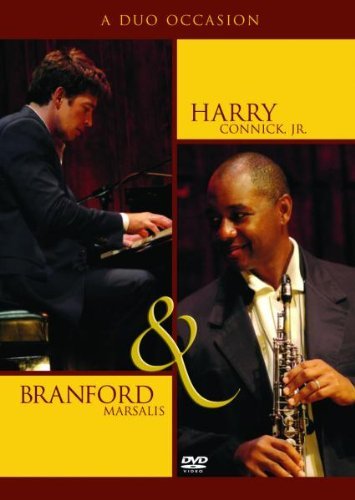
Harry Connick Jr and Branford Marsalis: A Duo Occasion (2005)

harry and branford a duo occasion dvd art

In support of their new album Occasion: Connick on Piano, Vol. 2 Harry Connick, Jr., and Branford Marsalis played a gig at the Ottawa Jazz Festival. Marsalis Music, in conjunction with Rounder Records, has just released a pristine DVD release of that concert.

Both musicians fall under what I’ll call the popular jazz genre. Connick is an accomplished jazz pianist. He grew up in New Orleans studying under such greats as James Booker and Ellis Marsalis. By age 18 he had moved to New York and headed his own jazz trio for Columbia Records. Yet unlike many jazz musicians, he isn’t afraid to delve into sheer pop territory like his Christmas records or the When Harry Met Sally soundtrack.

Branford Marsalis comes from a long line of jazz musicians. The Marsalis name is synonymous with great musical skill. Branford has lived up to his family name and is a well-accomplished, Grammy award-winning musician. Yet he too has not shied away from the popular spectrum. For several years he was the bandleader for The Tonight Show and he has performed with such popular rock bands as the Grateful Dead.

For this performance, the duo mostly leaves the popular music behind, sticking to a more strictly jazz format. However, Connick starts things off with his interpretation of the pop standard, “Chattanooga Choo Choo.” A rather stilted, tonal version, I’m afraid.

I honestly expected to be a little disappointed with this performance. As a general rule, I don’t really care for duos or even trios. I like my music robust and full of interplay. I want to hear a multitude of instruments playing together to form a cohesive sound. Before I had even put this DVD into play I was already writing a review in my head stating that it needed some bass, more keyboards, and perhaps a cello or two.

After about the second song I had to rewrite my internal review for the two performers were filling out the music just fine on their own. The interplay was smooth, interesting, and fun. Nowhere did I miss the sounds of other instruments, just the saxophone and piano were ample enough.

Harry Connick, Jr is the leader here. Not only are the majority of songs his compositions but he is the only one miked for between-song banter. He is a natural talker and showman whereas Marsalis tends to hide behind his instrument, letting his saxophone do the talking for him.

The music here is excellent. Both musicians are obviously having a great time performing together and have a long history of collaboration. They skillfully weave their instruments together, never trying to outdo or show each other up. Musically, it is easy enough to be background music for a dinner party and yet complicated enough to stand up to repeat listens with the lights turned off and the headsets on.

The concert was shot by award-winning director Pierre Lamoureux in a high-definition video. It looks and sounds spectacular. The editing is smooth and exciting. Or as exciting as a jazz concert DVD can be.

Duo Occasion is a remarkable performance for fans of Harry Connick Jr., Branford Marsalis, jazz, and popular music alike.

Confessions of An Easy Listener

I have been listening to a lot of Internet radio of late. Time and time again, much to my dismay, I have found that the station I tune into is labeled as “Adult Alternative” or as I like to call it “Easy Listening for Generation X.”

How did this happen? I used to be hip, I used to rock. My CD collection was once filled with ripping guitars, pounding bass, and plenty of punk attitude. I should have known it was over when I began humming along to Bruce Hornsby while at the bank. Bruce Hornsby? I love Bruce Hornsby, he freaking rocks. Um, no, they play him at banks, anyone played in a bank most assuredly doesn’t rock.

But really, how did this happen? How could my musical tastes go from The Edge to the old man? As usual, the answer lies in Willie Nelson.

I grew up with hair metal: Def Leppard, Whitesnake, and Poison. Loud guitars, lyrics about sexy chicks, and power ballads. I remember playing hide and seek with my cousins while taunting them with the chorus to Twisted Sister’s “We’re Not Gonna Take It.” Many an afternoon was spent pondering the deeper meaning behind Motley Crue’s “Girls, Girls, Girls” (ok, so maybe the time was spent ogling the hot girls in the video, but still.)

I knew the Sex Pistols, Operation Ivy, and Fugazi. As a teenager, I laid my long hair on the floor and let the Smashing Pumpkins panoply of sounds whirl around my head.

In college, I met, and subsequently fell in love with a girl by wearing a Dinosaur Jr. t-shirt. She was one of those Punker Than Thou chicks, always out to prove that her music was hipper, that she was cooler, and had more edge in her fingernail than I did in my entire body.

Without fail, every time, she beat me. Sure I knew who Jello Biafra was, and watched Gas, Food Lodging just to see J Mascis. I can name 5 Ramones albums and drove all night to see Sebadoh play at Tipatinas in New Orleans. But she walked circles around me in terms of the bands she had seen, the records she owned, and in general punk cred. I would always lose.

It didn’t help much that I also had a soft spot for Hootie and the Blowfish.

There was a breakup. A long, hard break up.

Most people would have retreated into the loud angst of punk and metal, letting their middle finger of attitude kick out the hurt and loss.

Instead, I found Willie Nelson’s subtle, quiet, and aching album Stardust.

For months, every night after the breakup, I retreated to a friend’s place who was also experiencing The Heartbreak.

We would sit up well past the After Hours burning candles, lighting incense, and letting Willie sing our blues away. Often we would talk and curse and holler about the stupid women that left us. More often than not, we would sit and think and listen.

Stardust is an album of covers of Willie Nelson’s favorite songs. Standards and classics like “Sunny Side of the Street” and “Moonlight in Vermont.” Songs that have been sung a million times, by a million voices; yet Willie sings them like they have never been sung before, as if they were the greatest songs ever sung. And we believe him.

I think I turned away from Punk music because it reminded me of the girl. The anger and the angst didn’t bring me release, only more pain. In something softer, in Willie Nelson, I found the emotional release I needed.

My CD collection is embarrassingly light on the rock and the roll. Gone are the Dead Kennedys, Suicidal Tendencies, and Alice in Chains. Now the shelves are filled with Townes Van Zandt, Lyle Lovett, and Lucinda Williams.

Periodically, when those pissing matches on who is the most punked punk around get going, I get a little nostalgic for my youth. I break out my old Sonic Youth records, crank up the stereo, and feel way too inadequate to jump into the argument.

Adult Alternative listeners just don’t have those types of conversations. No one boasts of seeing Bill Monroe before he got too commercial. Blood is never shed at a folk festival. Hipsters aren’t saving their sweaty t-shirts they wore when they saw Robert Earl Keen at the Tennessee theatre back in ’88.

There just isn’t the attitude with a folk audience. We bring our families, dance with our kids and talk about the weather between sets.

Whenever I start looking in the mirror wondering how I’d look with a nose ring, or a snarl begins to creep upon my lips I turn on Gillian Welch singing “Snowin’ on Raton” or Lucinda William’s “Jackson,” then settle back and tune into the Adult Alternative station.

I’ll never be punk again.

The Doc Watson Family – Tradition

doc watson family tradition

Music is all around us. Pouring out from the radio and the concert halls. Dripping from the internet stream and the podcast. Booming from the crowded discothèque and blues bars. Music is everywhere.

Some of the best music comes from places few have ever seen. In the empty pool halls, the backyards, the living rooms, and thousands of garages there is beautiful, passionate, amazing music being played. Right now, from every corner of the globe, someone is playing a tune, singing a song.

Before there was DVD audio, CDs, 8 tracks, and even vinyl records, there was a caveman sitting around a fire howling out a song about his battles to his cavewoman. Through time we moved out of the cave into cozier dwellings, but we’re still sitting around a fire, singing about our lives, loves, and losses.

Years ago I had the experience of sitting around in a living room with a bunch of people and singing and playing. And it was like a spiritual experience. It was wonderful. I decided then that was what I wanted to do with my life was to play music, do music. In the making of records I think over the years we’ve all gotten a little too technical, a little too hung up on getting things perfect. And we’ve lost the living room. The living room has gone out of the music. –Emmylou Harris

In 1977 Doc Watson released Tradition, a record designed to put the living room back into the studio. It is not so much of a studio record, as a family sing-a-long – quite literally since Watson uses his real family as a band. Doc is playing Grandpa here, picking the guitar and singing songs older than the entire family put together. Dolly Greer is the grandmother singing silly children’s songs on the porch and lonesome fiddle tunes in the kitchen. The rest of the family pitches in on guitar and banjo singing old-timey tunes while we gather ’round to listen.

The record is like an old photograph found buried in the back of the closet in your great-grandmother’s closet. It’s not the prettiest picture ever taken, nor something to take out and hang on your living room wall. It’s a little tattered and worn, faded by the sun. Yet there is something familiar, comforting, and beautiful about it.

Simple tunes like “Reuben’s Train”, and “Biscuits” will surely put a smile on your face, and if they don’t make you get up and dance, you’ll at least be tapping your foot along to the tune.

There are lots of little half-songs and snippets of tunes. Dolly Greer sings a medley of four children’s songs that lasts less than three minutes in total. Her country accent is so heavy that you can hardly understand what it is exactly, that she’s singing, but she does it with such a happy zeal you can hardly fault her for any of it. There are other half-played fiddle tunes and songs that seem so spur of the moment and forgotten halfway through that the album really does feel like a family sitting on the back porch watching a lazy summer day float away.

It is definitely not an album for everyone. Fans of tightly wound, well-crafted pop songs will surely find disappointment in the casual feel of the songs. I suspect even bluegrass and country music fans may find themselves looking back at the record bin through part of the 45 minutes of music here. But for anyone interested in traditional music, for a patient listener willing to wait for something special, there is a wealth of beautiful music on this disk.

Bela Fleck – Crossing the Tracks

bela fleck crossing the tracks

It is always interesting to revisit the roots of an innovative artist who has been around for a long time. Bela Fleck has been playing professional banjo since the 1970s. He played with the new-wave bluegrass band New Grass Revival to start out before creating blu-bop (an impressive mix of bluegrass, jazz, funk, and rock) with his own band, the Flecktones. Rounder Records just re-released his first solo album, Crossing the Tracks, originally released in 1979.

It is mostly a straightforward bluegrass album with some acoustic swing tossed in for good measure. Though you can already see the bluegrass innovator wanting to branch out. What other bluegrass musician would dare to cover Chick Corea’s masterful “Spain”? And that with a lead Dobro part!

For his first solo outing, Bela managed to find some of the premier bluegrass players around to join him. The band includes Mark Schatz, Bob Applebaum, and Russ Barenbert. Everyone’s favorite mandolinist, Sam Bush, joins the fun on fiddle, and Jerry Douglass plays Dobro on a few tracks.

All but two tracks (the spry ode to a broken heart “How Can You Face Me Now”, and the mournful “Aint Gonna Work Tomorrow”) are instrumentals. Often Bela lays back, allowing the other musicians to step up and shine. Though, in the title, it is a solo album, he never puts his own picking ahead of the song.

Crossing the Tracks is a fascinating glimpse into the beginnings of a masterful musician’s journey into innovation. For bluegrass lovers, Bela Fleck fans, and even jazz junkies looking for new takes on a favorite tune this should be of interest.

Jerry Garcia Band – Pure Jerry: Theatre 1839

pure jerry Jerry Garcia was a guitar-playing mofo-son-of-a-ho. For thirty years he played 100+ shows with the Grateful Dead annually. When he wasn’t playing for his day job, he was gigging in clubs with an ever-changing assortment of characters in the Jerry Garcia Band. Or he’d hit up Merle Saunders for a jam session and stop by David Grisman’s home to fiddle around. They tell tales of Garcia jamming on a few tunes for the Dead’s opening band, then sitting in with the New Riders of the Purple Sage on steel guitar; and then playing some five hours with the Grateful Dead. The man loved to play music.

In a move akin to the Grateful Dead’s release every note played policy, the Jerry Garcia estate has quickly been releasing a series of Jerry Garcia Band shows. The first in the series titled Pure Jerry is three disks from July 29 and 30 1977. Like a lot of the Dead sets from this year, these shows smoke!

The Garcia Band usually contained very little music that the Dead played. This was Garcia’s chance to play music that didn’t necessarily fit within the scope of the Grateful Dead. These disks are no different. There are numbers from Motown, Jamaica, God, and several tracks from Bob Dylan.

Garcia loved a soulful ballad. And though no one is gonna put Garcia’s voice on any all-time list, he has a way of projecting emotion that reaches down, far into his very guts.

For my money, it’s the upbeat numbers that make this set worth the price of the ticket, er CD. The opening track, “Mystery Train” is a barn burner showcasing both Garcia’s talent for ruminating on a theme, and Keith Godchaux’s ability as a piano man. The two take some nice leads and dance around each other in a glorious ballroom mania.

As with the Grateful Dead, the Jerry Garcia Band could jam a song out into beautiful, mysterious places. Yet this improvisational, take-it-as-it-comes approach to music could also lead to dead-ends, barren desserts, and meandering trails leading to nowhere. More often than not, Garcia was able to lead his comrades into rock-n-roll nirvana, but sometimes, like here during “Russian Lullabye”, the song loses control of itself. After a lovely, melody-shaking groove the song breaks down into a pointless, boring bass solo.

Nearly every song includes something of a jam, and mostly the band is able to pull it off. Whether it is the soft, rock-a-bye lilt of “The Night They Drove Old Dixie Down”, or the get off your keister and dance bebop twist to Dylan’s “Tangled Up In Blue”, Garcia and Co. are ready to take you out there, to find new spaces for music.

Though there are a few misses, and some all too long rambles (the 27 minutes of “Don’t Let Go” is about 15 minutes too much) these three disks are filled with so many moments of brilliance, it is a definite must-have for any Rock lover. It is also a brilliant place to find one of the all-time guitarists genius outside of the Grateful Dead.