Awesome ’80s in April: The Rambo Trilogy

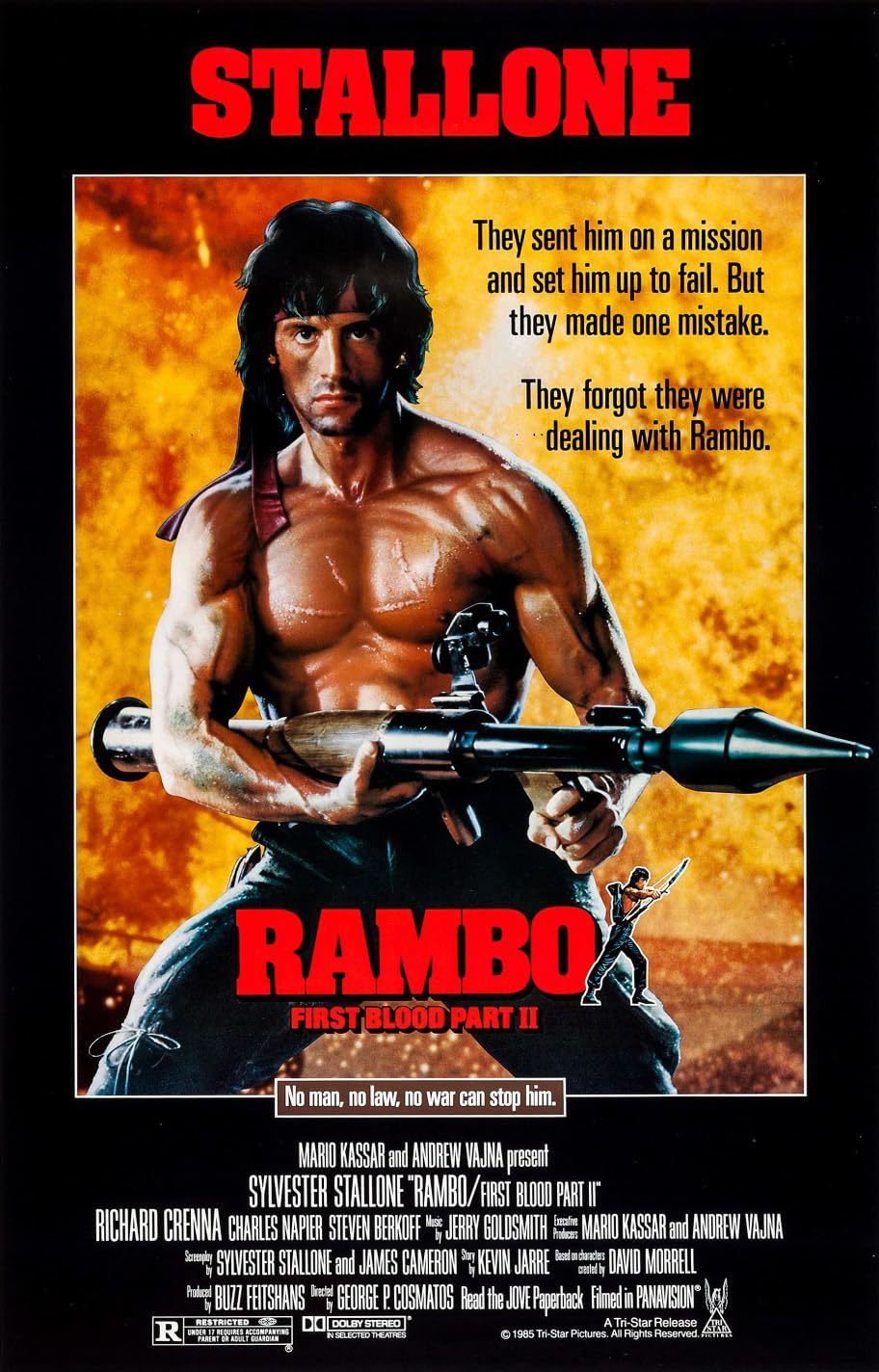
rambo ii

After years of getting bit parts and going nowhere, Sylvester Stallone sold his script to Rocky and somehow talked the right people into letting him star. It became a huge success and launched his career. In 1982 he starred in First Blood, the first Rambo movie. That film launched him into superstardom and made him one of the biggest actors of the 1980s.

What I didn’t realize until just now is that in the time between when he made Rocky in 1976 and First Blood in 1982 he made six other films including two Rocky sequels. Other than the Rocky sequels, most of them were only moderately successful. He is credited as a writer or co-writer on most of them. He also directed the first two Rocky sequels, Paradise Alley in 1978 and Staying Alive, the Saturday Night Fever sequel. It is interesting to look at his career at this stage and realize he seemed to think of himself as something of a Renaissance man.

But this isn’t about Sylvester Stallone, it is about John Rambo, the quintessential 1980s action hero. The Rambo films became something of a template for action films in the 1980s. You are probably picturing Stallone right now as Rambo, muscles bulging, a bandana wrapped around his long hair, sweat dripping down his brow as he fires a massive machine gun at countless bad guys.

Truth is the subsequent films became exactly that, but that first film, First Blood, actually attempts some real drama and a social message. It is more of a character study than an explosive shoot-em-up. For the first two acts anyway.

John Rambo is a Vietnam vet. He returns home to find his country not only isn’t proud of his service but angry at it. His fellow soldiers are spat upon when they return. He heads to the mountains to find his old friend. But when he gets there he finds his friend has died. It was cancer they wrote on his death certificate but his wife thinks it was Agent Orange from the war that really got him.

Disheartened he walks into town looking for a bit to eat before he moves on. He’s immediately picked up by Sheriff Will Teasle (Brian Dennehy). The Sheriff basically tells Rambo they don’t want his kind – dirty drifters who need a shower and a haircut – in his town and drops him off past the bridge. Rambo is having none of that and turns right back around.

He’s arrested then and essentially tortured by the local cops. Rambo, flashing back to his time in ‘Nam, when he was captured by the Vietcong and tortured, flips out and escapes. The chase is on and once again the police go too far, shooting at Rambo when he’s done nothing to deserve being killed. At this point, the film turns into an action film. Rambo’s former CO (Richard Crenna) shows up and lets the local yocals know they are facing the best damn Green Beret he’s ever seen and it’s best to give up.

The action is tight and well-composed all the way up until about the last fifteen minutes at which point it gets ratcheted up to ridiculous levels.

It is those levels that will serve as the inspiration for the following two sequels. In Rambo: First Blood Part II he’s offered a pardon from prison (for he did get sent to prison for killing all those cops in the first film) if he’ll go back to Vietnam. The mission is to infiltrate an old prison camp and see if there are still any POWs there. Naturally, there are and once again Rambo gets to kill a lot of people.

First Blood made a big deal about how the authorities were the villains. The cops hassled and tortured him just for existing, the military more or less turned their backs on him. That’s an interesting point of view for a 1980s action flick. Rambo II contains a little of that, with Rambo basically being used as an expendable pawn who is sent to Vietnam to basically prove that there aren’t any POWs left and everybody can be happy now that the war is over. But mostly it is a chance to let Rambo fight in the jungle.

With Rambo III our hero gets to fight in Afghanistan. His old CO is captured there and Rambo has to get him out. This time any pretext of a real plot of subtext is thrown out of the window in order to allow for more shooting, more explosions, and more dumb fun. Let’s just say there is a scene in which Rambo jumps inside a tank and fights off an attack helicopter and leave it at that.

There have been two subsequent Rambo sequels made – one in 2008 and another in 2019. I haven’t seen them. Those first three feel like enough.
The Friday Night Horror Movie: Maximum Overdrive (1986)

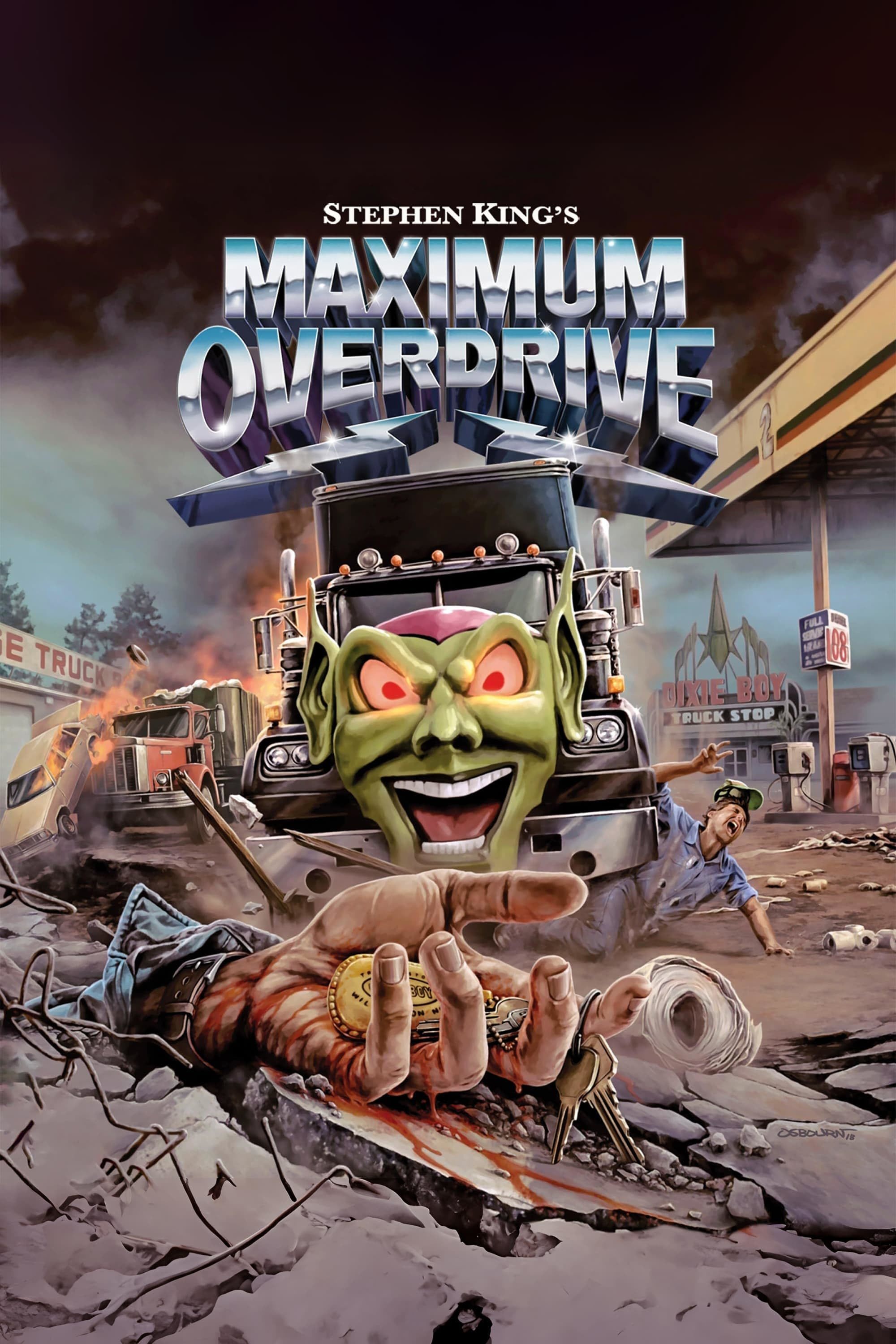
poster

Stephen King stories have been adapted into countless films and television series. Some of them are good, a lot of them are bad, a few of them are great, and some aren’t even worth talking about. Opinions vary on which films fit which category with King himself disagreeing with most.

In 1986 for the first (and last) time Stephen King actually adapted one of his own stories for a film. Based on his short story Trucks, King wrote the screenplay and directed Maximum Overdrive. It bombed at the box office and is generally considered to be lousy in pretty much every way.

I’ve become a pretty big Stephen King fan over the last few years, and have tried to watch a lot of the adaptations of his work. I knew I needed to watch this at some point, but I tended to believe the critics on this one and kept putting it off.

But since it is the Awesome ’80s in April, I decided to give it a go.

I knew it wasn’t going to be good, but I had no idea how insanely incompetent it was going to be.

One can forgive a first-time director like Stephen King (and especially one who has no training in filmmaking) for not banging it out of the park, but you’d think a guy who has written a lot of wonderful stories, would know a thing or two about writing. But the script is just as bad as the direction. Maybe he just didn’t know the difference between writing for the screen and writing for the page.

The bare bones of the story are actually interesting (and most of it seems to have come from that short story – which I haven’t read). Extra-terrestrial forces pass by Earth causing all electronics to become sentient, and murderous. Several people get trapped at a truck stop by a bunch of semi-trucks bent on their destruction.

Technology becoming sentient and trying to destroy mankind is not a new idea, but it can be a good one in the right hands. I especially like the idea of big trucks attacking people. And I love a good people trapped in an enclosed space story. With a better script and a good director this film could have been cool.

King has admitted to having a cocaine addiction at the time, and he was still deep in his alcoholic phase, so no doubt that affected the production.

An example of how this film works. At the start of the film, the controls to a draw bridge come alive, raising the bridge when cars are on it. I swear the number of cars on the bridge at any given time changes, depending on the shot. The height to which the bridge is raised changes as well. Sometimes we’ll have a shot in which the bridge has just been raised to a slight angle, but then we’ll get shots of cars spinning their wheels trying to keep from sliding backward, while other cars slide into the trucks behind them. A wide shot will then show the bridge all the way up. Then it will switch to barely having been raised. There is no tension, it isn’t at all scary.

I can see King writing that scene. As a novelist, he’d take pages and pages to tell that part of the story. We’d get lots of details. We’d know several of the characters. We’d get a sense of the terror. There would be gory details of someone getting smashed up. But as a director, it feels like he didn’t know how to get those details cinematically. He didn’t know the types of shots he’d need or how to put them together.

The entire movie is like that. It feels cheap. Like some bad B-movie, you’d see late at night on cable TV. In part, I suspect this is intentional. I can see King trying to make a B-movie. The kind he might have watched when he was growing up. But those movies have an energy to them that is fun to watch. Maximum Overdrive is a dud from start to finish.

Crosby, Nash & Jackson Browne – San Luis Obispo, CA (02/15/98)

David Crosby
Graham Nash
Jackson Browne
Benefit for Lois Capps
Calpoly Performing Arts Center
San Luis Obispo, CA
1998-02-15

Disc 1

Crosby & Nash

  1. Guinnevere
  2. Taken It All
  3. Carry Me
  4. Marguerita
  5. Delta
  6. Rusty & Blue
  7. I Used to be a King
  8. Time is the Final Currency
  9. Heatland
  10. Lost Another One
  11. Deja Vu
  12. Long Time Gone

Disc 2

Jackson Browne

  1. Intro
  2. I’m Alive
  3. The Barricades of Heaven
  4. In The Shape of a Heart
  5. World in Motion
  6. The Next Voice You Hear
  7. For a Dancer
  8. Cocaine
  9. Crow on the Cradle
  10. Lives in the Balance
  11. Jamaica, say you will
  12. Rock me on the Water
  13. Alive in the World
  14. Teach Your Children

Track 9 With Graham Nash
Track 10-13 With Crosby & Nash

Totally Awesome ’80s in April: 2024 Edition

back to the future

The Awesome ’80s are back, and better than ever! Looking through last year’s posts I see that I did really well with this theme, I watched a lot of movies, and I wrote a lot of reviews. Let’s hope I do the same this year.

As I noted in last year’s keynote I grew up in the 1980s. It’s when I really started watching movies. According to Letterboxd I’ve watched more films from the 1980s than any other decade. And yet, it is not at all my favorite decade for movies. When I think about my favorite eras for cinema, I start talking about the 1940s or the 1970s, or maybe even 1999. But the 1980s won’t get much of a mention.

There were some great movies made in the 1980s. I think, for me, in some ways the decade comes up short because I grew up in it, but I was too young to watch a lot of the best films from that period. I love 1980s Spielberg films, John Hughes’s teen flicks, and Robert Zemeckis and all that classic ’80s stuff. A lot of it holds up, and some of it is really good. But a lot of it was crap, kid stuff. I think my memory blends all of that together and the decade comes out as a mishmash of nostalgic gold and syrupy slop.

So, once again, this year I’m going to try to find and watch films that I would have missed as a kid. Movies that were maybe inappropriate for pre-teen me, or that I would have found hopelessly boring. I don’t want to say I’m gonna watch movies for adults, or mature films as that bring up images of me sitting in a dark room sweating, but movies for grown-ups lets say. And then maybe some silly, goofy totally 1980s movies.

I already watched the original Rambo trilogy if that tells you anything about where this is going :). Look forward to that review soon.

Kingfish – Hempstead, NY (03/27/76)


Kingfish
Calderone Concert Hall
Hempstead, NY
March 27th, 1976

Minglewood Blues [WLIR-FM] Flac
Label: Klondike Records ‎– KLCD5048
Format: CD, Album
Country: Europe
Released: Oct 2015

Tracklist:

01 Mystery Train > Muleskinner Blues 8:45
02 Goodbye Your Honor 3:14
03 Lazy Lightning > Supplication 8:49
04 Juke 3:32
05 Bye And Bye 4:29
06 Hypnotized 6:35
07 Minglewood Blues 3:44
08 Battle Of New Orleans 5:26
09 Big Iron 4:39
10 Jump For Joy 3:27
11 Promised Land 3:55
12 Sea Cruise 3:14

  • Brilliant performance at Calderone Concert Hall, Hempstead, NY on 27th March 1976
  • Includes the entire WLIR-FM broadcast
  • Digitally remastered for enhanced sound quality
  • Background liners

Barcode and Other Identifiers
Barcode: 5291012504814

Notes: Kingfish was fundamentally different to the more celebrated bands that Bob Weir and Dave Torbert hailed from. They clearly dug deep into their mutual love of American roots music to fashion a repertoire that established Kingfish as its own entity. The setlist performed here reflects the soul of their repertoire and finds Weir enjoying a brief sojourn from his obligations with the Grateful Dead while they took a well-earned break.

As for Bob Weir, nobody was really sure what a hiatus for the Dead meant, and Kingfish could have blossomed if the Dead had remained on the bricks, but Weir had a fantastic few hundred hours jamming with friends as this performance easily shows.

Klondike proudly presents the entire original WLIR-FM broadcast of Bob Weir with Kingfish live at Calderone Concert Hall, Hempstead, NY from 27th March 1976.

Professionally re-mastered original broadcast with background liners and rare archival photos! An exceptional celebration of the American songbook and a valuable addition for fans of NRPS and Grateful Dead.

The Forever Begging

Click HERE to donate to The Midnight Cafe.

I started this blog on May 29, 2004, which means I’m approaching twenty years as a blogger. I think most of you know the basics of my blogging history – started out as a journal for my year in France, turned into a pop culture site, which then morphed into solely a live music station, and for the last year I’ve added back in some pop cultural musings.

I’ve made something like 10,666 posts. I’ve shared some 8,000 shows, written about movies over 500 times. I’ve talked about music and books, and I’ve shared videos and interesting links. I’ve shared personal pictures and talked a lot about my life. I’ve traveled all over the world and shared my adventures.

I don’t know how much this means to anybody but myself. I like to think I’ve made something of my little corner in cyberspace. I know most of you come for the music, but I hope at least a few of you enjoy the other stuff.

On a few occasions now I’ve asked for donations to help cover the cost of the Cloud Drives. You all have given generously to that cause, and I thank you sincerely. In previous donation requests, I’ve capped the donations to the actual cost of the Cloud Drives. In my last begging session, I noted that since I was providing more content than just music downloads I thought I’d leave the Paypal link up so that you could donate at will.

This is a continuation of that. I’m going to pin this to the top of the page so it is easily viewable by everyone. I may periodically post reminders or what you might call mini-begging posts, kind of like they do on Substack and similar operations.

The Midnight Cafe is a labor of love. I do this because I enjoy it. I’ve put a lot more time and money into it than I’ll ever get out of it. But if you think it is worth a little of your money I would greatly appreciate any donation you’d like to give. If you are unable to give, that’s okay too. This site will always be free.

You may send donations to my PayPal account.

The Movie Journal: March 2024

ride lonesome

I watched 37 movies in the month of March. 24 of them were new to me. 23 were made before I was born. It was Westerns in March and I watched ten movies with dudes in cowboy hats.

I’m realizing as I do more of these monthly movie themes that I usually start off strong, but then something always happens in the middle of the month that distracts me. Sometimes I have to review some movies that don’t fit the theme, or maybe I want to watch some movies or TV shows with my wife, or we go out of town. When that happens I find it difficult to come back to the theme.

It’s like my little side gig of reviewing Blu-rays for Cinema Sentries. Since it isn’t a paying gig I get to choose when I want to review something. Some weeks I get really excited and request lots of stuff. Then they show up in the mail and I have to watch them. Suddenly, I don’t want to watch those movies I want to watch other movies.

I love Westerns. I love Westerns in March. But then I had to review some film noirs, and then we went on a little trip, and suddenly I wanted to watch something else. Savvy readers will notice that at the end of the month, I started watching a lot of movies from the 1980s in preparation for Awesome ’80s in April.

Not that it matters, the whole point is to have fun. If I’m not having fun, then what’s the point?

Clark Gable remains my top actor this year with six films watched. All those Westerns drove several actors into a tie for second place with four films watched. These include John Wayne, Randolph Scott, and Lee Van Cleef. Burt Lancaster is right there with them.

The director’s race continues to be pretty lame. Umberto Lenzi remains in first place, tied with John Ford, both of whom have three films watched by me. Fritz Lang and Budd Boetticher come in second with two films each.

Rambo III (1988) – **1/2
Rambo: First Blood Part II (1985) – ***
First Blood (1982) – ***1/2
Repo Man (1984) – ****
Trancers (1984) – ***1/2
Curtains (1983) ***1/2
Forbidden World (1982) – ***1/2
Humanoids from the Deep (1980) –
Thieves’ Highway (1949) – ****1/2
The Sons of Katie Elder (1965) – ****
Zodiac (2007) – *****
Chain Lightning (1950) – ***
Finger Man (1955) – ***
Evil Under the Sun (1982) – ***1/2
While the City Sleeps (1956) – ****
Spasmo (1974) – ***1/2
Crashout (1955) – ****
City of Shadows (1955) – *
Act of Violence (1948) – ****
And Then There Were None (1945) – ***1/2
A Fistful of Dollars (1964) – ***1/2
Nightmare (1956) – ***
Bulldog Drummond’s Peril (1938) – **1/2
Tinker Tailor Soldier Spy (2011) – ***1/2
Bone Tomahawk (2015) – ****
Ride the High Country (1962) – ****1/2
Black Tuesday (1954) – ***
Vice Squad (1953) – ***1/2
The Searchers (1956) – *****
The Whip and the Body (1963) – ***1/2
Ten Wanted Men (1955) – ***1/2
Ride Lonesome (1959) – ****1/2
Comanche Station (1960) – ****
The Professionals (1966) – ****
The Great Train Robbery (1903) – *****
The Faculty (1998) – ***1/2
Deadly Friend (1986) – **1/2

Westerns In March: The Great Train Robbery (1903)

the great train robbery

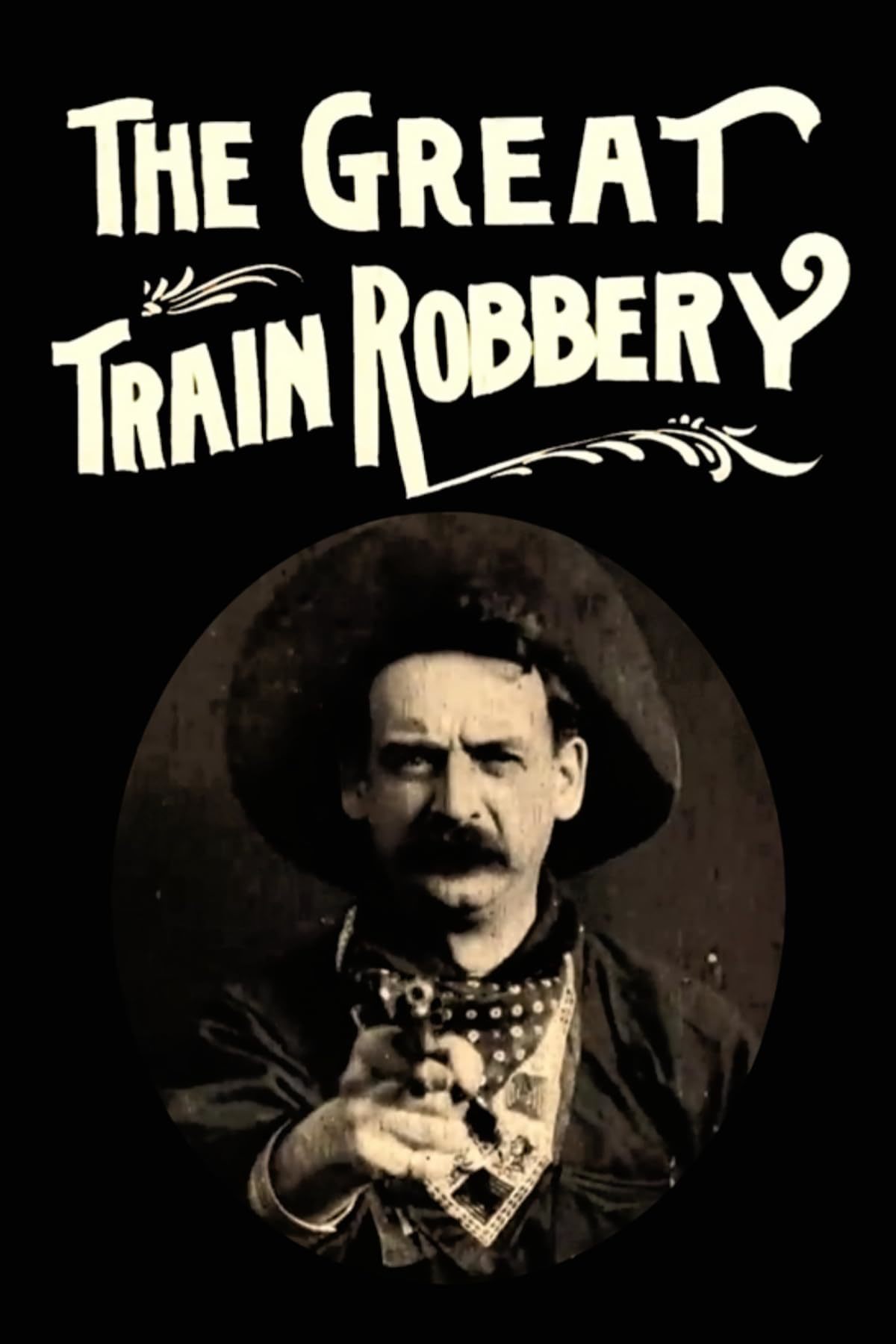
If you’ve never watched a Western before you’ve still probably seen scene from this one. An iconic moment shows a dusty old man with a hat and massive mustache stare at the screen, then point his gun at the audience and shoot. Any discussion of film history will bring up this scene.

It is a scene that has no real place in the film. It was shown either at the beginning or the end of the movie, depending on the projectionist’s whims. It is just a cool little moment. Sometimes it is said that audiences watching that moment, unfamiliar with cinema as they might have been in 1903, actually ducked for fear of actually being shot. This seems to be apocryphal, made up to show what rubes people used to be.

It is also sometimes called the very first Western movie, or the first film that told an actual story. This, also is pure nonsense as there were many Westerns that came before this one, many of which told a real story. The Wikipedia article on the film is pretty funny as the editors over there seem to be actually angry over these errors.

What The Great Train Robbery actually was, what in fact most likely caused it to be called all of those superlatives, was really popular. It was a huge box-office success. It is also rip-roaring fun to watch.

The plot does exactly what it says on the tin, and with a run time of just 12 minutes, it does nothing more. Some outlaws board a train, rob it at gunpoint, and then are captured by a posse of lawmen.

While it might not have significantly influenced or advanced the Western as a genre (as Wikipedia notes with a certain amount of glee) it still uses the tools of the time most effectively.

It uses wide shots, camera pans, and matte paintings to great effect. While on the train in the foreground, we see the outlaws doing their thing but in the background, through an open door, we see the mountains whiz by, making incredible use of rear projection.

There is also a great use of smoke and some hand colorization of certain items which I always find amazing.

The film is in the public domain and as such is widely available all over the Internet, including YouTube. It is well worth watching if you are a fan of cinema history. I’m surprised it took me so long to get to it.

Miles Davis – Paris, France (11/06/67)

Miles Davis Quintet*
Salle Pleyel
Paris, France
November 6, 1967

No Blues
Label: Jazz Music Yesterday – JMY 1003-2
Unofficial Release
Italy
Released: 1990

1 ‘Round About Midnight
Composed By – Monk*
8:05

2 No Blues
Composed By – Davis*
13:05

3 Masqualero
Composed By – Shorter*
8:40

4 I Fall In Love Too Easily
Composed By – Styne*
9:00

5 Riot
Composed By – Hancock*
5:30

6 Walkin’
Composed By – Carpenter*
9:40

7 Green Dolphin Street
Composed By – Kaper*
16:50
8 The Theme
Composed By – Davis*
0:40

Jazz Music Yesterday

Bass – Ron Carter
Drums – Tony Williams*
Piano – Herbie Hancock
Tenor Saxophone – Wayne Shorter
Trumpet – Miles Davis

Recorded at Salle Pleyel, Paris, France, November 6, 1967 (info taken from jazzdisco.org).

Track 3 is mistitled “Mascalero.”
Track 4 is mistitled “I Fall in Love Too Easy.”

Matrix  Runout: JMY 1003 PHC
Rights Society: S.I.A.E.