Noirvember: Night and the City (1950)

night and the city

Harry Fabin (Richard Widmark) is a man constantly on the run – from gangsters, and bookkeepers, loansharks and anyone else he owes money to or has otherwise schemed. He’s always got something cooking, some way to make a fast buck, get rich, and live a life of luxury. The ironic thing is if he actually put the energy he uses on these schemes and put them to legitimate work, he’d have a comfortable life.

Night and the City begins with Harry on the run. He’s making the slip past some unknown assailants across the streets of London. He winds up at Mary Bristol’s (Gene Tierney) flat. She loves him, but she’s tired of his constant hustling. Taking none of his crap, she simply asks him how much he wants this time.

Harry has a part-time gig working for Phil Nosseross (Francis L. Sullivan) smooth-talking out-of-town businessmen into coming to Nosseross’ club, The Silver Fox. One night out looking for chumps he wanders into a wrestling match where he becomes entranced by Gregorious the Great (Stanislaus Zbyszko). He isn’t in the ring but rather is complaining loudly about how fake everything is. Turns out he’s one of the great Greco-Roman wrestlers and these days everything is more WWE than real.

Harry hatches a plan to use Gregorious to become the wrestling magnate of London. Trouble is the current magnate is also Gregorious’ son Kristo (Herbert Lom). The father is angry with the son for getting involved in what he thinks of as entertainment and not real wrestling.

Harry needs money to get everything set up and he borrows it from Mrs. Nosseross (Googie Withers) who wants to divorce Mr. Nosseross but can’t until she’s got herself set up somewhere else. So she lends money to Harry so he can get more money from Mr. Nosseross (he won’t lend Harry money until he has some money himself to put down) which she will use to start a new nightclub.

The plot gets more convoluted from there. But I was never confused. Directed by the great Jules Dassin things run smoothly and clearly. There are some great exterior scenes overlooking most of the popular London spots, but much of the action takes place underground, it dirty bars, back alleys, and run-down gyms.

There’s a terrific wrestling sequence towards the end between Gregorious and another man. It isn’t staged with any flair, it is just two men trying to beat the other one into submission, but it is brutally effective.

I wish Gene Tierney had more to do that look upset at Harry, but she does get a wonderful scene towards the end that makes it all worth while.

Night in the City is a great movie, and a fantastic example of what film noir can be.

The Friday Night Horror Movie: The First Power (1990)

the first power

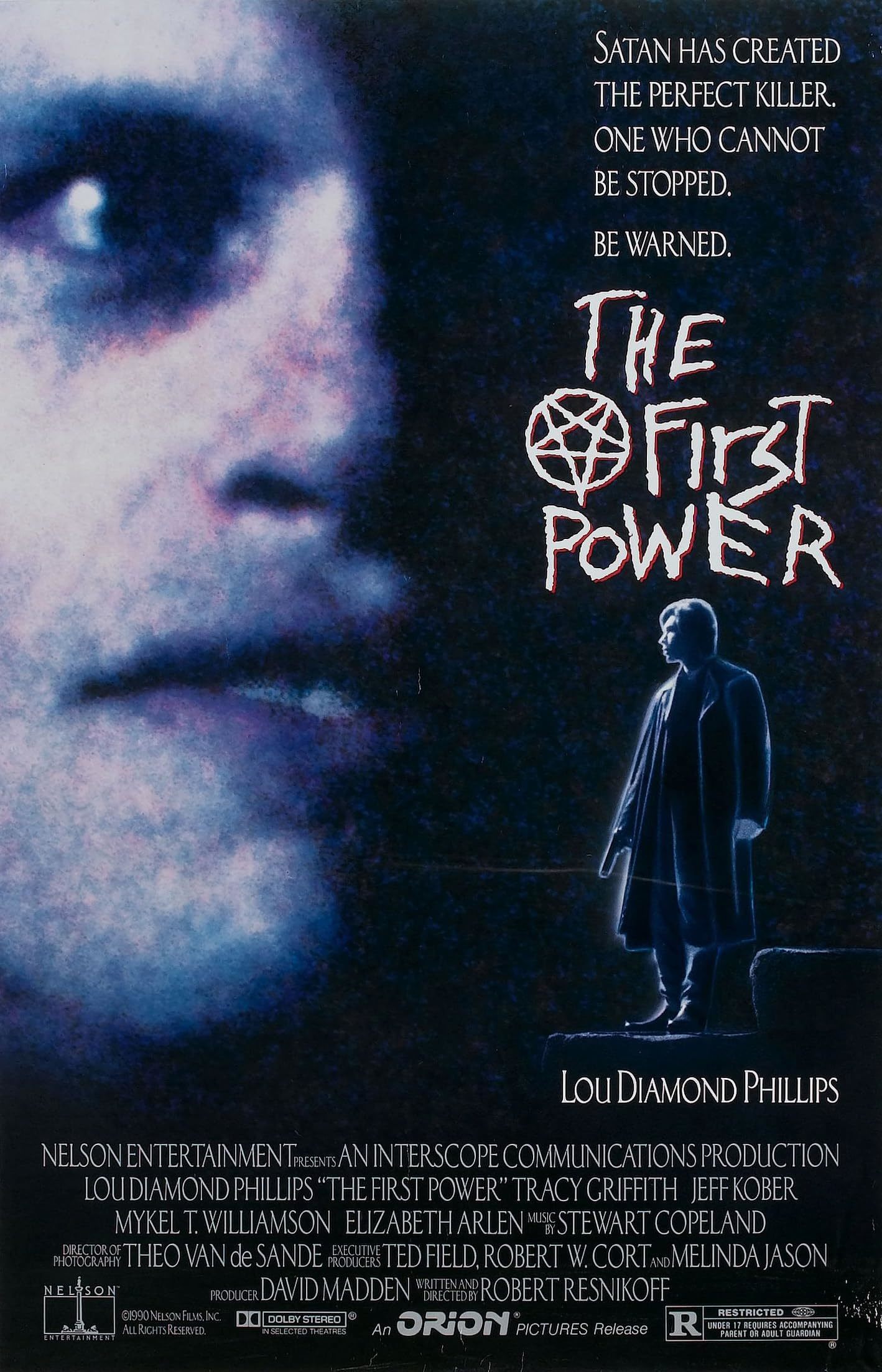
A crazy, satanic serial killer is on the loose in Los Angeles. Detective Russell Logan (Lou Diamond Phillips) is on the case. Or rather he’s chilling at home when a psychic (Tracy Griffith) calls him up and tells him where the killer’s next victim is going to occur. But she makes him promise that he won’t kill the killer nor will he allow him to get the death penalty.

Our hero gets the killer but he reneges on the deal to not let him get the death penalty. After he gets the gas chamber Detective Logan starts seeing horrific images and hearing the killer’s voice in his head.

The psychic shows up in person to let him know that the killer’s soul is now inhabiting the bodies of others and the killings will continue until they can stop them.

It is Noirvember and as I noted in today’s Daily Bootleg Post I’m gonna be busy watching a bunch of kung-fu movies over the next week or two. It is also Friday and I’m definitely not giving up my Friday Night Horror Movie. So, I was trying to find a way to blend those two things together.

Theoretically, that’s pretty easy to do. Film noir is hard to define and thus the definition is actually pretty flexible. Neo-noir is even more flexible. Both tend to involve crime, often murder. Sometimes serial murder. Horror films generally involve some murder and sometimes those murders are wrapped up in a murder mystery. A little Googling turned up a list of noir/horror hybrids and that’s how I discovered The First Power.

I wanna say I’ve seen this movie before but none of it rang any memory bells and I haven’t logged in on Letterboxd, so who knows. I definitely remember it coming out and wanting to see it.

It isn’t great. I love me some Lou Diamond Phillips. This film comes at the tail end of his first wave of popularity and it doesn’t work that well as a star vehicle for him. The script is pretty hokey, and it doesn’t lean hard enough on the whole satanic angle.

The killer carves pentagrams into his victims and they do bring a nun in at some point, but he’s never really involved in anything demonic. Most of it takes place in the city in broad daylight which is just weird for a horror movie about the occult. There are some scenes in dark warehouses and down in the bowels of the city’s water drainage. It does some nice things with light and shadow in those moments, but they don’t last.

The film posits that the killer’s soul is possessing various other people but it doesn’t really do much with that concept. Mostly we see him in the original body (played by Jeff Kober), but sometimes we see him in the body of whoever he’s possessing. But there are no scares involved in that. There is never any mystery of who he is possessing.

There are a few good, nut-ball moments like when a homeless woman floats in the air, or when the killer jumps off a ten-story roof and survives, or the fact that Los Angeles apparently has a giant boiling cauldron of flammable liquid in the bowels of their water drainage system, but mostly this is a by-the-numbers early 1990s horror/thriller.

Criterion’s Release of After Hours Is the Pick of the Week

after hours criterion

I first started writing these picks of the week a little over ten years ago. A lot has changed in the home video market in those years. Streaming did exist but it was still early days. Blu-rays had been out for a few years, but DVDs were the most popular option. 4K wasn’t even on the map. Choosing the week’s pick was fairly easy. I mostly voted for the best film. If the release had lots of extras or some cool packaging then all the better, but I mostly picked movies that I liked and were finally getting a release on home video.

These days, things are complicated. Whereas ten years ago almost every film that made it to theaters got a home video release (usually a few months after it left theaters) now many major movies don’t even make it to the theater. Netflix, Amazon, Apple, and other streamers regularly release movies straight to their services, bypassing movie theaters altogether. And since the major streaming services want you to subscribe to them there is no reason for them to release their movies on any other format. Why spend the money on a Blu-ray release when what you really want is for people to subscribe to your service for another month?

At the same time, lots of companies have sprung up over the last decade that specialize in releasing movies on physical media. Criterion, Arrow Video, Synapse, and Kino Lorber to name but just a few, all specialize in physical media. Most of the movies are for what you might call niche markets. Criterion deals with arthouse and classic movies, Arrow and Synapse specialize in the low-budget genre movie market. Etc. They often release their films with cleaned-up audio and video, loads of extras including audio commentaries and behind-the-scenes features, and even include cool booklets with essays on the film, posters, lobby cards, and other collectibles.

Beyond these Boutique Blu-rays labels, everybody is getting into 4K, the super high definition format, not to mention all sorts of special editions and exclusive releases to places like Target and Best Buy.

What I’m saying is that the decision on what to pick each week has gotten complicated. It can no longer be just based on the film itself, but you have to factor in the bit rates, special features, and how many other releases that particular film has received. I will admit that I don’t own a 4K player and my interest in that format is pretty small. Put me in a showroom and I will do the appropriate “oohs” and “ahs” over how incredible a 4K film looks, but at home, I just don’t care that much. I still watch terrible-looking prints of old and obscure movies and I just don’t care that much about super high-quality images. Especially if that means I have to not only buy a new, expensive player, but I have to rebuy many of the films I already own. I’ll mention a 4K release if I think it merits it, but I am not going to do so just because a film receives a 4K release.

Personally, I also tend to not pick the biggest movies coming out on any given week. Anybody who cares already knows that Avatar or the latest Marvel movie is coming out. I’ll give those movies a mention in my articles, but I’m going to rarely pick them. I like to pick something a little more obscure, something that deserves a little attention. But I also try to avoid picking the same type of releases each week. It would be easy just to pick whatever Criterion is putting out each week because I pretty much love everything they do. But that seems boring. Speaking of which I’m nearly a thousand words in so I must be boring everybody by now.

After Hours is a marvelous movie by Martin Scorsese. It came out in 1985 which is smack dab in the middle of what many people consider to be a low period for the famed director. I love pretty much everything he’s ever done and this one is no different. It stars Griffin Dunne as a man with a boring life who ventures to downtown Manhattan to hook up with a beautiful woman and has one crazy adventure after another. Criterion has given it a 4K upgrade and their usual treatment in terms of excellent extras.

Also out this week that looks interesting

Beau is Afraid: With Hereditary and Midsommer director Ari Aster has cemented himself as one of our modern masters of horror. His latest stars Joaquin Phoenix as a mild-mannered man confronting his darkest fear as he embarks on a Kafkaesque adventure home.

Are You There God? It’s Me, Margaret.: Based upon the beloved book by Judy Blume this film adaptation got a lot of surprisingly great reviews and more or less bombed at the box office. I never did read the book (it is about a young, teenage girl dealing with young, teenage girl problems so I wasn’t really the target demographic) but I have a lot of friends who loved it when they were growing up. My own daughter is the perfect age for both the book and the movie so I suspect we’ll be watching it soon.

Scream VI: I recently watched all of the Scream films in order so that I could come to this new one pumped and primed. It was both a blessing and a curse to watch them all so close together. It helped me to see all the connections the films make with each other and helped smooth out some of the rougher spots. But it also let me see just how far this series has fallen. The original Scream was so good because it made fun of the slew of generic slasher films that were being churned out through the last 1980s while also being a great example of what the best of those films could be. Scream VI isn’t at all bad, but it feels very much like those generic films the original was making fun of.

The Watermelon Woman: Criterion is releasing this romantic comedy about a black lesbian woman who is trying to make a film about a Black actress known for playing the stereotypical “Mammy” roles in the 1930s. Criterion says it is a pioneering film in queer cinema and I always take their word for it.

Doctor Who: Jon Pertwee Complete Season Three: As I’ve stated many times I’m a big fan of Doctor Who. Over the last few years, they’ve been releasing these really wonderful full seasons of the classic series on Blu-ray chock full of extras and special features. Pertwee is one of my favorite Doctors and while I believe I’ve seen all the stories from this season (Day of the Daleks, The Curse of Peladon, The Sea Devils, The Mutants, and The Time Monster) I couldn’t tell you a thing about them. But I’m already excited to watch them again.

The Burning: Shout Factory is releasing this “classic” 1980s horror film about a camp prank that goes horribly wrong leaving a man disfigured who returns years later to enact his vengeance, with a new 4K scan and lots of extras.

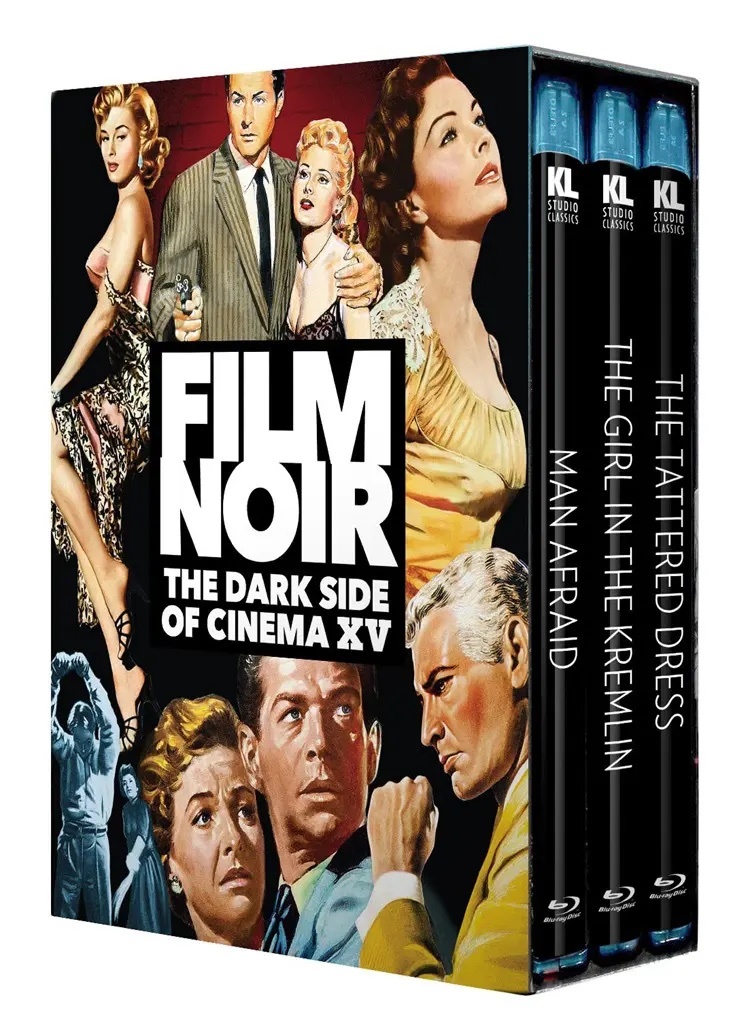
Film Noir: The Dark Side of Cinema XV: (Man Afraid / The Girl in the Kremlin / The Tattered Dress): I love these Kino Lorber releases of obscure film noirs. Sadly, they did not send me a review copy of this set, but I’ll likely buy it sometime anyway.

Johanna Enlists: One of the amazing things about this new resurgence of boutique Blu-ray labels is how they are finding some really old films, cleaning them up, and giving them a proper release. This drama starring Mary Pickford was originally released in 1918. I’m guessing it has been released on home video before, but likely from a terrible print with absolutely no care given to it.

Dead Men Don’t Wear Plaid (1982)

dead men don't wear plaid poster

I first learned of Dead Men Don’t Wear Plaid inside a little video rental store. The VHS had a cool cover with Steve Martin on the front aiming a gun at the audience, a plaid outline behind him. This would be the late-ish 1980s and Steve Martin was a huge star. I was a young teen and loved Martin in movies like Three Amigos (1986), Roxanne (1987), and The Man With Two Brains (1983). I immediately picked the VHS up and talked my mother into renting it.

We took it home and I popped it in the VCR and pressed play. I was immediately disappointed. It was in black and white. I hated black-and-white movies. Or I thought I did. I’d never actually seen one. But black and white movies were old and old was bad. At least that’s what I thought back then anyhow.

I watched for maybe ten minutes then turned it off in disgust.

Many years later, when I learned that there are, in fact, many really great movies in black and white, I decided to give it another spin. I was definitely a classic movie fan by then, but just a beginner. I knew actors like Humphrey Bogart and Cary Grant, Ingrid Bergman, and Vincent Price. I’d seen a few film noirs but was by no means an expert.

The film is a homage to the classic film noirs of the 1940s. Through trick editing, it intercuts the new story with clips from 19 classic films. It does this surprisingly well.

Steve Martin plays Rigby Reardon a private investigator who is hired by Juliett Forest (Rachel Ward) to investigate the murder of her father. During the investigation, he comes across a large crowd of interesting characters, which is where the classic films come in.

Sometimes Reardon will call someone on the telephone and it will be Humphrey Bogart from The Big Sleep (or some other classic film star in a classic movie) who will answer. The dialog is cut as if Reardon is talking to Phillip Marlowe. Other times he’ll meet up with someone and it will be Veronica Lake in The Glass Key (or some other classic film star in a classic movie). In these instances, the film will sometimes use an extra dressed like the classic film actor, shot from behind, so that they can interact with Reardon in a more realistic way. It is all done cleverly and that makes it a really fun watch.

The great Edith Head (in her last film) did the costumes and she did an amazing job matching everything up. Ditto the lighting and staging and everything.

The film was co-written (with Steve Martin) by Carl Reiner, and it was directed by him as well. Reiner is a vaudevillian at heart and this is very much in Martin’s very silly stage (long before he started writing for the New Yorker and Broadway). I have to admit I’m not a big fan of that style of comedy. It is too jokey for me.

It is also a bit cringe. There is an ongoing joke where Reardon feels Juliet Forest’s up, caressing her breasts because they were knocked out of place during a scuffle. Or another time Reardon gives Juliet a kiss when she has passed out. There are quite a few dumb gags like that that play very differently now.

I am now a very big fan of classic movies and film noir in particular. I’ve seen more than half the films included inside this movie and so all of that stuff was really quite delightful. It is very well done; clearly, the filmmakers are very big fans of classic movies.

Film Noir: The Dark Side of Cinema IX

film noir

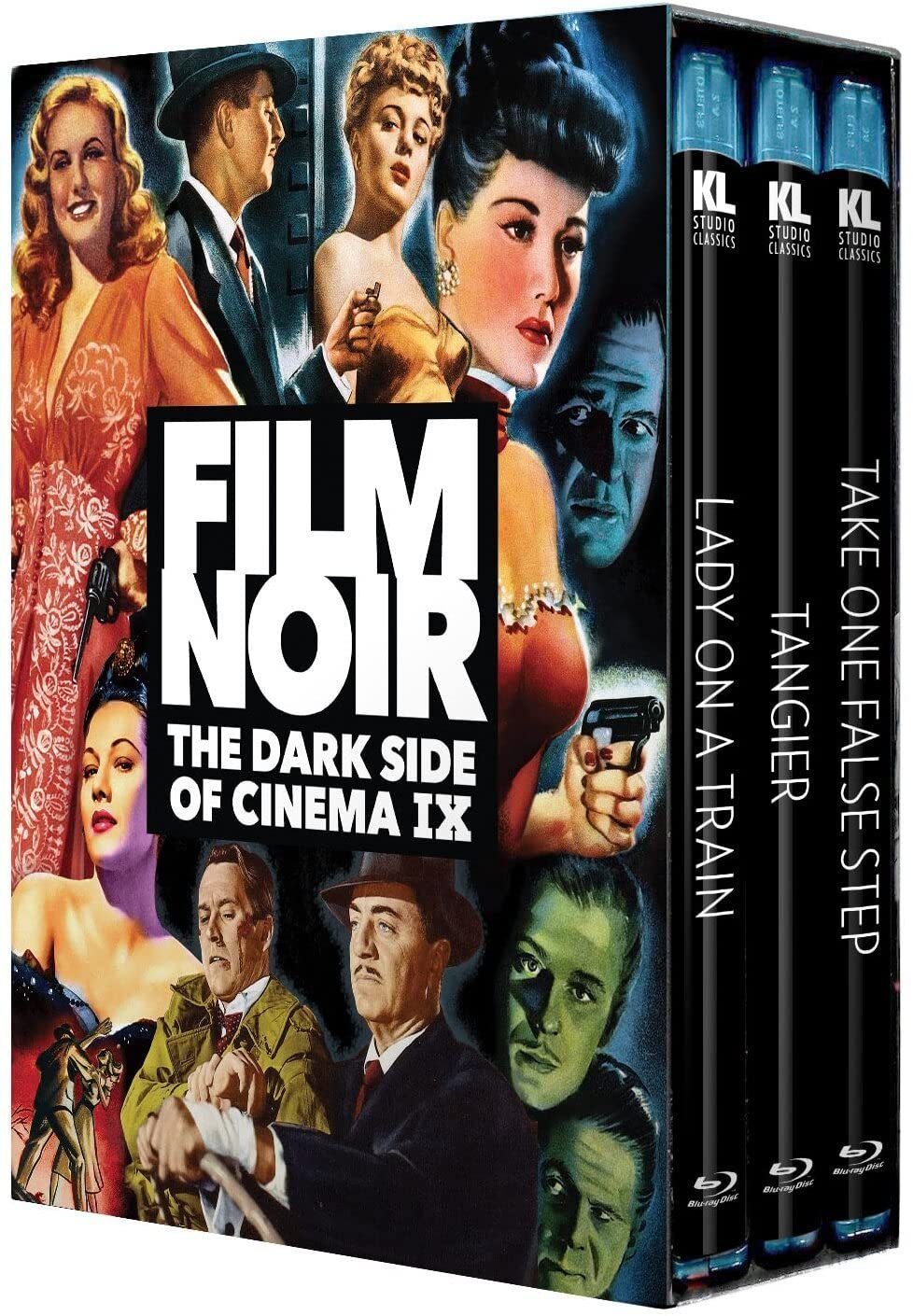
Kino Lorber released two of their film noir sets in October which seemed weird to me since Noirvember was just a month later. But maybe they wanted to get them on the shelves a few weeks before the holiday so that fans would be ready to watch once November rolled around.

I watched these so long ago I had to read my own review just to remember if I liked this one (I did). You can do the same here.

Film Noir: The Dark Side of Cinema X

film noir

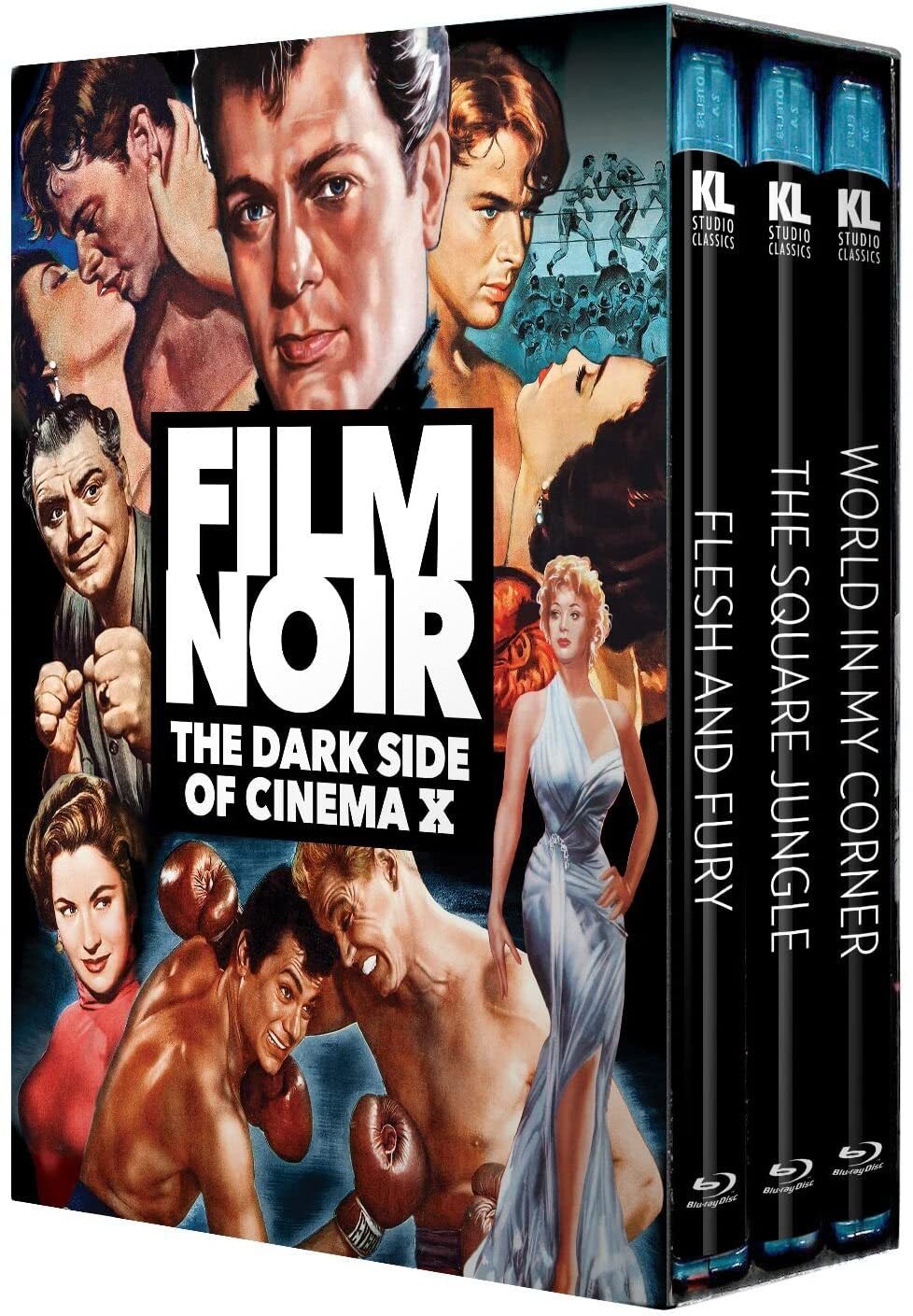
I’ve fallen behind in posting links to my reviews over at Cinema Sentries. I wrote this one for Kino Lorber’s latest film noir boxed sets back in October, but what better time to share it than the tail end of Noirvember? To be honest this set was probably my least favorite one they’ve done. Mostly because the three films are boxing movies and not really noir. But whatever, you can read my review here.

Noirvember #11: The Dark Corner (1946)

the dark corner

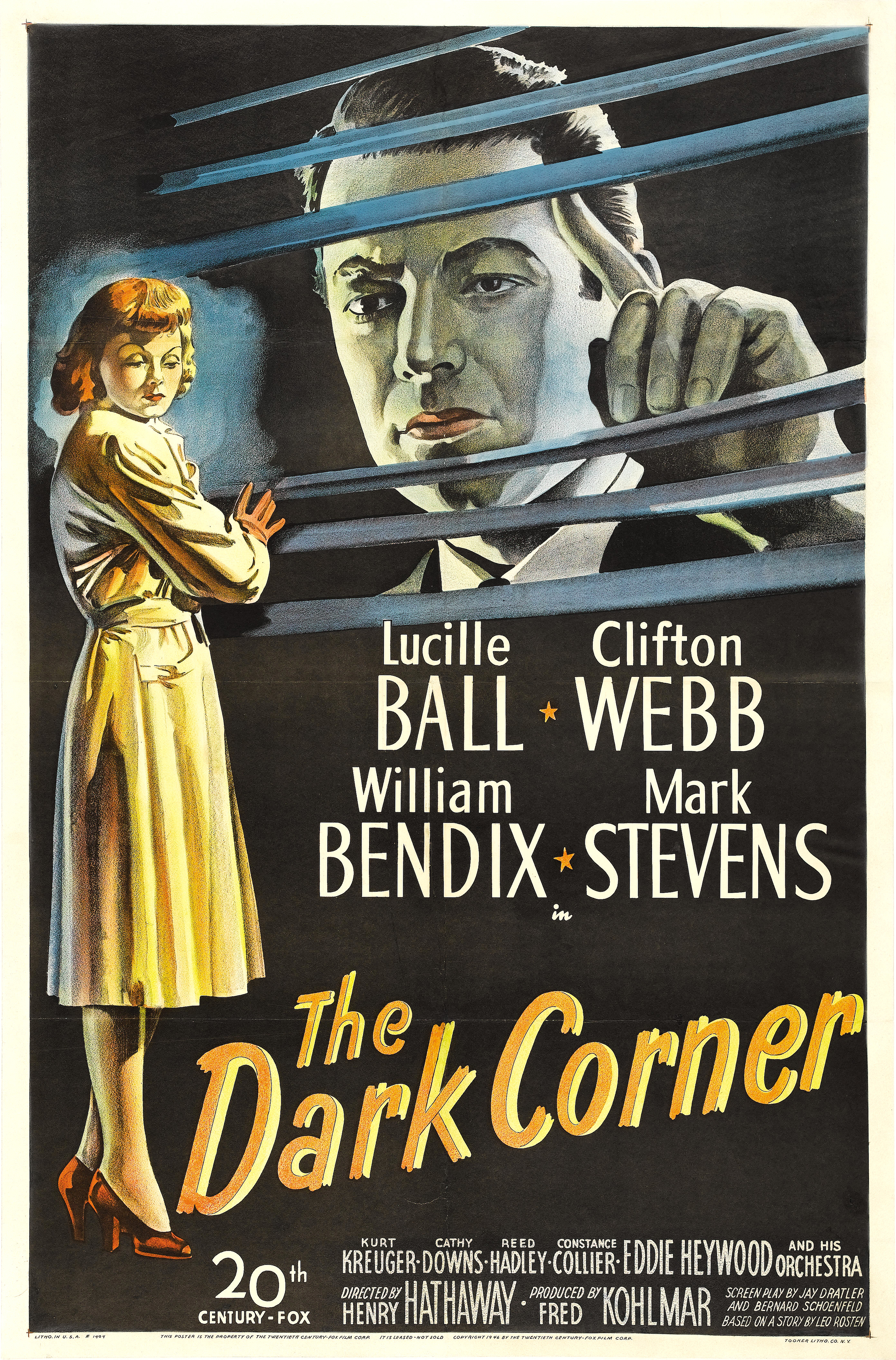
I love me some William Bendix. He’s one of those great character actors that you don’t necessarily notice at first but then he keeps showing up in small parts in all sorts of films and you go, “oh there’s that guy again.” And he’s always good. I probably first noticed him in The Glass Key (1942) where he played a jovial gangster who rather enjoyed beating up on Alan Ladd.

He’s a heavy in The Dark Corner as well, but he’s smarter and more crafty, but not nearly as fun to watch. He’s been hired by the film’s true villain to spy on the hero of our picture, Bradford Galt (Mark Stevens). He intentionally does a bad job of it so that Bradford will know someone’s keeping an eye on him. And then later trying to kill him.

Lucille Ball plays Galt’s secretary, but she doesn’t quite fit. Obviously, she was a gifted comedienne and a true treasure, I just wish they’d done something different with her character. They could have used her comedic talents and made something like The Thin Man where she wisecracks her way through the film. Or they could have made her the smartest person in the room. That’s what all the descriptions indicate she’ll be. I was expecting the Galt character to be rather dim-witted and she’s the smart secretary secretly solving all the crimes. Instead, she’s just a regular secretary and the love interest but is given very little of interest to do.

The story is fine, there are some good twists and it has the look of a good noir. But it never quite did it for me.

This makes yet another Noirvember film this month put into the just OK category. I fully expected this to happen as I intentionally picked relatively obscure films to watch instead of the well-known classics, but I have to admit I’m ready for something really good.

Noirvember #10: Beyond a Reasonable Doubt (1956)

beyond a reasonable doubt

I’m generally not the type of person who complains about plot holes in a movie. I’m a firm believer that cinema is much more than the plot. I can easily overlook holes in a plot or problematic bits of a story when the acting, direction, cinematography, music, etc, are doing it for me.

Fritz Lang is a fantastic director. He came up making silent films in Germany so he knows how to tell a story visually, without a lot of audible or written language. But I almost turned Beyond a Reasonable Doubt off because the story was so ridiculously dumb.

Dana Andrews plays a guy who, along with his soon-to-be father-in-law hatch a plan to expose the inadequacies of the district attorney and the death penalty. The idea is to find a murder case that the police can’t solve, then plant a bunch of evidence making it look like Dana Andrew’s character is guilty. At the same time, they’ll take some photos and stuff proving they planted it. The police will catch him, the DA will prosecute him, and the jury will convict but just before he’s executed the father-in-law will reveal the plan and all will be saved. Also, they’ll expose how easy it is to convict and execute an innocent plan.

Anyone with half a brain can see how terrible this plan is. Nobody in their right mind would intentionally get convicted of a crime they didn’t commit expecting the justice system to correct itself when proof of innocence is procured. Anybody who has ever seen a film before will know that something will inevitably go wrong leading to a panic that our hero will actually face the gas chamber. Everyone will guess he gets saved at the last minute.

What I’m saying is this movie is dumb. Dana Andrews does his best to carry the plot on his shoulders. Fritz Lang does a decent job of adding what tension he can to the story. But I could not get past how stupid it all is.

Did I mention that the two men decide not to tell Andrews’s character’s fiance about this stupid, stupid, plan because they don’t want to worry her? Because apparently letting her believe her fiance is going to be wrongfully executed is no big deal. That’s how dumb this plot is.

Noirvember #9: The Dark Mirror (1946)

the dark mirror

I’ve been slacking in my film noir reviews. I’d apologize, but I can’t imagine any of you actually care.

The first fifteen minutes or so of The Dark Mirror are terrific. A man is stabbed to death in his apartment. Several witnesses put the man’s girlfriend Terry Collins (Olivia De Havilland) at the scene. But when Lt. Stevenson (Thomas Mitchell) questions her, she provides several witnesses that can prove she was nowhere near the murdered man at the time of his death.

What the…? How can that be? Twins, that’s how. Terry has an identical twin sister named Ruth (also De Havilland). So, one of them did kill the man but the other has an airtight alibi. Trouble is no one can tell which one did what except the two sisters, and they aren’t saying.

The film has a lot of fun playing with that situation, befuddling the lieutenant at every turn. But then it introduces a psychologist, Dr. Scott (Lew Ayres) who has made a career out of studying twins. He begins seeing the girls individually, running them through a series of tests. Naturally, he also falls in love with one of them.

One of the twins is insane and has been gaslighting the other their entire lives. Naturally, there is a bit of a switcheroo with the twins, because you can’t have a movie about twins without having them pretend to be each other at some point. Once the doctor is introduced I started losing interest. He all but pushes the lieutenant out of the way and the story becomes less about a cop trying to solve a murder and more about a doctor analyzing patients. Boring is the word.

De Haviland is great. She creates two distinct characters out of the sisters while still making them fully believable as twins. Michell is very enjoyable as the lieutenant as well. I wish the film had stuck with him instead of getting all psychobabble with the doctor.

Noirvember #7: Fallen Angel (1944)

fallen angel poster

Laura the Otto Preminger film from 1944 is one of the all-time classic film noirs. It was a huge success upon its release and remains one of the genre’s most beloved films. Preminger followed it up with another noir, Fallen Angel, which also stars Dana Andrews. Here, he’s no longer a detective trying to solve a murder, but a drifter, a conman who gets into trouble he may not be able to get himself out of.

His name is Eric Stanton and he drifts into a small town called Walton because he doesn’t have the bus fare to make it to San Francisco and the driver kicks him off at the first stop once he learns Stanton doesn’t have a ticket. There he meets Stella (Linda Darnell) a beautiful, sultry waitress and like any good film noir sap, he falls immediately in love. But like any good dame in a film noir she won’t have him until he’s got some money. He figures he can get it from June (Alice Faye) a pretty, but reserved woman who hasn’t had much luck in love, but does have a lot of money.

Stanton figures she’s an easy mark. He can get lovey-dovey with her, score some cash out of her fat wallet then drop her and head back over to Stella. Naturally, things don’t go as planned and he finds himself on the run from the cops as a murder suspect.

The plot is just as complicated as Laura, but it isn’t nearly as compelling. Linda Darnell is the standout. She is radiant and mysterious. Unfortunately, she doesn’t get a ton of screen time and her character isn’t given much. Dana Andrews is fine. I love morally murky characters, especially men who think they have it all under control but are really quite clueless. Likewise, Alice Faye is perfectly acceptable but she’s missing that certain something to make this film truly great.

Well worth your time, but if you haven’t seen Laura grab that one instead.