Rabid (1977)

rabid movie poster

Going to the video store with my wife is an interesting endeavor, as we have rather divergent tastes in movies. I have recently developed a devout love for all things Japanese and Italian horror, while my wife prefers obscure French cinema. This usually means that we spend way too much time wandering around the store looking for something we both can agree on until one of us gives up, and the other gets what they want.

I recently won out and settled on the 1977 Canadian horror picture, Rabid, starring adult film icon Marilyn Chambers and directed by David Cronenberg.

The second part of our video renting dilemma is actually watching the films we choose. My wife always complains that I never let her watch the videos she gets from the library (which is true for she gets rather dull-looking French films and horrible BBC series adapted from weepy women’s literature.) And I complain that she never lets me watch my gory, bloody zombie flicks (which is also true, because she doesn’t let me watch them.)

When we actually manage to find something we can agree on (usually classic American films) we make a cozy evening of it, otherwise we have to wait until the other one is either at work or back at the computer engulfed in something else.

Luck struck me twice and I was able to watch the aforementioned Cronenberg flick while the wife worked on her dissertation.

It is one of Cronenberg’s first pictures made strictly for the cinema and a rather low-budget affair but not without its merit.

The film begins with Rose (Marilyn Chambers) and Hart (Frank Moore) taking off on a motorcycle trip only to have a serious collision with a stalled van out on the highway. The two are taken to a plastic surgery clinic due to them being miles away from the nearest hospital in Montreal. Hart is merely banged up, but Rose is in serious condition.

Dr. Keloid (Howard Ryshpan) decides to perform an experimental skin graph on Rose and the surgery seems to go well, but Rose is left in a coma for many weeks. When she finally comes out of it, she feels very strange, and very cold and has what has to be the oddest placed film mutations ever – a small, Alien-esque spike that sprouts out of a very vagina-looking hole in her arm pit.

Rose then begins going around hugging her victims in order that the underarm-spike thing can stab them and suck their blood. These victims then mutate themselves into rabid zombies biting and infecting others until they slip into a coma and die.

It’s all fairly silly, but Cronenberg proves himself very capable of turning it into a pretty thrilling, if not particularly cinematic, piece of film. It is definitely a Cronenberg film too as it all moves fairly slowly, is filled with some very deliberate camera work, and makes a few social observations about plastic surgery amongst all the blood and death making.

Marilyn Chambers proves a very capable actress coming into her first non-porn role. Though after this she slipped right back into porn. Even here, though she has to do some actual acting, there is an abundance of boob shots. I swore I would never complain about naked boobies, and I shan’t here even though they are as bountiful as they are gratuitous and cause continuity problems galore.

The rabid zombies plague Montreal until martial law is declared and poor Hart realizes that Rose is the cause of it all leading to a not-so-happy ending.

This isn’t Shakespeare, nor even a big-budgeted Michael Bay picture, but Cronenberg manages to create something interesting and well made despite his obvious budget limitations. It is obviously influenced by Night of the Living Dead and an influence on films such as 28 Days Later. Certainly, a picture to see by Cronenberg fans and horror-philes alike.

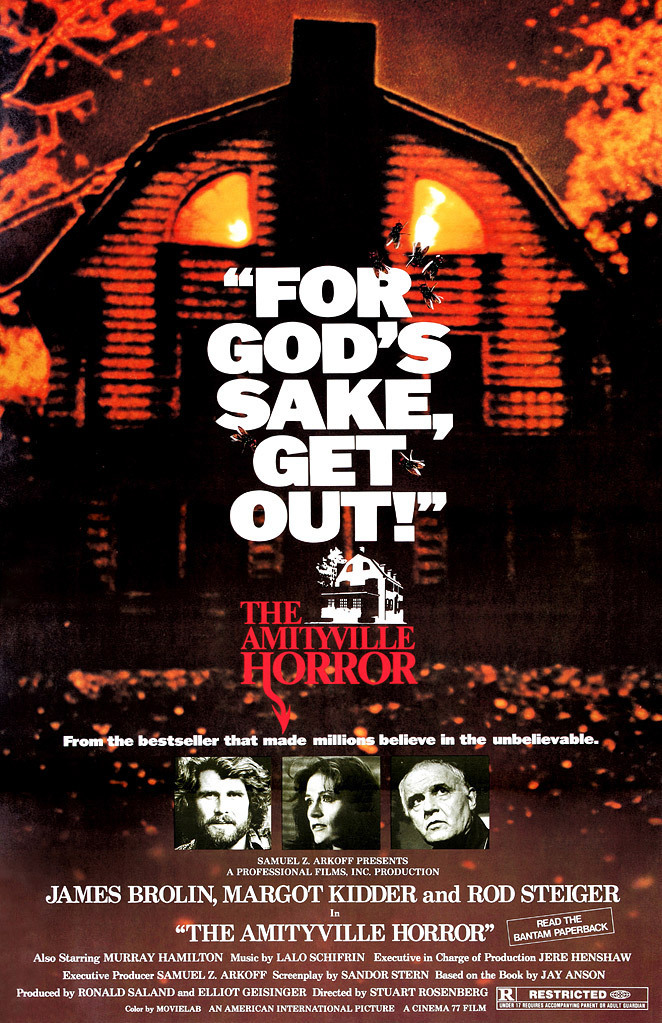
The Amityville Horror (1979)

amityville horror

Haunted House stories have to be some of the oldest examples of scary tales of horror. What’s scarier than the fear that resides right in your own home? Where can you find safety if not your own house? Where do we find much of our own horror but our own homes late at night with the creepy shadows and wind-blown creaky noises?

The Amityville Horror (1979) does a nice job of ratcheting up the spooks for about the first half but falters off towards the end.

Based on the book of the same name, which is supposedly based on true events, the story focuses on the Lutz family who just moved into a lovely old home that takes on some devious supernatural qualities. You see as the story begins we see that the family living in the home before the Lutz family were all brutally murdered in their sleep by one of their own. Even knowing this, the Lutz family buy the house for a bargain and move in because “houses don’t have memories.”

Houses it seems, not only have memories but have rotten dispositions too.

Strange things start to happen pretty immediately when the Lutz’s move in. The boathouse lights turn on and doors open in the middle of the night, the toilets get clogged with blood-looking ooze, and the priest who comes to bless the house (Rod Steiger) gets trapped in a room with a million flies and is told by a creepy voice to get out.

The film moves slowly towards its frights. This isn’t a film with a real live knife-wielding boogeyman ready to jump out and scare the family (and audience) at a moment’s notice. No, this film builds its horror with slow tension. Creepy things happen amongst the more mundane events of the family’s life. Between the scares we see the family unpacking boxes, attending weddings, taking boat rides, and chopping wood. Lots and lots of wood chopping.

Although amongst all of this in-between action, we hardly get to know the family at all. It is late in the film that it is revealed what George Lutz (a very hairy James Brolin) does. There is lots of talk about him needing to go back to work and all of these odd shots of the business van that only reveal that George owns his own business but strangely cut off the occupation. Eventually, it is revealed that he is a surveyor. And that’s how the whole movie is. We see a lot of the family doing things, but get no connection as to who they are as people.

Ultimately the slow build of tension fizzles out before it can really burst. This is the problem with making a haunted house picture. If there isn’t a ghost or phantom coming out of the walls, there is only so much horror a house itself can bring. Droves of flies, windows opening on their own, and chairs moving by themselves can build some tension, but without something bigger causing it all that’s left is a disappointment. In the end, all the filmmakers can muster is lots of heavy thunder and rain followed by a stairwell collapsing into a basement of blood. It’s just a house after all and that can be run away from.

Apparently, they followed the book pretty closely, and I’m not one to often ask for the creature behind the horror, but here it seems like they should have given us a little more. I can’t imagine the devil appearing for a final attack would have made the picture a great one, but it could have at least given a more adventurous ending.

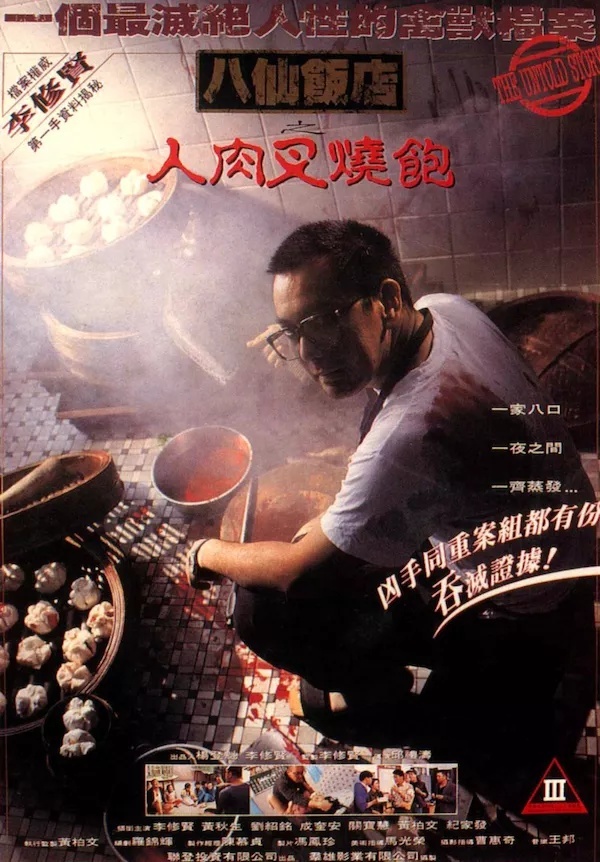
The Untold Story (1993)

the untold story poster

Originally written and posted in October 2006.

Someday I really will get into the reasons I tend to watch really depraved, sick, twisted, and awfully gory flickery. For now, I’ll continue to review the nasties I watch. I’m not really all that sure how I even know about some of these films anymore. I think I heard about this one by hearing about some other film and then following various links of similar films to this one. Or maybe I looked up one film on IMDB.com and followed a thread about similar films. Either way I did hear of it, and heard it was one of the most violent, sickest films out there so of course, this demented gore-head had to watch.

I hesitate to call myself a demented gore-head because my mom might read this and then where would I be? In truth, I watch lots of other films, regular like without violence and gore, but there is something raw and carnal about twisted films that make me watch. There I go again trying to explain they why when I said that would have to wait until later.

Ultimately this film wasn’t quite as sick as everyone said. Sure there is plenty of gore and buckets of blood in this tale of a crazed serial killer who slaughters people with his butcher knife and sometimes serves them up as pork pies, but none of it is particularly realistic and therefore not as sick as it could be. The blood, the guts, the nastiness always looks fake, so you never get sucked into the gore too much. The reputation comes, me thinks, from a particularly brutal scene involving the slaughter of several small children. Movies tend to shy away from mass murder involving little ones and so this film seems particularly nasty, even though what is seen on camera isn’t that vicious.

Gore aside, what really lowers the level of this film is the portrayal of cops. All of the police trying to solve the crime are completely incompetent, inept, and stupid. In one of the opening scenes where we see some severed limbs wash ashore, the cops bicker, joke, and argue over who will investigate the appendages. In numerous scenes, the one detective with half a brain brings in a scantily clad hooker as his date while the other male cops oogle and ogle all over her. In the interrogation scenes, all of the cops are all too eager to brutally beat a confession out of the killer.

Anthony Wong does an excellent job playing the psychopath and he even manages to render a few moments of sympathy from the audience.

This is totally a low-grade movie made for gore heads looking for a little fake blood. Even there it never rises above its cult standing as the epitome of crazy exploitation.

You have been warned.

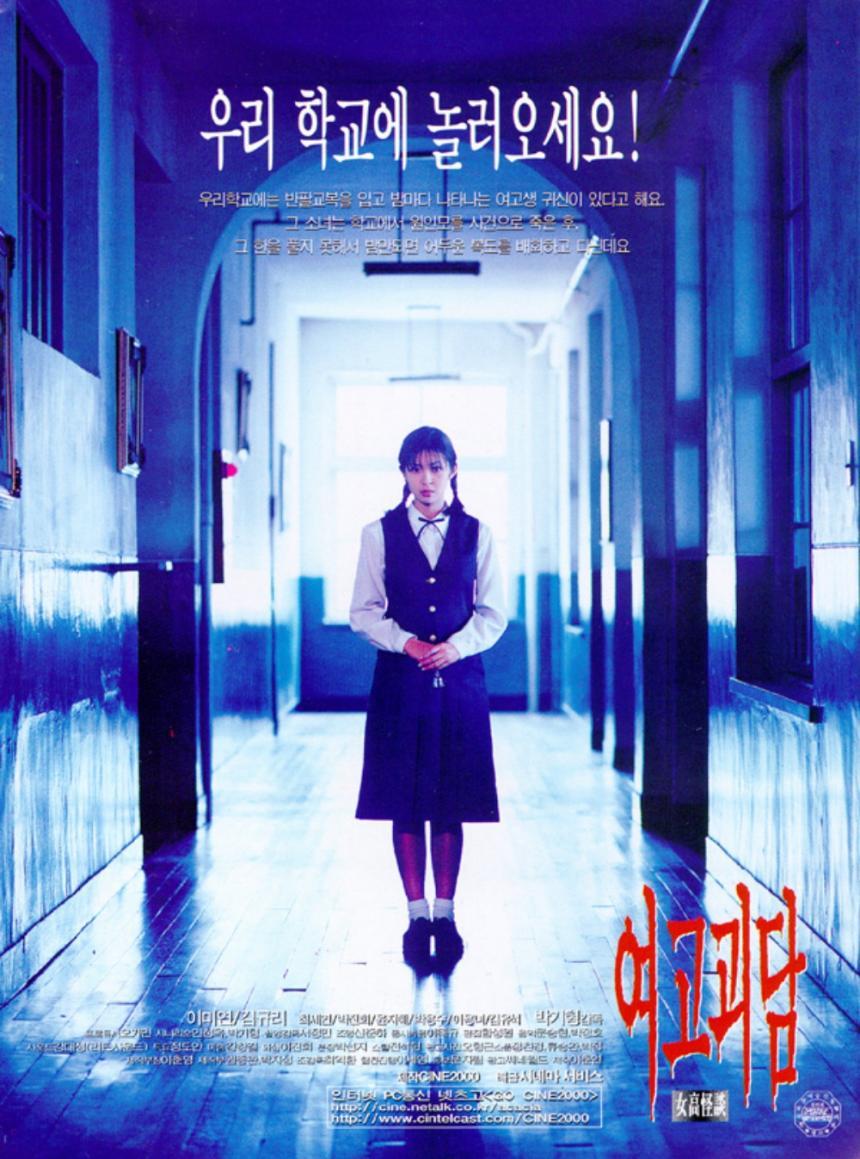
Whispering Corridors (1998)

whispering corridors

Poor Hur Eun-young (Mi-yeon Lee) has been having difficulties ever since she started teaching at her old school. The students don’t respect her as an authority figure, the teachers still look at her as a student, and unlike all of her fellow peers, she actually has some sympathy for what it is like to feel the pressures of being a young girl in South Korea. Oh, and people keep dropping like bloody flies around her.

The film begins with Mrs. Park, a teacher at the all-girl school, finding something disturbing in a yearbook. She then runs frantically through the hallways, scared out of her wits, before she calls Eun-young and mysteriously tells her that Jin-ju is still around, still attending the school. She then drops the phone and is strangled to death by an unseen person wearing the school uniform.

This mysterious killer takes Mrs. Park’s body and moves it outside to make it look like a suicide hanging. Early the next morning two completely different students, the pretty, outgoing art student Ji-oh (Gyu-ri Kim) and the less pretty, shy Jae-yi (Kang-hie Choi) arrive at school early for they have been chosen this week as class clerks, which means they have to arrive early and clean the room. Upon entering the classroom they discover Kim Jung-sook (Ji-hye Yun) is already there. The three form something of a friendship that will grow and change as the film progresses. Ji-oh, upon walking outside discovers Mrs. Park’s body hanging outside.

All of the girls are rounded up and made to promise they will not talk about the incident, and specifically not spread any rumors about it.

Of course, the girls do talk about it and begin to speculate that it was not suicide but murder. Mrs. Park was a notoriously mean and hateful teacher who seemed to take great pleasure in punishing her students. Perhaps a particularly hated student went off the edge and murdered Park in retribution. Those rumors turn to speculation that it could have been Jung-sook as she was a particular favorite for punishment by Park, was not a particularly good student, has few friends, and was at the school earlier than anyone else.

Eun-young befriends our three protagonists and begins sniffing out foul play herself, as she is continually reminded of the death of her high school friend, Jin-ju a few years earlier on those very school grounds.

The mystery deepens, the bodies pile up and the plot gets confusing.

I’ll be honest here, I had a very hard time following just exactly what the heck was happening. This is not particularly uncommon for me, especially in mysteries where knowing who did what to whom is almost always vitally important. I don’t mind it so much because I’m almost always clueless as to who-dunnit until the movie tells me during the final scene.

The thing is I’m really lousy at remembering character names, and unless the actor is someone well known to me faces and actions get mixed up in my head. A film like Whispering Corridors only compounds this confusion. The unfamiliar Korean names render them impossible for me to remember. And the unknown actors have a hard time standing out in my head (and when it is an all-girl cast all with the same long, black hair clothed in the same school-girl outfits you can forget it.)

The confusion is compounded by the plot of the film which is full of flashbacks, useless clues, and of red herrings. Like many mysteries, the film is designed to confuse the viewer a little so that it can surprise us in the last scene.

Visually the film takes quite a few cues from US slasher films circa the 1980s. There are lots of stop-motion cuts, weird fade-outs, and shots of the killer from angles that obscure his/her face. It has also taken a few pages out of the Dario Argento film book, especially with its use of sound for disturbing effects.

In reality, it isn’t particularly scary. The deaths mostly look cheesy and belong to a different era. Though director Ki-Hyung Park tries his best to create a creepy mood, he can only manage a few good moments of eeriness with broad shots of the super long hallways linking all of the classrooms together. It works best, not as a horror film, but as social commentary. I don’t know a thing about Korean school systems, but if they are anything like those depicted in this film, then they need some serious reorganization.

All of the teachers take sadistic pleasure in abusing and harassing the students. Several times we see teachers not only verbally abusing their students but even hitting them, hard, in the face and kicking at them. One teacher in particular, nicknamed Mad Dog, unleashes upon his students in nearly every scene. When he is not pitting them against each other academically (going as far as to say they are enemies in the war for the best grades) he is physically abusing them and coming onto them sexually.

What is particularly revolting about these scenes is that none of the students seem surprised by the actions, and the administration turns a blind eye. Even Eun-young who is a good-hearted woman and wants to make social change in the system, jokes at the Mad Dogs advances saying his nickname instead should be “pervert.”

Behind the death toll and mystery lies a cry for help from the students. It is an interesting juxtaposition between this and American movies that deal with the high school experience. Where American films generally deal with the effects of social standing and the fight to become “popular” Whispering Corridors shows how in a world where only good grades count the actions are also less than exemplary.

Whispering Corridors generally fails as an excellent horror/mystery film, but it does manage to raise important questions about the educational system, friendship, and how we treat our fellow beings.

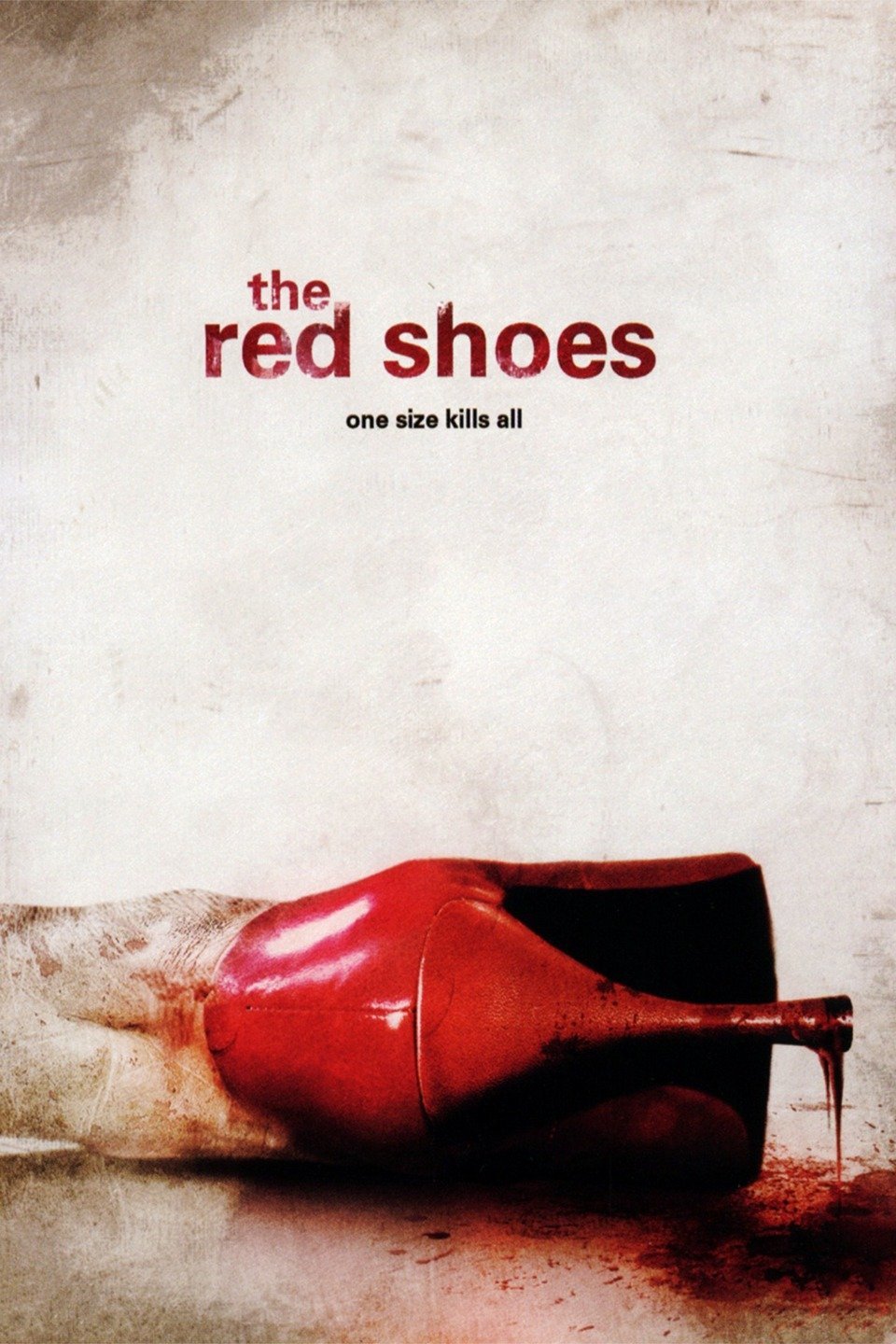
The Red Shoes (2005)

the red shoes

I suppose it is only natural that Asian horror should become as trite and bloated as its American counterparts. Eventually, they will most assuredly start aping themselves – mining their old material for what struck gold – and trying to recreate the old magic, only to fail miserably.

The Red Shoes isn’t as bad as all that, but it sure feels like a movie made upon audience testing and computer printouts of what has made the genre such a popular thing. It contains just about everything a good Asian horror movie should.

Inanimate objects that take on creepy spiritual significance? Check

A young child becomes enamored and endangered by said object? Check

Single mom recently divorced, living in a dilapidated and perhaps haunted apartment? Check.

Gruesome, unexplained murders? Check

Gruesome, unexplained murder that went unrevenged? Check

Long, black-haired

girl in desperate need of a chiropractor? Check

Buckets of blood? Double check.

Yet for all the textbook reasons why it should be an excellent creep-o-rama, it never really manages to pull itself off. At least part of the reason why Asian horror has become so successful both financially and artistically is that it managed to take a haggard genre and revitalize it with freshness. The Red Shoes does nothing new, but takes what has worked in the past and redoes it.

For all that, it’s not half bad. The production values are quite excellent and it does steal from some of the best horror movies this decade so I guess it would have to be pretty good. It’s the type of thing where had I not seen all of the films it rips off I’d probably have loved it.

Let’s slip into the plot for a moment. Sun-jae (Hye-su Kim) catches her boorish husband boinking some girl and decides to take herself and daughter Tae-su (Yeon-ah Park) away from the adulterer and they move into a run-down old apartment (did somebody say Dark Water?)

Later, Sun-jae finds a pair of pink shoes (I know the flick is called Red Shoes but the shoes are most definitely pink – this is either a bad translation or a literary device – they’re red because of all the blood! – get it?!?) and she takes the shoes home. Before she knows it she is attached to those shoes enough to get violently angry with anyone, including Tae-su who tries to touch them. (Inanimate object takes on spooky personality – did anyone see Ringu, the Ring, or the Ring Virus?)

Sun-jae’s friend gets a hankering for some pink –er red – shoes and steals them. Quickly she meets a bloody end. There are obligatory flashbacks showing why the shoes are now evil (I’ll only say the previous owner never got proper revenge, and so the shoe’s soul (get it?) must take that revenge on themselves.) Along the way, we get homages (or rip-offs) of The Eye, Ju-On, the Ring series, Dark Water, and just about every Asian horror film I’ve seen.

Like most Asian cinema the lighting is eerie and very well done. The acting hits all its cylinders and most of the production qualities are quite good. It just isn’t particularly original which makes it kind of a bore.

It’s just plain difficult to muster up any fear over a pair of pink heels. You might say the same thing over a television set, but for anyone who’s ever watched Mama’s Family you know that TV can be as scary as hell. But pink freaking shoes, there ain’t nothing horrifying about that, except maybe bad taste.

It is a good introductory film for Asian horror as it takes a lot of what works and applies it to one picture. But for anyone who has spent a good amount of time with Miike, Park, and Nakata, then the Red Shoes will feel a little too been there, done that.

Saw II (2005)

saw 2 poster

In my writing, there is often a conflict between the rational, intelligent critic, and the overly joyous fan-boy. There are many films, albums, and books that I enjoy that don’t stand up under critical observation. They are unoriginal, contain poor craftsmanship, and are quite often unintelligent and stupid, but for whatever reason, I enjoy them immensely. The difficulty lies in trying to review said material that criticizes its quality while still exuding the joy it can give while still maintaining my credibility.

This is doubly true for horror films. Perhaps more than any genre, horror cinema sets expectations very low in terms of overall cinematic quality. With few exceptions, horror films aren’t really very good and garner very little positive critical response.

For every Night of the Living Dead, there are a dozen Return of the Living Dead Part IIs. For every Dracula there exists countless Embrace of the Vampires. Gremlins spawn Ghoulies. And so on and so forth.

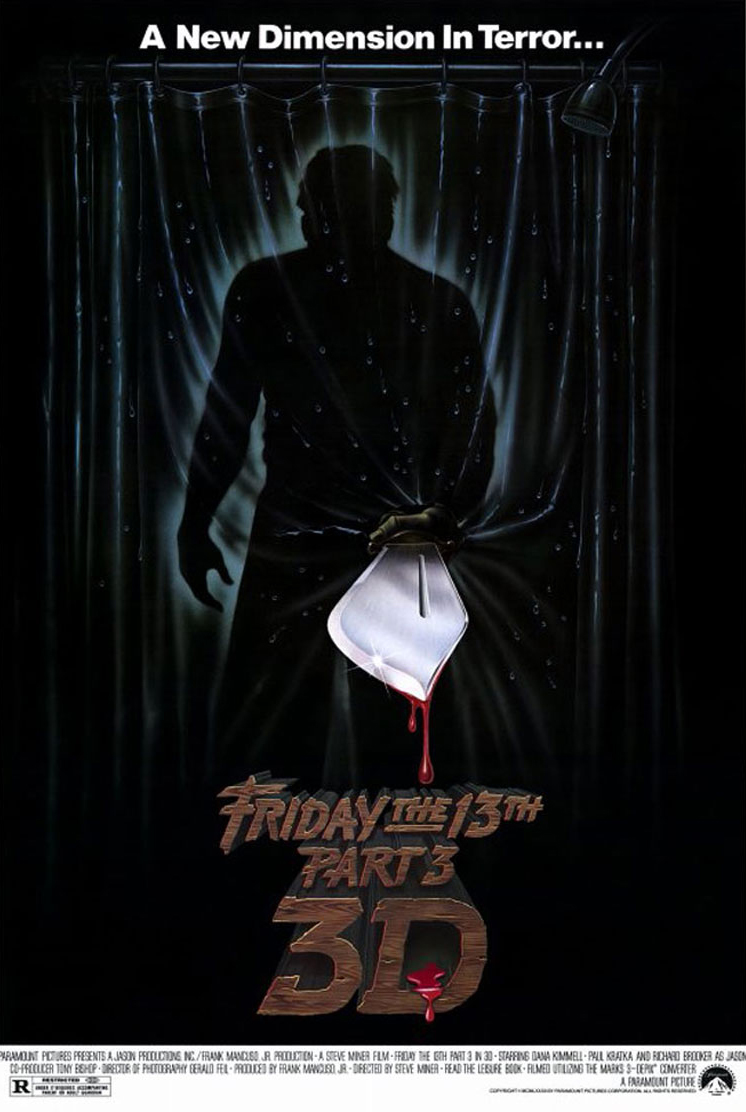
I can’t in any serious way recommend any of the Friday the 13th pictures, but when they come on the USA network you will always find me sitting in front of the TV anticipating the next gory move by Jason.

There is probably a secondary question in here about why I (and so many others) enjoy high-impact gore as much as we do. What is it about gushing blood and guts that excites me in some weird cinematic way? But that is more discussion than I have room for now.

I rented Saw II not because I expected it to be good, or a fine piece of cinema, for I expected it to be worse than the first one, and it rather stunk. Rather I rented the film because I wanted to see some inventive death traps, lots of gore, and plenty of blood even if to get there I had to wade through insipid acting, glaring plot holes, and a story that would make my grandma blush.

I got what I expected.

For those who missed the original or its sequel, Saw refers to Jigsaw a crazed serial killer who sets up elaborate games and traps to kill his victims. The games are often so intricate that they would take weeks to set up and involve so many improbable circumstances that they could only be produced in the movies.

In the first film, we are given absolutely no motivation for the killings. In the sequel, we are given a very basic, and rather insipid back story that is supposed to serve as reasons a person would create such elaborate murders.

Here, instead of random killings, Jigsaw has kidnapped several people and thrown them into a house, a house filled with traps and deadly games. Like in previous killings the players find a tape recorder whereupon Jigsaw tells them that the iron gates trapping them inside the house will not be released until two hours are up. However, a deadly gas is being loosed into the house which will kill them all in one hour. The only way to survive is to locate syringes located throughout the house which contain an antidote.

There are also several syringes in a large safe whose combination can be surmised once the players figure out what they have in common.

One of the players is the son of a police officer. The police officer, Eric Matthews (Donnie Walberg) manages to quite easily find Jigsaw in his lair and begins a stand-off with him to release his son, whom they can watch via closed circuit TV.

That’s way too much plot synopsis for a film that lives and dies by its gruesome traps. In the director’s commentary (yes I did listen to a few minutes of it before getting bored) it is noted that they created specific traps for each of the house players, but as the screenplay progressed their characters wound up doing more damage to each other than the traps. Thus we only see a few of the original death traps.

Herein lies a big problem for the film. The first one was effective (and I’ll use that term mildly) because of its creative use of death. The excitement was in the interesting use of gore and thrill. In the sequel, they try to create tension by making the characters go after each other a la Night of the Living Dead. But they can’t muster nearly that kind of tension. The few traps that we do see aren’t all that interesting either. The trailer for the movie shows one of the more interesting ones – a gun is bolted to a door which goes off whenever the characters use a key to open the door – and even that isn’t all that fantastic. Gore-ridden yes, but it is not exactly super original.

Again in the original, most of the traps entailed the player having to do something horrible to get out. Characters sawed their own legs off to get out of chains or dug through a corpse to get a key, but here most of the traps are pretty straightforward killers. Like the gun door, none of the characters knew it was a trap, there was no recording asking the character to do something to avoid getting shot in the head, it simply happened.

Perhaps asking a horror film to be intelligent, well acted, and actually scary is asking to much. Perhaps expecting the sequel to a mostly rotten gore-fest to be better than the original is expecting a miracle.

In the end, Saw II was a decent way to pass the time. No, there wasn’t anything to take away from the film, no revelations or interesting filmatic choices. But then again it isn’t meant to be. It made me squirm a little bit and be grossed out by the blood. And maybe that’s enough. Maybe

Dark Water (2005)

dark watert

In certain places around the world wide web, there are debates raging about the Hollywood craze of remaking films, especially those of the horror variety, and more specifically the Asian horror variety. For years those crazy Asians have been making twisted, bloody, and freaking scary horror films. Recently Hollywood has realized there is a market for such a thing and has been remaking them ad nauseam.

Scanning the Internet Movie Database you’ll come across all kinds of debates on such a thing, most of them beginning with:

“Why are Americans so dumb?”
Or
“American movies suck, all they do is remake other better movies. Can’t they think of anything original?”

Or my favorite

“Can’t Americans read? Why can’t they just read subtitles and stop remaking perfectly good non-English cinema?”

The fact is Hollywood has been remaking films almost as long as they’ve been making them. The third funniest movie ever made (His Girl Friday) was a remake of an earlier film, The Front Page, and it was released in 1940!

Do the majorities of Americans watch foreign language films? No, probably not. Do the majority of the French, German, and Japanese people watch non-dubbed, foreign-language films? I suspect not. It doesn’t seem that unusual for people to want to watch what is essentially a passive medium, passively.

Hollywood remakes films, and specifically Asian horror films because there is money in it. Let’s face it, if The Ring was a total bomb we wouldn’t have seen The Grudge or Dark Water. But it made a bundle and so more Asian horror remakes came. And they’ll continue to come until they stop making money.

For my money ($14.95 a month for 2 movies at a time via Blockbuster) they can keep on remaking J-Horror. Even when they are less interesting than the original (which is most of the time) they are still generally entertaining.

Dark Water, the American remake of a Japanese film of the same name starring Jennifer Connely is about 3/4th of a good movie. I haven’t managed to catch the original, so I came into the remake fresh, which probably helped me to like it more. Watching a remake when you’ve seen the original is a bit like watching a film when you’ve read the book. You always want the current bit to act more like the images in your head.

So, by not knowing anything about the original I could take on the remake without any preconceived ideas. Turns out it’s not a bad film at all – lots of good imagery, some good acting by great actors, and a rather unconvincing plot.

Jennifer Connely plays Dahlia a soon-to-be recently bitterly divorced mother. Dahlia and her young daughter move into a run-down high-rise apartment that has constant leaks.

Water permeates this picture. It is everywhere. In the constant rain, in sinks and baths, running down the walls and spilling over into the floor. It’s as if the water is a living thing and it wants to be the star of the show.

The real stars include a bloody good cast including John C. Reilly, Tim Roth, and Pete Postlethwaite. Connelly, who can usually hold her own, is completely outdone by her supporting characters. Both Reilly and Postlethwaite turn creepy, simmering, unhinged performances as the manager and caretaker of the apartment. Tim Roth takes a good guy role as a divorce lawyer with a heart of gold.

The direction draws out the suspense and creepiness very well. The apartment is filmed in dim light, with lots of scary shadows overcoming everyone. There is a real sense of dread throughout as we wrangle over the drama of Dahlia’s impending divorce, struggle with her child who seems to be going crazy and an apartment that just might be haunted.

As with many films of this type, Dark Water can’t sustain its premise for the entire length of the film. About the ¾ mark, many of the supernatural activities are oversimplified, and the ending is less than satisfying.

But up until the end, it is a pretty good flick. Not bad for a remake.

Audition (1999)

audition poster

Audition is a peculiar type of horror film. It is not the violent, gorefest that you might expect from the new stream of Japanese horror films, and certainly not from Takashi Miike, director of such bloodfests as Ichi the Killer and Full Metal Yakuza. It is also not the suspenseful, scare them with what you don’t see the type of horror film that Alfred Hitchcock might make.

In fact, for the first 2/3s of the movie, it is more akin to a family drama than anything you’d call horror. The plot concerns a middle-aged widow, Aoyama (Ryo Ishibashi), who is encouraged by his teenage son to start dating again. Not knowing how to go about this, he decides to hold auditions for his new wife. Real-life auditions, like you, ’d do in hiring actors for a movie.

Lots of women show up and are interviewed for the lifelong role of wife. Aoyama is intrigued by one woman, Yamazaki (Eihi Shiina), and begins to date her. Eventually, we find that Yamazaki is not all who she seems to be and thus the horror begins.

Miike’s ability to turn the conventions of an old romantic formula completely on its head is nothing short of masterful. Watching the first thirty minutes or so of the film, you would have no idea that horrible, bloody things were going to take place later on. Had I not known what to expect from a Miike film, I would have thought I was watching an old-style romance.

Yamazaki at first seems like a natural mate, she is beautiful, sweet, and shy. Miike lets the twist in her character come in slow, short, and shocking bursts. The screw tightens and the horror grows.

The gore is actually pretty minimal, but when the horror comes it comes quick and merciless.

Asian extreme horror is not for everybody. The blood and the gore are too much for a wide audience. But for those with the proper stomachs, Takashi Miike is a master and Audition is one of his best.

The Eye (2002)

the eye movie poster

There is an old horror story about a normal law-abiding citizen getting a transplant from a psychopathic killer. The killer’s body part still has the memory of its former owner and wants to take up the killings again.

This premise has been aped in countless movies and TV shows, most notably in Body Parts starring Jeff Fahey and that Simpsons episode where Homer has Snakes hair transplanted to his bald head. It is a pretty tired premise; one that has been done so many times all the originality has been drained from it. I’m waiting for the day when Hollywood green lights a picture about a little girl who gets a toe transplant from Charles Manson.

Chinese directors, the Pang brothers try to breathe some life into the concept with their 2002 feature, The Eye. Unfortunately, it is the first of the so-called Asian Extreme pictures that I’ve seen that I’ve found to be rather lackluster.

It isn’t for a lack of trying. The Pang brothers bring an eye of originality to the premise and create an atmosphere that is quite creepy and interesting. At least in the first half.

In this case, the transplanted body parts are eyeballs. A young blind girl, Wong Kar Mun (Angelica Lee) receives an eye transplant and thusly begins seeing dead people, a la The Sixth Sense.

The Brothers Pang introduce this concept by having the dead show up in shadows. Visually the first half of the film is stunning. We see the world through Mun’s adjusting-to-sight eyes and there are creeping things lurking just about everywhere. In an impossible-to-explain, but absolutely must-see series of scenes Mun comes to understand that what she sees with her eyes is beyond the realm of the natural. As a viewer, I was knocked upside the head by the brilliant display of imagery

There is no “I see dead people” revelation here. The revelations come slowly, building tension along the way. Having no concept of vision, Mun has no understanding of what is real and what may be supernatural. By allowing the audience to understand quickly what Mun must slowly learn, the film is quite effective in creating a sense of horror.

The camera pans slowly around corners as the music builds anticipation to what could be hiding just out of sight. There are nice jolts of music as the camera reveals a new surprise. Here it seems the Pang brothers have taken a page out of the American scary movie pages instead of the Asian counterpart. Scare the people with jolts instead of developing actual creepy situations.

In the second half, the film begins to truly unravel. With only a few conversations, Mun manages to have her psychotherapist, fall in love with her and be willing to drop everything and travel to Thailand to investigate the donor of her dead-seeing eyes.

From horror, the movie now travels into a melodramatic mystery. The doctor and Mun find dark secrets in the story of the young lady who had Mun’s eyes first. Of course, they are forced into setting things right, and the movie pretty much falls apart. Oh, it’s nothing terrible or cringe-inducing, but it is formulaic and not nearly as interesting as the first two-thirds of the film.

I found The Eye in the foreign section of my local Blockbuster. It was well worth the five dollars I laid down for it, if just for the glorious visuals of the first half.

Suicide Club (2001)

suicide club poster

Fifty-four Japanese schoolgirls stand on a train platform, holding hands, singing, and laughing. As the train approaches they clasp their hands tighter, and in sing-song fashion start to count. As the train arrives, the counting stops, and all 54 of them jump in front of the train. Buckets of blood and guts spray the train, the passengers, and the people passing by.

Later, another group of teenagers sits on the roof of a school building during their lunch break. They are eating and laughing and looking like happy schoolchildren. Conversations turn to the 54 and how cool it would be to form their own suicide circle. Amongst much joking and a good time having, a crew decides to end their lives then and there. Standing on the edge of the rooftop they hold hands and plunge their way to the bottom. Buckets of blood and guts spray all over the school grounds, teachers and students.

Amongst the bloodletting are some scenes about a pop group whose Britney Spearesesque pop wailings are irresistible to every teen. Adults everywhere do their best to quash any talk about the deaths being a part of a suicide club movement.  A theme develops about society’s herd mentality.

Call it Japanese horror with a message.

The cops have to rule all of these deaths as accidents for there seems to be no foul play involved. That is until a bag filled with little rectangles of skin sewn together shows up. Then the suicides become a matter of detective work.

The detectives begin getting calls from a cyber-savvy woman who seems to know more than she lets on, calling herself the Bat. She leads the detectives to an internet site keeping a count of the suicides before they actually happen. One of the detective’s kids finds another site with some peculiar type clues.

Call it a Japanese horror, detective thriller with a message.

Through all this shocking, blood-splattering suicidal carnage continues to occur.

The detectives find a suspect who acts like a cross between Ziggy Stardust and Graham Norton. He’s definitely a bad fellow, what with the squishing of animals, kidnapping, and the random sexing with girls wrapped in pillowcases lying in a bowling alley. But he may not be behind all the suicides.

Call it a Japanese horror, detective thriller by way of Asian MTV, with a message.

In the end, we’re left with nary an explanation of the suicides, but that’s not really the point anyway. There is lots of gory violence if you like that kind of thing. And let’s be honest if you are taking the time to search out a copy of a relatively obscure Japanese horror film called Suicide Club, you probably do. There are gobs of creepy, moody suspense, with some very dark humor thrown in. All mixed in with some pretty in-your-face, and spot-on social commentary.

What’s not to love?