Doom (2005)

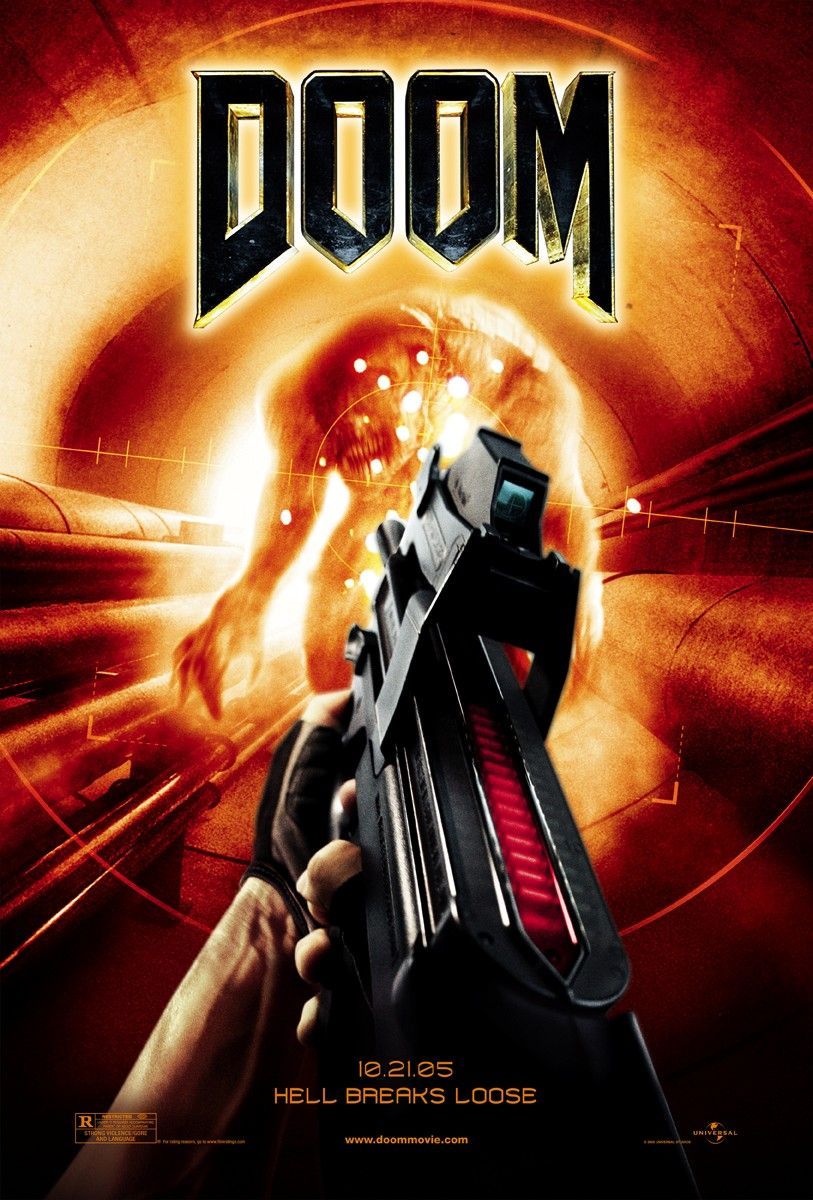
doom movie poster

One of my oldest and dearest friends and I had our first bonding moments while playing Doom. It was freshman year of college and another buddy of mine had Doom and the Doom-like Heretic on his computer. For reasons I won’t get into I had a key to this friend’s dorm room and used to sneak over to play while he was at work. The guy next door, Jamison, would then pop his head in and seeing what I was doing, would start playing when my turn was up. Many weekends were spent just like that, and through those games we became friends.

I suppose it is a pretty typical man thing to bond over playing games that focus on big guns and blood baths, but there we have it.

A movie based on the game was destined to be bad. Hollywood has a horrible record of converting games to films, and games are inherently difficult to map out into a two-hour piece of celluloid. Games are often low on plot, and give the players control over behavior. And for some dumb reasons, Hollywood producers can’t seem to grasp the things that make games so much fun in the first place.

In the film, the demon creatures are no longer from the depths of Hell but are genetic mutations created in a lab on Mars. It seems the scientists discovered ancient bones of Martian creatures with 24 chromosomes instead of the typical humanoid 23. Being dumb scientists they decide to inject humans with an extra chromosome to make them “super” and instead make them crazy mutant killers. (and yes that was a spoiler, but with a movie this dumb you’ll forgive me instantly.)

In the game, the scientists accidentally opened a portal to Hell while creating transport portals like in Star Trek. There is absolutely no reason to remove that part from the movie except that some screenwriter thought including a portal to Hell was too unbelievable and would hurt sales. Instead, we get this dumb mutant plot which is just as stupid and manage to alienate fans of the game in the process.

There is also more backstory than we need and a ridiculous subplot involving one of the marines and his sister who happens to be one of the scientists. It would have been so easy to use the game’s back story in a quick voice-over or title sequence and then dropped us straight into our marine killing demons. It could have been a great hour and a half of killer action and suspenseful horror. It wouldn’t have been great art, but it would have pleased fans and made more money. Instead, we get a big ball of stupid crap.

The one supposed redeeming moment is when the camera moves into first-person mode just like in the game, but even this looked mostly stupid. It looked too much like the game, actually, and ruined it. In the game, it was fun to not be able to see around corners only to turn them and find a bad guy lurking, but in a film, it was just kind of silly.

So, leave the movie at Blockbuster and download the game to relive those college memories
Manhattan Murder Mystery (1993)

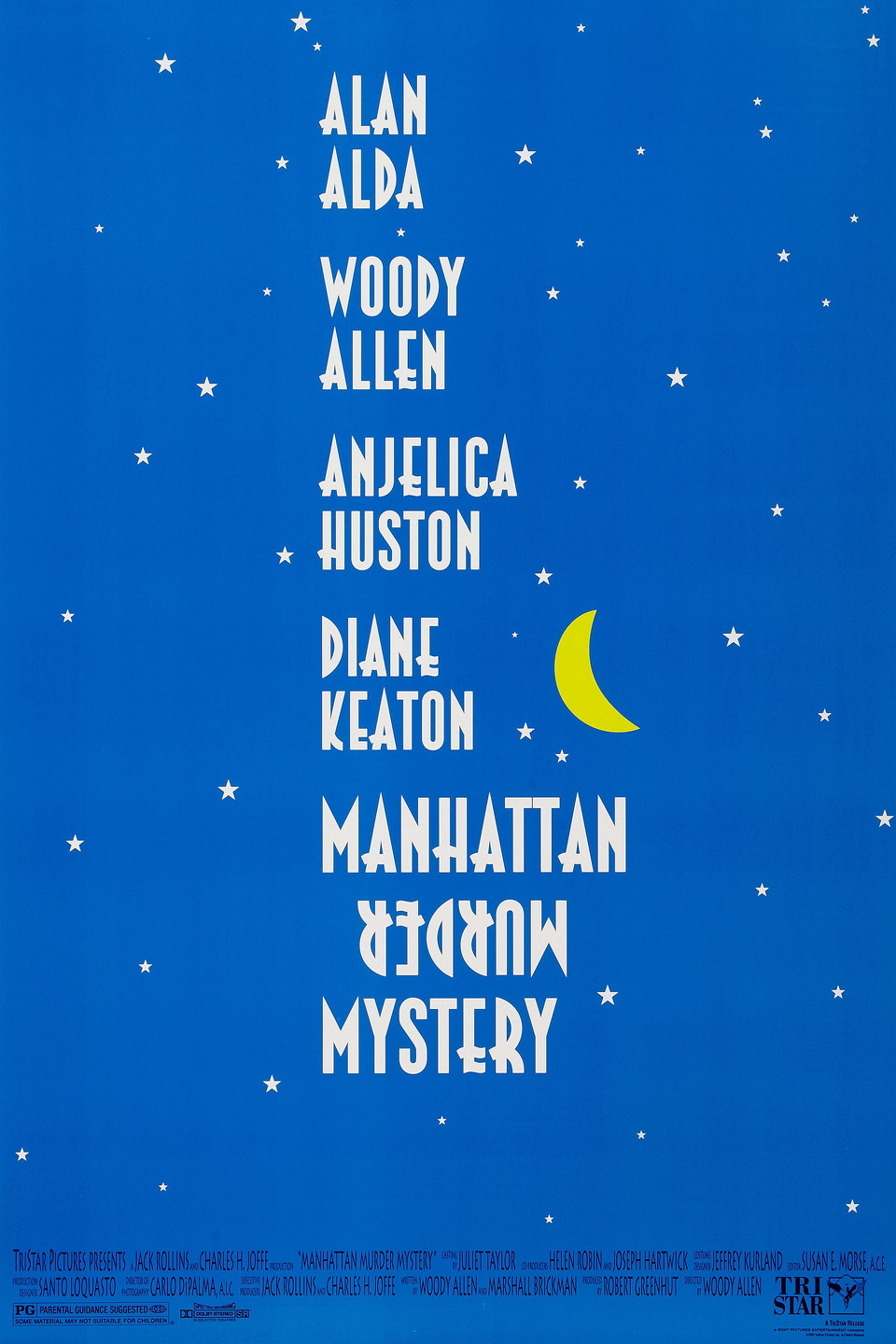
manhatan murder mystery

Originally written and posted on October 5, 2006.

I’ve been watching Woody Allen films lately and I don’t know how I missed so many of them. I mean how could I be thirty years old and never seen half of his oeuvre? I just don’t get it…I mean I used to watch his films on the USA network when I was a kid – Bananas (1971), Everything You Wanted to Know About Sex, But Were Afraid to Ask (1972), that one about the guy who takes a nap and wakes up a hundred years later and there’s no sex, and I loved them all. I used to stay up late and watch them with my dad. Then I just stopped. I mean I did watch Annie Hall (1977) of course, but so many others…I don’t know…they just slipped by. I think it was watching Deconstructing Harry (1997) that did it. That one…I don’t know it felt like an old man making dirty jokes for two hours…it sounded so good in the magazines, but…I don’t know I couldn’t take it. And then I decided I had seen all the Woody Allen I wanted to see. But now, lately, I’ve been watching the rest, and I can’t believe I ever stopped.

(So that was my written Woody Allen impression. It’s funny, maybe.)

Manhattan Murder Mystery isn’t top-notch Woody Allen, but it’s pretty stinking good. It is basically your classic murder mystery premise with Woody Allen jokes.

Woody plays Larry who is married to Diane Keaton who plays Carol. They live in Manhattan (and I know this sounds pretty much like every Woody Allen movie, but stay with me) and their kindly old neighbor dies. Carol is almost immediately suspicious because the dead woman’s husband, Paul (Jerry Adler),  is too chipper too quickly after the death of his spouse.

Carol enlists her friend Ted (Alan Alda) for the conspiracy while Larry thinks they are both nuts. Carol and Ted get deeper and deeper into trying to see how Paul could have done it and eventually (of course) realize that their little game has more truth to it than they could imagine. Soon everybody is knee-deep in a real death plot and must find a way to not only catch a crook, but stay alive as well.

The plot could have easily been lifted from Agatha Christie or Nancy Drew or any other of the millions of murder mystery writers. There is nothing original in the idea, but Woody Allen pulls it off masterfully, mixing the comedy and mystery in equal parts all in breezy, completely enjoyable way.

It may not be his best work, but it sure is fun to watch.

Lost: Season 3, Episode 1 – A Tale of Two Cities

lost a tale of two cities I have been anticipating tonight since the season two finale ended. I haven’t been this excited about TV since … well, ever. The season three premiere of Lost was like some crazy primitive religious rite. Fans and friends have been hyping it up for months. I was literally shaking with anticipation.
And then it began.

There are people in a house discussing a book. Who are these people? This must be a flashback. I had heard the new season was going to focus on The Others, so maybe this is a flashback to one of their early lives. The discussion gets heated and then there is something. An earthquake.

The house shakes; the people move close together, near support beams. The shaking stops and they run outside. It is a lovely looking place, with bright sun, and blue skies, like the suburbs of paradise. Then someone, a worker or someone, pops out from underneath something. Is that Ethan?

Holy crap it is. This must be Ethan’s back story. But no, there’s Henry Gale. This must be the aftermath of the explosion from the end of last season. What’s that in the sky? It is a plane — crashing.

It’s Flight 815; we’re seeing the crash from The Others’ point of view. Immediately Gale orders The Others to investigate and specifically tells Ethan to pretend he is a survivor.

Bam, commercial. Wow! That’s all I can say. Even my wife is impressed and she has totally lost her Lost momentum this summer.

After the break, we see what The Others have done to Kate, Sawyer, and Jack. Kate is in a large cinder block building with Zeke telling her to take a shower. She is defiant as ever but does take the shower only to find her clothes missing and a new girly dress in its place.

Sawyer awakes in a cage. It looks like something out of a whacky circus and there is an unknown man in the next cage. Sawyer uses his usual charm to question the man but gets nothing but silence in return. Amongst a variety of odd gadgets located in the cage, Sawyer spies one marked with a fork and knife. Pushing it, he gets only a warning. Pushing it again, the strange man warns him not to do it again. Sawyer does and is electrocuted.

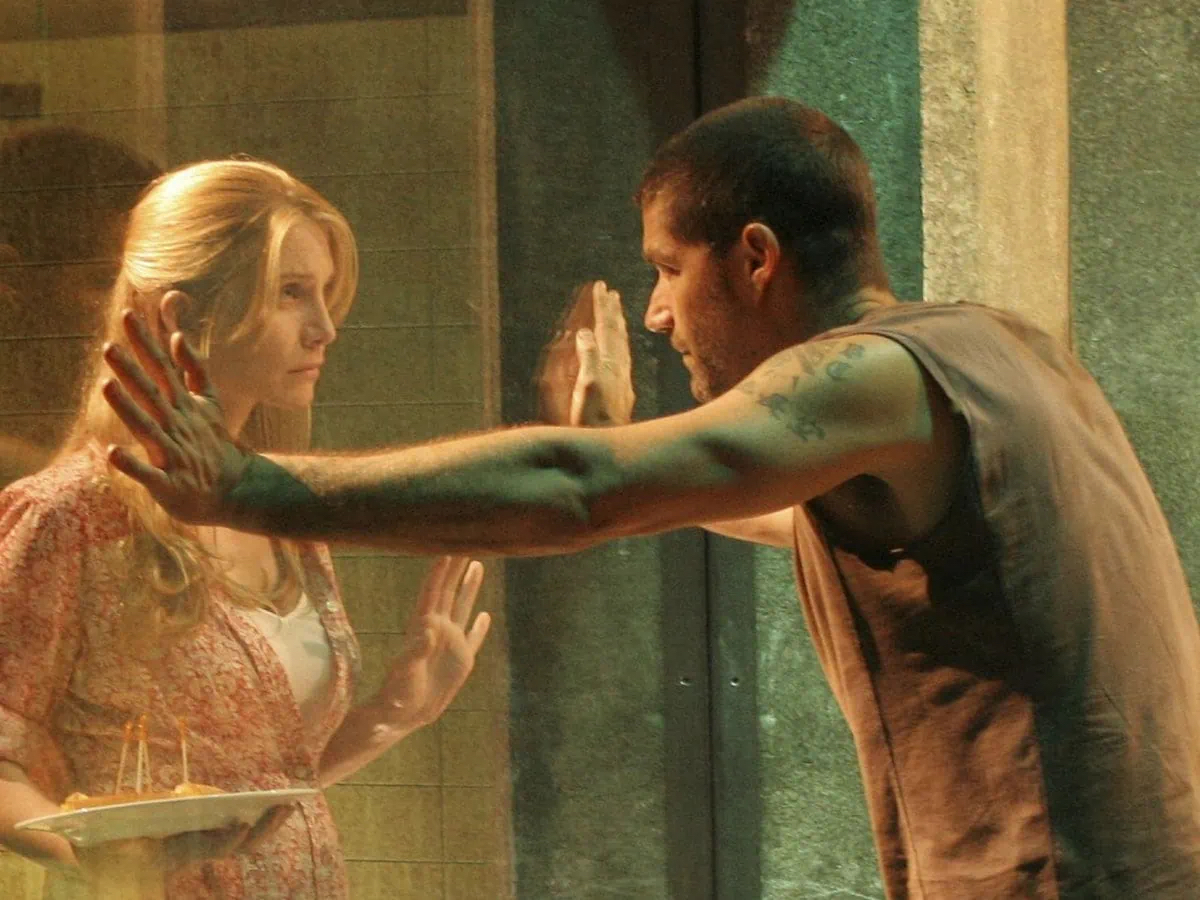
Jack awakens in a small windowless room with one wall made out of a strong invisible plexiglass-type substance.

Commercial number two, WTF? We’re 14 minutes in and already at commercial number two! Last season was bad enough with commercials every 10 minutes, now we’re down to seven? Those bastard network executives.

After the break, we’re back to Jack and now he’s pulling on some chain trying to escape. A woman enters and offers him food. Jack refuses, playing the strong, stubborn Gandhi.

Kate is taken to the beach where she has breakfast with Henry Gale who tells her he wants her to have a pleasant memory because the next two weeks are going to be very unpleasant.

The unknown man in the cage next to Sawyer breaks free and lets Sawyer out. They run but are quickly captured by the woman who has been talking to Jack. Zeke makes the other escapee apologize to Sawyer before being taken back.

Eventually, Sawyer manages to figure out the series of levers to push and the food button now releases a doggie bone (with the word Dharma on it) and some more dry food, plus a stream of water. While eating, Kate is brought to the now-empty adjacent cage. Sawyer, obviously moved to see Kate plays it straight and is kind to her. He even tosses over his doggie bone for food.

Meanwhile, Jack finally gives in and accepts the food offered by the woman. She forces him to sit in the corner so that she can open the door and bring the food. As she opens the door, Jack runs for her and manages to subdue her with a sharp object. They leave the room only to find more doorways. Stopping at one Jack tells the woman to open it.

She refuses saying she’ll die if she does. Henry Gale comes in stating she’s right. Jack doesn’t listen and opens the door. Immediately, a flood of water pores in. Gale closes an escape door in the woman’s face letting her and Jack fend for themselves. They escape by pressing an emergency button and the woman knocks Jack unconscious.

I should mention the flashbacks for this episode involved Jack and his ex-wife. It is during the moments when she has filed for divorce and Jack realizes she has found someone else. Jack has gone crazy with jealousy and begins doing things to find out who this man is – calling all the numbers on her cell phone, berating her about it and even accusing his father of knowing something, if not being that man.

Once things are cleaned up from the water, the woman begins telling Jack she knows everything about him. She begins telling him all kinds of things she shouldn’t and couldn’t know by simply paying attention to him on the island. Jack asks her about his ex-wife and is told she is happy. Then, Jack finally fully accepts submission and food. As the woman is about to enter, Henry Gale tells her she’s doing a good job and we fade to black.

It was a great episode. Lots of good emotional pull with the back story, a great introduction to new mysteries involving The Others and what exactly they are doing, and plenty of ‘Oh My Gosh’ moments. I do kind of wish they had spent a few moments with our friends on the other side of the island, but the teaser for next week showed we’ll be seeing plenty of them.

Strangely, though I immensely enjoyed the episode, I feel a little letdown. It is probably the down from a big high, but it feels strange knowing what happened after so many months of speculation.

No worry though; I’ll be back up next week when episode two airs.

Spider Forest (2004)

spider forest poster

This was originally written and posted on October 4, 2006.

A Neo-noir mystery wrapped in a detective story pretending to be a horror film, Spider Forest is a little bit of everything but not enough of anything to be as excellent as I had hoped. It starts out incredibly strong but meanders in the middle trying to be as confusing as possible before coming to an interesting if not entirely satisfying ending.

The film begins with Kang Min (Woo-seong Kam) stumbling across a grisly murder in a small cabin in the middle of the woods. A man is gruesomely lying on the floor having been hacked to death, and we see every bloody detail. Unlike most cop shows where dead men have small blood stains on their shirt, but otherwise look perfectly fine, the camera here shows that murder is a disgusting, dirty thing, expulsing blood and guts in a nasty mess.

As Kang Min walks further into the home he sees his girlfriend lying on the bed, beaten and battered. She can only say something about spiders and that she is scared before finally succumbing to death. But what’s this? The killer is still in the house and Kang Min chases him outside into the forest. Unfortunately, the killer is too quick for him and backtracks to beat Kang Min with a club.

Left for dead Kang Min stumbles up and wanders for help on a lone stretch of highway. A car, not seeing him, hits him straight on, and again he is left for dead. He is eventually found and taken to the hospital.

In a wonderful opening scene for Detective Choi (Jang Hyeon-seong) we see him and several other cops staging a raid on a gang resting inside an apartment. As the men give a three count before busting in, Choi’s cellular phone rings and ruins the surprise. With nothing to do but break down the door, the cops charge in and beat the villains to a bloody pulp. Then, while sitting on top of one bad guy, Choi answers his still-ringing phone.

It is a lovely, sadistic, and hilarious bit of filmmaking.

The caller was someone from the hospital informing Choi of Kang Min’s accident and Choi rushes over to meet him.

It is here that the film verges off into the land of confusion. Several times it jumps and cuts through time without much warning. I was often confused as to where I was in the timeline and just who I was seeing on the screen. We see Kang Min meeting his wife, meeting his girlfriend after his wife has died in multiple flashbacks we see the killing in the cabin as King Min begins to remember exactly what did happen.

Some of these scenes are incredibly interesting and kept me begging for more clues, while others tended to drag and not move the plot forward in any distinct way. I suppose this was to add to the mystery of it all and keep the audience guessing, but ultimately it felt like sloppy editing.

I won’t give away the ending, but it is the sort of film that even after everything is wrapped up you may not fully understand. I had to give it considerable thought and consult some online forums to decipher it fully. Which, depending on your personality is either an annoying way to tie things up or a brilliant way to finish.

In the end, it contained a number of wonderful moments but was marred by a lack of consistency in development. What’s brilliant is well worth watching and there is enough to chew on after the credits roll, but the promise of the first twenty minutes is never lived up to in the end.

Whispering Corridors (1998)

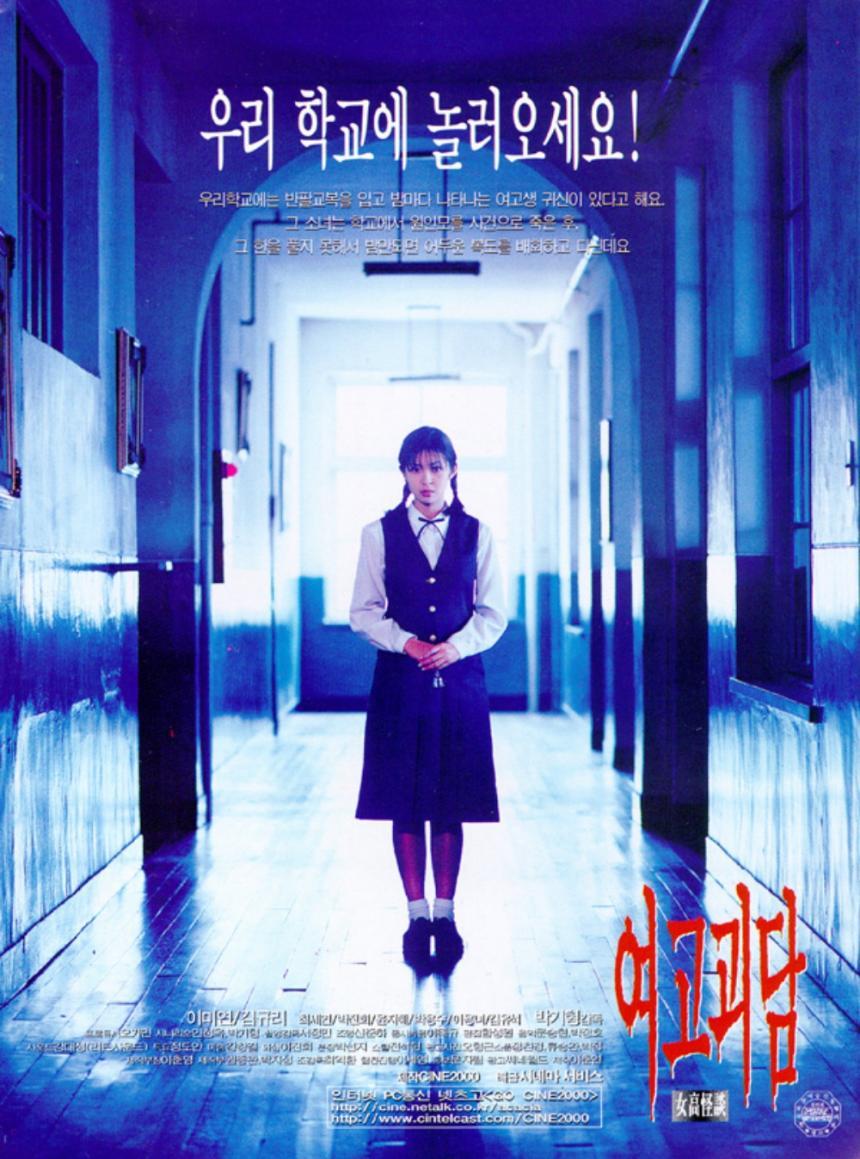
whispering corridors

Poor Hur Eun-young (Mi-yeon Lee) has been having difficulties ever since she started teaching at her old school. The students don’t respect her as an authority figure, the teachers still look at her as a student, and unlike all of her fellow peers, she actually has some sympathy for what it is like to feel the pressures of being a young girl in South Korea. Oh, and people keep dropping like bloody flies around her.

The film begins with Mrs. Park, a teacher at the all-girl school, finding something disturbing in a yearbook. She then runs frantically through the hallways, scared out of her wits, before she calls Eun-young and mysteriously tells her that Jin-ju is still around, still attending the school. She then drops the phone and is strangled to death by an unseen person wearing the school uniform.

This mysterious killer takes Mrs. Park’s body and moves it outside to make it look like a suicide hanging. Early the next morning two completely different students, the pretty, outgoing art student Ji-oh (Gyu-ri Kim) and the less pretty, shy Jae-yi (Kang-hie Choi) arrive at school early for they have been chosen this week as class clerks, which means they have to arrive early and clean the room. Upon entering the classroom they discover Kim Jung-sook (Ji-hye Yun) is already there. The three form something of a friendship that will grow and change as the film progresses. Ji-oh, upon walking outside discovers Mrs. Park’s body hanging outside.

All of the girls are rounded up and made to promise they will not talk about the incident, and specifically not spread any rumors about it.

Of course, the girls do talk about it and begin to speculate that it was not suicide but murder. Mrs. Park was a notoriously mean and hateful teacher who seemed to take great pleasure in punishing her students. Perhaps a particularly hated student went off the edge and murdered Park in retribution. Those rumors turn to speculation that it could have been Jung-sook as she was a particular favorite for punishment by Park, was not a particularly good student, has few friends, and was at the school earlier than anyone else.

Eun-young befriends our three protagonists and begins sniffing out foul play herself, as she is continually reminded of the death of her high school friend, Jin-ju a few years earlier on those very school grounds.

The mystery deepens, the bodies pile up and the plot gets confusing.

I’ll be honest here, I had a very hard time following just exactly what the heck was happening. This is not particularly uncommon for me, especially in mysteries where knowing who did what to whom is almost always vitally important. I don’t mind it so much because I’m almost always clueless as to who-dunnit until the movie tells me during the final scene.

The thing is I’m really lousy at remembering character names, and unless the actor is someone well known to me faces and actions get mixed up in my head. A film like Whispering Corridors only compounds this confusion. The unfamiliar Korean names render them impossible for me to remember. And the unknown actors have a hard time standing out in my head (and when it is an all-girl cast all with the same long, black hair clothed in the same school-girl outfits you can forget it.)

The confusion is compounded by the plot of the film which is full of flashbacks, useless clues, and of red herrings. Like many mysteries, the film is designed to confuse the viewer a little so that it can surprise us in the last scene.

Visually the film takes quite a few cues from US slasher films circa the 1980s. There are lots of stop-motion cuts, weird fade-outs, and shots of the killer from angles that obscure his/her face. It has also taken a few pages out of the Dario Argento film book, especially with its use of sound for disturbing effects.

In reality, it isn’t particularly scary. The deaths mostly look cheesy and belong to a different era. Though director Ki-Hyung Park tries his best to create a creepy mood, he can only manage a few good moments of eeriness with broad shots of the super long hallways linking all of the classrooms together. It works best, not as a horror film, but as social commentary. I don’t know a thing about Korean school systems, but if they are anything like those depicted in this film, then they need some serious reorganization.

All of the teachers take sadistic pleasure in abusing and harassing the students. Several times we see teachers not only verbally abusing their students but even hitting them, hard, in the face and kicking at them. One teacher in particular, nicknamed Mad Dog, unleashes upon his students in nearly every scene. When he is not pitting them against each other academically (going as far as to say they are enemies in the war for the best grades) he is physically abusing them and coming onto them sexually.

What is particularly revolting about these scenes is that none of the students seem surprised by the actions, and the administration turns a blind eye. Even Eun-young who is a good-hearted woman and wants to make social change in the system, jokes at the Mad Dogs advances saying his nickname instead should be “pervert.”

Behind the death toll and mystery lies a cry for help from the students. It is an interesting juxtaposition between this and American movies that deal with the high school experience. Where American films generally deal with the effects of social standing and the fight to become “popular” Whispering Corridors shows how in a world where only good grades count the actions are also less than exemplary.

Whispering Corridors generally fails as an excellent horror/mystery film, but it does manage to raise important questions about the educational system, friendship, and how we treat our fellow beings.

The Office: Season 3, Episode 2 – “The Convention”

the office - the convention Last week’s opener really got my hopes up for another stellar season of The Office. I was doubly looking forward to actually watching a full season from start to finish instead of sporadically catching episodes as I have done for the last two seasons. Unfortunately this week’s episode, “The Convention” failed to live up to my expectations. Oh certainly I’ll keep watching, but my dream of a perfect season has already died.
It starts off with a whiz-bang having Michael come in talking of adopting a child after having watched Angelina Jolie on Oprah. He quickly gave up the idea after learning the application process could cost upwards of $1,000 and the waiting list is a good eight months.

“I don’t even know if I’ll want a baby in eight months.”

After a bit of bartering, Pam and Michael agree to have a child together if both remain childless in thirty years.

“If I haven’t had a baby in ten years then you and I…”
“No, Michael.”
“In twenty years?”
“No, Michael.”
“In thirty years?”
“Ok.”

The rest of the episode centers around a paper convention pitting the Scranton office against the Stamford one, at least in Michael’s eyes. He is immediately jealous of the relationship that Jim has developed with Josh, the manager of the Stamford office, or as Michael says, “the poor man’s Michael Scott as he is known around my condo.”

Josh does get off a line that he would let Michael work as a salesman if his office absorbs the Scranton one. An interesting if mostly innocuous remark that may serve as a means to get Jim back into the company with the rest of the cast.

This is also one way to solve the whole two-offices dilemma. By holding a convention they can merge the two offices, making a more cohesive storyline than trying to keep up with multiple settings. Although certainly they can’t keep holding conventions and it still created two settings having a side plot involving Jan.

Jan has her first first-date in nine years with a cartoonist friend of Kelly’s, and Angela is upset at Dwight for leaving her for Philadelphia.

“Looks like someone took the slow train to Philly,” Angela jibes, “which translates to she’s a slut!”

The blind date goes poorly, but as a possible interesting sideline, Toby seems to have taken a shine to Pam, though is too shy to approach her about it.

In Philadelphia, the rest of the office tries to drum up business, while Michael invites everyone to a party back in his room. Nobody actually seems to come to the party except Jim who suddenly stops playing the prankster and is suddenly as kind to Michael as anyone ever has been. Even going as far as to admit he left Scranton because of Pam. It is as touching as it is weird to see somebody opening up to Michael.

The episode wasn’t bad, in fact, it had some very nice moments, and the writers definitely seem to be trying to create some interesting storylines. The line about the two offices merging may prove interesting fodder for later episodes, and the Pam, Jim, Toby triangle may also open up new drama. Some interesting ideas, but they also managed to slow the episode down. In trying to lay down some strands to expand the series, they bogged this particular episode down.

The show closes with its best gag: Michael turns on a black light only to expose many large stains on the bed. Dwight surmises that it is either “blood, urine, or semen.”

“God, I hope it’s urine,” Michael concludes.

My Name is Earl: Season 2, Episode 2 – “Jump For Joy”

my name is earl jump for joy

Originally posted on September 29, 2006.

This week’s episode was different for two reasons: it didn’t involve a single item from the list, and it wasn’t particularly funny. It was also a direct continuation of last week’s episode, which may be totally different, but since I watched last season in non-sequential reruns I’m not sure about that.

Earl begins the episode by telling us that he begins most mornings thinking about the list, but on this morning he was thinking about other things, mainly going to court to help get Joy out of jail – then he recaps the events that happened in last week’s episode, landing Joy in jail in the first place.

The idea to create episodes that don’t involve the list seems like a decent one. The show is popular and it seems quite possible that the list could run dry before the show runs out of episodes, plus the concept of writing certain wrongs could become tiresome more quickly than the producers would like. But if tonight’s episode is any indication of how it will go without a list, Earl had better start thinking about his past mistakes more often.

The judge sets Joy’s bail at one million dollars due to this being her third strike. In flashback number one (or two if you count the opening recap) we see that Joy once tried to make counterfeit money by copying bills at a big copy center like Kinkos. Strike number two occurred when she was being fingerprinted for that crime and struck the officer due to him breaking her newly minted fingernails.

Randy, as usual, isn’t concerned with the events of the day, but with a walnut – he wants to see if the judge will crack it with his judge hammer. Amazingly, the judge obliges, even after tossing Joy out of court.

So, a million-dollar bail is set making it a cool $100,000s needed for a bondsman.

Earl no longer has that kind of money, but Randy makes a helpful list of folks they can borrow it from – Richie Rich, the Beverly Hillbillies, and the like – but the list of fictional characters is written on a Chubby’s Pork bag, and Earl thinks he might be able to borrow the cash from Chubby himself.

Chubby, played in full-on sleaze mode circa Striptease by Burt Reynolds, relents to the money request, but only if Earl can bring back his favorite dancer, who happens to be Catalina.

Turns out Catalina loved being a dancer, but her unusual method of jumping up and down was hazardous to local citizens – an old man died of a heart attack from watching her “assets” go boingy-boing. Thus she reserved herself to a life of cleaning motel rooms.

Ever the helpful lot, Earl and Randy (who can’t seem to think straight after Earl mentions Catalina being half-naked) track down the dead guy’s family and it turns out the old man was a slave driver in a sweatshop. His death has brought happiness to the sweat shop workers (for the son brought in a fan) and everything is better.

Catalina agrees to dance prompting Randy to ponder “which half’s going to be naked – I hope it is the front half.” But all doesn’t go well when Catalina finds out her dancing will get Joy out of jail. Catalina refuses to, as she puts it “jump for Joy” in what has to be the cheesiest clever pun in the history of television.

Joy agrees to apologize for all the wrongs she has committed against Catalina in hopes that she will agree to the dance. But as usual, Joy can’t play nice and the apology turns into a catfight over which of the two is hotter.

Somehow Joy convinces the judge to release her for a one-night Chubby dance in order to raise bail money. Joy gets drunk to calm her nerves and instead of dancing, she pukes all over the front row.

In the end, Catalina saves the day and agrees to dance – not for Joy, whom she still loathes, but for Earl and his quest to make people’s lives better.

Though in the episode, Earl was unable to scratch something off his list, the episode still revolved around him trying to help people out (in this case getting Joy out of jail, and Catalina back to dancing.) This causes me to ask what’s the point of moving away from the list if all you’re going to do is set up the same type of situation. Without the list, Earl seems a little unfocused. The show focused even more on juvenile gags (witness Randy’s long gag with Catalina’s half-nakedness) and less on any moral center involving karma.

House, MD: Season 3, Episode 4 – “Lines in the Sand”

house lines in the sand

Originally posted on September 27, 2006.

I keep adding shows to my list of reviews to write which, at some point is going to bite me on the buttocks. And that right hard. But for now, I don’t mind doing little reviews of the shows I watch, when I watch them.

House is a show I started watching late last season. And for most of that, it was more filler than anything I was particularly interested in. If it was on and I was bored I watched it with detached interest, but if I missed it, I didn’t really miss it. As per usual with my writings on television these days, it was the summer that made me a fan.

I was anxious for this season to start and then I became nervous after the preview for last week’s episode thinking House had already jumped the shark and landed in X-files territory. It didn’t and we all were relieved.

What I like about House is that it is a mystery that pretends to be a medical drama (or is that a medical drama pretending to be a mystery?) Each episode brings us a patient with unexplained symptoms. House and his team spend the episode trying every test imaginable to figure out the problem. Hugh Laurie, as House does a magnificent job playing the cantankerous doctor who just happens to be brilliant. Truly he is the reason to watch.

Tonight’s mysterious illness lies in a young autistic boy who suddenly begins screaming and is seemingly in pain.

The pain isn’t related to the autism, but the team run a series of tests anyway. The tests come back negative, but the kid coughs up fluid.

In a very enjoyable sub-plot, Cuddy replaces House’s blood-stained carpet to which House complains and promises to never enter his office again until the blood carpet is returned. It is a great showdown between the two and one that seems so silly and petty in its foolishness it would be hilarious were they both not so serious about it all.

Also, the young jail-bait hottie from last week is back. She pretended to have the same chest symptoms as her father so that House would examine her (naked) chest. House plays along in his own little way and the girl continues to come to the hospital and call him repeatedly until Cuddy is forced to issue a restraining order.

In a nice, intimate, and helpful moment, House, to get the autistic lad to breathe in a sleeping agent, begins sucking on the tube himself and then putting it to the boy’s face. By doing this, the boy learns to trust House, and House gets high. But in his usual manner, House destroys the moment by telling the boy’s parents that it is a case of monkey see/monkey do, relating their son to nothing more than a primate.

Throughout the episode, House and his team set up shop in a variety of places including the main ward of the hospital, Dr. Wilson’s office, a conference room reserved by Cuddy, and eventually Cuddy’s office. All of this is part of House’s plot to make Cuddy give in and give him his carpet back.

We discover that House has an affinity for the child for he never has to deal with all of the social niceties that House deplores so much.

During a basic biopsy of the autistic child’s underarm, they discover that the cells located there are in fact liver cells. This brings up many other issues such as the possibility of cancer and more tests being run.

The tests lead the team to believe the kid may have ingested something harmful. House immediately suspects the parents of poisoning, but this is ruled out through some tests. This leads to accidental ingestion and the team scours the house to see what may be a threat without anyone knowing it.

Sure enough, there is jimson weed on location and House takes pictures of it and various other items in the yard to the boy. Without treating him like a sick kid, House demands the boy show him what he has been eating, but the boy only points at the sandbox.

Finally having enough of the Lolita, House breaks up with her using lines from Casablanca. Looking into her eyes while doing his best Bogart impression, House notices her milky tears – a symptom of some type of simple disease – to which he subscribes to a drug and leaves her alone. As often happens this small symptom leads to House discovering the large problem in the main patient. After looking into the autistic boy’s eyes, House discovers small worms. Worms that would be received through eating sand could have caused all of his other symptoms.

The worms are removed and the boy is well again.

The bloody carpet is returned.

Man, House is a difficult show to cover. It has so many complexities that a plot analysis gets tedious, and I’m still unsure how to cover it critically. We’ll see if I can keep it up.

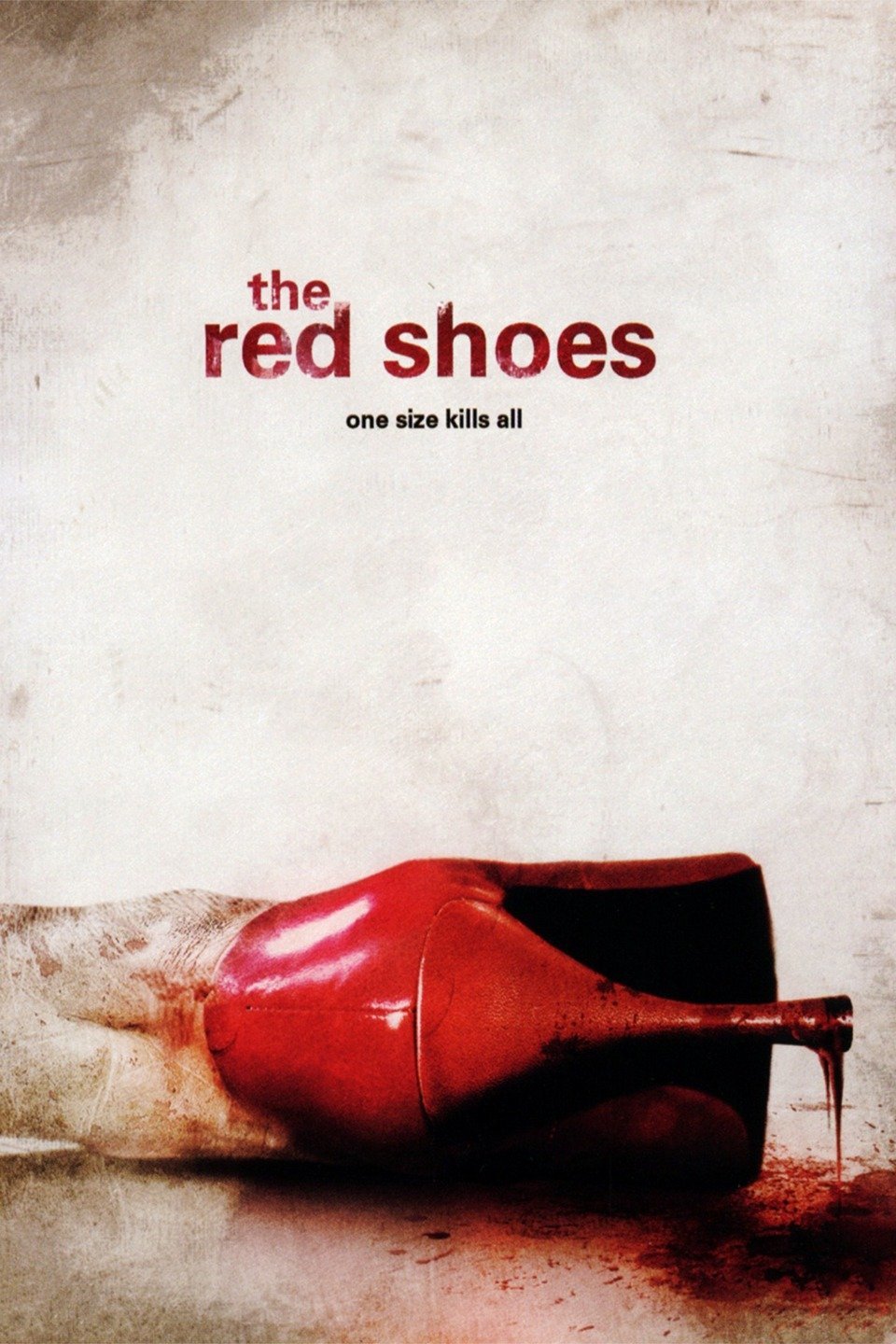
The Red Shoes (2005)

the red shoes

I suppose it is only natural that Asian horror should become as trite and bloated as its American counterparts. Eventually, they will most assuredly start aping themselves – mining their old material for what struck gold – and trying to recreate the old magic, only to fail miserably.

The Red Shoes isn’t as bad as all that, but it sure feels like a movie made upon audience testing and computer printouts of what has made the genre such a popular thing. It contains just about everything a good Asian horror movie should.

Inanimate objects that take on creepy spiritual significance? Check

A young child becomes enamored and endangered by said object? Check

Single mom recently divorced, living in a dilapidated and perhaps haunted apartment? Check.

Gruesome, unexplained murders? Check

Gruesome, unexplained murder that went unrevenged? Check

Long, black-haired

girl in desperate need of a chiropractor? Check

Buckets of blood? Double check.

Yet for all the textbook reasons why it should be an excellent creep-o-rama, it never really manages to pull itself off. At least part of the reason why Asian horror has become so successful both financially and artistically is that it managed to take a haggard genre and revitalize it with freshness. The Red Shoes does nothing new, but takes what has worked in the past and redoes it.

For all that, it’s not half bad. The production values are quite excellent and it does steal from some of the best horror movies this decade so I guess it would have to be pretty good. It’s the type of thing where had I not seen all of the films it rips off I’d probably have loved it.

Let’s slip into the plot for a moment. Sun-jae (Hye-su Kim) catches her boorish husband boinking some girl and decides to take herself and daughter Tae-su (Yeon-ah Park) away from the adulterer and they move into a run-down old apartment (did somebody say Dark Water?)

Later, Sun-jae finds a pair of pink shoes (I know the flick is called Red Shoes but the shoes are most definitely pink – this is either a bad translation or a literary device – they’re red because of all the blood! – get it?!?) and she takes the shoes home. Before she knows it she is attached to those shoes enough to get violently angry with anyone, including Tae-su who tries to touch them. (Inanimate object takes on spooky personality – did anyone see Ringu, the Ring, or the Ring Virus?)

Sun-jae’s friend gets a hankering for some pink –er red – shoes and steals them. Quickly she meets a bloody end. There are obligatory flashbacks showing why the shoes are now evil (I’ll only say the previous owner never got proper revenge, and so the shoe’s soul (get it?) must take that revenge on themselves.) Along the way, we get homages (or rip-offs) of The Eye, Ju-On, the Ring series, Dark Water, and just about every Asian horror film I’ve seen.

Like most Asian cinema the lighting is eerie and very well done. The acting hits all its cylinders and most of the production qualities are quite good. It just isn’t particularly original which makes it kind of a bore.

It’s just plain difficult to muster up any fear over a pair of pink heels. You might say the same thing over a television set, but for anyone who’s ever watched Mama’s Family you know that TV can be as scary as hell. But pink freaking shoes, there ain’t nothing horrifying about that, except maybe bad taste.

It is a good introductory film for Asian horror as it takes a lot of what works and applies it to one picture. But for anyone who has spent a good amount of time with Miike, Park, and Nakata, then the Red Shoes will feel a little too been there, done that.

Lady Vengeance (2005)

lady vengeance poster

Forget Kill Bill.

Screw Quentin Tarantino.

There is one filmatic revenge series to obsess over and it doesn’t come from the mighty shores of California. Chan-wook Park’s final installment to his vengeance trilogy, Lady Vengeance, has just been released on US DVD and it is an awesome way to end the series, indeed.

Where Tarantino gave us two films full of exquisite style and very little substance, Park finds time to explore the meaning between the bloodletting.

Where Tarantino created an amazing genre-bending exploitation masterpiece, Park has made a violent, stylish trilogy that is more than just eye candy.

That’s all the Kill Bill references I’ll make, I promise.

Lady Vengeance (which was forever named Sympathy for Lady Vengeance, until the good people at Tartan decided it needed a little spiffing) is a tad slower, and less action-oriented than the other two in the trilogy, but it is the final in the series and like Kill Bill Vol. 2 (darn it, ok I swear that was the last one, for real this time) the series needs a little grounding.

Lee Geum-Ja (Yeong-ae Lee) is sent to prison at the age of 19 for the abduction and murder of a small child. Truth in fact she did not murder or abduct the boy (she merely helped keep him) but takes the blame for her accomplice, Mr. Baek (Min-sik Choi) because he threatens her own child with violent harm if she does not.

She spends 13 years in prison for those crimes and while there she makes good with everybody. She is the perfect inmate – she finds religion, helps out, cares for an elderly inmate, and even donates an organ – all the while she meticulously plots her revenge.

Upon release, she uses her former cellmates to help get her revenge and extols it in true Chan-wook Park fashion.

Although served deathly cold, the revenge is not so sweet. In fact it is quite bitter and does not relieve Geum-Ja of guilt like she thought it would. Like all of the films in the trilogy, Lady Vengeance delves deep into the consequence of being wronged and how finding vengeance reaps more than it sows.

The film is astonishingly beautiful. Bathed in gorgeous color and light that makes even the most blood-soaked scenes look as delectable as the desirous confections Geum-Ja is so good at making.

With only four films under his belt, Park has proven he is an artist of the finest measure.

As mentioned, the film is slightly more subdued than the others. There are no liver donations as performed by hoodlums, no ironic circle jerks, and certainly no massive fist-fights as performed in small hallways, but what it lacks in extremism it finds in emotional gravitas.

Yeong-ae Lee is to Chan-wook Park as Uma Thruman is to Quentin Tarantino (oh forget it, you can’t review Lady Vengeance without referencing Kill Bill, at least not in this house.) Gawd just looking in her eyes would make a cold stone weep. She plays the role of Geum-ja with an intensity of a thousand suns, yet manages to keep an eternal sadness just below the surface. It is a performance worthy of honor.

For once Park has ended a vengeance film with something resembling a happy ending. No, the vengeance isn’t really vindicated, nor is Geum-ja satisfied, but unlike the preceding films, the violence, and vengeance seem to stop here. And that seems to be enough.

It may not be as gut-wrenchingly satisfying an ending as we get in Sympathy For Mr. Vengeance or Oldboy, but it is one that rings the finality to the trilogy, one that serves as an answer to the questions brought up by all three films.