Way back in 2007 – this was well before I ever started posting music, and just a few years after we moved back from France – I was busy trying to make The Midnight Cafe a super fun, super cool little pop culture blog. I was constantly trying to find new and interesting things to write about (or create content, as the kids today like to say).
One day, I came across this article from Premier Magazine listing out what they called the 25 Most Dangerous Movies. I was a big fan of Premier Magazine, and that was a fun list, so I decided to make a post of it. I listed the movies, detailed what Premier had said about them, and then wrote my own little notes on the movies I had seen.
It was no big thing. I just sort of tossed it off. It took me longer to format the post than it did to write my thoughts.
It remains my most popular post ever. By a large margin.
I don’t know why. Lists seem to be always popular, and that came out at a time when blogs were really booming, but not everybody was churning out a hundred lists a day. Presumably, some other popular site linked to my blog post, or maybe Google just liked it. I still get a dozen or so hits on that post every week.
I’ve been telling myself for a long time that I should do some different lists on the Cafe. They are still popular things to write, and I still enjoy reading them. Ages ago, I actually ran a little Facebook group called The Top Five where we listed out various Top 5 things that we liked.
My problem has always been that in order to list out the Top Number of anything, you have to spend time watching a bunch of things that qualify. If I want to do a Top 10 War Movies, then I have to watch a lot more than ten war movies. And I never seem to make time for that.
Last night, I was looking at some things on the blog and saw the stats for that Premier post, and thought maybe I should just do another post like that. Instead of making my own list, I could run commentary on someone else’s list. That would eliminate my need to watch everything, but it could still be fun talking about those movies.
I Googled “Best War Movies” and came across this list over at Variety, and here I am. For the Premier list, I actually copy/pasted what they had to say in my post, but that seems rude. I don’t want to steal anyone’s content. So you’ll have to read their thoughts on their site, but I will add my own commentary to the ones I’ve seen.
If this post garners decent stats, I’ll probably do more of them and then maybe I’ll create some of my own lists. Let me know if you enjoy this sort of thing. Or not.
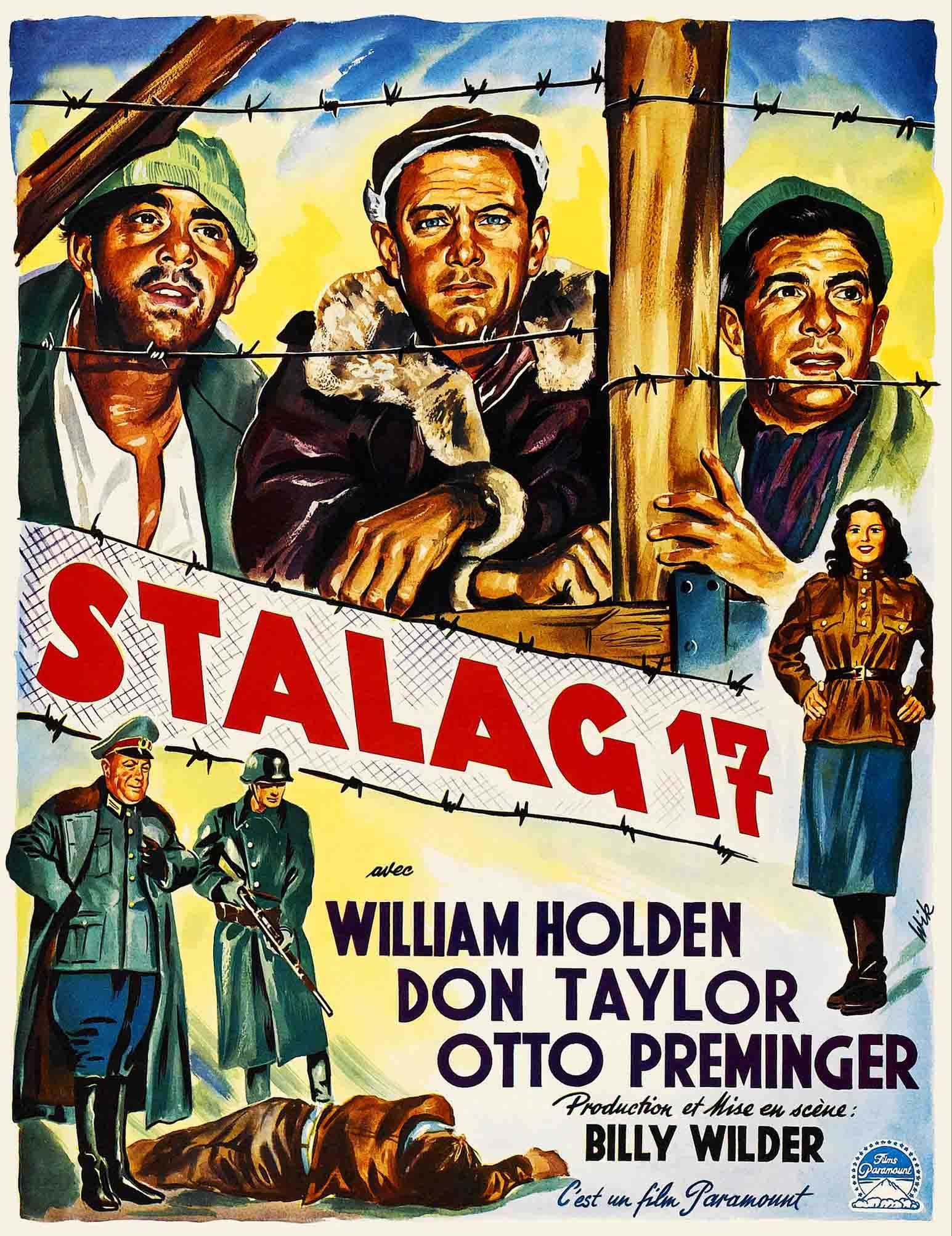
Stalag 17 (1953)
Directed by Billy Wilder
Starring: William Holden, Don Taylor, and Otto Preminger
Synopsis: After two Americans are killed while escaping from a German P.O.W. camp in World War II, the barracks black marketeer, J.J. Sefton, is suspected of being an informer.
Memory is a funny thing. I watched this back in 2018, and my recollection is that I didn’t particularly care for it, but I rated it 4 out of 5 stars on Letterboxd, so who knows?
I honestly don’t remember much about it except that it mixes the pathos of a World War II prison camp with MASH-style hijinks. My memory says I didn’t much care for the carefree tone and the jokes didn’t land, but that the performances were good and the drama involving a rat amongst the ranks was intriguing.
This is definitely a film I want to revisit.

War and Peace (1966)
Directed by Sergey Bondarchuk
Starring: Lyudmila Saveleva, Vyacheslav Tikhonov, and Sergey Bondarchuk
Synopsis: The Russian aristocracy prepares for the French invasion on the eve of 1812.
I’ve not seen this movie, or sadly, any adaptation of the classic Tolstoy novel (I’ve not even read the book!)

The Big Parade (1925)
Directed by King Vidor, George W. Hill
Starring: John Gilbert, Renee Adorre, and Hobarg Bosworth
Synopsis: A young American soldier witnesses the horrors of the Great War.
I have not seen this film.

Braveheart (1995)
Directed by Mel Gibson
Starring Mel Gibson, Sophie Marceau, and Patrick McGoohan
Synopsis: Scottish warrior William Wallace leads his countrymen in a rebellion to free his homeland from the tyranny of King Edward I of England.
When I was in high school, a friend of mine had somehow signed up for this thing where he periodically got free tickets to movies that had not yet been released. On a couple of occasions, he took me with him. I thought it was the coolest thing ever.
We’d show up at the theater at the proper time, present the kid behind the booth with our passes, and then be ushered to a theater with no marquee or poster, or anything advertising what we were about to see. I was in heaven.
In those days, I had no idea how he got those tickets or why. I couldn’t figure out why they were even having those secret screenings. Now I realize they were likely press screenings, and since Tulsa is a small market with few press, they probably gave away extra tickets to certain films as a way to garner some early buzz.
I watched Forest Gump and Braveheart in that way, and I loved both films. My college buddies and I used to quote Braveheart endlessly. At the time, I thought it was a great movie. It was funny, full of action, and romantic. It had a beautiful score, beautiful scenery, and was full of wonderful lines.
It has lost a lot of its lustre over the years. It doesn’t help that I’ve been to Scotland and seen some of the actual battle sites (The Battle of Stirling famously took place on an important bridge, not an open field in Ireland) and read some of the actual history (the movie fudges a lot of what actually happened). But also, I just don’t find it all that cinematically interesting. It’s still quite a bit of fun, though.

Grave of the Fireflies (1987)
Directed by Isao Takahata
Starring: Tsutomu Tatsumi, Ayano Shiraishi, and Akemi Yamaguchi
Synopsis: A young boy and his little sister struggle to survive in Japan during World War II.
I’ve not seen this World War II film about two children trying to survive after a devastating fire bombing destroys their hometown in a long time, but I remember it being absolutely beautiful and devastating.

Ashes and Diamonds (1958)
Directed by Andrzej Wajda
Starring: Zbigniew Cybulski, Ewa Krzyzewska, and Waclaw Zastrzezynski
Synopsis: As World War II and the German occupation ends, the Polish resistance and the Soviet forces turn on each other in an attempt to take over leadership in Communist Poland.
This Polish masterpiece is set just as World War II. It follows a group of resistance fighters as they try to make sense of their world free of Nazis but being overtaken by Communists.
Criterion released it a few years ago, and you can read my full review here.

The Dirty Dozen (1967)
Directed by Robert Aldrich
Starring: Lee Marvin, Ernest Borgnine, Charles Bronson, Jim Brown, John Cassavetes, George Kennedy, Robert Ryan, Telly Savalas, and Donald Sutherland
Synopsis: During World War II, a rebellious U.S. Army Major is assigned a dozen convicted murderers to train and lead them into a mass assassination mission of German officers.
This is the definitive men-on-a-mission film. Twelve military prisoners (who are played by an all-star cast) are tasked with an impossible mission and win their freedom if they succeed.
For my money, it spends way too much time in training sequences, and once they actually do the mission, it isn’t filmed with much excitement, but the cast sure is fun to watch.

City of Life and Death (2009)
Directed by Chuan Lu
Starring: Ye Liu, Wei Fan, and Hideo Nakaizumi
Synopsis: In 1937, Japan occupied Nanjing, the Chinese capital. There was a battle and subsequent atrocities against the inhabitants, especially those who took refuge in the International Security Zone.
I’ve not seen this film.

They Were Expendable (1945)
Directed by John Ford and Robert Montgomery
Starring: Robert Montgomery, John Wayne, and Doris Day
Synopsis: A Navy commander fights to prove the battle-worthiness of the PT boat at the start of World War II.
I’ve not seen this movie.

Three Kings (1999)
Directed by David O. Russell
Starring: George Clooney, Mark Wahlberg, Ice Cube, and Spike Jonze
Synopsis: In the aftermath of the Persian Gulf War, four soldiers set out to steal gold that was stolen from Kuwait, but they discover people who desperately need their help.
This was one of the first films I ever owned on DVD. I watched it a lot back then, but haven’t seen it in probably a decade. It was one of the first films to tackle the first US war with Iraq. It is both a crackling caper film and a pretty incisive critique of US politics at the time. To me, it also solidified George Clooney as a movie star.
It is high time I revisited it.

Fires on the Plain (1959)
Directed by Kon Ichikawa
Starring: Fiji Funakoshi, Mantarô Ushio, and Yoshihiro Hamaguchi
Synopsis: In the closing days of WWII, remnants of the Japanese army in Leyte are abandoned by their command and face certain death by starvation.
I haven’t seen this film, but that sounds harrowing.

Inglourious Basterds (2009)
Directed by Quentin Tarantino
Starring: Brad Pitt, Christoph Waltz, Michael Fassbender, Eli Roth, and Diane Kruger.
Synopsis: n Nazi-occupied France during World War II, a plan to assassinate Nazi leaders by a group of Jewish U.S. soldiers coincides with a theatre owner’s vengeful plans for the same.
At the very end of Tarantino’s Kill Bill, Vol. 2 (so spoilers for that, I guess), there is a moment when the Bride (Uma Thurman) is lying on a bed with her newly discovered daughter, watching television.
It is an overly sentimental moment in a film that is otherwise devoid of sentiment. It feels unearned to me. We don’t know the daughter at all. We only found out she existed at the end of the first film (The Bride only found out she existed at the end of that film come to think of it). So, the reunion doesn’t feel special to me; it doesn’t connect to me on an emotional level. So much of Inglourious Basterds felt that way to me.
An early scene finds a fiendish Nazi looking for Jews in an old, isolated house. He’s interrogating some poor people who swear they know nothing. The camera reveals to us that several Jews are hiding under the floorboards. Tarantino expertly ratchets up the tension. The problem, for me, is that he hasn’t developed any of these characters. Obvioiusly, Nazis are bad and I don’t want him to find those poor people under the floorboards, but I also don’t know who they are. I haven’t learned to care for them. Thus, I don’t really care if they are caught. This isn’t real life after all.
There are several scenes like that where Tarantino does a great job of creating tension, but he’s forgotten to make me care about the fates of these characters.
It is well directed and acted, and I really should see it again, but on my first viewing, it felt very hollow.

Rome, Open City (1945)
Directed by Roberto Rossellini
Starring: Anna Magnani, Aldo Fabrizi, and Marcello Pagliero
Synopsis: During the Nazi occupation of Rome in 1944, the Resistance leader, Giorgio Manfredi, is chased by the Nazis as he seeks refuge and a way to escape.
I have not seen this film, but it has been on my list for a long time.

The Deer Hunter (1978)
Directed by Michael Cimino
Starring: Robert DeNiro, Christopher Walken, and John Cazale
Synopsis: An in-depth examination of the ways in which the Vietnam War impacts and disrupts the lives of several friends in a small steel mill town in Pennsylvania.
I haven’t watched this since I was in college, but I remember loving it. The scene in which they are forced to play Russian Roulette is one of the most tense things ever put on celluloid.

The Steel Helmet (1951)
Directed by Samuel Fuller
Starring: Gene Evans, Robert Hutton, and Steve Brodie
Synopsis: A ragtag group of American stragglers battles against superior Communist troops in an abandoned Buddhist temple during the Korean War.
I’ve not only not seen this film, I’ve never even heard of it, but I love me some Samuel Fuller, so it is definitely going on the list.

Glory (1989)
Directed by Edward Zwick
Starring: Matthew Broderick, Denzel Washington, Cary Elwes, Morgan Freeman, and Andre Braugher
Synopsis: Robert Gould Shaw leads the U.S. Civil War’s first all-black volunteer company, fighting prejudices from both his own Union Army, and the Confederates.
This is another movie I loved in high school through college, but haven’t seen in a long time. I remember it sporting a lot of fine performances, especially from Denzel. I wonder how well the racial aspects hold up to a modern audience.

All Quiet on the Western Front (1930)
Directed by Lewis Milestone
Starring: Lew Ayres, Louis Wolheim, and John Wray
Synopsis: When a group of idealistic young men join the German Army during the Great War, they are assigned to the Western Front, where their patriotism is destroyed by the harsh realities of combat.
Possibly the greatest anti-war film ever made. An intense, brutal, and tragic look at war and how propaganda and patriotism conspire to bring young men into the machine only to grind them up over and over again.

Platoon (1986)
Directed by Oliver Stone
Starring: Charlie Sheen, Tom Berenger, Willem Dafoe, Keith David, and Forest Whitaker
Synopsis: Chris Taylor, a neophyte recruit in Vietnam, finds himself caught in a battle of wills between two sergeants, one good and the other evil. A shrewd examination of the brutality of war and the duality of man in conflict.
Hey, guess what? I loved this movie when I was in college and hadn’t seen it for years. But unlike so many other films on this list, I’ve actually recently rewatched Platoon. Oliver Stone’s semi-autobiographical tale about his time in Vietnam remains a testament to the absolute horrors of that war and a very real, very human drama.
I wrote a few more words about it in a recent Five Cool Things column.

Come and See (1985)
Directed by Elem Klimov
Starring: Aleksey Kravchenko, Olga Mironova, and Liubomiras Laucevicius
Synopsis: After finding an old rifle, a young boy joins the Soviet resistance movement against ruthless German forces and experiences the horrors of World War II.
I’ve not seen this movie, but it keeps showing up in my feeds. I’m kind of afraid to watch it, though, it feels like it will utterly destroy me.

The Hurt Locker (2008)
Directed by Kathryn Bigelow
Starring: Jeremy Renner, Anthony Mackie, and Guy Pearce
Synopsis: During the Iraq War, a Sergeant recently assigned to an army bomb squad is put at odds with his squad mates due to his maverick way of handling his work.
I remember very little about this Oscar winner except that I wasn’t particularly impressed by it.

The Bridge on the River Kwai (1957)
Directed by David Lean
Starring: William Holden, Alec Guinness, Jack Hawkins, and Sessue Hayakawa
Synopsis: British POWs are forced to build a railway bridge across the river Kwai for their Japanese captors in occupied Burma, not knowing that the allied forces are planning a daring commando raid through the jungle to destroy it.
This is one of my all-time favorite films. Alec Guinness gives one of his finest performances, and his test of wills against Sessue Hayakawa is just wonderful. I’m less enthused with William Holden’s sideplot, but the rest of it is golden. And I can’t think of this film without whistling that damn tune.

The Battle of Algiers (1966)
Directed by Gillo Pontecorvo
Starring: Brahim Hadjadj, Jean Martin, and Yacef Saadi
Synopsis: In the 1950s, fear and violence escalate as the people of Algiers fight for independence from the French government.
They say that President George W. Bush screened this film at the Pentagon during the Iraq War. The film is about how a small group of insurgents managed to successfully battle the much larger and better-armed French Army during the colonization of Algiers. I guess the President figured they could all learn something about how the Iraqis were doing the same to them.
It is a great film, and a difficult one. You can read a review I wrote about it many years ago right here.

The Best Years of Our Lives (1946)
Directed by William Wyler
Starring: Myrna Loy, Frederic March, Dana Andrews, and Teresa Wright
Synopsis: Three World War II veterans, two of them traumatized or disabled, return home to the American Midwest to discover that they and their families have been irreparably changed.
I could have sworn I’d seen this before. In fact, I thought I had written a review of it. But I can’t find it anywhere, and I don’t seem to have logged it anywhere, so I must have been thinking of something else.

Schindler’s List (1993)
Directed by Steven Spielberg
Starring: Liam Neeson, Ralph Fiennes, and Ben Kingsley
Synopsis: In German-occupied Poland during World War II, industrialist Oskar Schindler gradually becomes concerned for his Jewish workforce after witnessing their persecution by the Nazis.
I don’t think I’ve seen this since I first watched it in the theater when it came out. I loved it then, but it was so overwhelmingly sad that I didn’t want to see it again. I keep meaning to put it on for this month’s war theme, but I always put it off. There is so much horror going on in the world right now that revisiting past horrors seems like too much.

MASH (1970)
Directed by Robert Altman
Starring: Donald Sutherland, Elliott Gould, Tom Skerritt, and Sally Kellerman
Synopsis: The staff of a Korean War field hospital uses humor and hijinks to keep their sanity in the face of the horror of war.
It has been a while since I have seen this film, but I remember not liking it at all, which is unusual for me because I generally really like Altman’s films.
I have weird taste in comedy, and I didn’t find this film funny at all. And the rampant sexism was a turn-off.

Paths of Glory (1957)
Directed by Stanley Kubrick
Starring: Kirk Douglas, Ralph Meeker, and Adolphe Menjou
Synopsis: A colonel defends three of his soldiers in a court-martial after they abandon a suicidal attack.
Stanley Kubrick’s first masterpiece is a brilliant anti-war screed that demonstrates how the army is just another bureaucracy full of petty tyrants. It has been a long time since I’ve seen it, but I remember loving Douglas’ performance, and Kubrick was already a master of creating beautiful shots.

Apocalypse Now (1979)
Directed by Francis Ford Coppola
Starring: Martin Sheen, Robert Duvall, Marlon Brando, Laurence Fishburne, and Dennis Hopper.
Synopsis: A U.S. Army officer serving in Vietnam is tasked with assassinating a renegade Special Forces Colonel who sees himself as a god.
Arguably the greatest war movie ever made. A stunning film. A visual feast. An incredibly crafted vision of hell. You can read my full review here.

The Grand Illusion (1937)
Directed by Jean Renoir
Starring: Jean Gabin, Pierre Fresnah, and Eric Von Stroheim
Synopsis: During WWI, two French soldiers are captured and imprisoned in a German P.O.W. camp. Several escape attempts follow until they are eventually sent to a seemingly inescapable fortress.
Made just before the outbreak of World War II, this masterpiece by French director Jean Renoir is a prison break story, but also a beautiful look at class, the breakdown of old societal norms, and ultimately humanity in the face of monumental horror.
I got to visit the castle where part of the film was made, and it was a joy.

Full Metal Jacket (1987)
Directed by Stanley Kubrick
Starring: Matthew Modine, Vincent D’Onofrio, and R. Lee Ermey
Synopsis: A pragmatic U.S. Marine observes the dehumanizing effects the Vietnam War has on his fellow recruits from their brutal boot camp training to the bloody street fighting in Hue.
The second film from Kubrick on this list (one of only two directors who received more than one nod). This film is miles different from Paths of Glory. The first half follows several new soldiers during Boot Camp, getting hilariously yelled at by R. Lee Ermey, who had been a real-life Drill Sergeant. The second half follows them into Vietnam, where they see some harrowing action.
Both halves are excellent and work together to tell a full story of how the war machinery takes young men and turns them into killing machines.

Saving Private Ryan (1998)
Directed by Steven Spielberg
Starring: Tom Hanks, Tom Sizemore, Edward Burns, and Matt Damon
Synopsis: Following the Normandy Landings, a group of U.S. soldiers go behind enemy lines to retrieve a paratrooper whose comrades have been killed in action.
The D-Day scene is probably the greatest war setpiece in the history of cinema. The rest of the film simply can’t compare. It is overly sentimental in that Spielbergian way, and the final scene doesn’t hold up well when you actually think about it, but it still makes me cry like a baby. Tom Hanks gives a masterclass in acting, and the rest of the cast is very good.
That’s it. That’s all the movies. Overall, I think this was a pretty good list. Films I would have added include The Thin Red Line, Das Boot, Casablanca, Dr. Strangelove, and Casualties of War.




 themidnightcafe.org