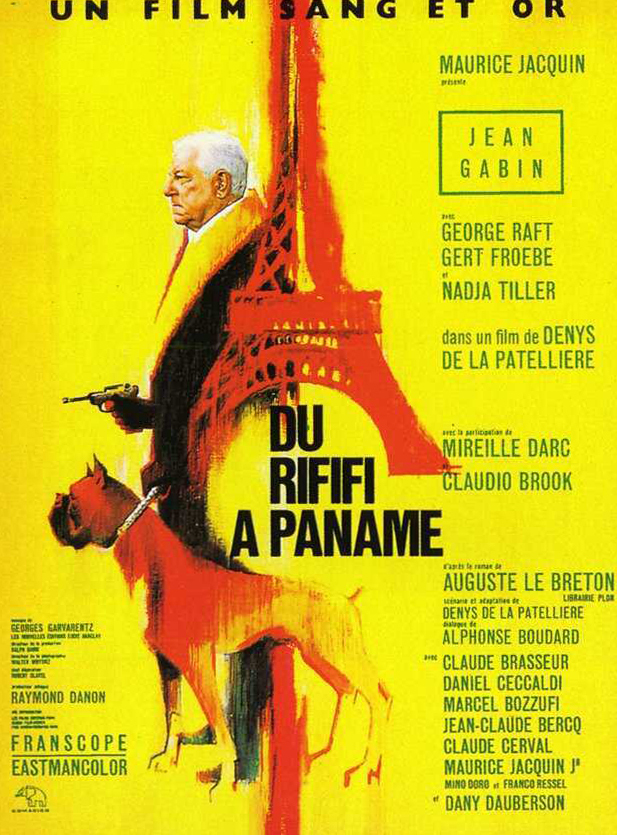
Rififi in Paris (1966)

rififi in paris poster

We now have a library card for the Strasbourg city library. In France, you have to pay an annual fee for a library card. There are actually two different prices, one if you wish to only check out books, and another higher priced card that allows you two check out multi-media items such as DVDs. Hearing that they had a selection of over 900 DVDs Amy and I decided we would shell out the expense of getting that type of card. We calculated that even if we only checked out one movie per week for the remaining time we are here, we would still come out cheaper than if we rented the same amount of films. The funny thing about their movies is that they almost never have any. Out of the 900 owned, there are usually only 6 or 7 of them available for check out at any time. We have been lucky that we’ve been able to find films that we would like to see. Both Rope and The Man Who Knew Too Much both came from the library.

This week I picked up Rififi in Paris thinking it was an old bank robber movie that I have heard good things about. Unfortunately, that film is entitled just Rififi. I am unsure if this is supposed to be a sequel or if it is just a coincidence in the title. There is limited information on The Internet Movie DataBase, and it wasn’t good enough to really look further than that.

The basic story of this film is that an American agent, Charles Binnagio (George Raft), is working undercover in Paris to stop a French group of gangsters. He uses his contact with a high-class hooker to start working for the gangsters by smuggling Gold to Tokyo. After saving the second-in-command mobster, Paulo Berger’s (Jean Gabin) life, Binnaggio is promoted to Berger’s bodyguard. Excitement ensues.

Due to complications involving the regional coding of the DVD I could only watch this film in an English dubbed version. I am universally opposed to dubbed movies, and try my best to only watch films in their original languages with subtitles if necessary. Watching this in the dubbed format was like slow torture. The plot was rather complicated to follow and I am not sure how much to blame on the language problem. What I was able to follow was resolutely bad.

There is no explanation why an American CIA agent would be infiltrating a group of French gangsters. There is a small subplot involving the weapons trade with Cuba, but it is not followed enough to make this the cause of the CIA’s involvement. To move the plot somewhere, a group of New York mobsters begins making threats to Berger and his cohorts to back off of several law-breaking activities. Violence ensues.

Binnaggio is so bad as an undercover agent that it is sheer movie magic that keeps him from being found out and killed. He visits the American consulate at will, talks with other agents as he pleases, and even snoops around the big boss’s house. It is surprising to see the French gang doing so well since they seem to have no ability to pay attention to their own members. The movie tries to build tension by having Binnaggio nearly found out or caught on a couple of occasions, but then the action moves forward and the enemy seems to forget. What little tension is built, always dies rather fast.

There is an odd quirk with the filming of this picture. More times than I could count there is a mirror located somewhere in the shots. Often we see one or more of the reflections of the character in the mirror, but many times we see only part of the stage. Once we even see a character’s reflection in a well-polished wall. I’m sure the filmmakers were attempting something meaningful out of all these reflections, but what that could be is beyond me. I was too busy being appalled by the sheer stupidity of the film to be bothered with such trivialities.

Movie Review: The Aviator (2004)

the aviator poster

I have been a fan of Martin Scorcese since I have been serious about film. His films are intelligent, technically brilliant, and artful. He causes us to meditate on characters we’d rather forget, or shuffle to the back of society and our minds. His movies are often tough, meaty films that take a great deal to work through. His films have never been as popular as contemporaries like Spielberg or Lucas. But he doesn’t seem to mind, nor do his fans. While these other filmmakers soar to the heavens and look for the good in people, Scorcese seems to dig into the trenches and inhabit the rough sticky worlds that inhabit the low lives of troubled men. He seems interested in why people live violent, hurtful lives. He is…well many other people have praised his work far better than I can.

I have seen every Scorcese picture in the theatre since Kundun. Each time I venture into his films I come with high expectations. I know an excellent Scorcese picture is a true treasure, something to behold and love. I was well pleased to see that the Aviator was playing here in France in version originale, or with an English language track.

Scorcese pictures are always a technical marvel. And the aviator does not disappoint in this category. In post-production, he manipulated the colors of the film to mirror the production scales of the time period being represented. In early scenes the colors are “two-tone Technicolor” and then evolve into “three-tone Technicolor” and on to full-scale color by the end of the film. The flight sequences are spectacularly shot. Scorcese is such a master of the technical aspects of filmmaking that he makes even the most difficult shots look easy.

I have been a closet Leonardo DiCaprio fan for many years. It is difficult to admit this in mixed company because of the general distaste for the actor. Since Titanic drove a million adolescents wild, it seems no serious fan of the cinema can admit admiration of the actor (except for people like Steven Spielberg and Scorcese who keep putting him into their pictures). Yet, I continue to find him to be an actor of excellence. He does a marvelous job here, portraying a complex, fascinating human.

Cate Blanchett does a pitch-perfect job as Katherine Hepburn, one of the many Hollywood romances of Howard Hughes. Ms. Hepburn was such a caricature herself, portraying her must have taken plenty of guts. It is a fine, outstanding performance.

Many people carry only a vague notion of Howard Hughes. We know that he was quite rich, lived a glamorous, flashy life as a young man, and became a maniacal hermit in his old age. Pictures of a hunched, old man with long, white hair; an unkept beard; unclipped, yellow toenails, and boxes on his feet come to mind instantly whenever Hughes’ name is mentioned. This is the Howard Hughes we have become fascinated by. Yet this aspect of Hughes’ life is barely dealt with in Scorcese’s picture. Yes, we catch many glimpses of the demons inside him, and we even capture a few weeks of isolation, but mostly Scorcese dwells on the younger man, full of life.

Though Scorcese is often fascinated with eccentric, crazed lives, it is rare for him to give any reason for the lives of his characters. We can tell that loneliness helps to bring Travis Bickel, in Taxi Driver, over the brink. We see greed and violence begetting more violence in films such as Goodfellas and Raging Bull. But these things are only the beginnings of why they behave in such reprehensible ways. Preferring to allow his films to be questions, Scorcese never fully gives us answers. The Aviator, also, gives us hints to what may have driven Howard Hughes to such madness, but it never fully explains his actions. We see hints of a protective mother, and surely his drive to control every aspect of his life helped him become obsessive-compulsive. Yet these things are not answers, more symptoms of the overall problem. Scorcese is more interested in the behavior of his characters. The nuances of their actions, and the subsequent damage it causes. You won’t find cookie cutters to make you feel better about life in this film, but you’ll find a meditation on a brilliant, troubled man. If you care to dig a little deeper, you might be moved.

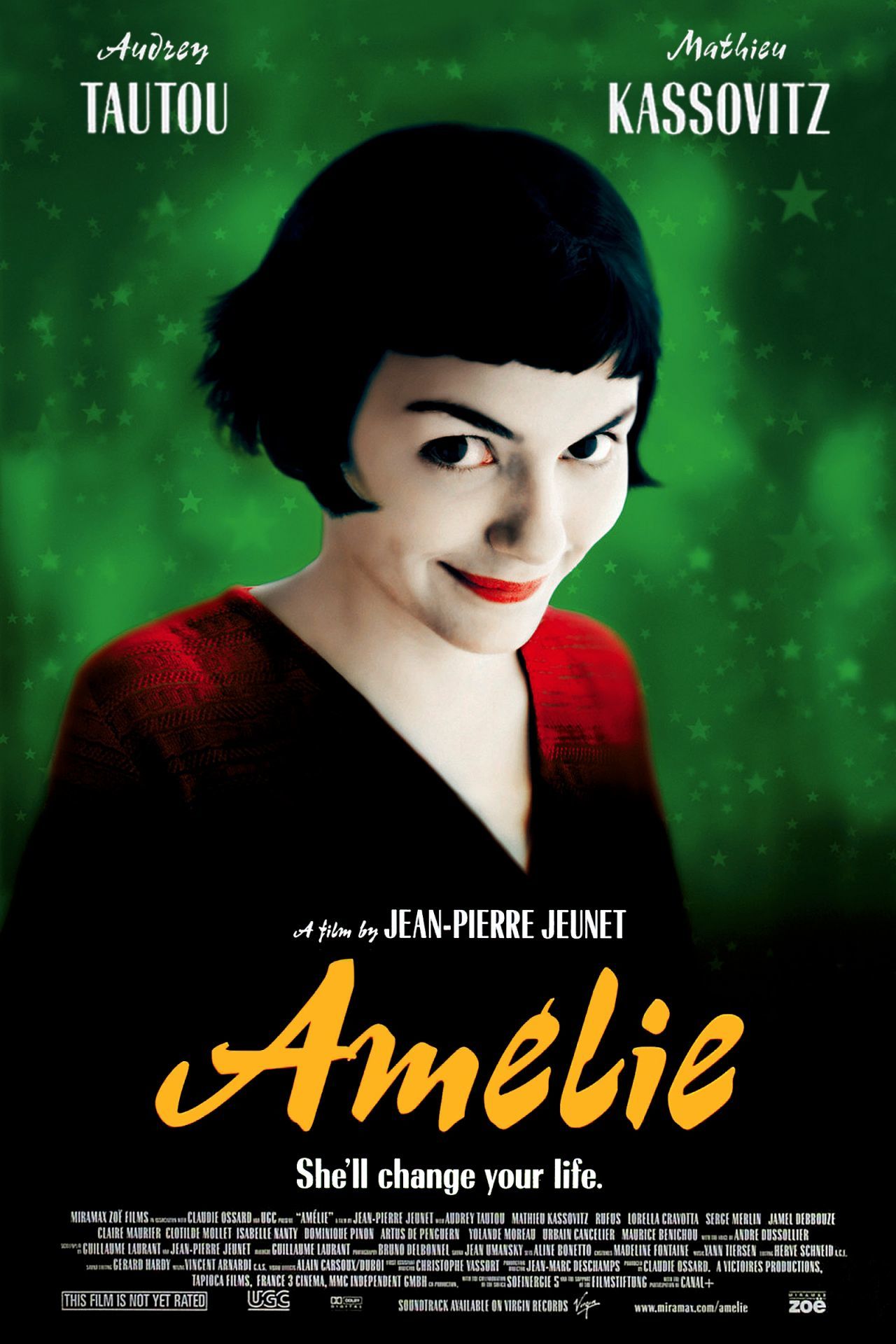
Amelie (2001)

amelie poster

There are some films that are pure joy to watch. These are films to be watched, cherished, and loved over and over again. There are certainly films that I may not herald as perfect cinematic achievements, but bring a smile to my face, and warmth to my heart. Amelie is such a film.

Jean Piere Jeunet made a series of dark, depressing films before Amelie. They seem to come from some strange crossing of Brazil-era Terry Gilliam and HR Giger-inspired Alien landscapes. In fact, Pierre directed the 4th installment of the Alien franchise, Alien Resurrection. Prior to Amelie‘s huge success, he was only known in the US for this picture. This is a shame, because her previous two films (Delicatessen and City of Lost Children) are real gems.

In Amelie, Jeunet has lost his Orwellian vision and has come up top of the world into the clear, blue sky. Amelie is alive with color and beauty. It is as if his first three films were harrowing graphic novels, and this one is a bright, technicolor Saturday morning cartoon. It is even a change of story for the director. Where his previous films concerned such meaty subjects as cannibalism, child murder, and those bloody awful Aliens, here is a simple story about making people happy. I’m not sure what caused these changes in the director, but it is a treasure to behold.

The story revolves around Amelie (Audrey Tautou), a shy, quiet, and lonely young woman living in the Montmartre section of Paris. Through a random series of events, she decides to make people happy. The means by which she manages this, and the heart of the movie, is through devising an extraordinary, and quirky, series of stratagems. For example, in order to bring some excitement into her saddened father’s life, she kidnaps his garden gnome and sends it across the globe with an airline stewardess. Her father sees the gnomes through a series of photographs taken with it standing near national monuments. The entire film is played out with child-like innocence and beauty. Jeunet uses his camera to create images that are light and joyous. Audrey Tautou plays Amelie like a pixie who is bursting inside to tell the world’s funniest joke.

Having visited Paris before watching this film again I found an additional joy by noticing the little details unknown to me in previous viewings. I have walked the steps of the Sacre Couer, seen the photograph kiosks in the train station, and seen the top of Notre Dame. These actions did not bring any further realizations into the film but brought a little more joy to my viewing. It is like when a film is set in an area you once lived in. It may not have anything to do with you, but there is a pleasant joy in knowing where the events take place.

The film does not look or feel like the Paris that I visited last Christmas. It is almost a fairy tale version of the city. A city that, as an American, I conjured up with such names as “City of Light, City of Love.” The reality is a much darker, dirtier sort of place. But in this film everything is lighted beautifully, there is no garbage piling up on the streets, and the metro stations look lovely. Even the people if not always cheerful, are quirky and cute in their unhappiness.

There are other films that achieve more in their 2 odd hours of screen time, than Amelie. Though I could site more serious, and relevant films, it would be difficult to find one so full of innocent joy.

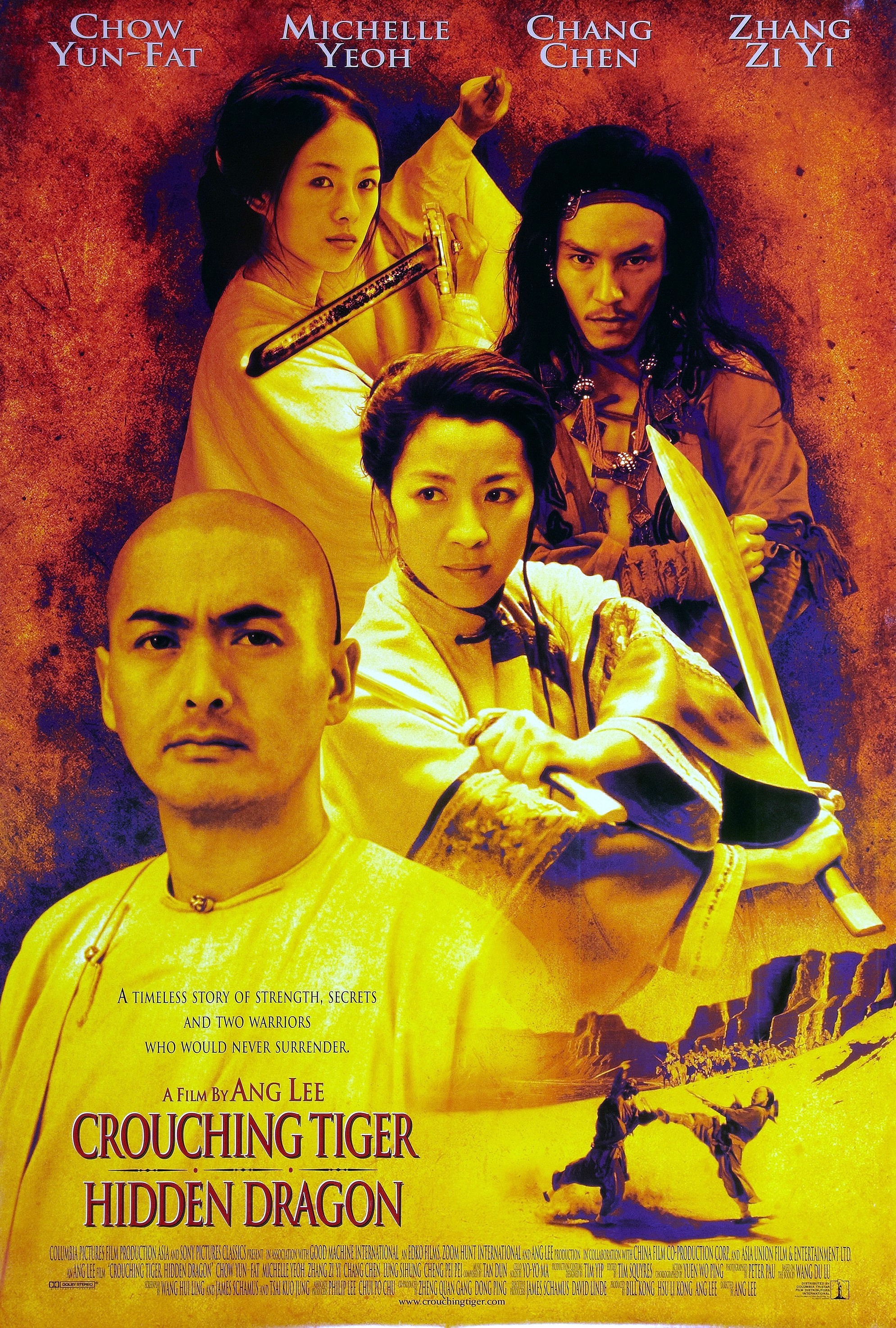
Crouching Tiger, Hidden Dragon (2000)

crouching tiger hidden dragon poster

Now that wire work is pretty standard in American film, it is hard to remember how impressive the effects were in The Matrix. Though The Matrix was hardly the first to use that type of effect, Asian cinema had been doing it for a while, it was the first time I had seen anything like it. I remember being completely awed by the look and movement of the film. Though much of the style and effects quickly became vamped by many films, shows, and commercials, it remained perfect in its visual effects. Crouching Tiger, Hidden Dragon came out a few months later and pushed the Matrix visual envelope even farther. For my dollar, Ang Lee created a smarter, more beautiful use for the effects than the Wachowskis ever dreamed of creating.

The story is a bit tricky. A master martial artist, Li Mu Bai (Chow Yun Fat), decides to give up his heroism and settle down. Proving his seriousness in this new direction he gives up his famed sword, the Green Destiny, to a friend. The sword is quickly stolen throwing Li Mu Bai and another friend, Yu Shu Lien (Michelle Yeoh) into detective work to reclaim it. Added to the plot is a noblewoman, Jen Yu (Ziyi Zhang), about to be married against her wishes, and Li’s old nemesis Jade Fox (Pei-Pei Chang). To add a little more to the plot (I told you it was tricky) Li Mu Bai and Yu Shu Lien are lovers destined to never have their loved fulfilled.

Ang Lee manages to sort out this complicated plot rather smoothly. The film is sumptuously shot on location in China. The renowned action sequences are poetic and beautiful. It feels more like watching ballet than a sword-fighting action movie. The more skilled fighters can climb up walls, jump great heights, and seemingly fly through the sky. Though the film never explains how they are able to manage such incredible feats, they do it with such agility and grace, that you never think to question it. There is a scene fought out amongst tall whisp trees that is pure poetry. Yet the action sequences never stand in the way of the story. This is not a film designed to wow the audience with nothing but visual tricks, the action serves the story alone and is not there to give cheap thrills.

As the film unfolds a theme develops. Li Mu Bai and Yu Shu Lin never express their love for each other out of honor and loyalty. They hold to strict codes that must be obeyed over all of their own desires. Jen Yu is also bound by codes of conduct, but she chooses to disobey them and strives to live her own life. This serves as the central conflict between the characters. I will not give too much more of the plot away but will say that film concludes this conflict in a manner not seen often in cinema.

It is difficult for me to judge the acting of a foreign film. I choose only to watch the original language, with subtitles. This allows me to hear the nuances of the actor’s voices, but since I must rely on the subtitles to tell me what they are saying it is difficult to really judge a performance. That being said all of the actors do a fine job. Chow Yun Fat does a remarkable job as a master fighter. In each action scene he is in he fills the screen with a knowing presence. He fights with great poise as if he knows he will be the victor, but does not want to show his true ability. Michelle Yeoh and Ziyi Zhang are also standouts.

My only complaint has to do with one of the subplots. In the middle of the picture, we get a long back story on part of Jen Yu’s life. After watching the film again I can see that the back story is essential to the overall theme of the film, but it is still too long in the telling. It also serves to slow the film down just as the plot was finally moving along. I believe the essentials of the back story could have been told at a quicker pace allowing us to understand what is needed without slowing the pace of the film down or lengthening it too much.

This is a small complaint with a truly wonderful film. I have been a fan of Ang Lee for many years, and this film stands as his finest achievement. He is known for his smaller, character-driven family films. Here he manages to achieve something on a grander scale, yet maintains a beautifully portrayed character drama.

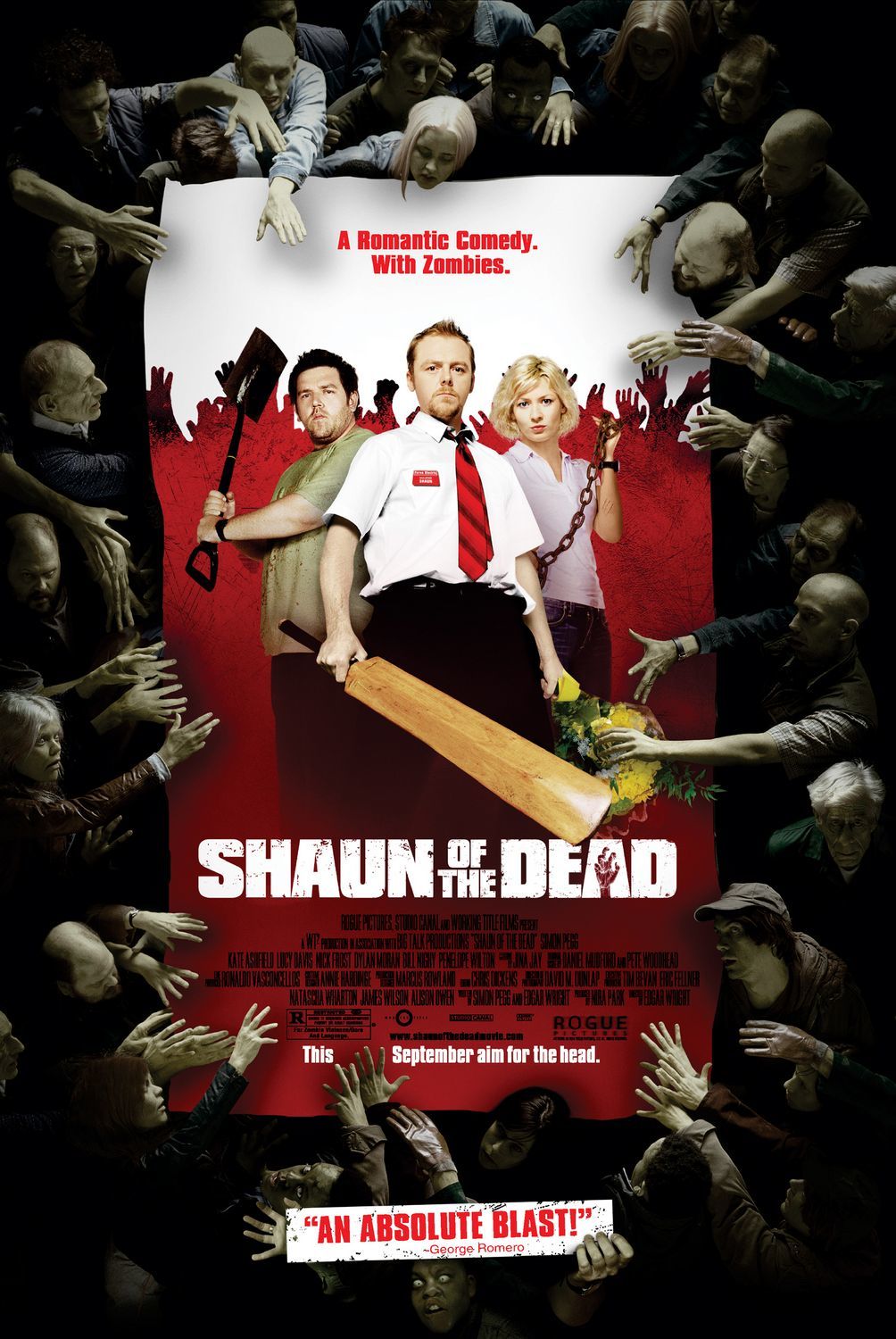
Shaun of the Dead (2004)

shaun of the dead poster

Editors Note:   I don’t know what I was thinking with this review.  I’ve since watched Shaun of the Dead many, many times and I absolutely love it.  I don’t know why I didn’t find this movie funny the first time, I now think it is hilarious.  Oh well, you live you learn.

I’m the type of person who doesn’t read movie reviews before I watch the film. I don’t seek out trailers online or read the latest dish on upcoming releases. I prefer to go into a film with a clean slate, knowing as little as possible about the film before I see it. I find the moviegoing experience more enjoyable when I have fewer preconceived conceptions about the movie I’m about to watch. That being said, I love to read reviews and seek out trivia about movies that I have already seen. I enjoy reading other people’s thoughts and ideas about a movie and comparing them to my own.

Since living in France I have completely been out of the entertainment loop. We don’t have a TV and it is rare that we go to a new movie. I do visit a few websites to keep up with the news and hear bits and pieces of the movies that are coming and out and generating some buzz. Shaun of the Dead is a film that I have been hearing buzz about for several months. I refused to read any reviews or really research any aspect of the movie, but I couldn’t help but hear bits and pieces of good things about it. Primarily that it was a funny zombie spoof. Being a fan of the zombie genre, when the chance came up to borrow the DVD, I didn’t hesitate to take it.

The plot is the pretty standard zombie plot. Some type of radiation/virus wreaks havoc on the earth re-animating the dead into brainless, homicidal maniacs. The movie does a good job of spoofing many of the conventions of the genre. The title character, Shaun, (Simon Pegg) is so stuck in his humdrum existence it takes him a couple of days to realize that his city has been attacked by zombies. He has a dead-end job, his girlfriend just broke up with him, and his flatmates are constantly fighting. Despite there being several zombies eating human flesh around him and the constant media blitz,  it literally takes a zombie in his backyard for Shaun to notice. There are a number of truly funny scenes that mimic many of the classic zombie cliches.

Here, the zombies walk in the classic, slow-motion, brain-dead way. They are mockingly slow. In one scene Sean and his friend, Ed (Nick Frost), throw a large crate full of junk at two zombies, then have time to run for a crate of records and argue which records are crappy enough to launch. The entire time the zombies are slowly walking toward them to devour Shaun and his friend. Other scenes have one zombie being beaten with pool sticks repeatedly to little or no effect. Time and time again there are little digs at the genre conventions while still lovingly following them.

A quick perusal of IMDB’s list of trivia for this film will show plenty of references to nearly every zombie film imaginable. I consider myself a fan of zombie films, but these guys must be nuts about them. They’ve set up multiple scenes that are an exact homage to older films. They’ve lifted lines right out of the classics of the genre. I must say that while reading the list I became more impressed with what the filmmakers created with this picture, but while watching it most of the references went over my head. As I said, I like zombie movies. They’re gory, violent, bloody, and often hilarious (intentional or otherwise). I have seen more than my fair share of good and awful zombie flicks. Yet here, most of the references were naught caught by me. I can’t exactly fault a film for referencing so many other films, yet I have to wonder who but the diehard zombie fanatic caught them.

My biggest complaint about the film is that it is too comedic, without being funny enough. What I mean by that is that the production is made like a comedy. The actors play their parts as if they are in a comedy and not the horrible zombie-addled situation that is scripted. Sure, there are a few moments of anguished screaming and fear, but those are over acted and far between. The story is truly frightening, the dead came to life and are devouring the city. This is not a light-hearted romp. Though often quite funny, zombie films play the situation straight. I felt let down that everyone was playing the situation for gags and not allowing the comedy to be more organic, or to flow out of the conventions of the genre itself. In the end, I didn’t find the movie funny enough for all that.

It was played for humor all the way through, yet I wasn’t laughing nearly enough. Some of this comes from not getting all the “in” jokes. Some of this is also, likely enough, because it is a British comedy at heart. There are a number of bits that seem to play better for the British sensibilities than my American in France’s heart. There were several moments that I could see the joke play out and “get” it, but it wasn’t enough to really make me laugh. This is not to say the movie isn’t funny. Because it is, often hilarious even. It’s just that the tone of the film was of great comedy, and the buzz I had heard matched this. Yet while watching it, I didn’t find it as funny as expected.

While thinking about this review I began to wonder how I would make a zombie spoof better. It wouldn’t be right to go the Zucker brother’s way. I got over that type of comedy in junior high, and the genre (well the horror genre which zombie movies are a sub-genre of) has been spoofed in this way enough (see Scary Movie). Slap stick spoofs were perfected by Sam Raimi in the Evil Dead series. In the end I decided that what the filmmakers were trying to do with this film is exactly the way to do it. I just think they missed the mark a little. I think I was partially disappointed because the genre itself has produced enough unintentional humor. Zombie movies are so often insanely bad, they are great fun. It is difficult to spoof a convention when the convention itself is so awful it seems a spoof unto itself. Likewise, some of the conventions such as the ineptness and slow walk of the zombies have been revamped by the likes of Danny Boyle. Instead, here, I would have preferred a darker, bloodier movie. I don’t believe this would have hurt the comedy. The references and homages could have stayed in tact and comedy could come out of horrific situations.

Shaun of the Dead is a fine movie. It spoofs a genre of film that is dear to my heart, yet remains firmly a fan of the genre. It references so many of the classics and non-classics of the genre that you’ll need an encyclopedic knowledge of zombies to catch them all. It is truly funny and makes a great party movie. Where it fails, it fails as a zombie movie. It is made for jokes and not scares, and there it falls a little flat for a good spoof. But certainly worth the price of the rental.