Noirvember #4: The Black Glove (1954)

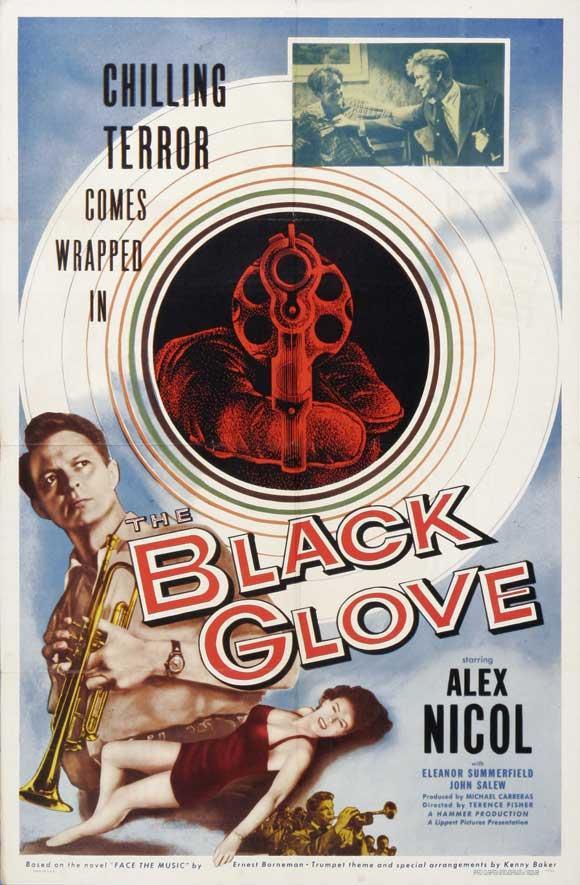
the black glove

A popular jazz musician named James Bradley (Alex Nicol) arrives in London for a series of performances. One late night, on his way to his hotel, he hears a beautiful voice singing along to a nice jazz band. He stops his cab, slips inside the club, takes out his trumpet, and plays along. The girl is pretty. The girl is nice. He takes her home. In the morning the girl is dead. The cops think he did it. He spends the rest of the film trying to clear his name.

This British production was produced by Hammer Studios which is usually associated with horror films and directed by Terence Fisher who helmed some of their best horror flicks. But this is all crime drama with lots of noir trappings. It is yet another film I’ve watched of late that’s just pretty good. There is some nice jazz music, some good images, but the story never quite succeeds.

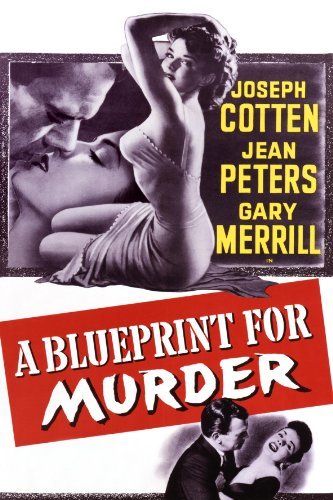
Noirvember #3: A Blueprint For Murder (1953)

a blueprint for murder

Joseph Cotten plays Whitney Cameron who is called to the hospital when his niece has taken ill. There with him is Lynne (Jean Peters) the widowed wife of his brother. When the girl dies Whitney decides to stay in town a little longer. When the doctor cannot figure out how the girl dies Whitney and his two friends suspect foul play. Lynne, it seems, stands to inherit a lot of money if her two step-children die. With one gone that only leaves the boy. With no proof that Lynne is the killer, Whitney must try to find some evidence while also keeping the child alive.

A Blueprint for Murder has many of the hallmarks of a good noir, but it never quite got there for me. It was directed by Andrew L. Stone who won an Oscar for a film called Julie (1956) but I had never heard of him prior to watching this film. It looks good, but it never quite builds up the tension it seems to be going for. Whitney Cameron has doubts as to whether or not Lynne is actually the killer but the film never gives us any reason to doubt. There are scenes in which the child’s life seems to be in danger, but what Hollywood movie from 1953 is going to kill off a child like that? And so there isn’t any real tension built up.

It is a perfectly run-of-the-mill movie. I suspect I’ll be watching quite a few of those this Noirvember, as I’m intentionally seeking out lesser-known ones. Yet I still love this sort of thing. I like Joseph Cotten quite a bit and I’m always glad to see more of his films. And, while seeking out and watching lesser-known films often brings movies that aren’t that great, you also find hidden gems, and that makes it all worth while.

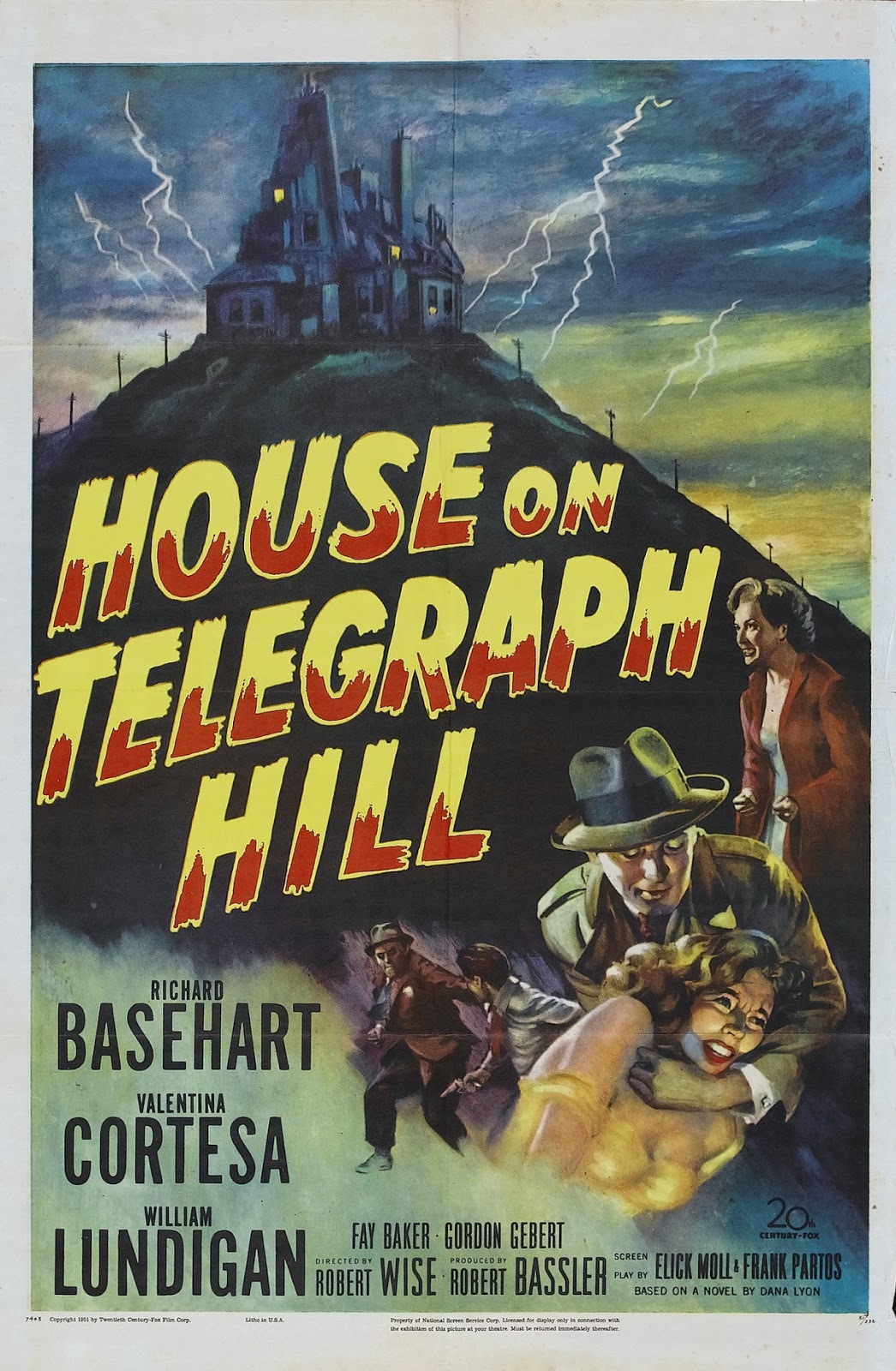
Noirvember #2: The House on Telegraph Hill (1951)

the house on telegraph hill

I know I said I wasn’t going to write about every movie I watched for Noirvember, yet here we are. I definitely won’t be writing full reviews of everything. Like tonight I’m too tired to say much. But I’ll say a little.

The House on Telegraph Hill was directed by Robert Wise which is why I decided to watch it. He directed the wonderfully spooky haunted house movie The Haunting (not to mention West Side Story, The Sound of Music and a bunch of others) which is why I watched it.

It is about a woman, Victoria (Valentina Cortese) who survives a Nazi concentration camp, and takes on the name of her friend who died there. The friend was American. When she arrives in San Francisco she discovers the friend (and thus her) has inherited a lot of money. She marries the man who has been taking care of her son, only to later discover that he is perhaps not quite what he seems. She’s pretty sure he is going to murder her.

It is a bit slow-moving and the intrigue never quite intrigues. The performances are fine and Wise’s direction is good. It isn’t bad, but neither is it all that good.

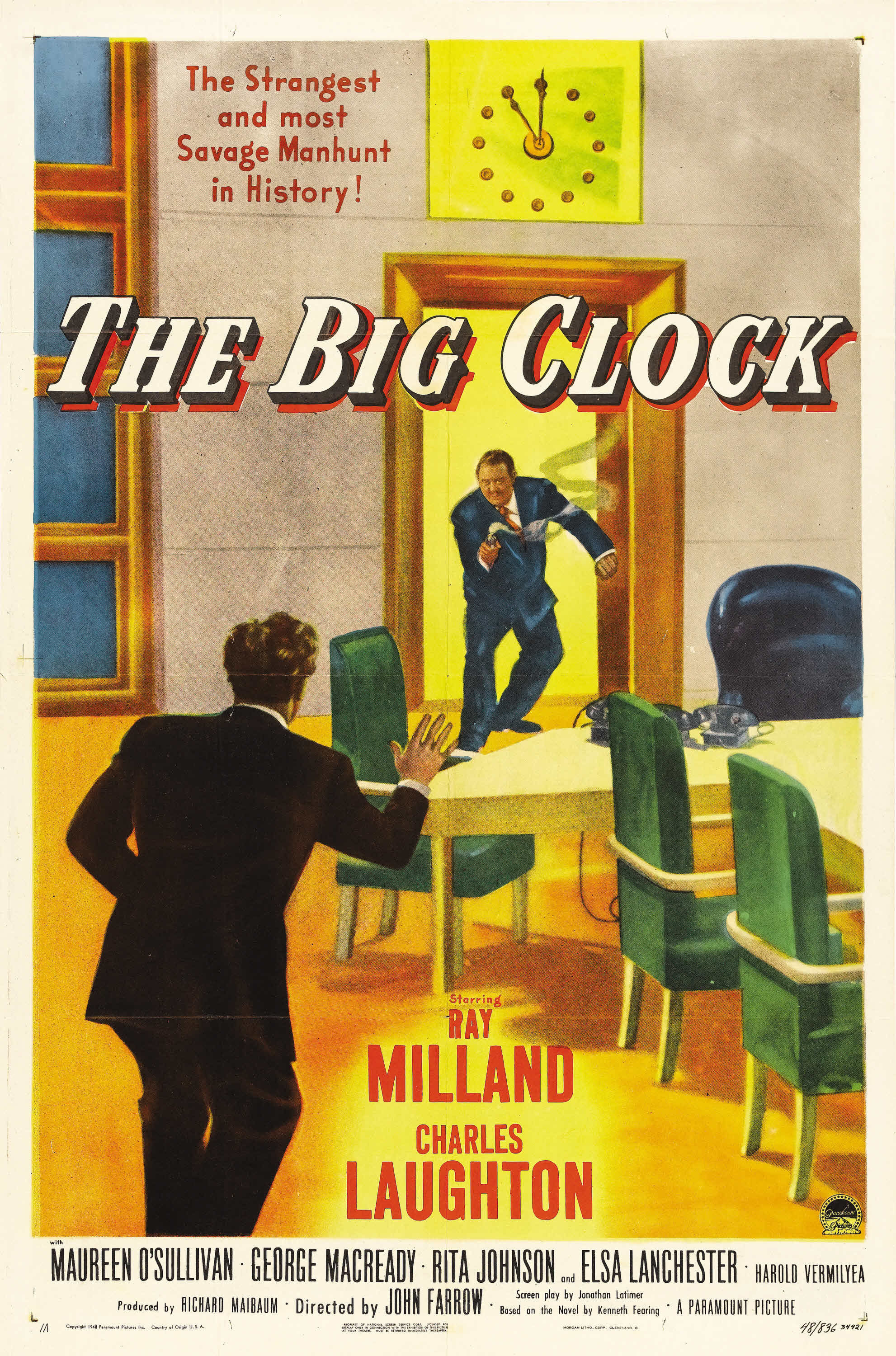
Noirvember: The Big Clock (1948)

the big clock poster

Knowing that I’m a big film noir fan, my wife recently bought me a bunch of postcards with film noir posters on them. Some of them I’ve seen, some of them I haven’t. A big chunk of my list of films to watch this month comes from those postcards. This is one of them.

Ray Milland plays George Stroud an editor at a big magazine in New York City. His boss Earl Janoth (Charles Laughton) is tyrannical. He’s the type of guy who calls a meeting to yell at everybody because subscriptions are down, then demands they come up with immediate solutions only to berate them when they respond. He doesn’t berate George because he’s just got a major lead on a missing person’s case. Janoth demands that George stick with the case even though he has a vacation planned for the next day.

George can’t miss that vacation. He’s missed too many vacations with this job, including his honeymoon. His wife is none too happy with him. He quits the job, but still misses his train. A glamorous woman, Pauline York (Rita Johnson) overhears his predicament and sees it as an opportunity. She’s Janoth’s secret lover and she’s ready to sell him out. She wants George to tell the story.

She gets herself murdered. Janoth learns that someone was seen leaving her apartment not long after the time of death. He forces George to supervise a team of reporters to figure out who that man was.

Spoiler alert: that man was George. He spends the rest of the movie trying to find himself.

The Big Clock is a lot of fun to watch. Milland and Laughton are terrific. Elsa Lanchester, in a tiny role, steals the show. It is one of those films that’s really quite good, but there is some little something that keeps it from being great. Still, it is a swell time at the movies.

Noirvember (2022)

Now that 31 Days of Horror is officially over we can now move on to Noirvember. That’s an amalgamation of Film Noir + November. Film Noir is a cinematic genre without a solid definition. When filmmakers were making film noirs during what is now considered the classic period (the 1940s and 1950s) the term wasn’t widely known. It was coined by a French critic in 1947 but was not widely used until the 1970s. Noir is the French word for black and even though the films are usually shot in stark black and white he was talking about the character’s dark night of the soul.

The fims are usually, but not always, crime dramas. They usually, but not always, follow a police detective or a private detective as they solve a case, or just as often they follow the criminal. There is often (but not always) a love interest, and if that’s a woman, she is usually a femme fatale. The criminal is often a bit of a schmuck. They are always cynical and hard-boiled.

Many of the plots come from the hard-boiled literary school of authors like Raymond Chandler, Dashiell Hammett, and Jams M. Cain. Classics of the genre are Double Indemnity (1944), The Third Man, Mildred Pierce (1945), and The Maltese Falcon (1941).

I love a good film noir, probably even more than I love a good horror movie. I’ve participated in Noirvember for the past several years and just like my 31 Days of Horror list I made a Letterboxd list of films I’d like to watch this month. This year I tried to include a lot of relatively obscure films in the list. I’ve seen most of the classics and I want to broaden my knowledge base of the genre. I know I won’t watch all of these films, and I will watch many other films that aren’t on this list. But it is a good place to start.

I will be writing about many of the movies I watch for this theme. I’ll try not to bomb you with quite as many reviews as I did last month. But I can’t really make a promise about that.

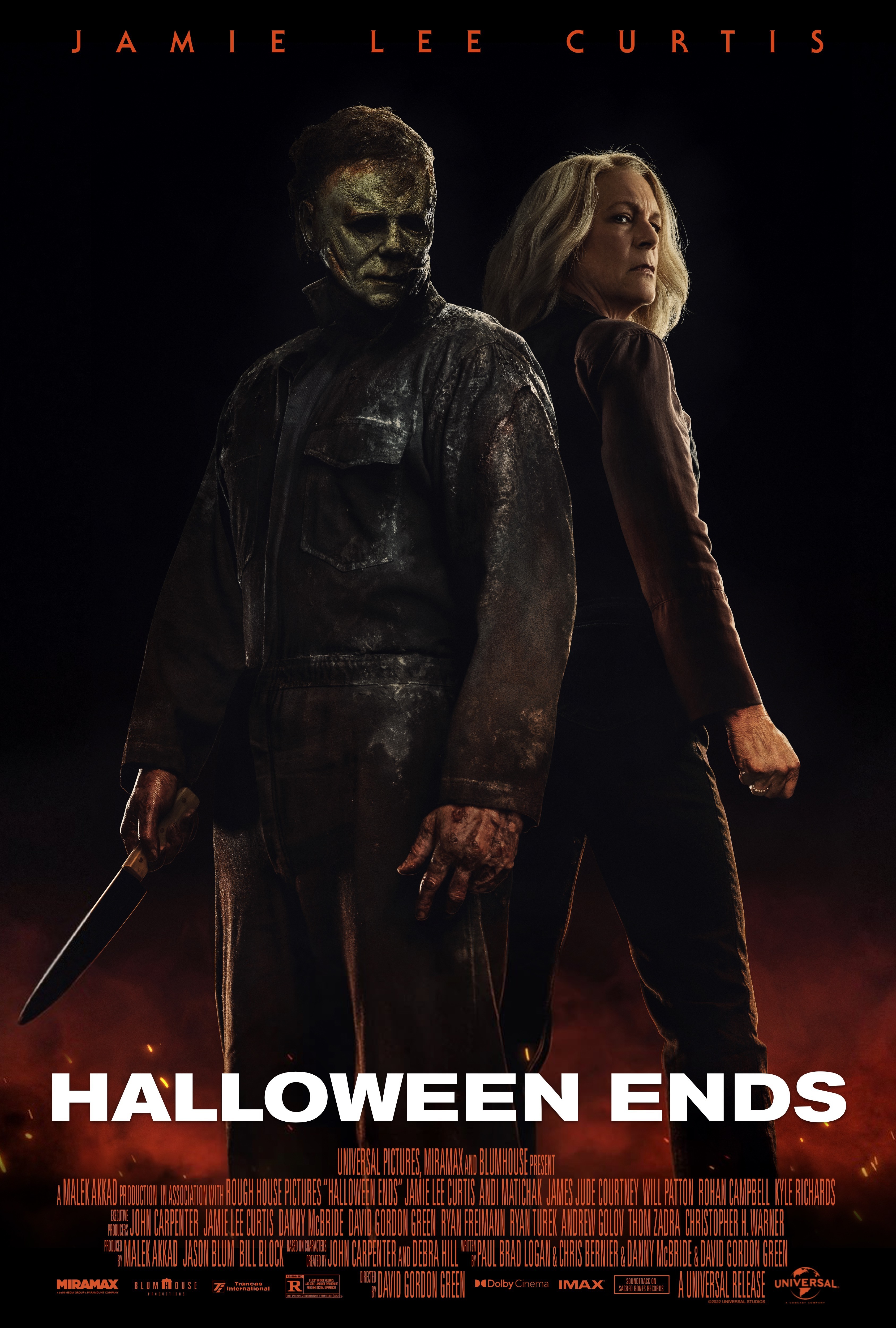
31 Days of Horror: Halloween Ends (2022)

halloween ends

Somewhere around 2007 or 2008, I started keeping track of all the films I was watching. It was a fun way of remembering what movies I had watched and when I watched them. I’ve since moved all my tracking to my Letterboxd account (which you can view here).

That first year I watched right at 100 movies. That seemed like a decent amount of films to watch, so I decided I would try to watch 100 movies every year. I quickly calculated and decided that I should watch 10 movies a month to meet my goal. Now, I’m bad at math, but I’m not that bad at math – I knew that 10 movies a month times 12 months equaled 120 per year but that was easier than doing the real math (it is 8.3333 movies per month if you really want to know) and 10 is a nice round number so I just went with it. Plus watching 120 movies a year is better than watching 100 movies a year and I was happy to increase my goal.

Ten movies a month is 2-3 movies per week and I worked diligently to meet that goal. Those of you who know me, you’ll know I actually stressed myself out more than once when I didn’t meet that goal. I managed to watch 120 movies or more for most of the years I was tracking it. For those of you keeping count, there were a couple of years in which my wife was in charge of a study abroad program and we spent three months a year living in Europe. I did not meet my goals during those years.

As my daughter got older I started watching more movies. She no longer needed my attention every moment of every day and so when she would play with her toys or whatever, I’d throw on a movie. She also started going to bed earlier and when she’d go down I’d put on another movie. My annual views went up.

Then COVID hit and we stopped going anywhere for a couple of years. I watched movies like a fiend. I’d get off work, spend a little time talking to my family then I’d start a movie. I might finish it, or I might not. Then there would be supper and clean up. Maybe a TV show or a game with the family. Then I’d put on another movie, or finish the one I started. But it was the weekends that made me a true movie addict. I’d watch something after work on Friday. Then I’d watch a horror movie that night, maybe two. Then on Saturdays, I’d watch 3 or 4 or 5. I think 6 was my record. I’d watch 2-4 more on Sunday. I was averaging something like 9 movies a week. Suddenly I was watching some 400 movies a year.

Even now when we are venturing out more on the weekends I’m still averaging about 1 movie per day or more.

Still, I watched a lot of movies this month. Fifty to be exact. Forty-four of these were horror movies. That’s a little crazy.

But I like stats so I’m going to break them down even more.

Twelve of the movies I had seen before. Twenty were made before I was born. The most movies I watched in one day were four. I did that twice. I only went to a movie theater once and that was to watch the original Halloween on the big screen. My final movie this month was indeed Halloween Ends. But it was kind of terrible and I don’t want to talk about it.

Truth is there was a bit of sickness in my family this month which kept us home on a couple of weekends. Also, the budget has been tight of late which kept us home even more. I tend to watch movies when I’m home.

I’ve done 31 Days of Horror for a few years now and I’ve never watched this many horror movies. Usually, I watch maybe 12 or 15 horror movies in October. I had no intention of writing about them every day either. But once I wrote my first 31 Days of Horror post I couldn’t stop. When I start something like that I have this weird need to keep it going. So I kept watching horror movies so that I could keep up with my posting. I’d watch multiple horror movies on the weekend so I could ensure that I’d have movies to write about even if I wasn’t able to watch a full movie on any given weekday.

To tell you the truth I’m kind of tired of watching horror movies

Next month is Noirvember. I’ll do a post about it tomorrow. I do not think that I will watch a film noir every day, nor do I plan to write about them every single day of the month. But I’ve said that before. I’m definitely looking forward to watching something that doesn’t have a lot of blood splatter.

31 Days of Horror: Gremlins (1984)

gremlins poster

I was eight years old in 1984 when Gremlins came out. I saw it at least once in the theater, but I suspect I saw it more than that. Certainly, I remember talking to my friends about it at school and on the playground. We all loved it. Famously it was one of the movies that created the PG-13 rating (the other was Indiana Jones and the Temple of Doom). There is quite a bit of violence in the film including scenes in which Gremlins are pureed in a food processor and blown up in a microwave. Some audience members were disturbed by this, having taken their young children to the movie due to its PG rating. Steven Spielberg who produced this movie and directed Temple of Doom used his clout to suggest a rating between PG and R and thus the PG-13 rating was born.

As kids, of course, it was those very scenes that we loved and were talking about on the playground.

If you haven’t seen it, Gremlins is about how a father buys a cute little furry creature from a mystical old Chinese man (we’re gonna overlook the terrible caricature that trope has always been, but do note I am completely aware of it). for his son Billy (Zach Galligan). Well, technically he buys it from the man’s grandson, but that detail isn’t that important. The creature called a Mogwai and named Gizmo by Billy comes with three rules.

He doesn’t like bright lights, and sunlight will kill him.
Never get him wet.
Never, ever, feed him after midnight.

As a side note, I once bought the woman who would become my wife a stuffed Gizmo but made her recite the rules to me before I would give it to her. She still has it, and pulled him out while watching the movie.

Naturally, all three of these rules will be broken in the course of the movie.

When water is accidentally spilled onto Gizmo he spawns a bunch of other Mogwai. Unlike Gizmo these spawns are more mischievous and malevolent. They trick Billy into feeding them after midnight which metamorphosizes them into larger, nastier creatures with evil intent.

Mayhem and quite a bit of pretty bloody violence ensue.

Director Joe Dante directs Gremlins from a script by Chris Columbus with a wonderful mix of humor and gore. As a kid I loved it. As an adult I still do.

It takes place on Christmas Eve so technically you could call it a Christmas movie rather than a Halloween one, but I’m still counting it for my 31 Days of Horror scoreboard.

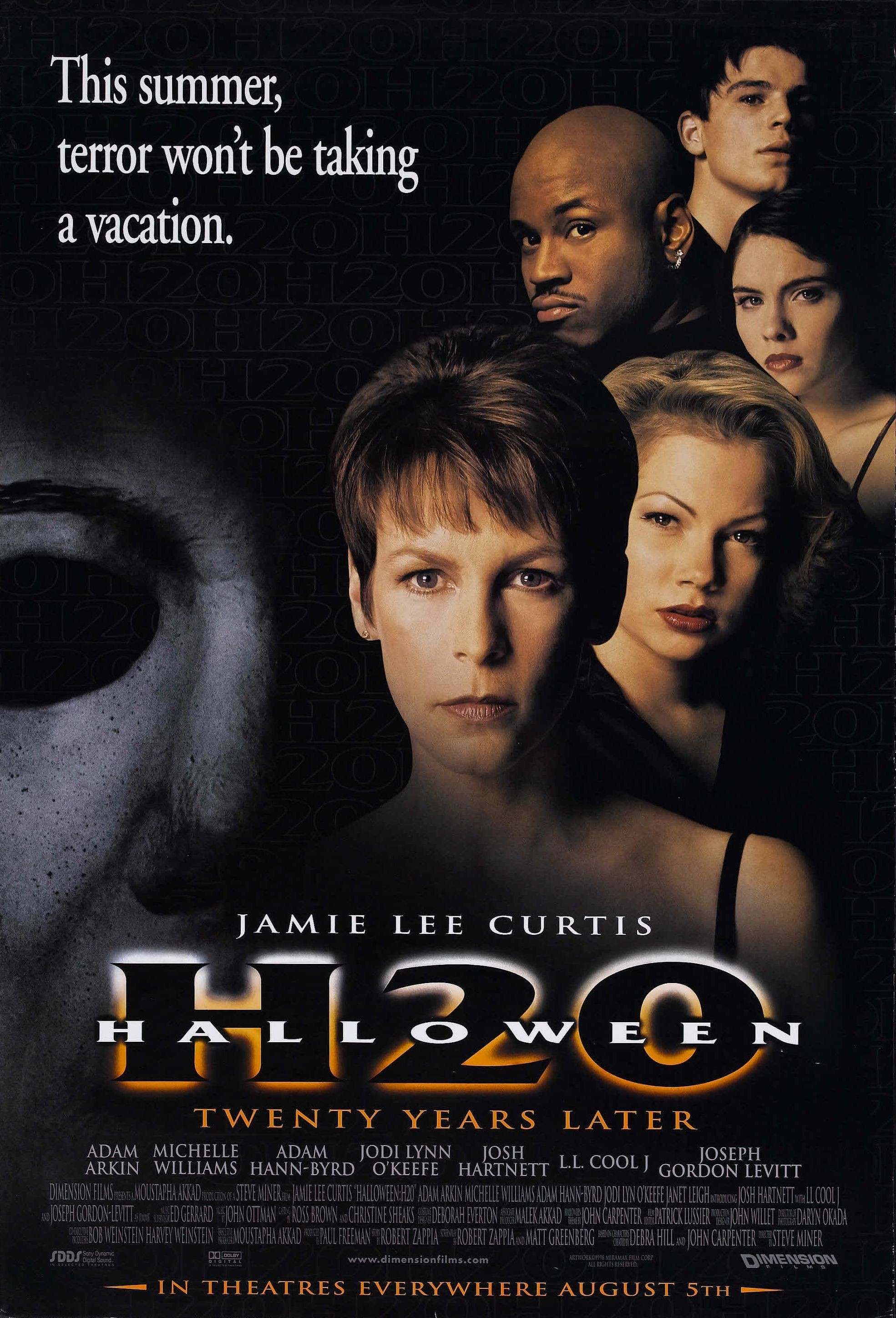
31 Days of Horror: Halloween H20: 20 Years Later (1998)

summer of sam poster


I’ve talked quite a bit about how I grew up watching slasher movies like Friday the 13th, A Nightmare on Elm Street, etc. I am a child of the ’80s and slashers were all the rage. But while I am a child of the ’80s I really came of age in the ’90s. This is a fallow period for horror movies. Slasher movies were either straight-to-video schlock or the 7th or 8th sequel to a long-since stale franchise.

Then in 1996 Scream was released and things changed. Written by Kevin Williamson, a horror buff, and directed by Wes Craven who directed many a horror film including the original A Nightmare on Elm Street. These were people who knew the genre and loved it. They also knew the tropes, and how tired they had become and made a film that played around with them. The characters in Scream are fans of horror movies and talk about the rules and tropes of the genre whilst simultaneously living through one. It is a self-aware slasher film, but one that is also a really good version of the genre.

I injected it straight into my veins. It was hugely successful and like all cinematic successes, it spawned countless imitators. They all had a cast of attractive up-and-comers (who were usually stars on the small screen but had yet to break onto the big screen) were filled with self-aware characters and the music was very much of the time (mostly 1990s alt-rock). Most of them were also instantly forgettable.

When Halloween H20: 20 Years Later came out I was all on board. I loved the original John Carpenter film (which essentially ignited the slasher craze of the 1980s) and I thought it would be really fun to give that film a boost with this new updated version of the old film. I hated it on that first viewing.

It is here that I admit that at this point I had only seen the original Halloween, but none of the sequels. So I was not well knowledged in the Halloween-verse lore. I was also expecting more Scream-esque shenanigans and got very little of that.

But I’ve seen the film a few times since that initial viewing and I’ve really come around to the film. I’ve also seen all the other Halloween films (excepting the Rob Zombie-directed Halloween II) so I’m better prepared to see how it fits into the canon.

Halloween H20 essentially pretends that every film after Halloween II (the original not the Rob Zombie remake, man this series gets weird with their naming) doesn’t exist. Laurie Strode (Jamie Lee Curtis) survived the attacks from Michael Myers, then faked her death and got on with her life. She’s now the headmistress of a posh, exclusive, and secluded prep school in California. She might be a functioning alcoholic, and she pops a lot of pills, but she’s not living in fear. Well, maybe she lives in a little fear, especially when the calendar gets closer to Halloween. Maybe a lot of fear when it is almost Halloween, and her son, John (Josh Hartnett) is about to turn 17, the same age she was when Michael Myers attacked.

Much like the original, this Halloween movie takes its time getting to the killings. Oh, there is a pretty great opening scene in which Michael Myers kills his former nurse to get some files on where Laurie is currently living, and he kills a couple of people along his route. But mostly the film is about how Laurie has started her new life. She seems to be a good teacher. She has a steady boyfriend (Adam Arkin). She is learning how to deal with her growing son, etc. We spend quite a bit of time with her son and his friends.

I liked these scenes. It is a film about trauma and how the violence of the early films has stayed with Laurie even as she tries to pretend everything is fine. These days it seems like every other film is about trauma (and certainly the new Halloween movies dig deep into that idea), but at the time this was something of a rarity. There are callbacks to earlier films but they don’t hit you on that head with it.

This isn’t a film that is self-aware like the Scream movies are. Nobody reference other horror movies or their tropes. LL Cool J provides some comic relief as a security guard who secretly wants to write romance novels, but that’s as jokey as it gets. The teenagers are young, and attractive, and populated by up-and-coming actors (Michelle Williams and Joseph Gordon-Levitt appear). The soundtrack is filled with cool alt-rock from the period. But it feels less like a 1990s new-slasher film than an update of the original.

When Michael Myers does show up the kills and the final battle are well-staged. There is nothing here that will make a highlight reel of the best kill scenes, but it does the job. And that really sums up the film. It is well made and well acted, it works as a serviceable slasher and a nice updating of the original. But there is nothing here that makes it special. But in a world filled with really terrible horror films, perfectly serviceable is a perfectly reasonable thing to hope for.

The Friday Night Horror Movie: Dark Glasses (2022)

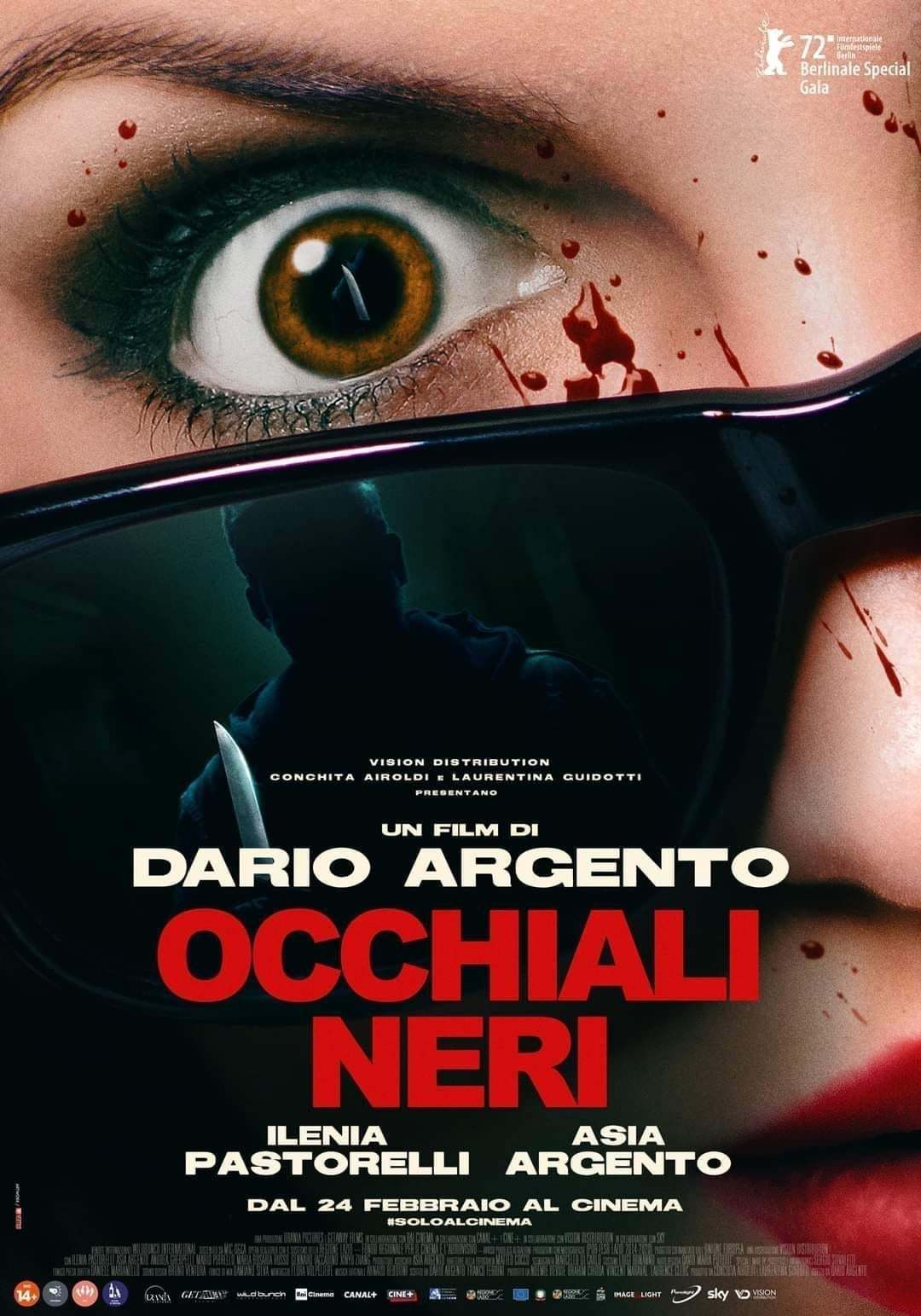
dark glasses argento poster<

I am a very big fan of Dario Argento. He was one of the originators and the perfector of the Italian Giallo. Throughout the 1970s and much of the 1980s, he churned out one masterpiece after another. But the hard truth is he hasn’t made a good movie in a very long time, and most of his output since the 1990s has been terrible.

So it was with some trepidation that I came to Dark Glasses, his first film since the godawful Dracula in 2012. Well, I’m happy to say Argento is back, baby.

This is not Argento at his peak. It isn’t as good as Suspiria or Dark Red, but it is still pretty darn good. Gone is the shoddy CGI and dull cinematography. The film looks great and it absolutely contains some of his famous stylistic flairs.

The story involves a woman who is blinded in an accident and chased by a crazed maniac. It is none too special in that department but it works well enough. There are enough surprises to keep you guessing, and while the killer’s reveal is pretty dumb, getting there is quite effective.

This is a film that were it directed by someone else, some up-and-comer, you’d be hearing a lot more chatter about it. But because it is from a master of horror, and that it is perhaps not the peak of his career it is already being forgotten about. That’s a shame because I really liked it.

31 Days of Horror: The Blood Spattered Bride (1972)

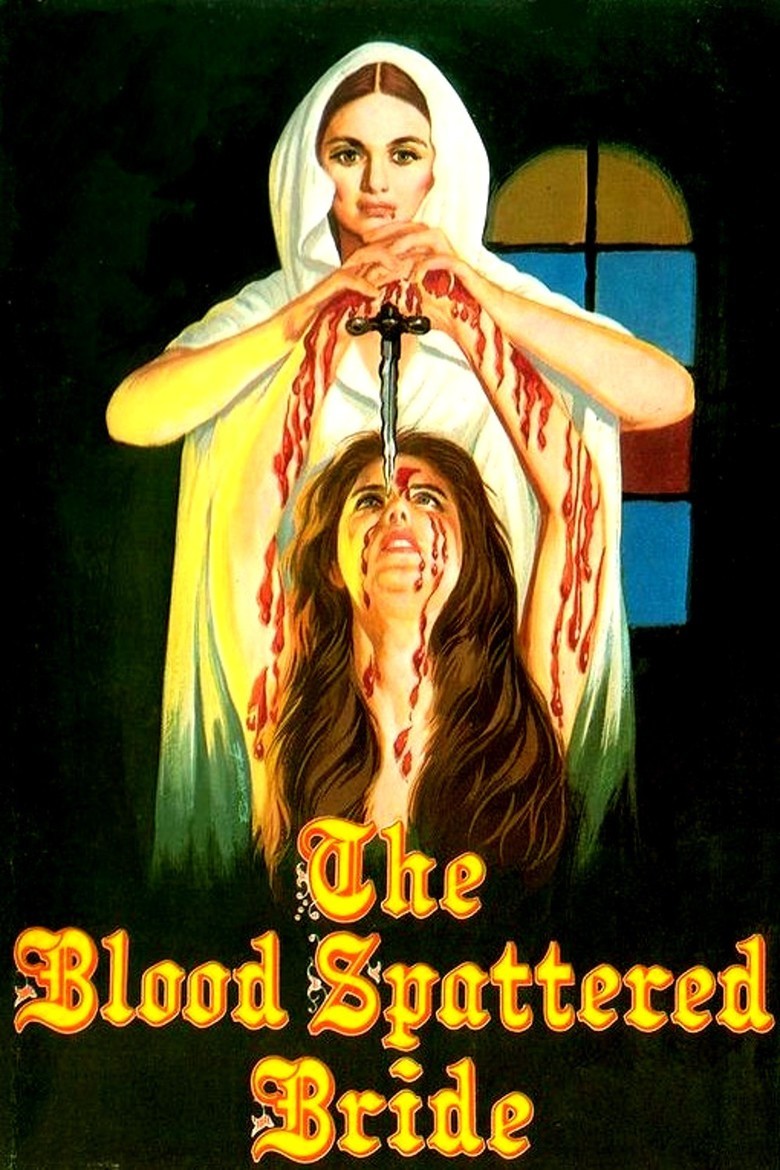
the blood spattered bride poster

The story Carmilla by Sheridan Le Fanu is one of the earliest known works of vampire fiction. It is also the origin of just about every lesbian vampire trope out there. The Blood Spattered Bride is one of many adaptations of that story to film. It is beautiful to look at, mesmerizing, and eternally slow.

It is about a woman, Susan (Maribel Martín), who has just married a man (Simón Andreu). He is unnamed in the story which suggests that he is not that important. They return to his ancestral mansion. She is a virgin on their wedding night and while she enjoys the pleasures of his company as the days and nights pass he is increasingly aggressive and demanding, which makes her grow distant.

She keeps having dreams about a strange woman. One day that woman, named Carmilla (Alexandra Bastedo) shows up. She looks just like one of her husband’s ancestors. The story goes that the ancestor slaughtered her entire household after going crazy

Carmilla seduces Susan and drinks her blood. Then she tells her to kill her husband.

It is all very dreamy. The ladies wear those flowing white gowns. The lighting is soft. It is like a renaissance painting (albeit with a bit more neck biting) come to life. It is definitely a film that is best to just allow it to flow over you. Don’t come in expecting lots of action and violence (though there is one scene that is pretty gory), and you might be pleasantly surprised.