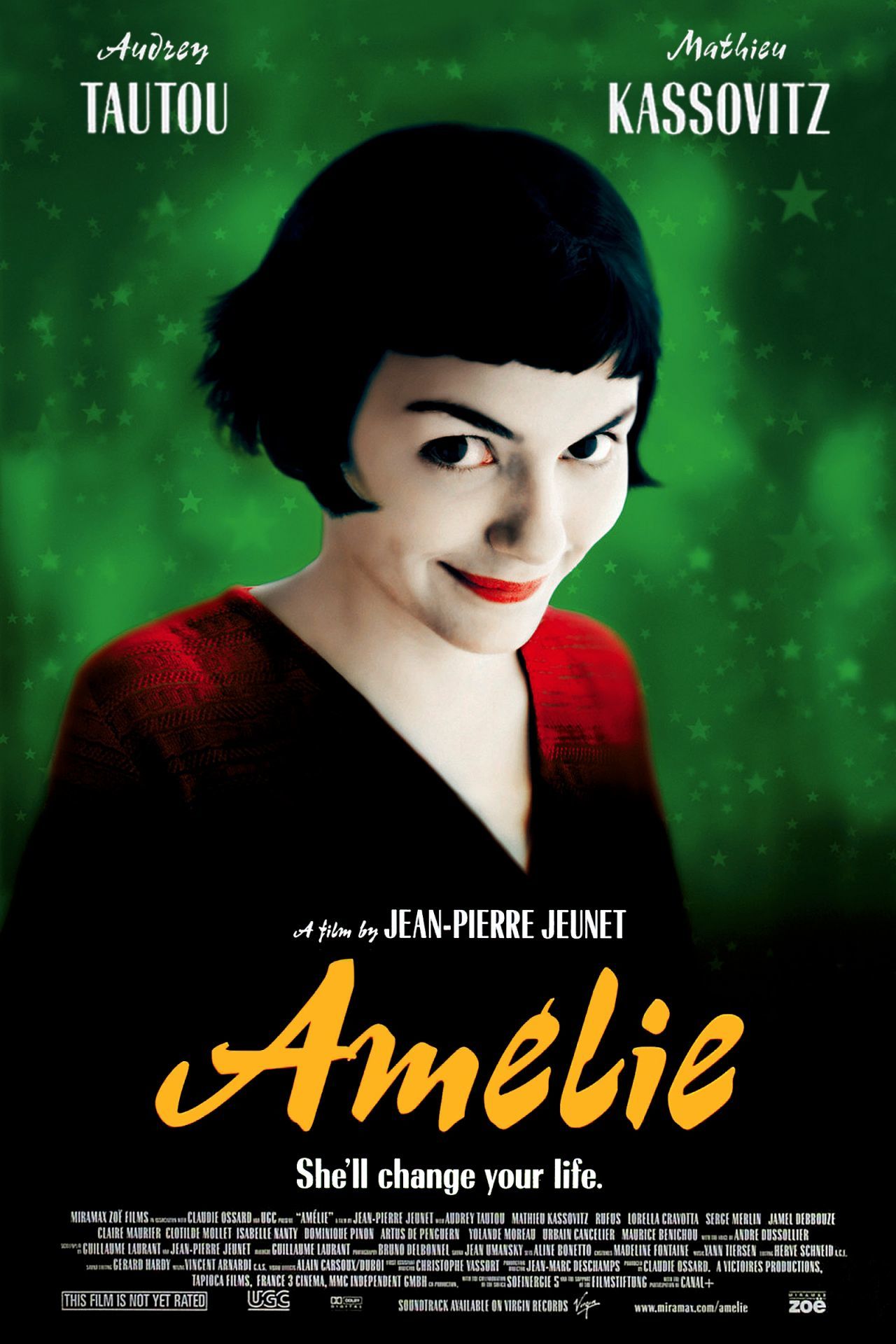
Amelie (2001)

amelie poster

There are some films that are pure joy to watch. These are films to be watched, cherished, and loved over and over again. There are certainly films that I may not herald as perfect cinematic achievements, but bring a smile to my face, and warmth to my heart. Amelie is such a film.

Jean Piere Jeunet made a series of dark, depressing films before Amelie. They seem to come from some strange crossing of Brazil-era Terry Gilliam and HR Giger-inspired Alien landscapes. In fact, Pierre directed the 4th installment of the Alien franchise, Alien Resurrection. Prior to Amelie‘s huge success, he was only known in the US for this picture. This is a shame, because her previous two films (Delicatessen and City of Lost Children) are real gems.

In Amelie, Jeunet has lost his Orwellian vision and has come up top of the world into the clear, blue sky. Amelie is alive with color and beauty. It is as if his first three films were harrowing graphic novels, and this one is a bright, technicolor Saturday morning cartoon. It is even a change of story for the director. Where his previous films concerned such meaty subjects as cannibalism, child murder, and those bloody awful Aliens, here is a simple story about making people happy. I’m not sure what caused these changes in the director, but it is a treasure to behold.

The story revolves around Amelie (Audrey Tautou), a shy, quiet, and lonely young woman living in the Montmartre section of Paris. Through a random series of events, she decides to make people happy. The means by which she manages this, and the heart of the movie, is through devising an extraordinary, and quirky, series of stratagems. For example, in order to bring some excitement into her saddened father’s life, she kidnaps his garden gnome and sends it across the globe with an airline stewardess. Her father sees the gnomes through a series of photographs taken with it standing near national monuments. The entire film is played out with child-like innocence and beauty. Jeunet uses his camera to create images that are light and joyous. Audrey Tautou plays Amelie like a pixie who is bursting inside to tell the world’s funniest joke.

Having visited Paris before watching this film again I found an additional joy by noticing the little details unknown to me in previous viewings. I have walked the steps of the Sacre Couer, seen the photograph kiosks in the train station, and seen the top of Notre Dame. These actions did not bring any further realizations into the film but brought a little more joy to my viewing. It is like when a film is set in an area you once lived in. It may not have anything to do with you, but there is a pleasant joy in knowing where the events take place.

The film does not look or feel like the Paris that I visited last Christmas. It is almost a fairy tale version of the city. A city that, as an American, I conjured up with such names as “City of Light, City of Love.” The reality is a much darker, dirtier sort of place. But in this film everything is lighted beautifully, there is no garbage piling up on the streets, and the metro stations look lovely. Even the people if not always cheerful, are quirky and cute in their unhappiness.

There are other films that achieve more in their 2 odd hours of screen time, than Amelie. Though I could site more serious, and relevant films, it would be difficult to find one so full of innocent joy.

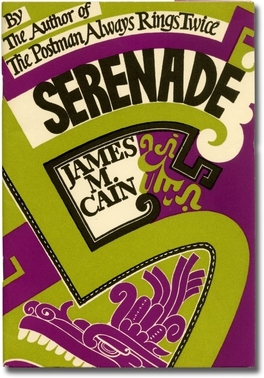
Serenade by James M Cain

serenade book cover

James M. Cain wrote in the first person, from the criminal’s perspective. His storytellers are not usually hardened criminals, yet through circumstances commit the most atrocious of crimes. He writes about downtrodden, out-of-luck schmucks, who fall for the wrong kind of girl. Interestingly, it is usually his women who are tough, manipulative, and full of lust for the crime. The men tend to be suckered in by their seductive charms.

Serenade centers around a down-and-out opera singer, John Howard Sharp. He is so down on his luck that he’s been singing in a small club in Mexico, before, even they, kick him out. His luck seems to change when he meets a cheap whore, whom he falls with. His love for her causes his once faltering voice, to come back. What follows is a transcontinental series of adventures cataloging John’s skyrocketing rise in both movies and the New York opera, and his subsequent fall.

There is plenty to like about Serenade. Cain’s terse, cynical prose moves across the page like a song. He accurately portrays John’s love and hatred for his lover. There are plenty of nice character moments. Moments that give just the right details that give meaning to ordinary events. Much of the “action” of the story revolves around the little moments of life: sitting in a room talking to friends, stroking the hair of a girl, and listening to music. Cain understands that much of life is filled with these types of moments and that great changes and meaning can be found in them.

Before Cain became a writer, he was trained as a singer. In part, this novel seems to be an attempt for him to allow his musical knowledge and training to come to some use. Throughout the book, John converses about or describes internally the music he likes and hates, musicians, and his own singing. Some of this is vitally important to the story, for he is a professional singer, and the plot concerns his successes as such. Yet it is so infused with information that it, at times, feels more like a trade magazine than a proper story. At only 136 pages, it is superfluous to fill so many with discussions on Puccini and Mozart.

There is a revealing moment about John’s character in the last third of the book. Even while reading this in 2005 it seemed shocking. Yet it is treated with aplomb, handled with an expert hand. The feelings that arise out of the character seem true if not entirely kind. It is also interesting to see how that particular issue was handled at that time.

Overall, Serenade is an interesting read. It is well written and the characters are well drawn. However, if you have never read anything by James M. Cain, I would recommend picking up The Postman Always Rings Twice and then Double Indemnity before I began reading this.

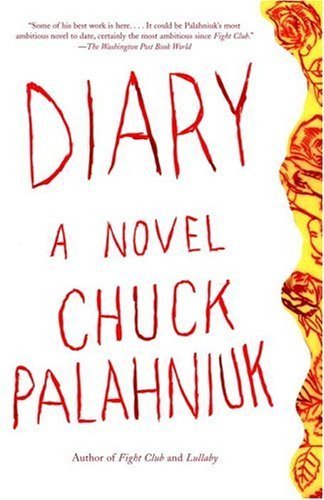
Diary by Chuck Palahniuk

diary chuck palahniuk

Chuck Palahniuk’s first novel was the bitter, cynical, diatribe called Fight Club. It is the story of young males who are so disenfranchised by materialistic American culture that they must beat themselves silly to feel anything. It is a scathing review of a society that numbs its members with consumerism. The characters become nihilistic in their views and begin destroying all that society deems worthy, including themselves. It spoke directly to a generation of males (and many females) including myself. It is a theme that permeates his following novels.

After seeing the excellent 1999 movie based on Fight Club and reading the book, I planted myself firmly in the fandom of its writer. I began reading his subsequent books in no particular order (other than what I could find at the library.) I made it through Survivor, Invisible Monsters, Choke, Lullaby, and most recently Diary. Each of these stories follows the same basic guidelines. An assortment of odd and often disturbed characters move through an increasingly absurd amount of crazed plot lines. There is the former cult member on a plane to his death (Survivor) the faceless ex-model on the road with a trans woman (Invisible Monsters). You get a man who intentionally chokes on food in crowded restaurants so he can bilk his saviors out of cash (Choke) and an involuntary killer who can summon a culling song of death at will. And finally a coma Diary “written” by the wife of an attempted suicide. Each of the novels is filled with jabs and slashes at societal norms. All of the characters go through extreme changes and end with a shocking twist. Unfortunately, they wind up being mostly the same.

Diary tells the story of Misty Wilmont, a once-promising art student, who now waits tables at a seaside resort while she writes a coma diary to her husband. It seems her husband, Peter, whisked the young artist to the resort tourist island of Waytansea. Throughout the story, Peter is in a coma from an apparent suicide attempt. All is not well on the once quaint Waytansea island and Misty quickly finds herself being locked in a hotel room by her mother-in-law and daughter, being forced to paint picture after picture blindfolded. I won’t give any more of the story away, because it is filled with the usual Palahniuk twists. Once again this book is filled with, mostly true factoids, and a biting cynicism towards all things culturally held dear. The problem, here, is that we’ve heard it all before.

Try as he might, Mr. Palahniuk has been writing the same story novel after novel. Oh, he gives us different characters and more outlandish scenarios, but his central themes remain the same. I read this one just waiting for the new twists to occur. But even the twists seem more of the same. I wasn’t expecting the actual twists to occur as they did, but I was expecting the twists, and that knocked half the shock out of them. The characters seem less real, and more like a cheap device to rattle off more nihilistic castigation.

Palahniuk is a talented writer. I just wish he’d get off his philosophy and get to writing something new, something fresh, something that Fight Club was when it first arrived in bookstores.

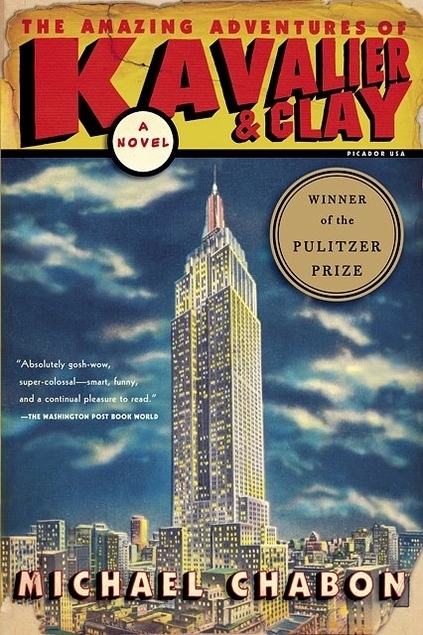
The Amazing Adventures of Kavalier and Clay by Michael Chabon

Amazong Adventures of Kavlier and Clay

I finally tried my hat at doing a full book review with Michael Chabon’s 2001 Pulitzer prize-winning book. I’ve never reviewed a book before, so let me know how I do.

I started reading this book in February or March of 2003. For one reason or another, I was only a couple of hundred pages into it when it was due back to the library. As is usual with me, I decided to give up reading it and turn it in, rather than recheck it. This is not a comment on the quality of the read, but rather a quirk in my own existence. I was fairly busy at the time and I figured that if I only made it through 200 pages in the first three weeks, another three weeks wouldn’t get me to the end of this 636 paged tome. Finding it in the library here, I decided to pick it back up. I’m glad I did and grateful I managed to finish it this time.

Chabon has created a magical book. It is slightly based on the history of comic books and is partly a fictional account of a small group of Jews during the atrocities of Hitler. Though, as Chabon admits, he chooses to ignore facts and history as it suits his story. It is the story of the friendship between Joe Kavalier and Sam Clay. The story begins with Joe having fled Nazi-run Prague for the comforts of his cousin Sam’s apartment in Brooklyn. They quickly become great friends and enter the burgeoning comic book world.

Chabon writes beautifully crafted sentences.  The plot courses forward and backward through time to tell a multi-faceted story. His pen pauses in moments of time during the present and pulls the reader into a back story of Prague, the Kavaliers, and comic books. Joe Kavalier’s story is beautifully told, encompassing a stint as a magician and escape artist before traveling from Prague to New York by way of Asia and California. The story of how Joe traveled to New York by way of a golem-filled box is hilarious, frightening, and poignant. For the first 2/3s of the book, Chabon’s pen doesn’t let the reader down from its magnificent beginning.

Yet it is about 2/3s of the way in, that the story begins to falter. In an effort to tell a grand, epic story, Chabon treads beyond the beautifully told past, and magnificent present, into a less-than-glorious future. Seeing his characters rise from humble, troubled beginnings to a stellar, triumphant present, only to have them fall again was a mistake.

It’s not so much the fall that hurts the story but the rushed way it is told. The novel moves at a slow pace, giving many sumptuous details and never minding slipping into the past for a revealing story. Yet, when it moves to the future it seems to force things along. You can feel the writer telling his story to point towards his final concluding point, rather than just allowing the story to unfold. To really flesh out the future section he would have needed another few hundred pages. I would have preferred him to wrap up the story by leaving out the future scenes. He does manage to salvage the conclusion and bring his characters into fully realized beings.

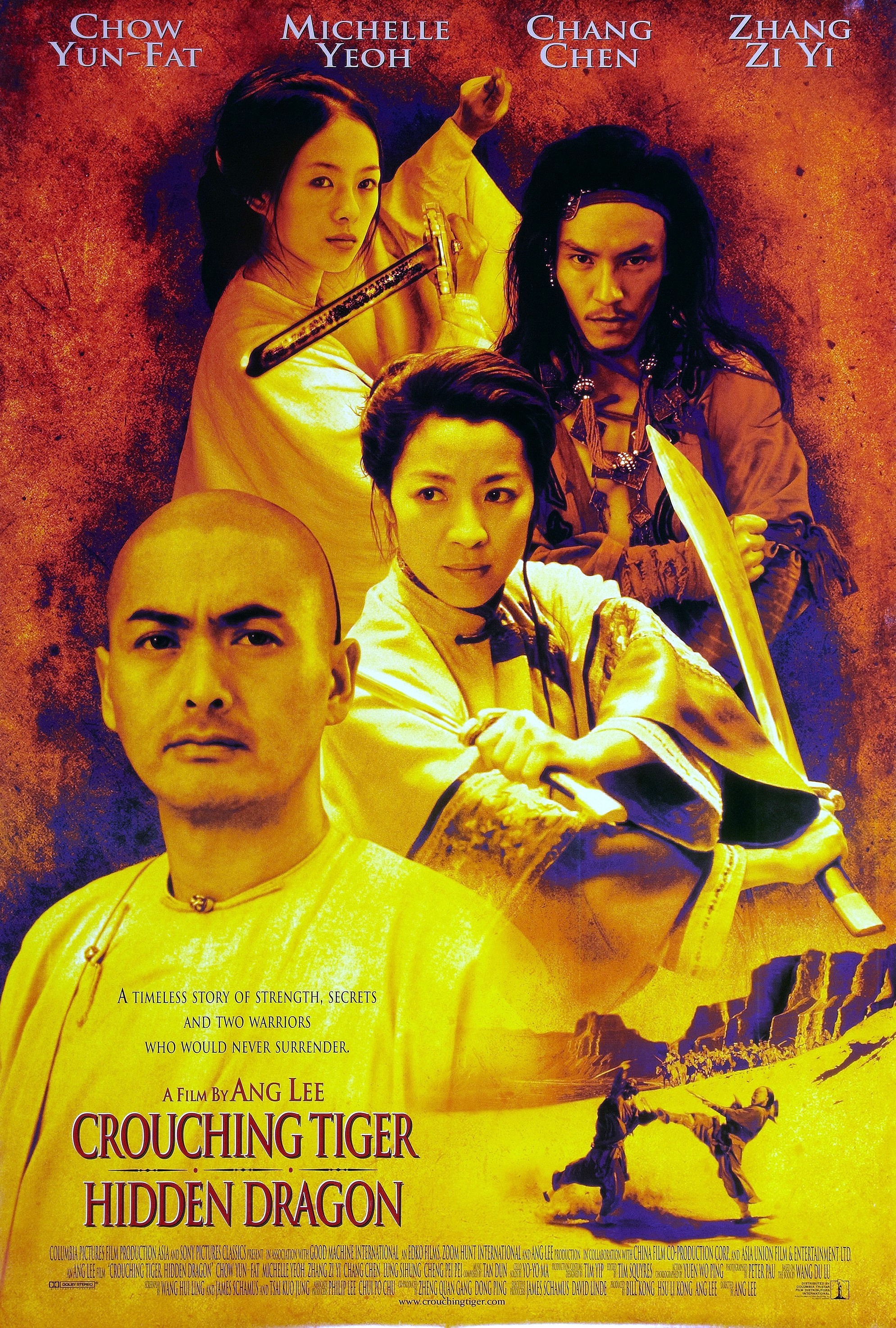
Crouching Tiger, Hidden Dragon (2000)

crouching tiger hidden dragon poster

Now that wire work is pretty standard in American film, it is hard to remember how impressive the effects were in The Matrix. Though The Matrix was hardly the first to use that type of effect, Asian cinema had been doing it for a while, it was the first time I had seen anything like it. I remember being completely awed by the look and movement of the film. Though much of the style and effects quickly became vamped by many films, shows, and commercials, it remained perfect in its visual effects. Crouching Tiger, Hidden Dragon came out a few months later and pushed the Matrix visual envelope even farther. For my dollar, Ang Lee created a smarter, more beautiful use for the effects than the Wachowskis ever dreamed of creating.

The story is a bit tricky. A master martial artist, Li Mu Bai (Chow Yun Fat), decides to give up his heroism and settle down. Proving his seriousness in this new direction he gives up his famed sword, the Green Destiny, to a friend. The sword is quickly stolen throwing Li Mu Bai and another friend, Yu Shu Lien (Michelle Yeoh) into detective work to reclaim it. Added to the plot is a noblewoman, Jen Yu (Ziyi Zhang), about to be married against her wishes, and Li’s old nemesis Jade Fox (Pei-Pei Chang). To add a little more to the plot (I told you it was tricky) Li Mu Bai and Yu Shu Lien are lovers destined to never have their loved fulfilled.

Ang Lee manages to sort out this complicated plot rather smoothly. The film is sumptuously shot on location in China. The renowned action sequences are poetic and beautiful. It feels more like watching ballet than a sword-fighting action movie. The more skilled fighters can climb up walls, jump great heights, and seemingly fly through the sky. Though the film never explains how they are able to manage such incredible feats, they do it with such agility and grace, that you never think to question it. There is a scene fought out amongst tall whisp trees that is pure poetry. Yet the action sequences never stand in the way of the story. This is not a film designed to wow the audience with nothing but visual tricks, the action serves the story alone and is not there to give cheap thrills.

As the film unfolds a theme develops. Li Mu Bai and Yu Shu Lin never express their love for each other out of honor and loyalty. They hold to strict codes that must be obeyed over all of their own desires. Jen Yu is also bound by codes of conduct, but she chooses to disobey them and strives to live her own life. This serves as the central conflict between the characters. I will not give too much more of the plot away but will say that film concludes this conflict in a manner not seen often in cinema.

It is difficult for me to judge the acting of a foreign film. I choose only to watch the original language, with subtitles. This allows me to hear the nuances of the actor’s voices, but since I must rely on the subtitles to tell me what they are saying it is difficult to really judge a performance. That being said all of the actors do a fine job. Chow Yun Fat does a remarkable job as a master fighter. In each action scene he is in he fills the screen with a knowing presence. He fights with great poise as if he knows he will be the victor, but does not want to show his true ability. Michelle Yeoh and Ziyi Zhang are also standouts.

My only complaint has to do with one of the subplots. In the middle of the picture, we get a long back story on part of Jen Yu’s life. After watching the film again I can see that the back story is essential to the overall theme of the film, but it is still too long in the telling. It also serves to slow the film down just as the plot was finally moving along. I believe the essentials of the back story could have been told at a quicker pace allowing us to understand what is needed without slowing the pace of the film down or lengthening it too much.

This is a small complaint with a truly wonderful film. I have been a fan of Ang Lee for many years, and this film stands as his finest achievement. He is known for his smaller, character-driven family films. Here he manages to achieve something on a grander scale, yet maintains a beautifully portrayed character drama.

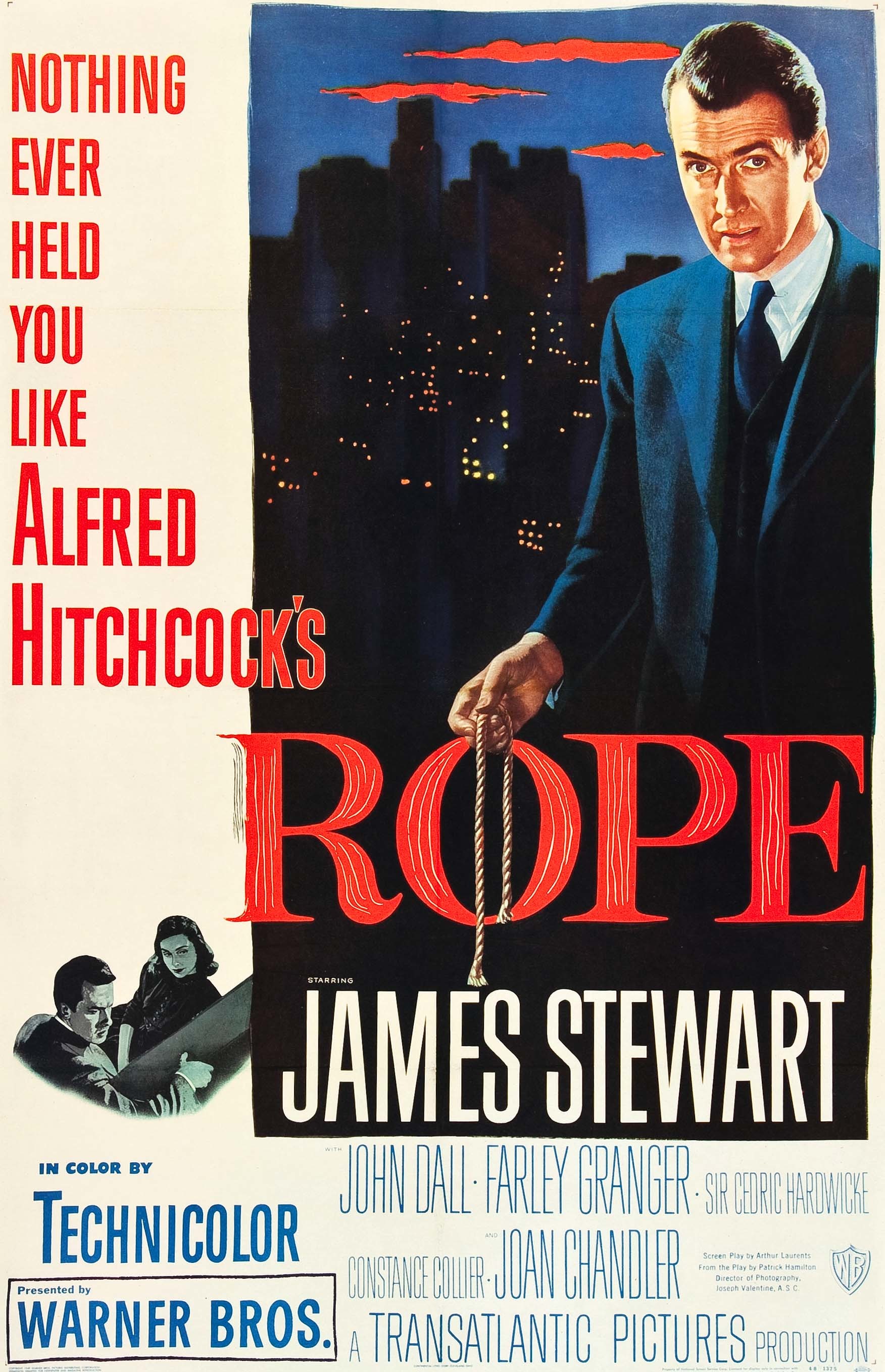
Rope (1948)

image host

This 1948 Hitchcock film is mostly noted for its technical achievements. Hitchcock filmed this story, about two well-to-do rich kids who decide to commit a murder for the fun of it, as a play. Which, in fact, originally was, though based in London and not New York. Technical limitations did not enable his original vision of making the entire picture one continuous long shot. Instead, it is made up of several 8-minute continuous shots. This was the length of film that fit into one reel. Using some very inventive cutting techniques the film appears as if it was filmed all in one take.

This is more impressive when you see the actual size that color film cameras during this time period. They were absolutely enormous, bigger than a man standing. To move the camera in and around the small stage space, many of the set pieces were set on casters and rolled about to keep out of the way of the camera. Some of the actors were noted saying that they worried every time they sat down, that there might not be a chair for them to fall into. Another achievement of the film is in terms of lighting. The apartment that the entire film is set in has several large windows overlooking the city. As the movie is more or less uninterrupted from start to finish we see the lighting change as the sun begins to set and night falls. It is a testament to this achievement that upon first viewing you don’t really notice the effect. Yet, the filmmakers took great pains to get it to look realistic, staging numerous re-stock for the final few scenes.

Though the technical achievements are quite wonderful, it is a shame that they have overshadowed what is really a very good bit of suspense. It seems the two high society murderers have planned a dinner party just after the murder. They store the corpse in a wood box that is featured prominently in the midst of the dinner. This creates an excellent mix of suspense and macabre. Throughout the party, the murderers become more unraveled even as they are enjoying their little game.

All of the acting is quite good. The two murderers (John Dall and Farley Granger) do a fine job of playing intellectual, society playboys, with a desire for excitement. It is slightly annoying watching their excited, nervous mannerisms (especially some stuttering by Jon Dall) but it is fitting with the characters. Their former instructor, Rupert Cadell, is played magnificently by the impeccable James Stewart. This is a bit of a departure from Stewart’s typical roles. Here he is a tough, cynical intellectual. This was the first of four collaborations between Stewart and Hitchock and it is hard to imagine his role as Scottie in Vertigo without this movie.

The story unravels in typical Hitchock fashion. The suspense is built, then lessened by some well-timed comedy, and then built again to a final crescendo. Hitchcock was excellent as a technical director and allowed his actors the breathing room they needed for fine performances. In the end, I left the picture feeling more excited about the superb storytelling than any particular technical achievement. It is a testament to his craft, that Hitchock allows you to leave a picture being enamored with his story over his technical achievements. Some of the greatest effects are those you don’t notice because they seem so natural and real.

Alfred Hitchock manages a triumph of technical brilliance and suspense in Rope. Its influence in the technical realm of cinema far outshines any effect the story has on future movies. This is a shame, for the story being told is one of suspense, macabre, and excitement.

Shaun of the Dead (2004)

shaun of the dead poster

Editors Note:   I don’t know what I was thinking with this review.  I’ve since watched Shaun of the Dead many, many times and I absolutely love it.  I don’t know why I didn’t find this movie funny the first time, I now think it is hilarious.  Oh well, you live you learn.

I’m the type of person who doesn’t read movie reviews before I watch the film. I don’t seek out trailers online or read the latest dish on upcoming releases. I prefer to go into a film with a clean slate, knowing as little as possible about the film before I see it. I find the moviegoing experience more enjoyable when I have fewer preconceived conceptions about the movie I’m about to watch. That being said, I love to read reviews and seek out trivia about movies that I have already seen. I enjoy reading other people’s thoughts and ideas about a movie and comparing them to my own.

Since living in France I have completely been out of the entertainment loop. We don’t have a TV and it is rare that we go to a new movie. I do visit a few websites to keep up with the news and hear bits and pieces of the movies that are coming and out and generating some buzz. Shaun of the Dead is a film that I have been hearing buzz about for several months. I refused to read any reviews or really research any aspect of the movie, but I couldn’t help but hear bits and pieces of good things about it. Primarily that it was a funny zombie spoof. Being a fan of the zombie genre, when the chance came up to borrow the DVD, I didn’t hesitate to take it.

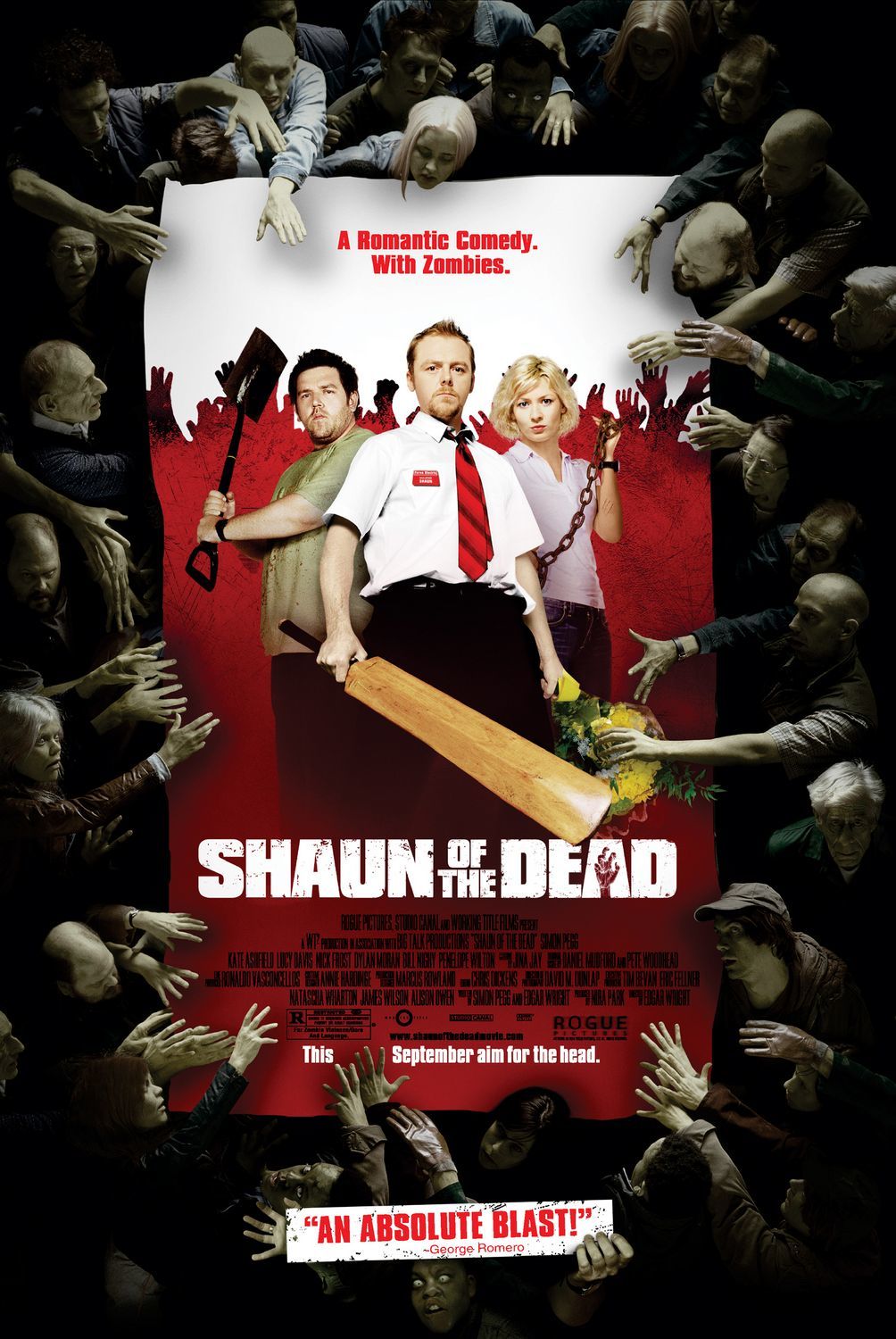
The plot is the pretty standard zombie plot. Some type of radiation/virus wreaks havoc on the earth re-animating the dead into brainless, homicidal maniacs. The movie does a good job of spoofing many of the conventions of the genre. The title character, Shaun, (Simon Pegg) is so stuck in his humdrum existence it takes him a couple of days to realize that his city has been attacked by zombies. He has a dead-end job, his girlfriend just broke up with him, and his flatmates are constantly fighting. Despite there being several zombies eating human flesh around him and the constant media blitz,  it literally takes a zombie in his backyard for Shaun to notice. There are a number of truly funny scenes that mimic many of the classic zombie cliches.

Here, the zombies walk in the classic, slow-motion, brain-dead way. They are mockingly slow. In one scene Sean and his friend, Ed (Nick Frost), throw a large crate full of junk at two zombies, then have time to run for a crate of records and argue which records are crappy enough to launch. The entire time the zombies are slowly walking toward them to devour Shaun and his friend. Other scenes have one zombie being beaten with pool sticks repeatedly to little or no effect. Time and time again there are little digs at the genre conventions while still lovingly following them.

A quick perusal of IMDB’s list of trivia for this film will show plenty of references to nearly every zombie film imaginable. I consider myself a fan of zombie films, but these guys must be nuts about them. They’ve set up multiple scenes that are an exact homage to older films. They’ve lifted lines right out of the classics of the genre. I must say that while reading the list I became more impressed with what the filmmakers created with this picture, but while watching it most of the references went over my head. As I said, I like zombie movies. They’re gory, violent, bloody, and often hilarious (intentional or otherwise). I have seen more than my fair share of good and awful zombie flicks. Yet here, most of the references were naught caught by me. I can’t exactly fault a film for referencing so many other films, yet I have to wonder who but the diehard zombie fanatic caught them.

My biggest complaint about the film is that it is too comedic, without being funny enough. What I mean by that is that the production is made like a comedy. The actors play their parts as if they are in a comedy and not the horrible zombie-addled situation that is scripted. Sure, there are a few moments of anguished screaming and fear, but those are over acted and far between. The story is truly frightening, the dead came to life and are devouring the city. This is not a light-hearted romp. Though often quite funny, zombie films play the situation straight. I felt let down that everyone was playing the situation for gags and not allowing the comedy to be more organic, or to flow out of the conventions of the genre itself. In the end, I didn’t find the movie funny enough for all that.

It was played for humor all the way through, yet I wasn’t laughing nearly enough. Some of this comes from not getting all the “in” jokes. Some of this is also, likely enough, because it is a British comedy at heart. There are a number of bits that seem to play better for the British sensibilities than my American in France’s heart. There were several moments that I could see the joke play out and “get” it, but it wasn’t enough to really make me laugh. This is not to say the movie isn’t funny. Because it is, often hilarious even. It’s just that the tone of the film was of great comedy, and the buzz I had heard matched this. Yet while watching it, I didn’t find it as funny as expected.

While thinking about this review I began to wonder how I would make a zombie spoof better. It wouldn’t be right to go the Zucker brother’s way. I got over that type of comedy in junior high, and the genre (well the horror genre which zombie movies are a sub-genre of) has been spoofed in this way enough (see Scary Movie). Slap stick spoofs were perfected by Sam Raimi in the Evil Dead series. In the end I decided that what the filmmakers were trying to do with this film is exactly the way to do it. I just think they missed the mark a little. I think I was partially disappointed because the genre itself has produced enough unintentional humor. Zombie movies are so often insanely bad, they are great fun. It is difficult to spoof a convention when the convention itself is so awful it seems a spoof unto itself. Likewise, some of the conventions such as the ineptness and slow walk of the zombies have been revamped by the likes of Danny Boyle. Instead, here, I would have preferred a darker, bloodier movie. I don’t believe this would have hurt the comedy. The references and homages could have stayed in tact and comedy could come out of horrific situations.

Shaun of the Dead is a fine movie. It spoofs a genre of film that is dear to my heart, yet remains firmly a fan of the genre. It references so many of the classics and non-classics of the genre that you’ll need an encyclopedic knowledge of zombies to catch them all. It is truly funny and makes a great party movie. Where it fails, it fails as a zombie movie. It is made for jokes and not scares, and there it falls a little flat for a good spoof. But certainly worth the price of the rental.

Meditations on the Grateful Dead circa 10/09/77

1977 is not the greatest year for Grateful Dead concerts. 10/09/77 is not the Dead’s finest night, it is not even their best from 1977 or their best night from October. “The Music Never Stopped” is a good song. It is not a Great Song.

But what the band does to it this night is what the Dead could do to just about any song. They make it Great. It begins no better than any number of versions they played throughout the years. All cylinders are popping right on time. Bob sings with his usual gusto.

The verses and chorus sound good, but it is after the last chorus that things really get going. At 3:24 the music begins to break down. The song’s structure is shed. Garcia plays like two snakes intertwined, dancing through each other. Bob follows his trail, throwing loopy, curved rhythms. Lesh hops along behind on bass like a kid on a pogo stick. The drummers keep their pace. Garcia speeds up the race moving his fingers like a jackrabbit on acid.

The pace quickens, and all melody and structure are thrown away, for a moment there is no longer a song, hardly what anyone would call music, but it is magic. An exciting pulsing beast. Garcia’s snakes eat each other and explode into something new. Phil thump thump thumps into the highest reaches of the atmosphere. Bob is no longer playing anything like rhythm unless it is the rhythm of some cosmic god. This lasts for two or three minutes, then without warning every musician, as if on cue, bangs back into the beat. I, wearing my headset at full volume, tense up as if a bomb has been dropped.

I begin to open my mouth half expecting to sing along with the next verse or the chorus. The boys seem to expect this too, playing the melody outright for a moment before realizing there is nothing left to sing. There are no more verses, the chorus has been sung. Garcia takes that cue to soar to the heavens again. The rest of the band continues to hammer out what remains of the song. The melody is there in the backbeat. Phil has it in his bass, the drummers pound it out on the skins, and even Bob is back into the rhythm. But Garcia, sensing the cosmos around him wants nothing to do with the conventions of song. He skates, dances, and weaves through a new song.

Something the audience, as cosmically charged as Dead audiences get, must understand. It is Garcia taking us along for the ride, headed to outer space and salvation, held back only by the melody and rhythm of that song. No longer dancing, Garcia charges ahead to break free. Faster, faster, louder he plays. Like a rocket flaring to break through the atmosphere, but at last, the gravity of the song still being played pulls him down. The band senses their victory and as if toying with Garcia breaks out of the mold of the song and begins the fast beat of the end. A crescendo of noise followed by the crash of a song ended.

No, 1977 was not the greatest year for live Dead. December was not the greatest month in 1977 and October 9 was not the Dead’s greatest night of October. “The Music Never Stopped” is not the Dead’s finest song. Yet in this year, this night, and on this song the Grateful Dead created magic. Just like they did for 30 years over different years, different months, and different songs.

The Man Who Knew Too Much (1956)

the man who knew too much poster

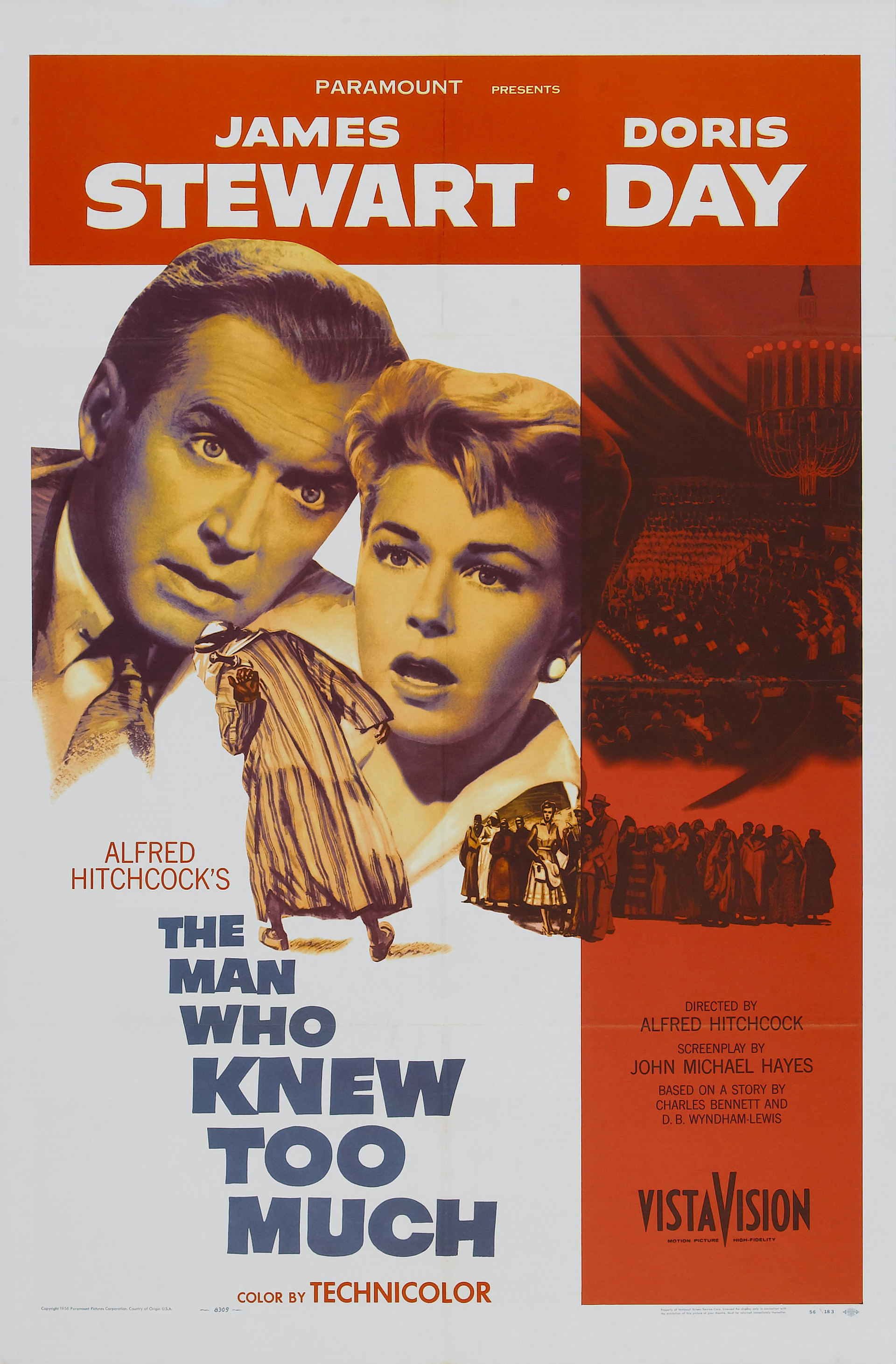
I suppose if you were to pick anyone to remake the classic Alfred Hitchcock film The Man Who Knew Too Much (1934), Hitchock himself would not a bad choice. And that is just what the master of suspense did in 1956. In fact, this version feels more like an extended, director’s cut than a remake. The story is essentially the same. Ben (James Stewart) and Jo MacKenna (Doris Day) are vacationing in French Morocco with their son (Christopher Olson). They are quickly caught up in international intrigue and must try to stop an unknown diplomat’s assassination to keep their son from being harmed.

While the original stays mainly indoors keeping its action to a few set pieces. In this new version Hitchcock thrills in taking his characters and the audience, to wild, colorful places around the world. It begins in Northern Africa and here we see many lovely shots of the countryside. The action moves to London where there are numerous shots inside enormous, gorgeous buildings like the Royal Albert Hall.

The opening credit sequence is beautifully done. Hitchcock shoots a half orchestra playing the opening music. It takes a few moments to realize that the typical orchestrated number you are hearing over the credits is visibly being played by real people in the picture. This inventive bit is promptly ruined by an uninteresting title card played over the cymbalist.

I own the original 1934 version and recently watched it. Many debates are raging over the internet on which version is superior. Frankly, I find both versions to be lacking. The original was paced quicker but suffered from several jolts in the plot which created some confusion and no sympathy for the protagonists. The newer version tries to help this out by giving us long and unmoving scenes in which the protagonists try to stretch out their characters.

Jimmy Stewart does a marvelous job as usual, but Dorris Day is annoying in nearly every scene. She is pretty and plays the part of a normal, cheerful American girl, but she grits my teeth while she’s on the screen. Maybe I’m just not a fan. In a scene towards the end she sings “Que Sera Sera” and to my ears, it sounds like she’s howling the number. One could argue that she is singing loudly for a plot purpose, but I would say it would serve the movie better if it was pretty and not harsh. In an interesting bit of trivia, Ms. Day apparently didn’t like the song to the point of nearly refusing to record it. It turned out to be her biggest hit, and won the Oscar that year.

There is an ingenious bit of filmmaking in the latter 3/4ths of the movie filmed in the Royal Albert Hall. There are some 12 minutes when not a word of dialogue is spoken and the only sound heard is the music played by the orchestra. It is a beautifully crafted scene that builds tension like a bullet.

Several plot elements make me ill at ease. The Scotland Yard seems terribly inept. We are made to believe that these detectives are willing to allow the MacKennas to run around the streets of London trying to solve the crime by themselves even though Mr. MacKenna knows important details about the assassination of an important diplomat. Why would an assassin use a small pistol to kill the diplomat from a long distance? After the assassination attempt, why is everyone allowed to run free? There are other questions and inaptitude that go unanswered except to allow a movie to tie up loose ends quickly and move the plot along.

Hitchcock was a master at manipulating audiences. He is in fine form throughout this movie quickly moving the viewer through the scenery with a good bit of humor and suspense. This is not a bad movie by any stretch. There is a great deal to enjoy as a carefree audience member and for anyone interested in the craft and art of film. However, it is far from Hitchcock’s greatest film, and I find its flaws to be more disappointing considering the masterful hands that created it.

A Hard Days Night (1964)

a hard days night poster

I started watching Alien on Monday to follow through with my alphabetical watching, but have been delayed in completing it. Instead, I have a review of the Beatles’ first film A Hard Day’s Night.

Critiquing this film as a piece of cinema, and not as a collection of Beatles tunes is a difficult task. Richard Lester creates some truly beautiful black-and-white images. Though sometimes the camera can’t seem to find its focus. And the images were obviously taken on a helicopter as the boys play in the grass outside the television studio shake wildly and distract from the fun being had. The boys, though essentially playing themselves, still play it a little stiff as if they are not sure how, exactly, to be themselves. The jokes, for the most part, are still funny, and what little plot there is, still works to give a glimpse into what it was like to be a band on the verge of universal stardom.

To take the movie without the songs is well beyond the point, though. The movie is essentially a market ploy to get the songs heard via different media. One might not be so forgiving if the songs were not any good, but the music shines throughout. The title song that starts the movie off starts with that struuuum that is instantly recognizable and jumps out and smacks you in the face. That is followed by what is arguably the Beatles’ best tunes. When you add in such songs as “I Should Have Known Better”, “Tell Me Why”, “I’m Happy Just to Dance with You”, the simple, sweet “If I Fell” and the sing-along favorite “Can’t Buy Me Love” to the soundtrack then you have a musical that is just shy of remarkable.

The movie was released just before the Beatles came to America and appeared on Ed Sullivan which brought on the madness known as Beatlemania. By this time they were extremely popular as can be seen in the crowd’s reaction while the boys sings on the television show. It is still shocking to see images of teenage girls screaming, crying, and shaking in a manner previously only known to the Pentecostal religion. The soundtrack periodically allows the girls screaming to take over the music allowing us to glimpse what it must have been like to be there. No wonder the boys gave up playing live shortly thereafter.

A Hard Days Night is an excellent glimpse of the Beatles on the cusp of World Stardom. This was before the summer of love, drugs, and the sitar where the Beatles were just trying to be the best band in the world and writing songs that made them so. It is a joy to see them cutting up and being their goofy, hilarious selves. I dare you not to sing and dance along as you watch it.