31 Days of Horror: Macabre (1980)

macabre poster

There has been a lot of discourse over on Twitter lately about how cinema is more than just plot. This stems from a certain contingency of filmbros who loudly complain about things like perceived plot holes or a lack of narrative or some other problem within the film’s story without paying attention to the atmosphere or direction, acting or other aspects of a film’s artistry. The argument is that what makes movies special is not what actually happens, but how it happens, or how the story is told.

Lamberto Bava’s first film as a director Macabre is a good example of what I’m talking about. The plot is razor-thin. A woman returns to a rambling old mansion where she rents an apartment after being away for several years. The apartment is not her home, but rather a place she used to sneak away to and have an extra-marital affair. This was before her daughter drowned her son and before an automobile accident decapitated her lover (which happened just moments after she learned about the dead son). The reason she was away was due to being in a mental institute, having broken down after those two deaths.

All of this happens within the first five minutes of the film. For the rest of the movie the lady spends most of her time in her apartment having spirited relations with some unknown lover all the while the blind man who owns the building listens attentively downstairs. The woman’s daughter (who was not arrested for her brother’s murder as she made it look like an accident) periodically shows up and asks a lot of questions.

There is a mystery around the woman’s lover as he is never seen. And she has the freezer locked up for some reason. It is pretty easy to figure out what’s going on, especially since the posters and synopsis tend to give away the surprise.

But Bava (who is the son of Mario Bava, one of the grandfathers of Italian horror) knows how to make a movie, even when the plot is slim and rather hokey. The mansion is filled with creaky old stuff and interesting bric-a-brac. He films it from various angles with lots of shadows and light giving it a great gothic feel.

It reminded me a lot of really old films that clearly didn’t have much of a budget and were hemmed in by the censors from creating something really creepy. But were still able to create a mood, a vibe, and then had some ridiculous twist at the end. Bava does his best to create tension about what it is that freezer. He moves his camera slowly towards it, adds in mysterious music, etc. Even though you know what it is, and how ridiculous the idea is, you are still along for the ride. At least I was.
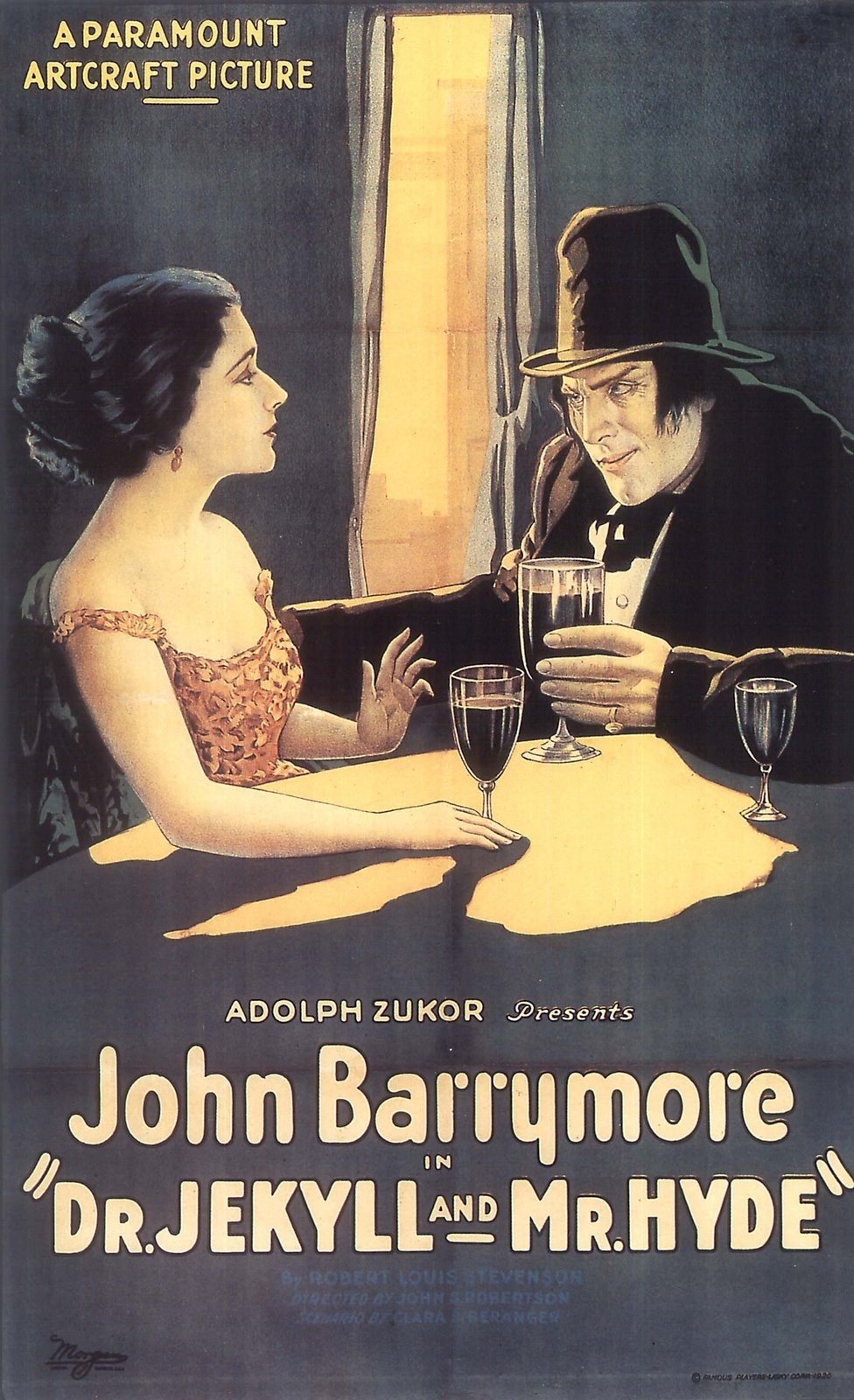
31 Days of Horror: Dr. Jekyll and Mr. Hyde (1920)

jekyll and hyde

Over the last few months, I have watched no fewer than four different versions of this story. Honestly, at this point, they are all starting to blend together. This is especially true since three of the adaptations I watched all follow what is called the Sullivan plot. In 1887 Thomas Russell Sullivan created the first serious theatrical rendering of Robert Louis Stevenson’s book for the stage. He reworked the plot around a romantic love interest (apparently there is no romance in the book).

Each film (this one from 1920, a 1931 adaptation starring Frederic March and another one from 1941 with Spencer Tracy) does its own variations on that central plot, but they are mostly the same. The differences are in the staging and the performances.

Over the last year or two I’ve been trying to watch more silent films, a part of film history I don’t really know much about. I have to admit I’ve struggled with the project. Silent Films obviously rely heavily on the visuals, since there is no dialogue, except what is periodically written on card inserts. And while many silent films contain some very striking images, they often also present what I’d consider to be fairly flat visuals.

Dr. Jekyll and Mr. Hyde does some interesting things with the visuals, there are some nice sets and the transformation of Dr. Jekyll to Mr Hyde is pretty cool. But there is also any number of scenes in which characters sit and the dinner table, or stand in the drawing room and talk. Sometimes, my mind wandered. It is a struggle to stay focused on the acting and the scenery. This is again, especially true with a film like this in which I am all too familiar with the story.

Still, there are some nice moments. John Barrymore shines as the titular characters. He is especially great when he transforms into the manic Mr. Hyde.

The more silent films I watch the more I am able to get into their particular groove. The do make you be more attentive to what is happening on the screen, versus allowing your eyes to wander to your phone or some other object, relying just on the dialogue to tell the story. This is a good thing, even if I still do struggle a bit with them.

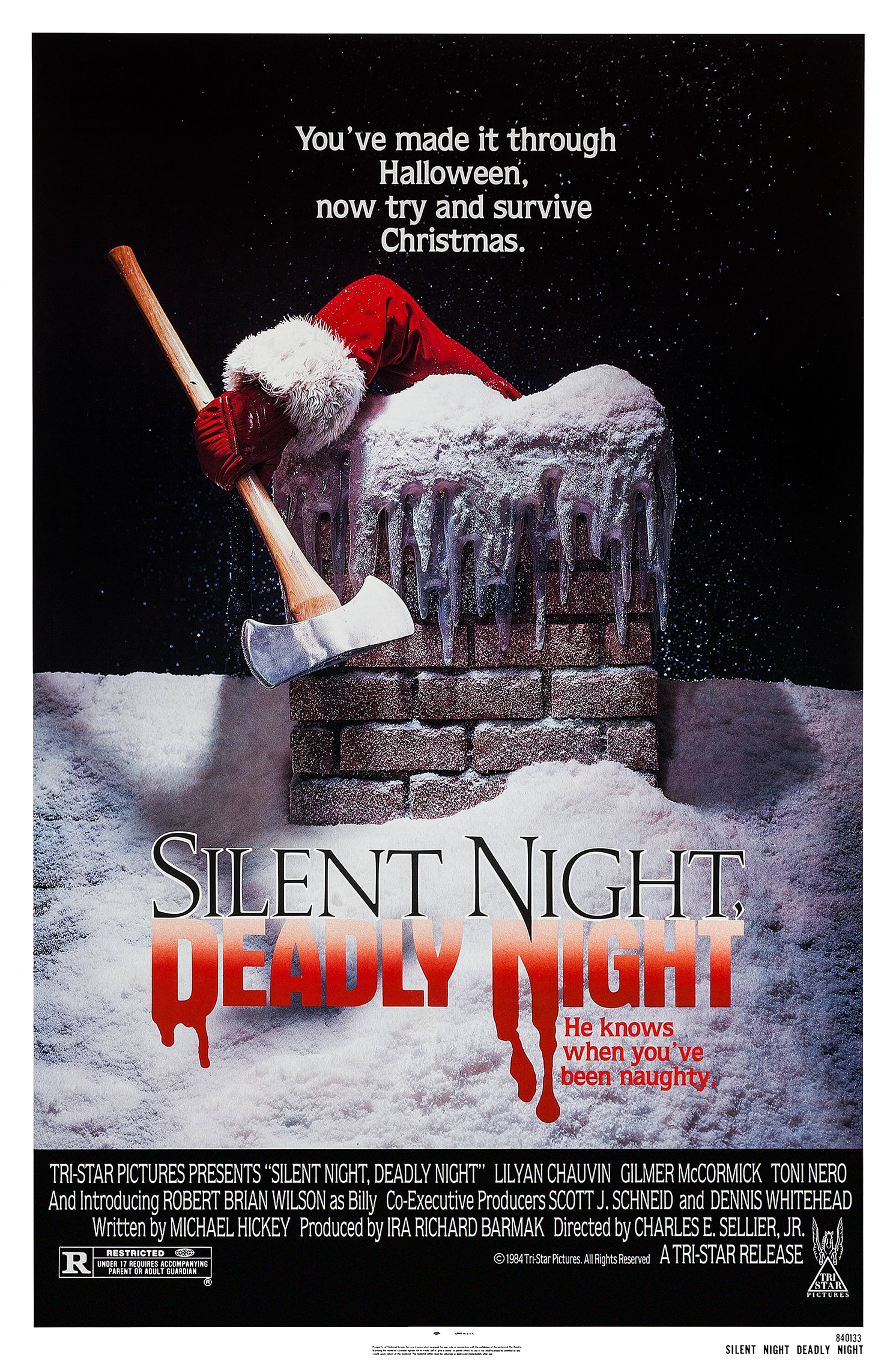
31 Days of Horror: Silent Night, Deadly Night (1984)

silent night deadly night

Halloween (1978) was such a huge success that it essentially ignited the 1980s slasher craze and spawned a whole slew of holiday-themed knock-offs. Naturally, it didn’t take too long for someone to make a Christmas-themed slasher. Although, if you want to get technical, Black Christmas (1974) was the first Christmas-themed slasher and it came out four years before Halloween hit theaters (though it is now considered a classic of the genre, Black Christmas was a bit of a dud at the box-office which is why Halloween gets all the accolades for kicking off the slasher crazy).

While I am clearly still a horror fan, I am less and less interested in the gore aspects of the genre. As a younger lad, I used to seek out the most controversial, the most gore-soaked films I could find. Fans of horror often talk about the kills in the films. We look for how many people are violently murdered and hope for interesting ways in which they reach their demise. There is a whole psychological essay one could write about why we like this stuff (from the thrill of being scared to the technical aspects of filming the stunts and practical aspects of created gore) but I’ll leave that to someone else.

As I get older I find the violence less interesting, but still enjoy the thrill of being scared, the filmmaking techniques, and the more suspenseful aspects of the genre. A good horror film can create a mood, an eeriness that I still find quite wonderful.

Silent Night, Deadly Night is a nasty piece of work. The plot begins with a young boy who watches his father and mother get murdered by a man in a Santa suit. He’s sent to a strict Catholic orphanage where the sadistic Mother Superior beats him for the simplest of errors. When he’s all grown up he’s sent into a long killing spree over one Christmas holiday.

While there is plenty of violence, it isn’t that much more than I’ve seen in a million other slashers. It is a very low budget film and that actually gives it a bit of charm. But I think what made me rather hate this film is that there are no heroes. There was no one to root for. Now I have no problem with anti-heroes, and I don’t think every film needs to have a full-fledged hero or a white knight. I am completely down with ambiguous morality in a film.

But with a film like this, where we follow a boy as he gets traumatized as a boy and then turns into a crazed killer but we never really get to know him, or anybody else. Anti-heroes like Tony Soprano or Walter White, both are terrible humans, but they are also incredibly charismatic. We get to know them throughout their respective television series. They aren’t people we’d root for in real life, but within the context of the series, we are interested in the plights.

The main character in this film is just generic. We never spend enough time with him to really care about what is happening to him psychologically. And so when he starts to kill it is just nameless slaughter.

31 Days of Horror: The Hidden (1987)

the hidden movie poster

I’m a big, fat dumb-dumb. Back when I was posting bootlegs every day I would periodically get burned out. I would get burned out because I felt like I had to add 3 or 4 or 7 bootlegs every day to the blog. Even though no one ever complained if I didn’t, you all seemed to be happy no matter what I posted no matter how often. But I pressured myself to post as much as possible every single day.

Now I’m not posting bootlegs, but talking about movies. When October began I thought it would be fun to do some 31 Days of Horror posts. I didn’t think I’d watch a horror movie every day of the month and I certainly didn’t think I’d be writing about them more than maybe a dozen times. Yet here we are on October 20th and with but a few exceptions I’ve watched and written about a horror movie every day.

This week has been rather stressful. Work has been a pain. Nothing too terrible has happened, but I’ve been very busy. I’ve also had some non-horror stuff to watch and review for Cinema Sentries. But I put pressure on myself to keep watching horror flicks and to write about them.

So here I am at 9:30 in the PM, trying to scratch something together about The Hidden. It is a good movie, I’d like to talk about it. Also, I’m tired. Really tired.

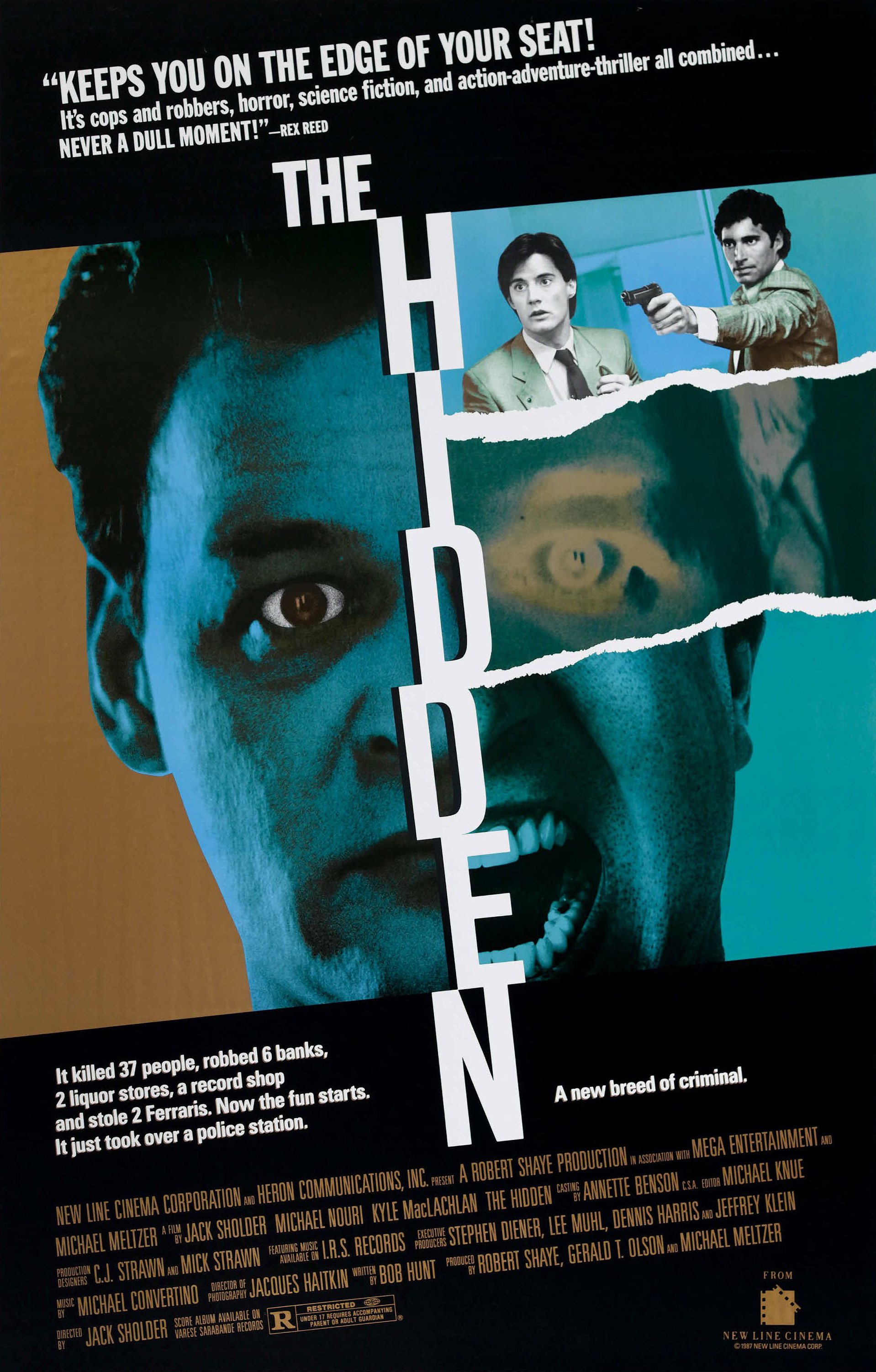
So, The Hidden is a very 1980s horror film that stars Michael Nouri as a copy who teams up with Kyle MacLachlan’s FBI agent who is tracking an alien that is able to move from one human body to another. It is a mixture of Men in Black, the Species series and every 1980s buddy cop movie. I kind of loved it.

31 Days of Horror: Frankenstein (1931)

frankenstein

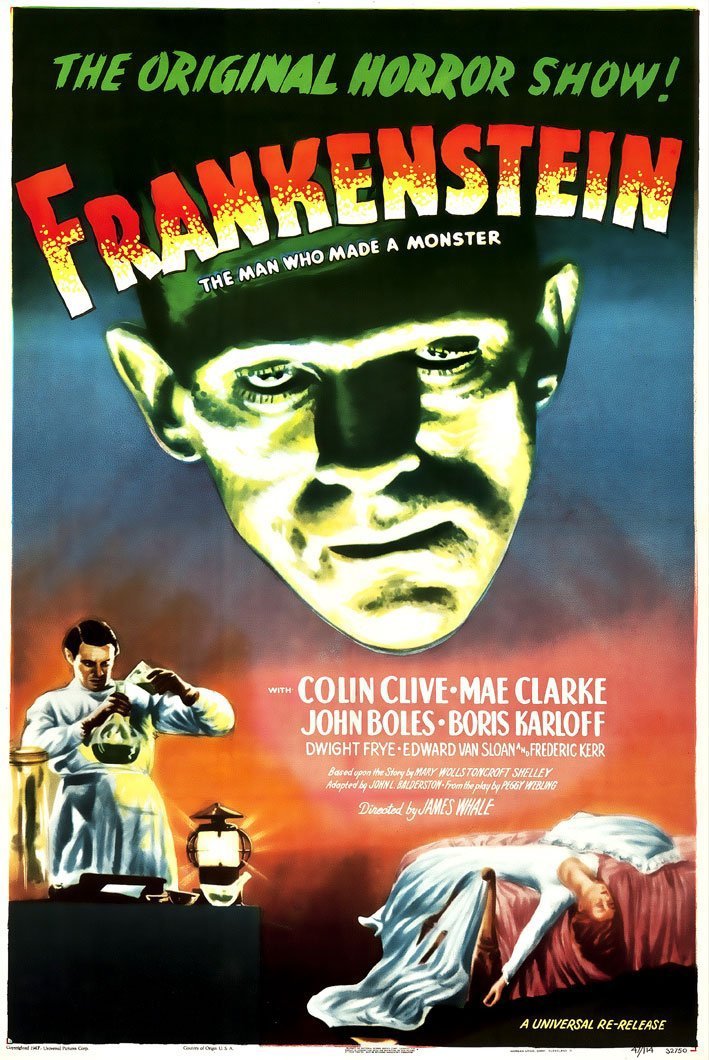
My wife is not a fan of horror movies, at least not the blood-soaked, gore-filled variety and so every once in a while I throw on an older film and we watch them together. I can’t remember the first time I watched Frankenstein. It is such a part of the culture I probably saw parodies of it before I ever actually watched the film. I’m pretty sure I watched Young Frankenstein (1974) before I watched the original.

Whenever I watched it first, I have seen it many times since. It is a genuine classic. Frankenstein (or technically Frankenstein’s Monster) is my favorite of the Universal Horror Monsters. I actually prefer the sequel, Bride of Frankenstein (1935), slightly more than this one, but they are both terrific.

Young Frankenstein is one of my all-time favorite comedies and I’ve probably watched it more than any of the original films. So much so that it is a little difficult to watch the original because my mind always goes back to the comedy. I find myself muttering the jokes to myself and anticipating certain sight gags. When the Monster meets the young girl, for example, I’m confused when they don’t play on a teeter-totter.

But really, this is a great film and if you haven’t seen it I highly recommend it, even if you don’t like horror.

31 Days of Horror: Near Dark (1987)

near dark

A couple of young guys are hanging out one evening on a sidewalk. They spy a pretty woman standing alone. One of the guys, Caleb (Adrian Pasdar) walks over to her. Or rather he struts. He’s full of confidence. He asks the girl her name – it’s Mae (Jenny Wright). He asks if she’s got a boyfriend. She says she needs a ride home.

In his truck, he is full of flirt. He asks her to slide over. He puts his arm around her. She asks him to stop so they can look at the night. He tries to kiss her, but she pulls away. Later they stop again. He literally lassos her and tries to kiss her again. She sees the dawn coming and says she has to get home. Now. He says he won’t take her unless she kisses him.

The beginning of Kathryn Bigelow’s Near Dark begins with a push and pull of the most interesting power dynamics. It is a situation most women will recognize, I imagine. A man offers kindness to a woman, but the wants something in return, and he gets more and more demanding if not immediately satisfied. But we know something poor old Caleb doesn’t – Mae is a vampire and she can bite him anytime she wants. She does exactly that when he tries to stop her from returning to her home before daylight.

When he turns, she introduces him to her band of fiends which includes Lance Henriksen as the defacto leader who has been around since the Civil War, Jennette Goldstein, Joshua John Miller who plays a vampire who was turned when he was just a kid and Bill Paxton whose channeling his Aliens character’s energy, but without the fear and a whole lot of nutso bravado. If you are paying attention you’ll notice that half the cast was also in James Cameron’s Aliens. He was dating Bigelow at the time and basically told her his cast would be perfect for her film and she agreed. So do I.

It is a western take on the vampire story and it is rather glorious. Shot in parts of Texas and Oklahoma, Bigelow fills the screen with this wideshots of beautiful, desolate landscapes. There are bar brawls and shoot-outs. The violence is stylish and brutal. The story – which winds up being about Caleb’s reluctance to take human life – is a bit too familiar, but I love the way it is told. And Paxton is bloody fantastic.

31 Days of Horror: Halloween 4: The Return of Michael Myers (1988)

return of michael myers

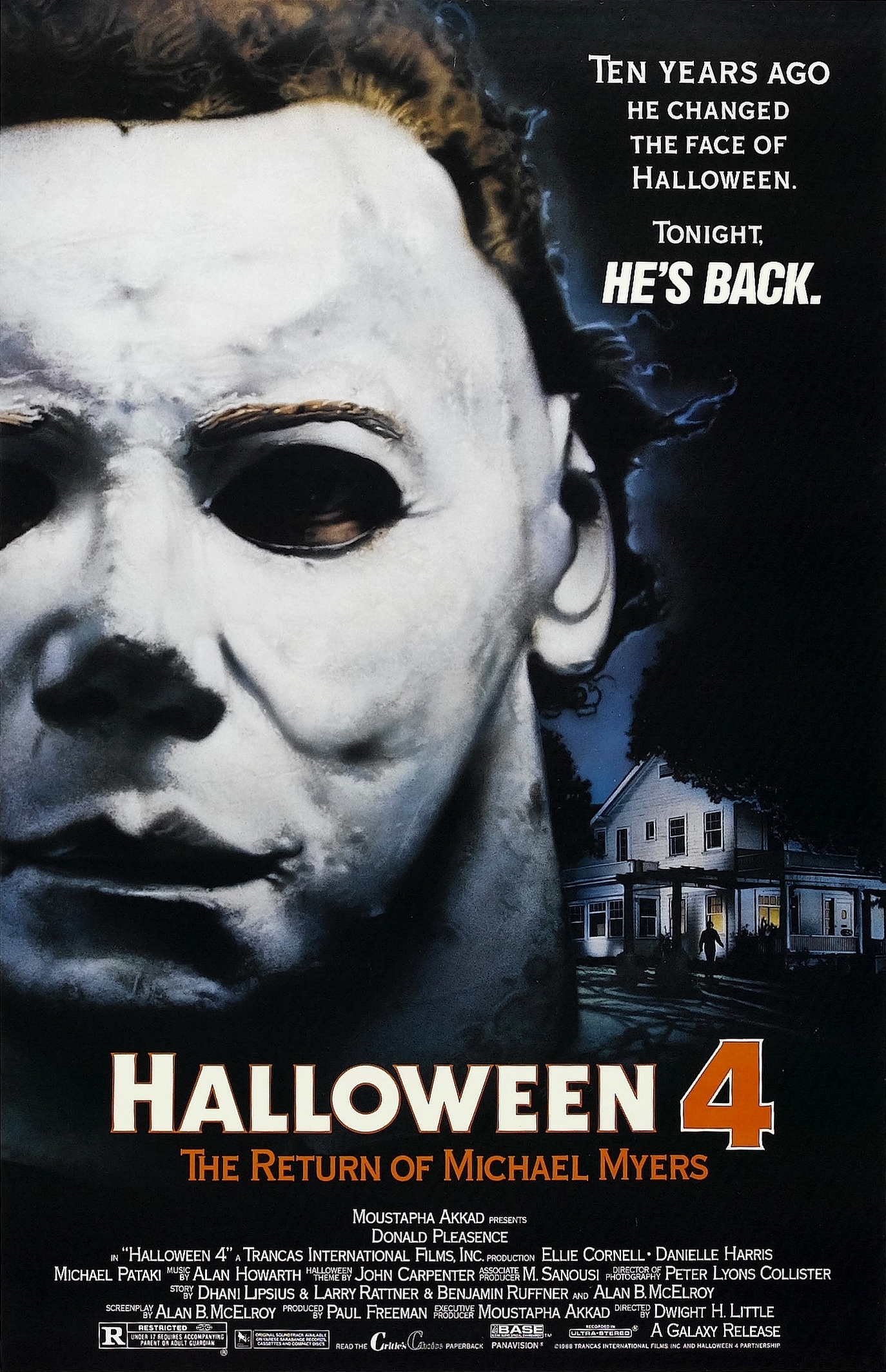
When Halloween 3: Season of the Witch underperformed both at the box office and with critical reception the idea of an anthology series based around the holiday disappeared. Fans and producers alike clamored for the return of Michael Myers and with this film they got him. He would never again be missing from the franchise for good or for ill.

We begin ten years after the events of Halloween: 2. Good old Mike has been in a coma all that time, resting quietly at a federal sanitarium. For reasons that go unexplained the powers that be have decided to transfer him back to Smith’s Grove the sanitarium, he escaped from all those years ago. The two idiot paramedics that are transporting him not only don’t bother strapping the villain down but discuss how he’s still got one living relative in Haddonville. Naturally, this pulls Michael Myers out of his coma and on another killing rampage on Halloween.

The surviving relative is Jamie, Laurie Strode’s young daughter who is now living with an adopted family (in this film Laurie died in a car crash sometime previous). 

Michael is back, having survived the fire from Halloween 2. Ditto Dr. Loomis. 

In a lot of ways, this film acts as a return to course. Fans hated Part III, the film seems to say, so we’ll do everything that made the first two films so popular and nothing else. Then we’ll turn it up a notch or two. There is a Strode family but this time the girl is even younger. It has Dr. Loomis but he’s acting even crazier than before. And of course, it has Michael Myers who is ready to kill even more people.

It more or less works. It doesn’t have nearly the originality or style as the first one, but it gets the job done.

31 Days of Horror: Halloween III: Season of the Witch (1982)

season of the witch

Halloween Ends, the third and final film in David Gordon Green’s Halloween trilogy came out this weekend. Since I’m not likely to see it in theaters I thought it would be fun to return to the original set of films. I’ve seen the original Halloween (1978) many times and I watched Halloween II (1981) a few weeks ago so this time I hit up Halloween III: Season of the Witch (1982). I probably would have watched that one anyway because the early chatter on Halloween Ends is that it steals a lot from this film.

For those not in the know, the Halloween franchise is a bit weird. The original was written and directed by John Carpenter (with a little help from Debra Hill). It was a huge success and essentially created the 1980s slasher craze. Carpenter had no interest in a sequel but pressures from the studio (and presumably big sacks of cash) helped persuade him to write Halloween II. Both follow a young Laurie Strode (Jamie Lee Curtis in a breakout performance) being followed by a psychopathic killer named Michael Myers.

When part II was a success more pressure and more bags of money came into play but Carpenter put his foot down this time. He didn’t want to be a part of another sequel. Eventually, he agreed that there could be a sequel but there would be no Laurie Strode or Michael Myers. They could do an anthology series with each film being based on the general concept of the Halloween holiday is scary.

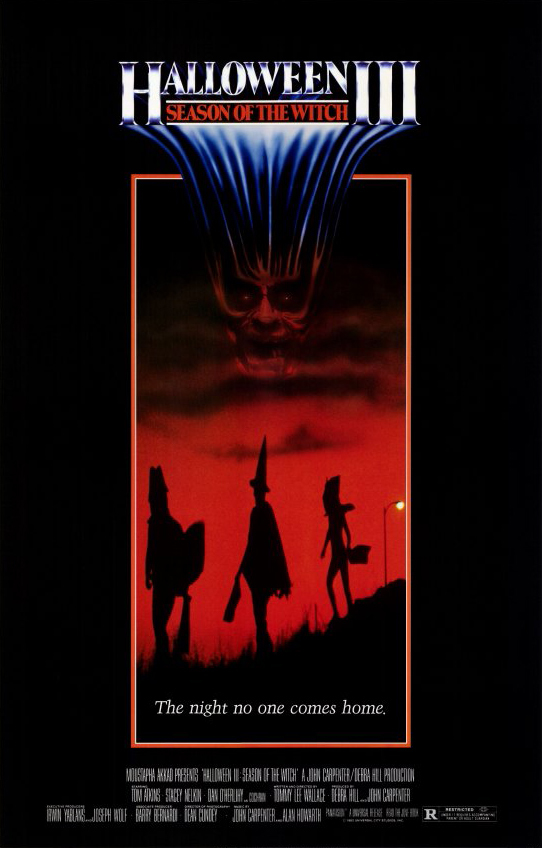
From this Halloween III: Season of the Witch was born. It has nothing at all to do with the original two films. In fact, the original movie is apparently a film inside the world of Season of the Witch as we see advertisements for it and actual clips from the film on the television within this movie. Initially, audiences hated part III. So much so that the anthology idea was scrapped after its release and part IV brought back Michael Myers and prominently displayed the in the posters and even called it The Return of Michael Myers. I watched that one recently as well, so I’ll talk about it in another post. But for now, let’s actually get to Season of the Witch.

An old man collapses at a gas station and is taken to the local hospital. He mutters something sinister and passes out. Later another man dressed in a nice suit and tie crushes the old man’s skull with his bare hands. Then he walks to his car and sets himself on fire.

The old man’s daughter, Ellie (Stacey Nelkin) talks to Dan (Tom Atkins) the doctor on call, about what happened. They begin to investigate which takes them to the sleepy town of Santa Mira, CA where the Silver Shamrock headquarters is. It seems that was the last place the old went to before winding up dead. There they find a conspiracy involving killer robots and Halloween masks that turn your head into buts, snakes, and other creepy crawlers.

Neither Neklkin nor Atkins give what you’d call a great performance, but they are serviceable. The story isn’t great and it is a big pile of 1980s cheese, but I kind of love it. The concept of a novel holiday company being run by an evil genius with supernatural tendencies is kind of awesome. It shouldn’t work, but it totally does.

It is interesting that initial audiences hated this film, but in recent years it has been reconsidered and it now has a very large fan base. I can see how filmgoers coming to the theater in 1982 expecting another violent romp with Michael Myers would have seen this and come out scratching their heads. But now it seems like such a bold move by the filmmakers. In a world drenched in sequels, prequels, and reimaginings, where the MCU has created an unstoppable universe where every film and TV show plays off one another, it is almost impossible to imagine a film like this getting released today. That alone is pretty cool. I wonder what people would think of it now had it been released on its own, without any ties to the Halloween franchise. Would audiences than have been more receptive? Would it now be a forgotten classic? Who knows? But I’m glad it exists.

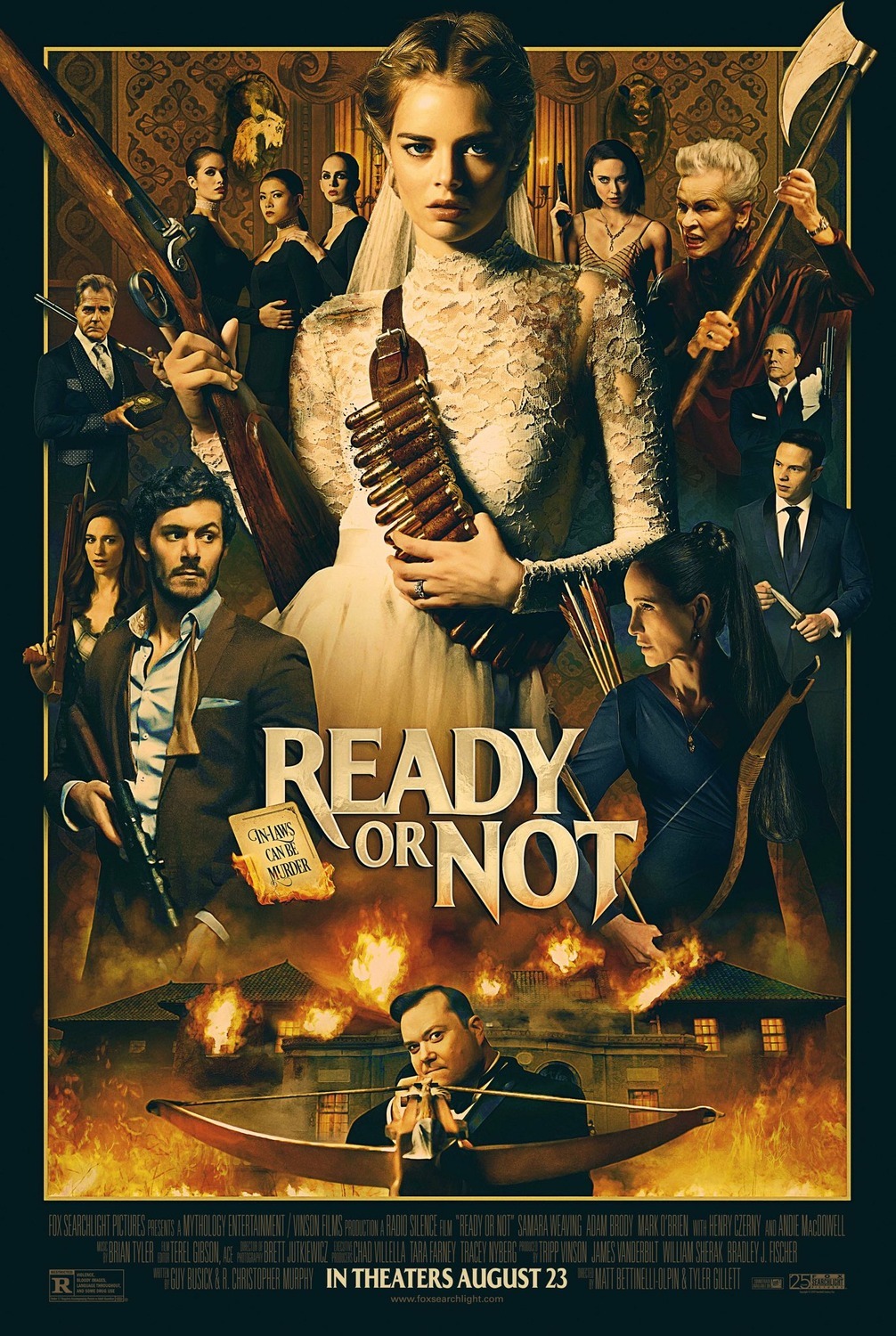
31 Days Of Horror: Ready or Not (2019)

ready or not

Every once in a while you find a film that just hits your sweet spot. It might not be a perfect film, but it is a perfect film for you. Ready or Not is that type of film for me. It is difficult to talk about the film without giving away some vital plot points so if you are the type of person who wants to go into a film completely fresh (and I do recommend that – though since even a basic synopsis of this film gives it away that will be difficult) then stop reading now.

Grace (Samara Weaving) is set to marry Alex (Mark O’Brien). His family is rich, strange, and probably psychotic. On their wedding night, Alex tells Grace that at the stroke of midnight she must play a game. What type of game? Well, she’ll get to choose it, but probably checkers or chess or something silly like that.

The family gathers in a room full of old weapons and a big table. The patriarch (Henry Czerny) tells them of how an ancestor made a deal with a man (or possibly the devil) on a boat and ever since the family’s fortunes have increased and will continue to do so as long as they keep this tradition. Whenever a new member is added to the family he/she must pick a card and play a game. Simple as that.

Grace draws the wrong card. It says “Hide and Seek,” which means she must hide and the family must seek (and kill) her. Some of the family seem reluctant to play, while others (like the demented aunt, gleefully played by Nicky Guadagni) are excited by the hunt. Everybody agrees to play because if they don’t kill Alex then the entire family will die horrible deaths by the time the sun rises.

The movie smartly plays this rather ridiculous (and yet still entirely awesome) story seriously which gives it some real stakes and makes us care bout Grace’s plight, but not so seriously that it becomes overwrought. The action is well done with the violence coming quickly, sometimes surprisingly, and often quite hilariously. The tension is built well and there is some pitch-perfect black comedy.

I’ve seen Samara Weaving in a few things and I’ve always enjoyed her performances (she’s really quite great in Mayhem), I hope she gets all the stardom she wants. She’s fantastic in this balancing fear, action, and dry comedy perfectly well.

This really is a film made for me. I love good horror comedies, and this is a great horror comedy.

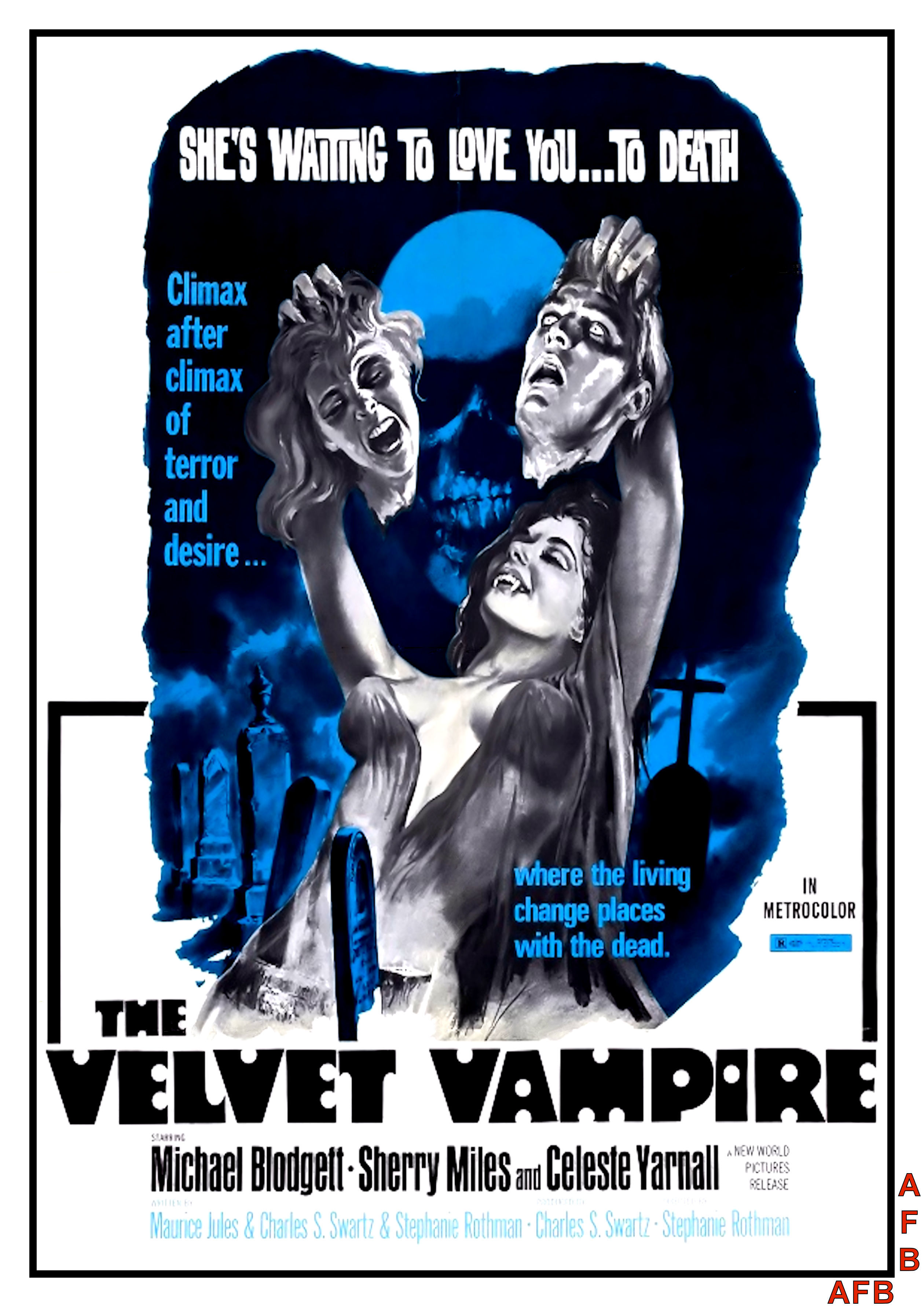
31 Days of Horror: The Velvet Vampire (1971)

velvet vampire

This extremely low-budget vampire flick from Stephanie Rothman isn’t exactly good, but it does have its charms. A young, hippie couple are invited to spend a few days at a mysterious woman’s isolated desert ranch. Naturally, she turns out to be a hundred-year-old vampire who has more than fun in the sun in mind for the two.

The acting is mostly terrible and the lack of a budget certainly shows, but Celeste Yarness shines as the vampire and there is enough style to keep vampire fans interested. There are a few dream sequences of the young couple making love on a bed sitting out in the lonesome desert and a magic mirror that are worth watching the film for alone.